Working Well January 14, 2026

Green infrastructure and energy company Acciona invites nature into its Madrid workplace

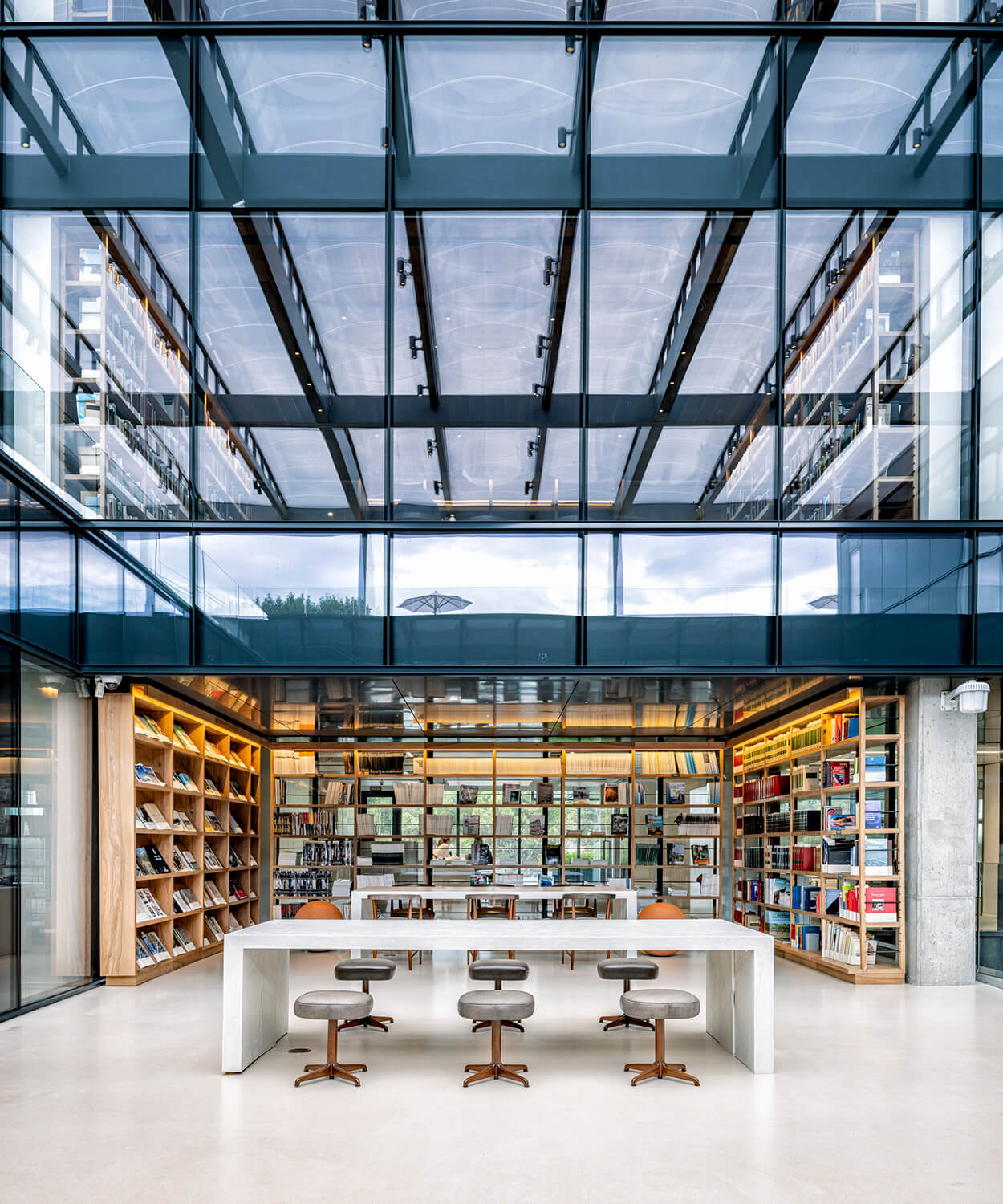
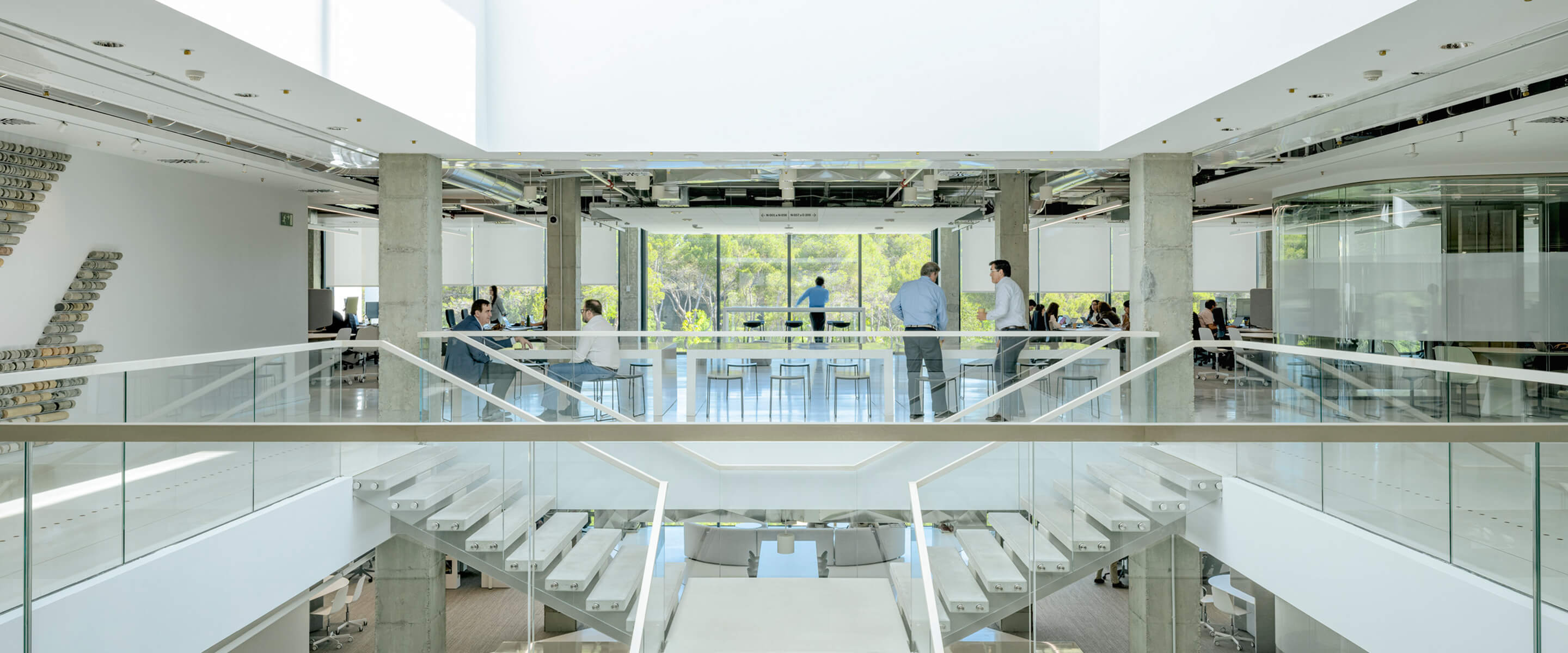
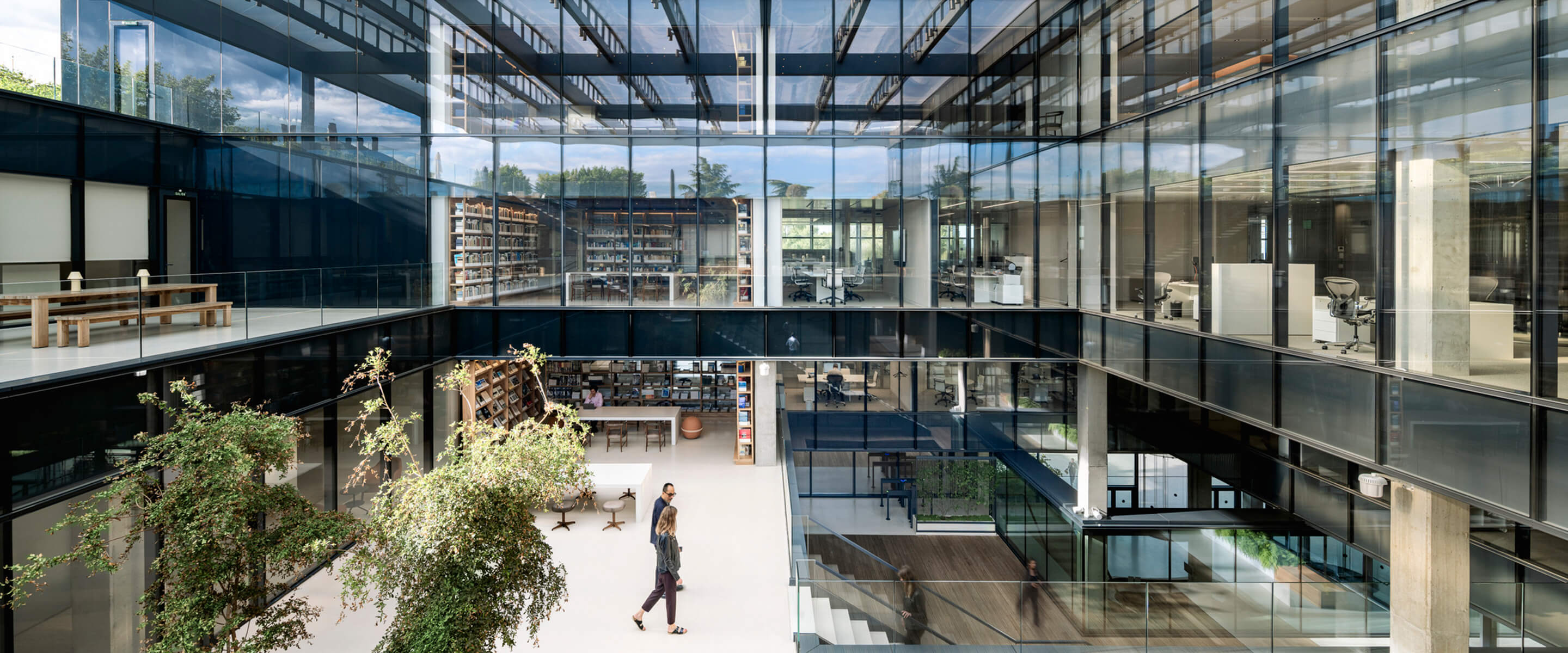
Modern glass office atrium with greenery and people walking.
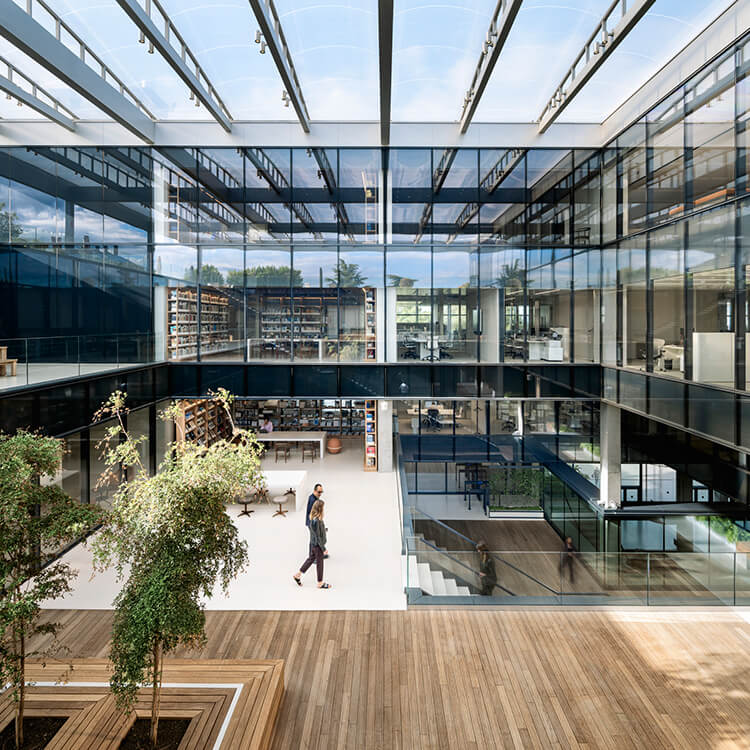
Modern office atrium with glass walls and natural light.
Photos: Timothy Soar
Base building designed by Fenwick Iribarren Architects

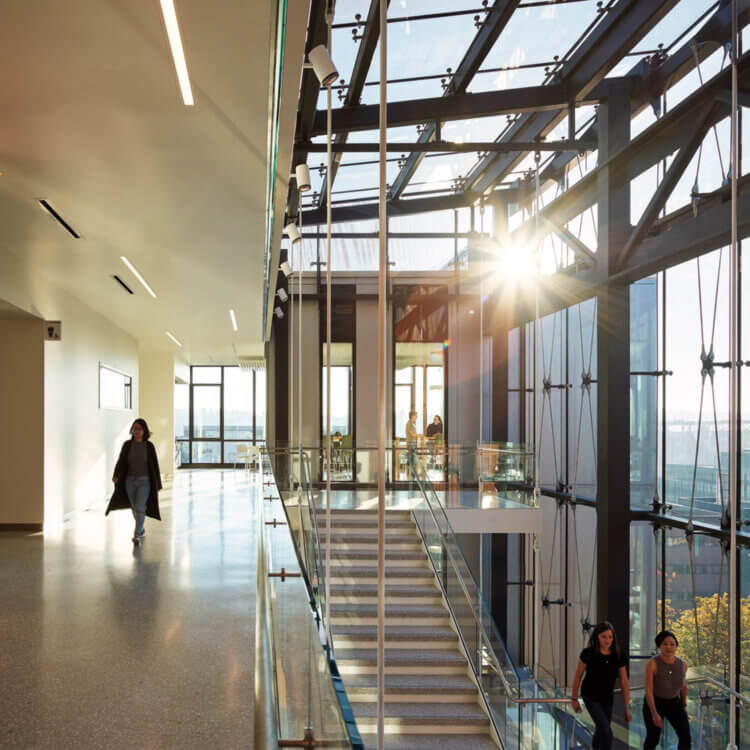
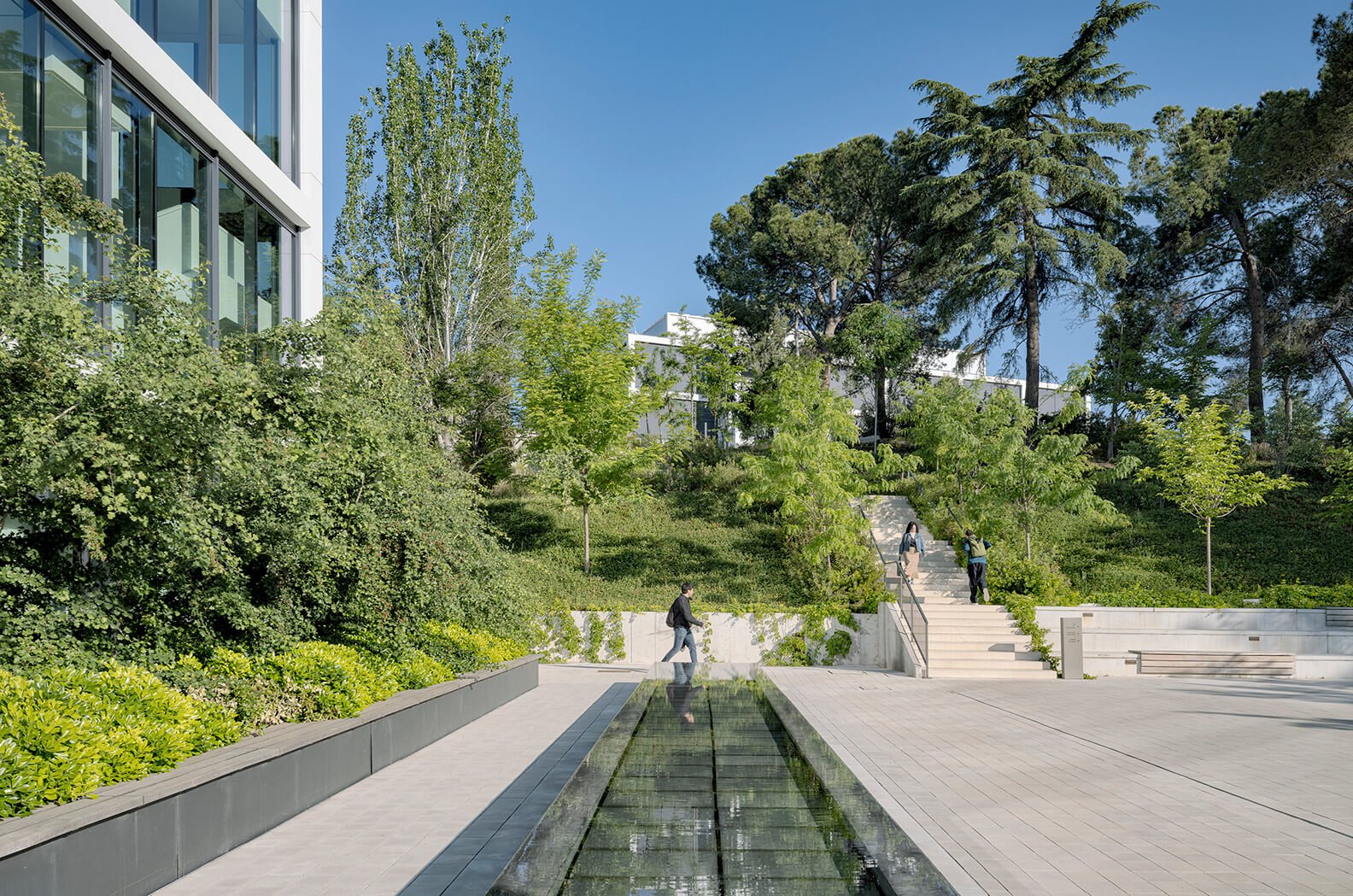
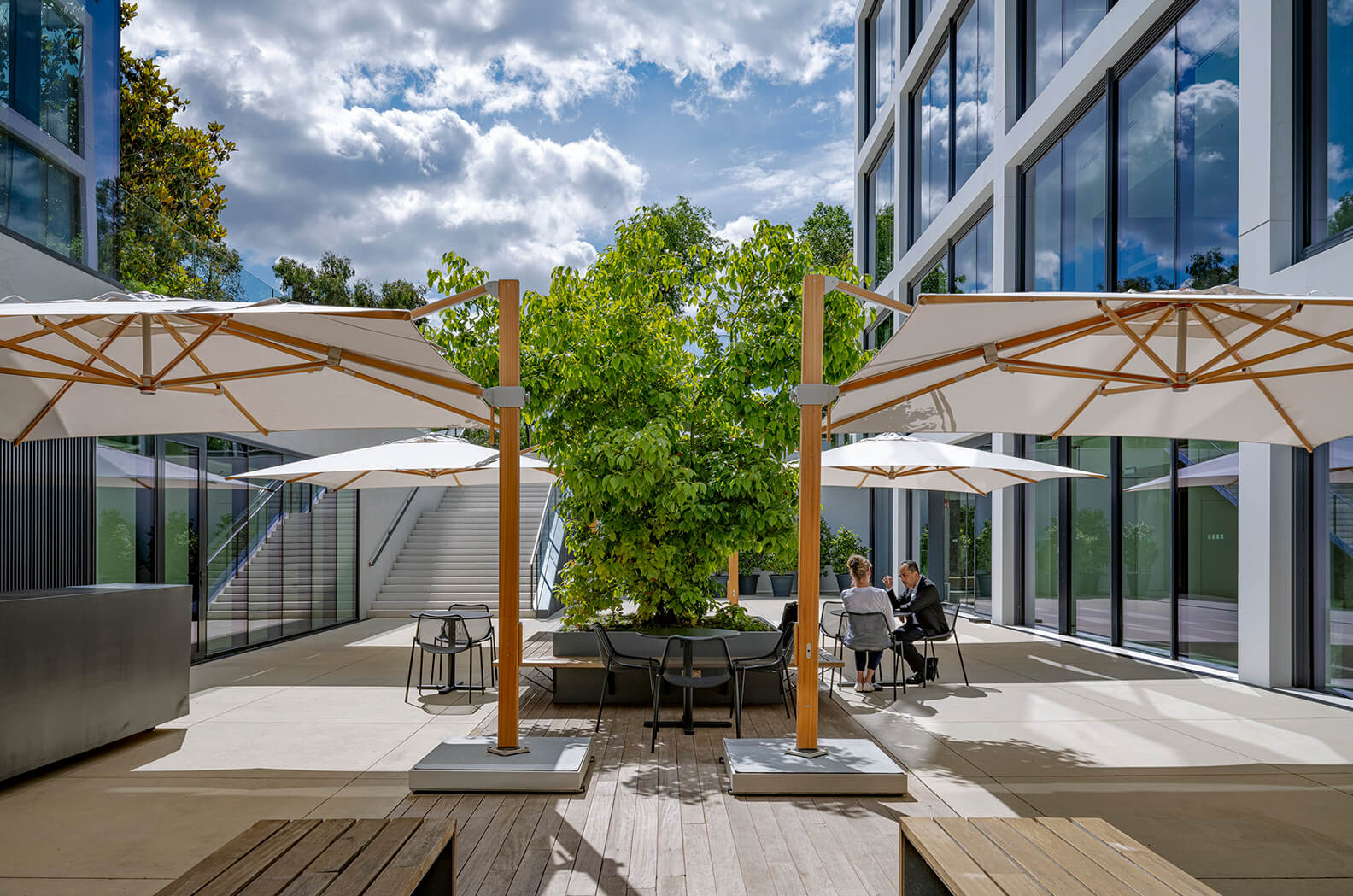
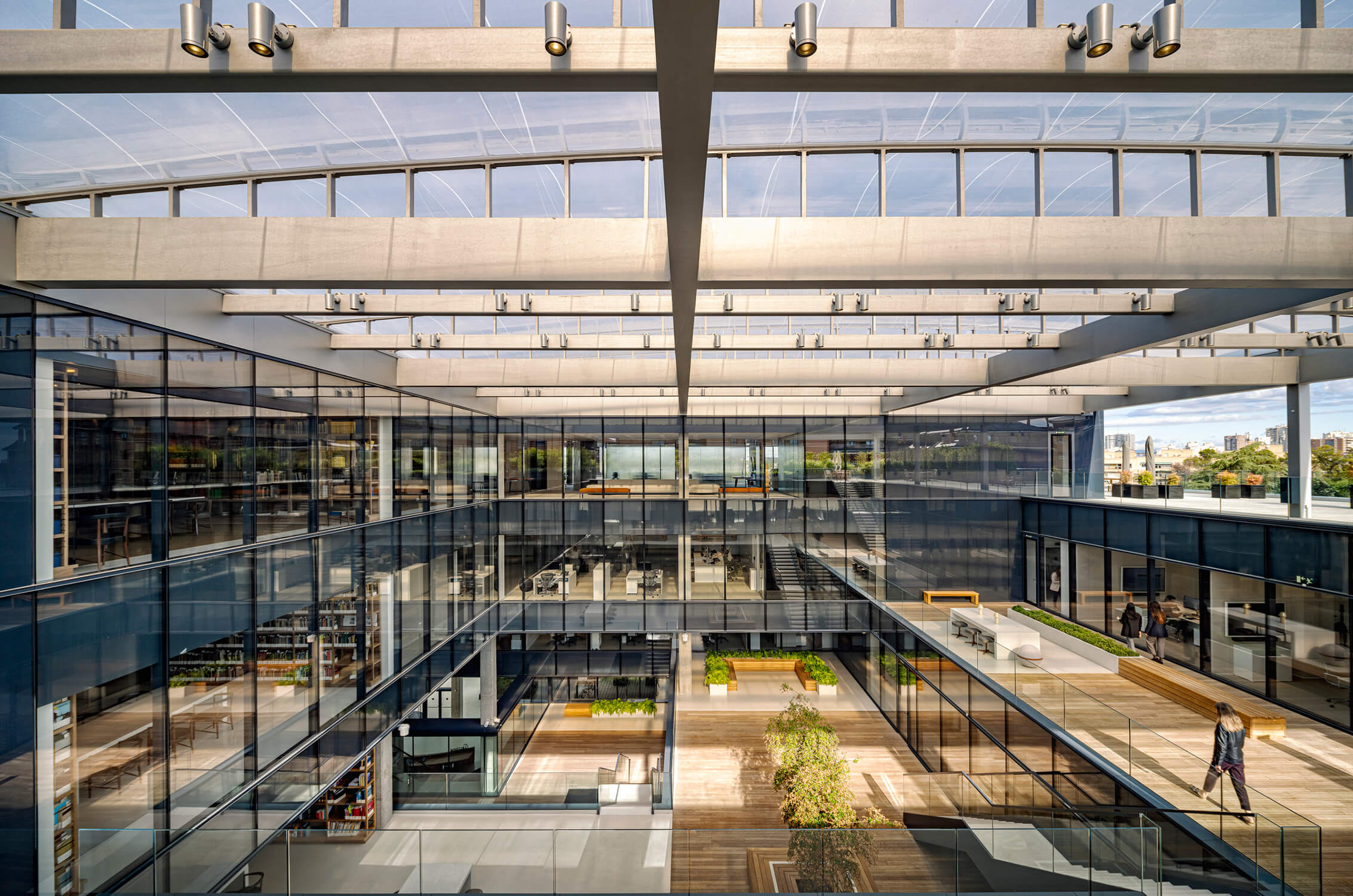
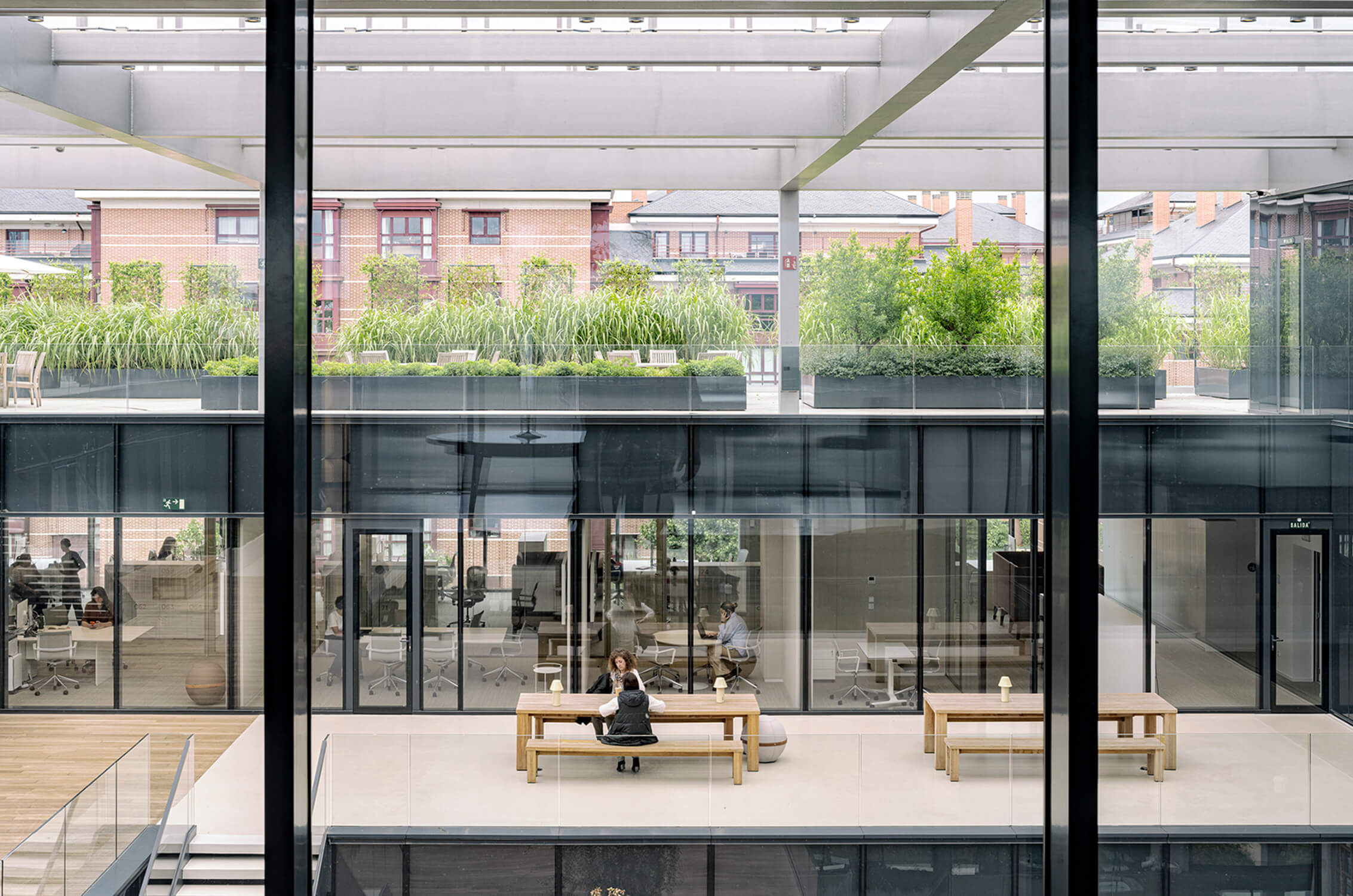
Following a winding path through a pine grove, past a reflecting pool, and across a breezy meadow alive with birdsong, employees arriving at ACCIONA’s new Madrid campus might easily mistake the experience for a nature retreat rather than a commute. This tranquil approach sets the tone for a workday that feels anything but routine. A coffee under the shade of mulberry trees offers a quiet moment to connect with colleagues before stepping into the soaring, light-filled atrium, where greenery is ever present beyond floor-to-ceiling glass—calm, grounding, and providing clarity for embarking on what will surely not be just another day at the office.

The benefits of nature on human well-being are established knowledge, and increasingly, companies are bringing these benefits into the workplace. For ACCIONA, a world leader in sustainable infrastructure and renewable energy, working in the midst of nature is not only advantageous to its employees; it also reflects the company’s mission.

Designed to embody environmental and social responsibility, the campus is a living expression of ACCIONA’s role in decarbonizing the economy. Set on a 25-acre site, its buildings and lush landscapes merge elegant design with biophilic principles. “With our new headquarters, we wanted to demonstrate our technical capabilities and, at the same time, integrate ourselves in the community while creating a beautiful workplace to help attract and retain talent,” says Macarena Carrión, ACCIONA’s chief of corporate resources. “It is our showcase. It reflects our values and politics for our teams: leadership, diversity, recognition, workplace environment, and access to rights. The strategy promotes inclusive leadership, gender equality, flexible and healthy work environments, and fair conditions worldwide.”

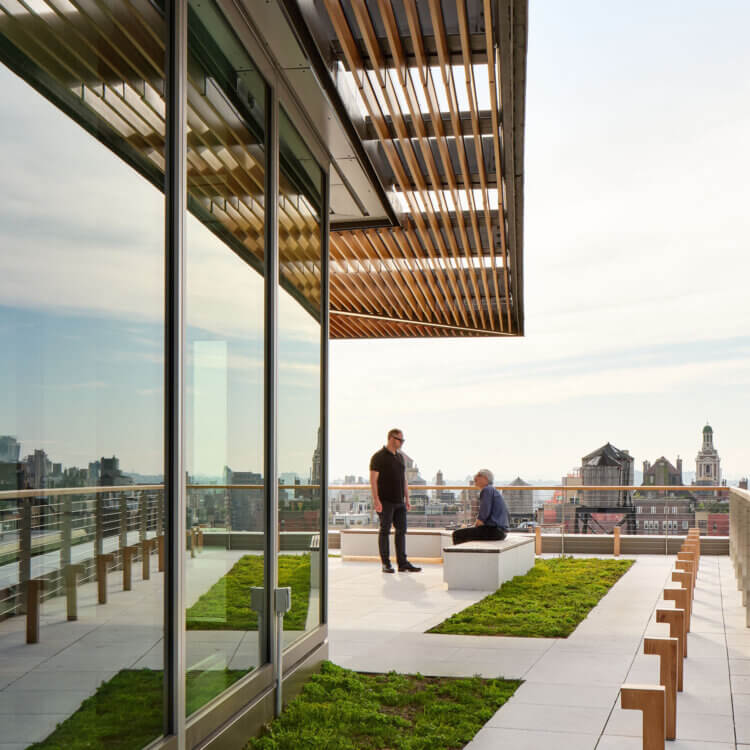
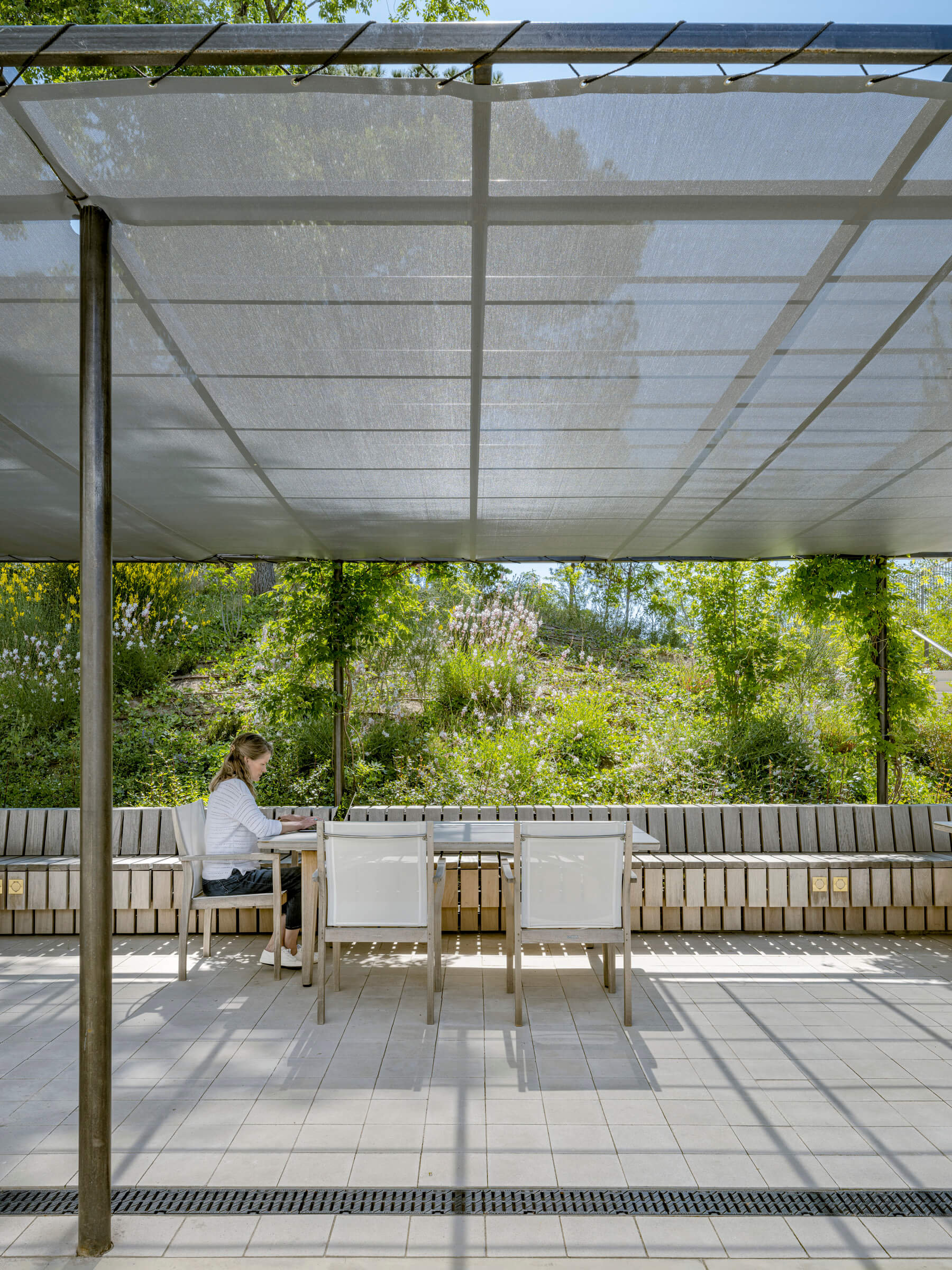
Designed with Madrid’s Mediterranean-continental climate in mind, the campus embraces sunlight, shade, airflow, and vegetation to create comfortable conditions during cold winters and hot, dry summers. Green roofs, nearly 2,000 trees, plentiful terraces, and generous plantings throughout the interiors promote connection between occupants and the outdoors. “The environment is so natural and so carefully integrated into the urban environment that it’s hard to believe that we are in the center of the city,” Carrión says.
“It’s hard to believe that we are in the center of the city.”
Macarena Carrión, ACCIONA’s chief of corporate resources

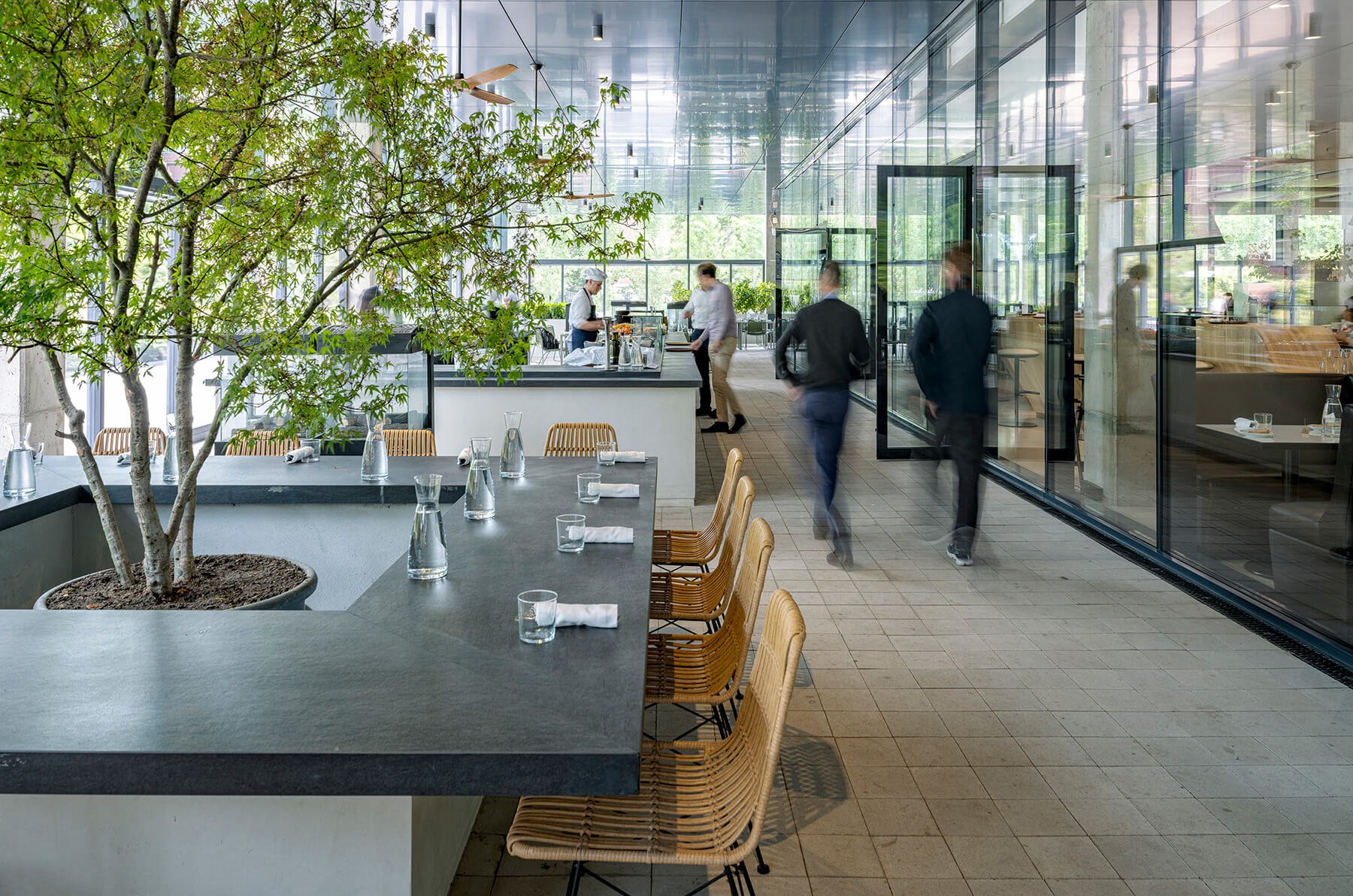
ACCIONA devised a plan for the diverse landscapes, which are irrigated with recycled rainwater. One of their objectives was preserving and enhancing the site’s historic pine groves and replacing lawns with native meadows. They introduced hardwood groves as unifying elements between the pines and other green areas. Throughout, they increased the number of plants, with an emphasis on native and adapted species with low water consumption. Vegetable gardens supply ACCIONA’s dining facilities.

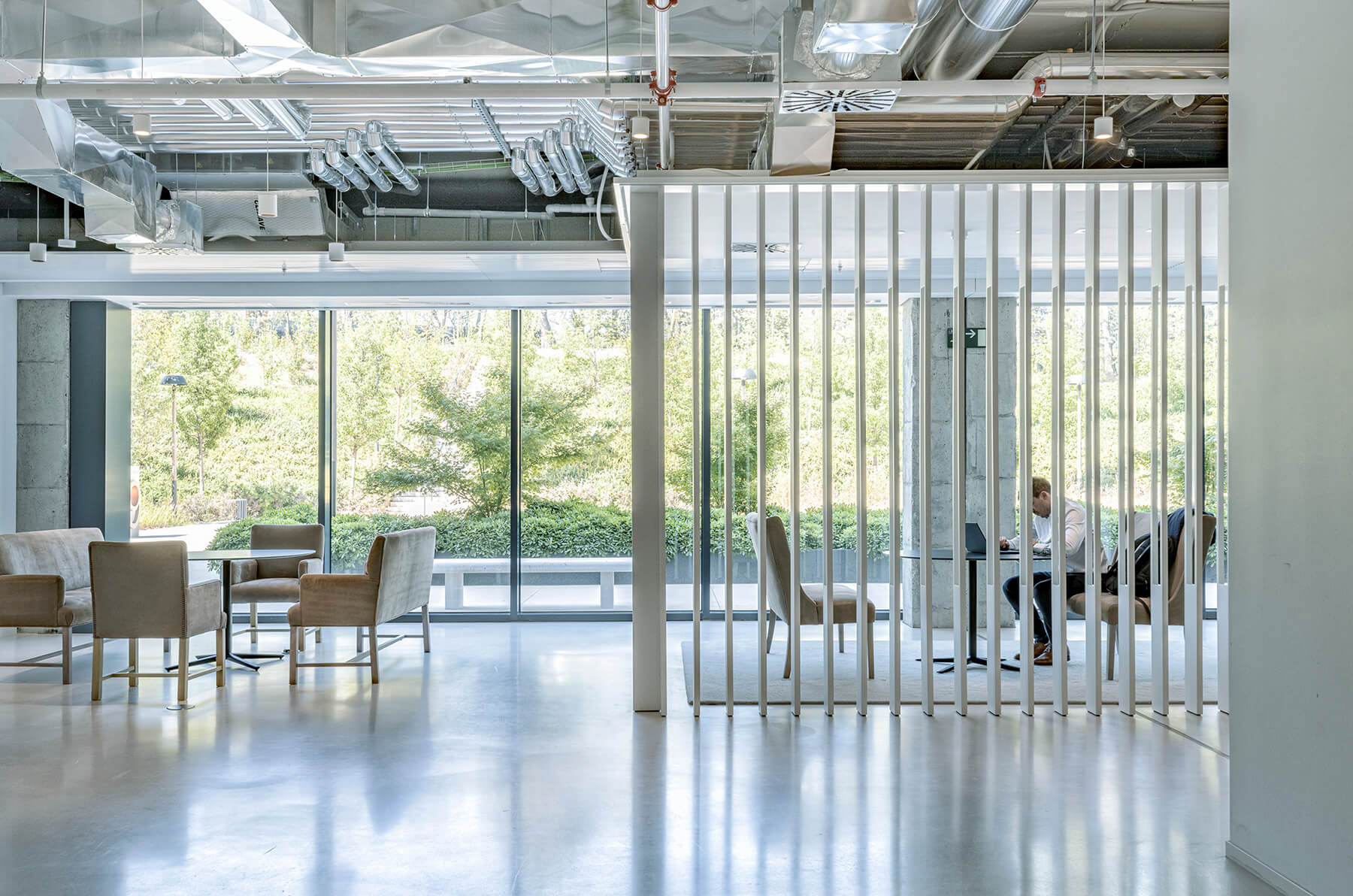
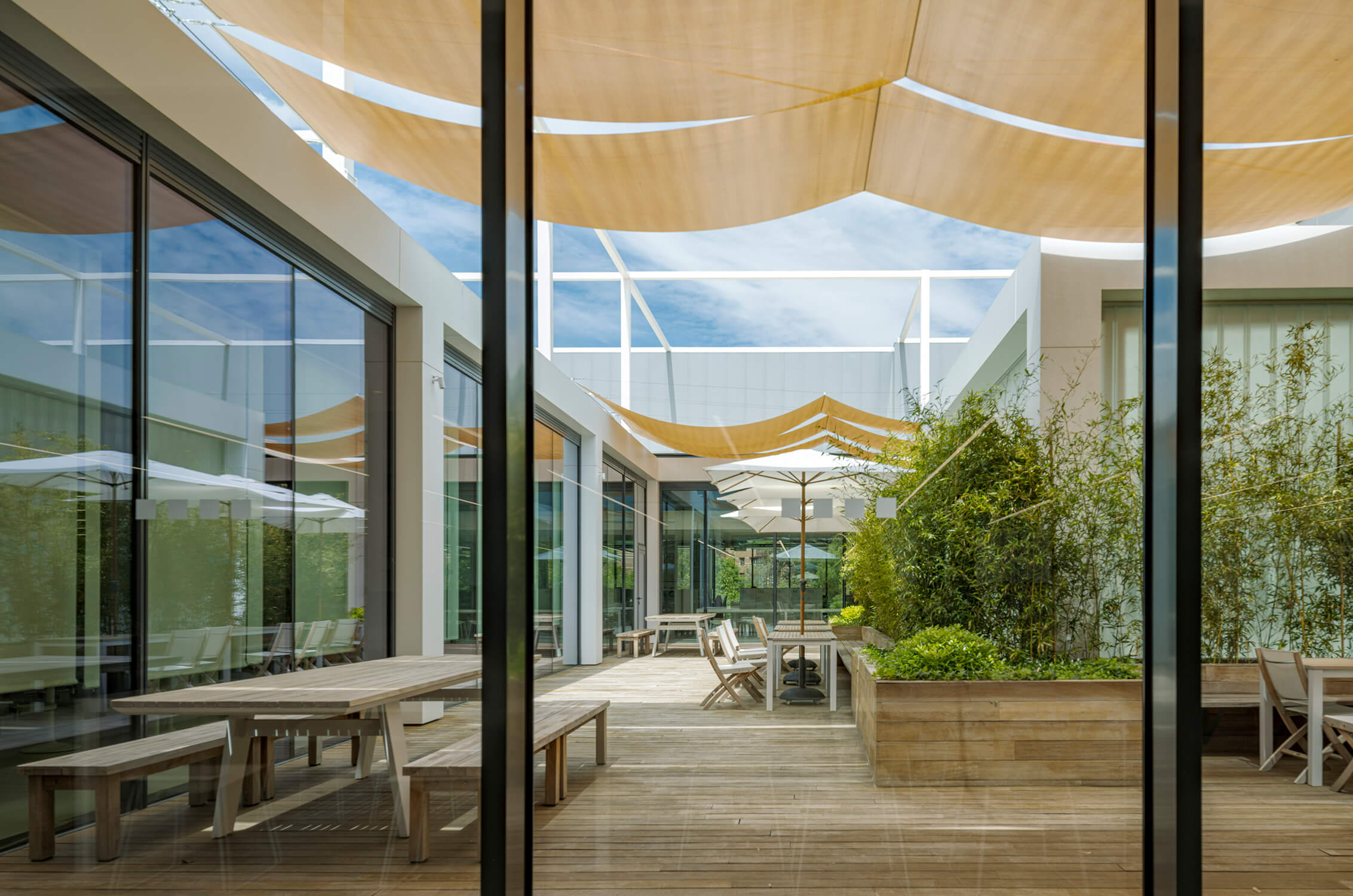
Patios with abundant vegetation and paths lined with trees, viburnum hedges, and long-flowering roses extend across campus. The copious greenery enhances air quality and supports the mental and physical health of employees, creating a soothing, restorative atmosphere that encourages productivity and focus. “It’s quite unique—being in the middle of the city but feeling like you are in an enormous garden,” Carrión says. Expansive views, water features, reflective ceilings, and white surfaces blur the line between indoors and out, filling interiors with light and a sense of airiness. Even when you’re inside, you see green everywhere.

The campus is also green in energy performance. It generates more electricity than it consumes annually through a combination of passive design features and renewable energy technologies, including photovoltaic panels and geothermal systems. The six buildings on site have the highest LEED and WELL certifications. All but three are renovations of structures that were already there, preserving the embodied energy associated with their original construction. It’s clear that ACCIONA is leading by example with its decarbonization goals.

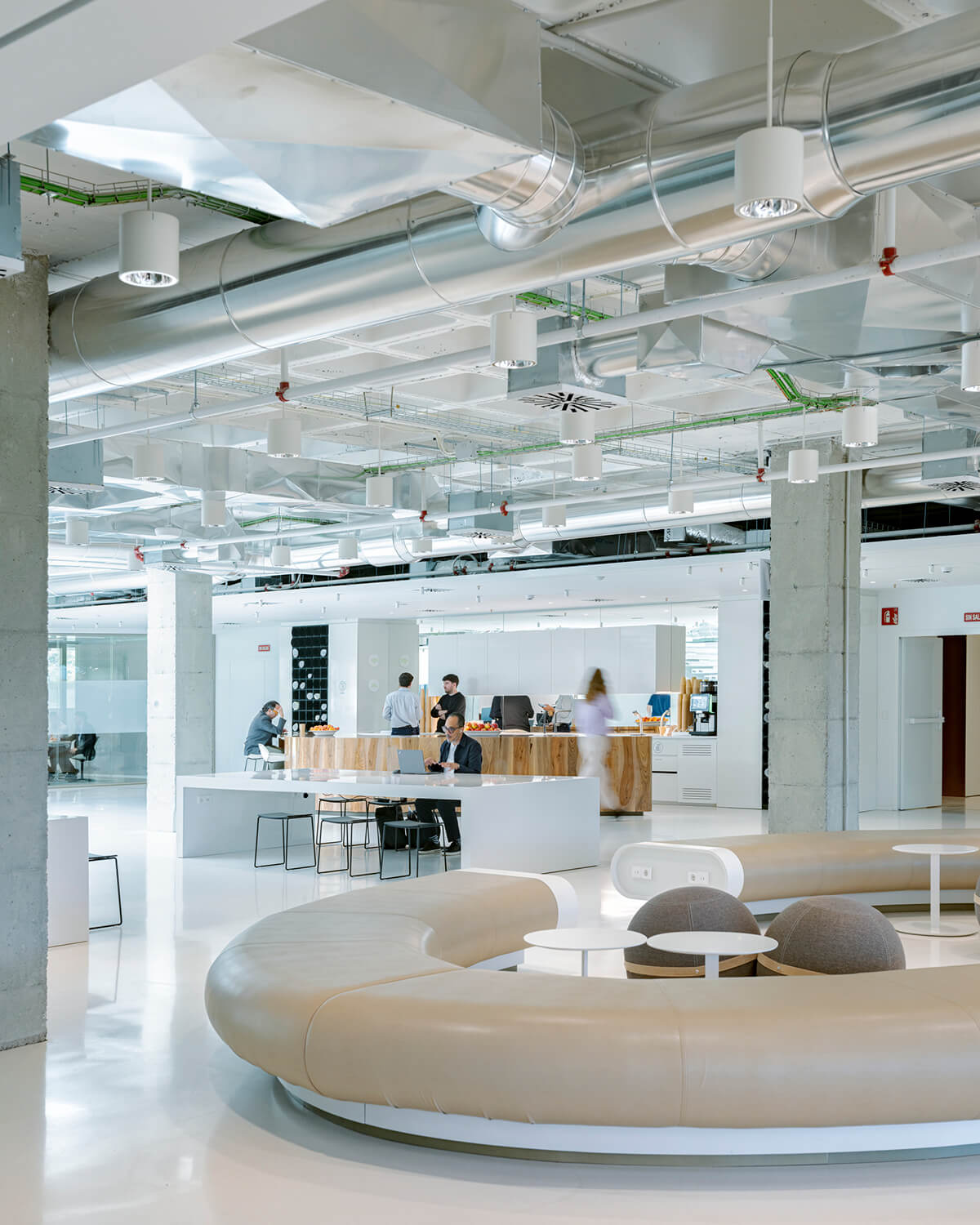
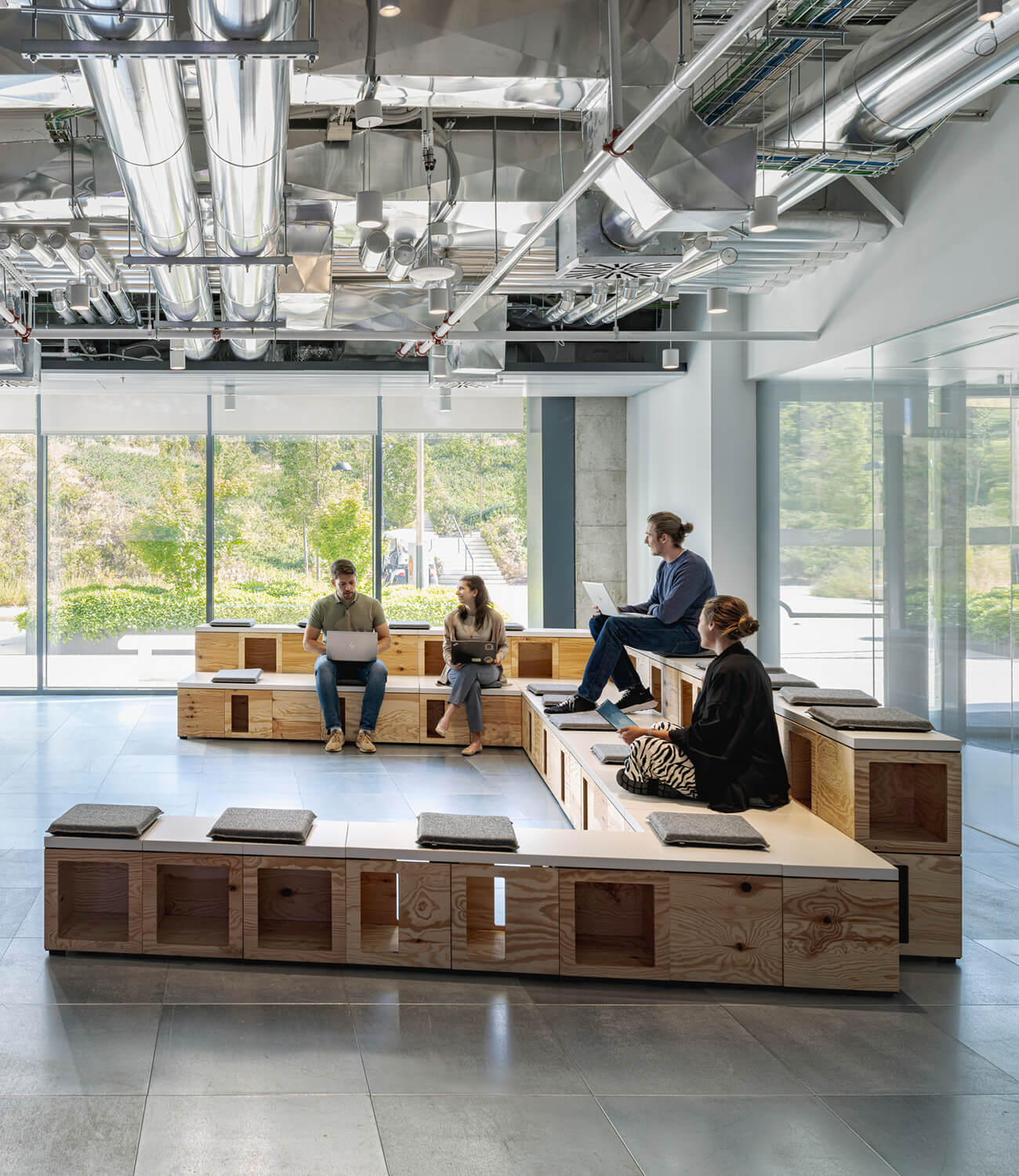
In envisioning its new home, the company sought to build the workplace of the future—a flexible, collaborative, and digitally enabled space that promotes well-being and work-life balance. The interior architecture juxtaposes the textures of raw concrete and galvanized metals, along with exposed masonry and mechanical systems, with more refined materials such as terrazzo floors, wood, polished plaster, reflective ceilings, and powder-coated metal. This layered approach allows old and new to coexist in unity. Flexible, open-plan spaces encourage collaboration and promote employees’ autonomy. Natural materials and ample daylight enhance cognitive function and emotional equanimity. The outdoor work areas (equipped with Wi-Fi and 5G), shaded green zones, and wellness-focused amenities promote stress reduction and overall health.

The campus is an open ecosystem in which everyone is enriched. ACCIONA welcomes third parties and hosts business and cultural activities, including forums, conferences, exhibitions, and workshops. It also plays host to visiting students studying engineering and technology, 80% of whom, the company says, later apply for jobs there. It’s not difficult to understand why. The blend of humane design, abundant nature, and cutting-edge technology combined with ACCIONA’s strong corporate culture, which fosters collaboration and a sense of belonging, is a potent formula for the attraction and retention of top talent.

As ACCIONA continues to design and implement projects around the globe that positively impact communities and ecologies, it demonstrates that business growth and environmental responsibility can—and must—go hand in hand. Its new Madrid headquarters underscores this belief, standing as a powerful example of how the future of development can look when nature is not just considered, but prioritized.

A powerful example of how the future of development can look when nature is not just considered, but prioritized.