Xidan Mall
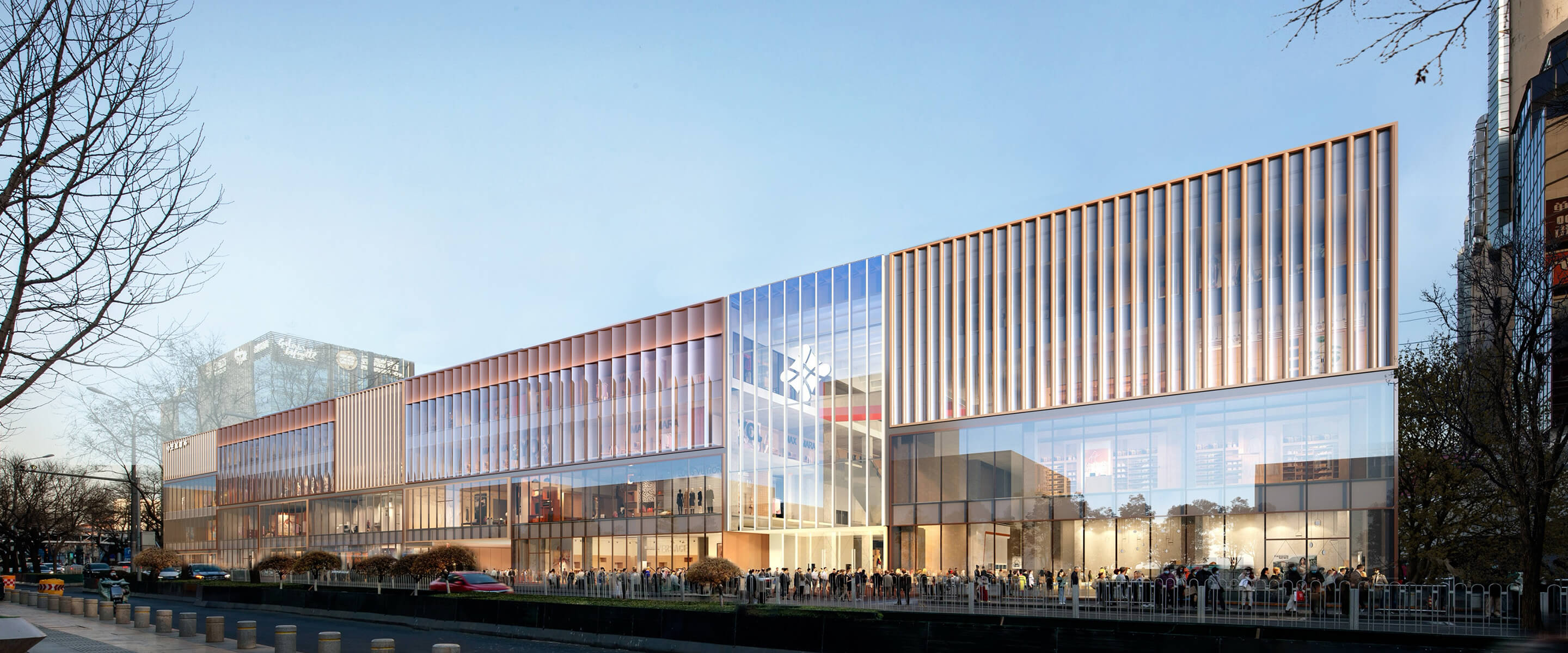
Xidan Mall is one of the oldest shopping centers in Beijing. The complex underwent multiple additions and renovations since its establishment as the Houde Shopping Market in the 1930s, and its interior was dated, dark, and fragmented. The clients wanted to repurpose as much of the existing structure as possible while also initiating a comprehensive transformation that would welcome shoppers from nearby neighborhoods and around the world.
The mall is in the historic Xidan district, an area that’s been a bustling commercial center for hundreds of years, and it lies less than half a mile from the modern center of Chinese government. Recognizing that a superficial renovation wouldn’t do justice to its prime location and historical context, the clients sought to create both a commercially successful shopping destination and a cultural icon.
They were committed to abandoning old retail paradigms and embracing a new model based on modern connectivity and experiential design. In a city where automated delivery services cater to customers’ whims within minutes, they wanted to build a platform for in-person interaction and exploration.
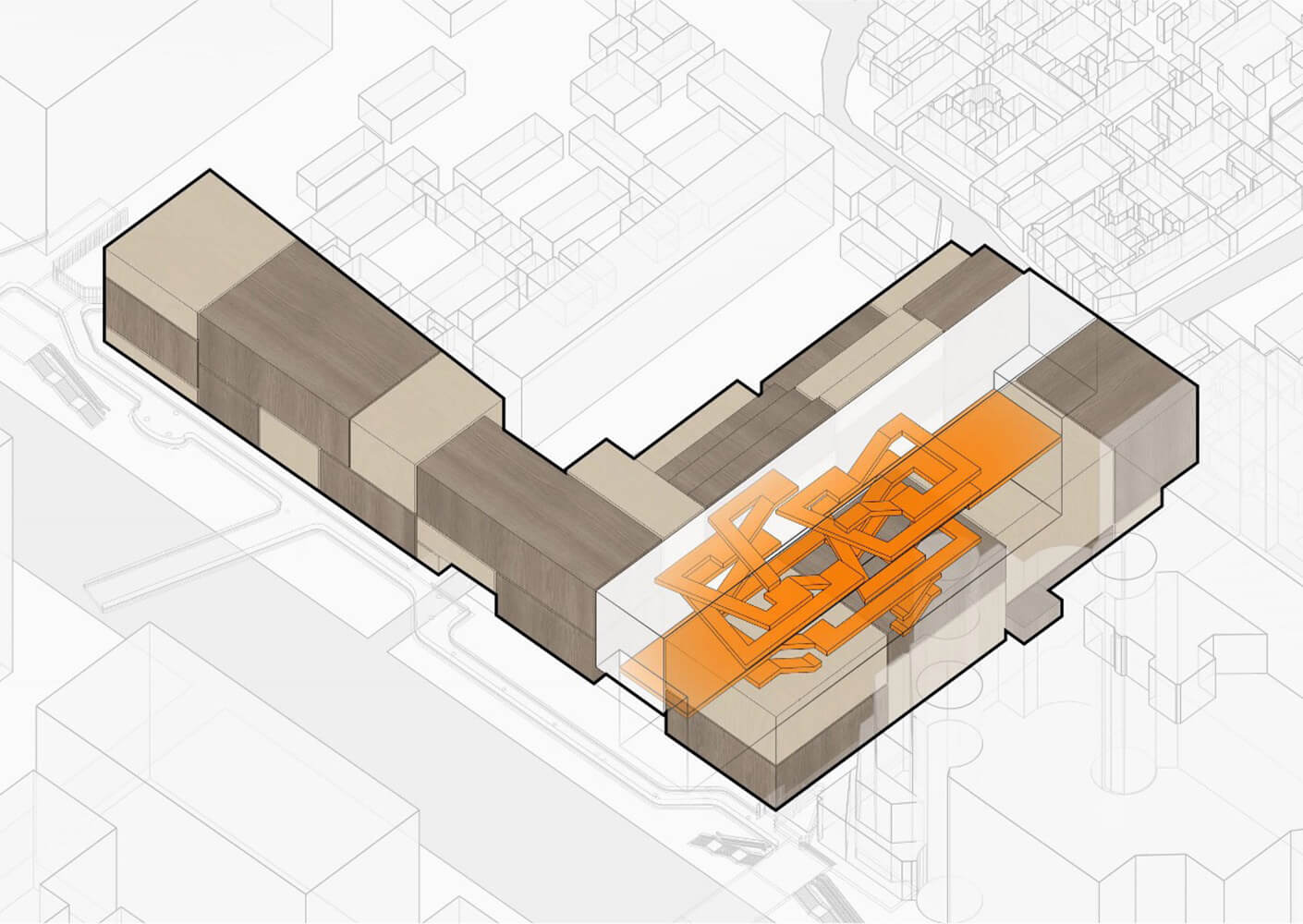
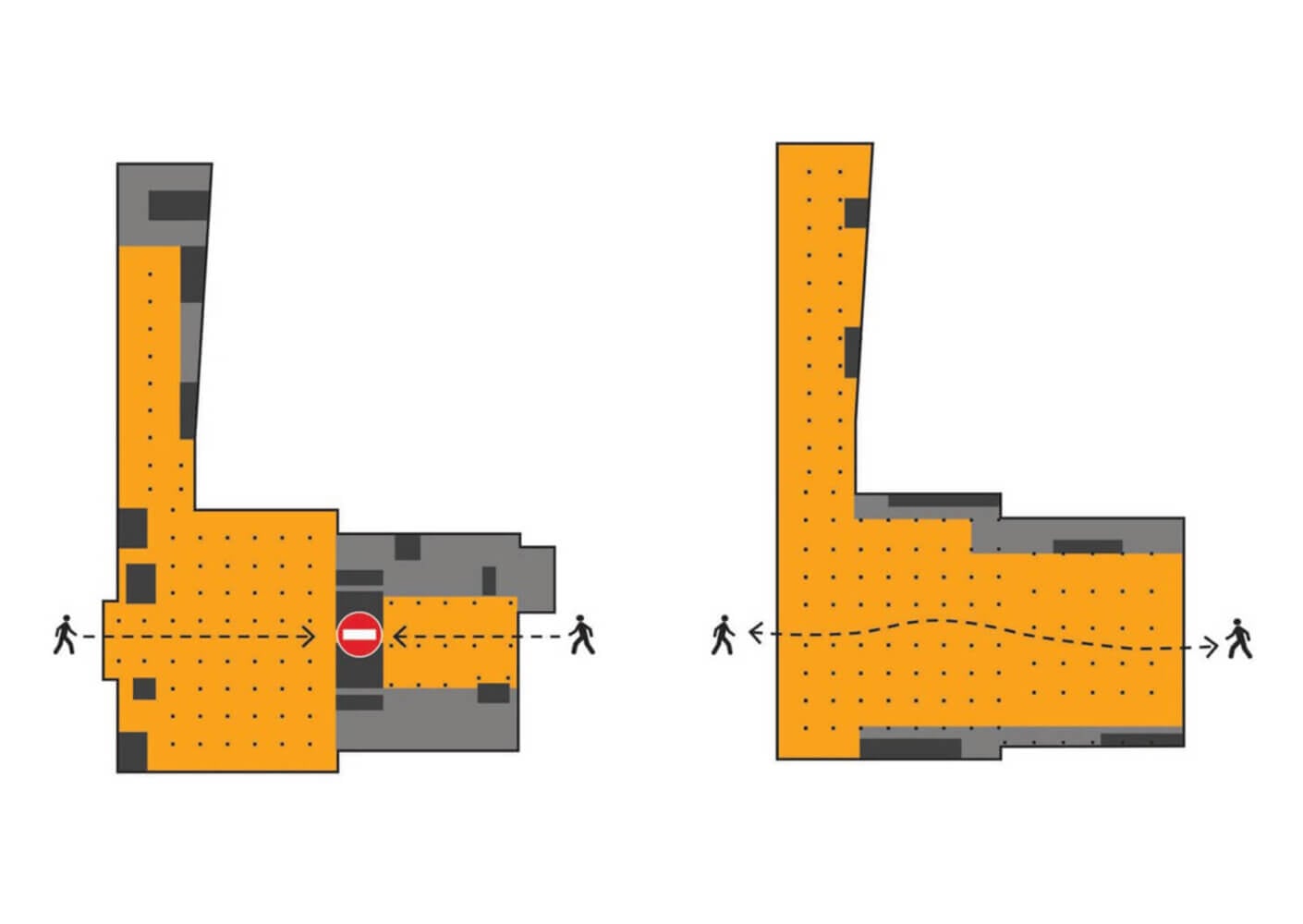
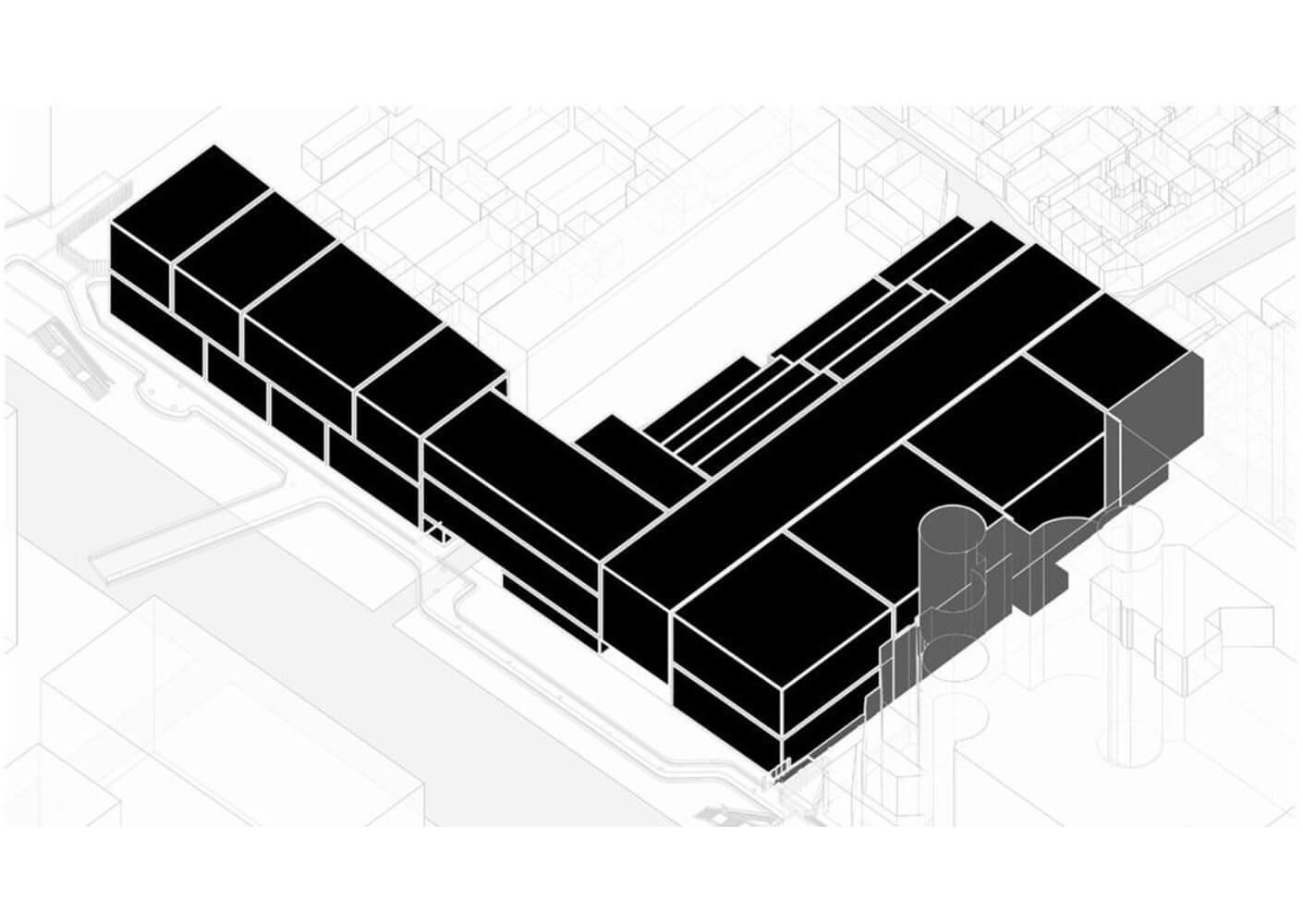
The center of the complex previously consisted of back-to-back shops that essentially divided the mall into two dead ends. Although the mall’s location and long-established history virtually ensured that it would continue to attract shoppers, the design team realized that, with the right interventions, it could also serve as a public through-way that would entice residents of surrounding neighborhoods to linger, shop, and dine.
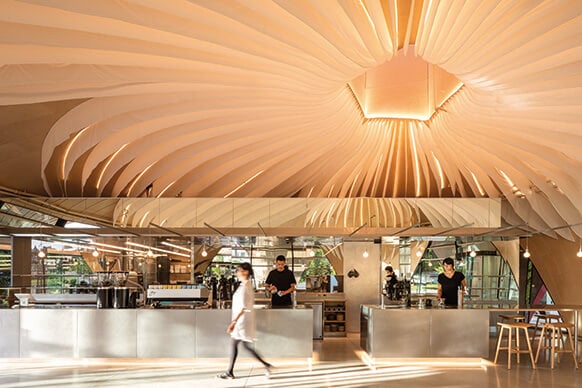
To connect North Xidan Avenue’s bustling activity to the quieter, low-rise community to the east, they relocated the central shops to provide a shortcut through the building. Then they carved out a “cloud” in the resulting open space by excavating about 12 meters below ground level, slicing into the existing roof and floors, and filling the central atrium with a series of stacked ramps and platforms. This brought daylight into the interior and created a dazzling, 24-meter-tall space that enhances functional circulation with pop-up shops and informal gathering areas.
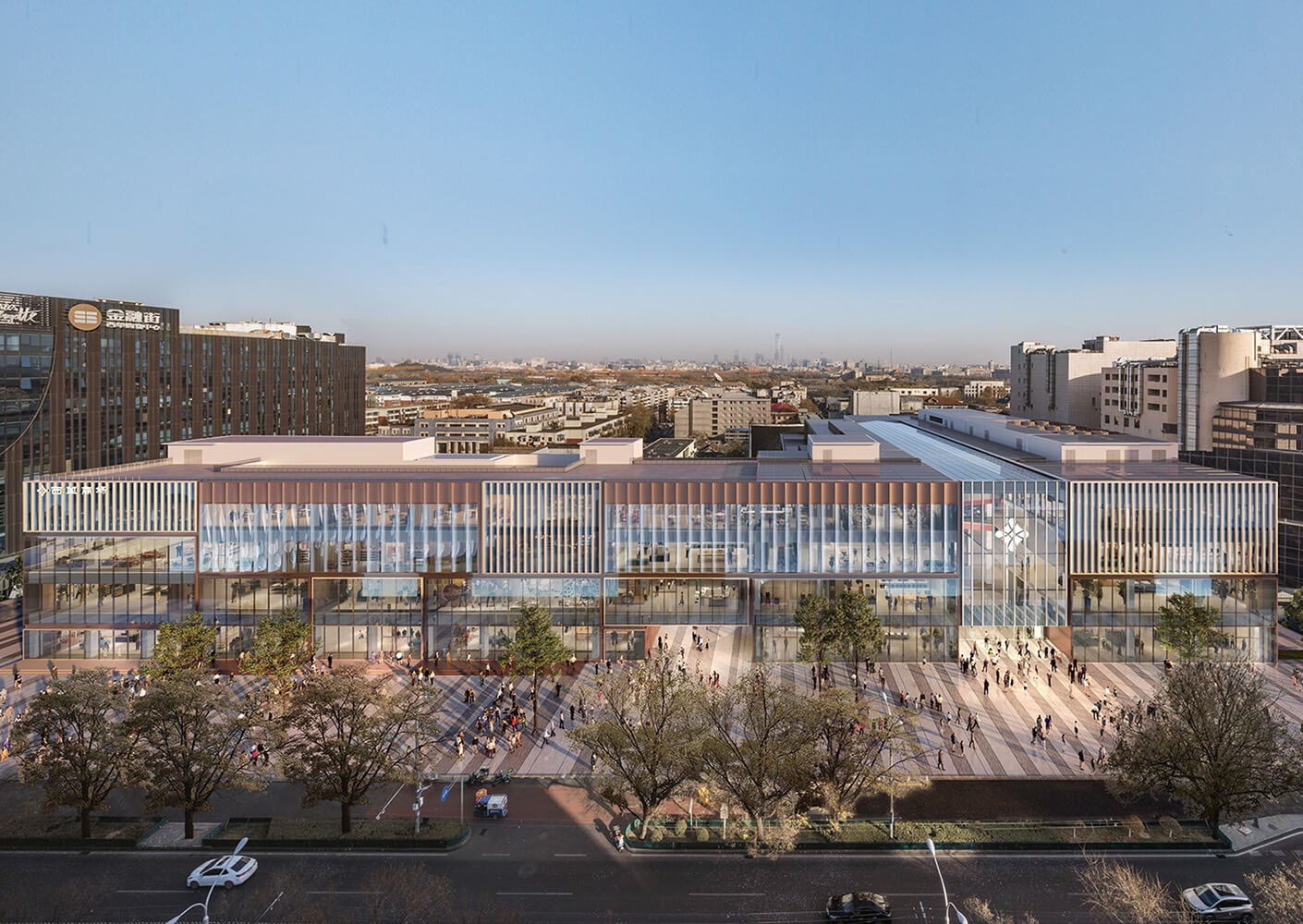
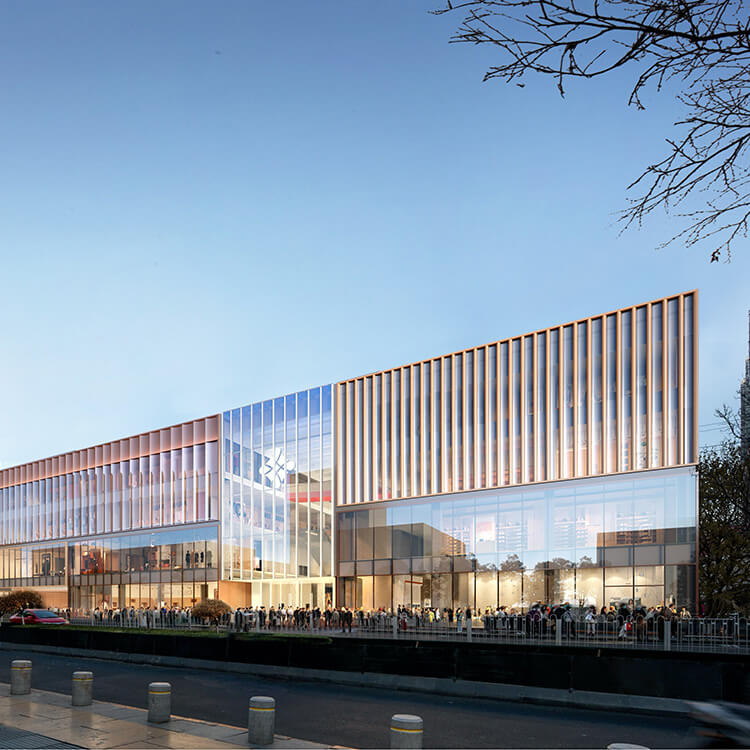
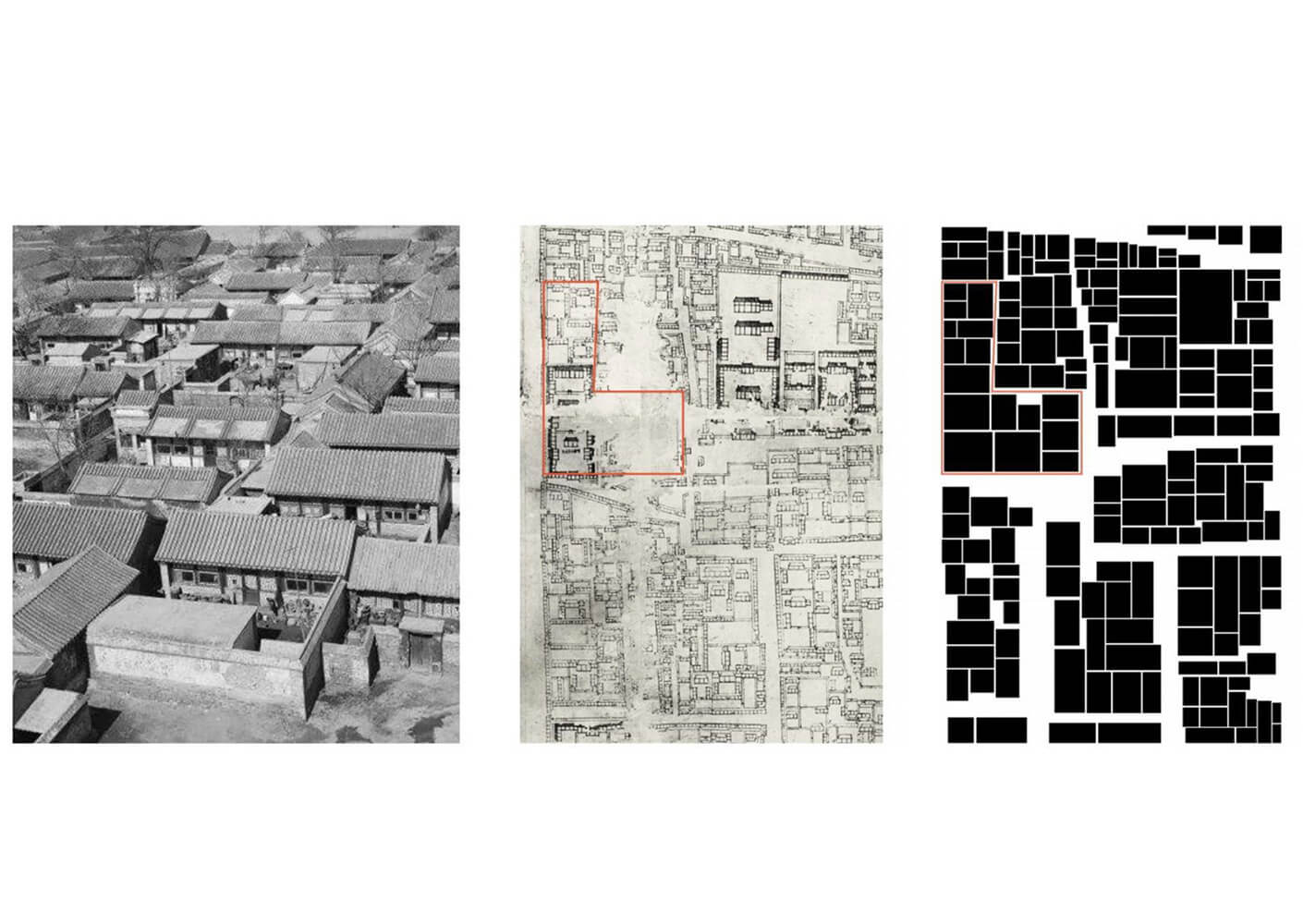
Following extensive discussions about the site’s historical context, the design team determined that the exterior should evoke the small, diverse homes and shops of the area’s traditional neighborhoods. The resulting facade is expressed as a series of stacked blocks in a variety of materials, including fluted ceramic panels, glass, and small modules of glass brick and glass-fiber reinforced concrete. This creates an engaging visual experience that’s sleek and modern while echoing the site’s historic texture.