Perspectives November 24, 2025

Caring for the Caregiver in Fast-Growth Cities: Lessons from an Award-Winning Hospital

By Kelsie Whittington, AIA, and Kat Middlebrook, NCIDQ

From Celina and Prosper in North Texas to Leander, New Braunfels, and Katy further south, population surges across Texas are quickly transforming small towns into thriving regional hubs. New schools, neighborhoods and businesses are cropping up at a rapid pace, and with them, expectations of what a modern city should provide. Among these expectations, few carry more weight than access to quality healthcare.

Healthcare facilities are civic anchors. When a developing city opens its first full-service hospital, it’s a sign the community has arrived. Hospitals lay the foundation for future development, and in fast-growth cities, they also act as cultural markers, reflecting who the community is and who it’s becoming.

Amid population booms and rapid change, healthcare systems also face pressure to expand access, provide best-in-class service, and build community trust all at once. Staff experience is too often overlooked or an afterthought. It is caring for the caregiver, though, that makes both sustained growth and a higher standard of care more achievable.
"Celina is growing so rapidly, and we did not have a medical facility. Having Methodist only blocks away is just a weight off of all of our shoulders in this community."

― Alexis Jackson, president, Celina Chamber of Commerce

Why Staff Experience Matters in Emerging Hubs

Healthcare’s workforce crisis is well-documented. Nearly 46% of healthcare workers report feeling burned out often or very often, a jump from 32% in 2018.

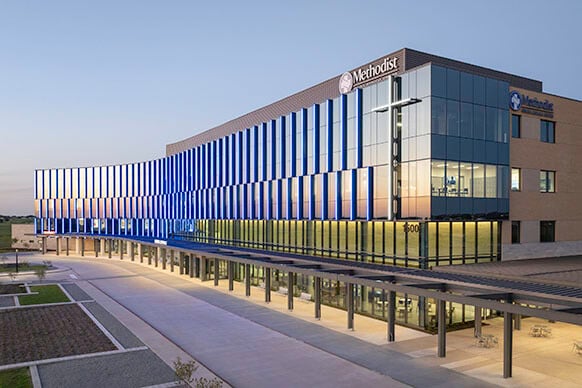
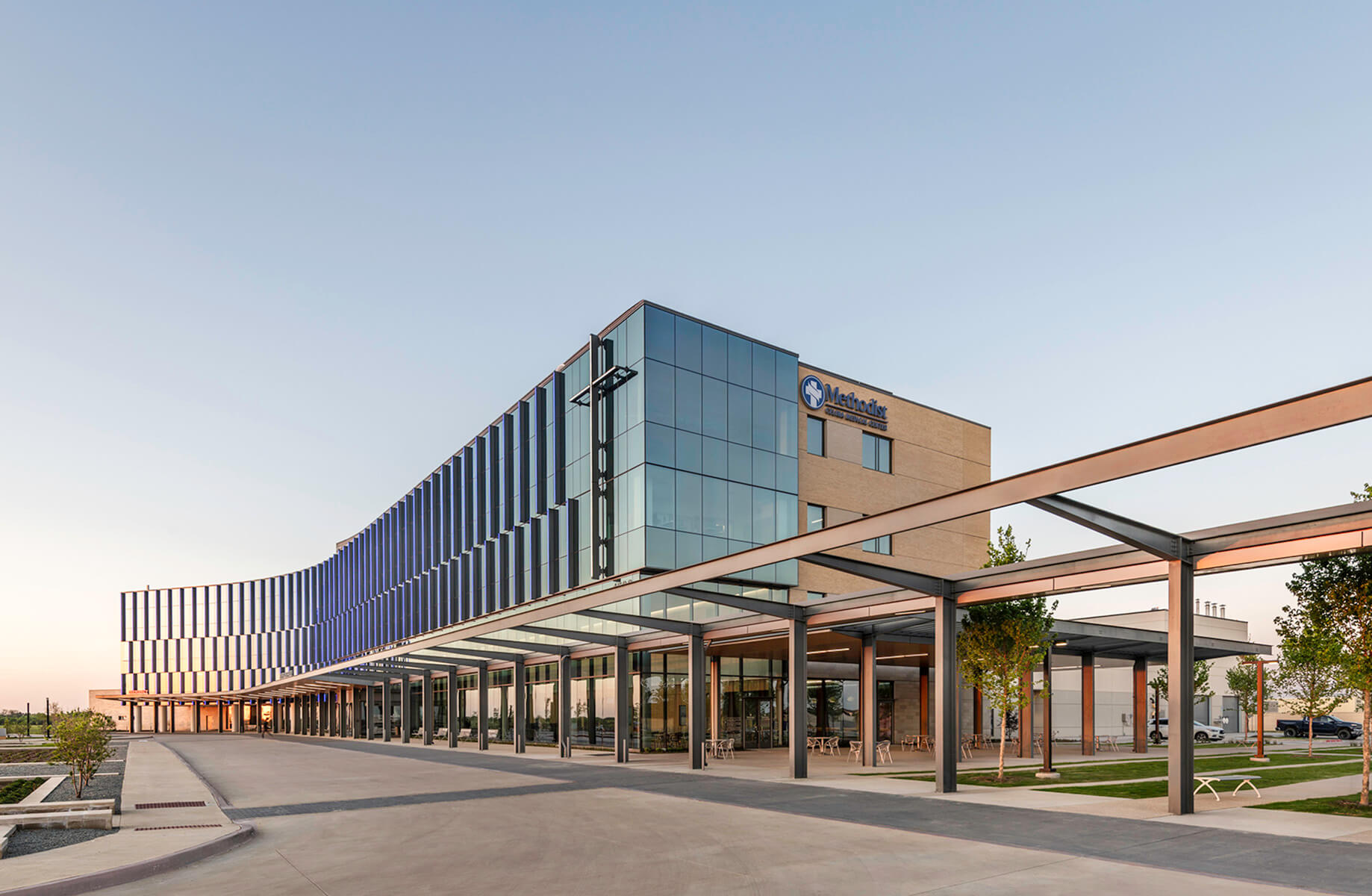
For fast-growth cities, this challenge carries added urgency. Recruiting and retaining high-quality talent is critical to keeping pace with population growth and establishing a strong reputation from the start. When designing Methodist Celina Medical Center—recently honored with a national IIDA Healthcare Design award—our Dallas healthcare team recognized these concerns and saw, in the high rates of healthcare worker burnout, a design challenge.

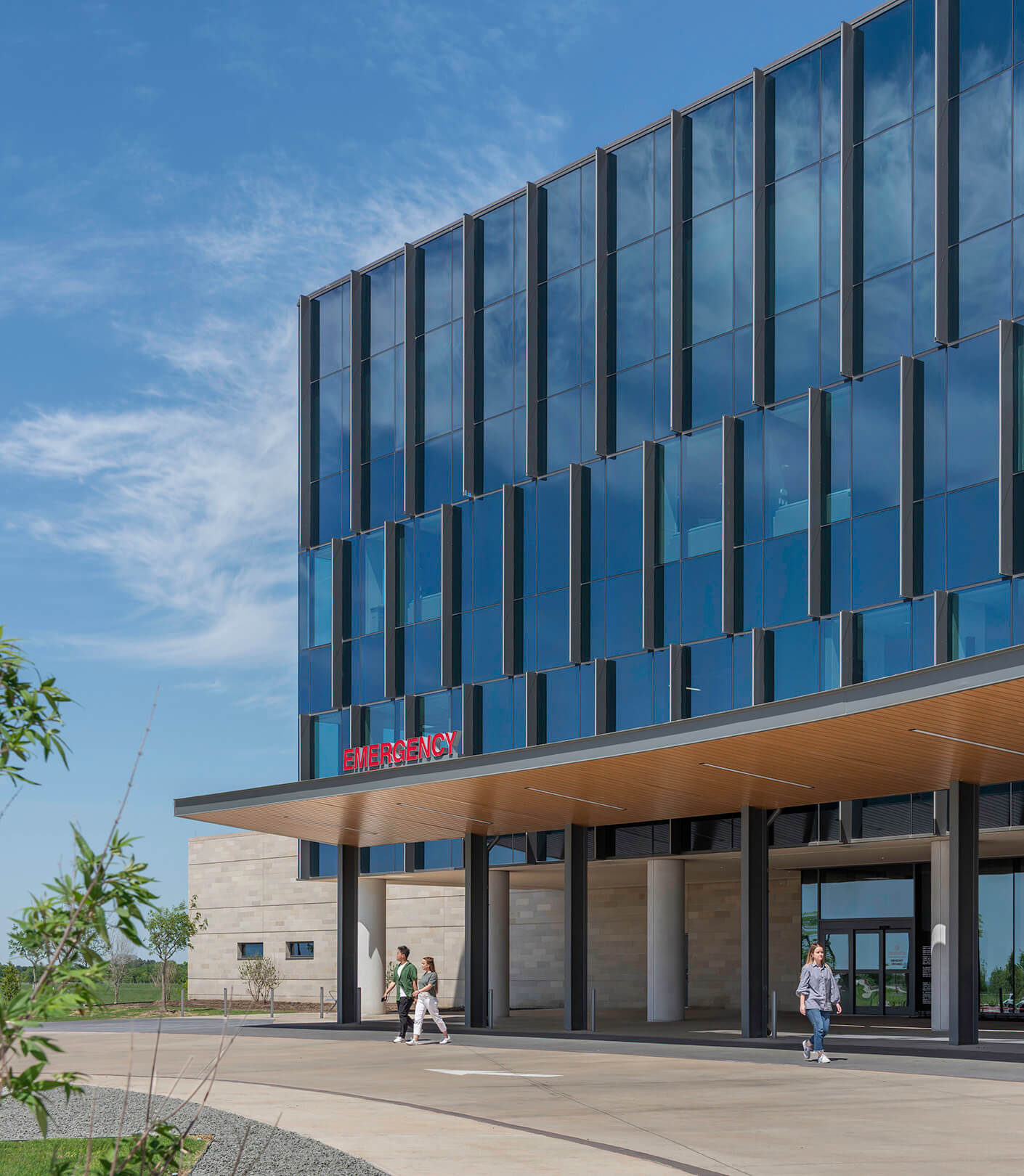
Methodist Celina Medical Center opened in 2025.
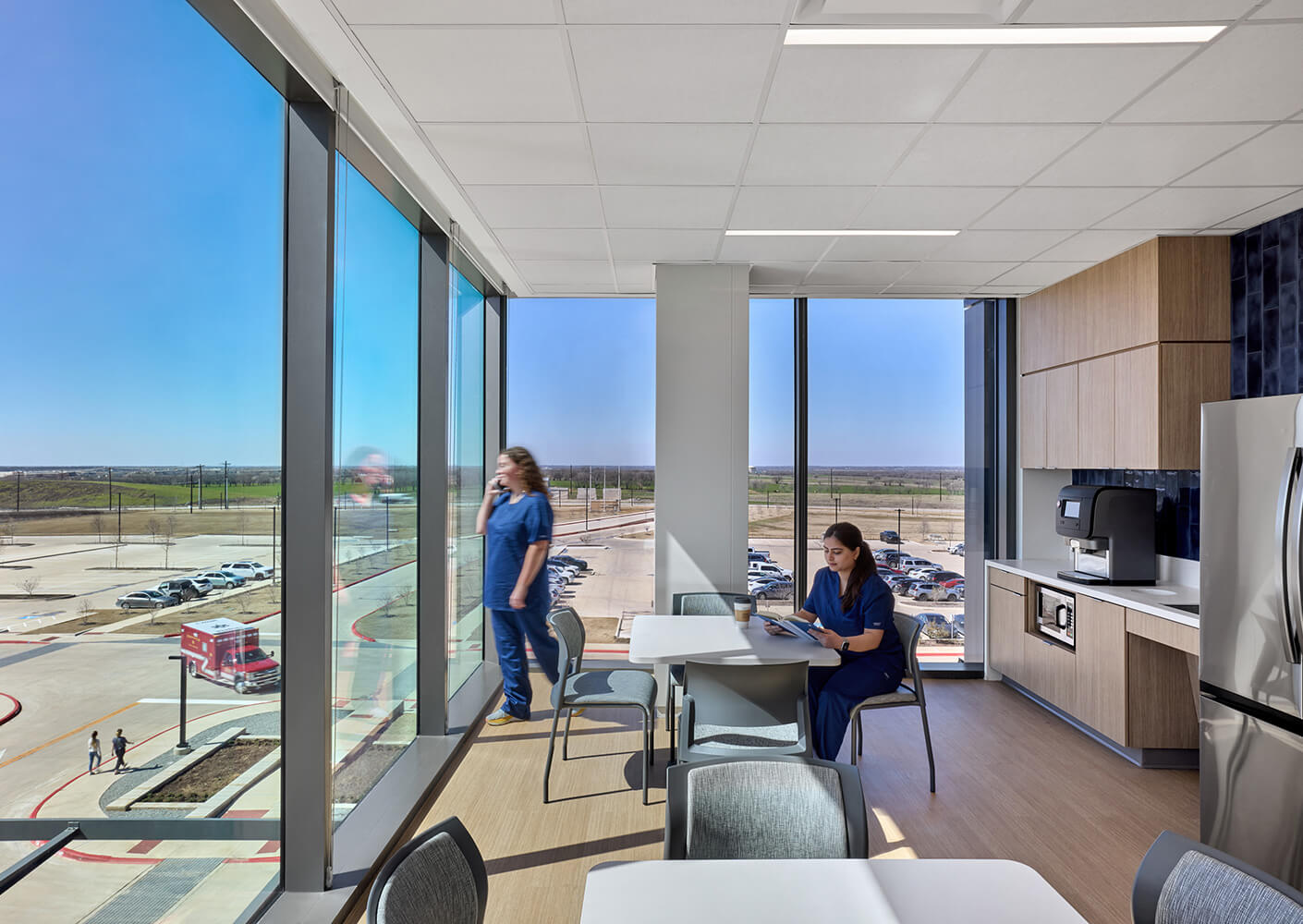
Methodist Celina reserves coveted corner space for staff.
Design Strategy #1
Privacy for the “Always-On” Caregiver in a Close-Knit Community

In smaller towns, caregivers are often deeply embedded in the fabric of community life. Your nurse might also be your neighbor. That closeness brings empathy, but it also means less anonymity and potentially more emotional fatigue. And care providers in any scenario often struggle to “turn off,” with emotional weight compounding over time.

At Methodist Celina, we designed spaces that deliberately acknowledge this emotional labor. The onstage/offstage model defines clear boundaries between patient-facing areas and private staff zones. The design also includes a separate parking lot for staff, helping back-of-house operations flow into the facility away from public view. Corner staff lounges with window walls and abundant daylight offer views and privacy to help providers decompress in a restorative setting.

Design Strategy #2
Peace of Mind

A positive staff experience is a competitive advantage from day one, especially in smaller cities hoping to attract talent—and in fast-growth markets competing for said talent while establishing their reputation.

One tenet of a positive experience is staff safety. In response to growing anxiety around patient and family aggression toward clinical teams, we designed ballistic-resistant Emergency Department reception spaces in Celina, including full-height glazing and counter-height millwork. We also added private Women’s Unit entrances to protect staff. With peace of mind, caregivers can feel secure and free to focus on their work.

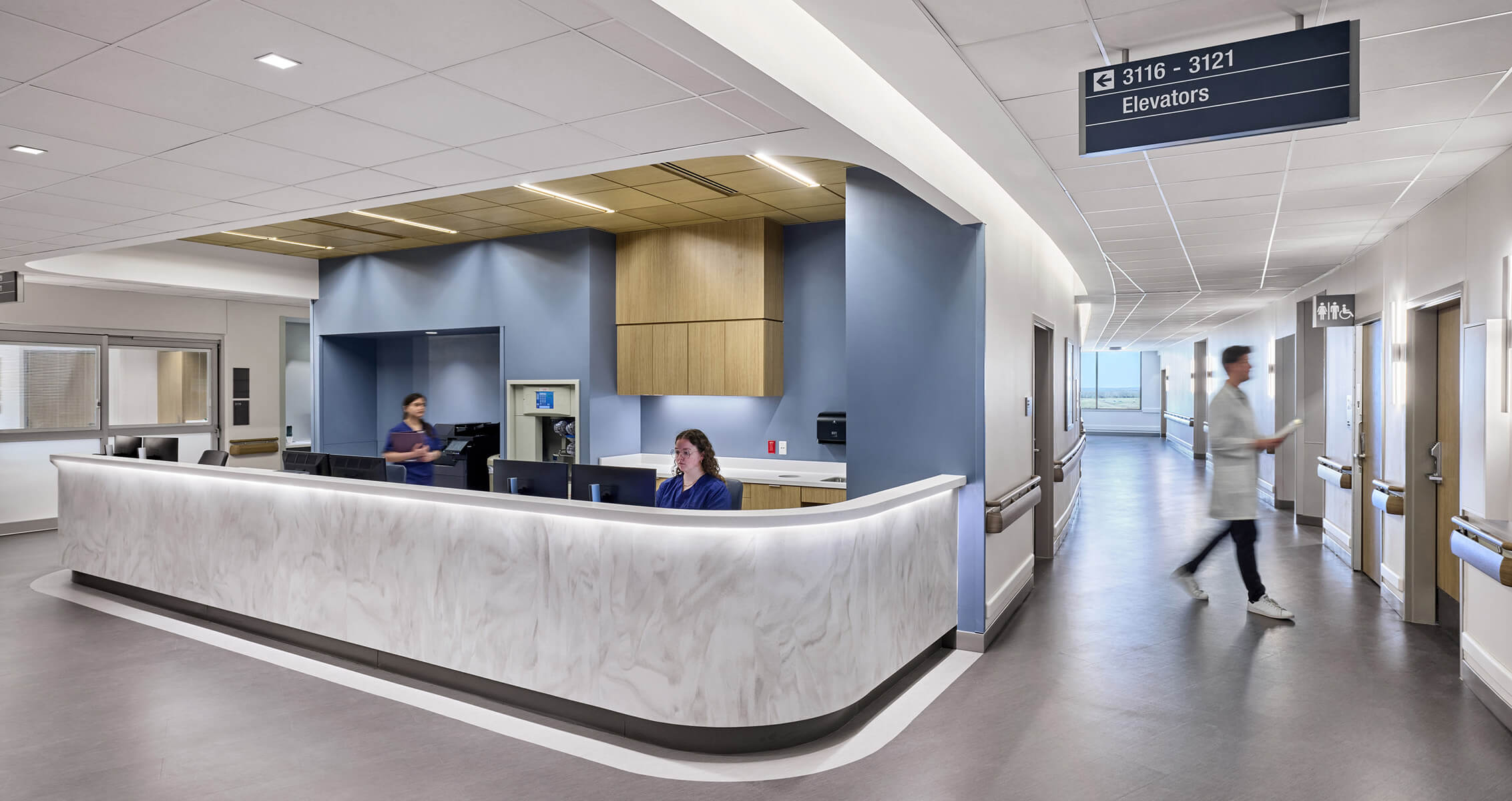
Level 3 ICU nurses' station, color coded in blue
Design Strategy #3
Removing Friction to Attract and Empower Talent

The modern healthcare environment has seen growing pressure for added efficiency. For providers, small friction points add up, eroding focus and introducing frustration. Inefficiencies like far-away supply closets and poor charting setups detract from the meaningful work of providing exceptional care.

When operational excellence is embedded into the design, it becomes an intuitive partner in care delivery and a boon to staff experience. For systems operating in competitive, high-growth markets, this means designing for ease and efficiency is a talent strategy.

At Methodist Celina, we emphasized proximity and predictability with patient and exam rooms that follow consistent layouts, simple color-coded wayfinding, and convenient nurses’ stations. Each medical/surgical patient unit in Methodist Celina is set up with flexibility to serve these and intermediate care patients. If a patient’s acuity changes, they won’t need to be transferred to a separate unit with separate staff. This also helps the hospital assign patient rooms with more flexibility. The 4th level has an identical floor plan, with a racetrack corridor and large, centralized support spaces. As staff circulate the loop, the centralized support means lower travel distances and more efficient workflows, including stocking, communication, and care delivery.

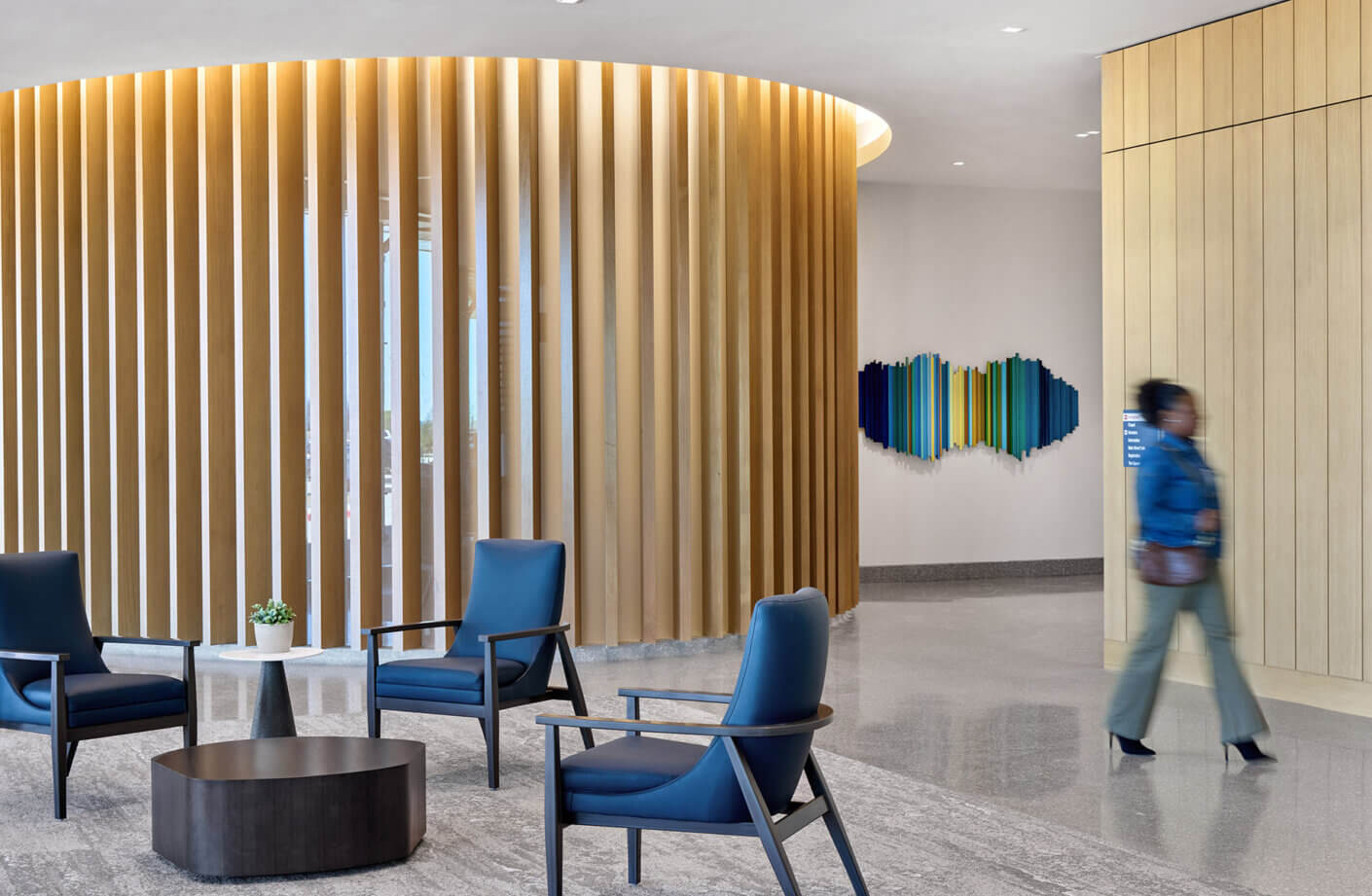
Modern lobby with blue chairs and vertical wooden fins on a curving wall.
Methodist Celina's chapel and prayer room
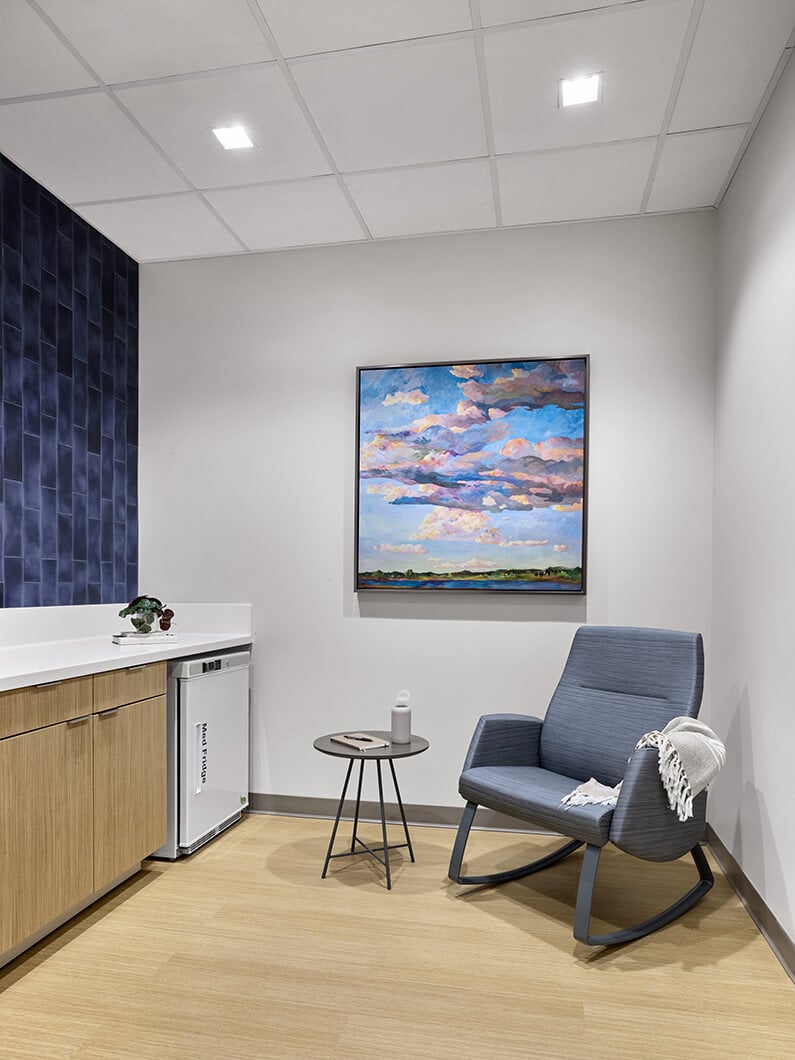
Modern room with blue chair, artwork, and side table.
Lactation room for mothers on staff, found on every floor
Design Strategy #4
Modeling Wellness

The first full-service medical center in an emerging community is a symbol of civic wellness. Designing spaces that support and empower staff allows the hospital’s caregivers to model the principles of holistic health and prevention.

The design of Methodist Celina draws on principles of WELL to champion a healthier experience as a shared value. We used warm woods, biophilic materials, and abundant daylight to create a tranquil, grounded atmosphere that supports well-being for patients and providers alike. Chef-prepared meals served in an oversized dining commons are an intentional departure from sterile breakrooms, meant to emphasize hospitality and connection. The chapel, often an afterthought in hospital design, is instead a thoughtfully planned place of respite, with frosted glass between vertical fins to create a soothing, ethereal glow. By reserving corner spaces for staff lounges, the design democratizes access to daylight and views. This along with wellness and lactation spaces on every floor for staff reinforces the message that staff well-being is essential.

The impact of the built environment on staff wellness is especially important for fast-growth cities where these metrics shape talent performance, recruitment, retention, and a new hospital’s developing reputation. From access to natural light and better nutrition, to activating outdoor spaces and circadian-tuned lighting, design has a spectrum of solutions to improve staff satisfaction and elevate patient care.

Looking Ahead

Methodist Celina demonstrates what thoughtful architecture can do in fast-growth contexts: build resiliency, inspire loyalty, and model wellness at every scale. As new cities emerge across Texas and beyond, the future of healthcare design will be shaped by how deeply we care for those who care for everyone else.