Despite efforts, public space is still failing to truly engage the communities it should be sustaining. MIT’s Senseable City Lab exhibited Eyes on the Street, concerning findings from a comparison study of human behaviour in public space which revealed that people walk 15% faster through public space and that lingering has reduced by half. Against this social decline, new forms of community engagement are emerging.
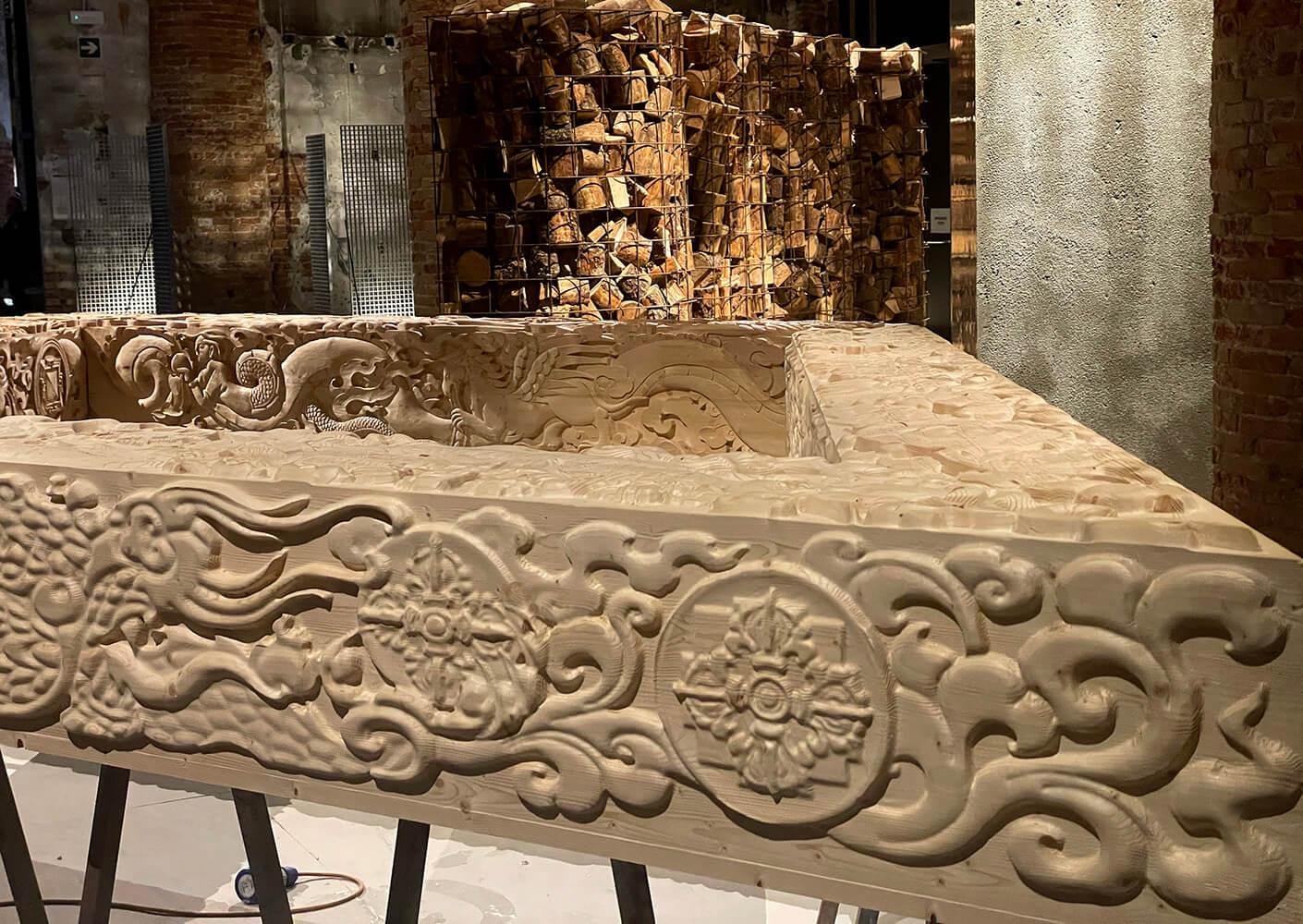
The Holy See Pavilion establishes a community hub out of a site under renovation, elevating conservation work into a spectacle that people are invited to view and participate in. Architecture is framed as a living practice of repair and collective care, expanding beyond the bounds of the building to nurture communities and ecosystems. The exhibit curates diverse opportunities for engagement: craftsmanship in action, musical performances, workshops in restoration, and an open kitchen serving locally sourced food, ultimately fostering an open platform for collaborative participation. The building counters the notion that construction sites should be taped off and closed, instead proposing an open and transparent site of activity, championing the concept of the ‘meanwhile space’ that utilises its transitional stage as something to be celebrated. By opening processes to public discourse and insight, it establishes a collective creativity, turning the space into a civic centre where public engagement creates value from transience.
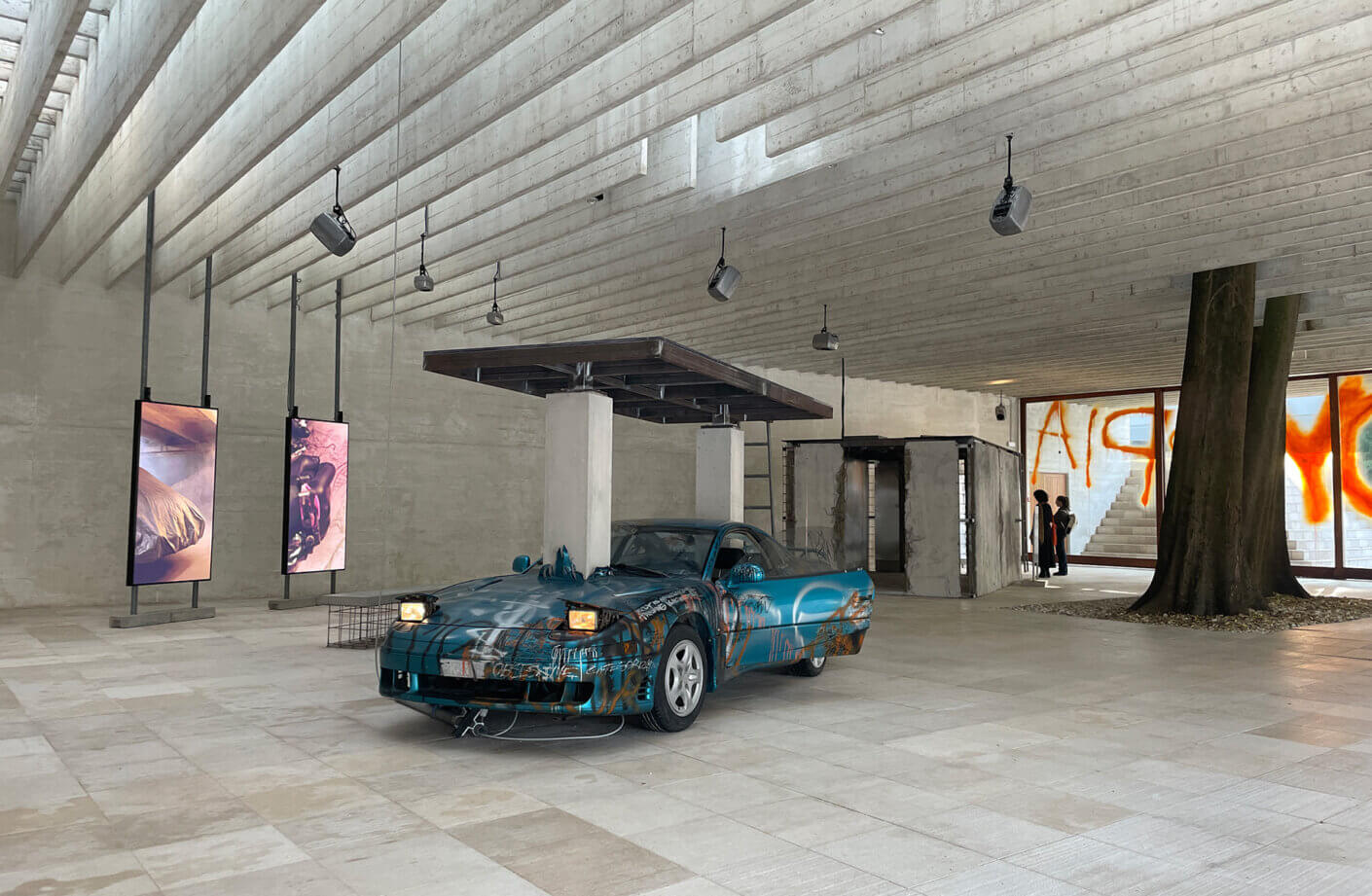
Similar spectacle has been made of the transformative stages of construction with the Denmark Pavilion making an exhibition out of the necessary renovation work on its building in the Giardini. Instead of hiding their process from view, they circumvent omission by making a show of their efforts, celebrating their site and the materiality of design.