Head to the Heart January 14, 2026

Two London life sciences labs show the importance of place in the talent race

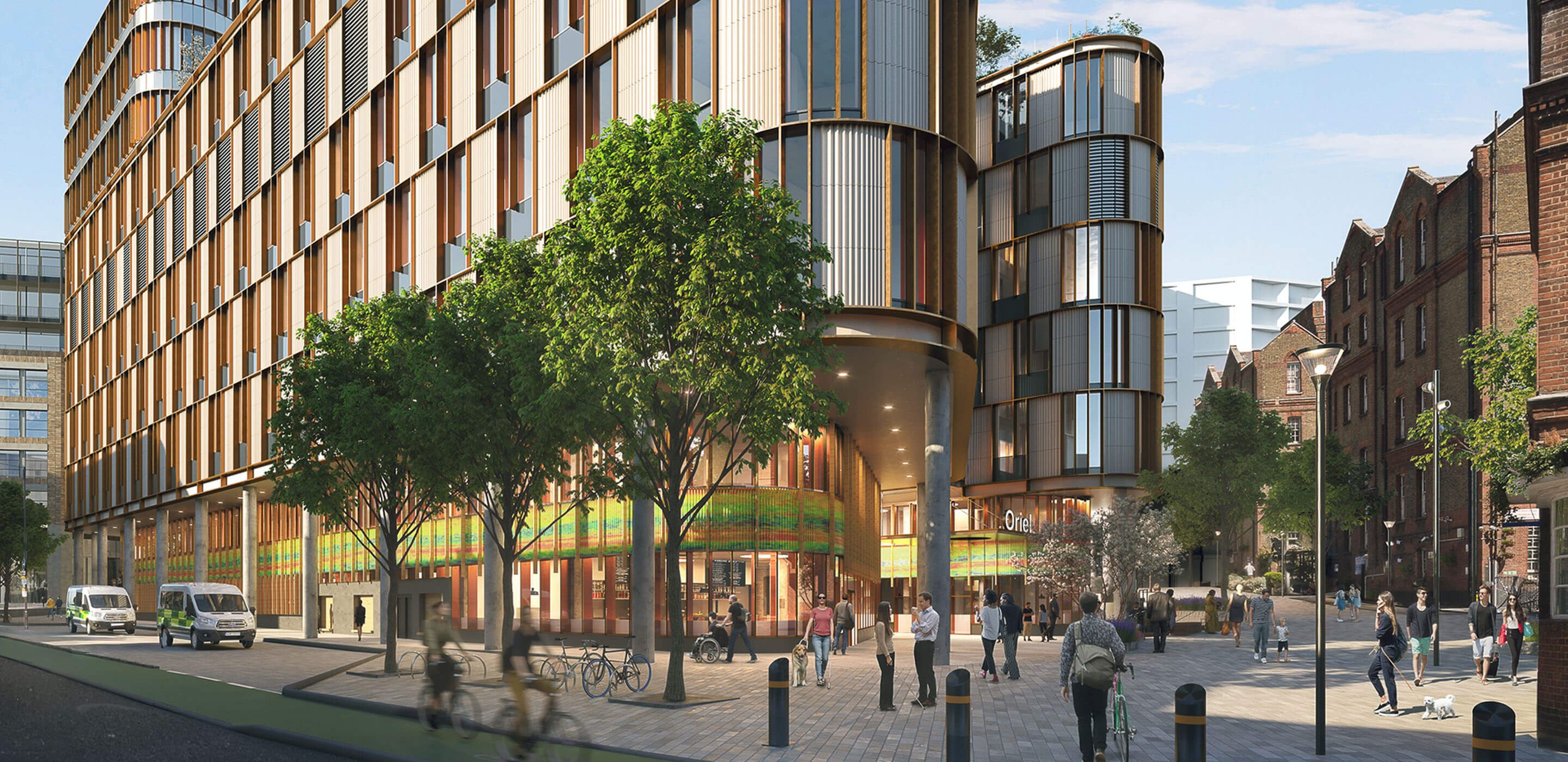
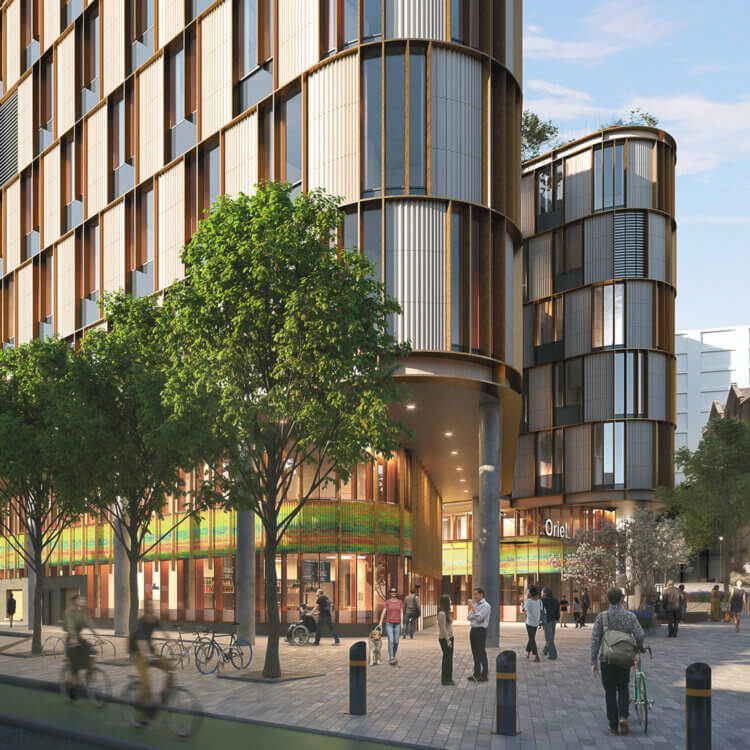
Modern lab building with glass facade, people and bicycles in foreground. A sign says
In today’s life sciences sector, the global competition for top talent is fierce. To stay in the race, organizations need to go beyond offering generous salaries and career opportunities. They must also consider the power of place: Now, where science happens matters as much as how it happens.

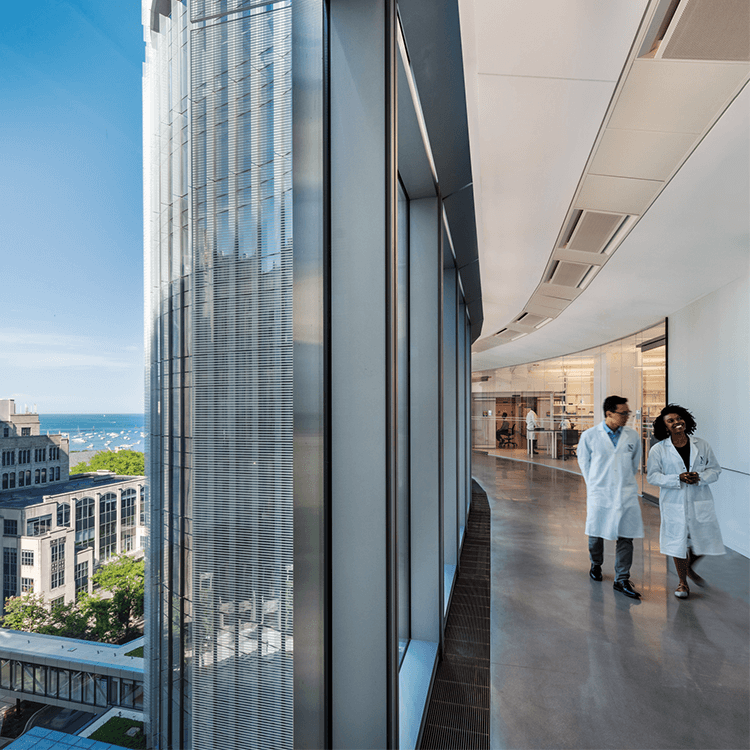
Labs and innovation districts that prioritize design and connectivity are emerging as a critical element for attracting and retaining the best minds. These environments are no longer cloistered campuses on the outskirts of cities; they’re vibrant, integrated urban hubs that support investigation, collaboration, and well-being.

Increasingly, professionals want livability, purpose, and balance. The most successful campuses offer spaces that are sustainable, adaptable, and inclusive of all stages of life and career. Publicly accessible areas, visible laboratories, green spaces, and dynamic interiors all contribute to making labs more open, engaging, and inspiring. Creating places that connect with both the people who work there and the surroundings has become essential for organizations that want to lead the way in life sciences.
 

These two laboratory campuses show how powerful design can be a strategic advantage.
Tribeca
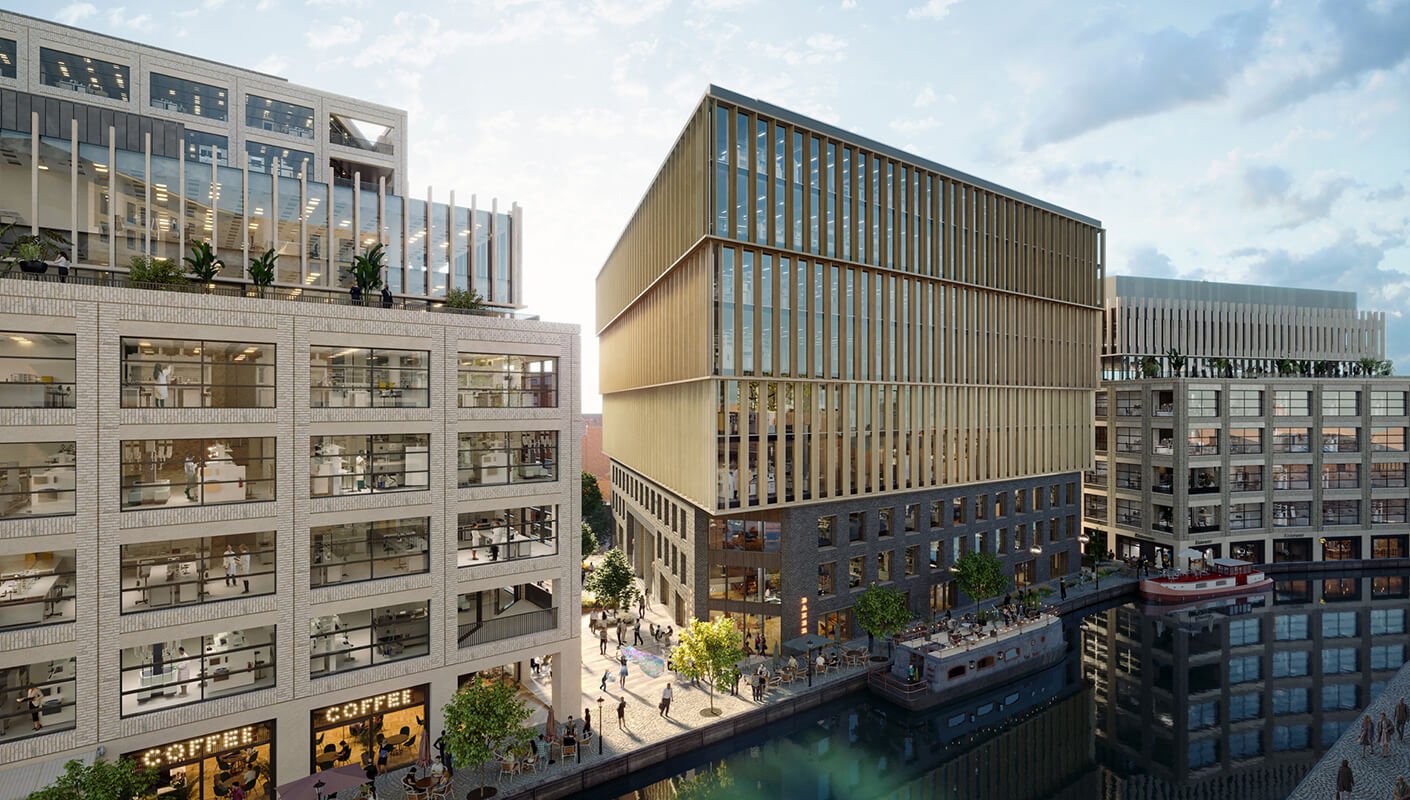
Modern office buildings along a riverside with people and cafes.

Anchored in the heart of London’s King’s Cross Knowledge Quarter, Tribeca was designed as a cohesive, mixed-use ecosystem. Integrating nearly 1 million square feet of cutting-edge laboratories, adaptable workspaces, and vibrant public amenities, it will soon occupy four architecturally distinctive buildings. Its location—steps from leading institutions like the Francis Crick Institute, the London BioScience Innovation Centre, and University College London—offers tenants access to world-class facilities and a collaborative research community.

What sets Tribeca apart is its people-first approach. Developed with input from operators, the laboratory and office spaces are tailored for seamless scientific workflows, with floor plates of various sizes to support companies at every growth stage. “The businesses that have already moved in have noted how important it is to be in a building that was purpose-built as a laboratory, with the servicing and operating considerations taken into account at the design stage,” says Thomas Partridge, development and design director at real estate firm Reef + Partners. WELL-certified buildings, fitness studios, and curated ground-floor retail, dining, and leisure facilities all contribute to well-being. The newly opened Towpath Café in the Apex, the campus’s first building to be completed, further embeds the campus into the local community.

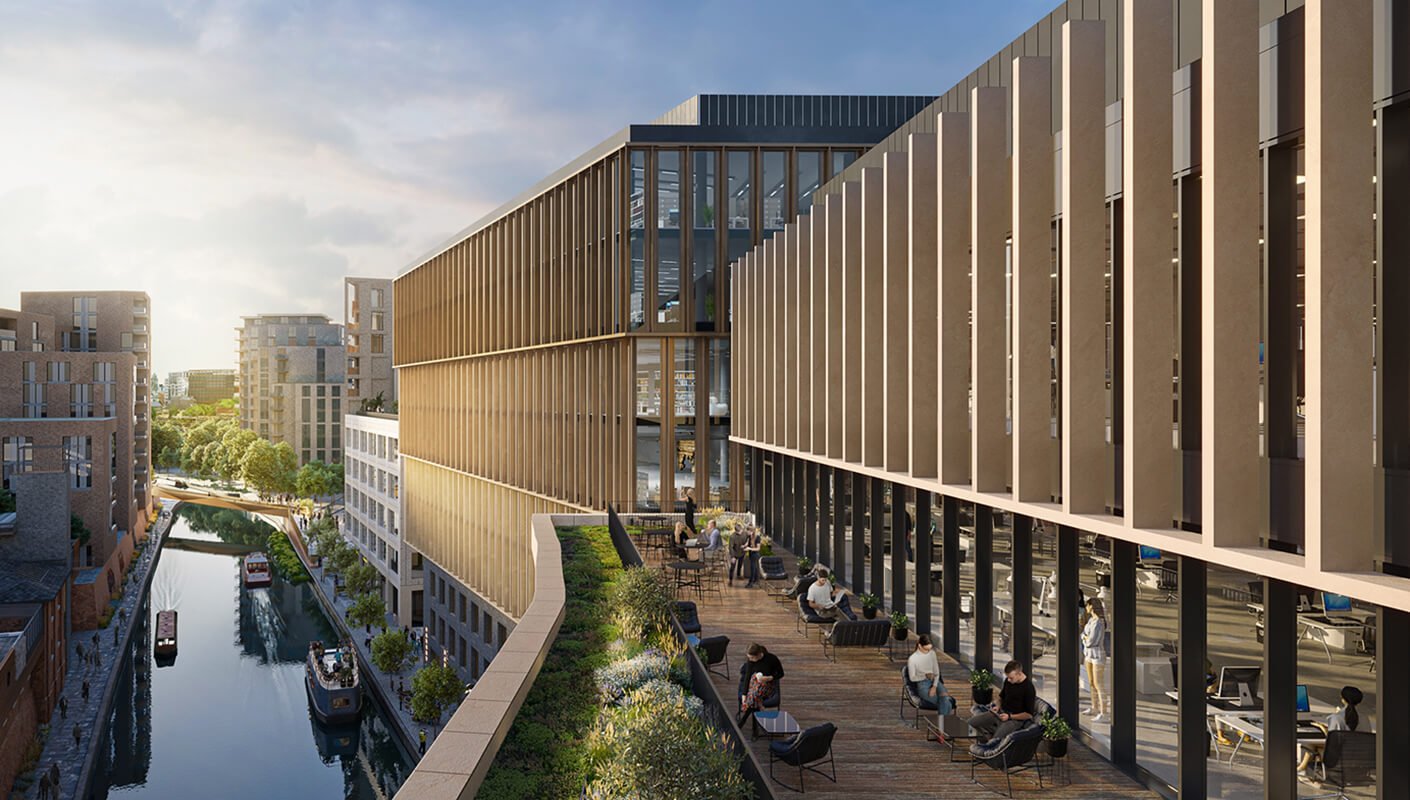
Modern office terrace overlooking city canal and buildings at sunset.

Tribeca’s richly landscaped public realm features green spaces, a central square, and new paths that improve walkability and connectivity—including a footbridge linking to King’s Cross. By blending high-performance infrastructure with urban energy, livability, and strategic partnerships, Tribeca is redefining the urban life sciences campus now, and into the future.

“Our aspiration for the second phase,” says Partridge, “is to attract a range of tenants and to continue existing partnerships as well as building new ones, so that a true campus ecosystem can emerge within the Knowledge Quarter.”

Oriel
Modern lab atrium with curved architecture and people walking.

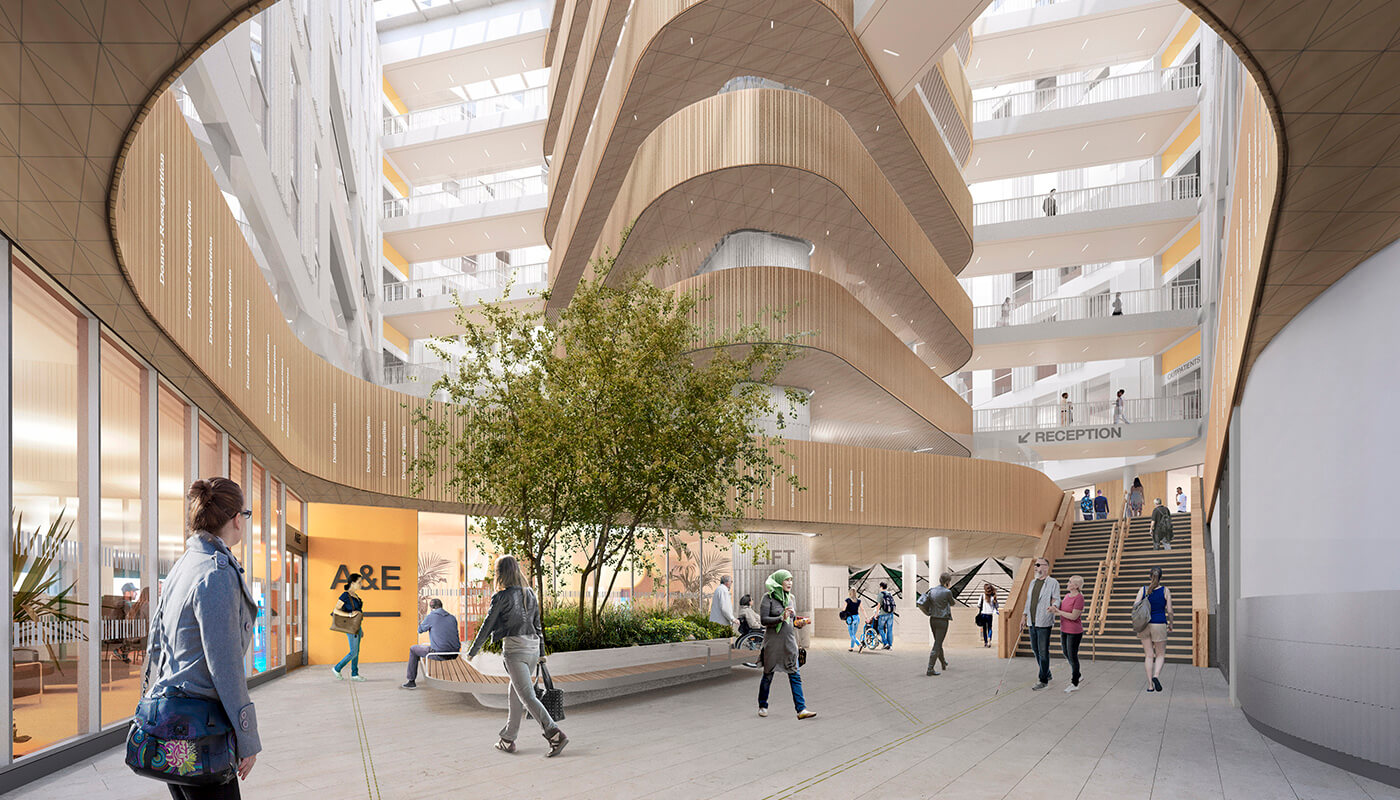
Another forthcoming addition to the evolving Knowledge Quarter is a new center for advancing eye health designed with people—and connection—at its core. The project to build the center is known as Oriel and is a joint initiative between Moorfields Eye Hospital, UCL Institute of Ophthalmology, and Moorfields Eye Charity. The center—a campus under one roof—will unite world-class eye care, research, and education with a strong focus on well-being, sustainability, and community engagement.

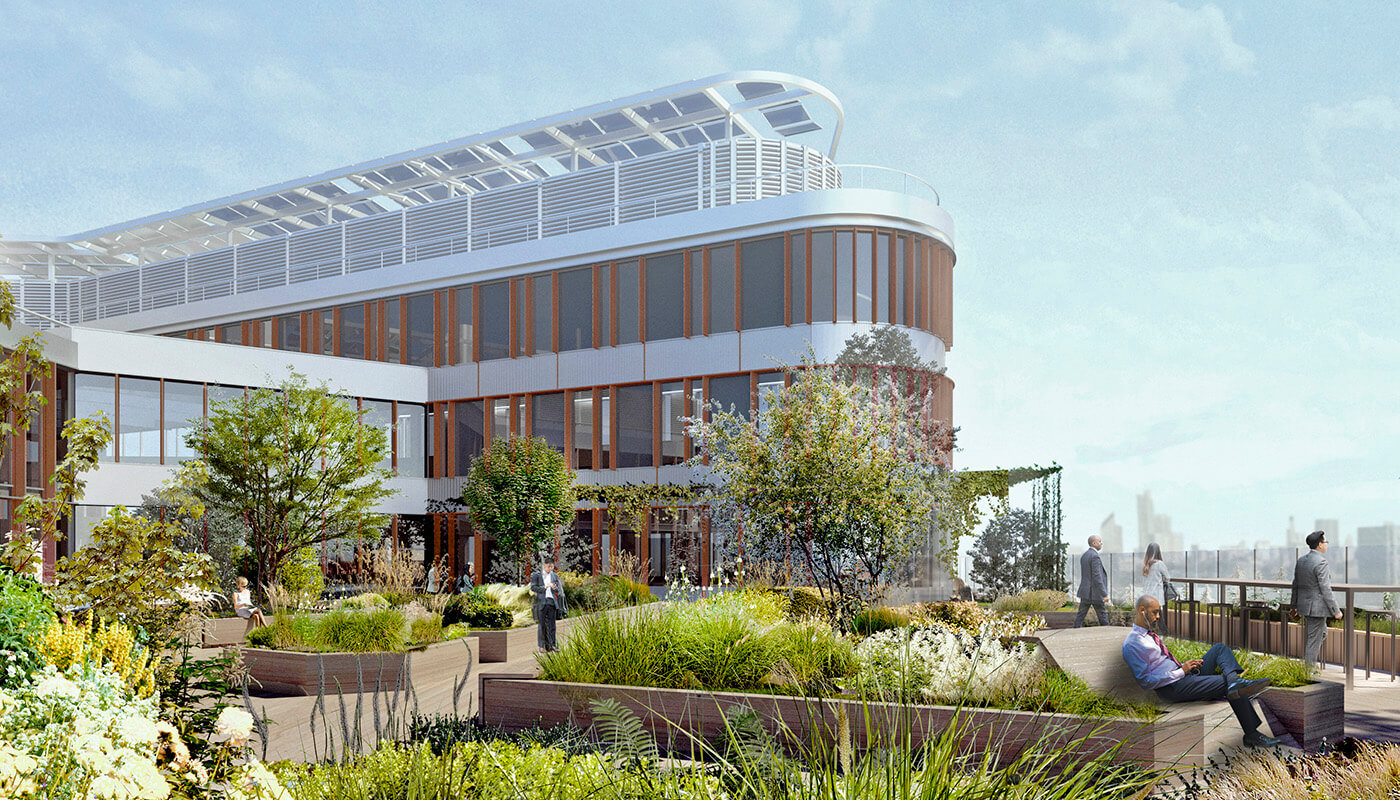
While focused on patients, the center is equally aimed at attracting and supporting the best ophthalmic scientists, educators, and clinicians. A spacious central atrium and distinctive mini-tower—a vertical stack of meeting, waiting, and study spaces—encourages collaboration, visibility, and intuitive wayfinding. Inside, natural materials, integrated planting, and finely tuned acoustics create a calming, sensory rich atmosphere that supports concentration and reduces fatigue. A landscaped roof terrace provides outdoor spaces for socializing, learning, and relaxation, with panoramic views of London. “Our new center will empower innovation in the future of eye health through its design and by bringing together the hospital, university, and external partners,” says Andrew Dick, director of the UCL Institute of Ophthalmology. “By fostering collaboration between scientists, clinicians, patients, and the public, it accelerates the discovery pipeline—delivering meaningful benefits to both patients and society.”

Modern rooftop garden with urban skyline view and people relaxing.

Sustainability is embedded throughout with a strategy that anticipates a renewable energy future and embraces circular economy principles. The center will also connect to the neighborhood. Situated between the historic St Pancras Churchyard and the dense urban fabric of North London, the building will carefully balance heritage and modernity through its form and materials as well as its richly landscaped public realm. And the design supports the project’s civic mission: to create an open, welcoming hub that invites the community in through exhibitions, art, and public science. It’s a place envisioned for innovation and people to thrive together well into the future.