Perspectives February 20, 2026

The Brain Capital Framework: A Global Movement to Build Stronger Brains

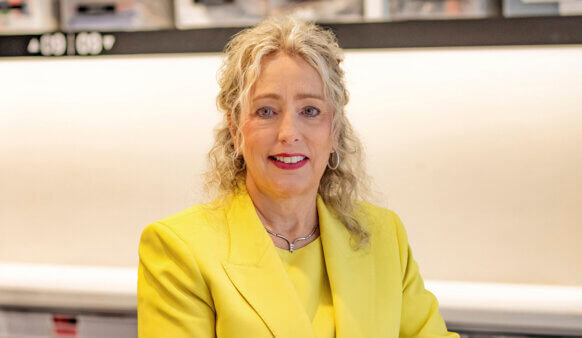
By Debbie Beck, MPA, Ed.D., FACHA

Researchers today caution that while our overall lifespans are increasing, the number of years we live in good health—our “healthspans”—are not advancing at the same rate, and we are witnessing a rise in neurodegenerative diseases linked to aging. Around the world, populations face new challenges to behavioral health, often caused by social media, isolation, economic pressures, climate change, and related issues. Artificial Intelligence is likely to worsen the situation, while financial instability threatens people’s ability to afford healthcare and labor market issues hinder economic growth and prosperity.

In light of these trends, global leaders are exploring ways to better support people while promoting economic and social growth. They are turning to Brain Capital to guide these efforts.

Brain Capital refers to the combined strength of brain health and skills—the cognitive, emotional, and social abilities that enable individuals to learn, work, and contribute to a thriving society. As we learn more about the costs of cognitive decline, burnout, and mental health, the focus shifts to the Brain Economy—a development approach that actively builds Brain Capital rather than depletes it. This involves evaluating environments, systems, and policies for their ability to support productivity, focus, resilience, creativity, and long-term human performance. This idea is endorsed by the World Economic Forum, the United Nations, and many public- and private-sector leaders.
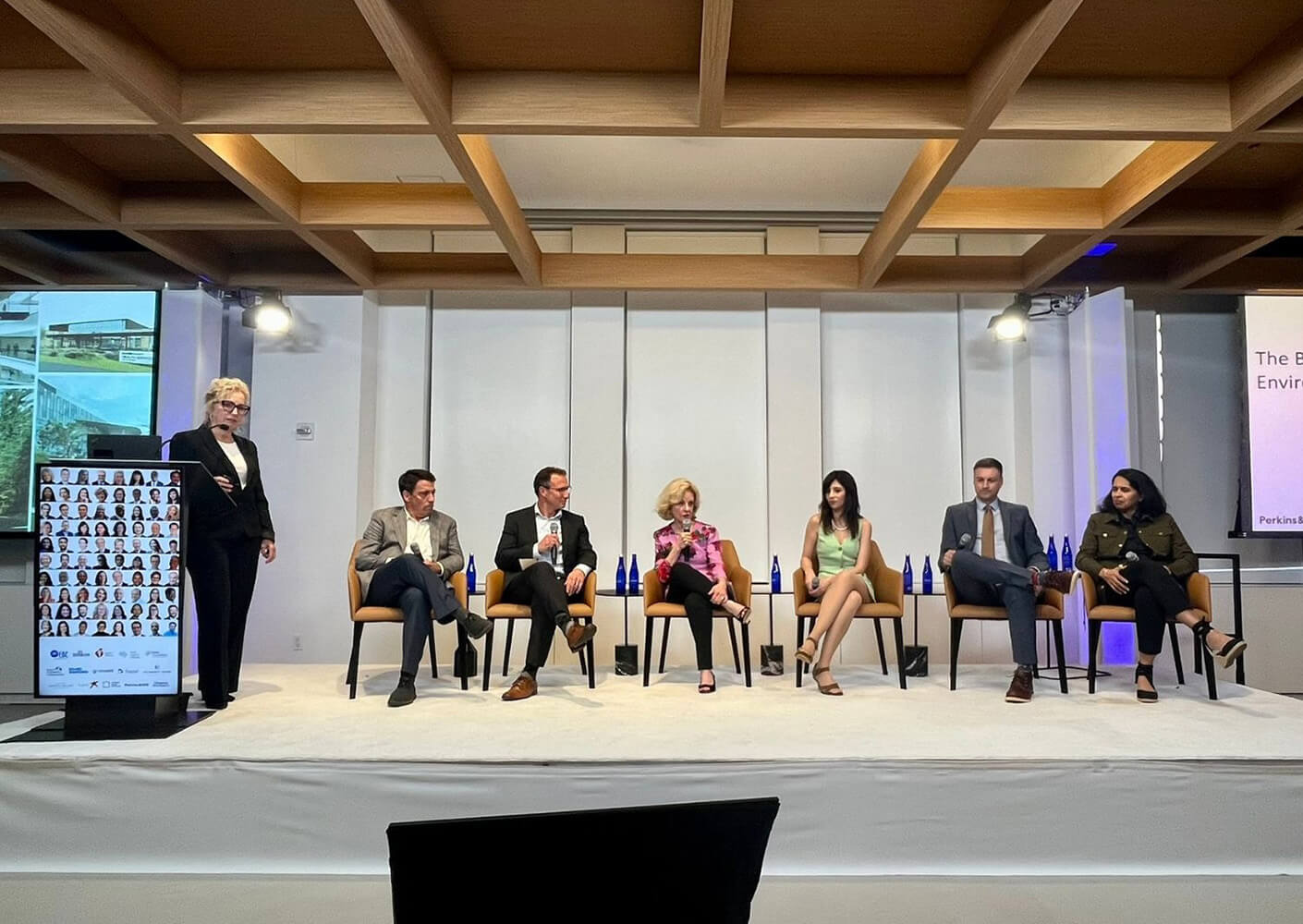
Dr. Debbie Beck, Dr. Toby Ewing, Devin Kleiner, Dr. Sandi Chapman, Hala El Khorazaty, Dr. Mark Chrisman, and Vandana Nayak at the 2025 Brain Days Science Summit during UNGA80.

As these ideas gain momentum, Perkins&Will is receiving recognition for our leadership in designing to support Brain Capital. We are members of the Building Brains Coalition and seek to advance the built environment through applied neuroscience research, technical innovation, and policy advocacy, with work spanning universities, think tanks, real estate, and financial institutions.

The firm was recently invited to present at the 2025 Brain Days Science Summit in New York City—a sponsored event during the 80th United Nations General Assembly—by the European Brain Council, the Brain Capital Alliance, the Davos Alzheimer’s Collaborative, and the Meadows Mental Health Policy Institute. At this forum, global leaders in neuroscience, health, economics, public policy, and design explored concerning trends and identified opportunities to respond.

Our multidisciplinary team contributed a session focusing on building resilient minds and brain skills through integrated design in places where people live, work, learn, play, and heal.

Building Resilient Minds Through Science, Design, and Policy

I led the Perkins&Will team alongside Hala El Khorazaty, Devin Kleiner, and Vandana Nayak, and was supported by our longtime partner, Dr. Mark Chrisman, of Henderson Engineering. Dr. Sandi Chapman from the University of Texas Center for Brain Health and Dr. Toby Ewing from the Stanford School of Medicine joined the panel to provide expertise in neuroscience and public policy.

As Dr. Chapman pointed out, our brains—in conjunction with the rest of our body—are essential for keeping us upright, thoughtful, and functional. But unlike our hearts, lungs, and backs, we often neglect caring for our brains, skipping periods of rest and recovery. Continuous multitasking, frequent distractions, and insufficient deep sleep hinder healthy brain function and aging. Just as we invest in the health of our hearts and lungs, we must also actively nurture our brain’s capacity and well-being. Undervaluing our brains can lead to burnout, poor performance, and physical and mental health challenges.

After setting the stage with this important neurological and sociological context, Perkins&Will presented three real-world examples of spaces that actively support Brain Capital through design.

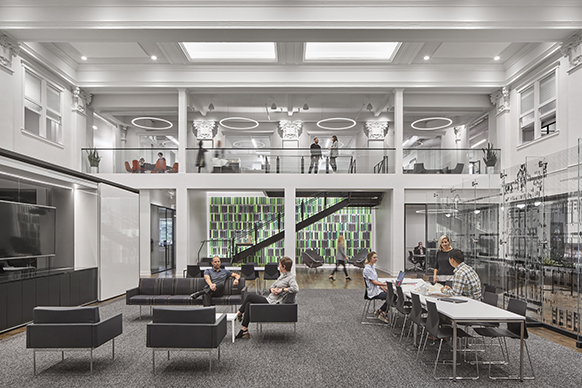
Perkins&Will’s examples on healthcare delivery and higher education demonstrate how we are already integrating the science of brain health and brain skills into our everyday lives.

Dr. Toby Ewing

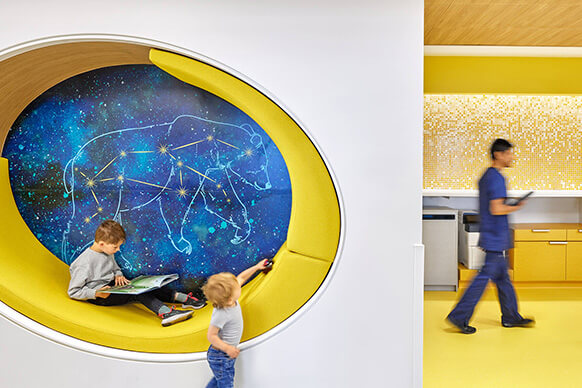
Nicklaus Children's Hospital, Kenneth C. Griffin Surgical Tower
Miami, Florida
Supporting Children’s Empowerment in Miami

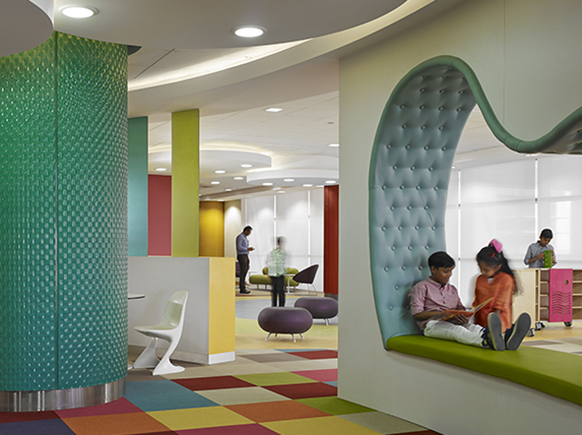
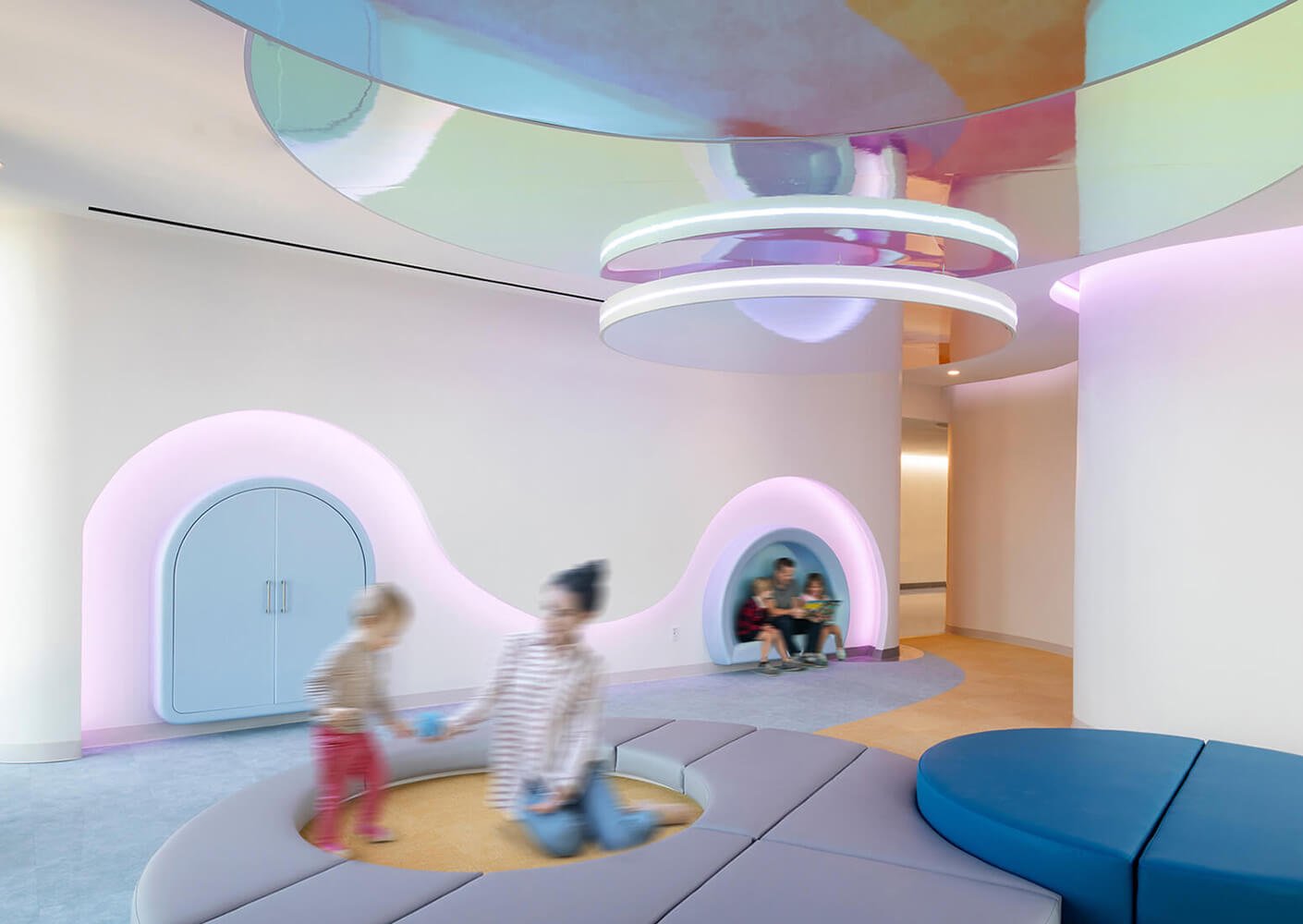
The Nicklaus Children’s Hospital in Miami demonstrates how the built environment can actively enhance children’s brain health, resilience, and empowerment, positioning design as a catalyst for healing and cognitive well-being. In this 120,000-square-foot surgical tower, our team emphasized environments that support developing brains, offering young patients a sense of control, predictability, and safety through neuro-supportive, child-centered design. Thoughtful use of light, color, spatial clarity, and play-rich zones reduces stress responses, strengthens emotional regulation, and supports healthy neural development—core principles of trauma-informed care.

By minimizing sensory overload, promoting choice, and creating emotionally safe spaces, the design helps children feel seen, respected, and secure. These trauma-informed design principles are essential because they foster a sense of safety and support healing, confidence, and lifelong cognitive well-being for children in healthcare settings.

Promoting Student Success in Dallas

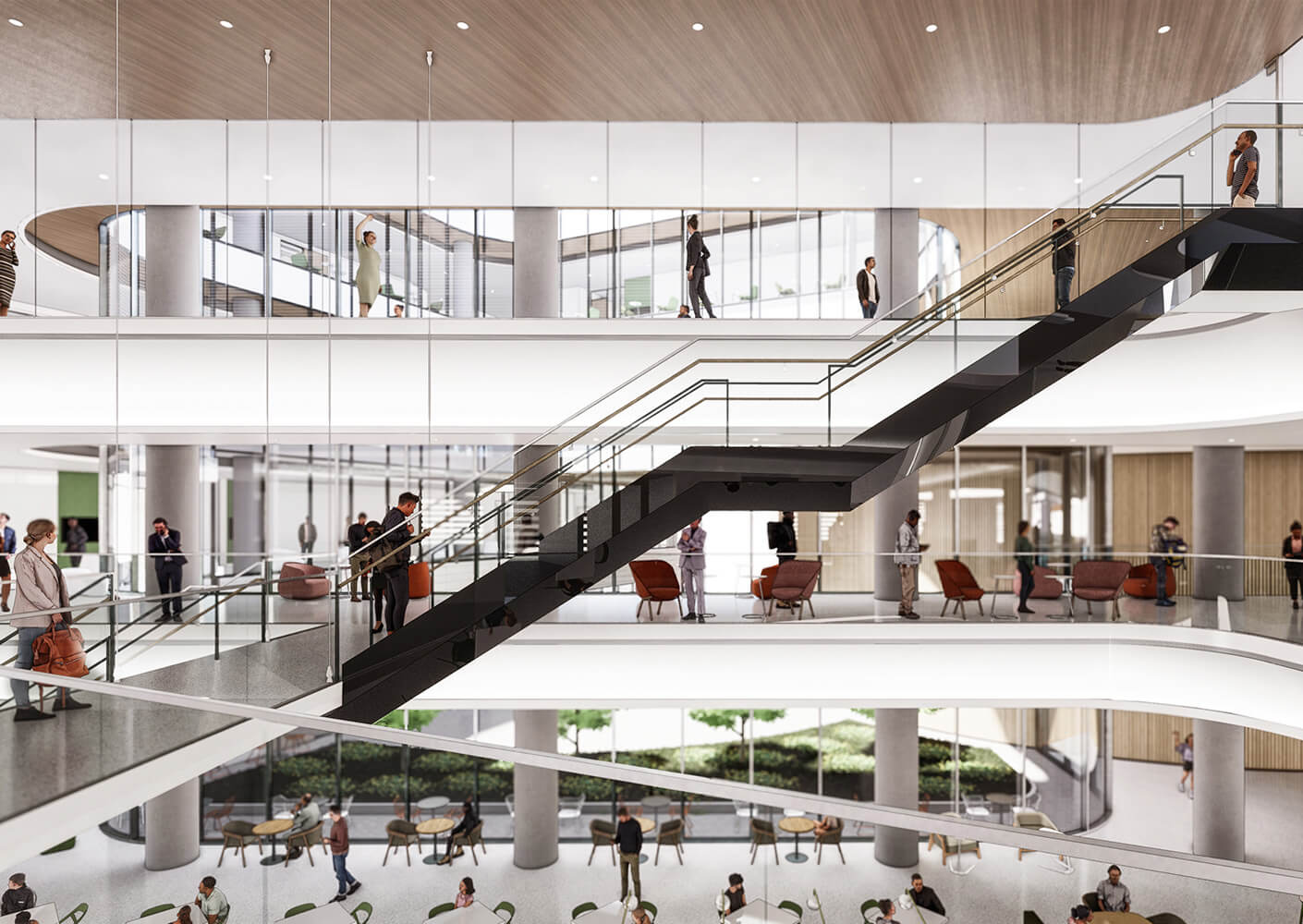
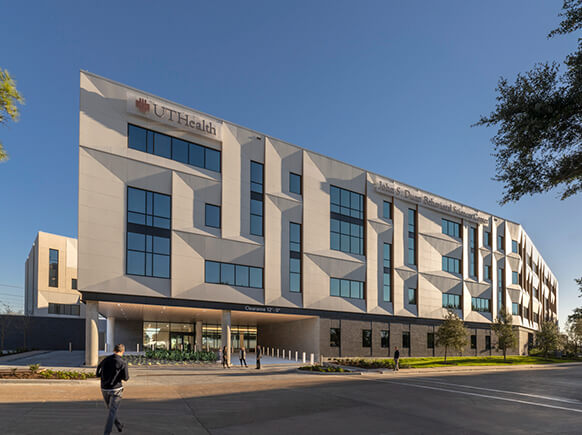
The University of Texas at Dallas Student Union illustrates how the built environment can meaningfully enhance brain health, resilience, and student empowerment through designs that support learning and emotional well-being. In this project, our team used strategies such as clear wayfinding, inclusive spaces, and settings that accommodate diverse social needs to promote a sense of belonging, safety, and agency. Abundant daylight, biophilic elements, and calming sensory conditions reduce stress, boost focus, and strengthen healthy neural functioning. The project reinforces that when we design for empowerment and brain health, we support students’ capacity to learn, connect, and thrive.

University of Texas at Dallas, Student Union
Dallas, Texas
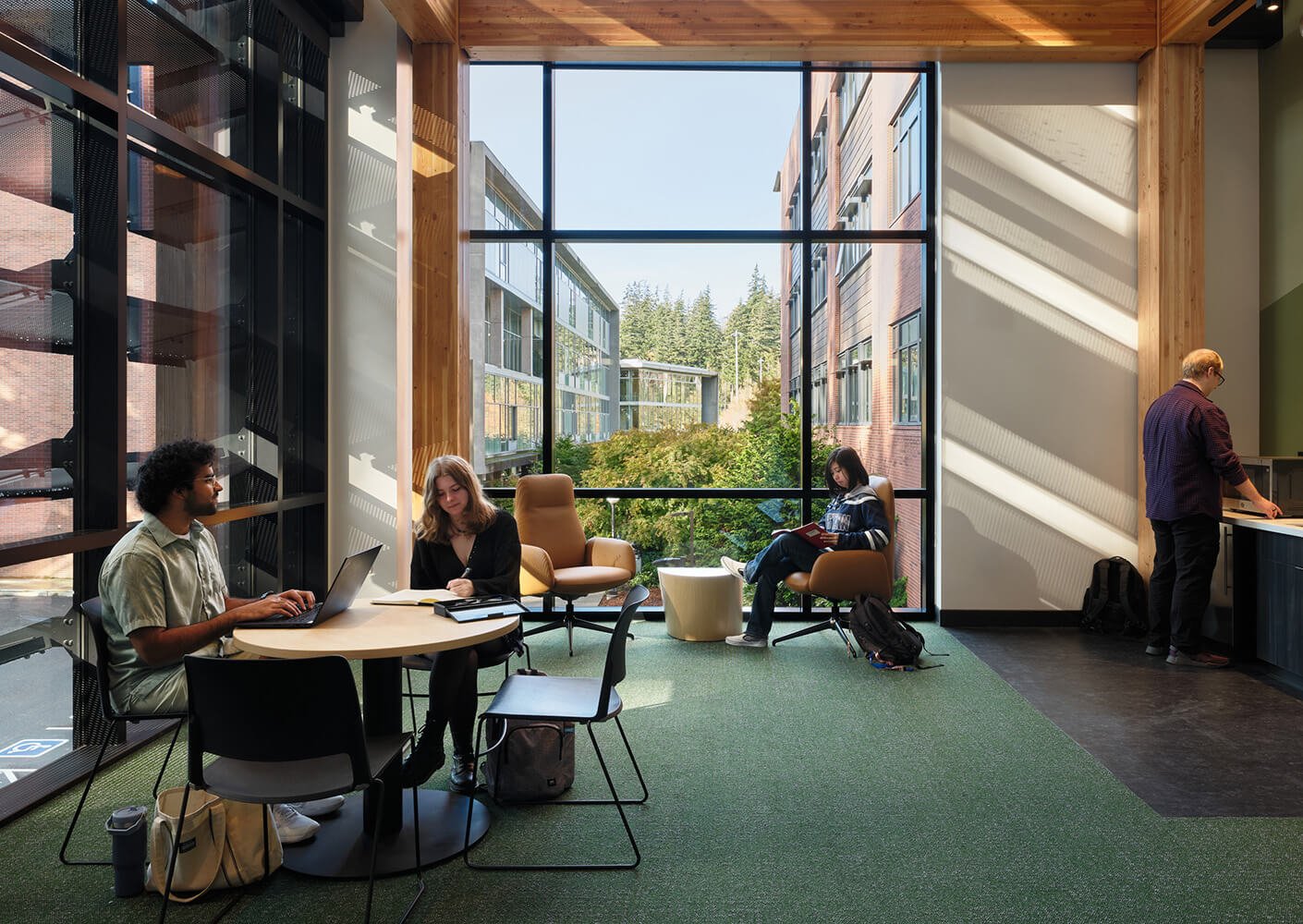
Western Washington University, Kaiser Borsari Hall
Bellingham, Washington
Enhancing Resiliency and Learning in Washington State

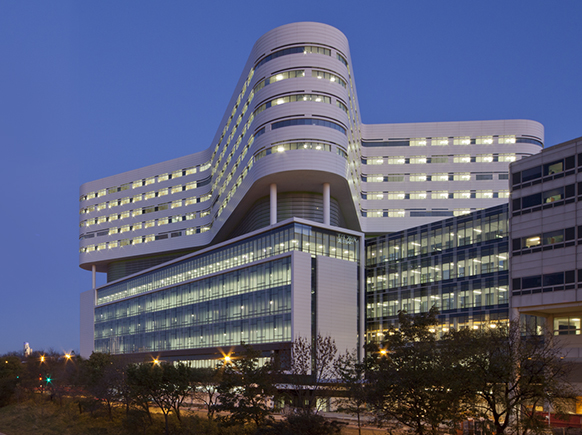
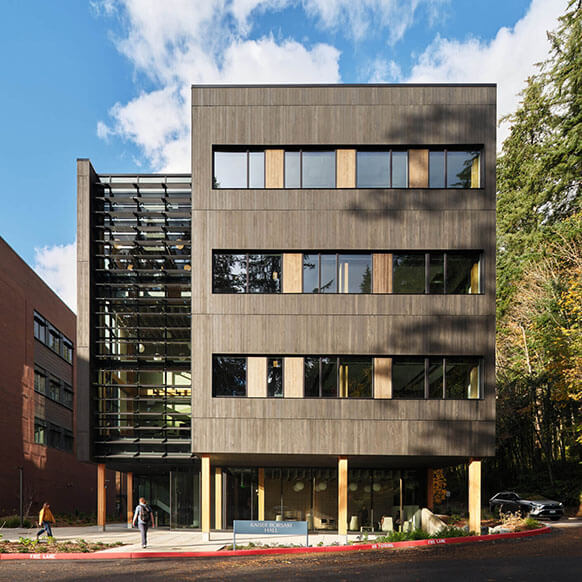
Kaiser Borsari Hall at Western Washington University demonstrates how thoughtful design can elevate student and faculty learning outcomes by creating environments that reduce stress and actively support brain health. Our team emphasized spaces that promote clarity, safety, and dignity, particularly for individuals navigating complex academic, research, and personal demands. Through natural light, restorative landscapes, sensory-responsive settings, and intuitive spatial organization, the design helps regulate stress, improve focus, and enhance cognitive performance. This example reinforced our message that designs that uplift learners and educators alike can strengthen academic communities, and support success at every level.

Translating Brain Capital Concepts into Action

Building on the UN convenings, Brain Capital leaders are now laying the groundwork for investments, research, and public policy. Following the World Economic Forum (WEF) in January 2026, leaders plan to publish the first Brain Economy Impact Report through the WEF Brain Economy Action Forum and establish a Global Brain Economy Institute to coordinate and accelerate brain-based innovation worldwide. Simultaneously, leading neuroscientists are announcing a Brain Economy Research Strategy that ties opportunities and risks to global prosperity to the collective health and productivity of the human brain.

In architecture and design, as Dr. Toby Ewing discussed at the UNGA80 panel, we can create immediate impact by applying the science of design, materials, spatial engagement, social connectedness, and the interaction between built and natural environments to support brain health and cognitive skills. He stated, “The challenges and opportunities ahead are to bring the recognition of Brain Capital and the tools offered by architecture and design into impactful spaces where we live, work, and learn. Schools, workplaces, public transportation, and other environments that tax our brain health and skills have the most opportunity to become resilient spaces.”

We proudly lead the way in designing innovations that enhance brain health and skills. When Dr. Harris Eyre, representing the Brain Capital Alliance, Rice University, and The University of Texas Medical Branch, invited us to join the UN event, he emphasized that addressing global challenges—such as rising neurodegenerative diseases, threats to economic prosperity, and potential declines in collective brain health—will require leadership from both public and private sectors. We are empowered by the community’s recognition that architecture, with its capacity to translate scientific insights into the spaces we inhabit, is a crucial partner in reaching Brain Capital objectives.

As we look ahead, advancing Brain Capital is more than a health imperative—it is an economic, social, and moral responsibility. Perkins&Will is committed to translating neuroscience, policy, and lived experience into environments that strengthen human potential across generations. Through sustained research, cross-sector collaboration, and design leadership, we will continue to champion spaces that protect cognitive well-being, foster resilience, and unlock creativity. By placing brain health at the center of how we plan, build, and invest, we have an opportunity to shape a future in which individuals and communities are not only healthier, but more capable, equitable, and prepared to thrive in an increasingly complex world.