Copenhagen Mall
As Copenhagen has transformed from a declining port city to a model of urban regeneration, its waterfront and former harbor districts have become lively destinations for shopping, dining, and recreation. One of the most dramatic changes has taken place at Copenhagen Mall, which once stood isolated on the post-industrial waterfront, disconnected from the city and turning its back on harbor views.
An increasingly vibrant public realm emerged around the mall as new housing and office developments took shape and as public transit and bicycling infrastructure expanded. But the building’s blank façade blocked foot traffic instead of welcoming it.
Designers at Schmidt Hammer Lassen, our Copenhagen studio, won the competition to reshape Copenhagen Mall, and their master plan proposed fundamentally repositioning the building’s engagement with the city. The plan reorients the mall toward the canal and opens it to broad paths along the waterfront to create a richer, more generous ground plane or “edge zone.”
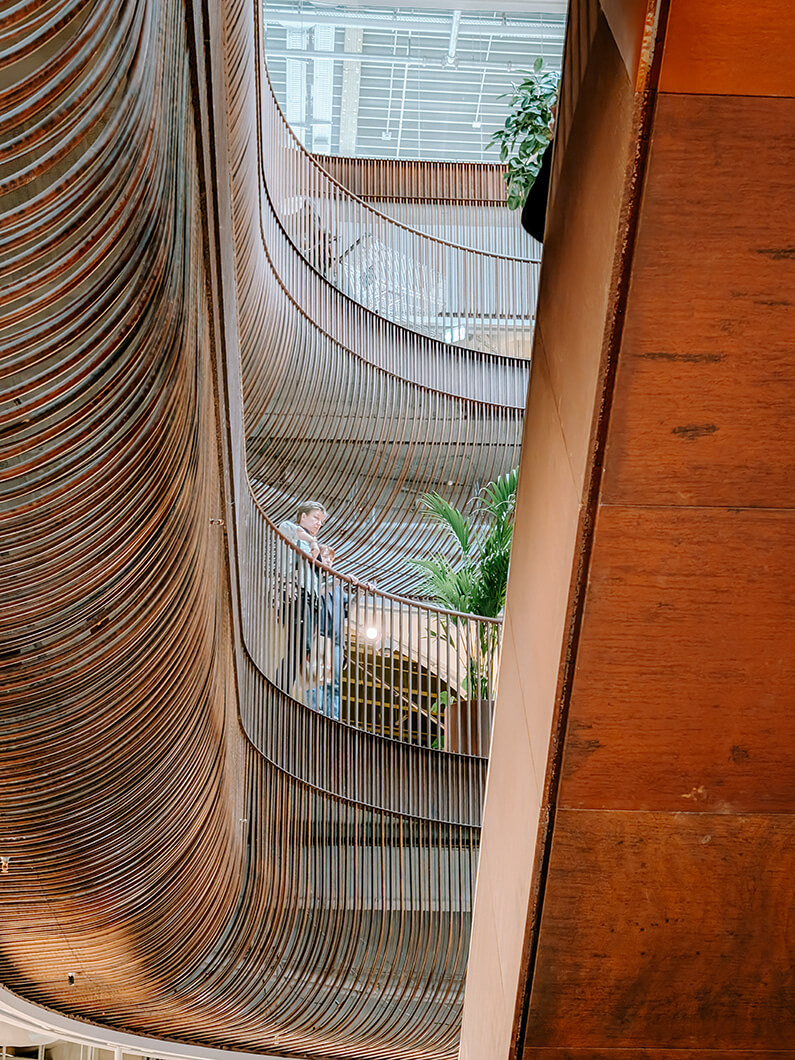
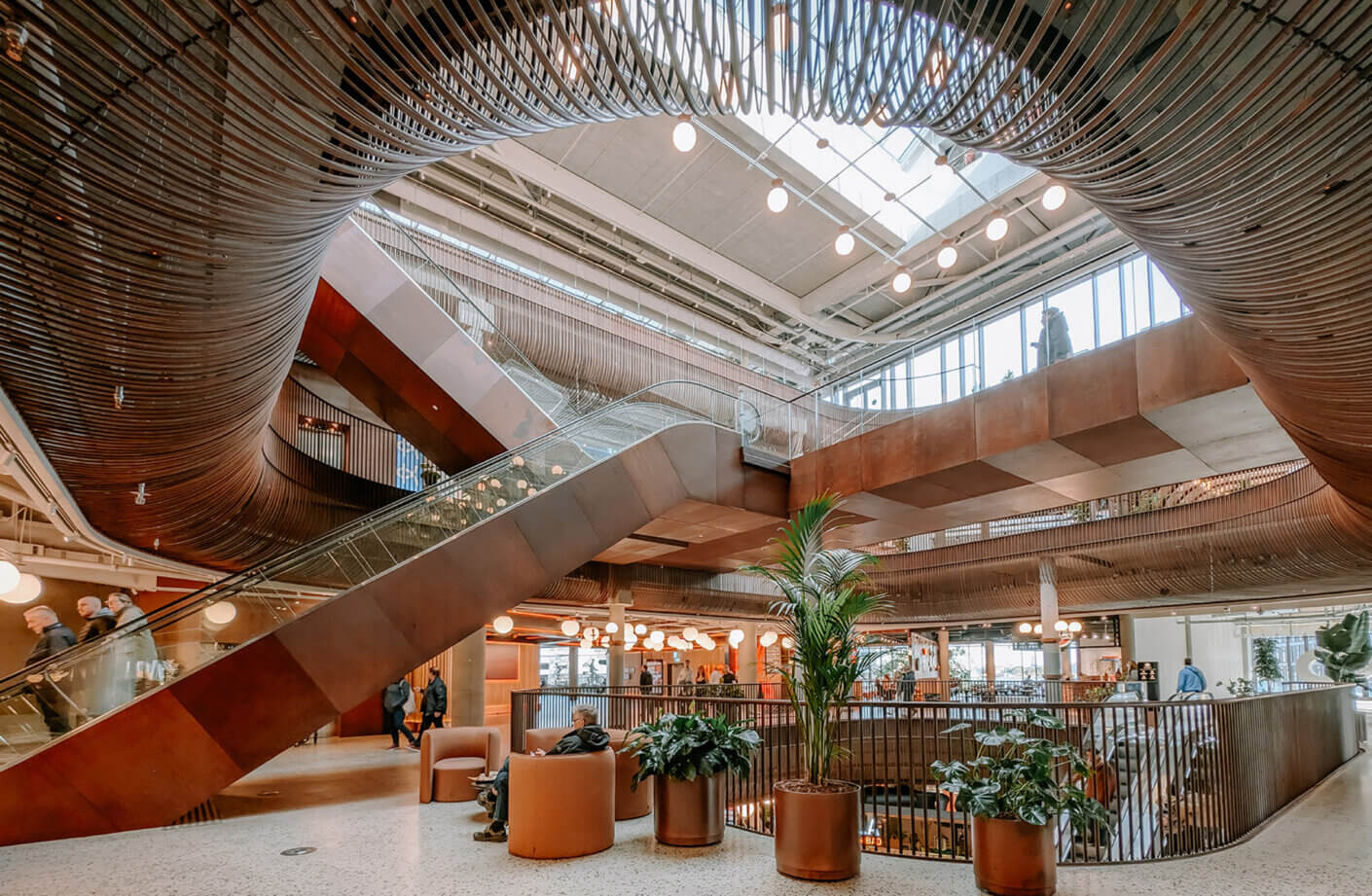
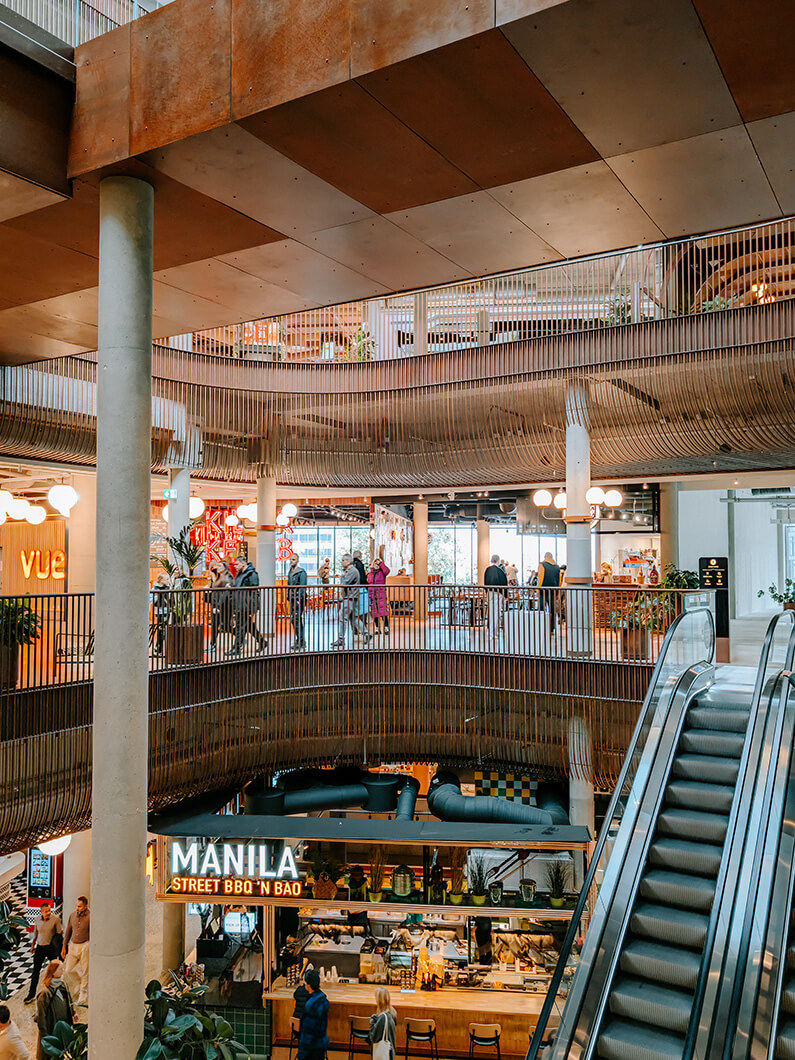
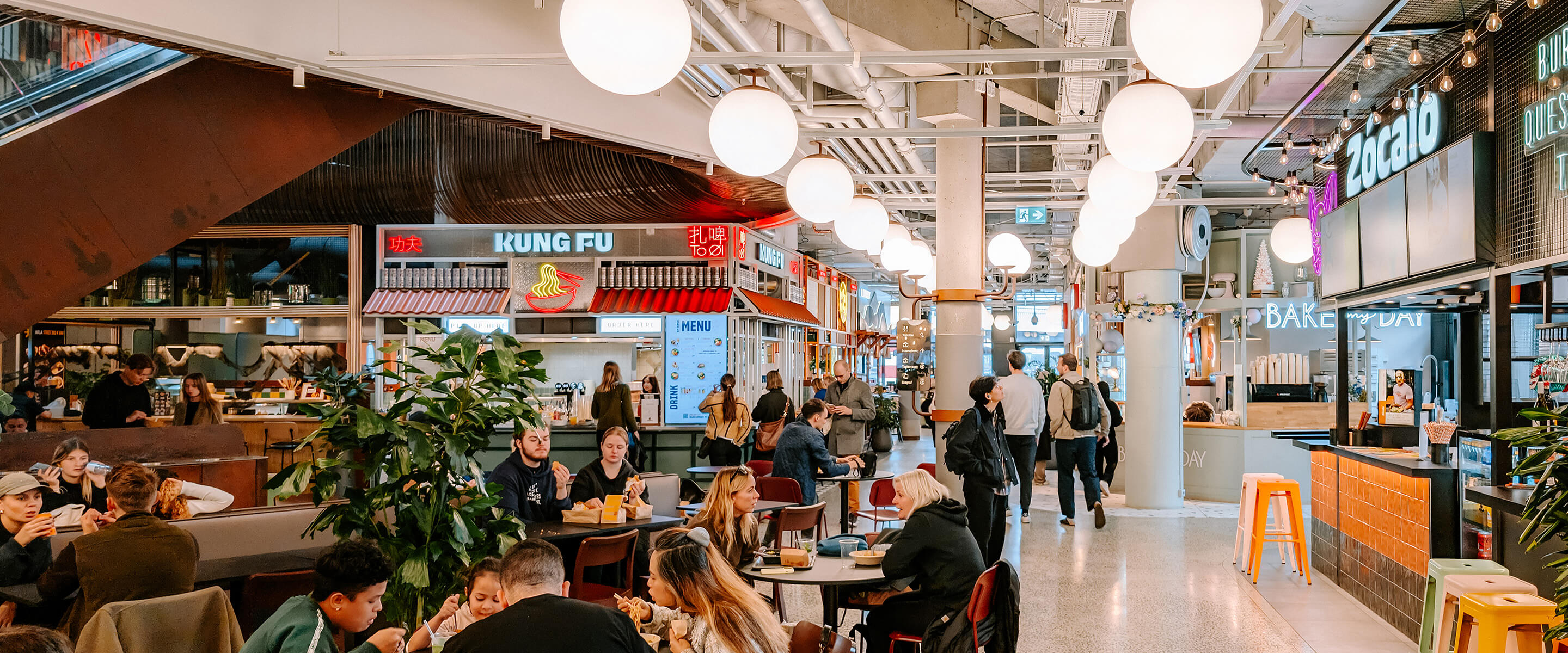
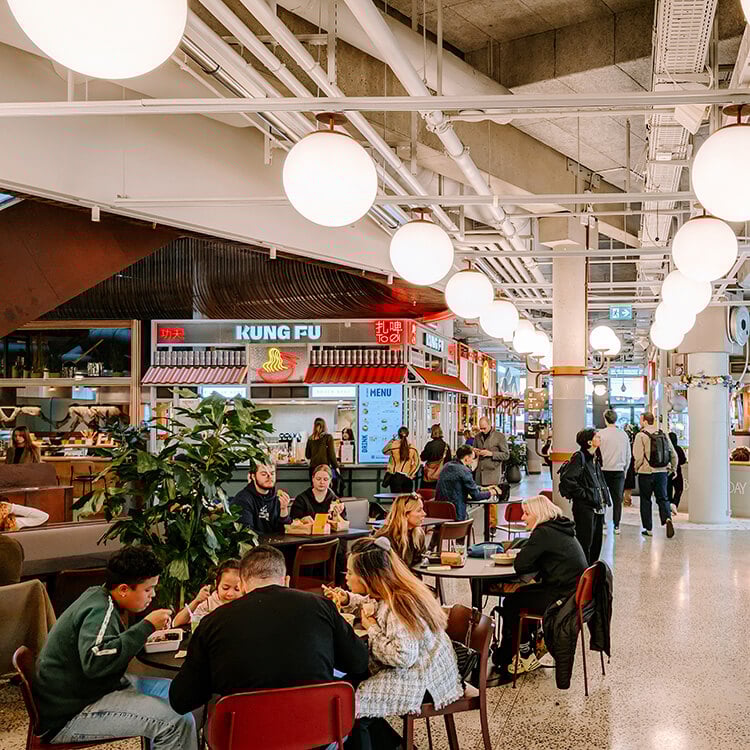
Improving the dining experience was the first step toward achieving the vision set forth in the plan. The existing canal-facing façade was visually cluttered and physically uninviting, housing fast‑food chains along an underused plaza that failed to capitalize on its scenic location. By opening the exterior to foot traffic and views, reorganizing circulation, and slicing into the building to brighten the interior, designers created a more convenient and appealing dining experience that fully integrates with the shopping center’s retail tenants.
The new dining environment, called Kajen, reflects a shift in retail design. Instead of long interior pathways with few points of entry, this modern approach opens the ground floor in multiple locations, blurring the boundary between the mall and the pedestrian promenade. Local food vendors have replaced global fast‑food chains, helping reposition Copenhagen Mall as an authentic destination rather than a generic shopping center.
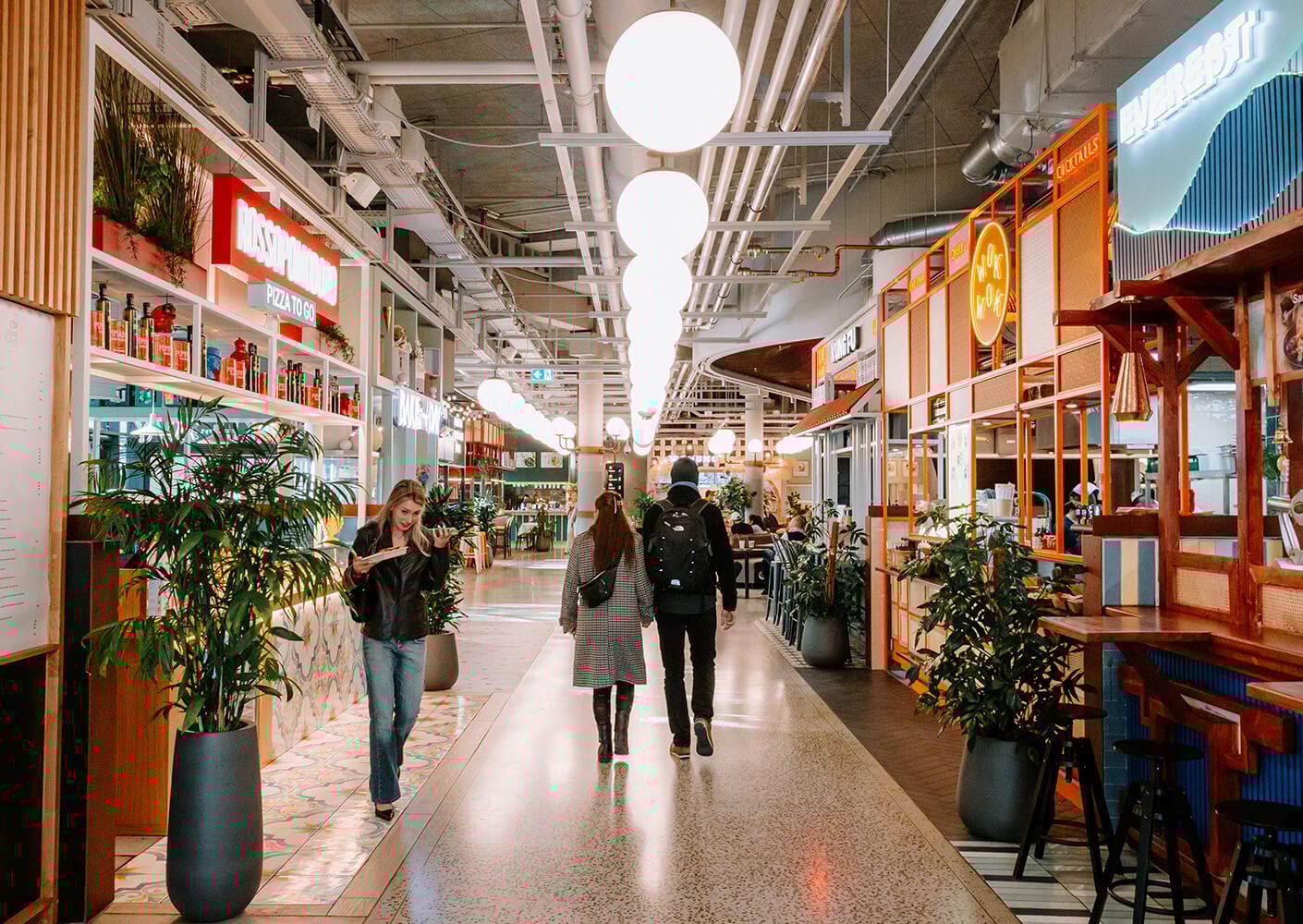
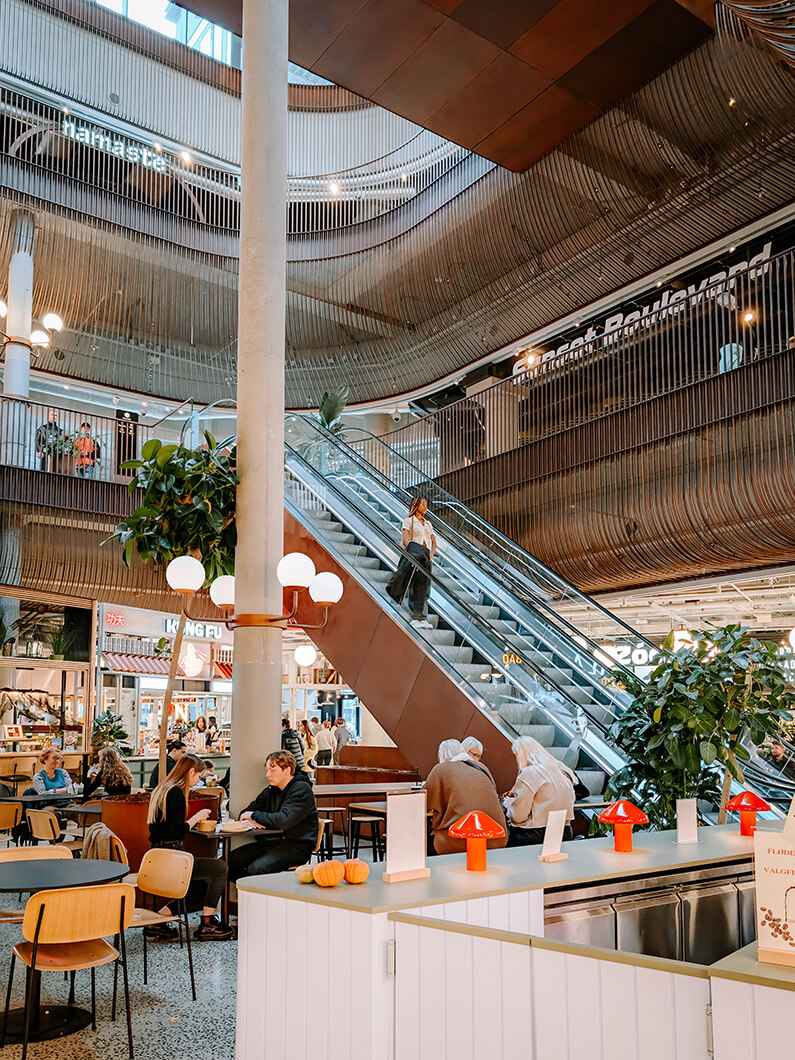
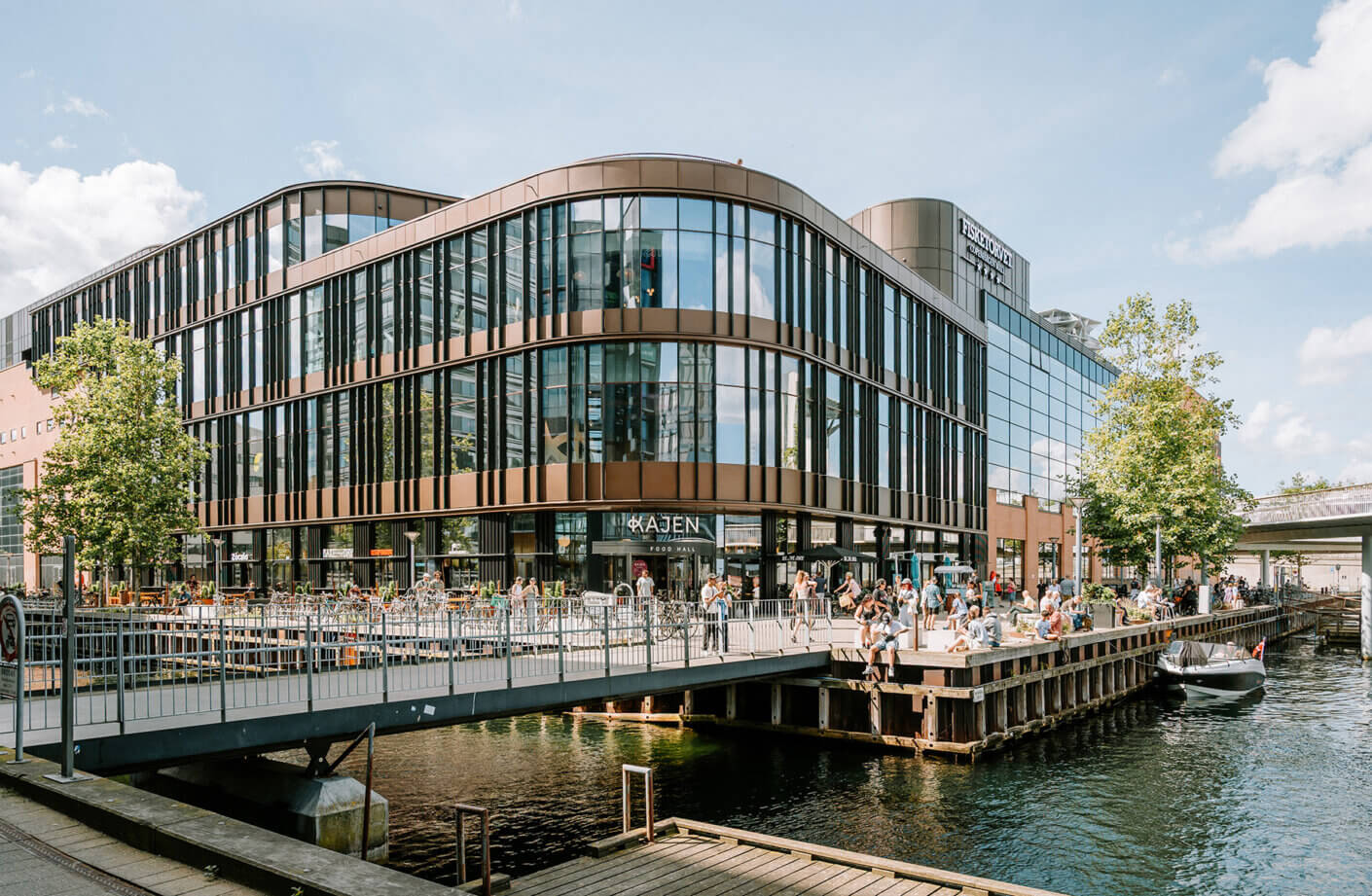
The transformed space is now active year-round, particularly in summer, when the canal attracts swimmers, students, families, and bike riders who can stop into the dining plaza to grab a quick coffee or enjoy a waterfront meal.