Press Releases April 14, 2026

Perkins&Will Appoints Former MIT Accelerator Program Head as New Firmwide Director of Research and Development

Gilad Rosenzweig brings two decades of experience leading R&D across the built environment. He aims to accelerate innovation at Perkins&Will to deliver leading-edge, scientifically sound design solutions.
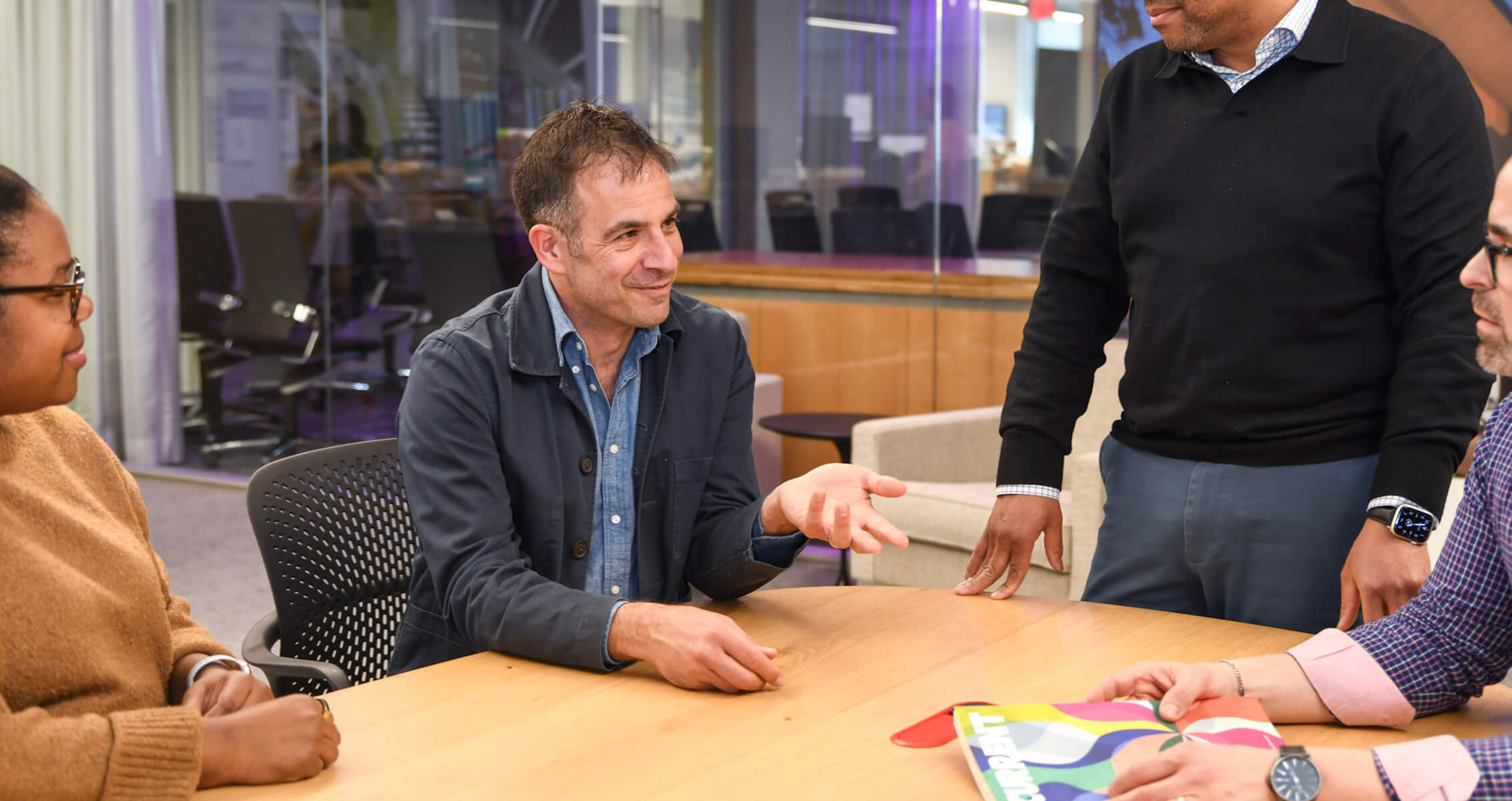
Group of professionals, including Gilad, engaged in discussion around a conference table, with colorful materials and a collaborative workspace background.

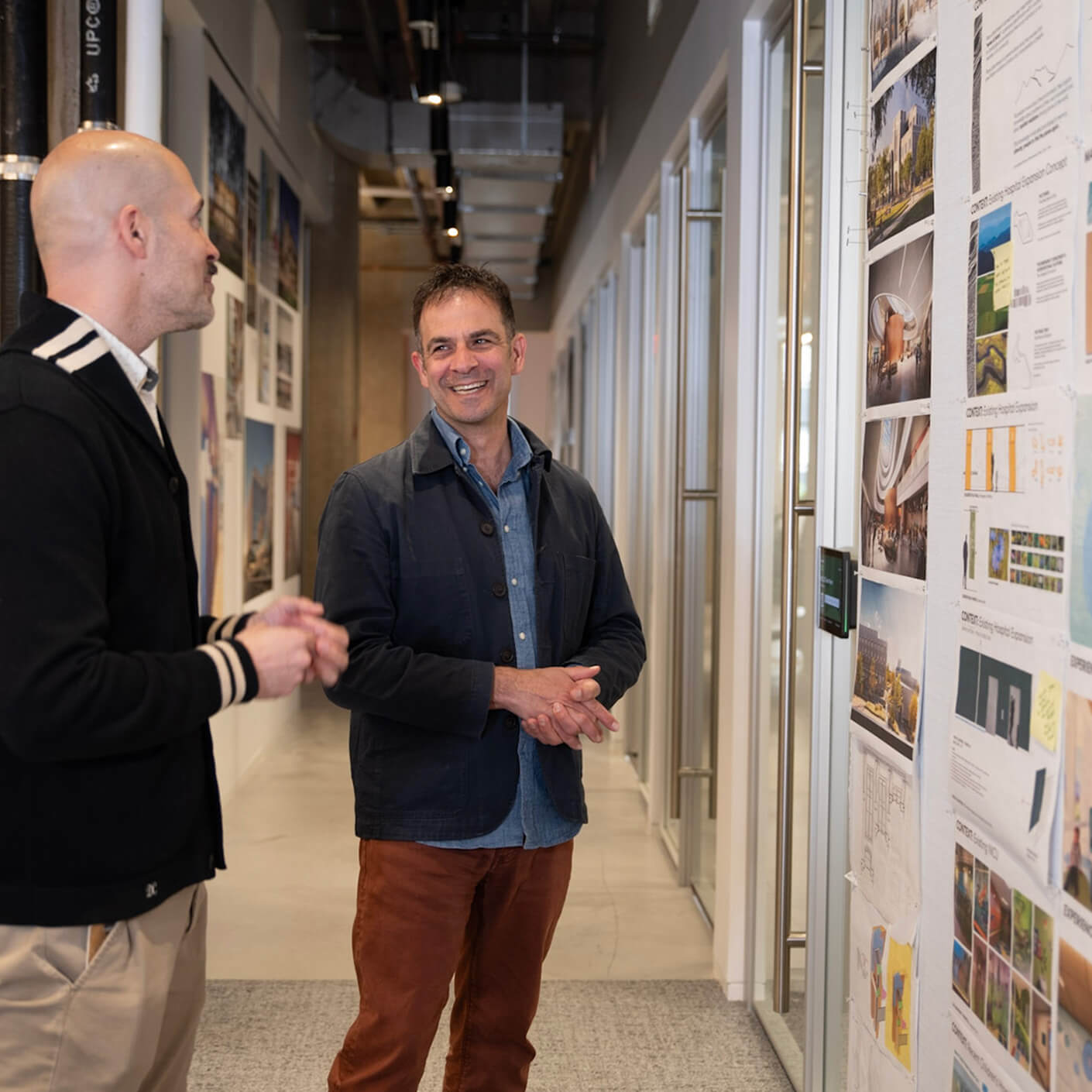
WASHINGTON, D.C.—Perkins&Will welcomes Gilad Rosenzweig as its new firmwide director of research and development. Rosenzweig, who for 10 years led the venture accelerator MITdesignX at the MIT School of Architecture and Planning, will focus on strengthening and scaling Perkins&Will’s already robust research practice. Based in Washington, D.C., he’ll collaborate with design teams and researchers across studios, practices, and disciplines, ensuring the successful transfer and broad application of research-based intelligence.

“Perkins&Will has a rare culture where research is already happening in almost every corner of the firm, but the real magic happens when you connect those dots,” Rosenzweig says. “My goal is to make our collective intelligence more visible and accessible. It’s about creating a culture where a discovery in one studio can immediately spark a solution in another halfway across the world.”


A distinct approach to research

Rosenzweig’s approach to research and development focuses on three core principles: invention, innovation, and entrepreneurship—or “intrapreneurship” within the context of an existing organization.

Invention, he says, is where the research is born—discovering something, identifying a phenomenon, asking a question without knowing the answer yet. Innovation takes an invention and applies value to it: “You’re not just answering a question; you’re turning the answer into something that can be used,” he says. “That’s the development side of R&D.” Intrapreneurship is when people inside the firm take that innovation and scale it across studios, practice areas, projects, and client relationships. With more than 2,700 professionals across 35 Perkins&Will studios worldwide, Rosenzweig believes that third principle is most critical.

“A startup only succeeds if it scales. The same principle applies inside a large, global firm like Perkins&Will. If you want to make something that travels and compounds, you need the intrapreneurial mindset. That’s what I want to cultivate here.”
Priorities and passions

Rosenzweig’s initial priorities include investigating novel uses of artificial intelligence (AI) and the ways in which a design firm can adapt to an AI-driven future; exploring bio-based and natural materials; and securing new academic partnerships to bolster the firm’s research capacity. Designing from post-occupancy evaluations (POEs), which help teams understand how a building performs over time for the people who use it, is also high on his list, as POEs can demonstrate impact and improve future projects.

“Clients often turn to us because they want to know what’s next, and they want to know how our work together will create long-term value for them,” says Phil Harrison, Perkins&Will CEO. “Gilad brings a rare ability to see where our research can create that value. He knows the right questions to ask, understands when to pursue an inquiry—and when to pause it—and has a proven track record of transforming ideas into meaningful innovation.”


Ideas that make a difference

As the founding executive director of MITdesignX, one of the field’s leading accelerator platforms for startups advancing new ideas in architecture, construction, and urban technology, Rosenzweig supported more than 250 ventures across North America, Latin America, Europe, Asia, and the Middle East. Other initiatives he collaborated on included an innovation workshop for architecture students from the historically Black Tuskegee University in Alabama, and a peace-building program with the organization Our Generation Speaks that brought Israelis, Palestinians, and MIT students together through academic and entrepreneurial work.

Prior to MITdesignX, he was the founder and executive director of Smarter in the City, a nonprofit accelerator in an underserved community of Boston that supported underrepresented entrepreneurs working on community-centered efforts and emerging technologies.

“Gilad balances careful investigation with the rigorous demands of the design profession and the high expectations of clients, all while keeping the greater needs of society front of mind. That alignment of purpose and values with business imperative is something we value deeply at Perkins&Will,” says Lindsey Peckinpaugh, the firm’s president.

A nonlinear path of personal discovery

Rosenzweig began his career in Tel Aviv, Israel, designing residential and commercial projects before turning his attention to the larger systems that shape how cities function. He holds a master’s degree in city planning from MIT, an architectural diploma from the Bartlett School of Architecture at University College London, and a bachelor’s degree in design studies from Arizona State University. He’s a lecturer in the MIT department of architecture and has taught internationally on urban futures, design innovation, and entrepreneurship in the built environment.

“I’ve spent years thinking about how the built environment can be better, walking through cities wishing things were different. Now I get to be part of the team that has the scope and the access to actually make them different. No single person can do that alone. But Perkins&Will has the reach, the client relationships, the talent, and the leadership commitment to make R&D a real strategic driver. There’s no better place to do the work I’ve spent my career preparing for.”