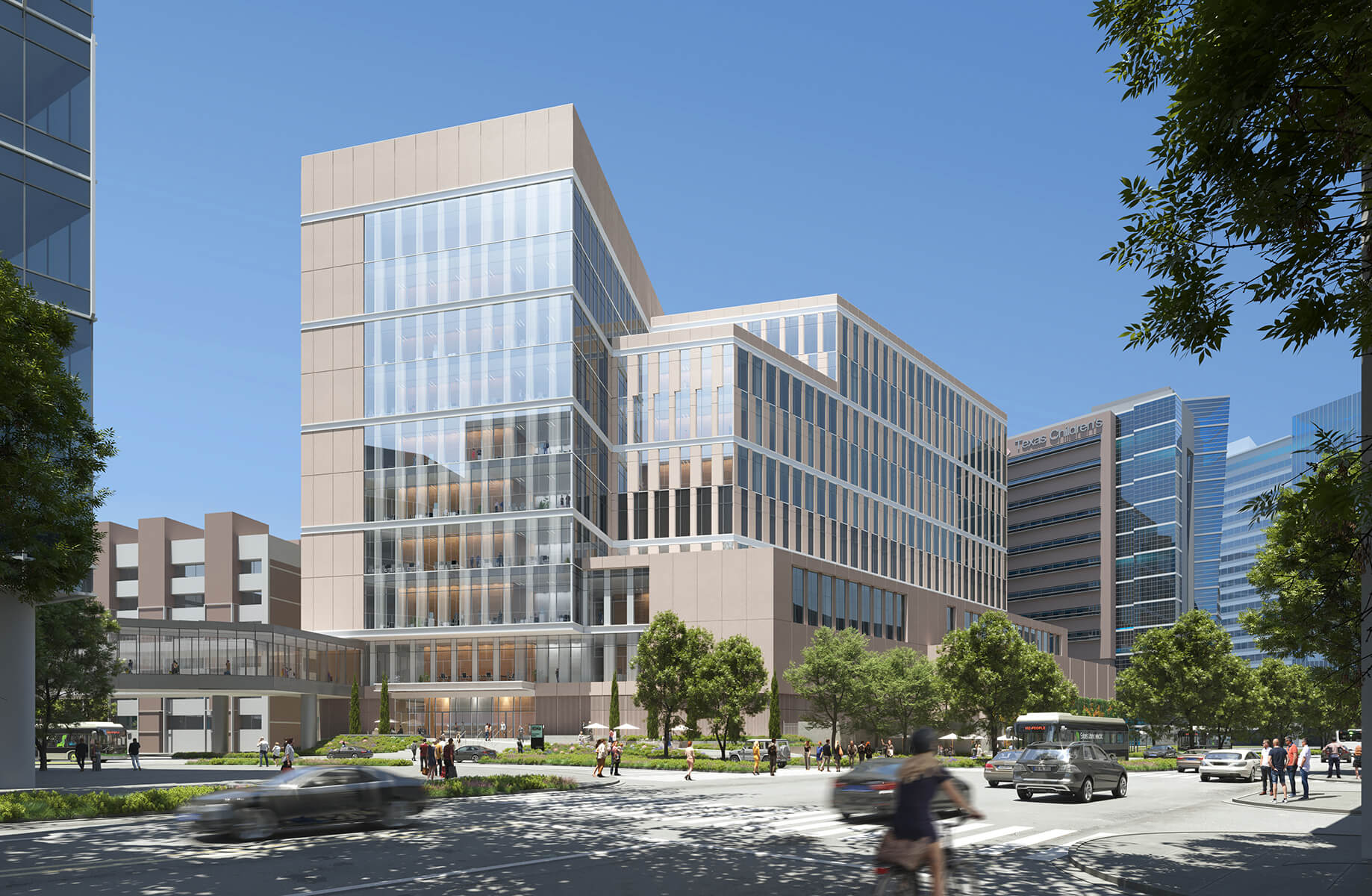
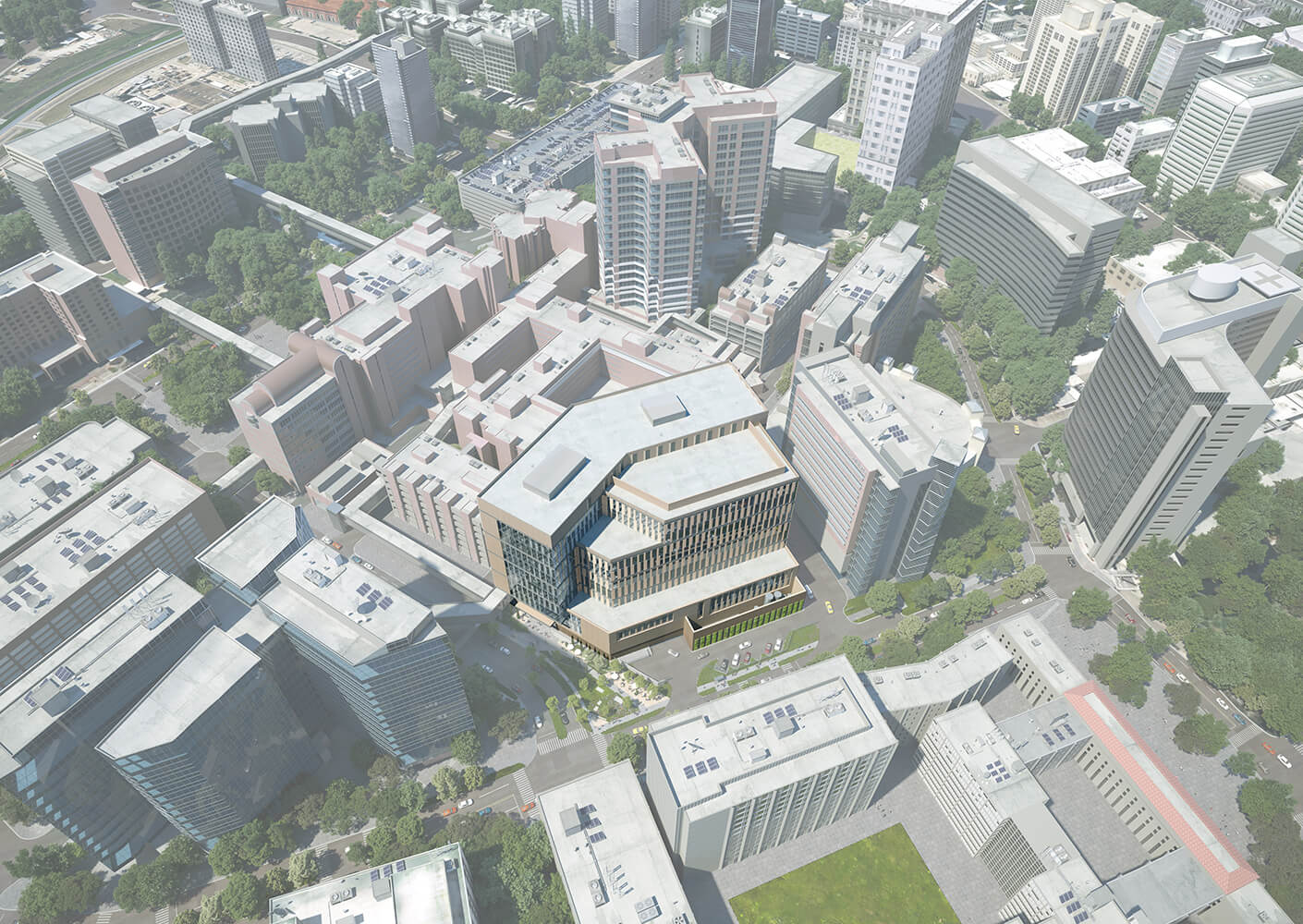
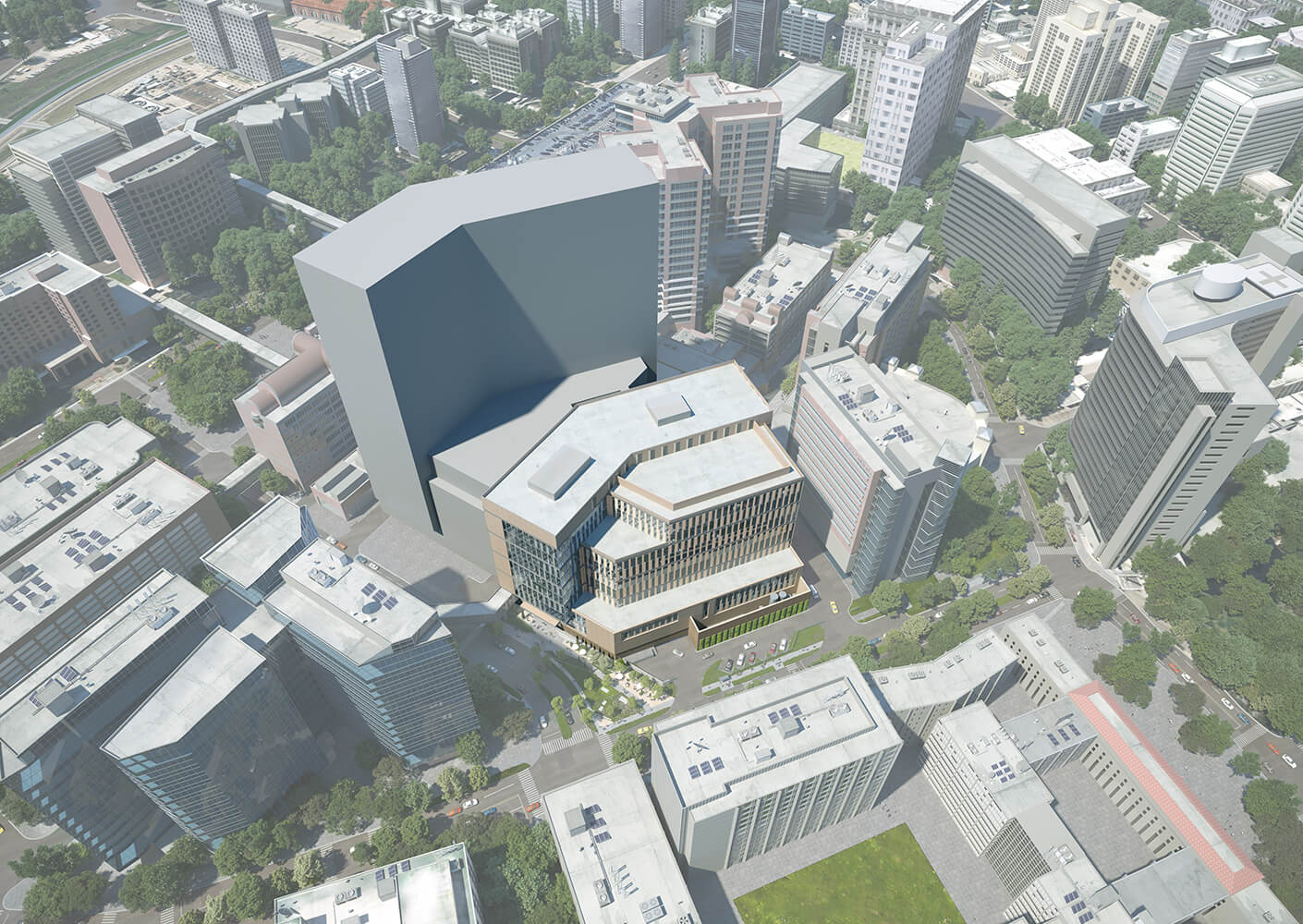
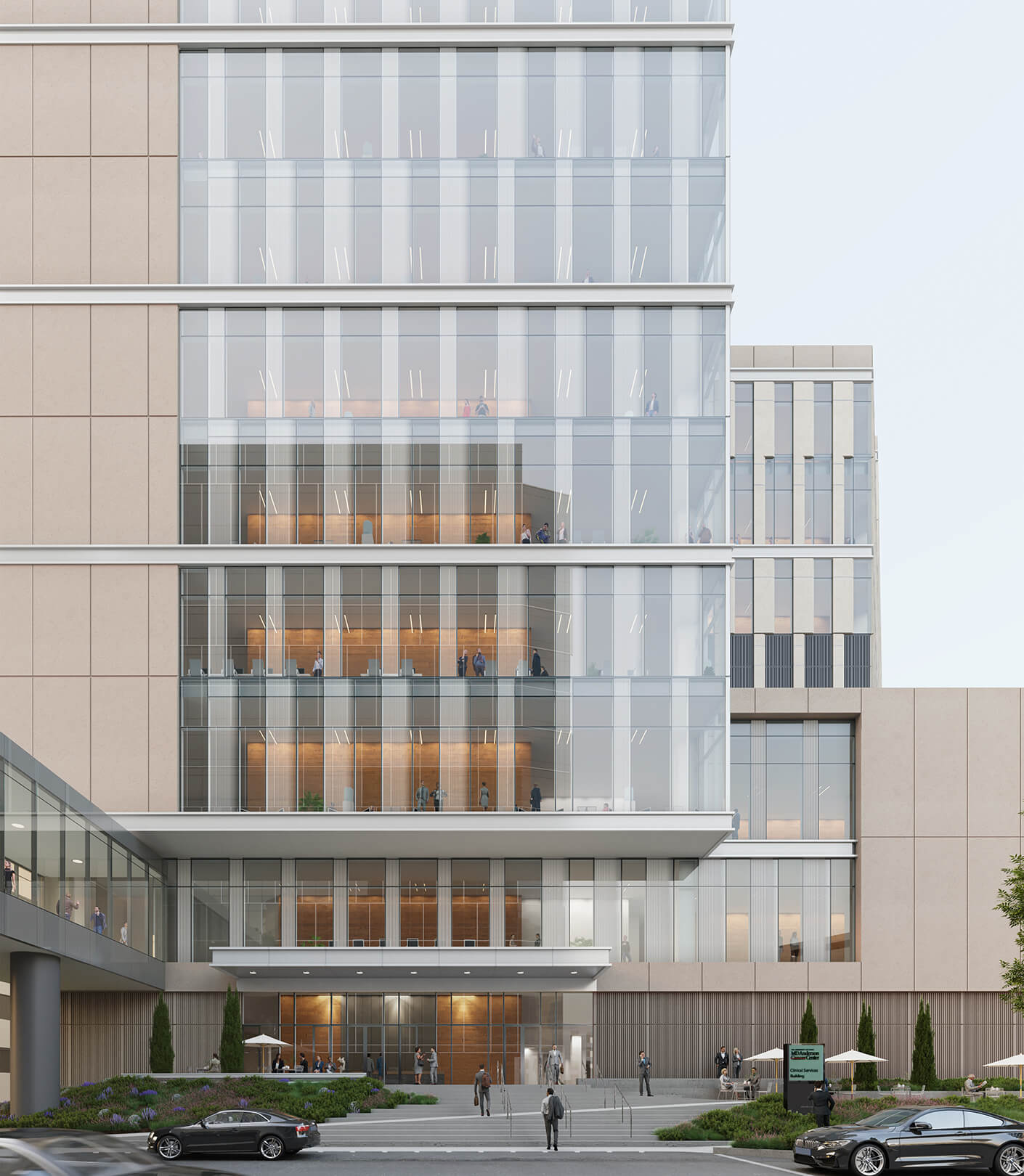
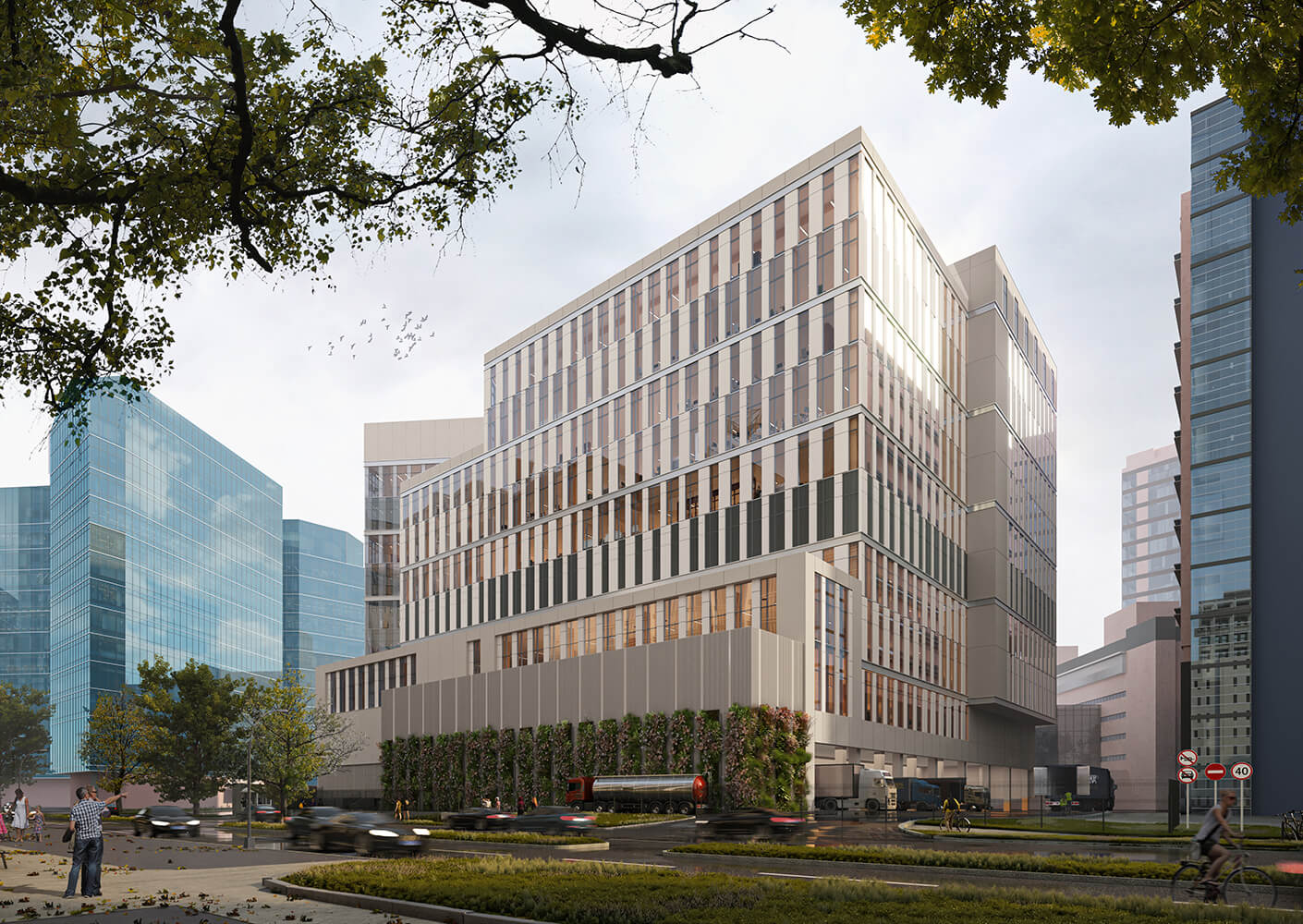
The CSB is the first move in a multi-phase campus transformation, which meant designing for a future condition that is still being defined.
Every major system had to anticipate connection, extension, expansion, or even transformation. Floor-to-floor heights were aligned with future buildings. Vertical and horizontal circulation paths were sized for a larger, integrated campus. Infrastructure systems were planned for both current and future load.
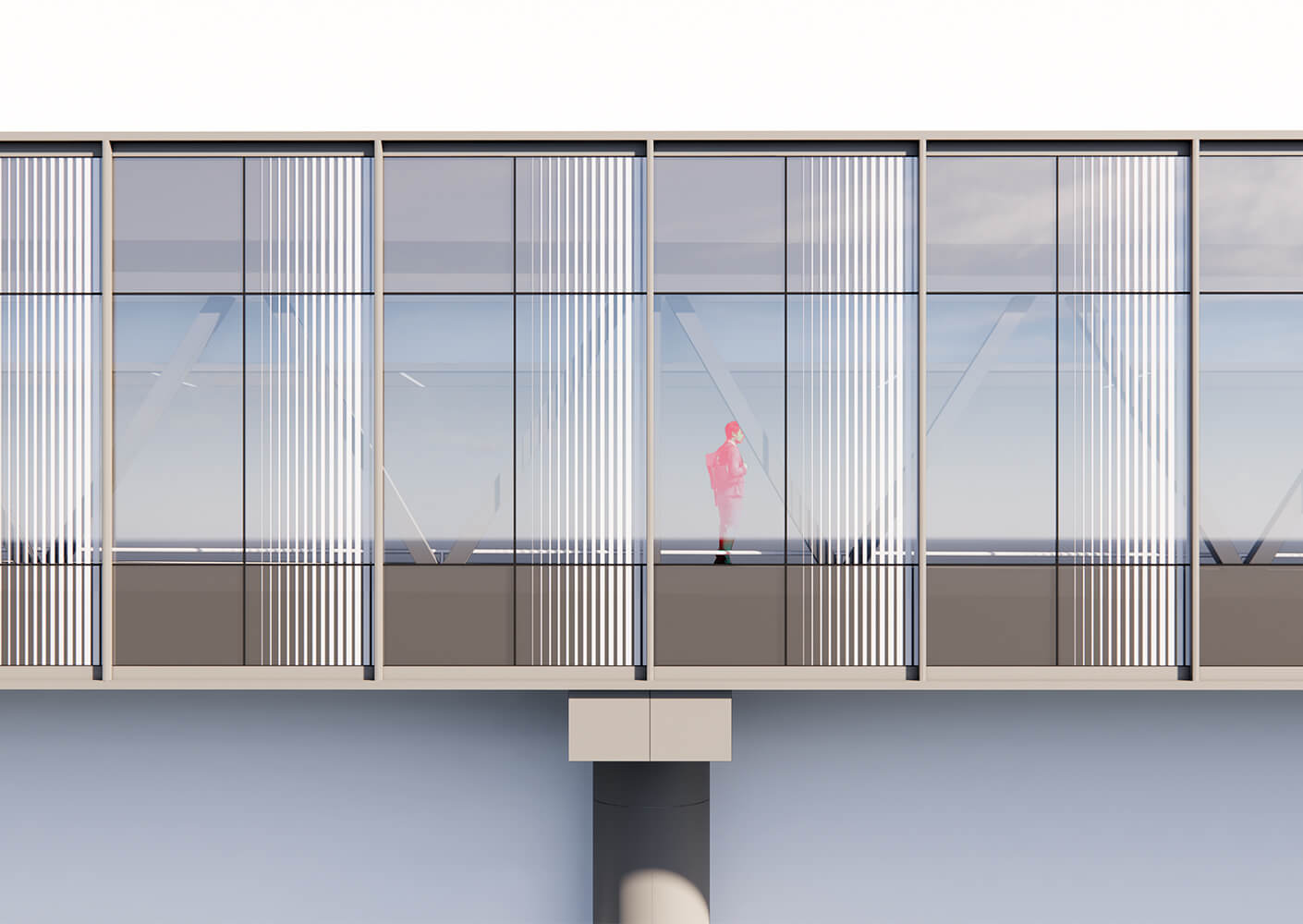
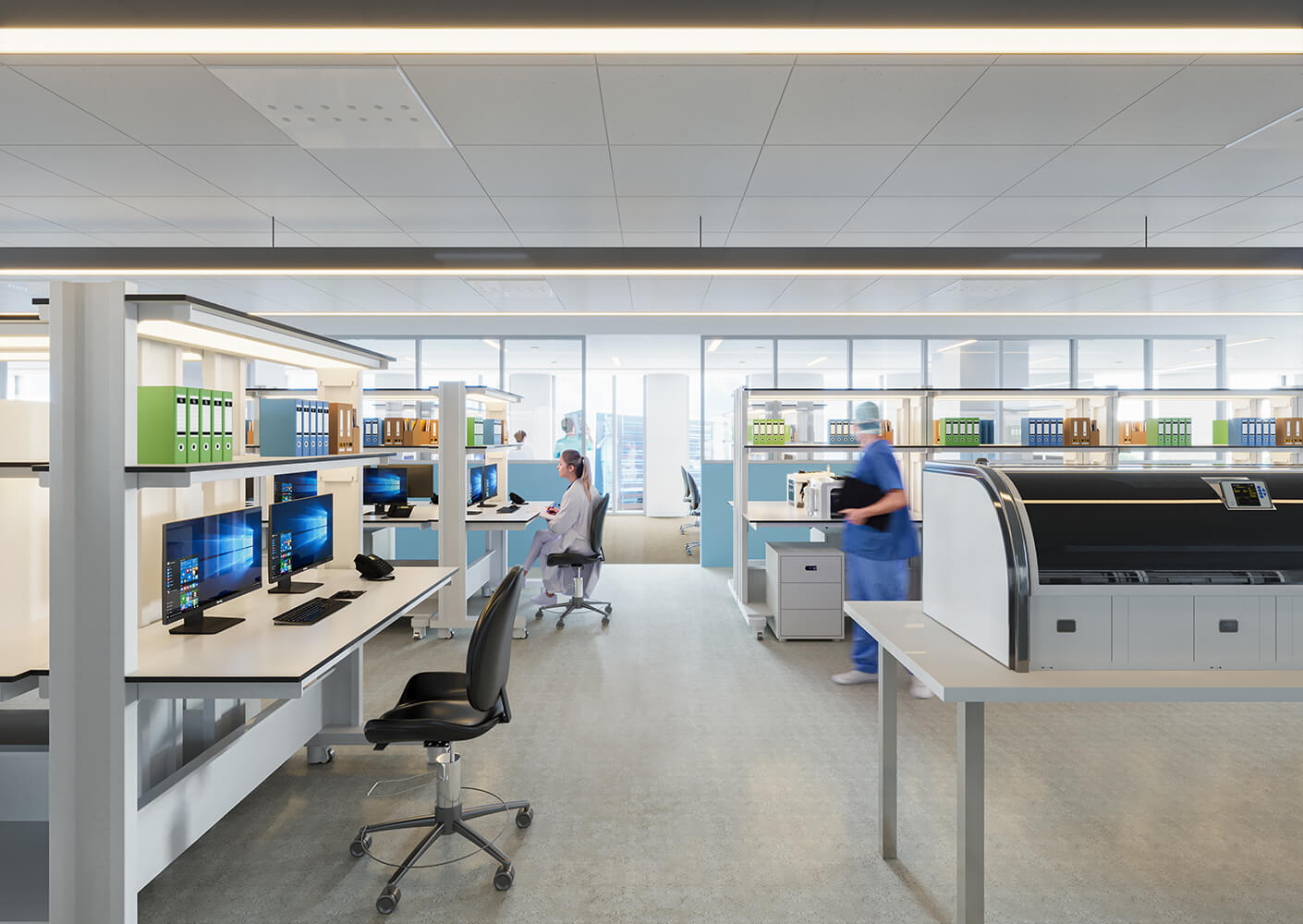
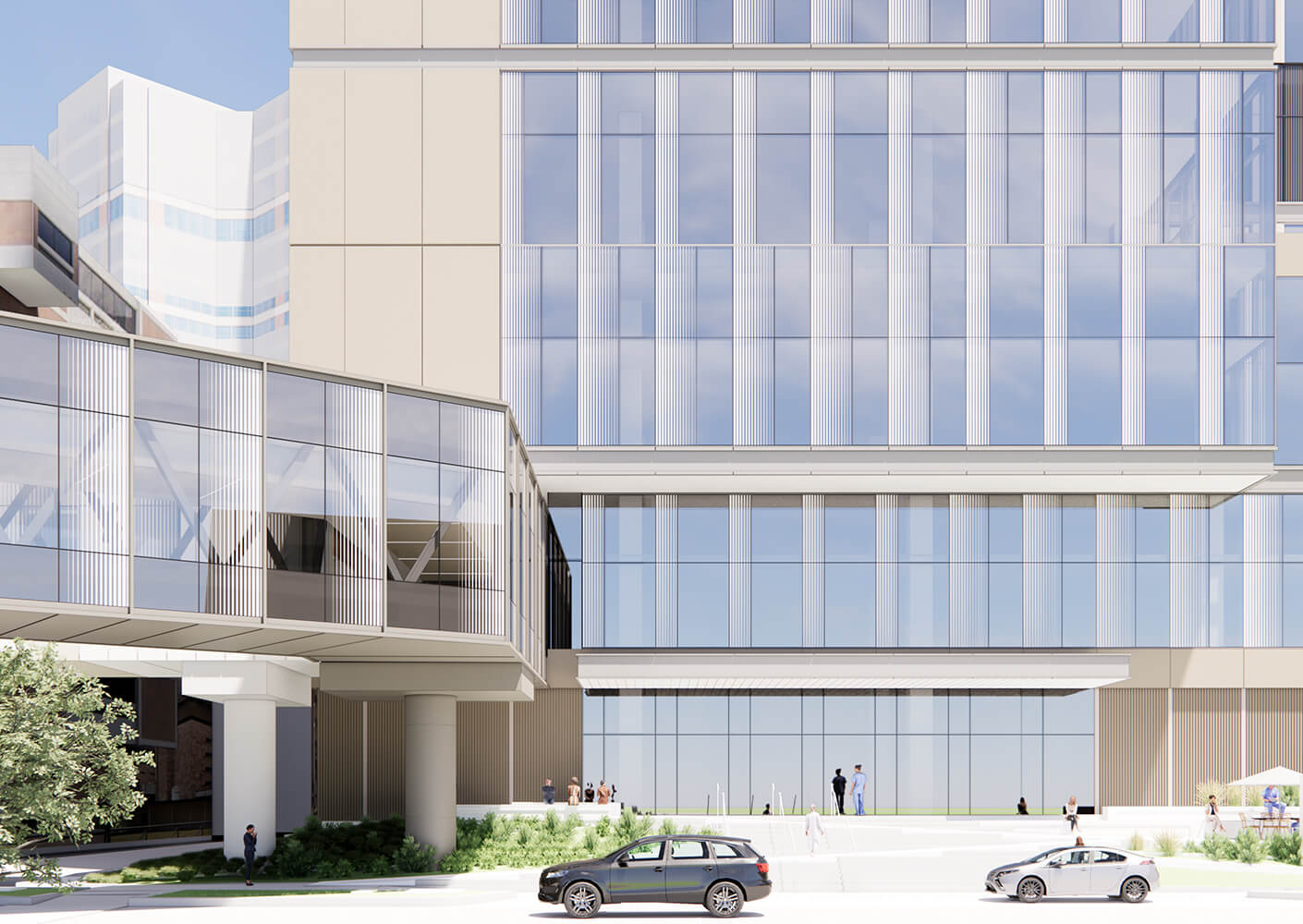
Departments were organized with embedded flexibility. Shell space, unequipped zones, and adjacent “soft space” allow for growth as new programs come online. Strategic placement of functions such as pharmacy and cell therapy was coordinated with anticipated bridge connections to add efficacy across following phases. Perioperative support spaces were aligned with operating room floors that do not yet exist.
At the same time, the team had to determine where not to over-resolve.
Planning for long-term performance entailed difficult trade-offs. Food services, for example, were initially included in hopes of solving both immediate and future needs and desired adjacency to the super dock. Further analysis revealed that its placement would create inefficiencies for the future campus, particularly in relation to patient experience and travel distances. The decision was made to defer its move to a future phase where it could be more optimally placed to support patient beds.
These decisions were guided by a structured process of iteration. The team advanced the conceptual master plan only as far as necessary to inform Phase 1, continuously testing scenarios against operational performance, travel distances, and future adjacencies. Rather than locking in a single outcome, the design was evaluated as a range of possible future states, with solutions selected based on their ability to perform across multiple scenarios.
Other design decisions carried similar weight: whether to include windows on a façade that will eventually be absorbed by a future building; whether to invest in elements that may only exist for a limited duration; and whether to carry desired amenities, such as a staff terrace, as alternates until the core program is secured within the budget.
What emerges from this process is a building that is precise where it needs to be and open where it must remain adaptable. That balance allows the campus to evolve without requiring rework of the systems put in place today.