Announcements October 9, 2026

Celebrating the First Harvest from Our Indoor Growing Pod

The pod prototype advances our award-winning Resource Circularity research, which explores how buildings can do more than provide shelter by contributing to food production in urban settings.
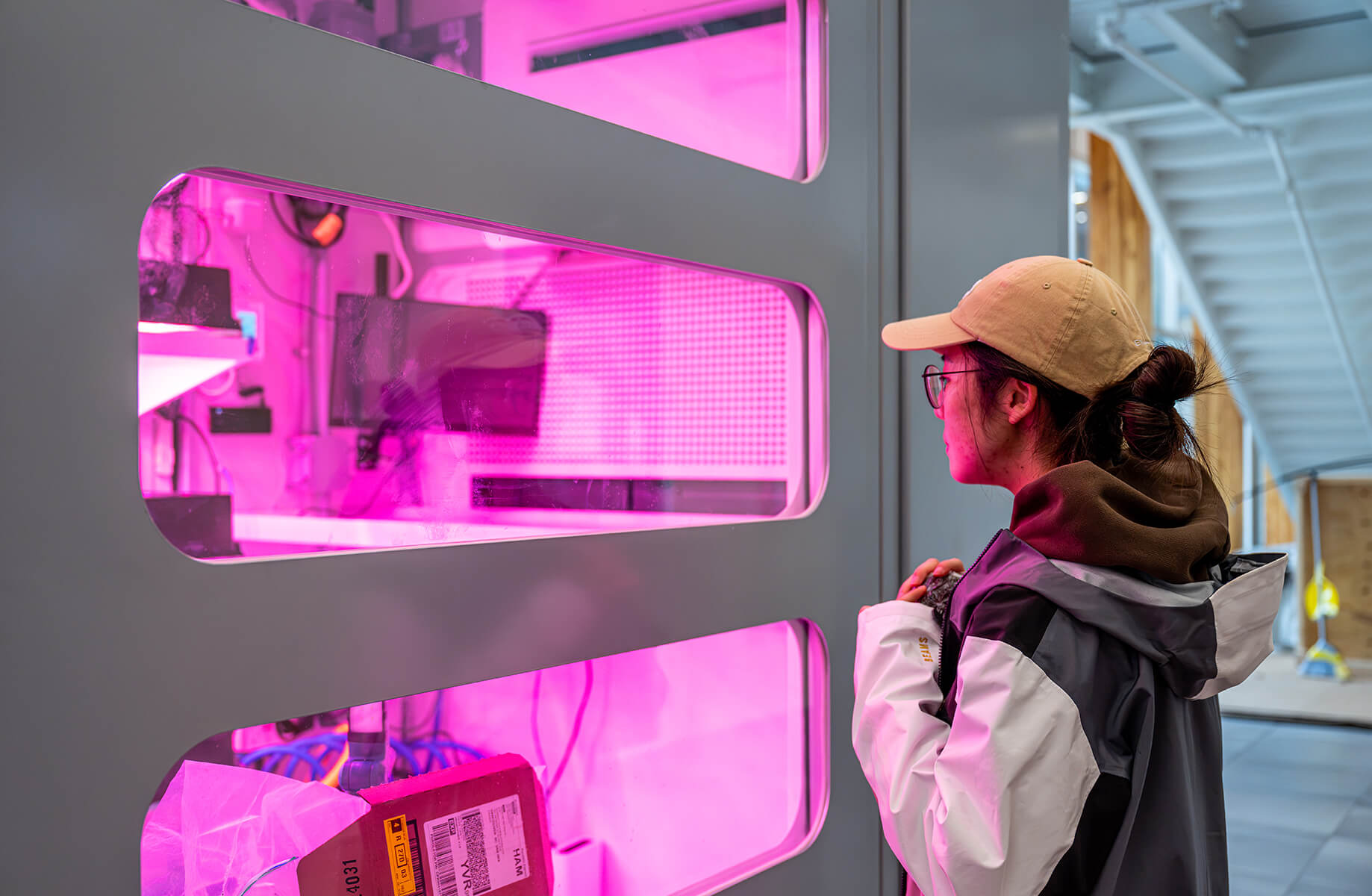
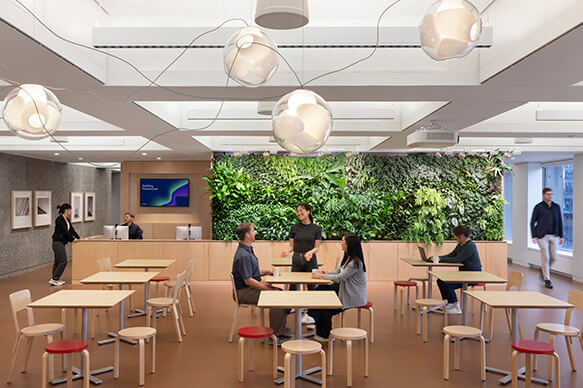
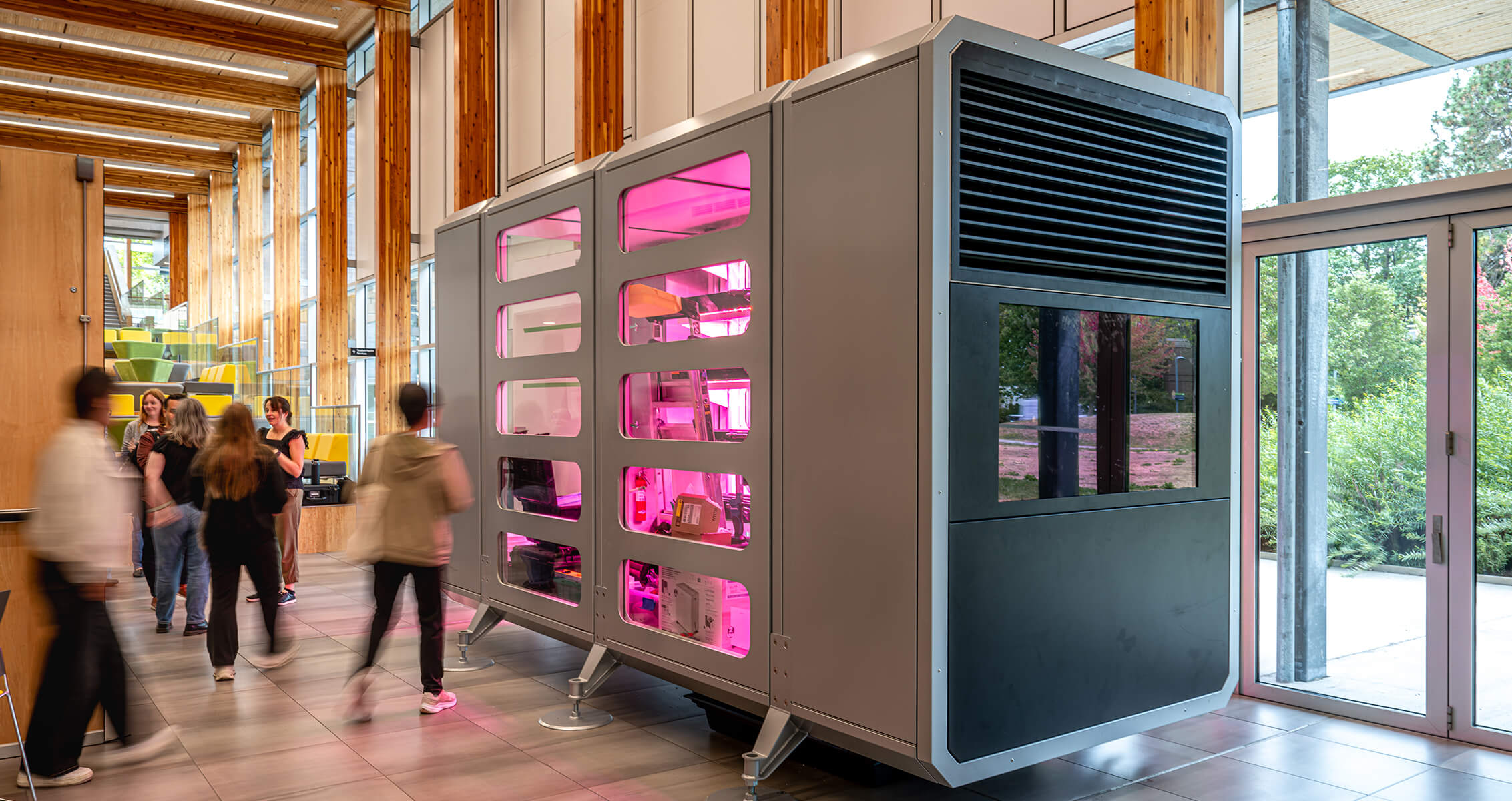
Interior view of a space featuring a sleek, multi-functional unit with pink lighting, surrounded by people engaging in conversation.
The growing pod prototype in UBC's Orchard Commons Dining Hall.

We recently gathered with our research partners, including the University of British Columbia (UBC) and QuantoTech, at the Orchard Commons Dining Hall on the UBC campus in Vancouver to celebrate an exciting milestone in our ongoing building-integrated agriculture research.

An indoor growing pod, designed with FORM3 and QuantoTech, has been installed in the dining hall to grow produce such as lettuces and herbs, which will become part of the campus dining menu. The team will continue their research through the outputs of the pod, studying yield, energy, carbon, cost, and space—as well as crop quality and public perception. This data will inform future investigations into the viability of scaling this type of innovation and assessing viability in different community contexts.

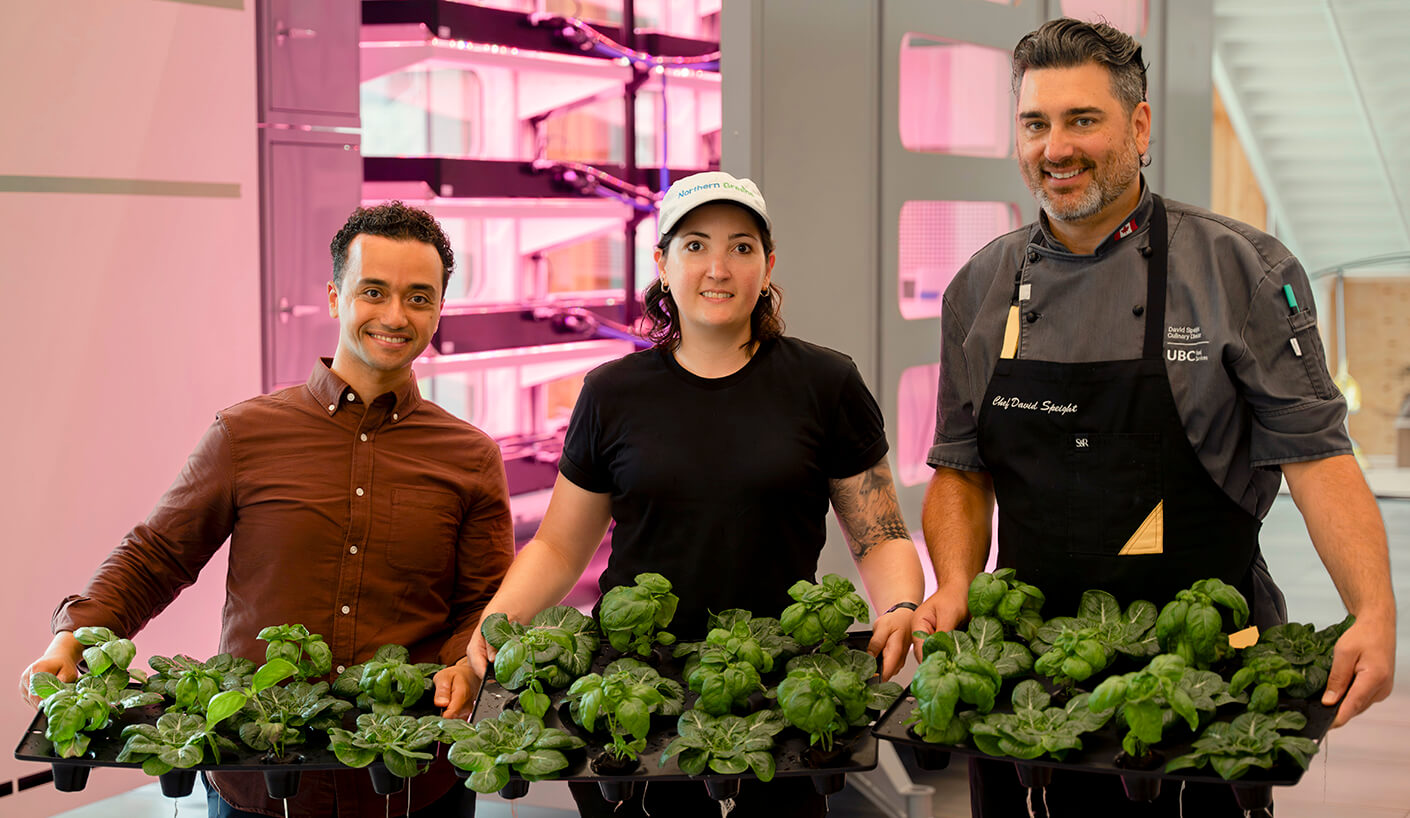
Dr. Mohamed Iman of Perkins&Will, Alycia van der Gracht of QuantoTech, and David Speight of UBC Food Systems (left to right).
Mariam Al Roujuleh/UBC

This milestone is the culmination of years of investigation, exploration, and design:

Planting the Seeds
The work grew out of Mohamed Imam’s doctoral research at the University of Calgary, Resource Generative Architecture, which asked how buildings could produce—instead of only consume—resources.

Watering the Plot
In 2023, Agriculture and Agri-Food Canada’s Agricultural Clean Technology Program awarded Perkins&Will $429,000 to study building-integrated agriculture. Additional matching funds were later granted by The BC Centre for Agritech Innovation through partnerships with Simon Fraser University (SFU).

That same year, in response to the City of Vancouver’s mandate that food assets be integrated into large developments, our Vancouver studio ran a series of workshops across our design teams to explore how this could work in practice. Our designers were clear about what they needed: real yield, energy and social data, and modular examples that could fit tight sites.

Enriching the Soil
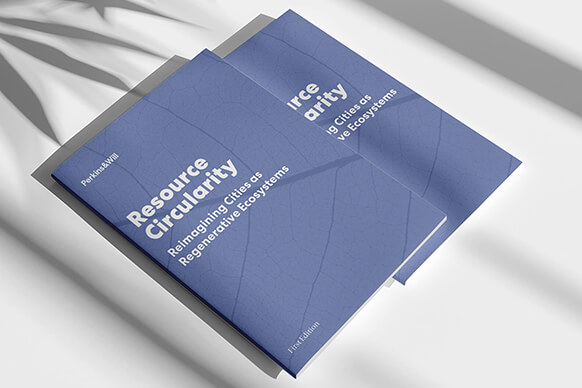
The research answered with evidence. In 2025, we published a peer-reviewed framework in Frontiers in Sustainable Food Systems for measuring a farm’s carbon, energy, and water in the same terms we use for buildings. We also released Resource Circularity: Reimagining Cities as Regenerative Ecosystems, a report that features 150 projects worldwide and more than 80 contributors from 17 organizations.

In 2026, the report received the RAIC Research and Innovation in Architecture Award.

Tools came next. With SFU’s Computational Design Lab, we developed a design-tool prototype to support decision making around building integrated agriculture during the design process. A beta web version, the Resource Circularity Engine, is now available to the public for testing.
Overall, the project represents a compelling and actionable vision for regenerative urban ecosystems and stands out as an exemplary contribution to sustainability-driven research and innovation.

RAIC Research and Innovation in Architecture Award Jury

Producing the Harvest
The indoor growing pod prototype brings the research into built form. With support from UBC’s Campus as a Living Lab fund, we designed a modular farm with FORM3 and QuantoTech that accommodates disassembly and travel. The pod’s produce, including lettuces and herbs, will form part of the student dining experience at UBC.

In 2027, we plan to leverage the pod’s mobile design and transport it to Venice for exhibition at the Time Space Existence biennale presented by the European Cultural Centre. From there, we aim to move it to Simon Fraser University before reaching its permanent home with the North Fraser Métis Association.

Read more about Resource Circularity