
Future of Design January 14, 2026

The first step in creating a cultural institution in the U.S. involves telling a good story

Pixelated butterfly illustration on purple background.
Digital butterfly illustration with pixelated design.
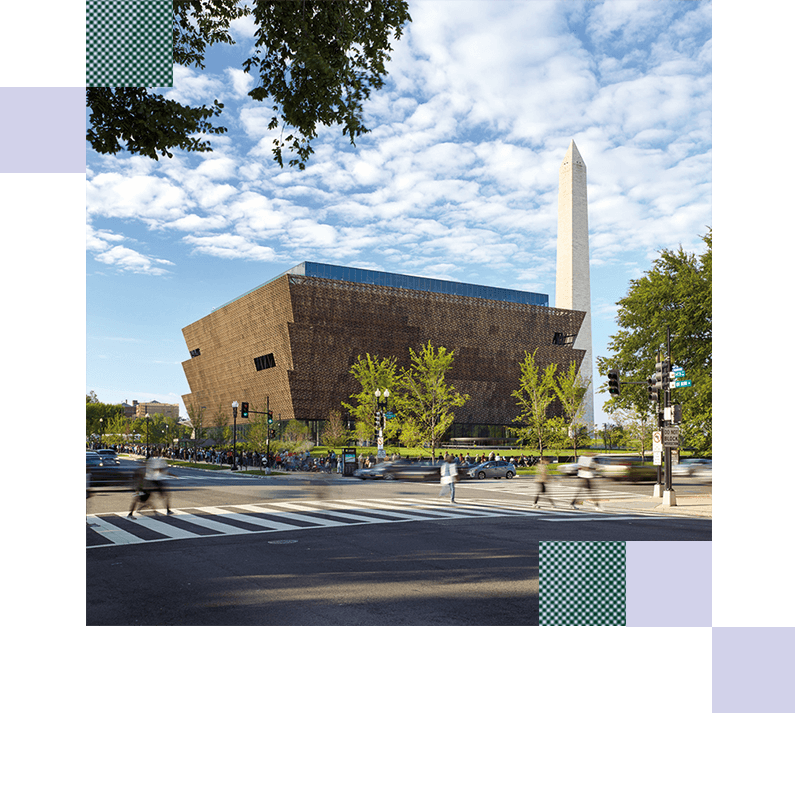
Modern museum and people crossing street, Washington Monument in background.
Smithsonian Institution, National Museum of African American History and Culture
Photo: Alan Karchmer
Standing proudly on the National Mall in Washington, D.C., the National Museum of African American History & Culture opened to great fanfare in 2016. However, the landmark event came only after a century-long effort of organizing and planning. How does an idea to honor a community, culture, or history, conceived by a handful of individuals with little or no building experience, become a world-class destination?

This extraordinary journey begins with a process of incubation. It consists of working with a design team before designing the building to develop a narrative that clearly and compellingly explains the symbolic value of the project. It also involves identifying and securing the support of community influencers, people with filial connections to the project, and philanthropic organizations whose values are aligned with the project’s goals.

Ultimately, the incubation phase needs to build excitement around the project to generate community backing and financial support. With a concept rooted in a compelling story; sound financial, feasibility, and operational analyses; and a strong leadership team and board, a project has a better chance of making the leap to design and construction.
Here are three U.S. projects, each currently in the incubation phase, that are poised to become the nation’s next must-visit cultural destinations.
Miami Museum of Contemporary Art of the African Diaspora

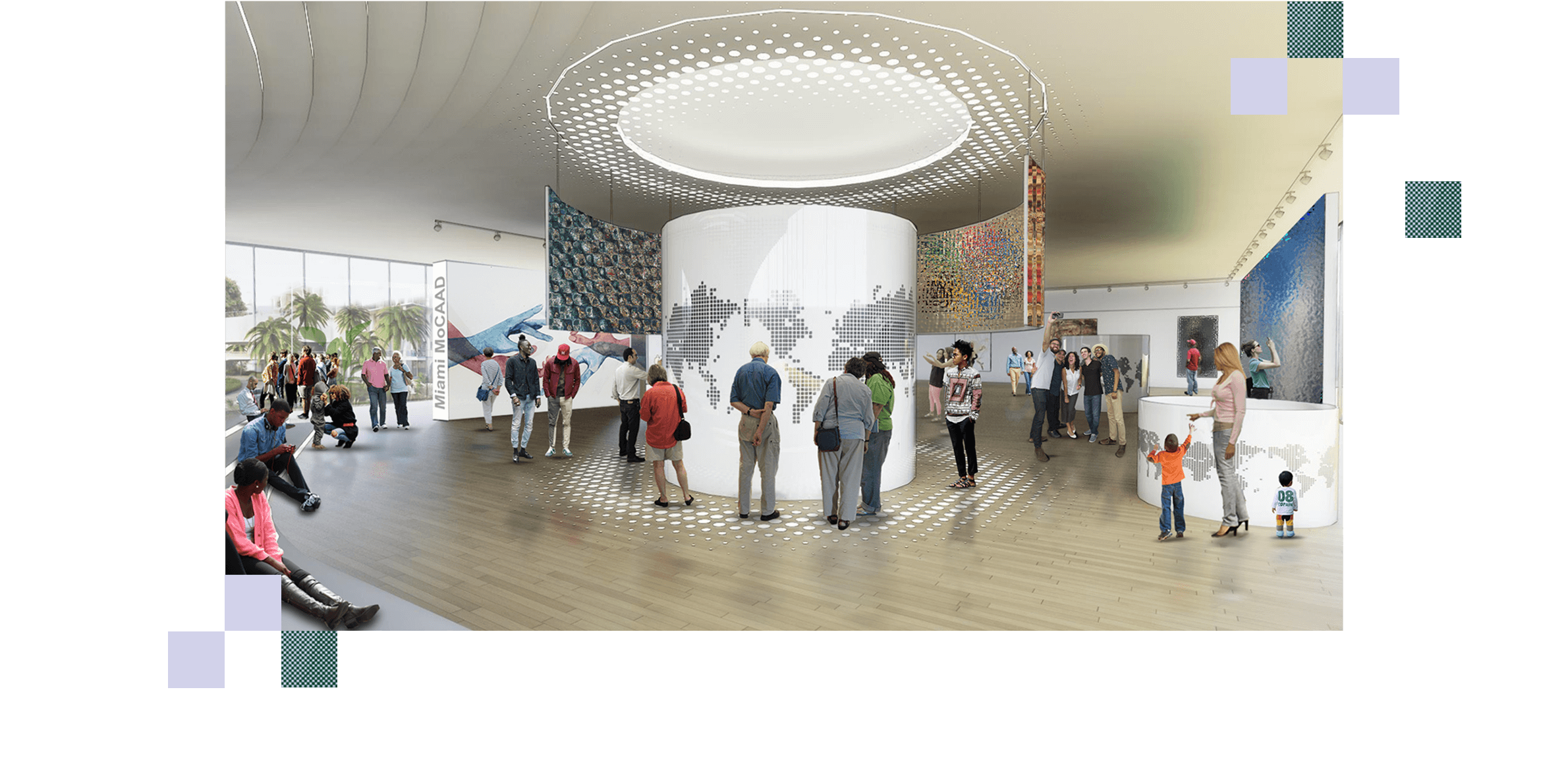
Since 2015, the Miami Museum of Contemporary Art of the African Diaspora (Miami MoCAAD) has worked toward becoming the preeminent platform for contemporary artists of Africa and the African Diaspora. Following a feasibility study, master plan, and launch of interactive murals and virtual reality art exhibitions, Miami MoCAAD achieved a new milestone in April 2025, when the city’s Southeast Overtown/Park West Community Redevelopment Agency authorized the allocation of $25 million toward the transformation of a former jail located across the street from a historic Black high school as the museum’s future home.

Though hurdles remain, “we are on cloud nine,” says Miami MoCAAD co-founder and board chair Marilyn Holifield, who is also a senior partner at the law firm Holland & Knight. Ahead of a two-day meeting in 2019, museum leaders collaborated with designers to craft a conceptual presentation, including a narrative tuned to connect on an emotional level and help the community see themselves in the space. “Working with professionals who listen to the client and want to understand the pulse of the community before they start designing has been of the utmost importance,” Holifield says.

Last year, the organization created the Miami MoCAAD 100 Leadership Council to spearhead a fundraising campaign as a building block to a capital campaign. “The proposed site of the abandoned jail provides the basis for a powerful narrative,” Holifield says: “From the ashes of despair, Miami MoCAAD, a museum of the future, will bring hope, creativity, and innovation.”

Couple walking by the waterfront near a modern building.
Frederick Douglass Cultural Corridor

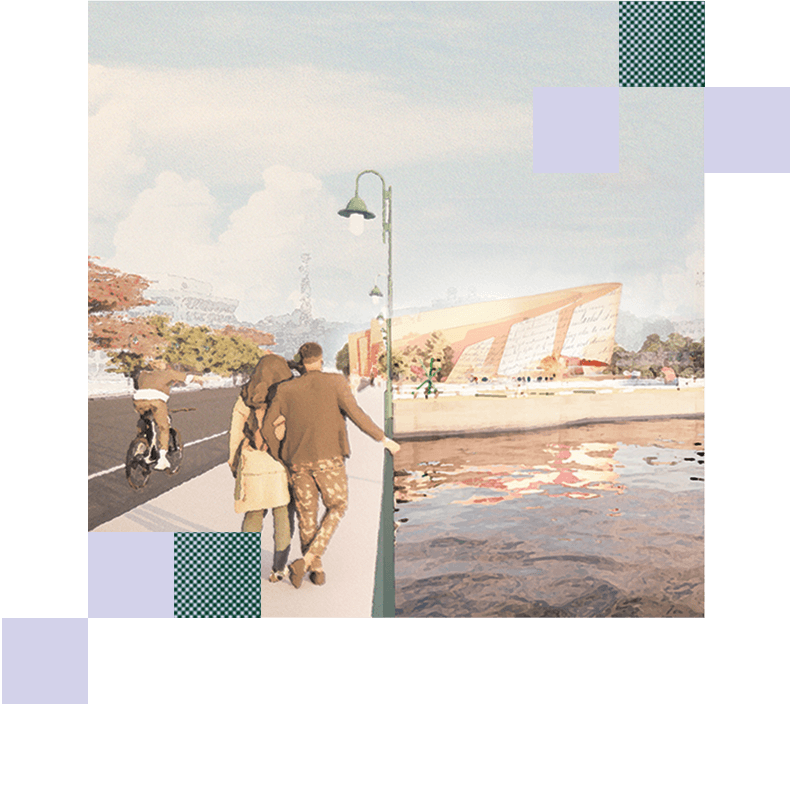
Along the Genesee River in Rochester, New York, the nonprofit Frederick Douglass Family Initiatives (FDFI) aspires to create a campus that shares the history of Frederick Douglass, his wife Anna Murray Douglass, and succeeding generations of abolitionists and activists. Building a museum, cultural center, and park in a city that figured prominently in Douglass’s life following his escape from slavery made sense, says FDFI co-founder and president Kenneth B. Morris Jr., the great-great-great grandson of Douglass.

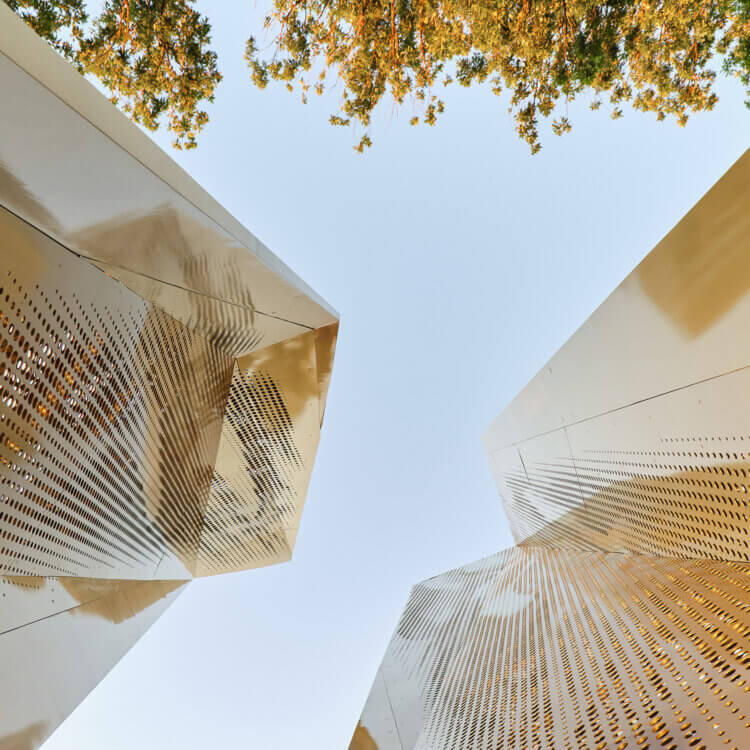
Morris envisioned a museum building that incorporated sailboats, a nod to Douglass’s observations of ships on the Chesapeake Bay as “freedom’s swift-winged angels, that fly round the world”—a stark contrast to his conditions in slavery. Morris needed visuals to present to city officials, he says, so he partnered with a team of architects and designers, who “brilliantly tied my vision with the theme of literacy, as pages of a book bound at the spine but free at the edges.” The metaphor was a powerful one: “Learning to read and write enabled Douglass to become one of the most influential figures in American history.”

FDFI has signed a memorandum of understanding with the City of Rochester, the first in a series of steps to obtain site control and launch a capital campaign. “We want the community to take pride in this project,” Morris says, “so how we engage with the community is an important part of what we’re doing.”

“We want the community to take pride in this project, so how we engage with the community is an important part of what we’re doing.”
Kenneth B. Morris Jr., co-founder and president of Frederick Douglass Family Initiatives
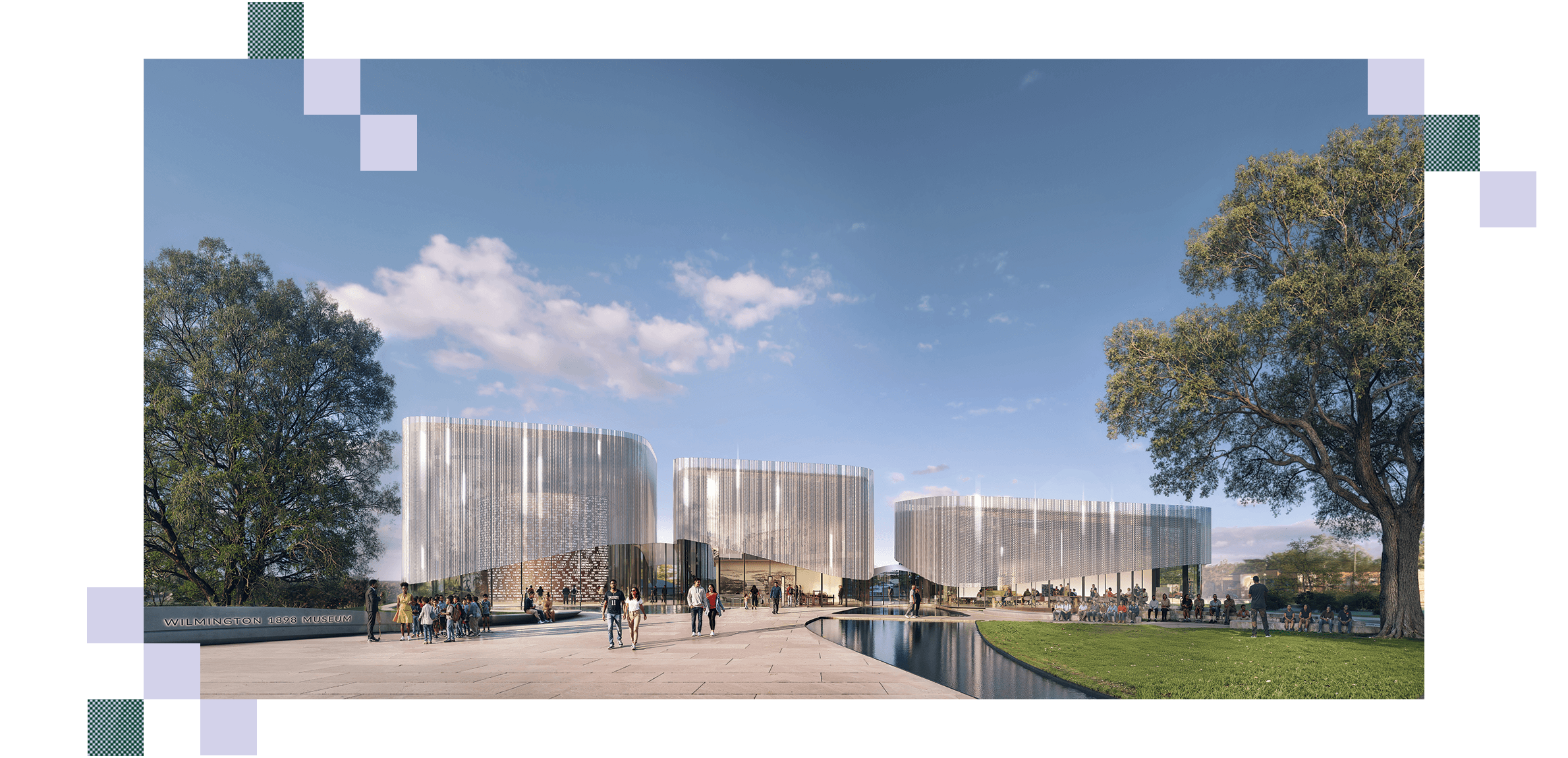
Wilmington 1898 Museum

Until Nov. 10, 1898, Wilmington, North Carolina, was the home of a thriving Black community. Then, in what’s known as the Wilmington Massacre and coup d’etat, white supremacists overthrew the city’s democratically elected, multiracial government, killing upward of 60 Black residents—though the exact number remains unknown. Efforts are now underway to create a space that can “provide growth and healing for the community around this history, as well as a place of deep internal inquiry for visitors to make connections with their own experiences and backgrounds,” says Leigh Carter, board member and founder of the Elizabeth L. Carter Foundation, initial funder for the museum.

After the museum organizers purchased a parcel of land in downtown Wilmington, adjacent to the existing 1898 Memorial Park and monument, they knew their immediate next step was to engage a team of designers. “Having people who understood our vision was crucial,” Carter says. “Our designers bolstered our team’s confidence that we can sensitively place a physical, man-made structure on an organic setting. We all exhaled, knowing we now had help.”

The project is in the early stages of design. “We’re excited about leaning on technology to make our museum experience engaging and stimulating,” Carter says. “The designers helped us right-size the project for our community, budget, and vision. Whenever we meet with them, they are as enthusiastic about our ideas as we are.”