Climate Impact January 14, 2026

Ecologist Juan Rovalo brings new perspectives to the design process
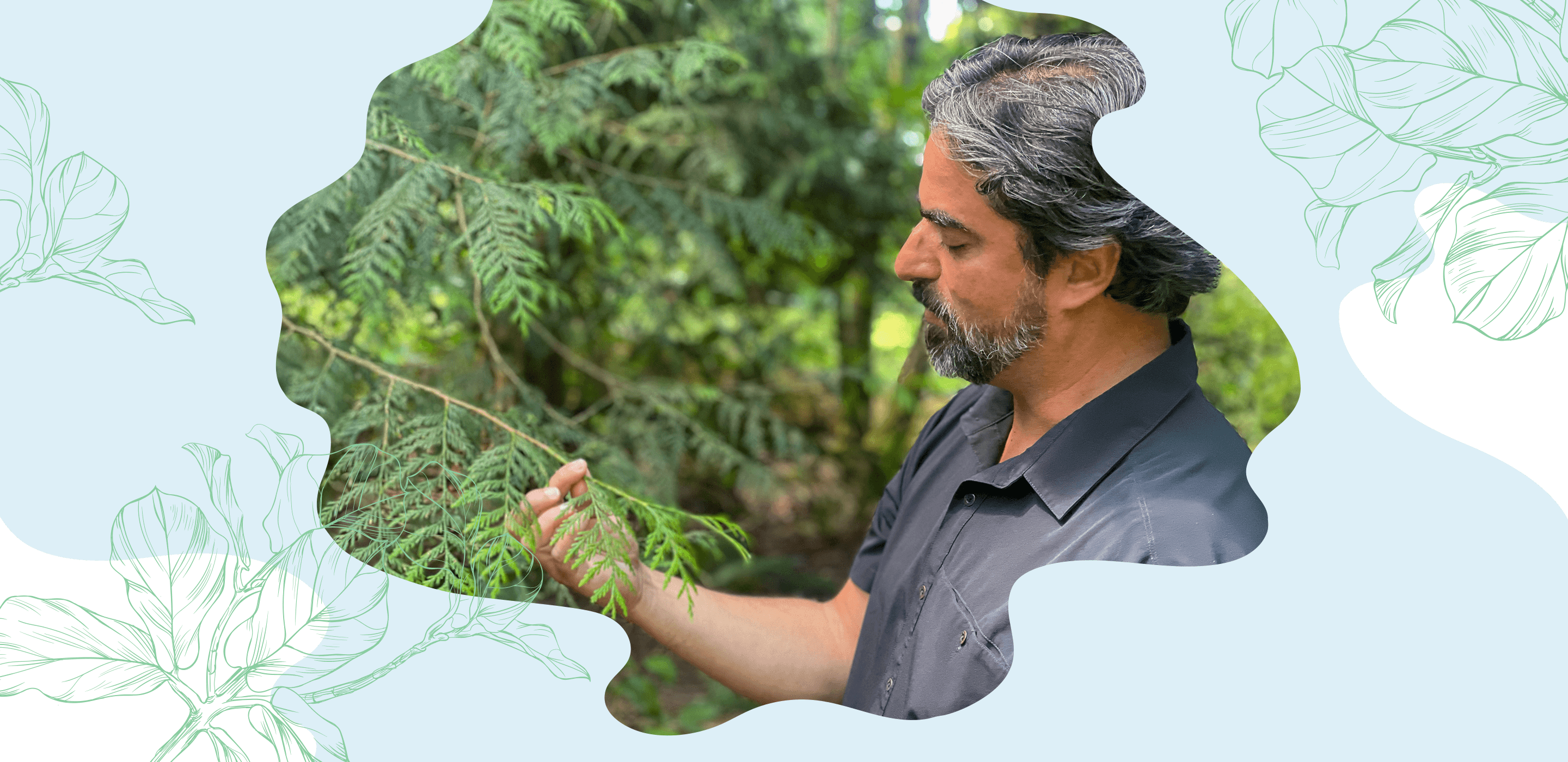
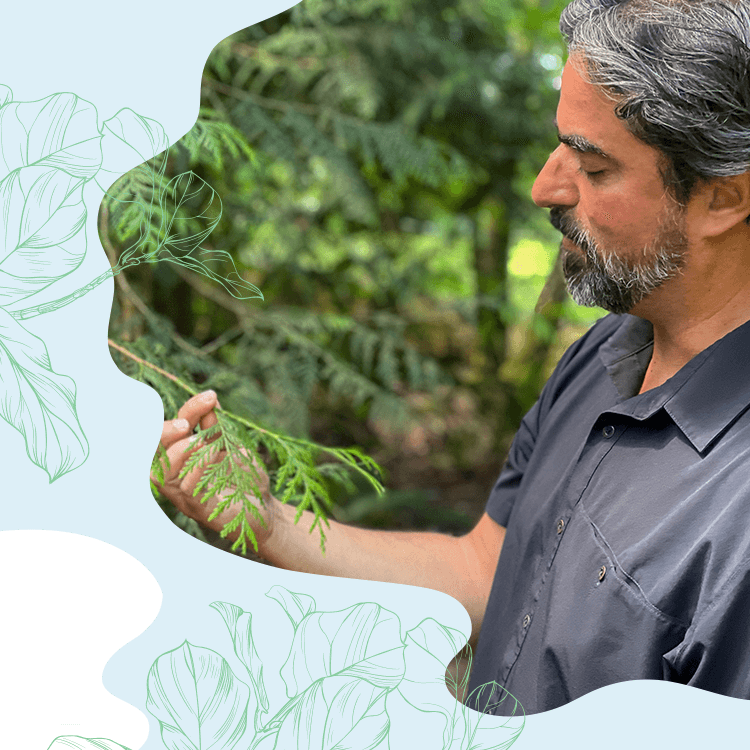
Man examining tree branch in forest setting.
Man examining foliage in forest setting.
Photos: Rachel Rose

According to the latest report from the Intergovernmental Panel on Climate Change, the earth’s surface temperature has risen faster over the past 50 years than ever before. At the same time, biodiversity is shrinking and life-sustaining habitats are being destroyed or pushed to the margins. Despite humans’ impact on the natural world, Juan Rovalo thinks the built environment can shift toward a more positive future. And as Perkins&Will’s first firmwide director of ecology, he’s in a position to influence designers’ habits—and mindsets—across the globe.
 

Here, Rovalo shares his thoughts with Derek Lee, a landscape architect and partner at PWL Partnership, on the far-reaching benefits of regenerative design.
Derek Lee: What do you hope to accomplish in your role?

Juan Rovalo: I want to make sure that our designs include nature as the default, not the exception. To achieve this, I want to collaborate with our clients and empower our teams.

We need to show our clients that regenerative strategies deliver solid long-term benefits like reducing risk and long-term costs, strengthening brands’ reputations, and facilitating dialogue with regulatory authorities. This approach also offers advantages that are more difficult to quantify in financial terms, like wildlife habitat and employee satisfaction.

Internally, we’re increasing our teams’ capacity by giving them knowledge and practical tools. We’re building ecological literacy across the firm so designers and strategists can align with clients’ timelines and budget expectations while also enhancing biodiversity, water conservation, and habitat protection.

DL: Can you share some real-world examples of regenerative practices?

JR: Sure. Earlier in my career, I worked as a senior ecologist for Jacobs Engineers and collaborated with the U.S. Army Corps of Engineers’ “Engineering with Nature” program. The goal was to improve the resilience of critical infrastructure and maintain readiness by working with the emerging properties of natural processes instead of against them. We looked at the “services” that nature provides, like dunes that prevent shoreline erosion, and we restored them, protected them, or mimicked them in our designs. These were large regional projects, and I can assure you that the Corps of Engineers applied this approach because it works, and because it saves time and money.

On a smaller scale, a project team recently asked me to evaluate a proposal for a city park that would be built on a floodplain. I analyzed the site and told them that, even though the surrounding streets and culverts were outside the client’s stated scope, stormwater runoff would directly impact the park. I suggested designing wetlands at the perimeter to capture stormwater, reduce the risk of flooding, and improve biodiversity. These wetlands would also act as a natural water filter and provide habitat for birds and other wildlife. This is an example of how considering natural processes first and working with nature can save money in the long run. Even though the city wasn’t thinking about water flowing into this area, I knew that anything we did in the park would flood and deteriorate if we didn’t address those issues.

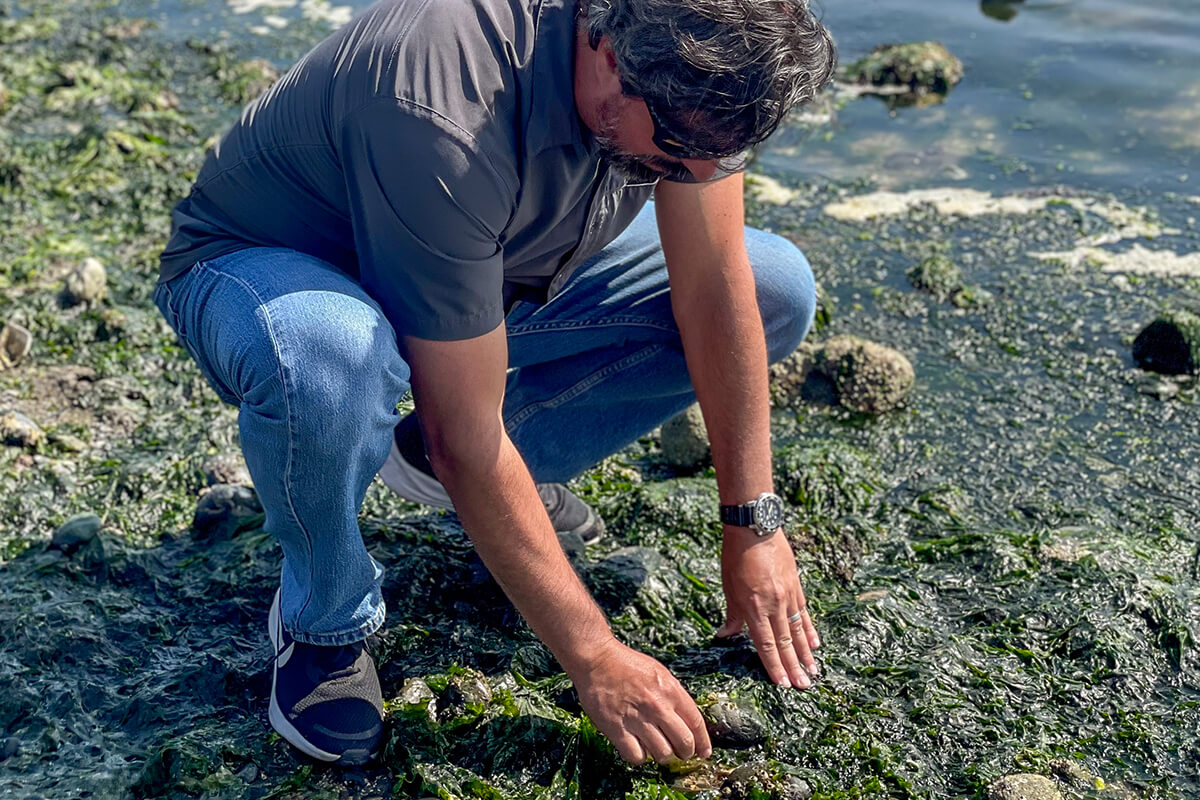
Man crouching on rocky shore, examining marine life amidst seaweed and stones.
DL: If you were giving blanket advice to anyone who’s building a new project, how would you suggest they make it more nature-positive?

JR: So much depends on the type of project, the location, and the scope. But in general, it’s best to start by understanding the site, the region, the biophysical attributes, and the history, along with the current pressures, threats, and drivers of degradation. Are there ecological assets to protect, like species, habitats, and processes?

Then think about recovery pathways, keeping in mind that we aren’t necessarily trying to return a site to its pristine past condition. In fact, we usually can’t do that. But we can identify different degrees of recovery potential, like remediation, rehabilitation, transformation, and regeneration. We can reduce pollution and stormwater runoff. We can mimic natural systems that filter and clean water. We can plant native species that stabilize the soil and provide wildlife habitat.

In a nutshell, the simplest advice is to identify recovery opportunities and implement them, even if they seem small.

DL: What do you think are the main things that need to change in the AEC (architecture, engineering, and construction) industry?

JR: We need to change mindsets. AEC professionals who don’t push themselves to think more broadly and creatively are defaulting to the most basic level. Every designer faces constraints like tight budgets and legacy impacts, but these impediments should not hinder a regenerative approach. Designing with nature, instead of against it, also extends the useful life of a project.

DL: Why is it so difficult to change mindsets among AEC professionals and their clients?

JR: Because this isn’t business as usual. Ecologically integrated design requires knowledgeable, multidisciplinary teams and a willingness to collaborate, learn, and innovate. It requires leveraging each other’s openness and expertise to do something different. And of course, it has to conform to timelines and budgets. But better tools are evolving, and they make it easier to manage data and make informed decisions.

DL: If we don’t adopt a new mindset, and if we don’t do a better job designing for nature, what does science tell us will happen?

JR: Life’s diversity, and the meaning, purpose, and consciousness that emerge from it, are the most valuable and irreplaceable treasures known to us in the universe. If we lose that, we lose ourselves. If we don’t change our approaches to solving humanity’s needs, and not just in our industry but also in agriculture, manufacturing, and other aspects of modern life, we will lose wildlife populations and drive species to extinction, and with them, processes that sustain ecosystems. And all our systems, products, and processes that depend on nature would collapse.

I don’t go for gloom and doom, because we need to do this work in a way that keeps our hearts open and our enthusiasm going. But I think we should all have a real sense of urgency. Problems like pollution, floods, fires, loss of biodiversity, and climate change are not remote future possibilities. The news is full of these stories right now, every day, and we need to address the underlying causes. We don’t have the luxury of not doing this work.