Perspectives November 13, 2025

Adaptive Reuse in Sports & Recreation: Breathing New Life into Community Spaces

By Jennifer Williams and co-authored by Tyler Hinckley

Across campuses and cities, sports and recreation facilities are evolving to meet the changing needs of the communities they serve. Within aging structures and outdated programs lies an opportunity to reimagine what these spaces could be. Adaptive reuse offers a solution that uniquely balances legacy with performance and sustainability with inclusion. According to a 2025 report, 78% of U.S consumers now favor eco-friendly venues, prompting designers and institutions to prioritize reuse strategies over new construction. Rather than starting from scratch, this approach introduces a new purpose to existing buildings while preserving their history and prioritizing environmental responsibility.

We took this approach with three recent projects in the Northeast — a Division I collegiate arena, a university athletic training center, and a neighborhood squash hub — to transform underused spaces into modern environments that reflect the values and aspirations of the people who use them.
Renovation Rooted in Equity

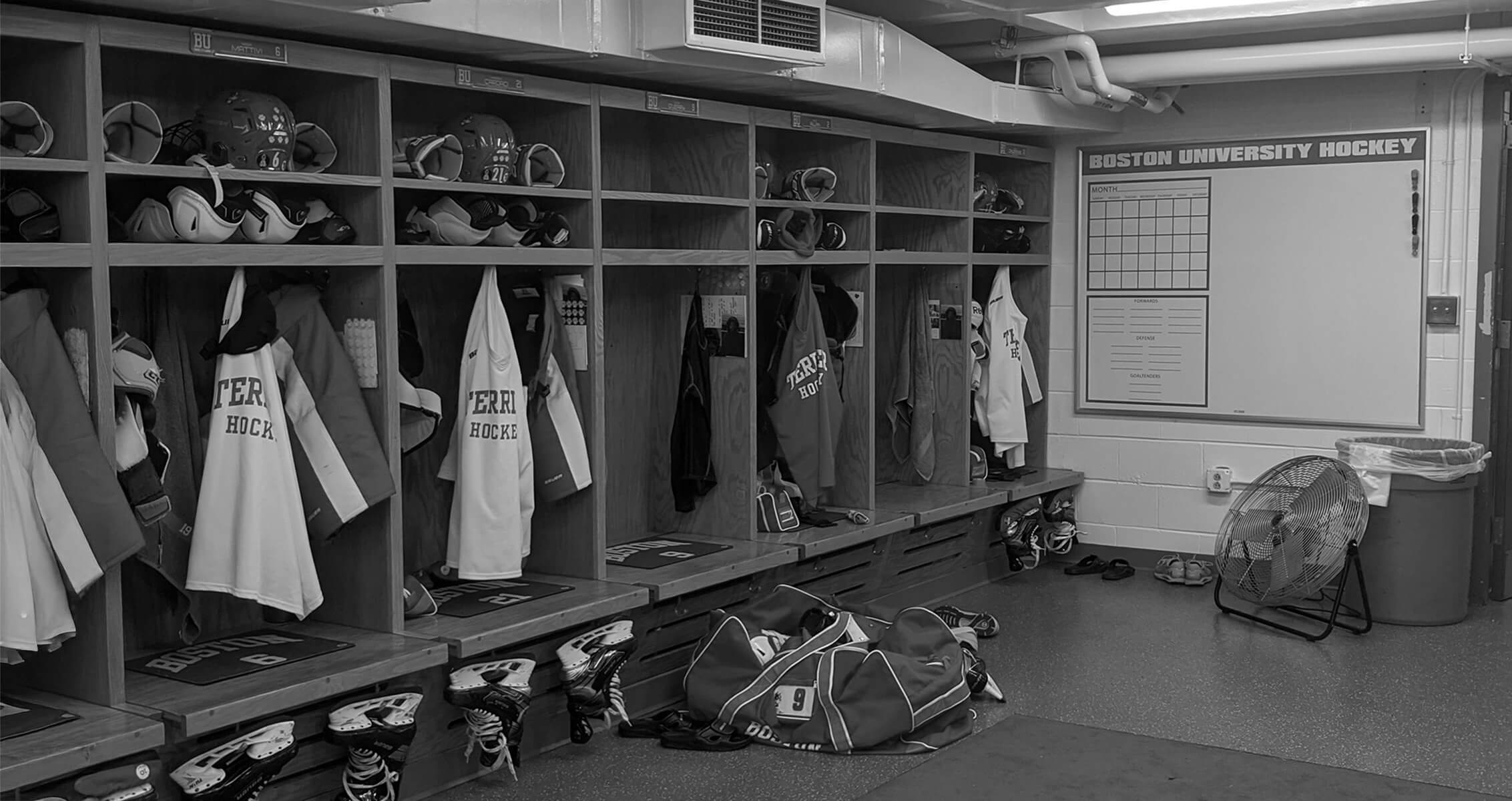
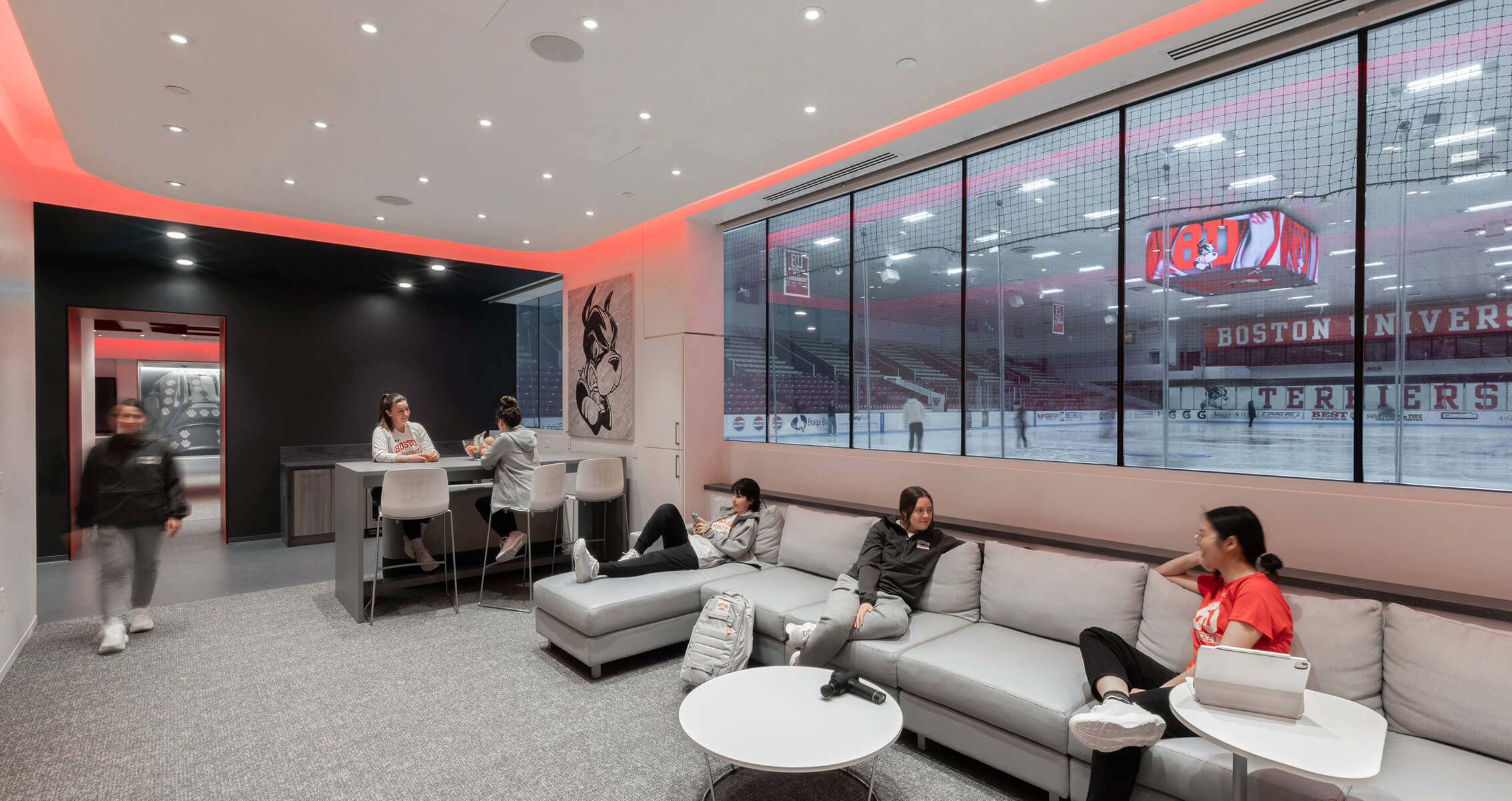
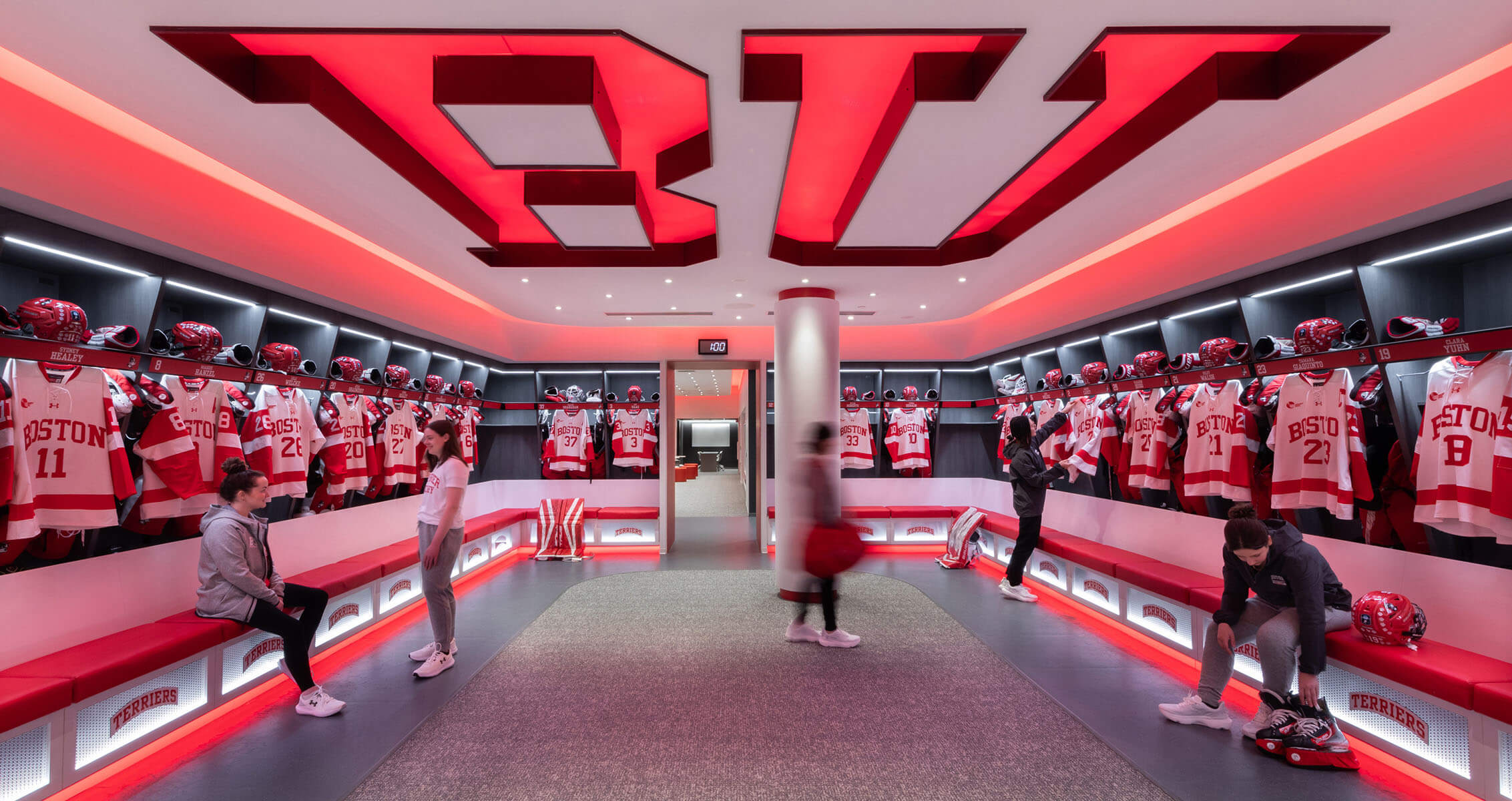
Through thoughtful reuse, the past becomes a foundation for the present as we create more inclusive and equitable spaces that serve a broader and more diverse community. At Boston University, the Walter Brown Arena had outgrown its ability to serve current student-athletes and the wider campus community; rather than build from the ground up, we chose to reuse and reframe its story. Originally intended to support the men’s ice hockey team, the arena was built in a pre-Title IX era before women’s sports entered the scene. Now, half a century later, our renovation transformed the interior into one of the few Division I women’s specific ice hockey arenas in the nation — a bold commitment to equity and excellence.

What was once a complex mix of outdated spaces is now a purpose-built performance environment where student-athletes and coaches thrive. Upgrades to the venue’s support spaces also accommodate club sports, intramurals, physical education programs, and outside rentals in a universally accessible, inclusive way previously not possible within the existing conditions.

Boston University, Walter Brown Arena
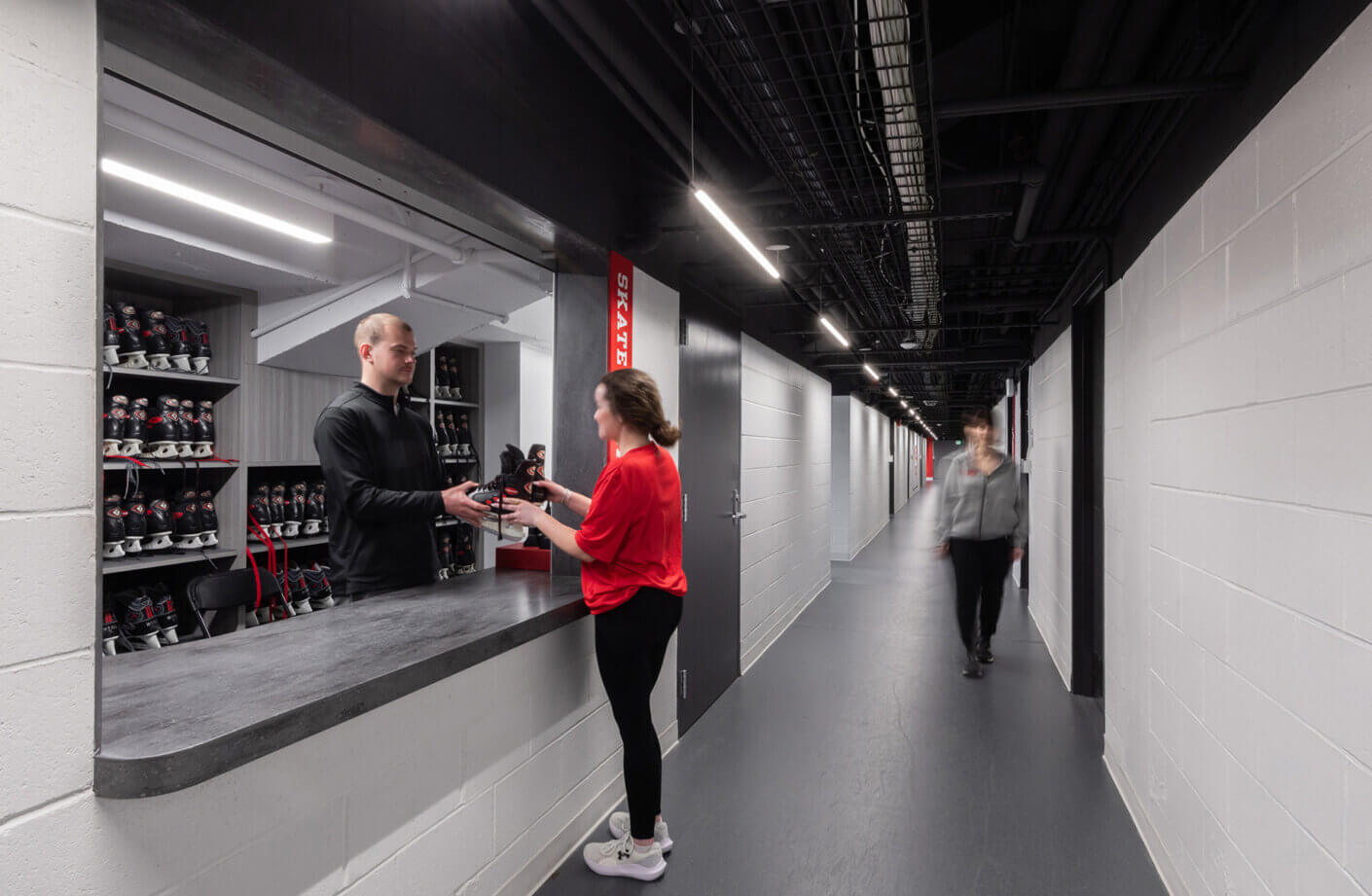
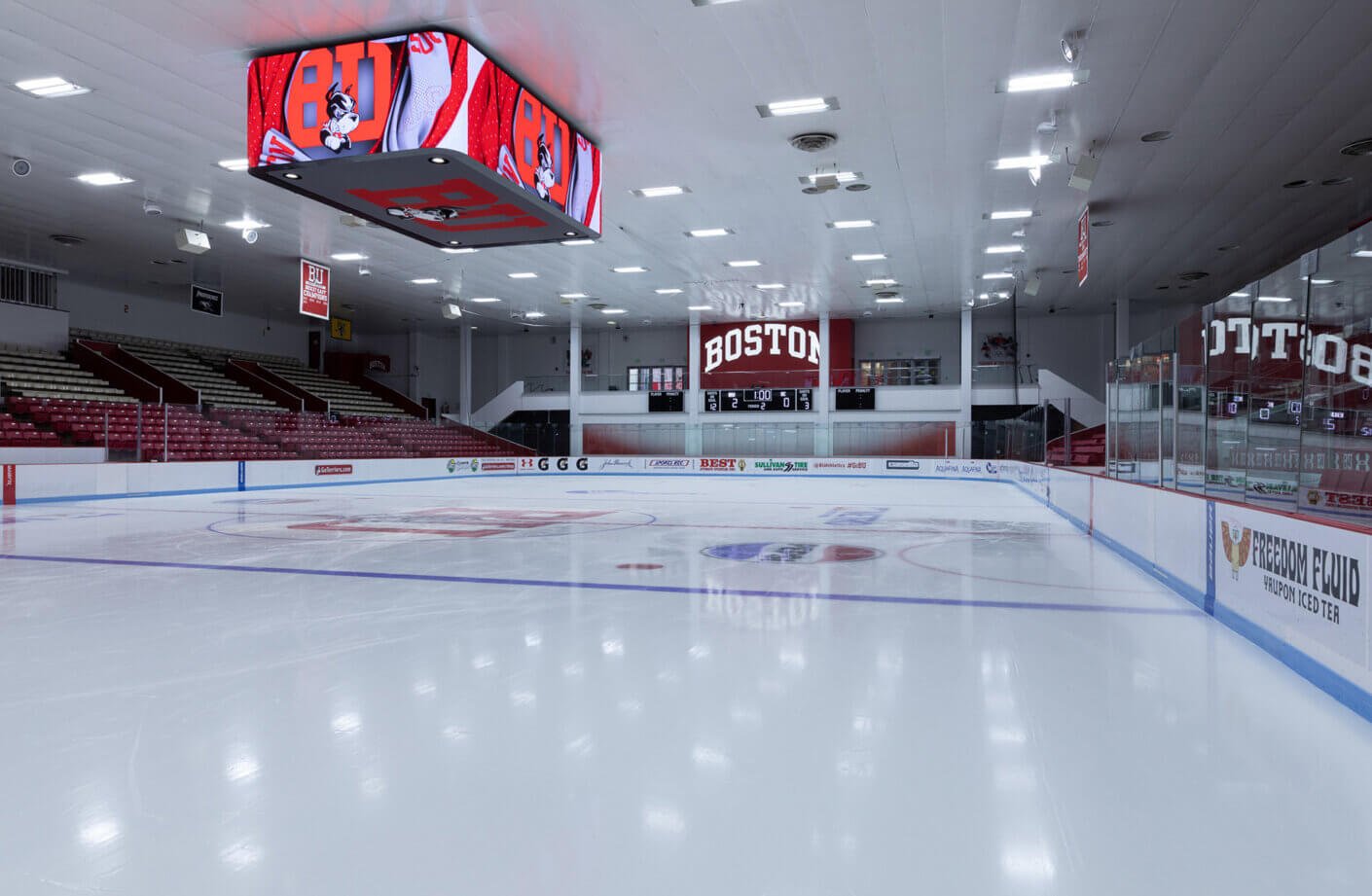
As a mid-century facility, the arena faced challenges with accessibility, infrastructure, and overall character. Thoughtful upgrades to branding, lighting, and circulation now create a more welcoming, inclusive environment for club sports, intramurals, physical education programs, and public use.
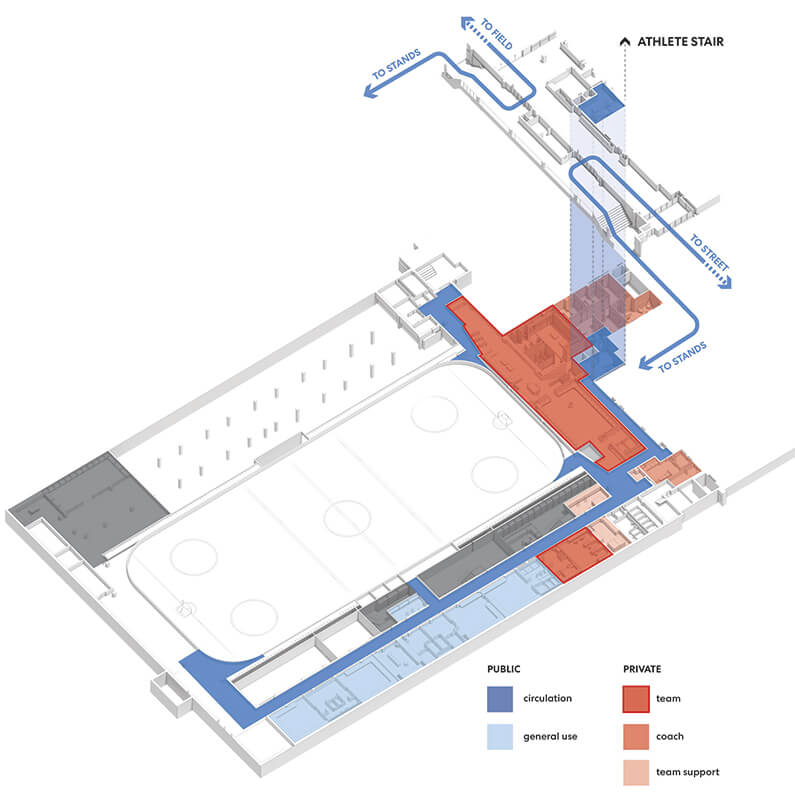
Architectural floor plan and exploded axon for women's hockey arena showcasing public and private team zones.
Boston University, Walter Brown Arena
Improvements to circulation and wayfinding throughout benefit not only athletes, but the University community at large. When not in use for practices and game days, the arena is open to the public for open skate sessions and student events.

Sustainability Through Repurposing

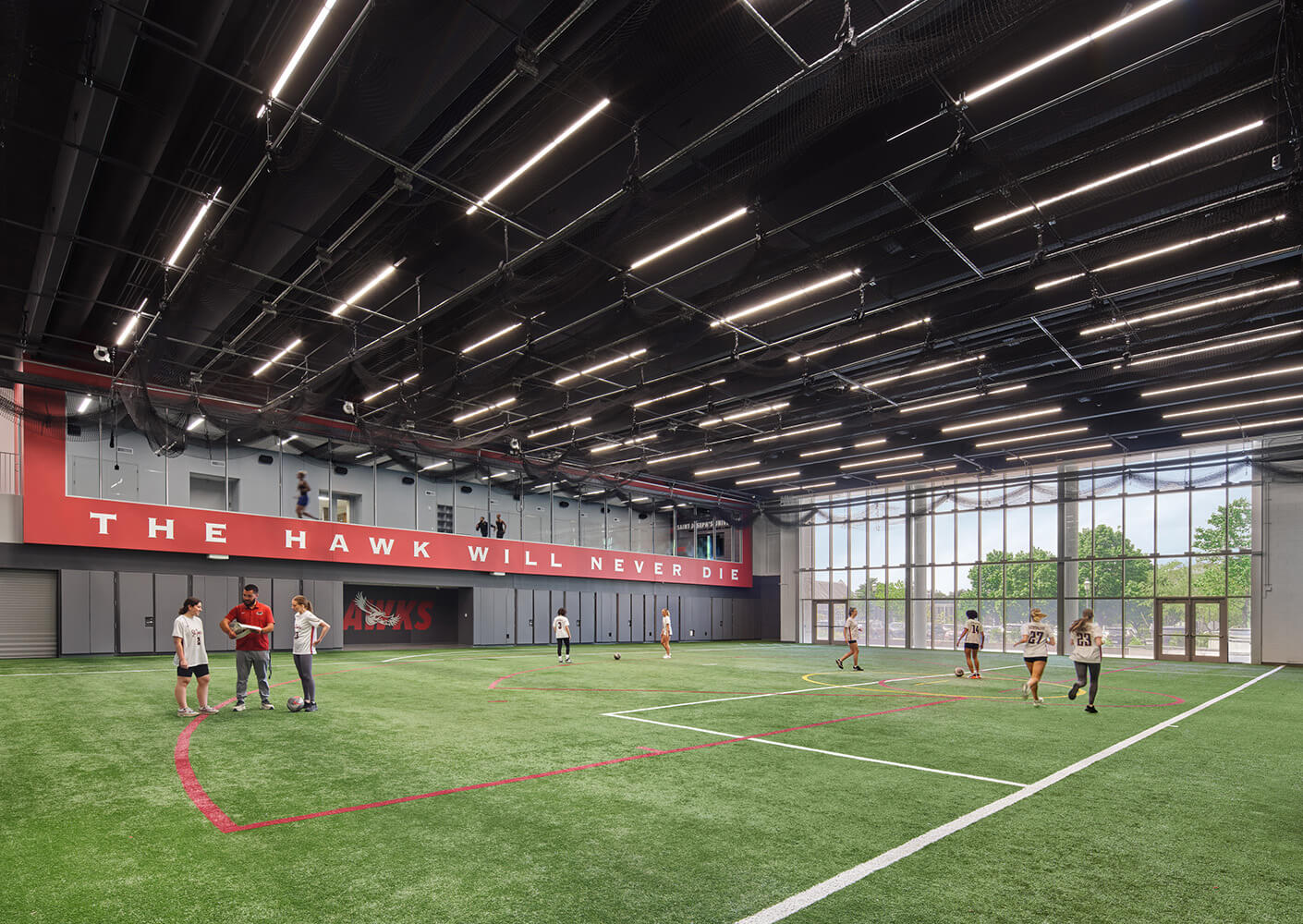
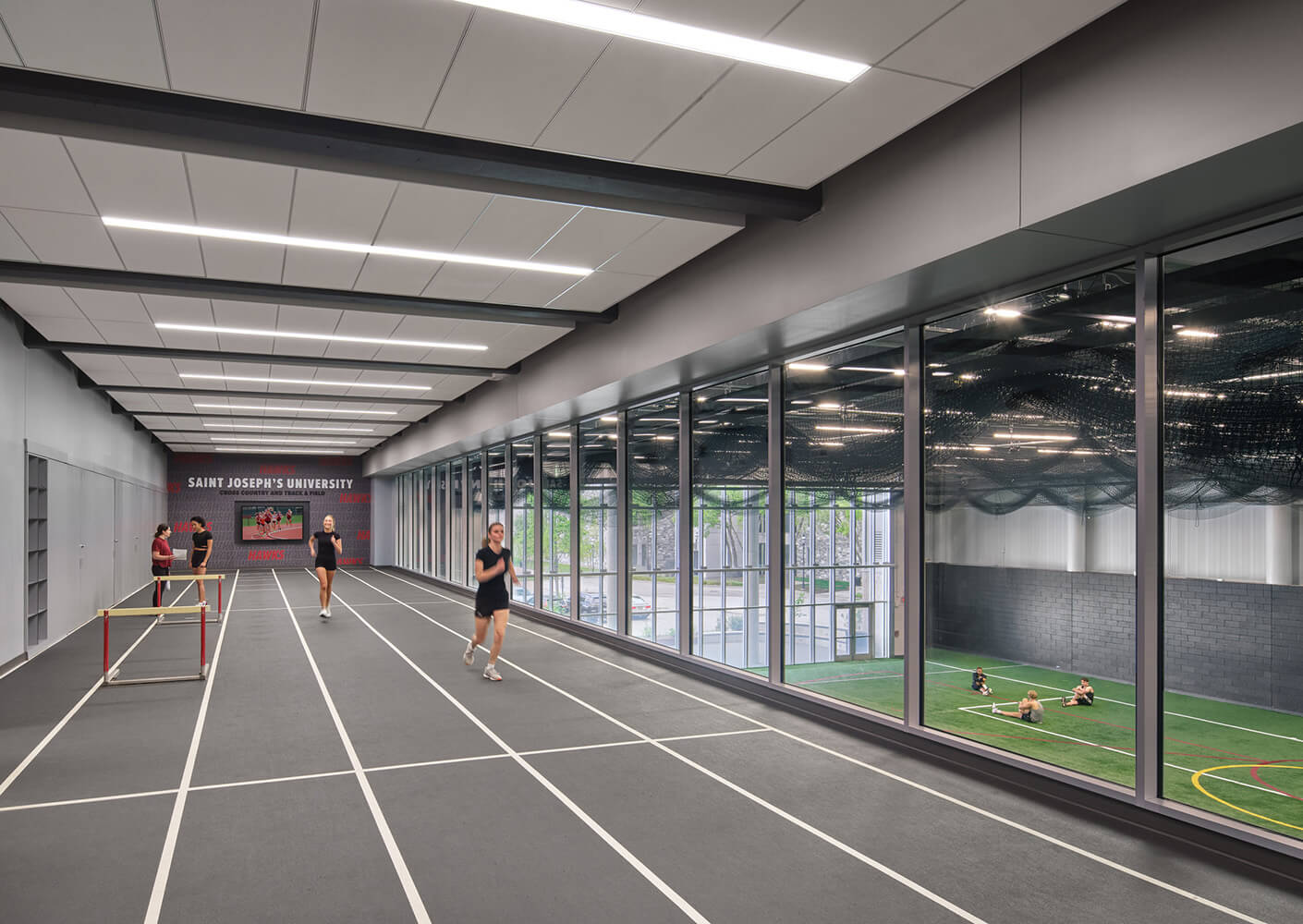
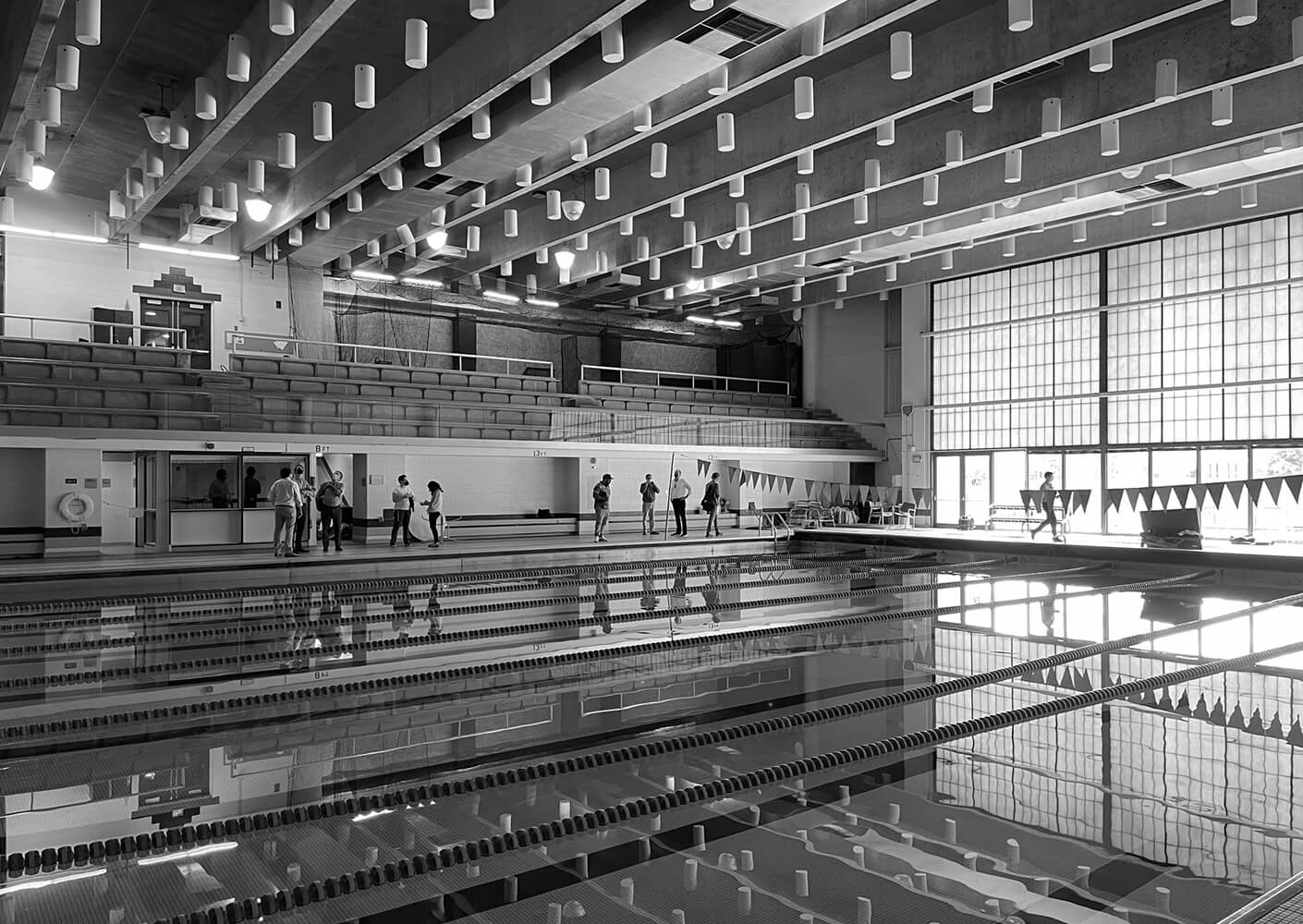
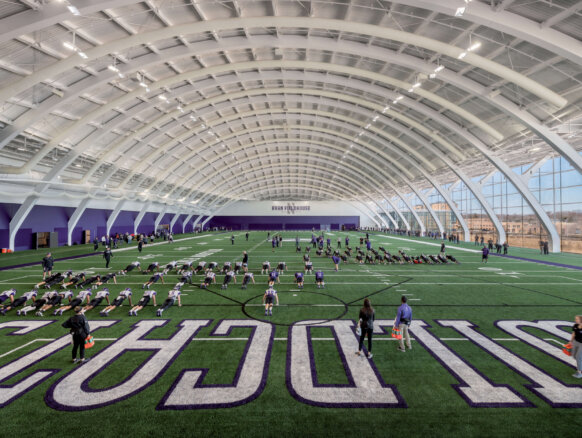
At Saint Joseph’s University, the challenge was to redesign a cluster of facilities that no longer met the demands of a modern Division I program. The vision for the Maguire Athletic Center was to transform what existed into a high-performing environment that maximizes every square foot while emphasizing a whole-health approach to the student-athlete experience. What was once an underutilized swimming pool now operates as a multipurpose indoor turf field that supports field sports and elevated conditioning. The seating mezzanine overlooking the pool has become an indoor track and field training space. Former multipurpose courts were redesigned into dedicated practice facilities for men’s and women’s basketball. Nearby racquetball courts were reinvented as a wellness suite, a golf practice facility, and a multipurpose erg room used by the men’s and women’s crew programs.

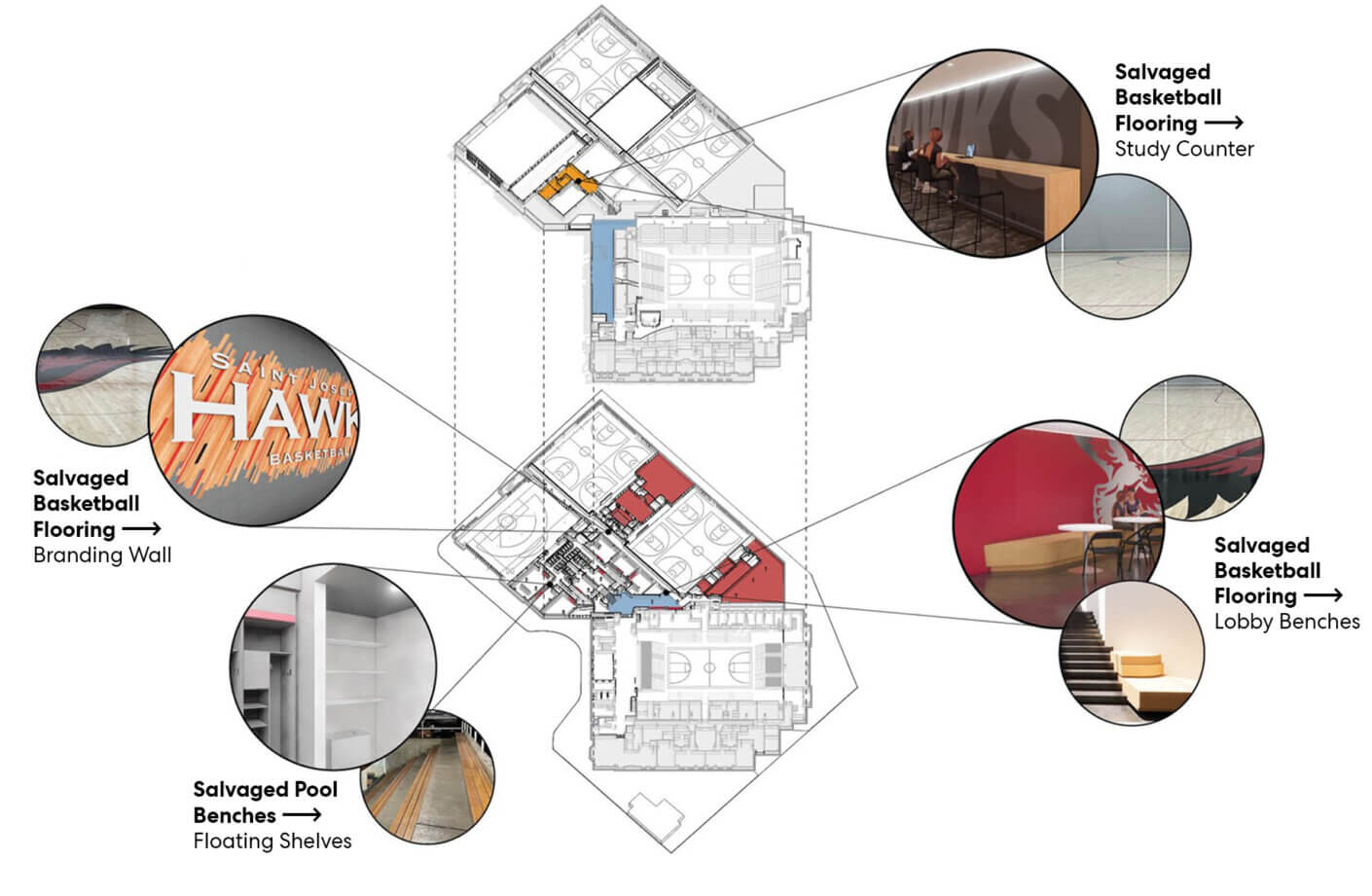
Equally as important was the commitment to sustainability and the transformation of space. Salvaged bleachers were repurposed as lobby benches; wood court flooring was transformed into branded design features, and the reuse of existing structures significantly reduced embodied carbon. By transforming the interior of the building and maintaining the exterior and main structure, rather than building new facilities of the same size, we saved over 400 kgCO2 per m2 of embodied carbon or 42% of Global Warming Potential (GWP). What began as a collection of outdated spaces now operates as a holistic, high-performing ecosystem — a transformation that demonstrates how design can turn constraint into opportunity.

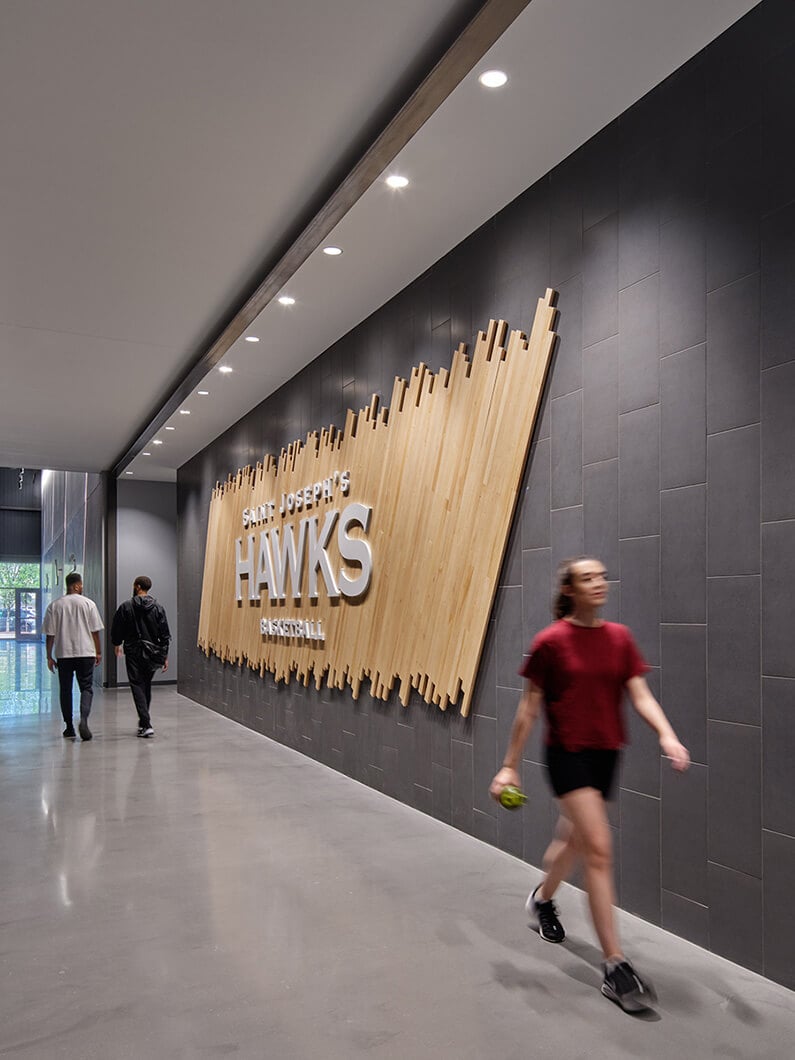
Hallway with Saint Joseph's Hawks basketball sign, and students walking by.
Saint Joseph's University, Maguire Athletic Center
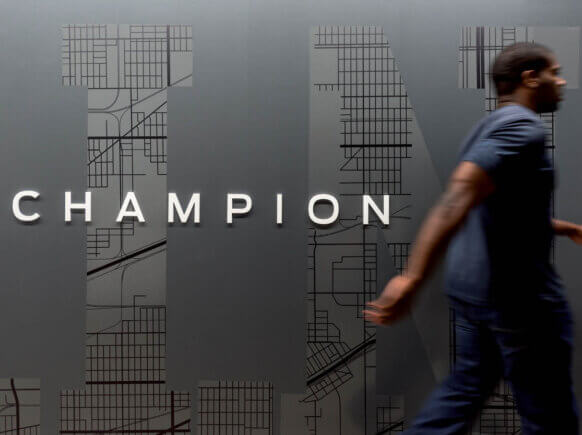
Today, student-athletes are welcomed by a signature branding wall crafted from the reclaimed wood flooring of the old basketball courts.
Floor plan and design features using salvaged material elements for college athletic center.
Saint Joseph's University, Maguire Athletic Center
We reclaimed and repurposed existing materials from the facility into branded signage, countertops, and artwork, uniting old and new while reducing the project’s embodied carbon footprint.

A New Model for Community and Belonging

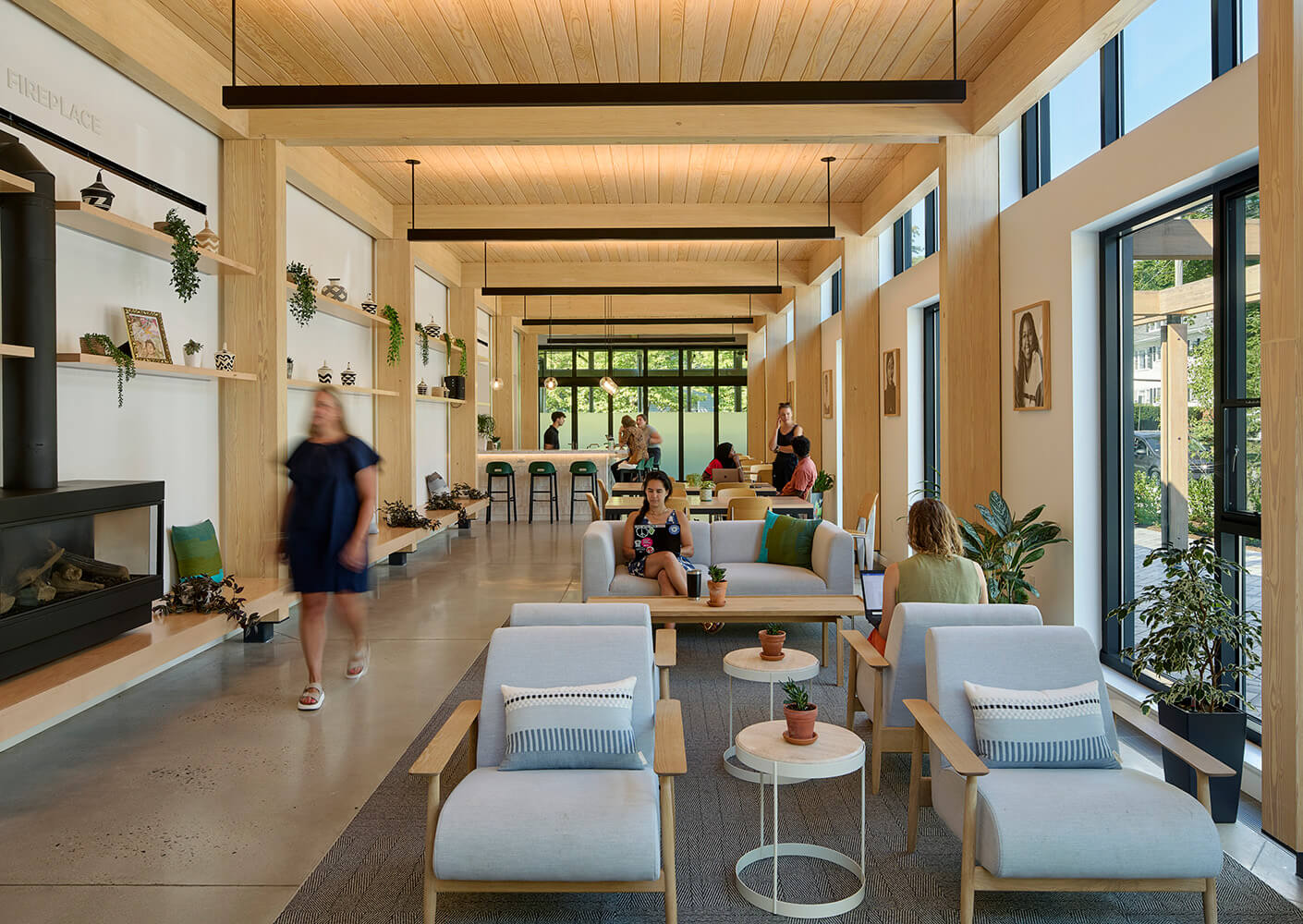
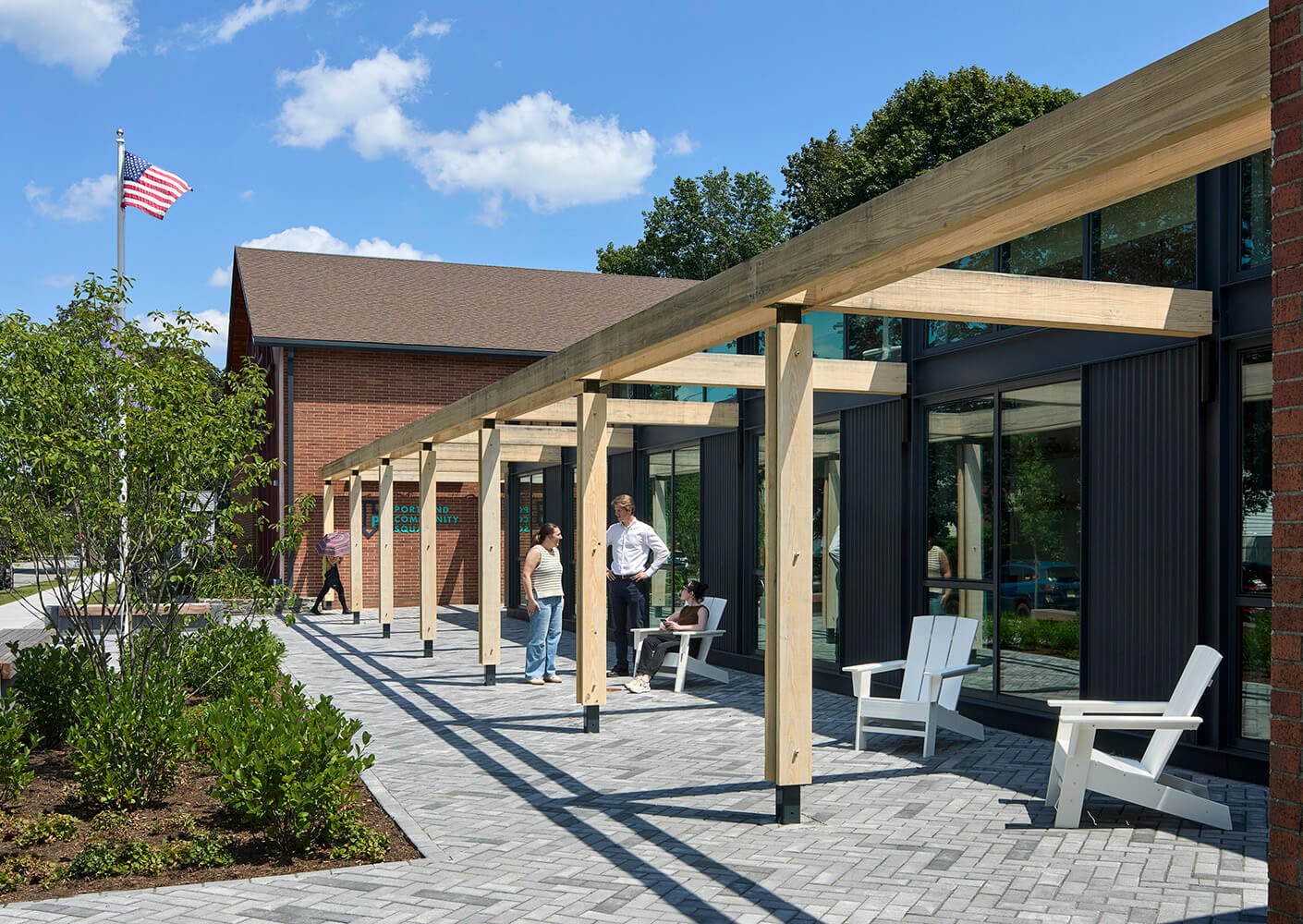
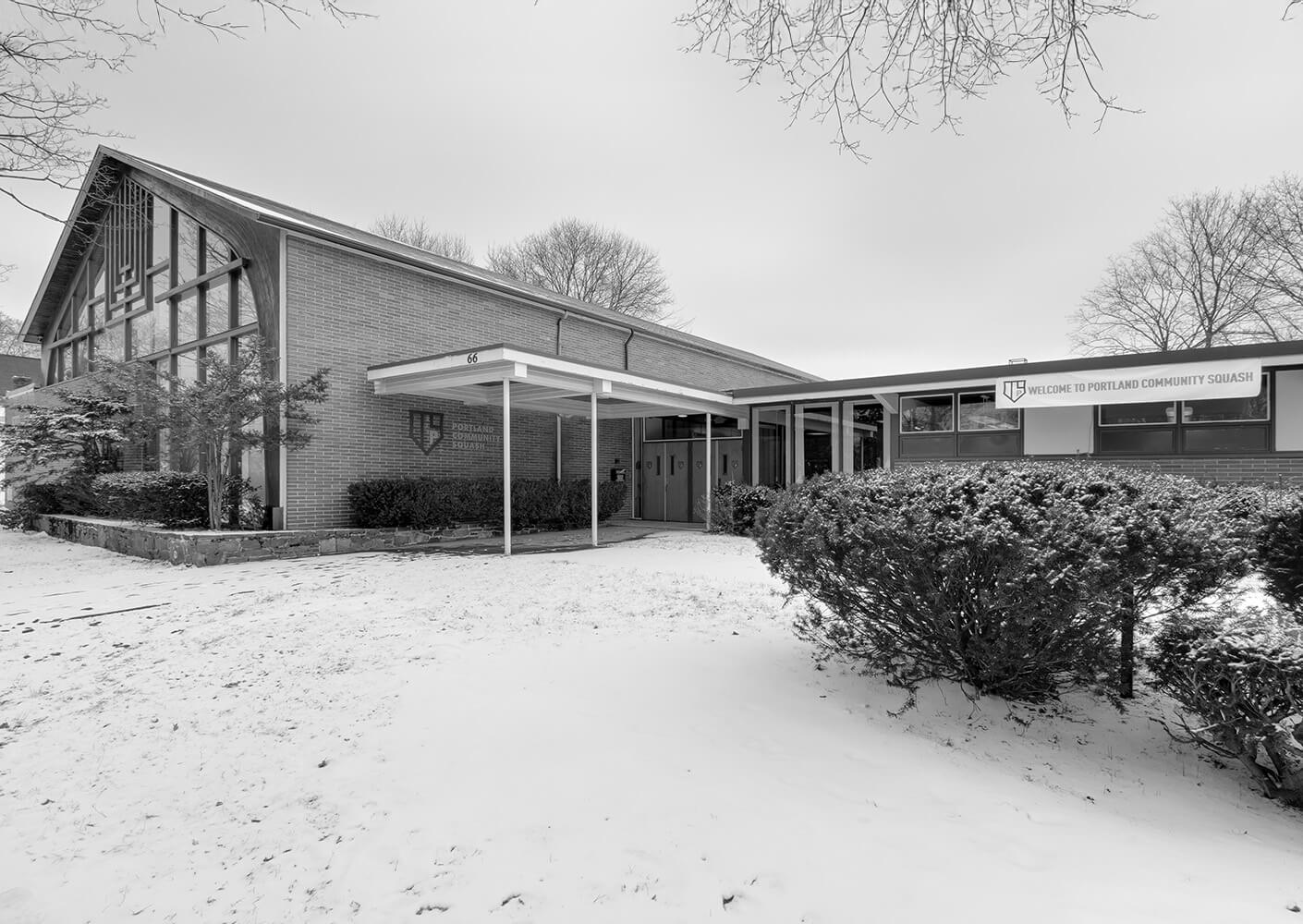
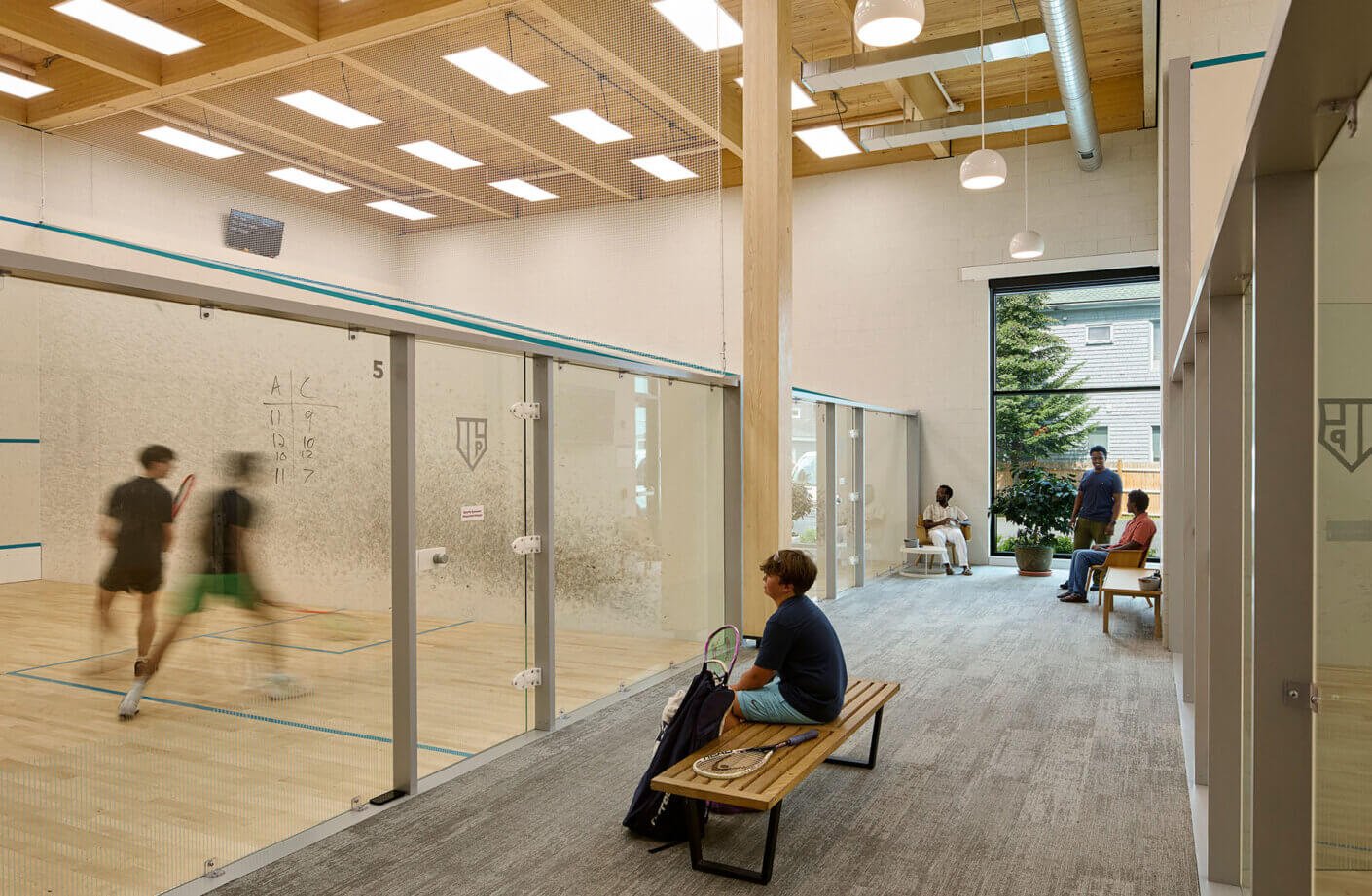
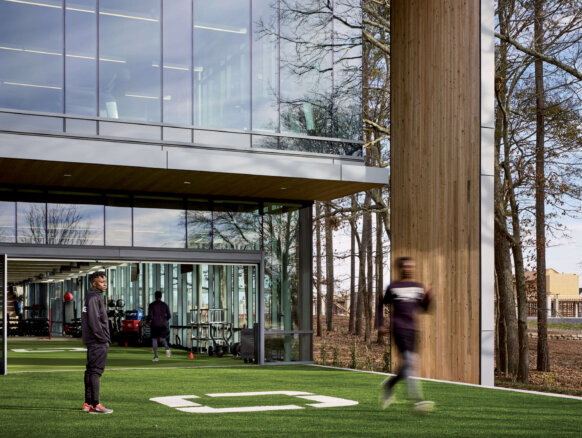
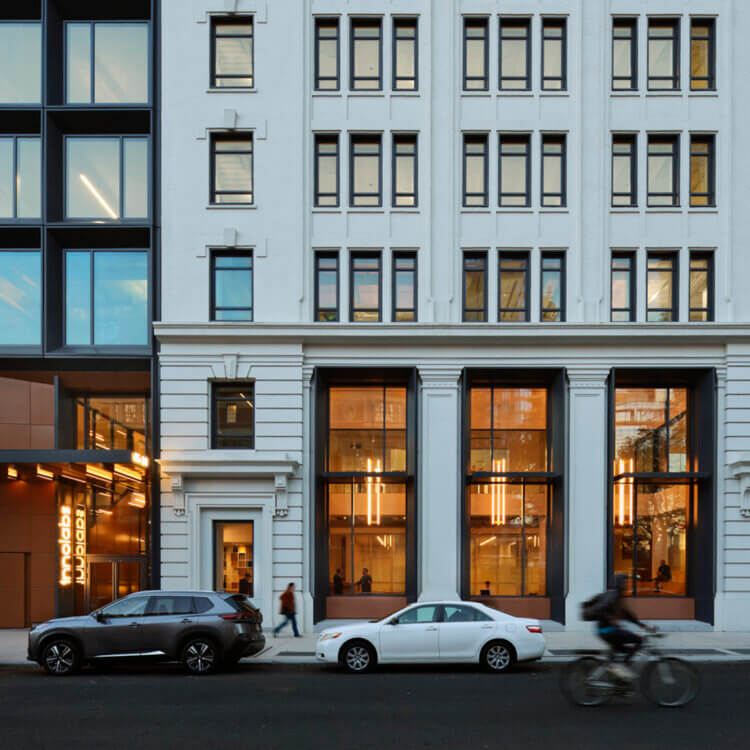
For Portland Community Squash (PCS), we transformed a former synagogue into a welcoming hub where people of all ages, backgrounds, and abilities connect through sport. As the pioneer of the Community Squash Model, PCS needed a space that could grow with its mission and better serve the surrounding neighborhood. The squash addition introduces new squash courts, including a doubles court that supports a wider range of players. The entry addition provides a new shared “living room” and café that encourages community gathering. Updated strength and conditioning spaces and renovated inclusive locker rooms ensure that every visitor feels welcome.

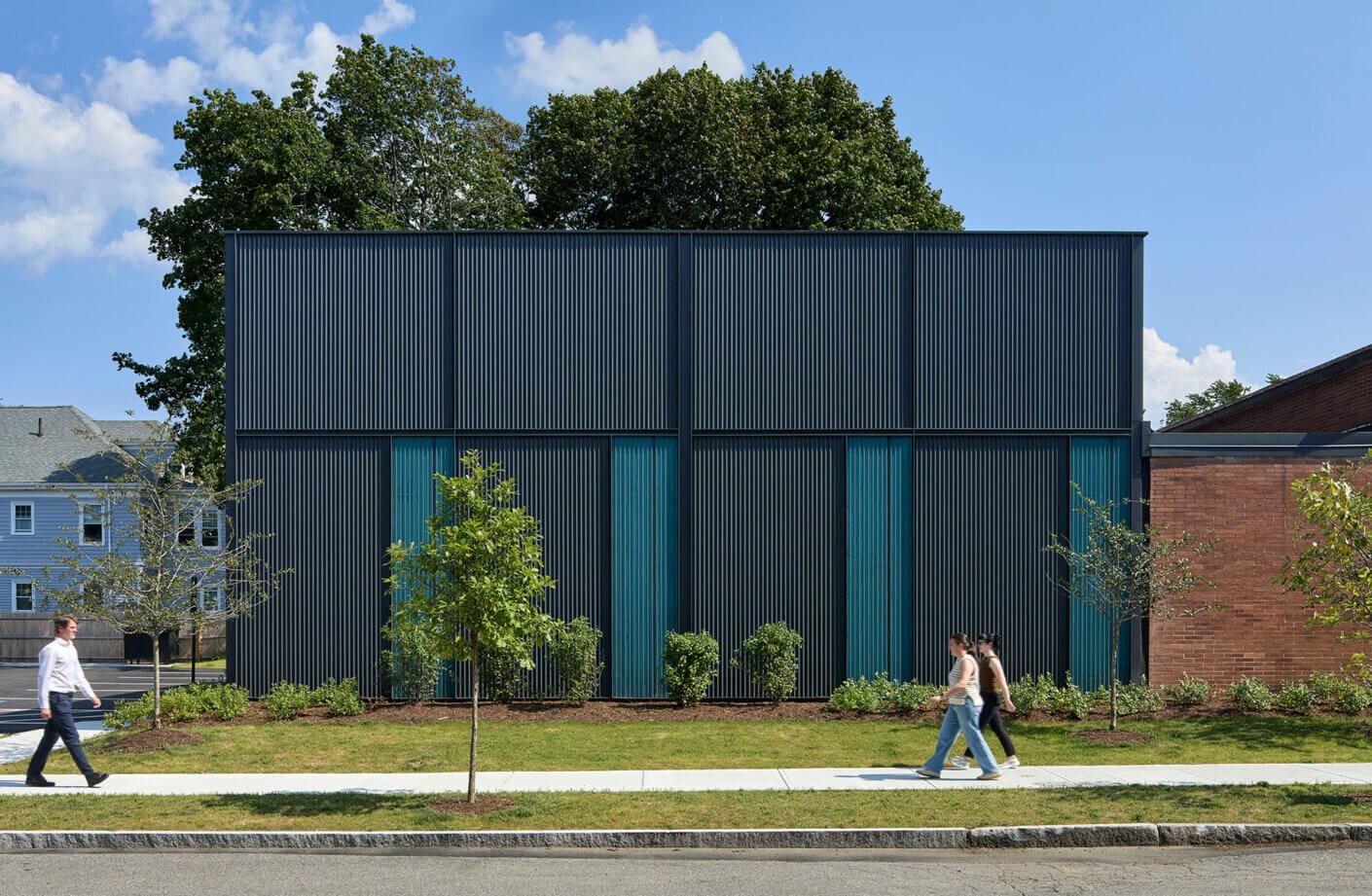
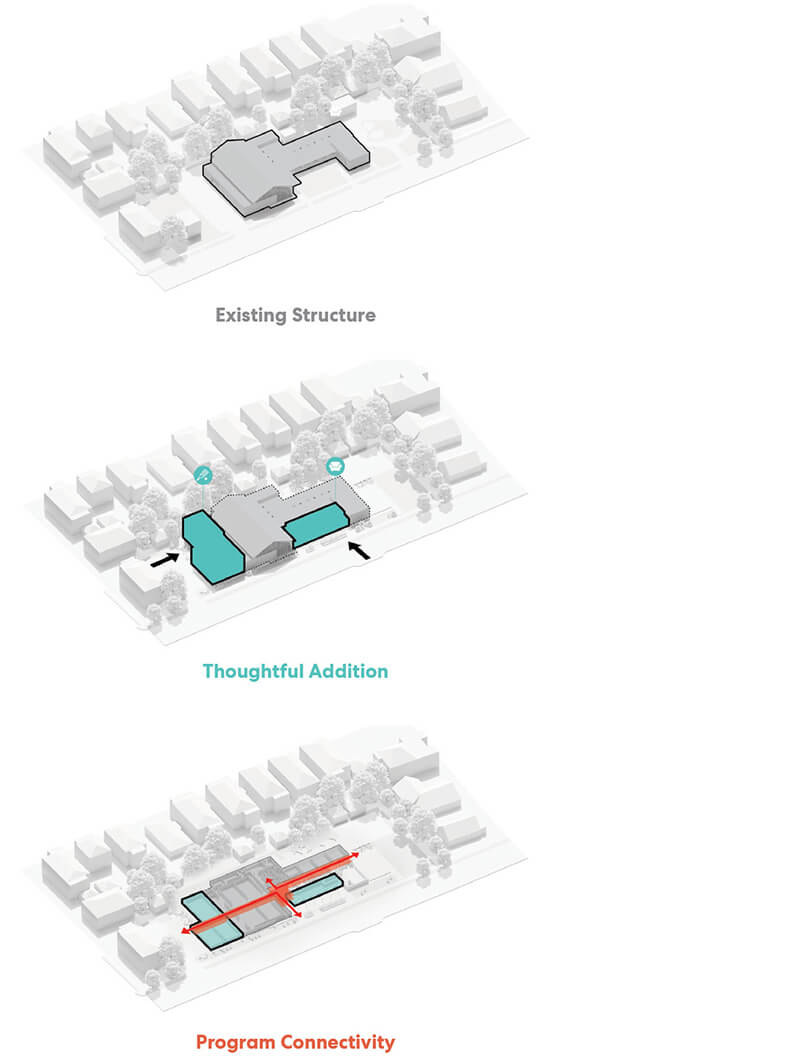
Those two new additions shape the updated experience: a gathering space within the entry courtyard and a squash court volume to the east of the original sanctuary. Both additions respect the historic architecture while introducing warm exposed timber structure and textured metal cladding that connects the building to the scale and character of the residential neighborhood. The redesigned facility is more than a place to play. It is a center for belonging, where sport becomes a catalyst for connection and community.

Architectural diagram of building additions and connectivity of spaces.

From Tension to Transformation

Every adaptive reuse project starts with a moment of tension: a place already exists, yet the needs of today call for something different. Design becomes the bridge between the current state and what could be, helping us discover new opportunities and remove what no longer supports the purpose of the space. This evolution is evident across our Northeast sports and recreation facilities, where once single-use buildings are being reshaped into mixed-program hubs for competitive athletics, wellness, recreation, and education. We are also seeing adaptive transformation emerge as a national trend, with developers and institutions increasingly opting to transform existing assets into lively, engaging community destinations. 

These projects have shown us that adaptive transformation is most successful when guided by intention. Thoughtful decisions, from cost-efficient strategies and the reuse of existing materials to rethinking program layouts and refining elements like wayfinding, branding, and lighting, allow spaces to reveal their fullest potential and create lasting value for future clients.

The transformation becomes real not when the construction is complete, but when people return, when students train, when neighbors gather, when life fills the space again. Design has the power to reveal potential that was always there.