Announcements April 15, 2026

Meet Donald Oloruntobo, the 2026 Nagle-Johnson Family Fellow

We’re excited to welcome Donald Oloruntobo, M.Arch ’27, as this year’s Nagle-Johnson Family Fellow at the Harvard Graduate School of Design (GSD).

The Nagle-Johnson Family Fellowship—established in 2018 by our Firmwide Design Director, Ralph Johnson, and his wife Kathleen—provides financial aid to underrepresented GSD students with the aim of widening their academic and career prospects.

Donald is now in his third year at Harvard, bringing with him a perspective shaped by Lagos, Tampa, and Cambridge. We sat down with him to talk about the life cycle of buildings and materials, and how a place’s past can shape its future.
How did you find your way to architecture?

Both of my parents studied architecture. My dad is a contractor, and my mom works in city planning in Dade County. I was born in Lagos and moved to Tampa when I was four, and I just grew up around it. For the longest time, that actually made me not want to do it. I thought, “I grew up around this, why would I want to study it too?” But then I had an epiphany in college and switched into architecture. I’ve been here ever since.

None of my brothers studied it, so my parents had kind of given up on the idea that any of us would. When I made the switch, they were thrilled.

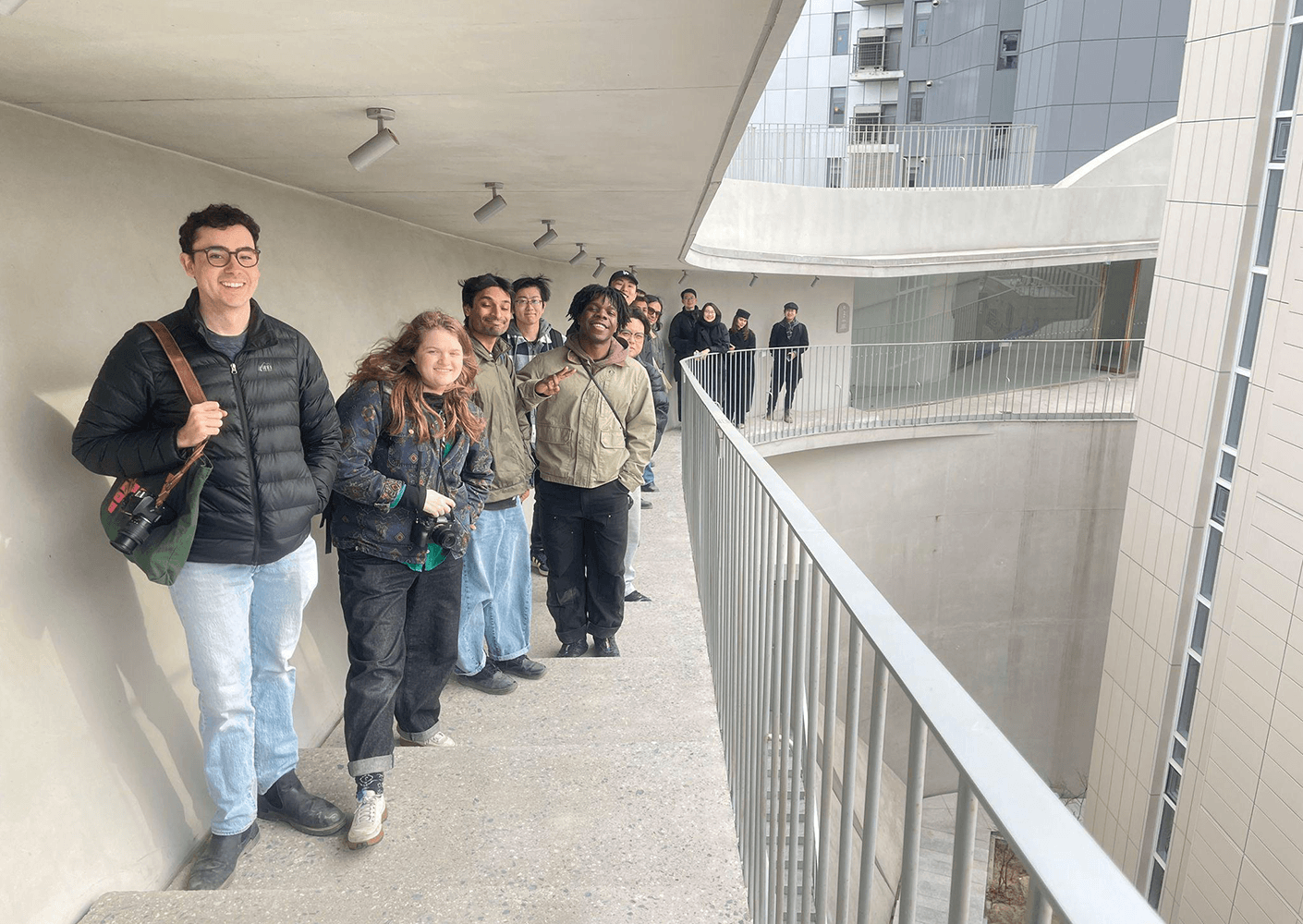
Donald on a class trip to Seoul, South Korea
What's been the throughline in your work at GSD so far?

It’s not any singular project—it’s more of a recurring thing that shows up in my projects. I’ve come to think of it as the metabolism of a building: all the materials, all the labor, everything that goes into making it, and then what happens to it after. The full life cycle. That’s become the lens I bring to almost everything.

There’s a reading I keep coming back to called “I, Pencil“—it’s not even a book, just a short essay—that traces the entire geography of making a simple pencil, from where they mine the graphite to where they cut the trees to how it all gets processed. That’s how I think about timelines in architecture. It’s not linear. There are these branches that ripple out into different industries, different construction practices. A piece of wood might become part of a building or part of a pencil—it’s all the same matter moving through different systems.

You've talked about "post-landscape" as a concept. What does that mean to you?

A post-landscape, the way I think about it, is what’s left behind after a major intervention—whether that’s an industry that lived somewhere and then disappeared, or houses that were wiped out by a natural disaster. The Rust Belt is a perfect example. There was a time when a region’s entire identity was built around making structural steel or refined glass, and when that industry gets outsourced or wanes, you’re left with these towns and all this infrastructure in a kind of after-state.

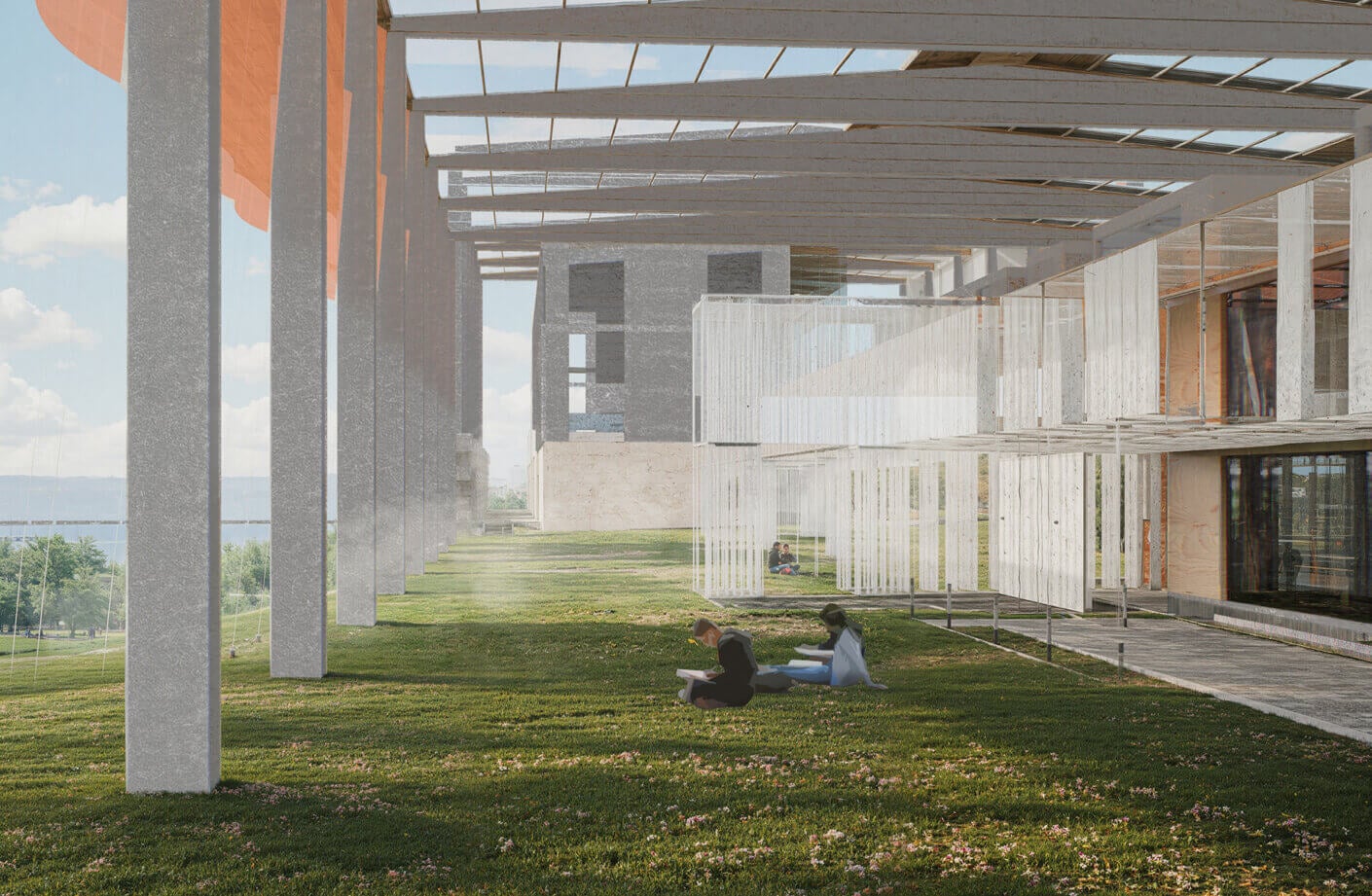
A spacious architectural design featuring large pillars, glass elements, and green grass where people sit and read under a covered area.
Donald engages his idea of the "post-landscape" with this worker housing concept, situated in a former industrial site near Madrid, Spain.
"The site also sits on the edge of a wetland, so I was very deliberate about how the building touched the ground."
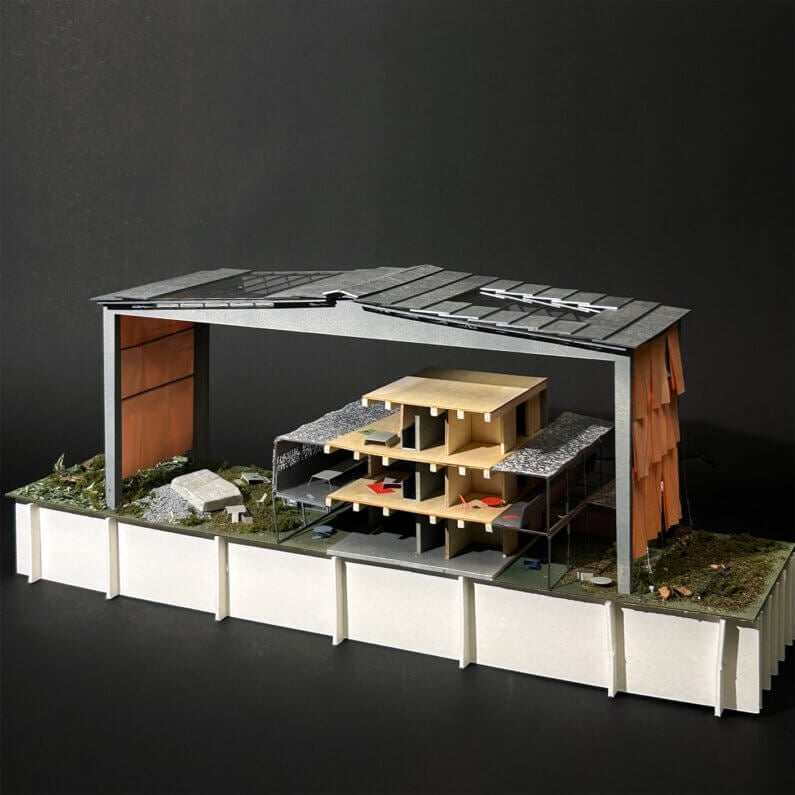
Scale model of a building featuring open spaces, layered structure, and mixed materials, set against a dark background.
Is there a project from your time at GSD that best captures how we can work in a “post-landscape” place?

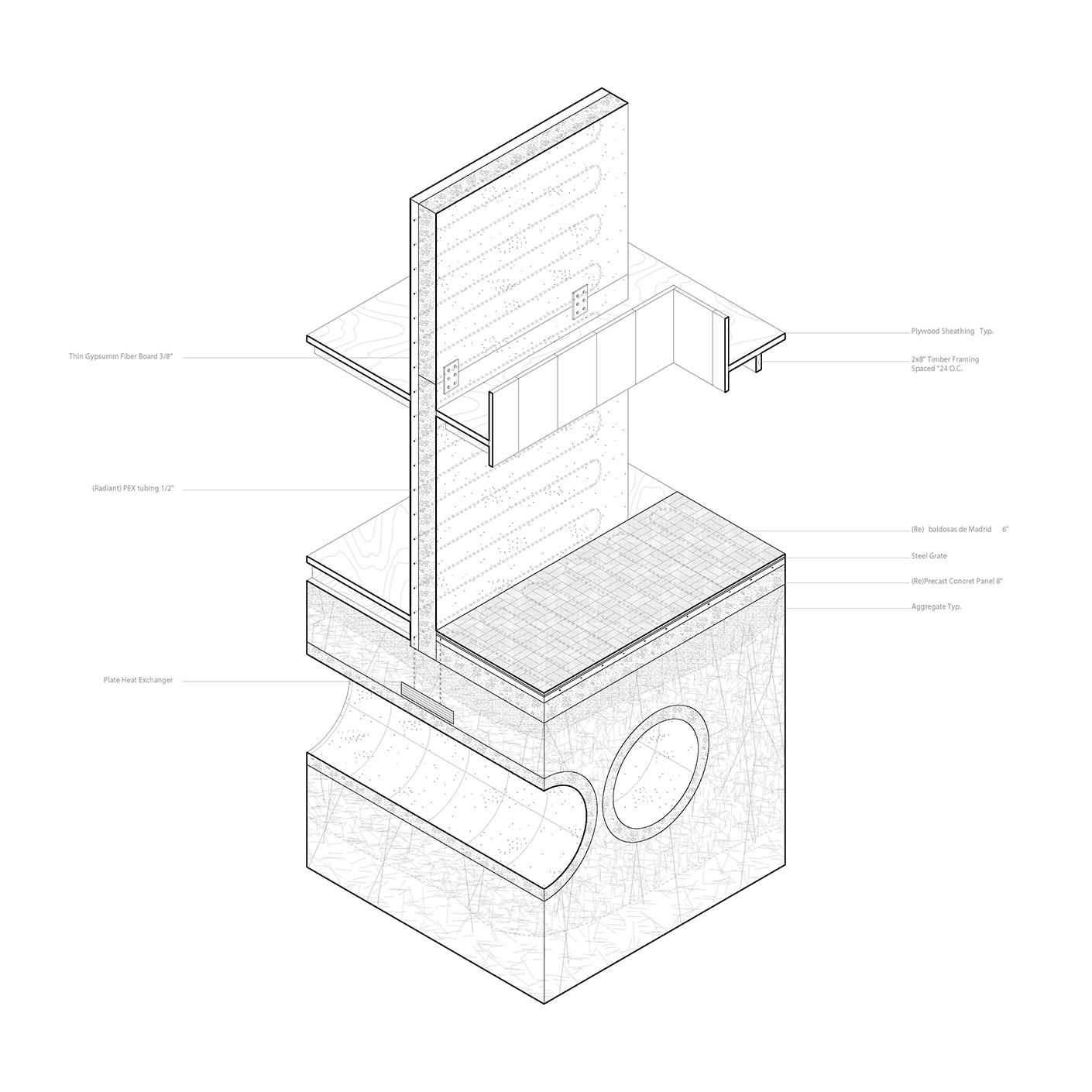
The one that comes closest right now is a project from last semester, taught by Javier García-Germán. The brief was a “productive commune,” essentially worker housing that also generates economic activity. He based the site in Madrid, and when I started researching the area, I found an industrial ruin from the 1960s where they used to extract the aggregate used to build the entire city. And about six minutes from that ruin, there was an abandoned industrial warehouse with large prefab trusses spanning the interior.

So my proposal was to disassemble those trusses, reassemble them above the ruin, and wrap the whole thing in a protective layer—essentially inhabiting the ruin with the housing and productive program underneath. I was using existing building stock to generate something new, which felt true to the way I think about material flows.

The site also sits on the edge of a wetland, so I was very deliberate about how the building touched the ground. It’s actually designed to flood on one side—the structure is lifted there so water can rise and the wetland can run through it rather than being impeded by it.

You're also involved in ongoing material research with Professor Jonathan Grinham. Can you talk about that?

Jonathan has been a big part of my experience here. He teaches a class called “Circuits, Circles, and Loops” that really reinforced a lot of what I’d been thinking about, and he’s advising my thesis. I also worked with him doing material research one summer, and that project has continued ever since.

We connected with the American Woolen Company in New Hampshire, which had large stockpiles of waste wool that the fashion industry had rejected because the grade wasn’t up to their standards. Our task was to figure out if that material could be reintroduced into a building or fashion economy. What we’ve landed on—and we’re now in the patent process—is essentially a 100% biocomposite board made entirely from wool. Think of it as a drywall alternative. We extracted the keratin properties from the fiber, broke it down at the micro level, and reconstituted it into sheet form. It’s actually kind of insane.

What gets you most excited—a section, a plan, or an elevation?

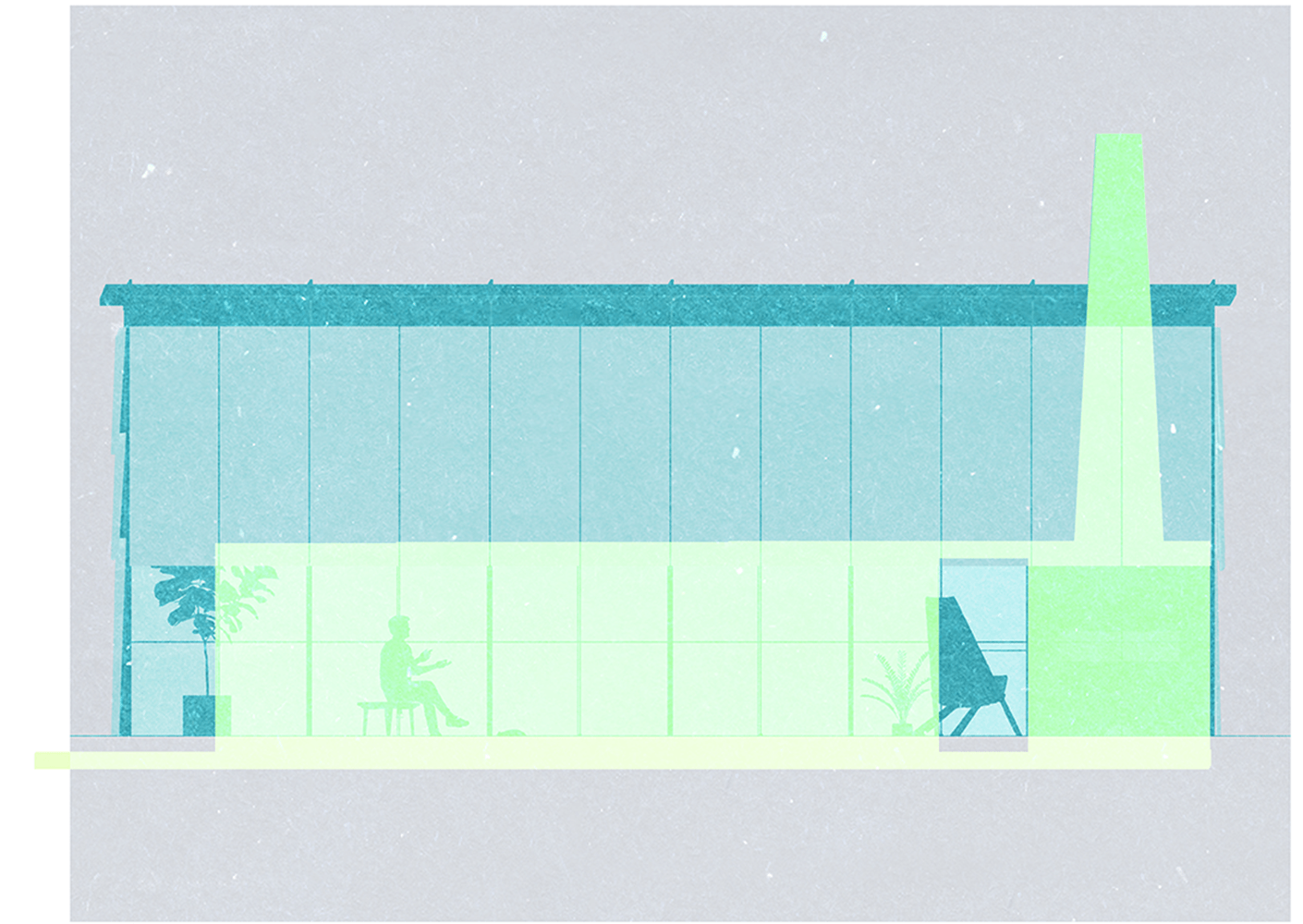
A section, honestly. I think that’s when you get to see the building in its most dynamic form. Plans are good for organizing a project. Elevations are good for understanding it from the outside. But a section—it feels like you’re a doctor cutting a cross section through the building. You see it for all its parts and how the different volumes of space are working together. That’s what gets me most excited about a building.

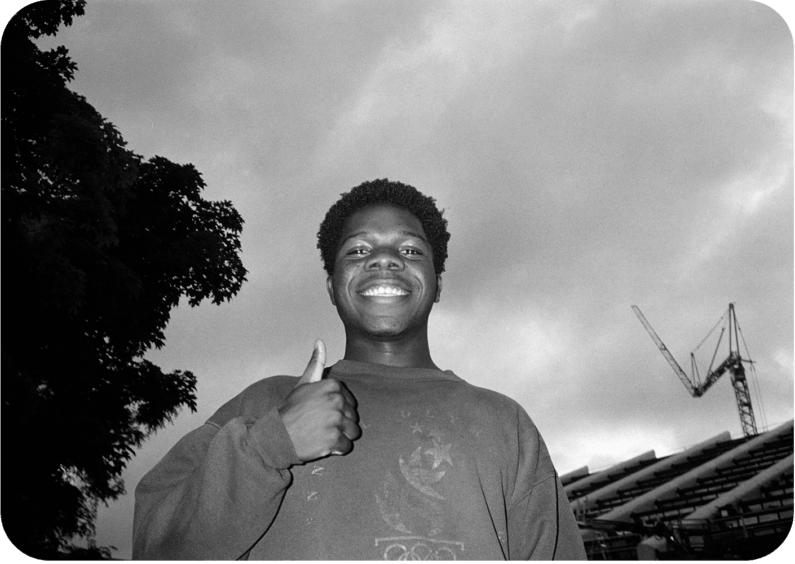
Donald has many hobbies, including chess, running, and shooting film with his trusty Yashica FX-2.
Where do you hope to take all of this after you graduate?

I want to go back to the Gulf Coast. I miss the Gulf waters—Boston winters are not for me. But beyond that, I think the South is a genuinely interesting frontier right now in terms of what’s next for this country, and I think it needs more people coming back with diverse training and diverse perspectives. I grew up there. It’s home.

Someone I met here told me I just need to find my frontline. And I think that’s mine. I want to take what I’ve learned here—the ideas, the connections, the networks—and bring it back to the place I’m from. That’s what I want to come out of this experience.