East Bayfront Community Recreation Centre
Situated in Waterfront Toronto’s East Bayfront, this 25,000-square-foot boutique community centre sets a new standard for how civic infrastructure can be woven into high density urban development. Designed in collaboration with 3XN, Tridel, and Hines, it is fully integrated into a mixed-use development, blending essential public amenities within the everyday life of a growing, diverse neighbourhood.
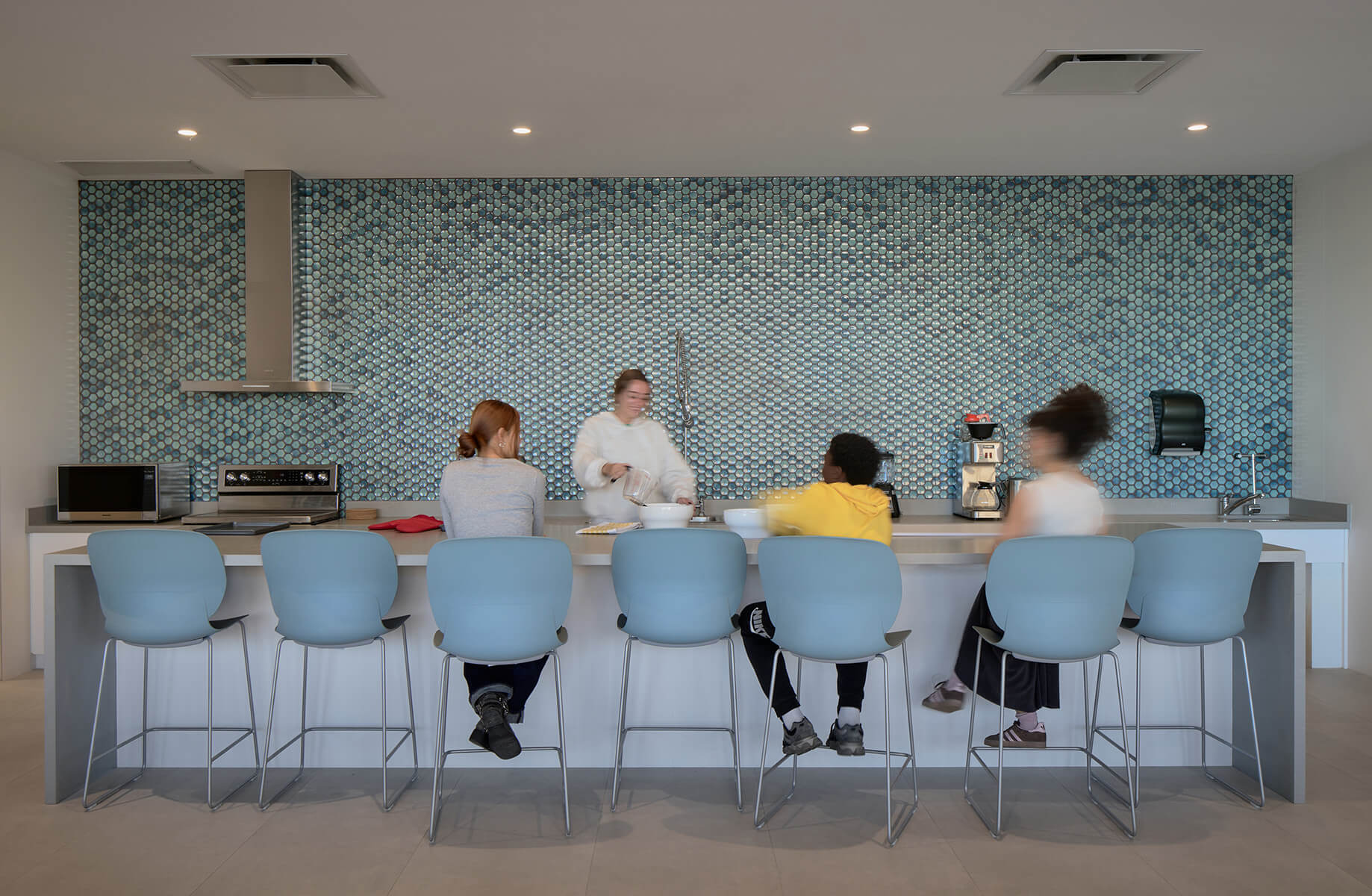
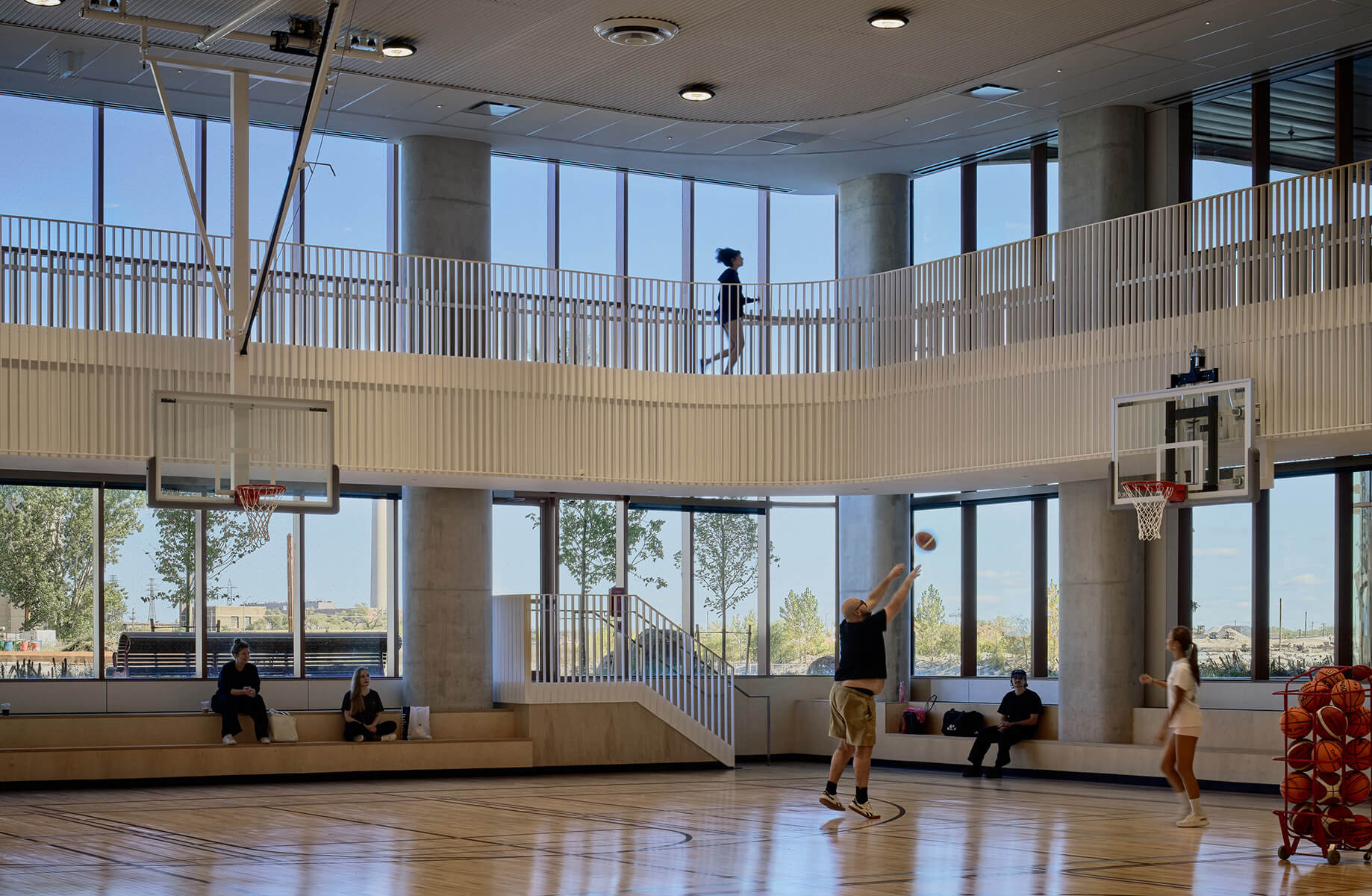
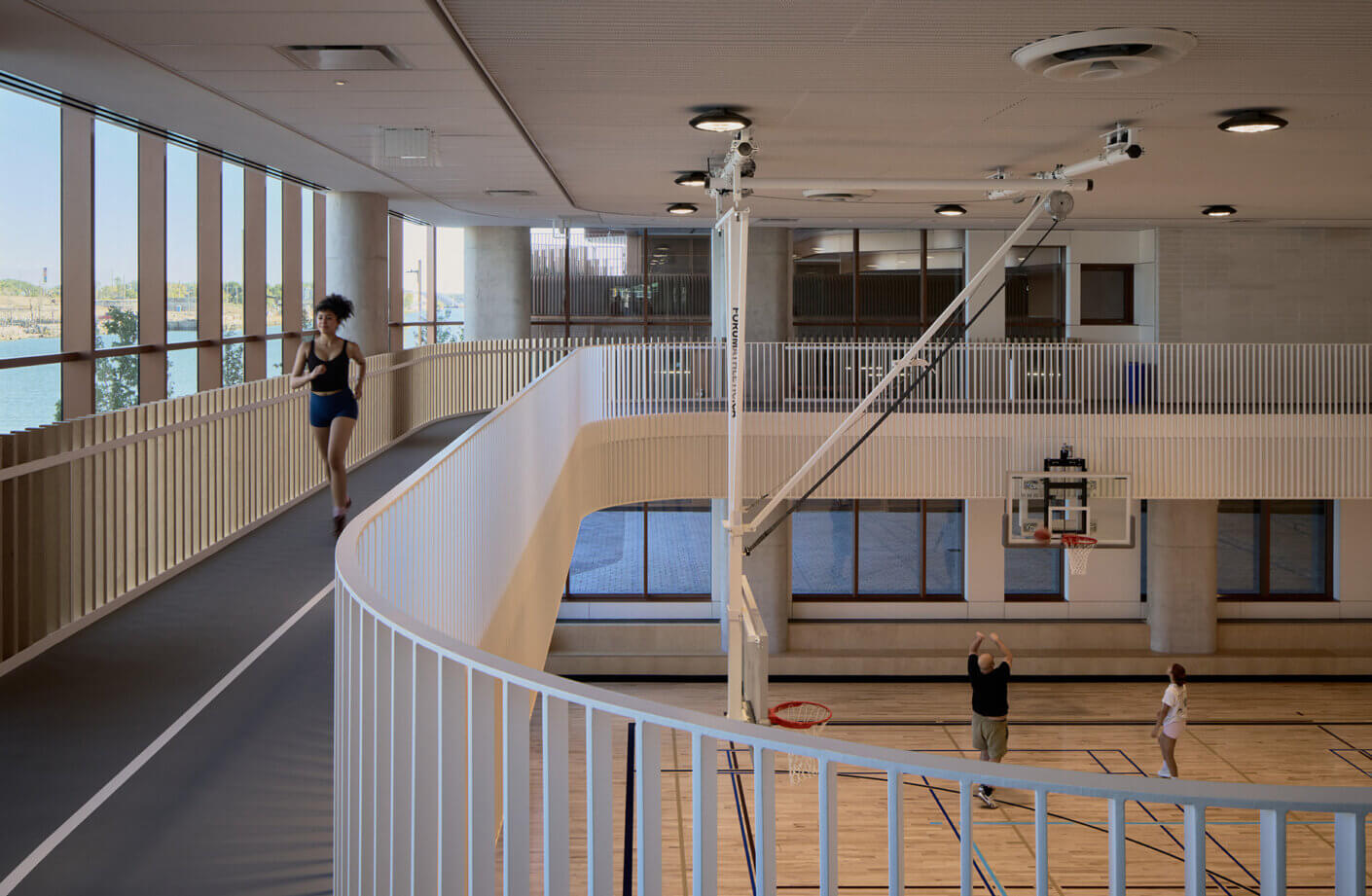
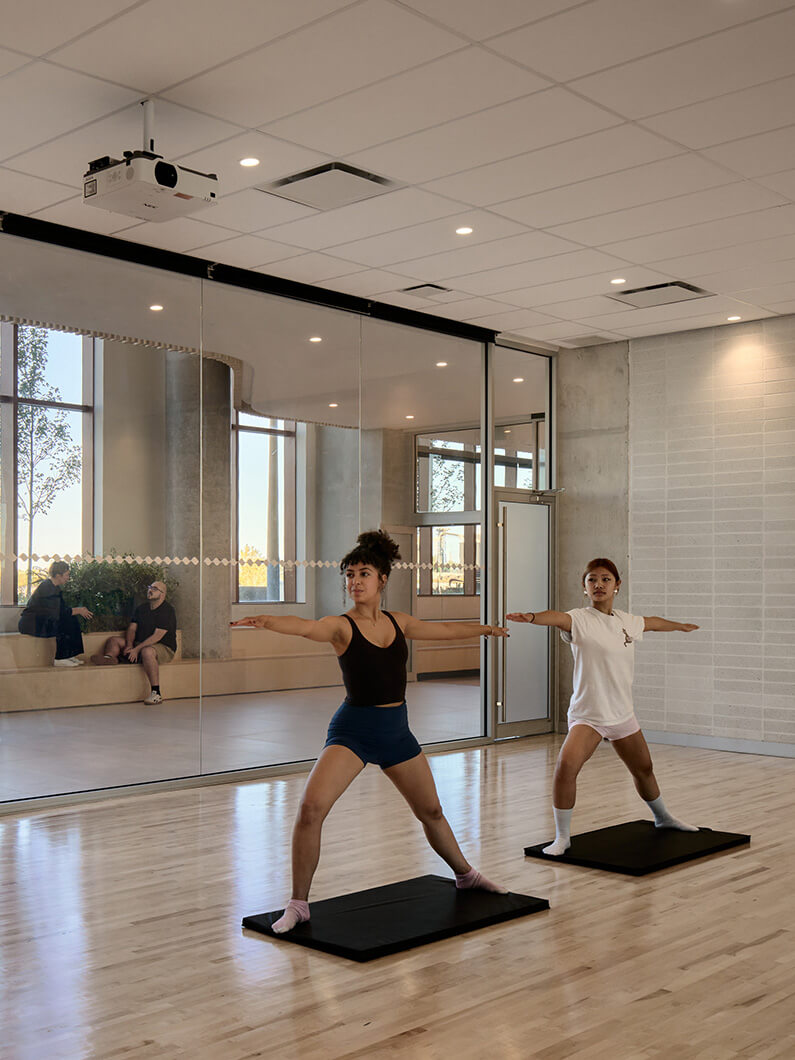
Rather than a traditional standalone recreation building, the centre embodies the City of Toronto Parks, Forestry, and Recreation’s forward-looking model of embedding community spaces within emerging residential and commercial districts. Its program is intentionally crafted to promote health, social connection, and resilience, featuring a full-sized gymnasium, flexible fitness studio, adaptable multi-use rooms, and a welcoming community kitchen that encourages shared meals and cultural exchange.
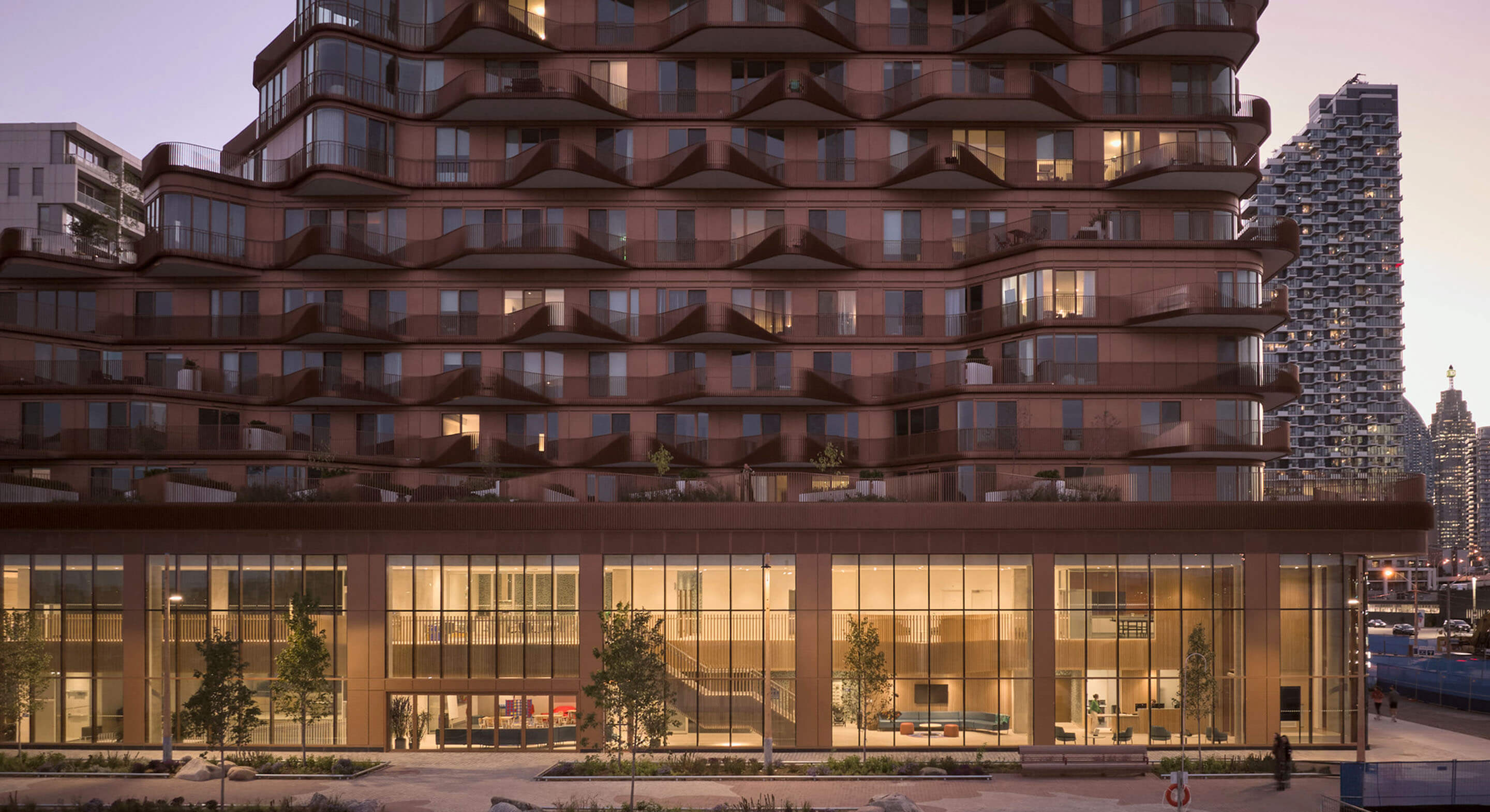
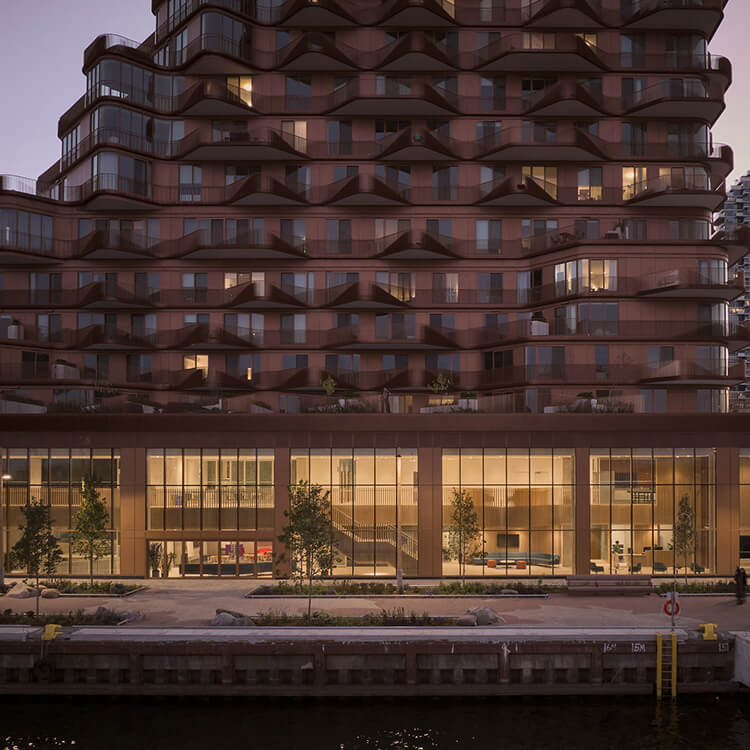
Connected directly to the shoreline promenade, a key driver for the project was activating Lake Ontario’s edge. By opening onto one of the neighbourhood’s most vibrant pedestrian routes, the centre acts as an active extension of the public realm and invites public life inside, reinforcing its role as embedded social infrastructure. Operable glazed partitions allow interior programs to spill out into the lobby and beyond onto the promenade itself, dissolving boundaries between inside and out. The double-height façade amplifies visibility and transparency, showcasing activity and inviting the community in.
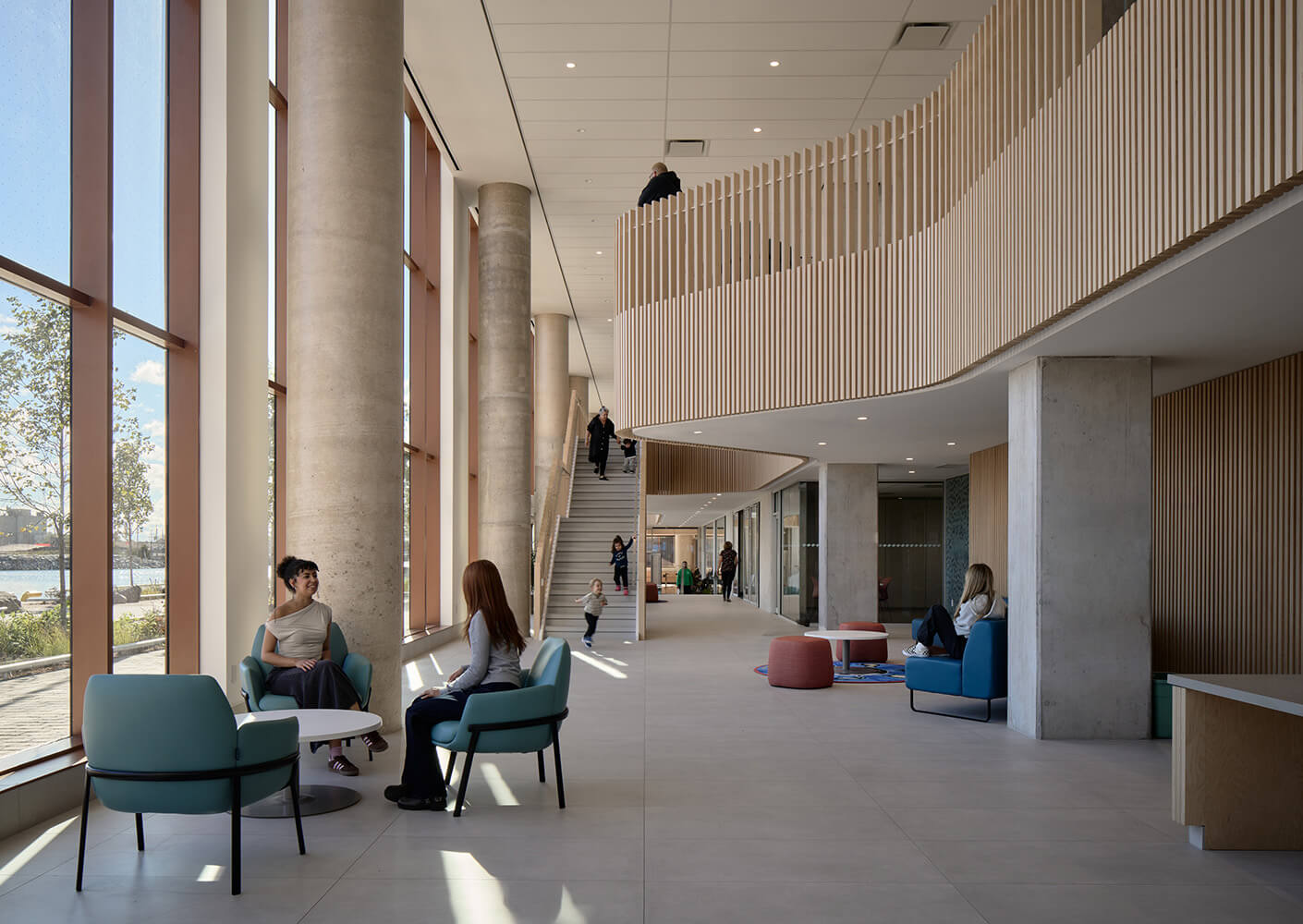
This permeability is reinforced inside, where program spaces are designed for maximum adaptability and overlap. An expandable community space and flexible multi-purpose rooms shift throughout the day to support everything from recreation to cultural events to informal gatherings. The fluid interior mirrors the energy of the promenade outside—ensuring the centre remains responsive and deeply embedded in the daily rhythms of the community.
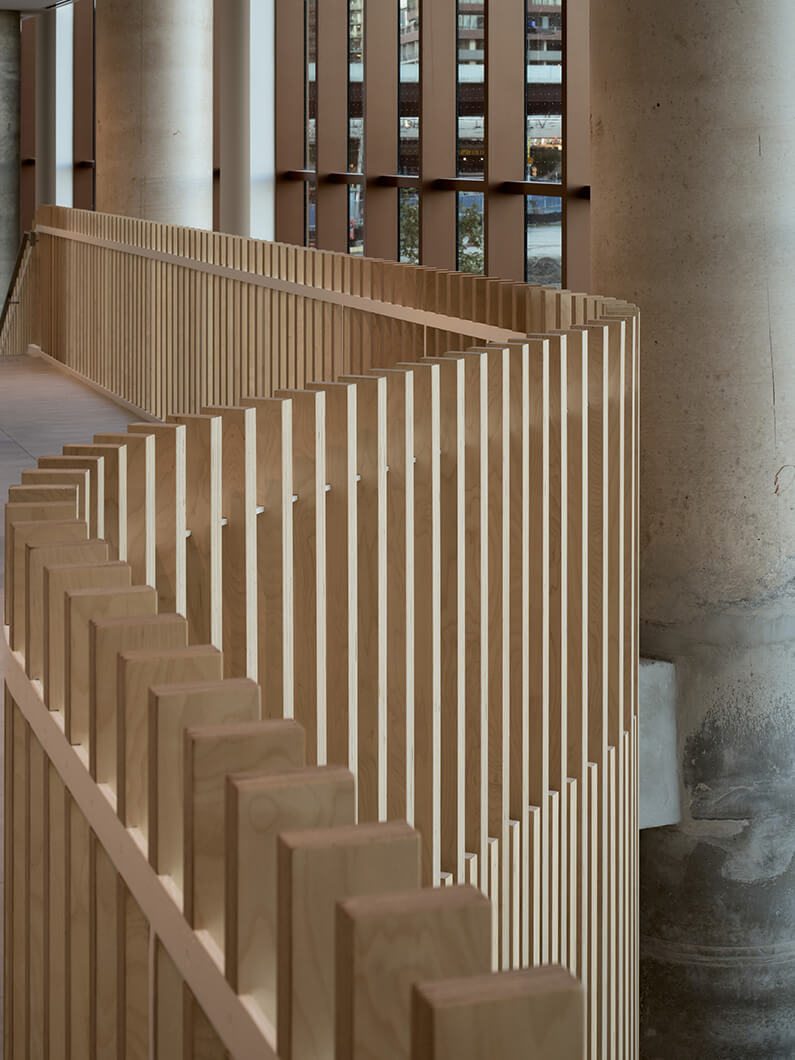
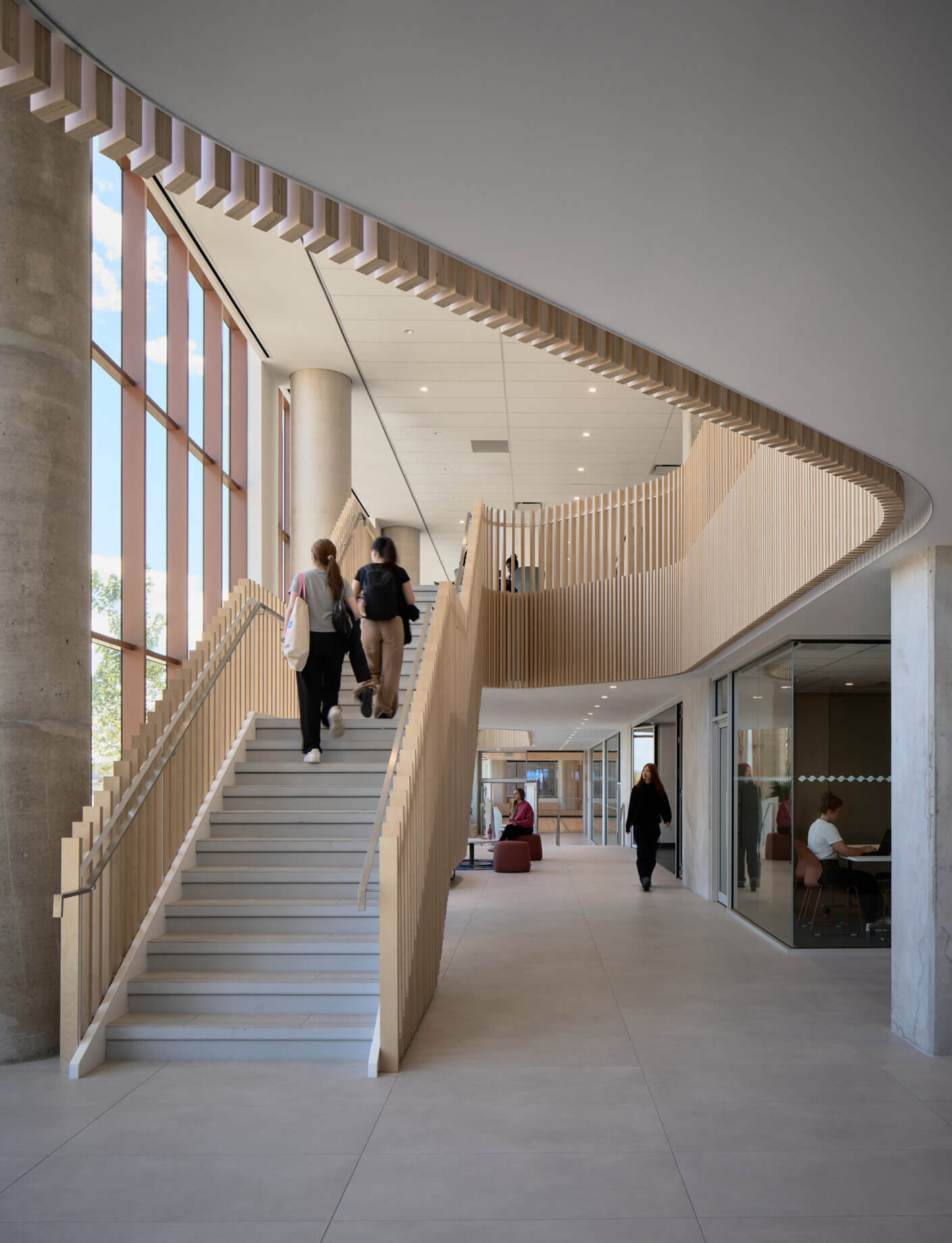
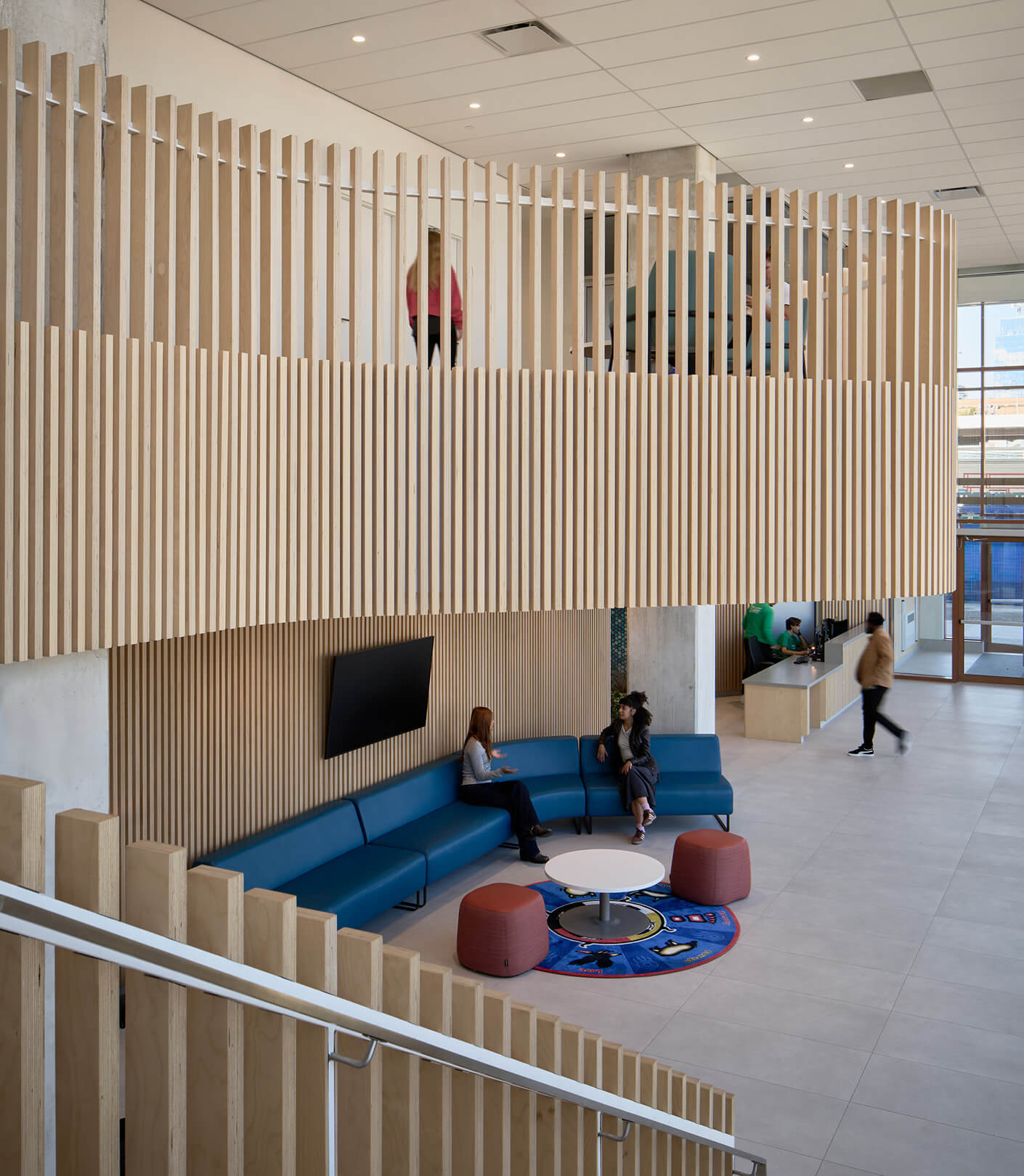
Inspired from the rhythmic movement of Lake Ontario, the Aqualuna Condominium is positioned on a dramatic lakeside setting. Our design looked to reinforce the waterfront context and create a cohesive dialogue between exterior and interior. Reinterpreting the fluid geometry of the buildings balconies, a series of vertical wood slats extend into the building, framing public spaces and guiding movement. The use of natural wood introduces a biophilic layer to the architecture bringing warmth, tactility, and a sense of human scale to the interior environment. Beyond aesthetics, the slatted elements serve as spatial organizers, subtly delineating zones of gathering and circulation while fostering a welcoming atmosphere that resonates with the community-oriented nature of the program.
Accessibility is embedded as a core design and operational principle, shaping both how the centre is used and who it serves. As a City of Toronto facility, the recreation centre is designed to be open to everyone, supporting equitable access to wellness, recreation, and community programming across a range of ages, abilities, and cultural backgrounds.
Barrier-free circulation, flexible room configurations, and a welcoming public interface enable seamless movement between all program areas. This facilitates people with diverse mobility needs to participate fully in activities ranging from sport and fitness to arts, meetings, and community gatherings. Adaptable multipurpose rooms allow programs to respond to different physical, social, and sensory needs over time, reinforcing long term inclusivity rather than prescriptive use.
Project Team

Related Content