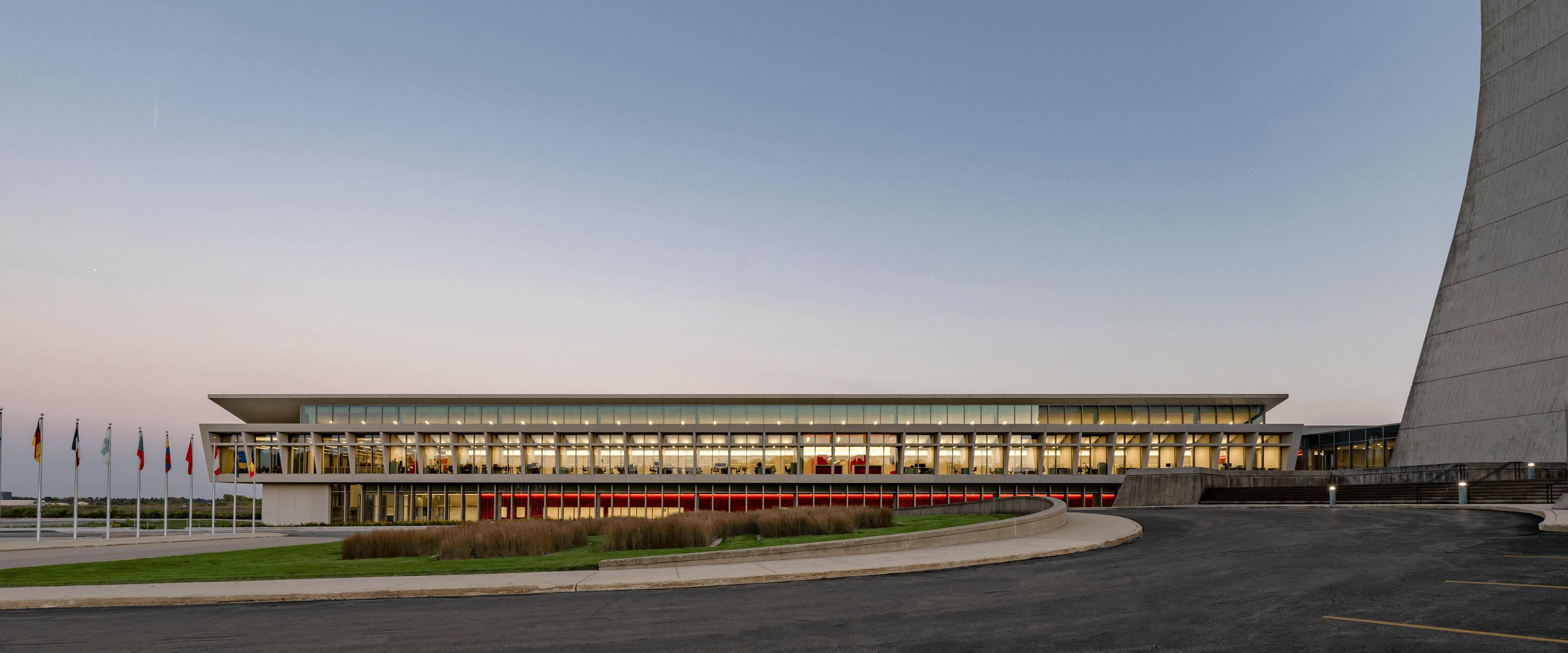
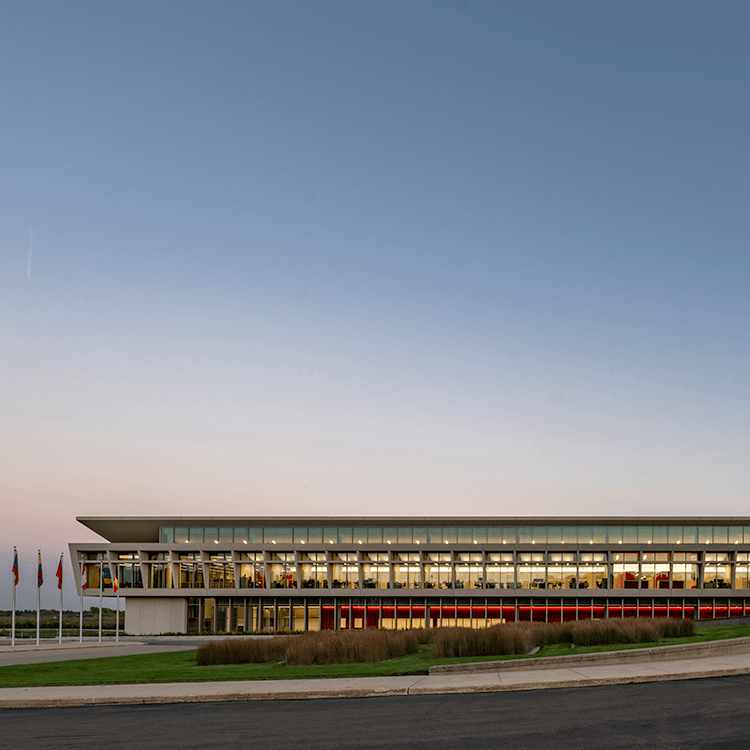
Fermilab Helen Edwards Engineering Research Center
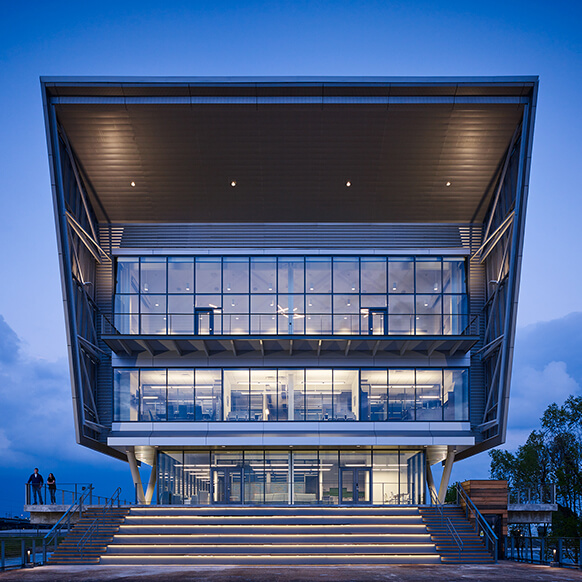
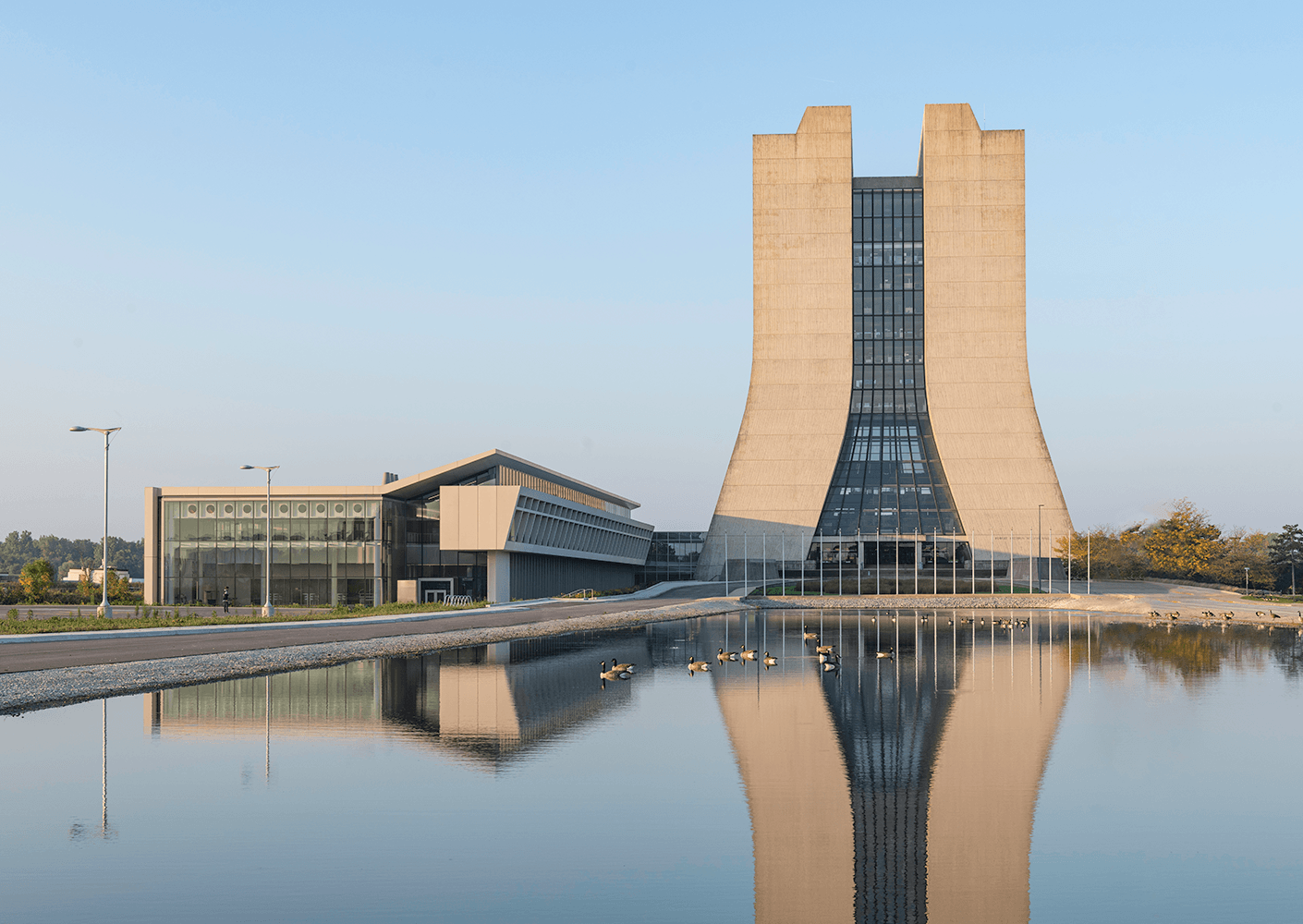
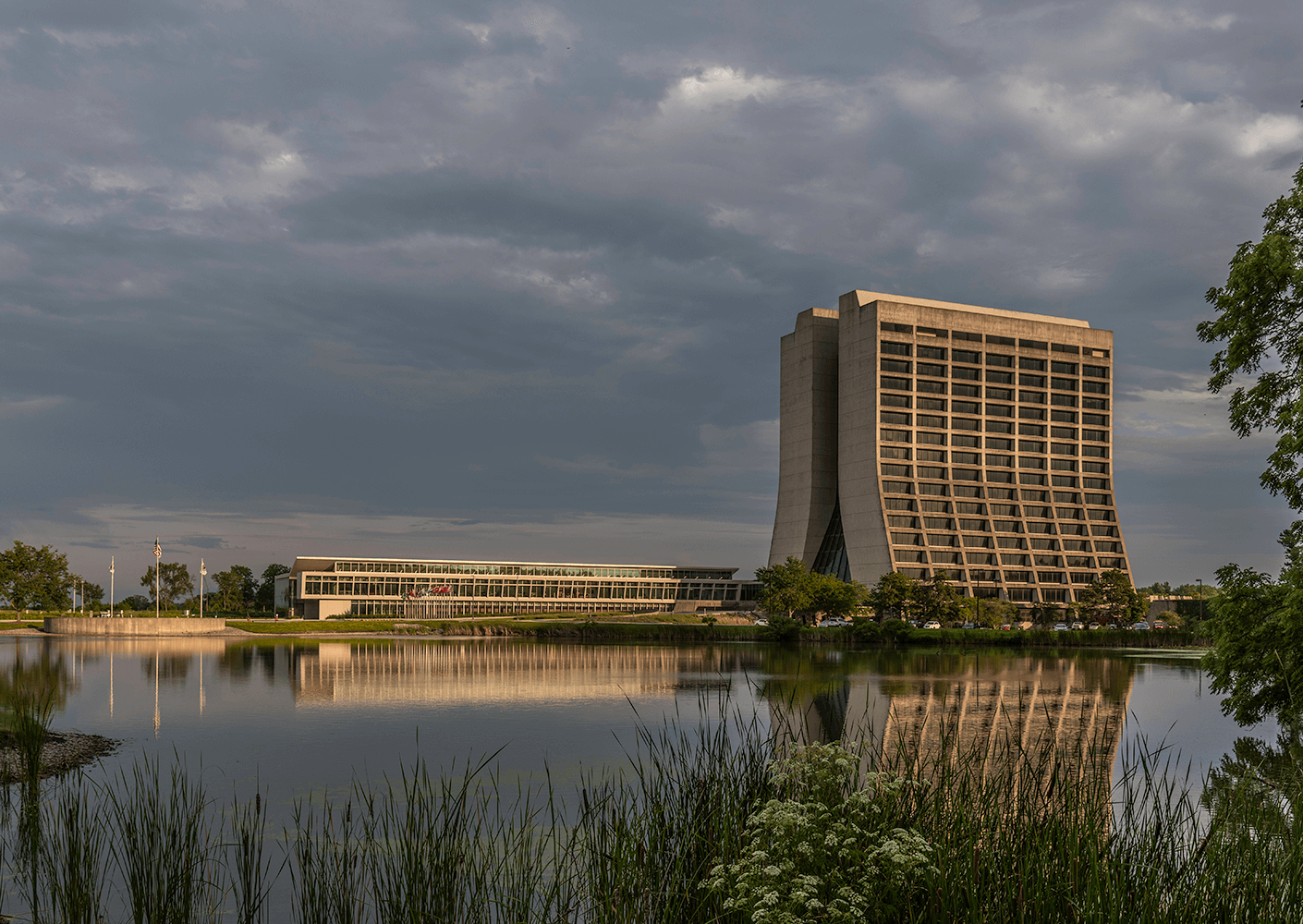
The Helen Edwards Engineering Research Center (HEERC) is where the boundaries of particle physics are pushed, and the future of science takes shape. This 90,000-square-foot facility, located on Fermilab’s central campus near the iconic Wilson Hall, is a purpose-built home for groundbreaking research and engineering. Designed to support pioneering work on initiatives like the Deep Underground Neutrino Experiment, the HEERC provides state-of-the-art laboratories and collaborative spaces that empower scientists and engineers to solve some of the universe’s greatest mysteries.
A symbol of Fermilab’s legacy and innovation, the HEERC bridges the past and future of discovery, fostering a culture of exploration that inspires the next generation of scientific breakthroughs.
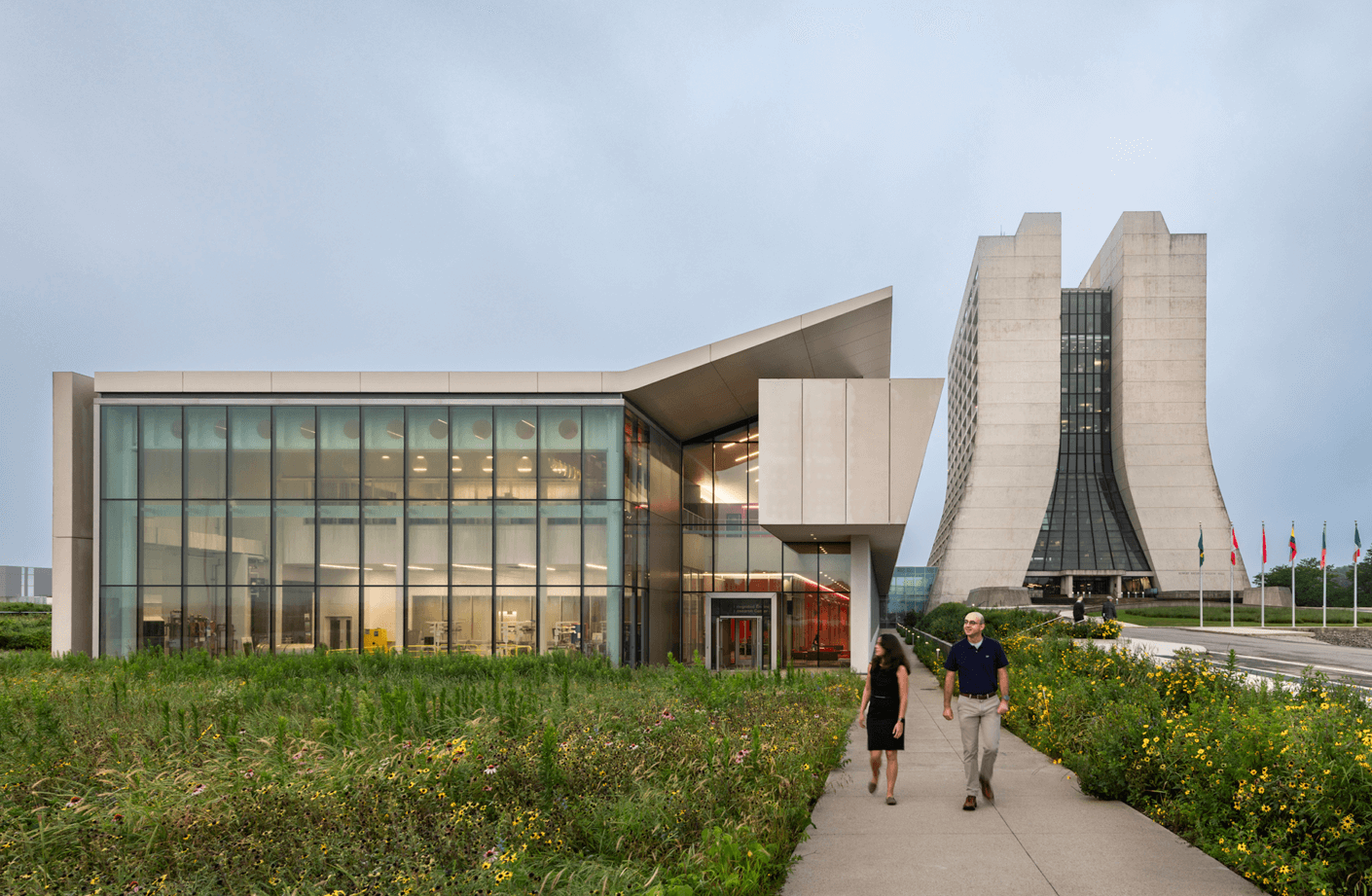

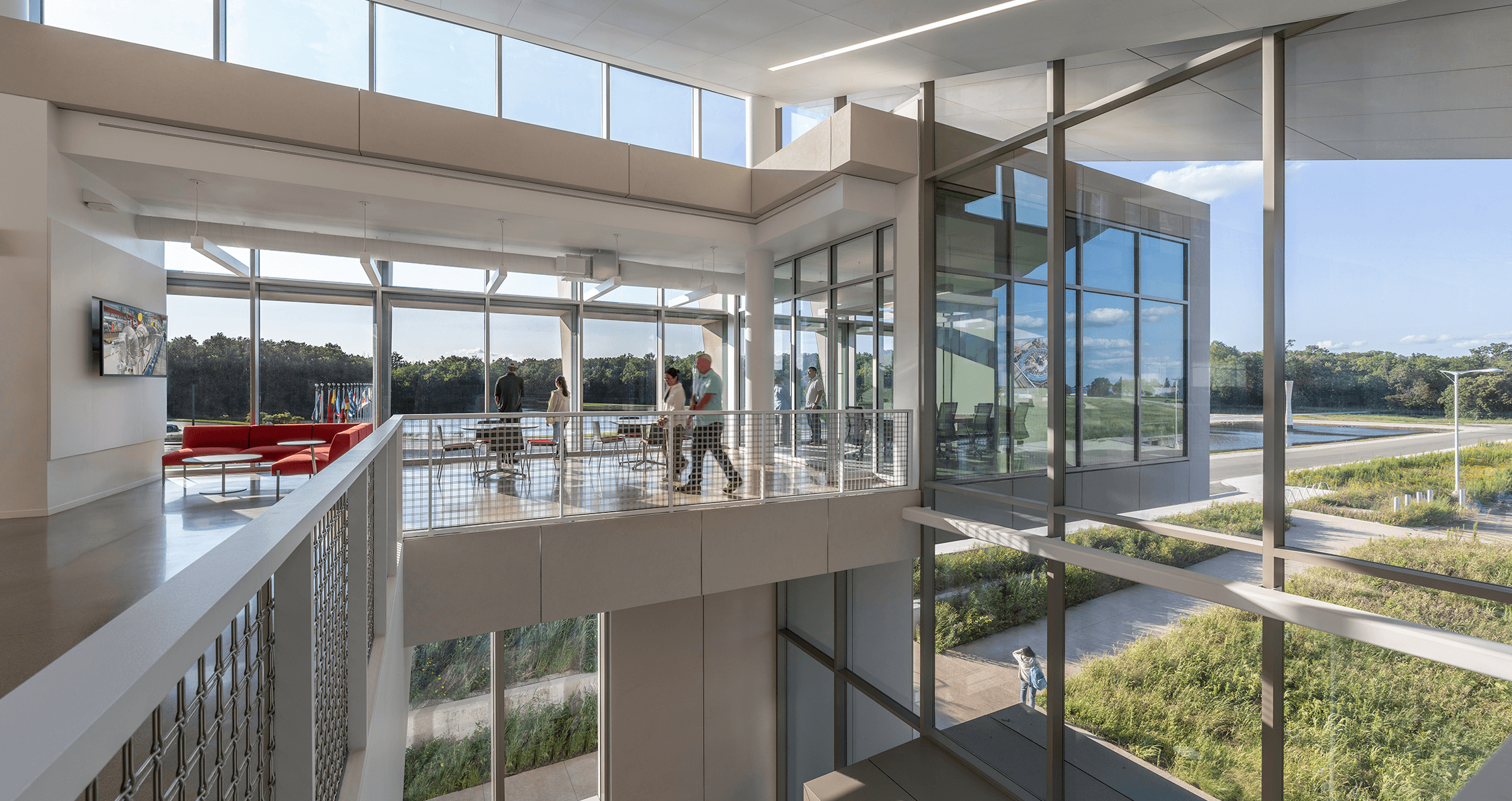
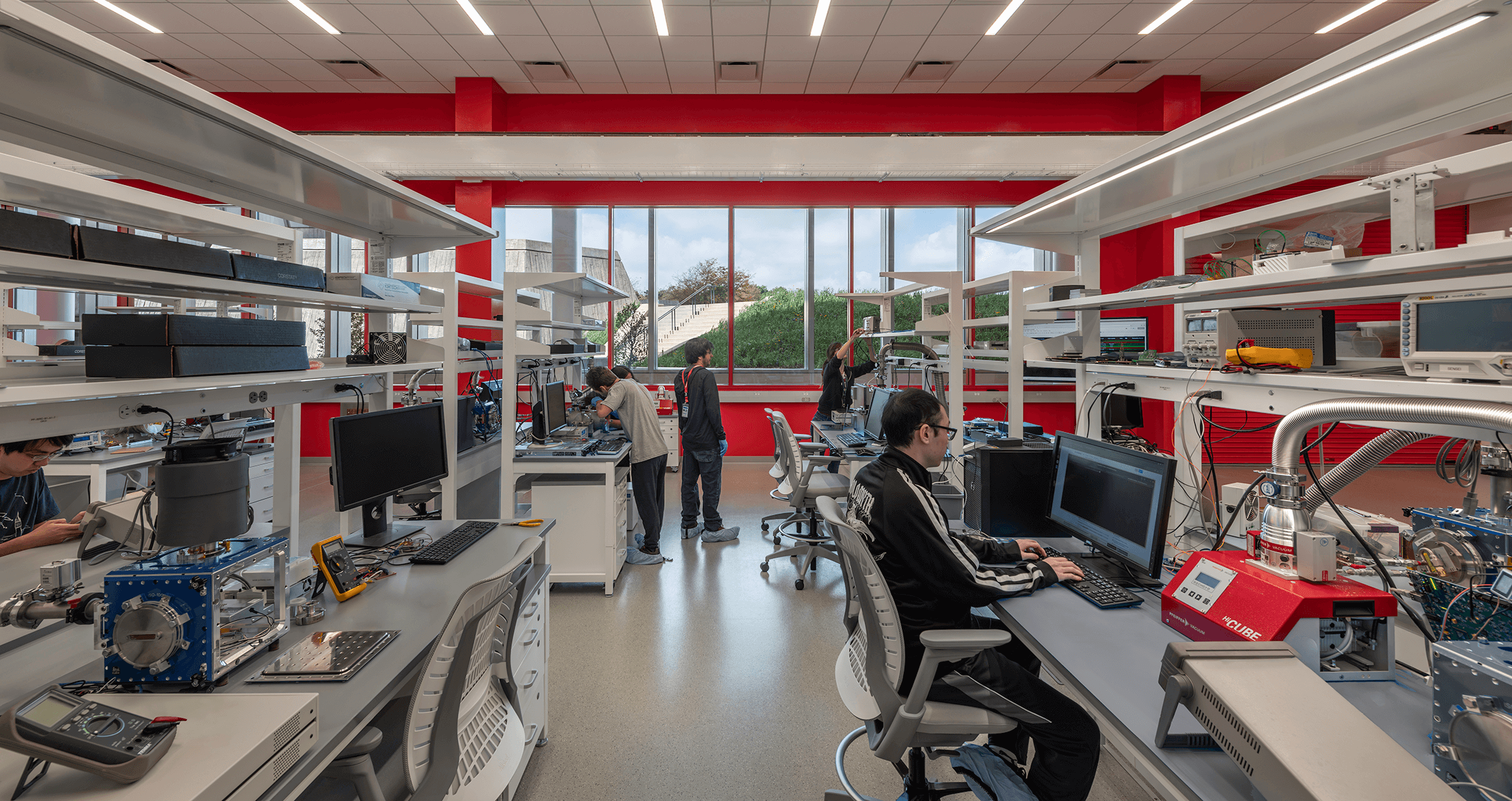
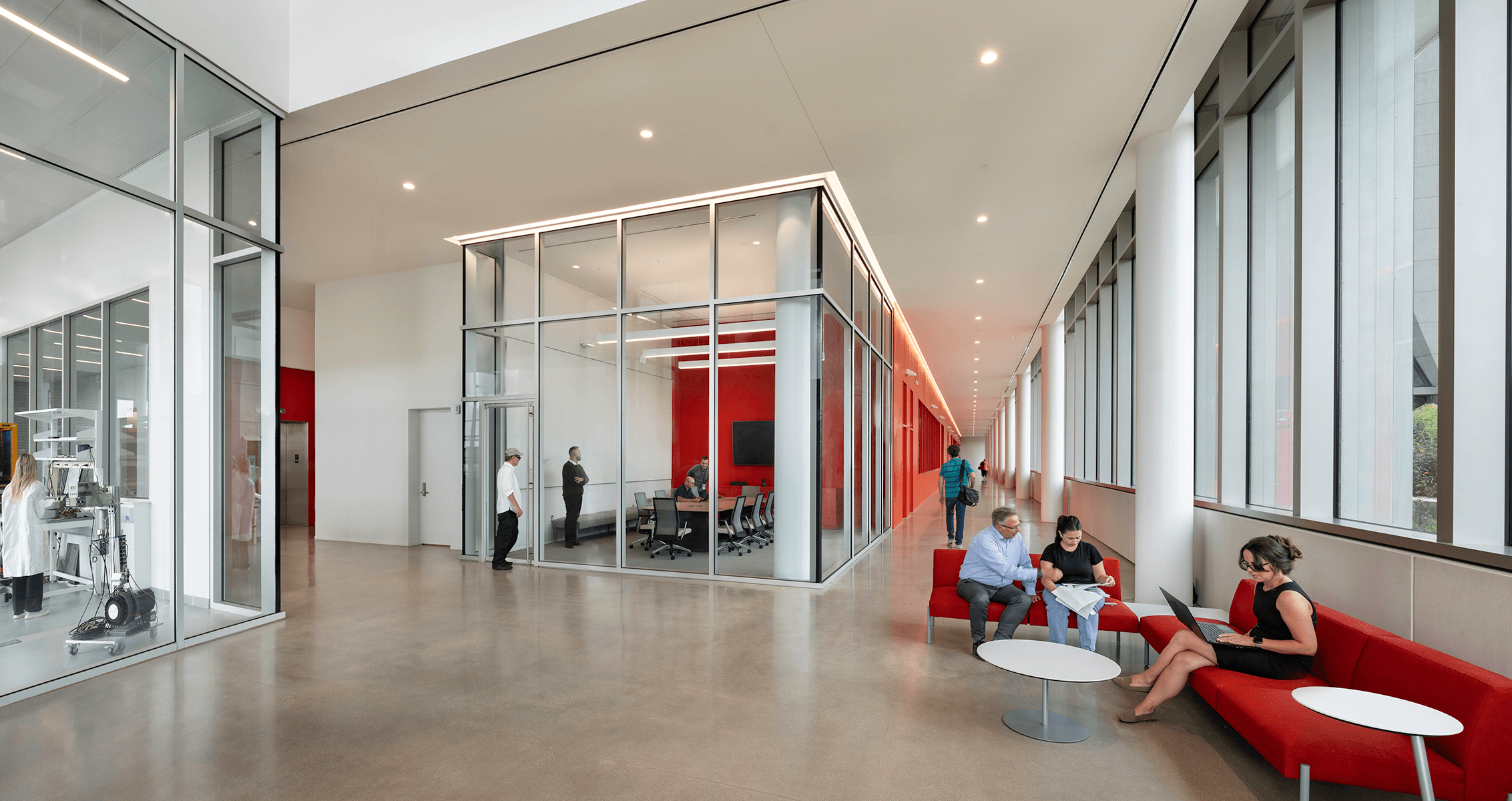
Collaboration is the heartbeat of scientific progress. The HEERC strengthens Fermilab’s campus by physically and intellectually linking engineering teams with the researchers who rely on their expertise. A transparent, bridge-like connection to Wilson Hall ensures a seamless flow of people and ideas, turning proximity into possibility. Daylit laboratories and visible workspaces put science on display, reinforcing an open, knowledge-sharing culture. The result is a research environment designed to accelerate breakthroughs—one that invites curiosity, fosters connection, and supports the collective pursuit of discovery.
Illinois Governor, J.B. Pritzker
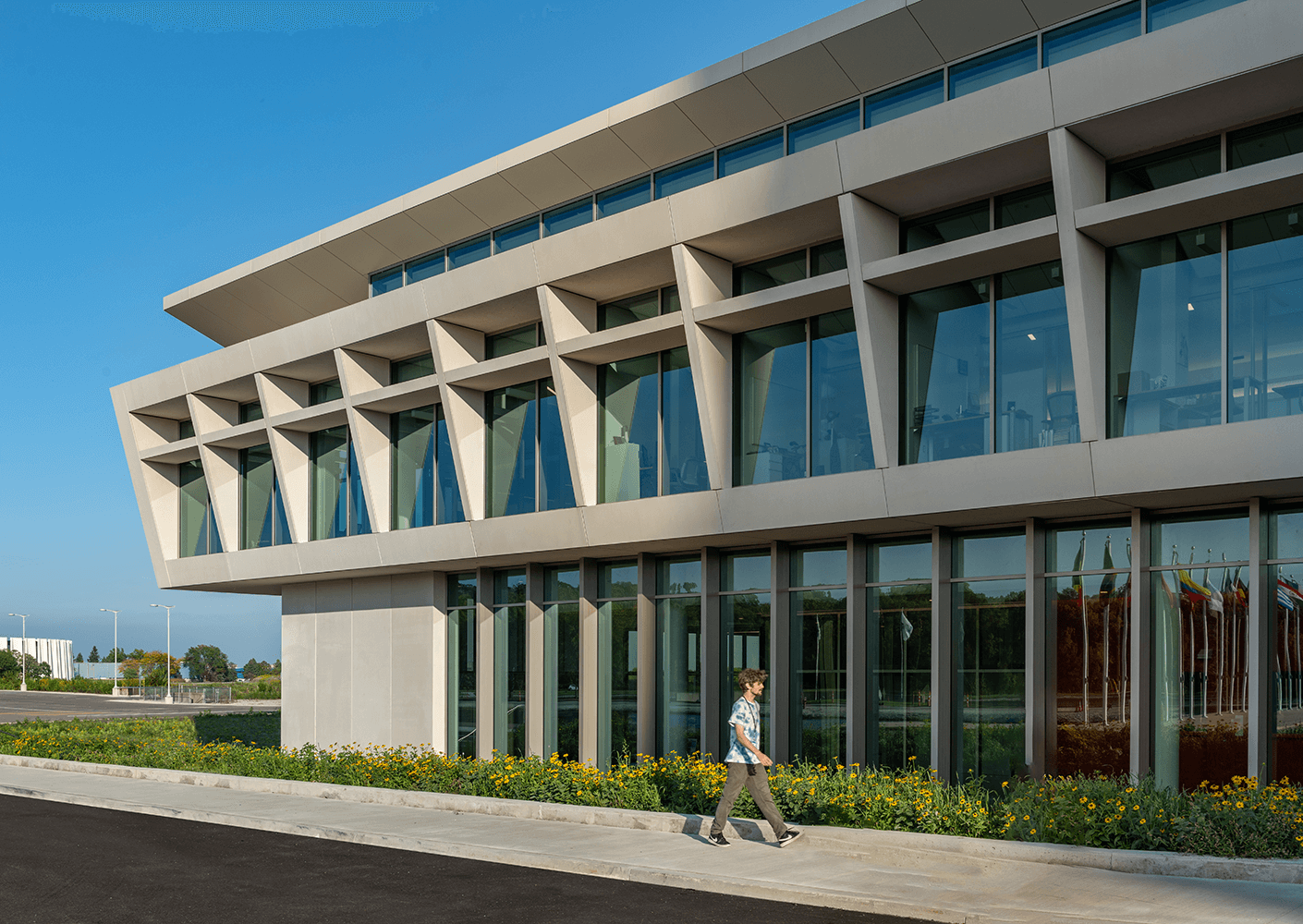
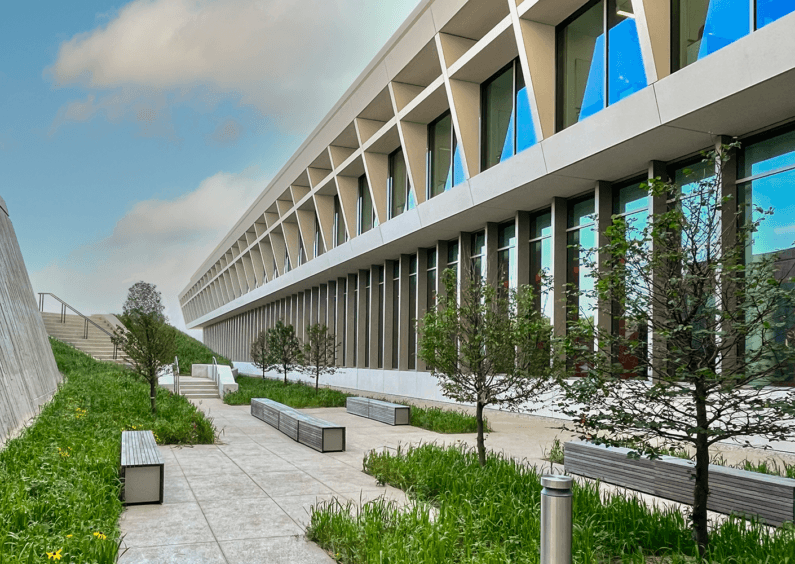
Innovation and responsibility go hand in hand. The HEERC integrates sustainability into every aspect of its performance-driven design and prepares Fermilab’s campus for a more resilient future. A 20,000-square-foot green roof provides insulation and stormwater management, mitigating the effects of a changing climate. Inside, high-performance mechanical systems reduce energy demand. Energy-efficient lighting, ventilation, and HVAC systems, including radiant heating, high-efficiency boilers, and schedule-based lab exhausts, contribute to a 30% reduction in energy consumption compared to baseline standards. Low flow water fixtures further conserve resources, while expansive glazing introduces daylight deep into the building, improving employee wellbeing and reducing reliance on artificial lighting. By rethinking how the building’s electrical systems are organized, the team reduced the amount of equipment needed around the exterior and shortened the distance electricity has to travel saving nearly $1 million and making the systems easier to maintain over time.
Even the building’s connection to Wilson plays a role—reducing the need for redundant infrastructure while reinforcing a culture of shared resources. The HEERC doesn’t just house scientific discovery—it ensures that the environment supporting it endures.
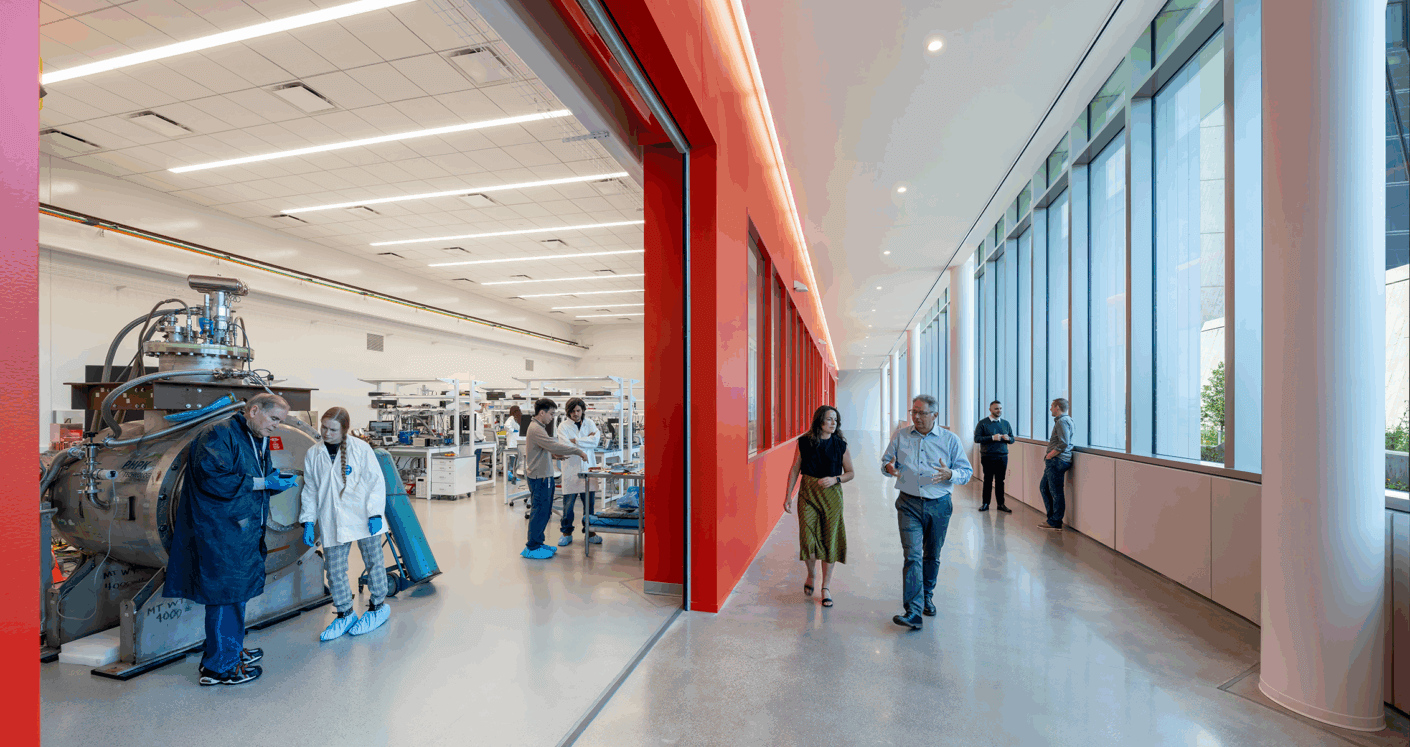
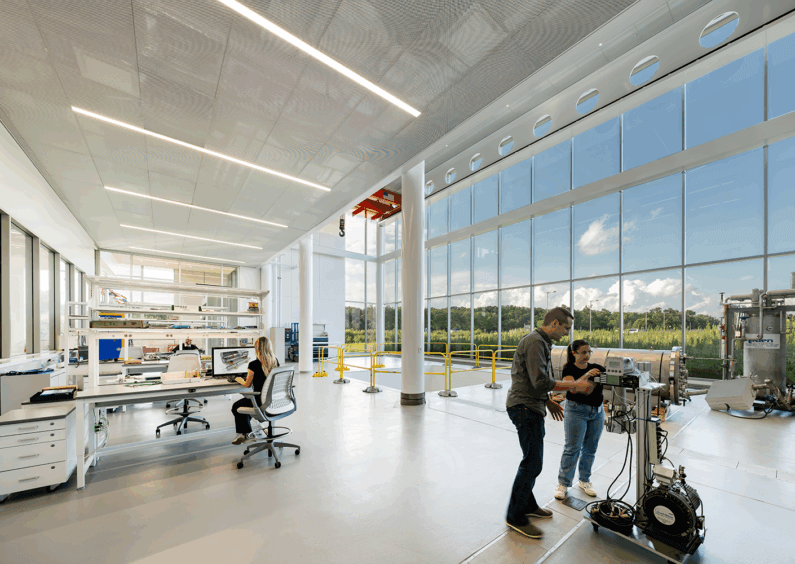
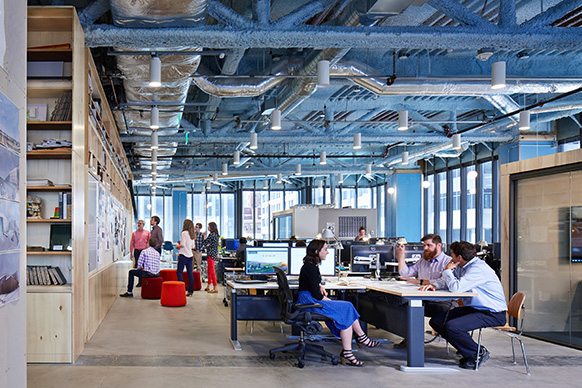
Particle physics pushes the boundaries of what’s possible—and the spaces that support it must do the same. The HEERC is Fermilab’s first purpose-built facility integrating engineering and research, bringing together scientists and engineers to collaborate in real time. Designed for adaptability, its modular laboratories and specialized research spaces can evolve with emerging technologies, ensuring it remains at the forefront of discovery. From advancing neutrino detection for the Deep Underground Neutrino Experiment (DUNE) to refining next-generation particle accelerators, the HEERC is a catalyst for scientific breakthroughs—built for today, ready for what’s next.
Wilson Hall has stood as an icon of Fermilab’s bold vision for more than 50 years. The HEERC continues that legacy—respecting its predecessor while forging its own identity. A restrained material palette and rhythmic structural elements reflect Fermilab’s commitment to precision. The result is a building that balances form and function—a space that not only supports scientific inquiry but embodies it.
Project Team





Related Content