
Lake Highlands Middle School
The 1,500-student Lake Highlands Middle School is the first entirely new building for Richardson ISD in three decades. Designed to amplify the school’s strength as a welcoming neighborhood resource, it replaces a junior high building, originally opened in 1960, that housed only 7th and 8th grade. We worked with the district and the Lake Highlands community to establish a new model for Richardson ISD that brings 6th, 7th, and 8th grade together under one roof.
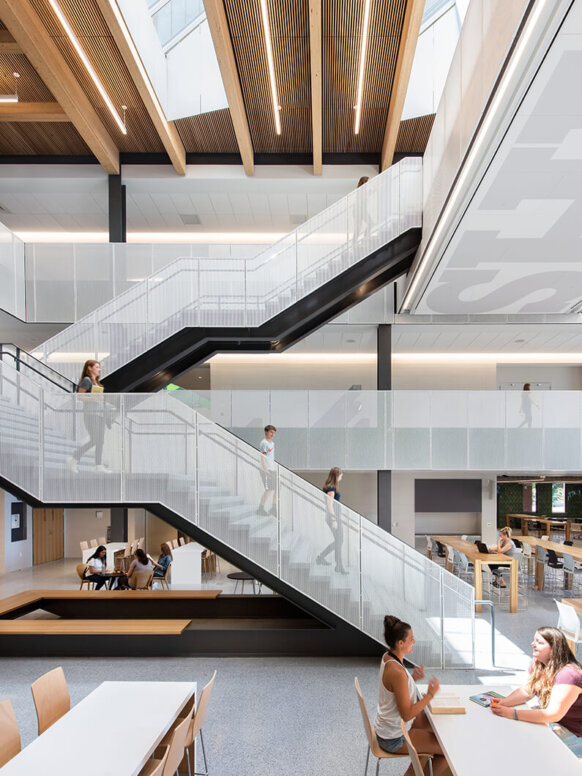
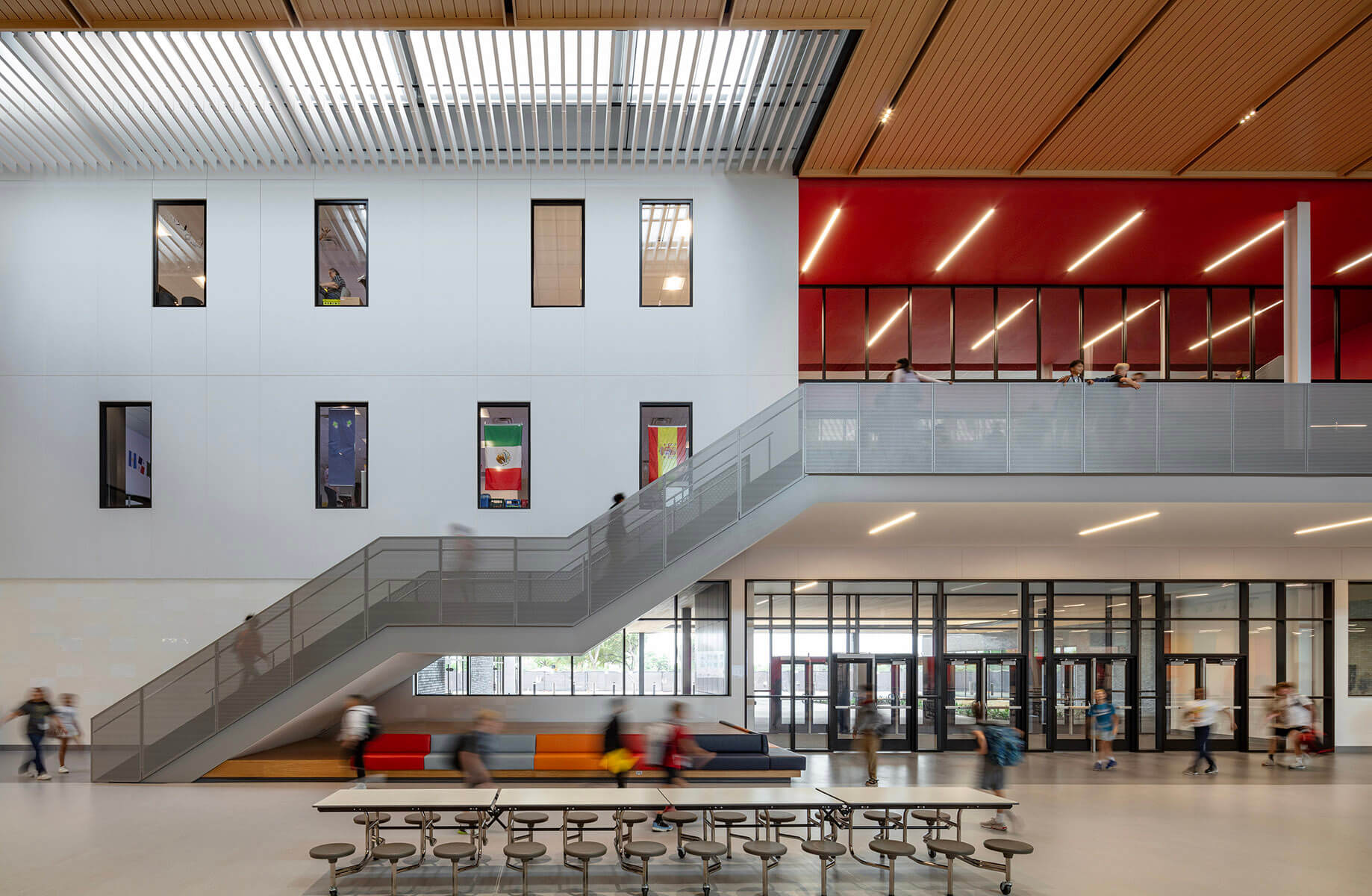
Visually interconnected and filled with daylight, the design prioritizes well-being and supports a vibrant community experience.
The broad visual connectivity of the new building is “game-changing for our administrators,” says RISD Superintendent Tabitha Branum. “If I’m an administrator, I can be at four different corners of the building and get a sense of what’s going on across the campus.”

Over the course of six community meetings, we learned how important well-being, sustainability, connection to nature, and community engagement are to Lake Highlands. While designing the school, the replacement project allowed us to restore a sloped part of the site to its natural contours and plant native grasses and trees to protect the habitat. A walking trail through this nature preserve gives both students and neighbors a place to enjoy the outdoors.
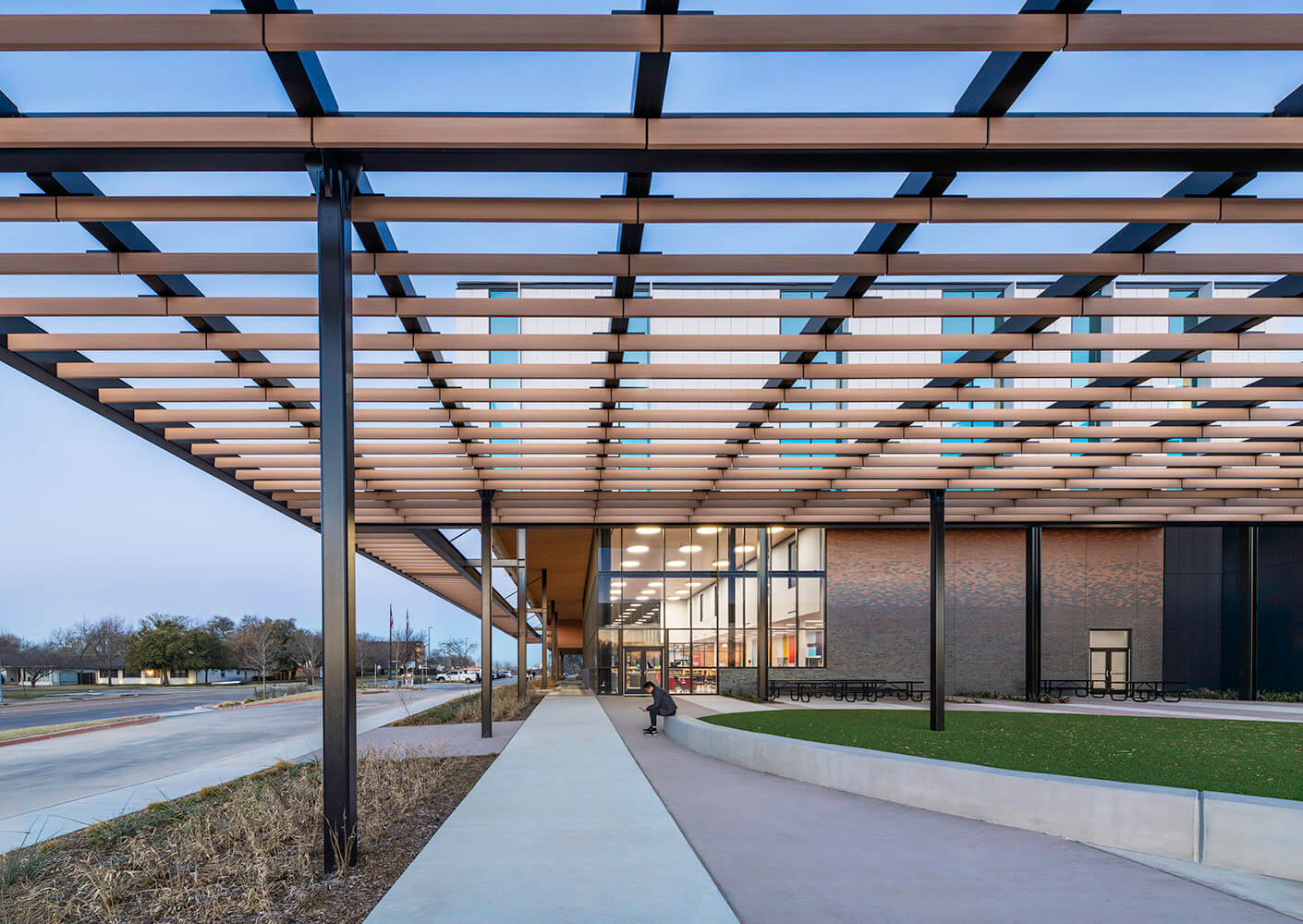
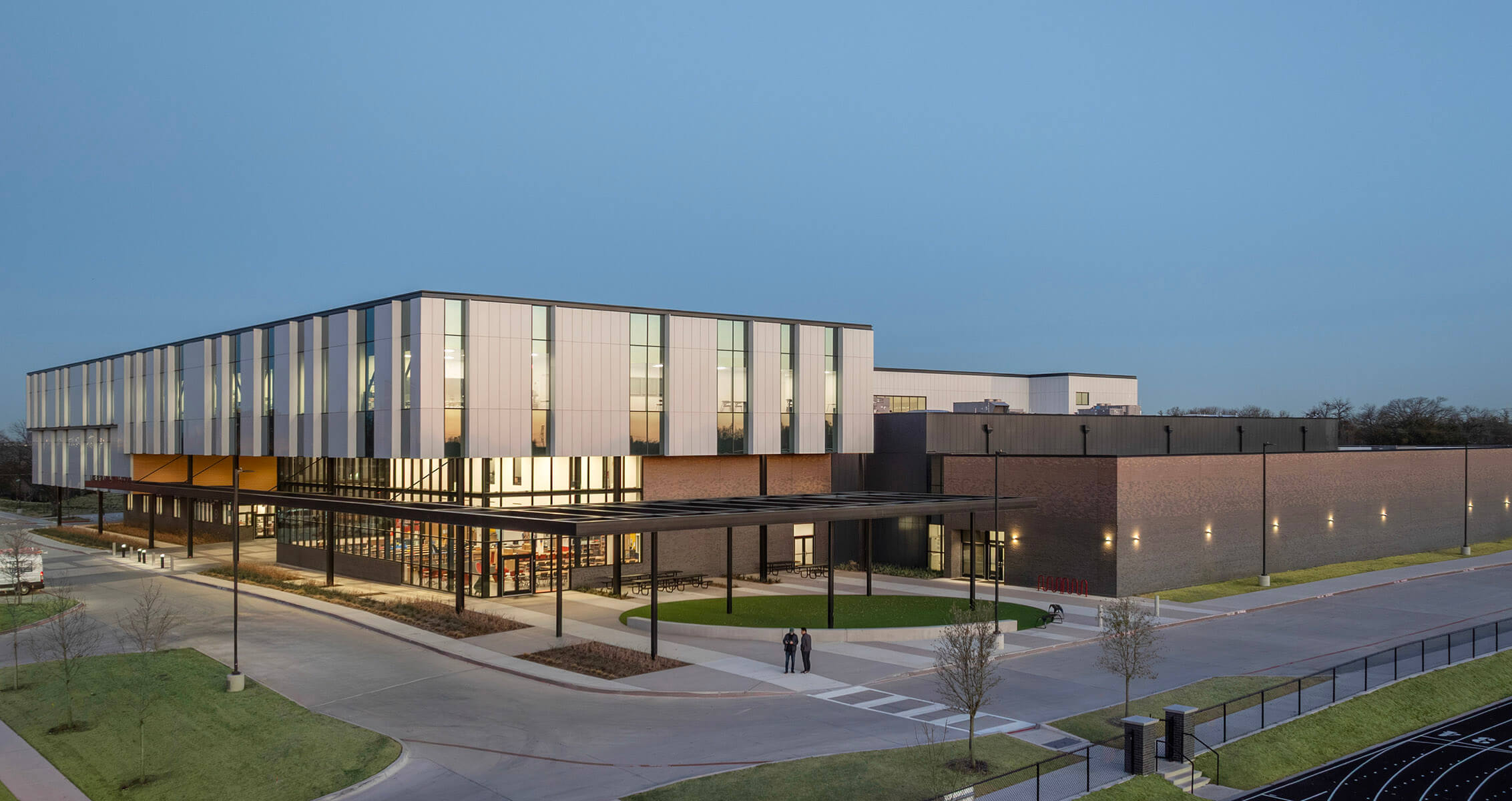
The new building’s site was constrained on one side by athletic fields and on the other by the existing school, which remained operational during construction. This challenged us to think upward rather than outward.
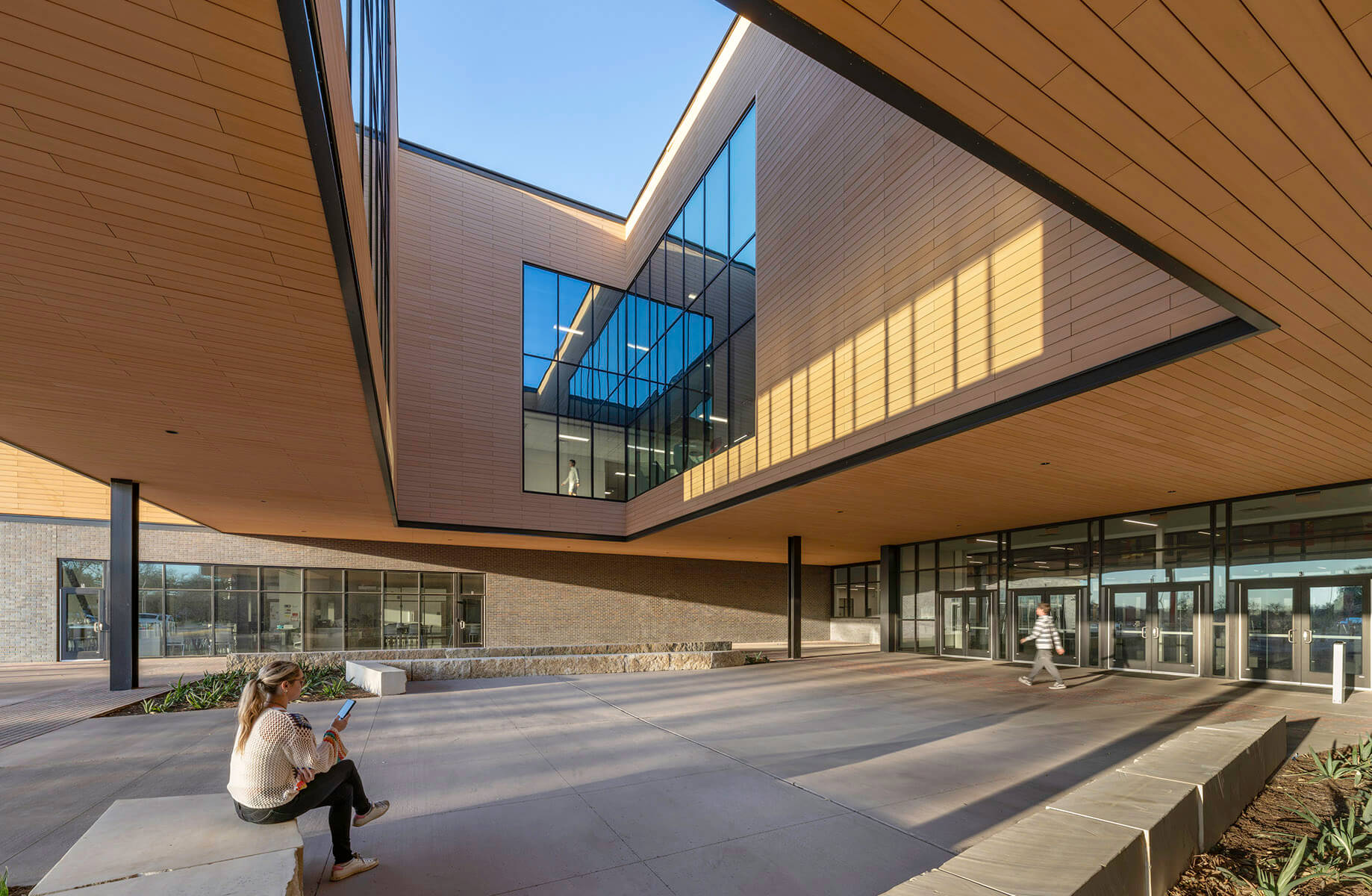
At three stories, the building is taller than a typical Texas middle school. Dark brick at the base echoes the region’s Blackland Prairie, rising in a gradient to red—a nod to the palette of the original building that served the community for more than half a century. Higher up on the facade, metal panels and glass meet the expansive Texas sky with visual lightness.
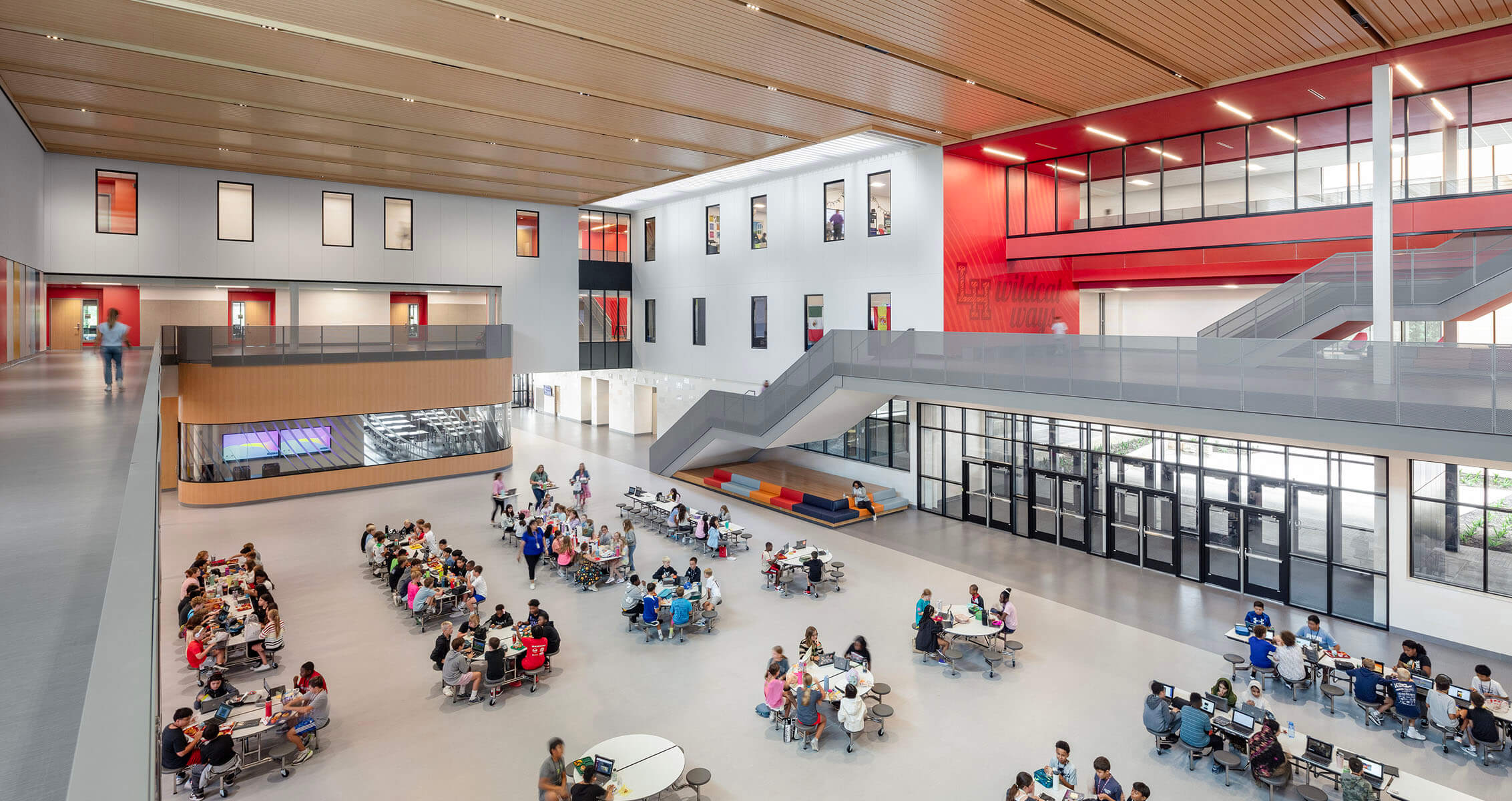
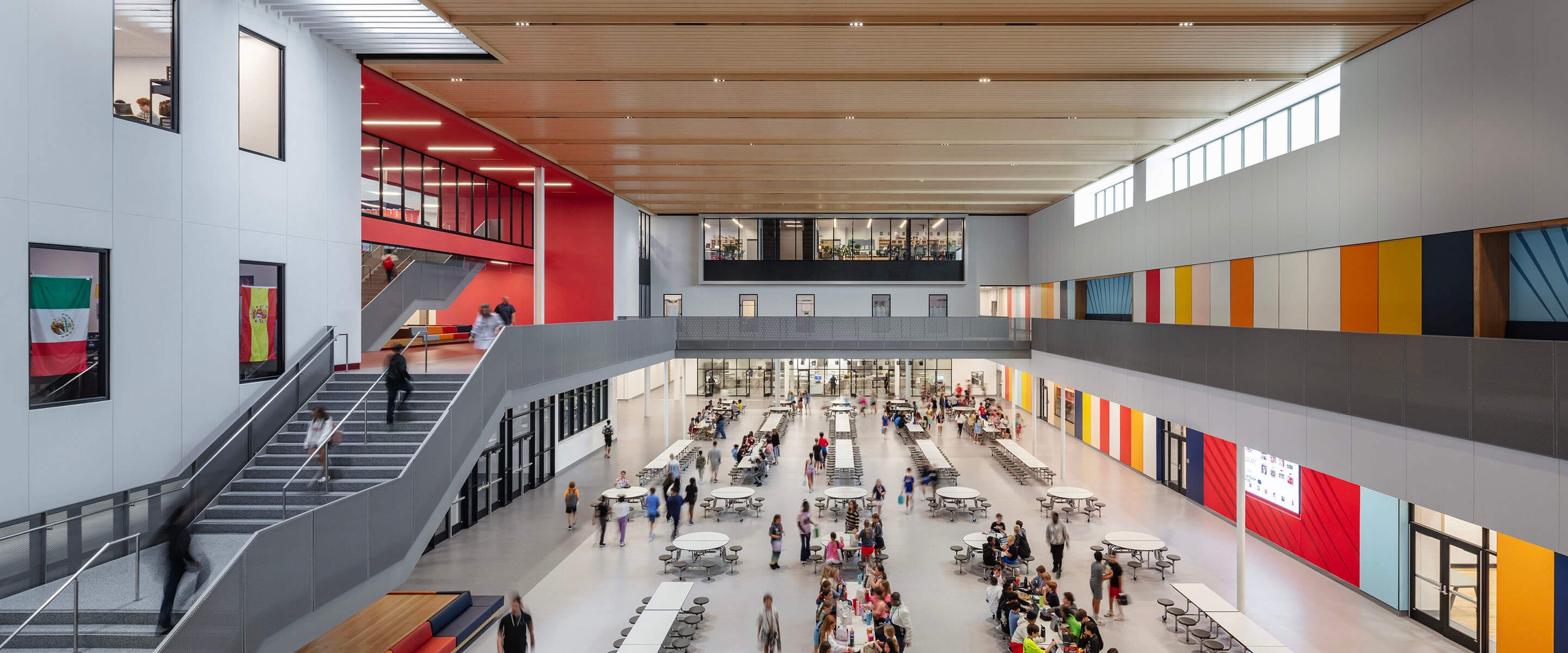
Inspired by the agora—the open-air center of public life in ancient Greek cities—we gave the middle school a central town square. Broad visibility helps create a sense of connection and supports passive supervision. This visual access to activity across the school allows freedom of movement for students while maintaining safety.
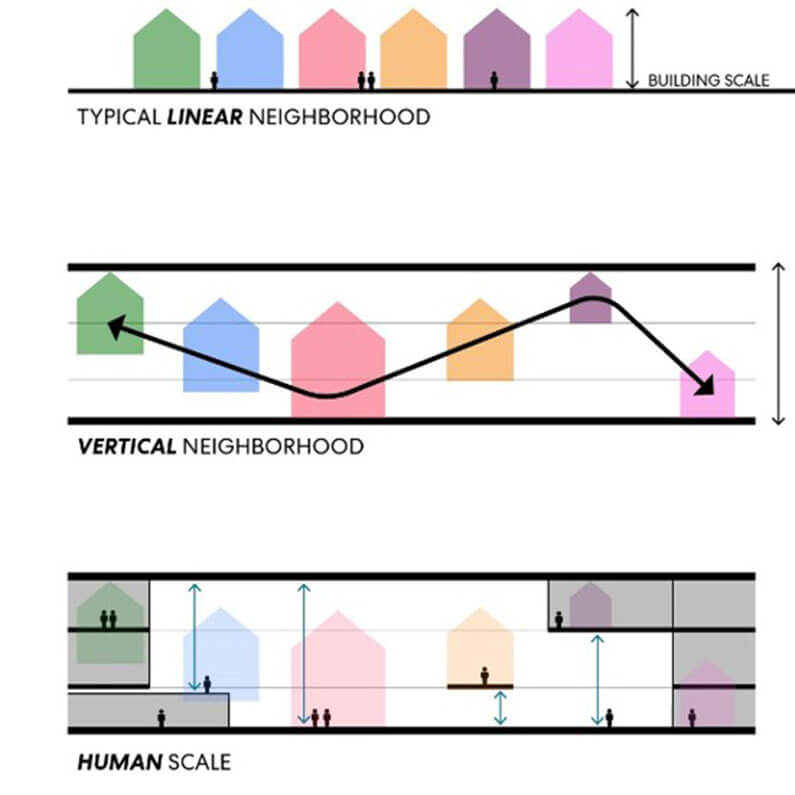
As opposed to a traditional horizontal model, we organized the school in vertical learning neighborhoods encircling the central commons. The dedicated space gives each grade level a place to belong, while areas reserved for teachers within each neighborhood foster teamwork among staff.

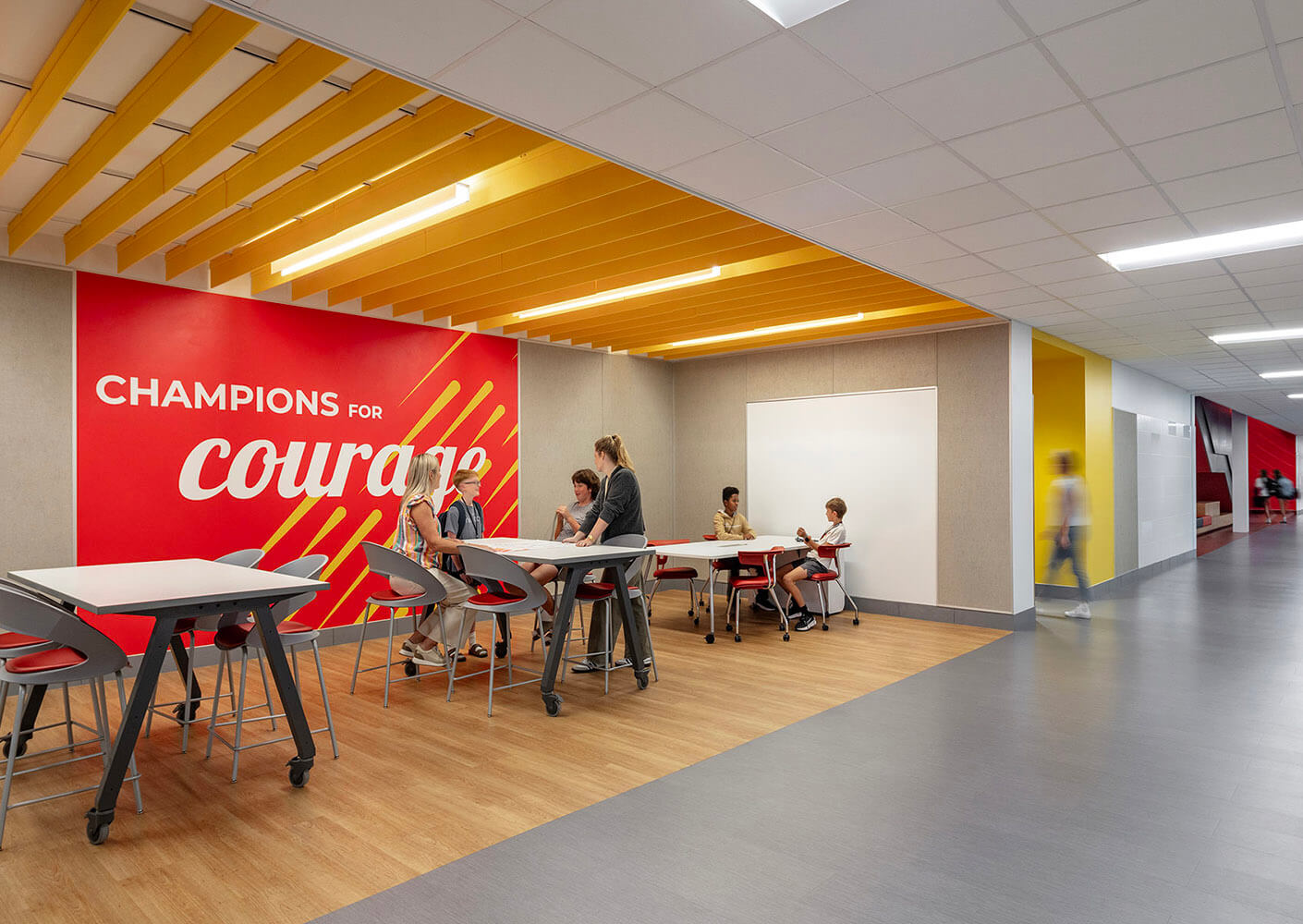
Meetings with staff, students, and community members informed our strategy to activate brand moments throughout the building, expressing LHMS pride.
Finding your way around is simple, with distinct visual cues and material transitions identifying each learning neighborhood.
A highly transparent ground-level facade provides visual connection to the surrounding environment, supporting well-being in the daily experience of students and staff. Strategically placed light wells and windows infuse every space with daylight, and the design provides access to the outdoors at every level. Bright, open, and interconnected, the building becomes an enriching, student-centric place to learn.
Lake Highlands Middle School was designed to use 44% less energy than a typical building of this type. We chose locally sourced, bio-based materials with recycled content to reduce embodied carbon, and during construction we were able to salvage or recycle more than three-quarters of the waste materials rather than sending them to a landfill.