University of Houston, RAD Center
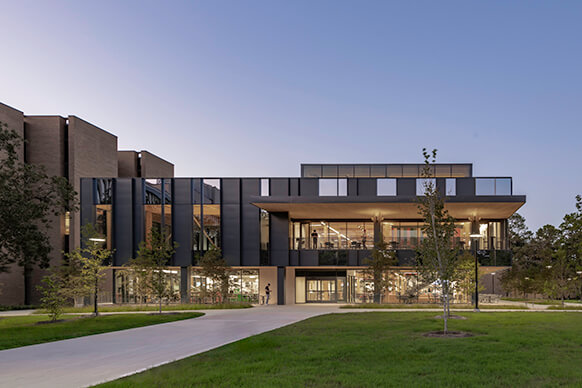
The University of Houston had a new vision for campus dining—a “third place” outside of the home or classroom where students are encouraged to gather, linger, and be well. The Retail, Auxiliary, and Dining (RAD) Center brings this vision to life.
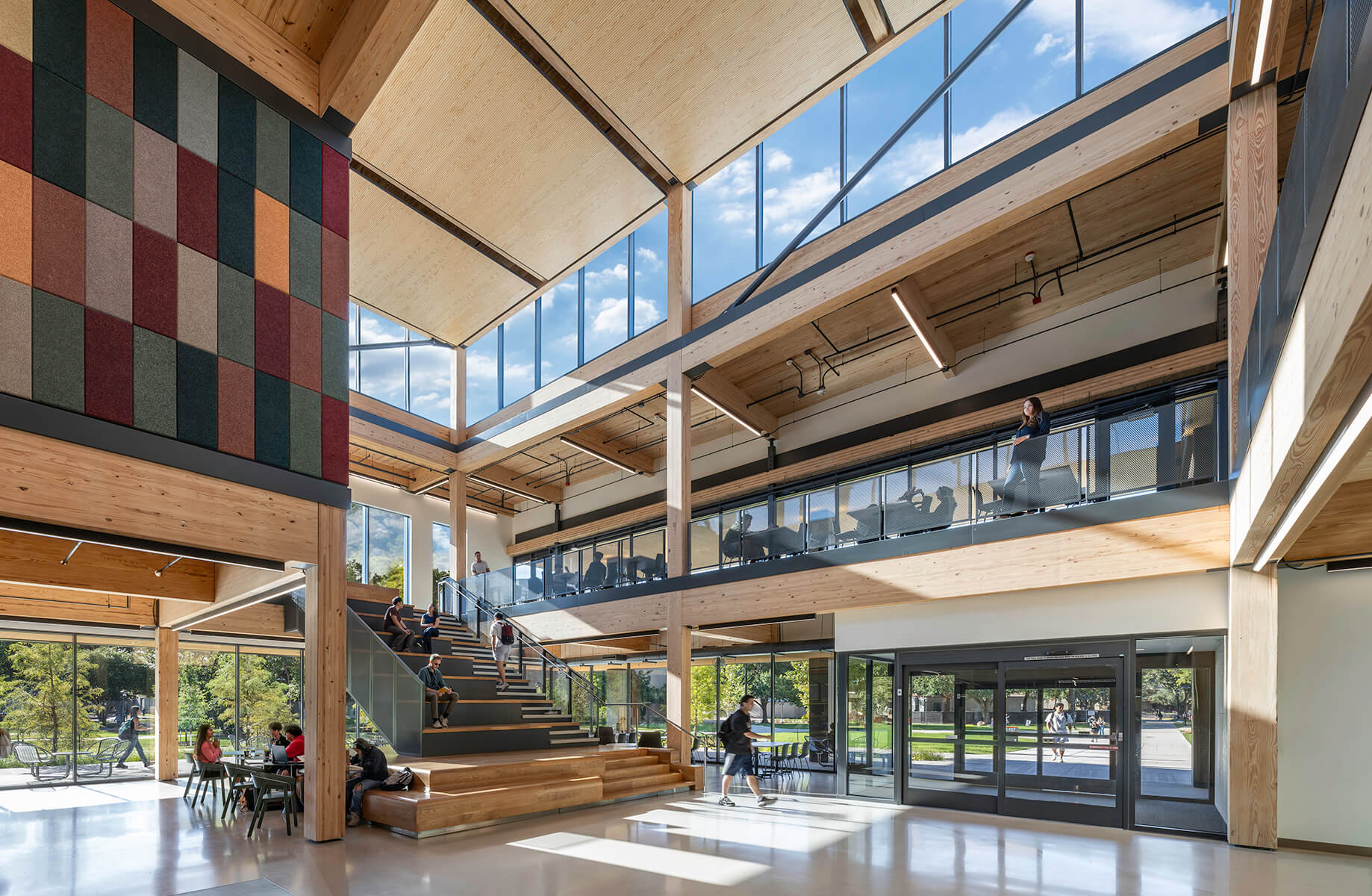
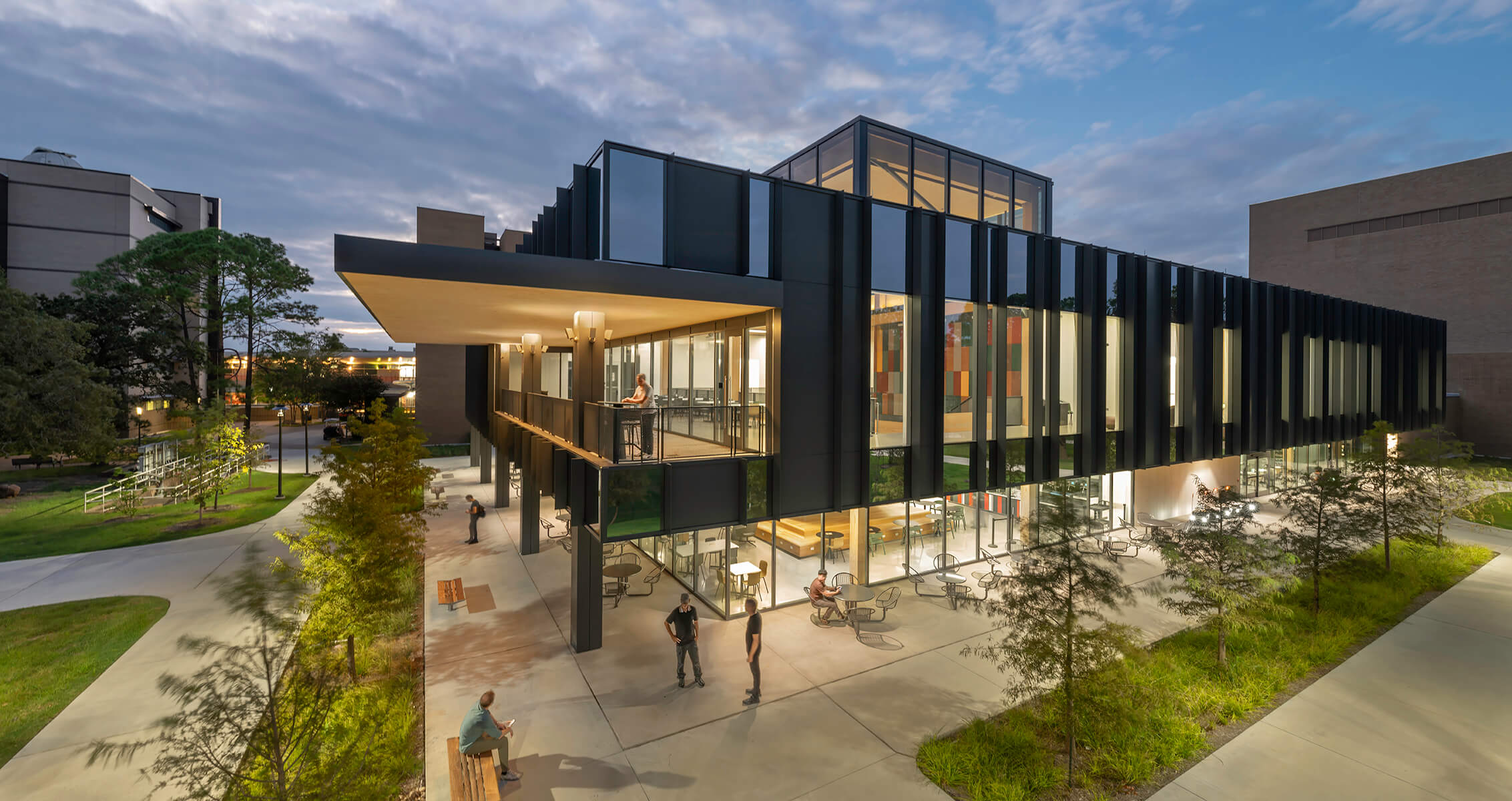
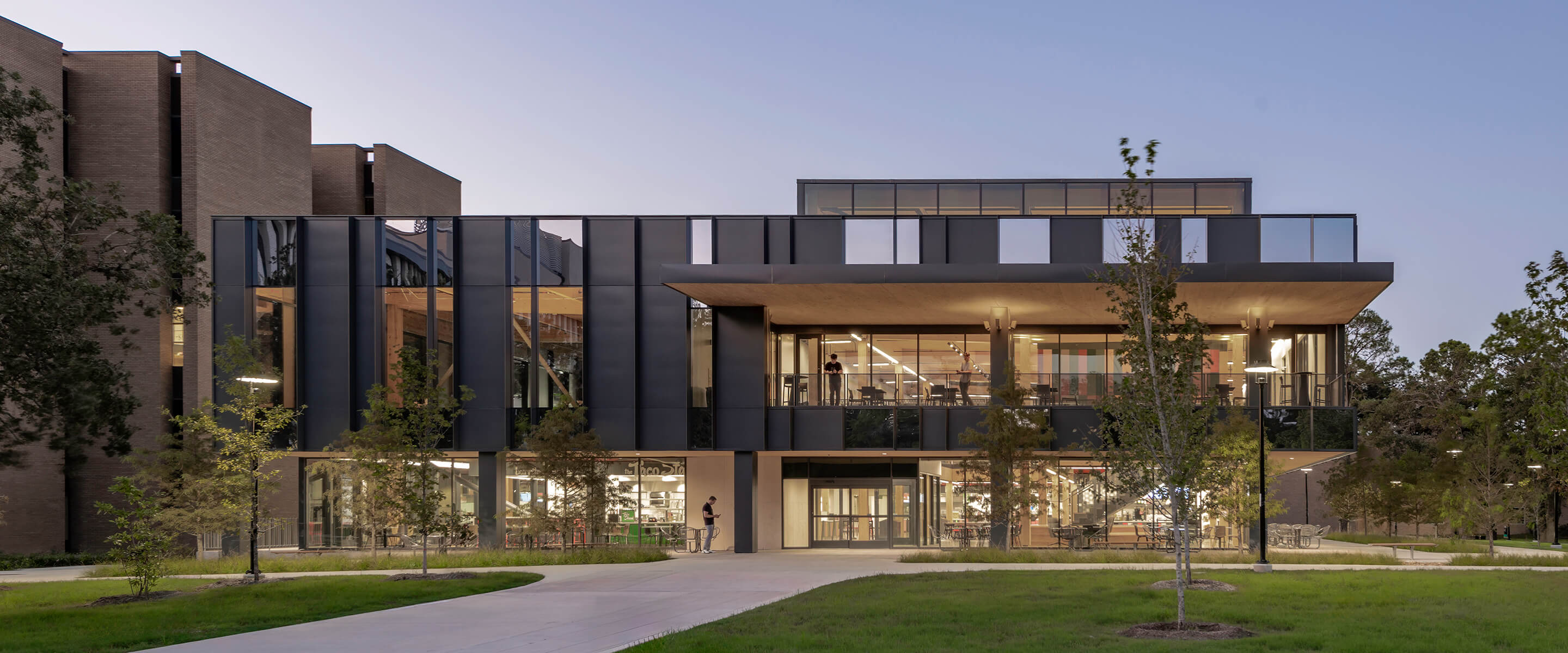
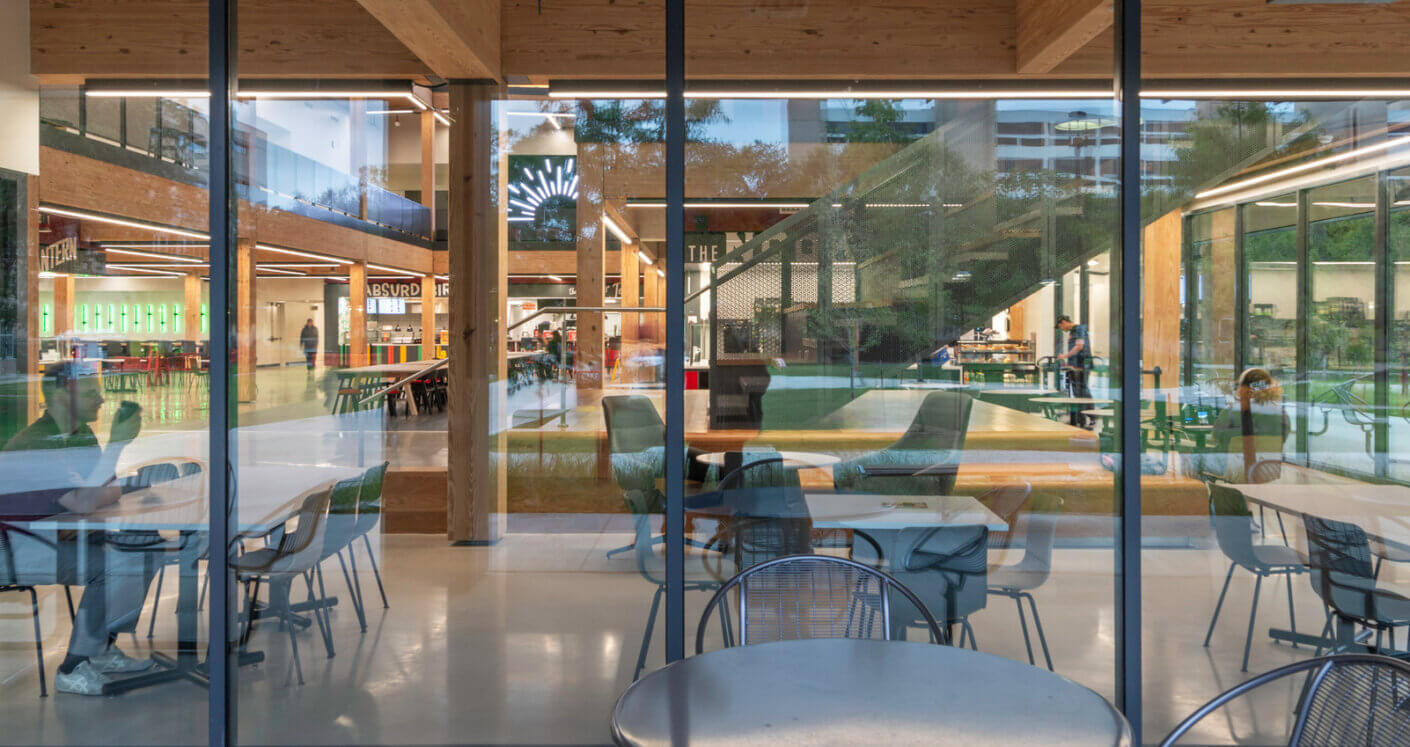
The first mass timber construction on the University of Houston campus, this structure replaces a flood-prone underground dining facility that was severely damaged during Hurricane Harvey. It presents an elevation of the campus experience—literally. In contrast to the below-grade dining hall, the design rises as a beacon and a foil to its brutalist neighbors. The RAD’s transparent façade and glowing interior create a “lantern in the woodlands,” welcoming up to 400 students and staff into a warm, communal wellness-boost of timber and light.
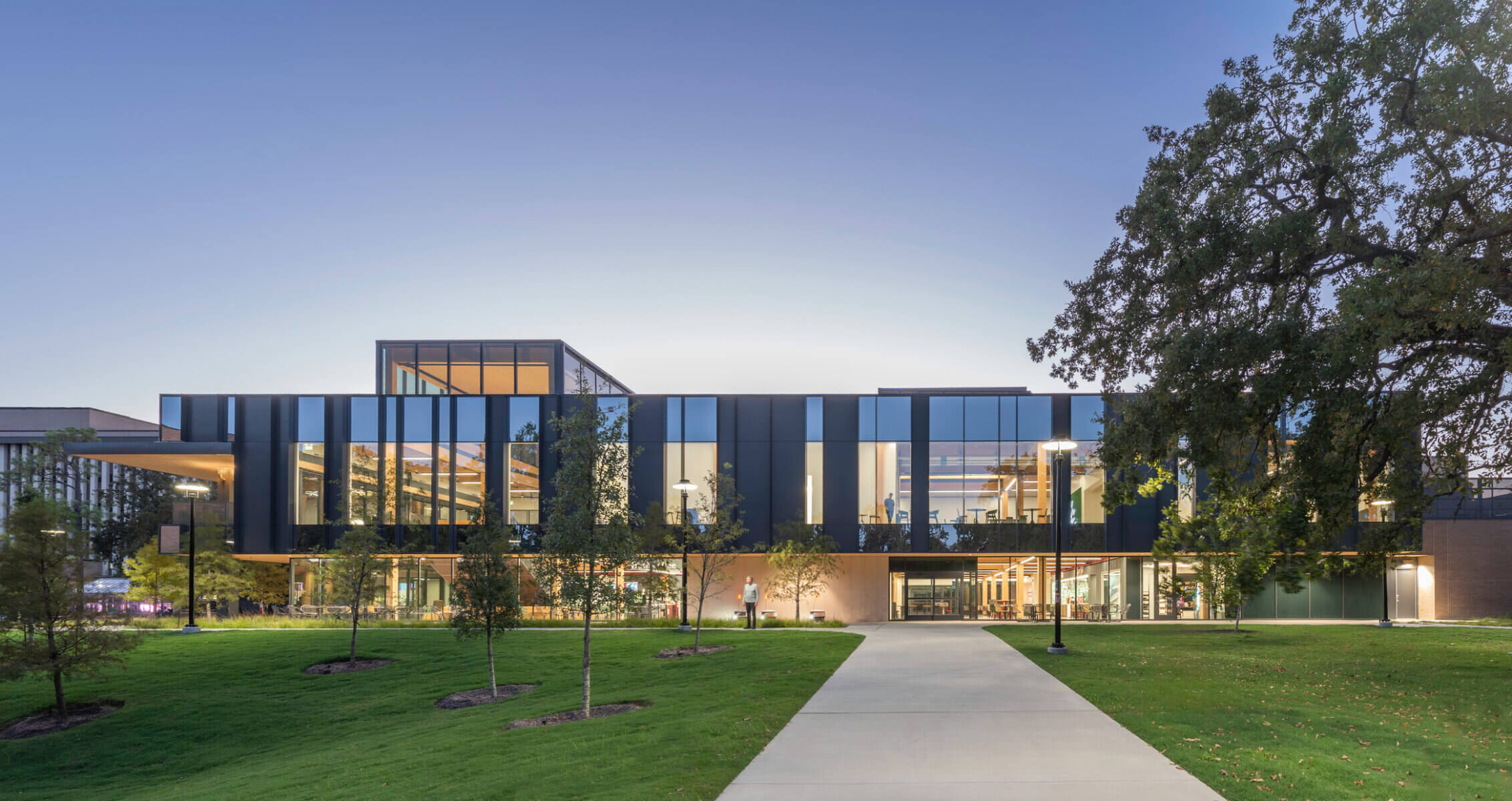
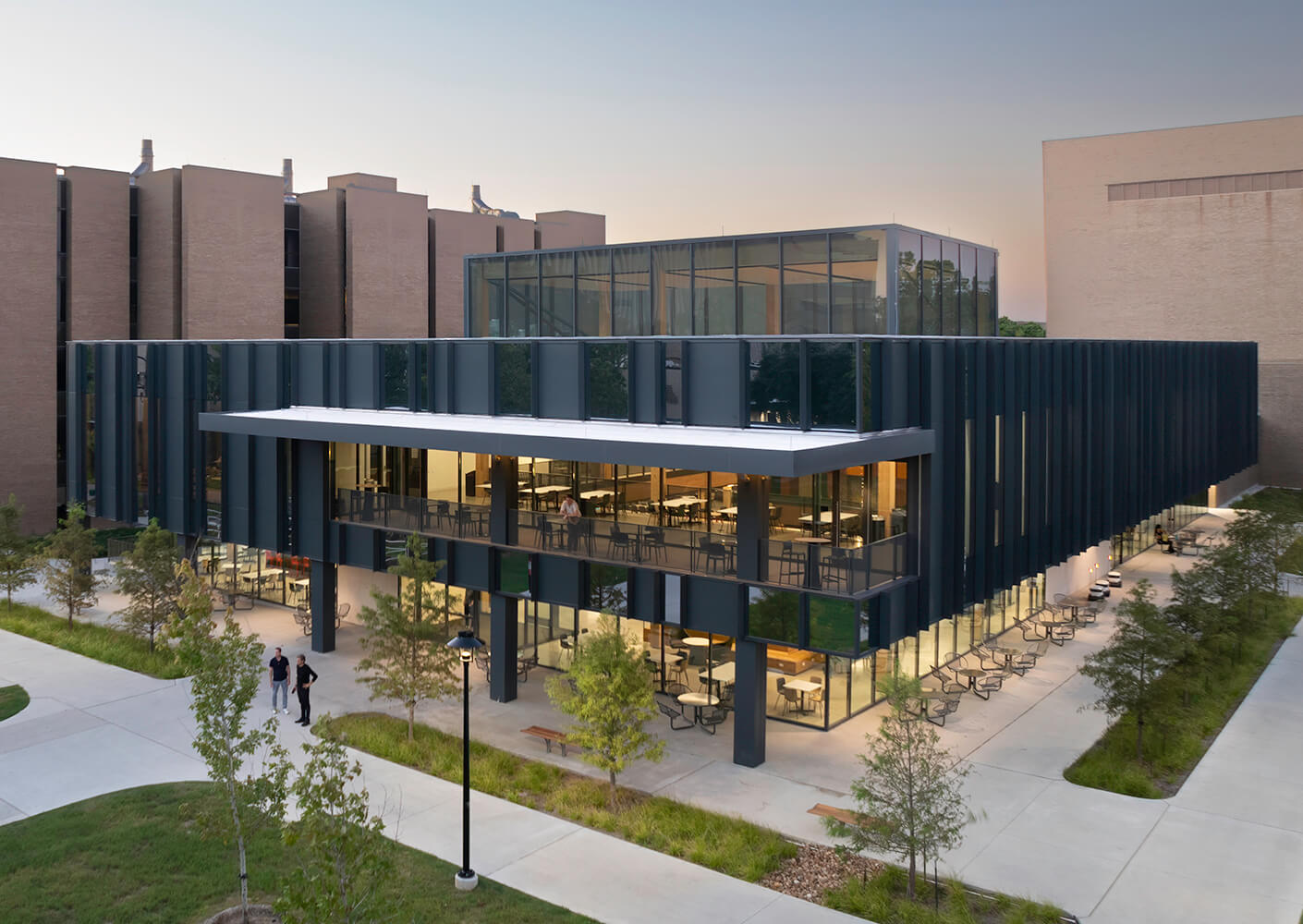
The RAD was designed to nurture a sense of welcome and well-being on campus. It emphasizes holistic wellness through healthy dining options, inspiring art, social connectivity, and a soothing resonance with nature.
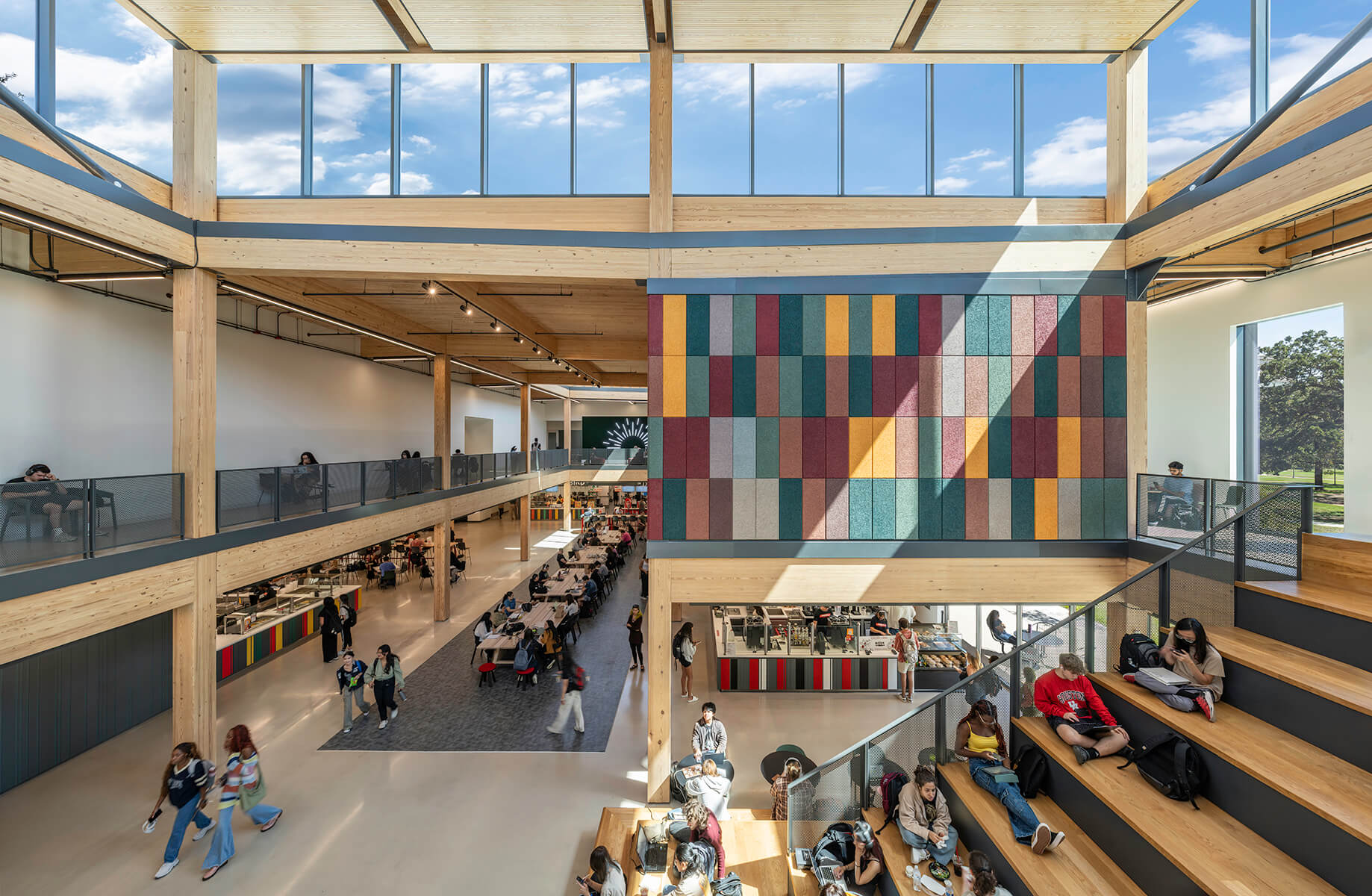
The plan is simple and clear, finding richness in structural rhythms, multi-story spatial overlaps, warm materials, and generous daylight.
Mass timber provided design, delivery, and performance benefits. Lighter than structural steel, mass timber allowed us to reuse the existing facility’s foundations, columns, and beams and create a multi-story building on the original footprint. Coupled with daylighting, energy-efficient systems, and resilient materials, the project achieved a 39% reduction in Global Warming Potential and a 74% reduction in Energy Use Intensity compared to benchmarks. This is equivalent to the carbon sequestered by 4,380 acres of forest.
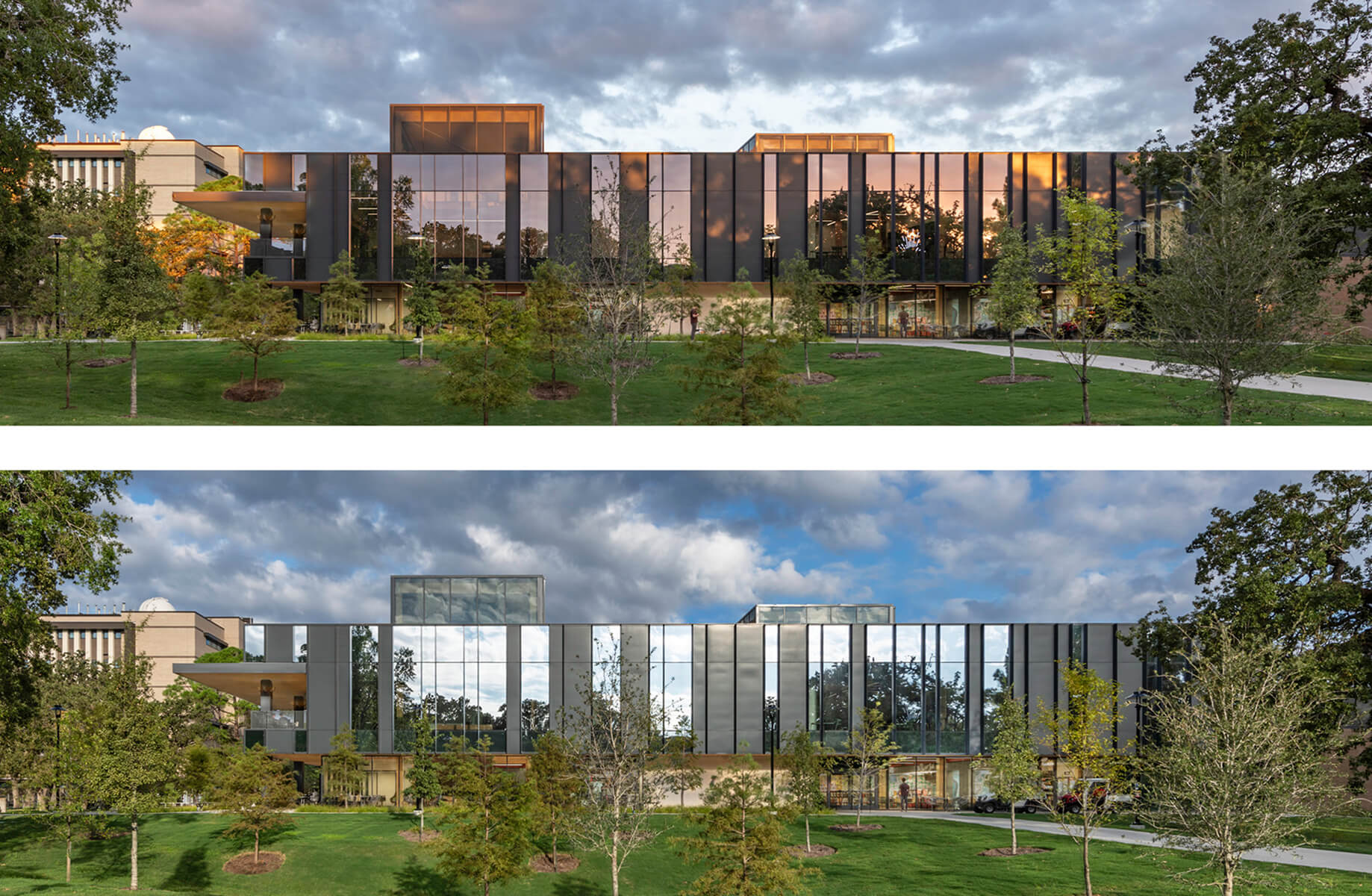
Part of a larger initiative to provide improved food access and student engagement for the university’s growing enrollment, the RAD houses five diverse dining options and a convenience store. Designed as more than a dining hall, it also incorporates adaptable spaces for events, study, and reflection, shaped in conversation with students and the administration.
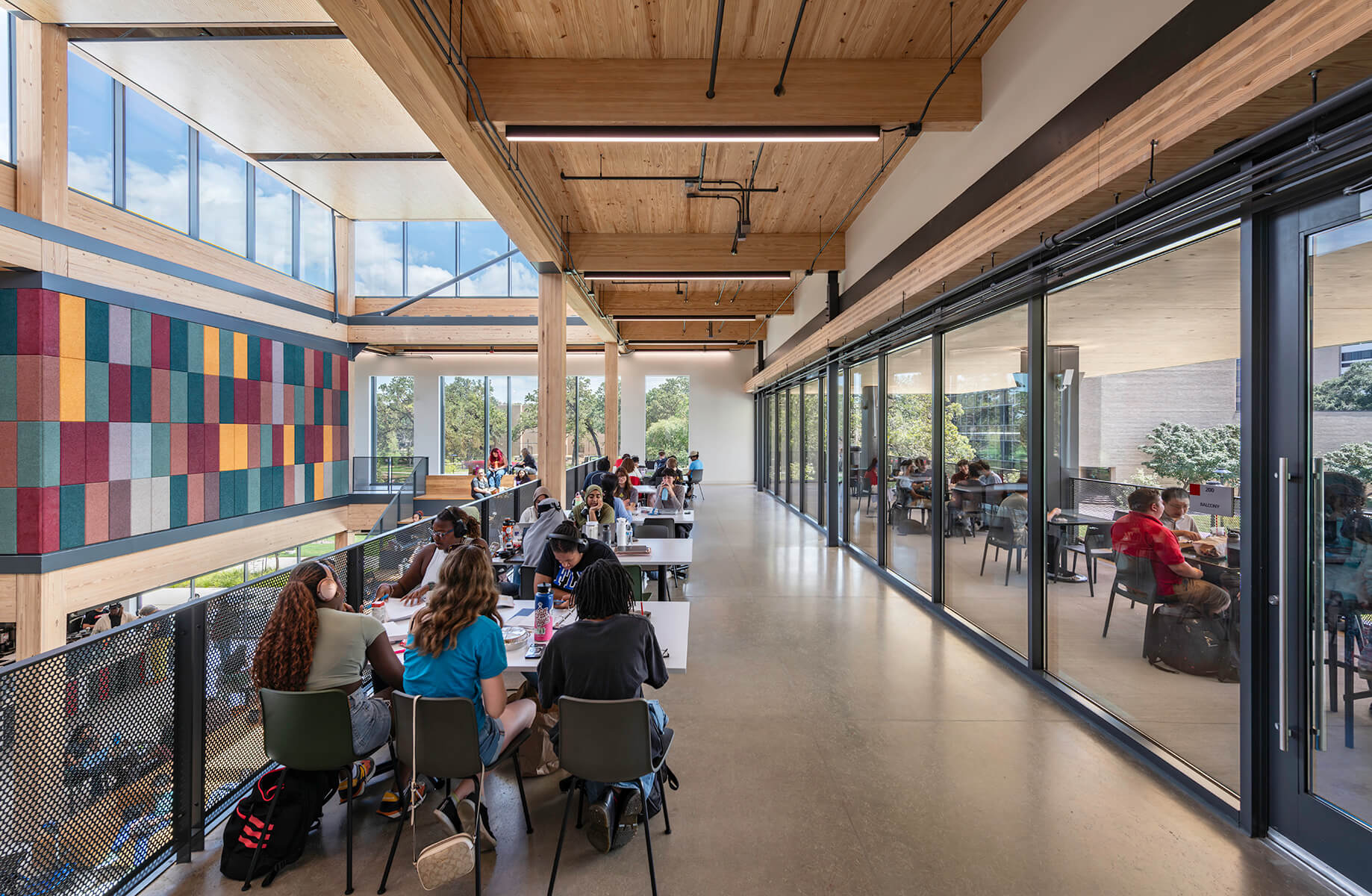
Sheltered outdoor patios, individual heads-down nooks, and a variety of seating options throughout the daylit space bring students to the RAD for a range of experiences, from private meals to loud social gatherings.