For the Love of People January 14, 2026

Designing better hospitals begins with developing better models of care

Illustration of doctors and planners discussing data and research

Why do hospitals and clinics look and function the way they do? Before they were built, and even before architects started sketching, teams of doctors, nurses, administrators, and facilities and operations specialists worked together to develop a model of care.

A model of care isn’t a physical model. It’s an approach that guides how healthcare services are delivered, including processes, roles, and responsibilities—all factors that fundamentally shape the building’s design. In the ‘90s, we saw the development of high-efficiency strategies designed to increase access and meet the growing need for services. Today, the paradigm is more people-centered, aimed at improving the experience and outcomes for patients, their families, and healthcare workers.

To find out how models of care are developed, tested, and refined, we took a glimpse behind the scenes at two very different settings.

Redefining Outpatient Care

Corewell Health Cardiovascular and Neurosciences Outpatient Clinic
Grand Rapids, Michigan

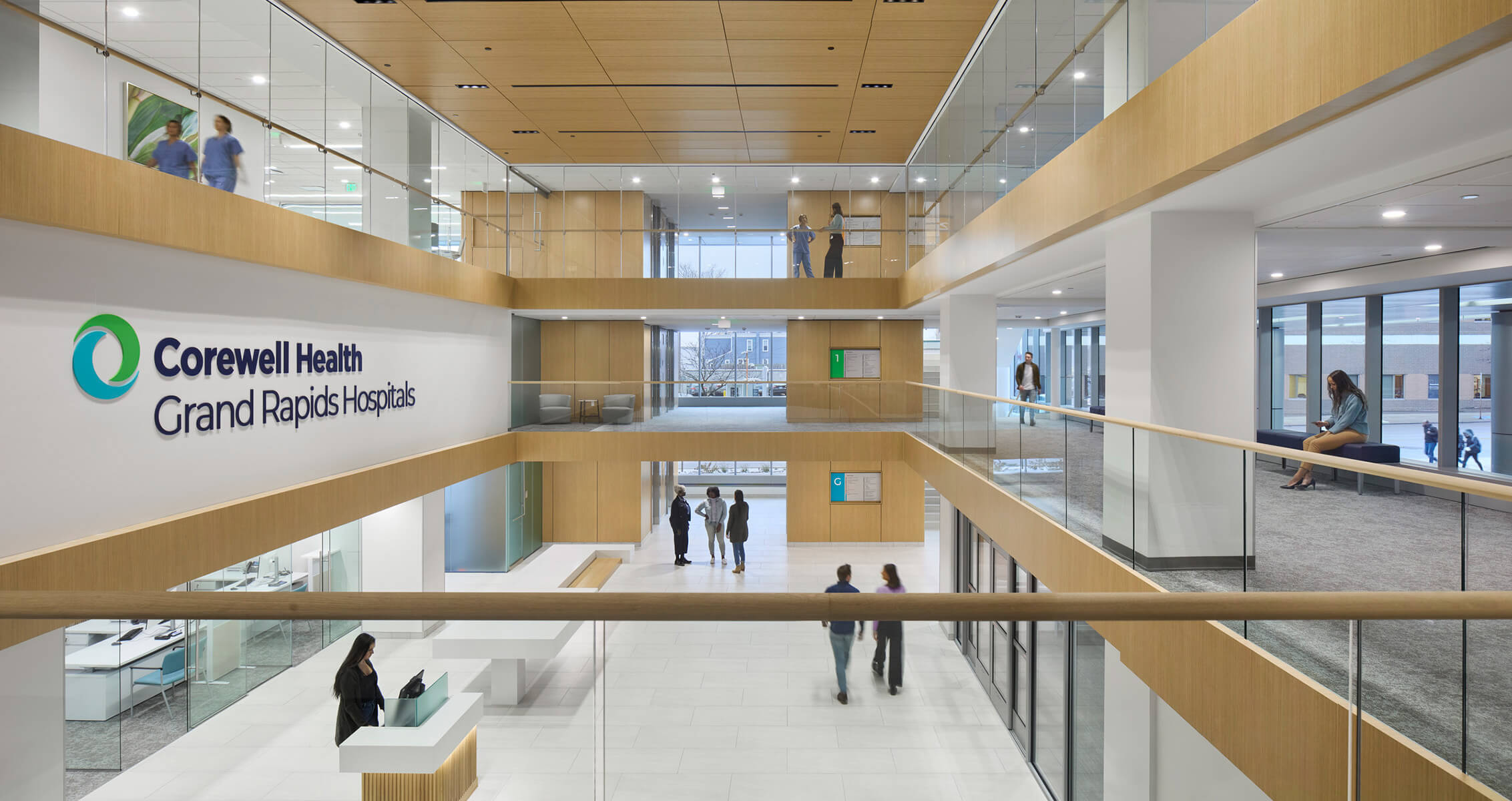
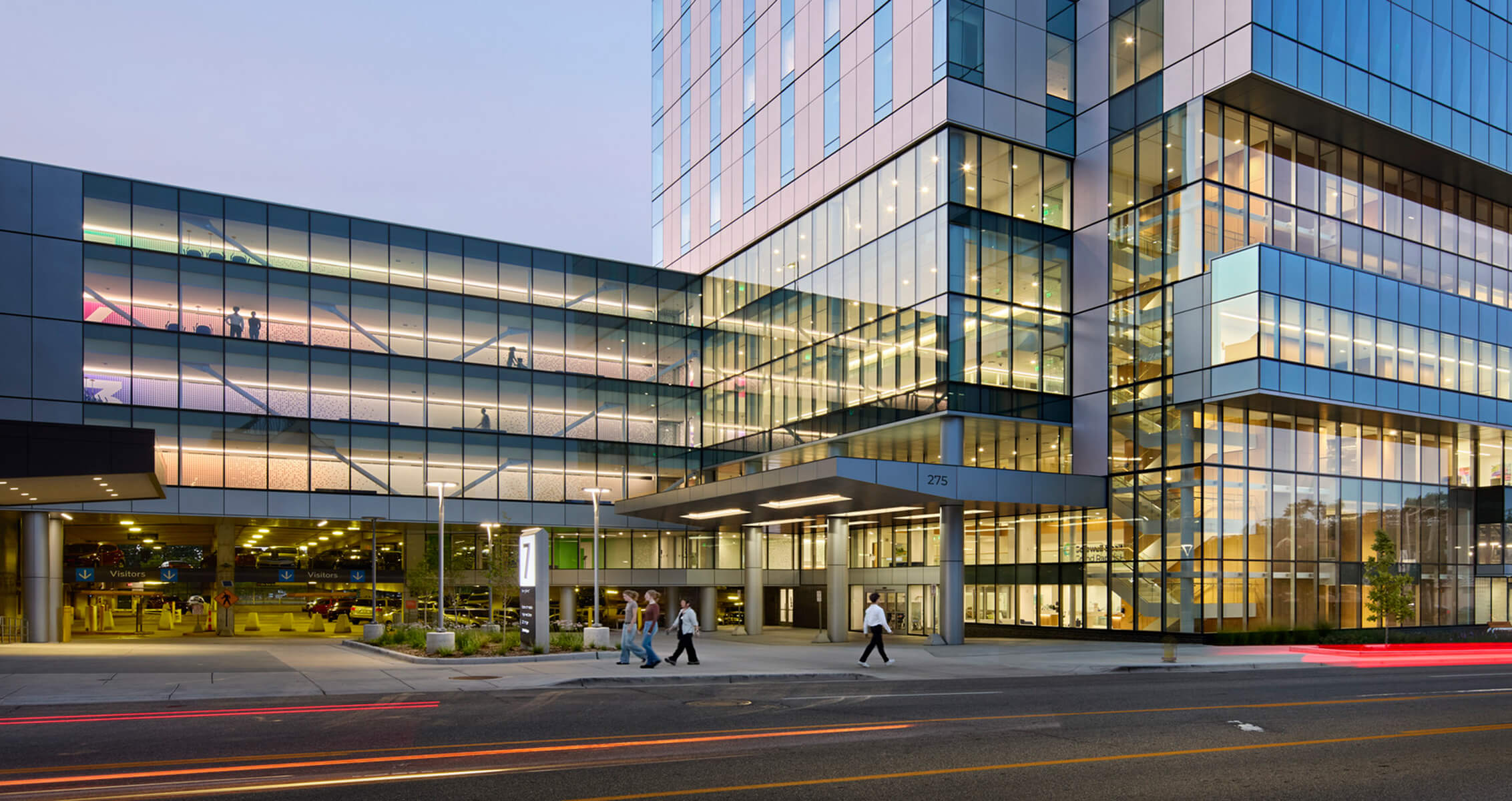
Corewell Health operates 21 hospitals and more than 300 outpatient locations in Michigan. In downtown Grand Rapids, on the west side of the state, its hospitals and clinics anchor the “Medical Mile,” a healthcare and life sciences corridor. When the need arose for a new clinic there, leadership decided to develop a single standard for outpatient care that could be used in the new building and across the system.

“Before this, we designed every building from scratch,” says Sarah Banks, a vice president of operations at Corewell Health. “That took a long time, and they all looked and functioned differently. Providers who worked in several locations had to adjust to different layouts and processes. Patients weren’t sure what to expect from one clinic to the next. And if a specialty outgrew its space and moved out, we would spend a lot of time and money renovating that space for a different specialty.”

A standard model for outpatient care would provide a consistent experience for patients and providers across multiple locations. It would also help future design projects proceed more quickly, be more affordable, and leverage flexible spaces as patient demand for different specialties ebbed and flowed over time.

Doctor check-up illustration with heart monitor and patient form.

Although the immediate need was for a cardiovascular and neurosciences clinic, representatives from all ambulatory subspecialties participated in focus groups and discussions to determine a model of care that would work for everyone. They considered the entire process for patients, from arrival to departure, as well as the workday flow of providers and staff.

Participants determined three guiding principles: They wanted to encourage standard yet flexible floorplans; integrate technology while maintaining a warm and welcoming atmosphere; and prioritize comfort and convenience for patients and providers.

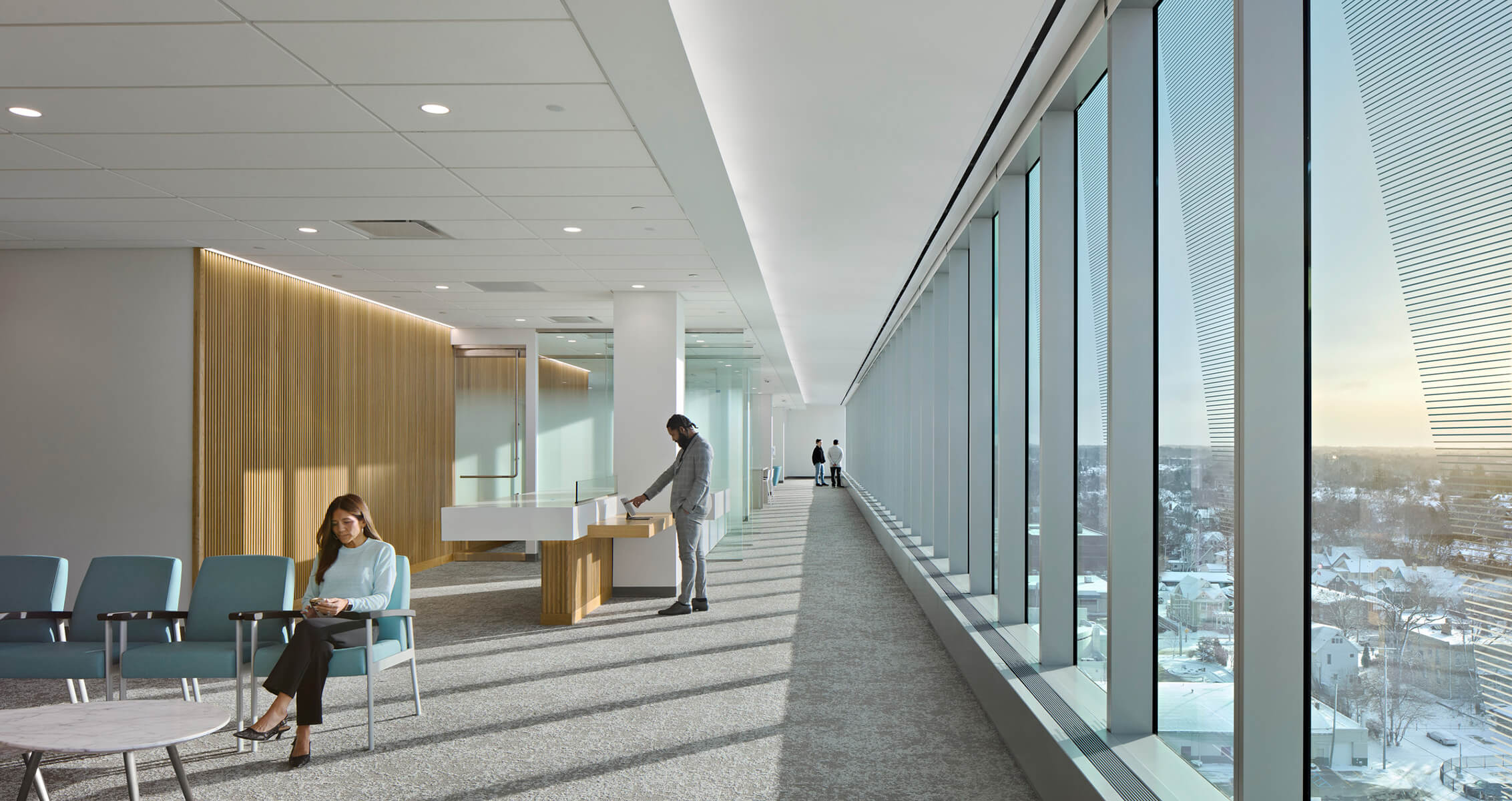
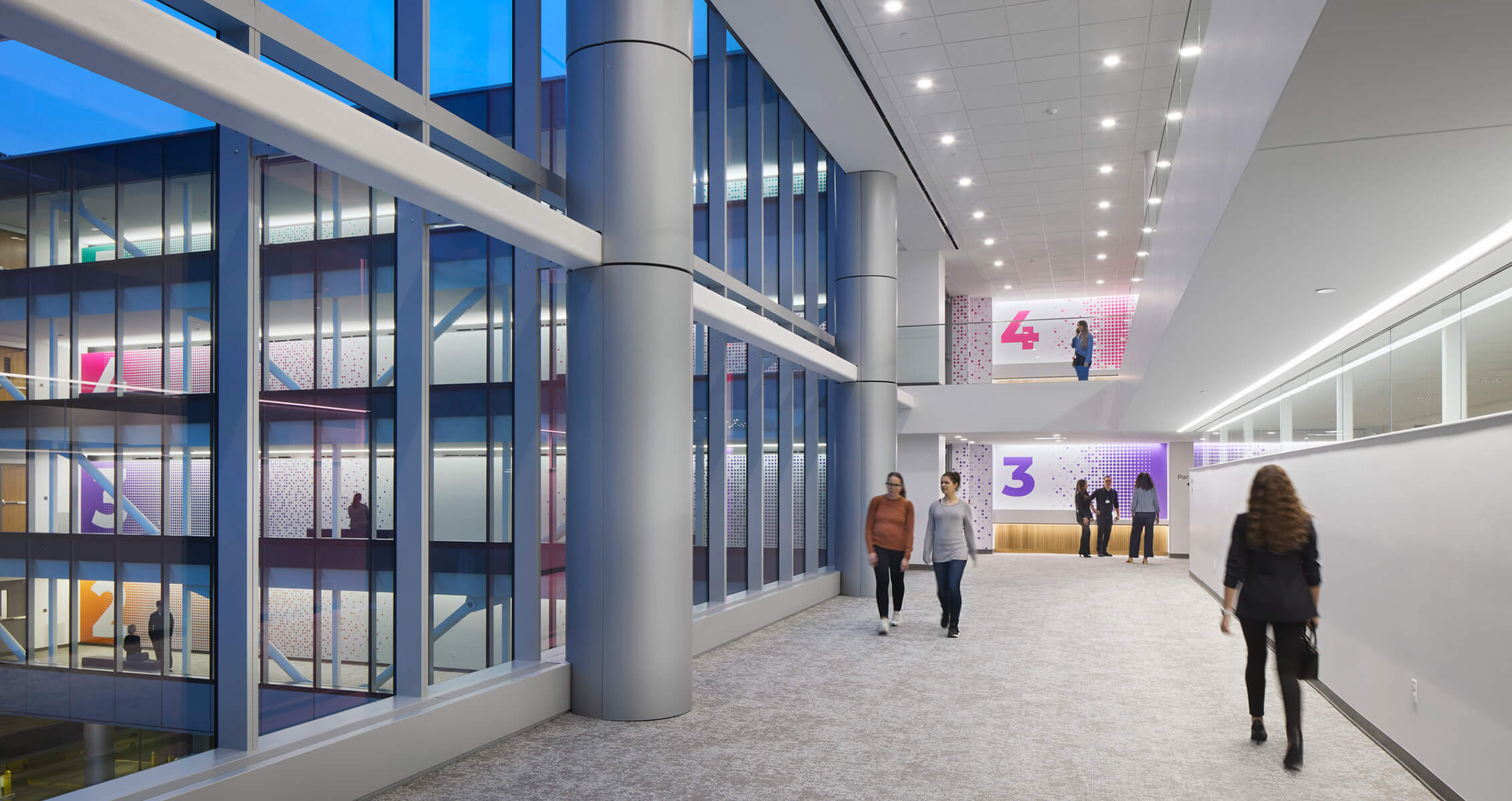
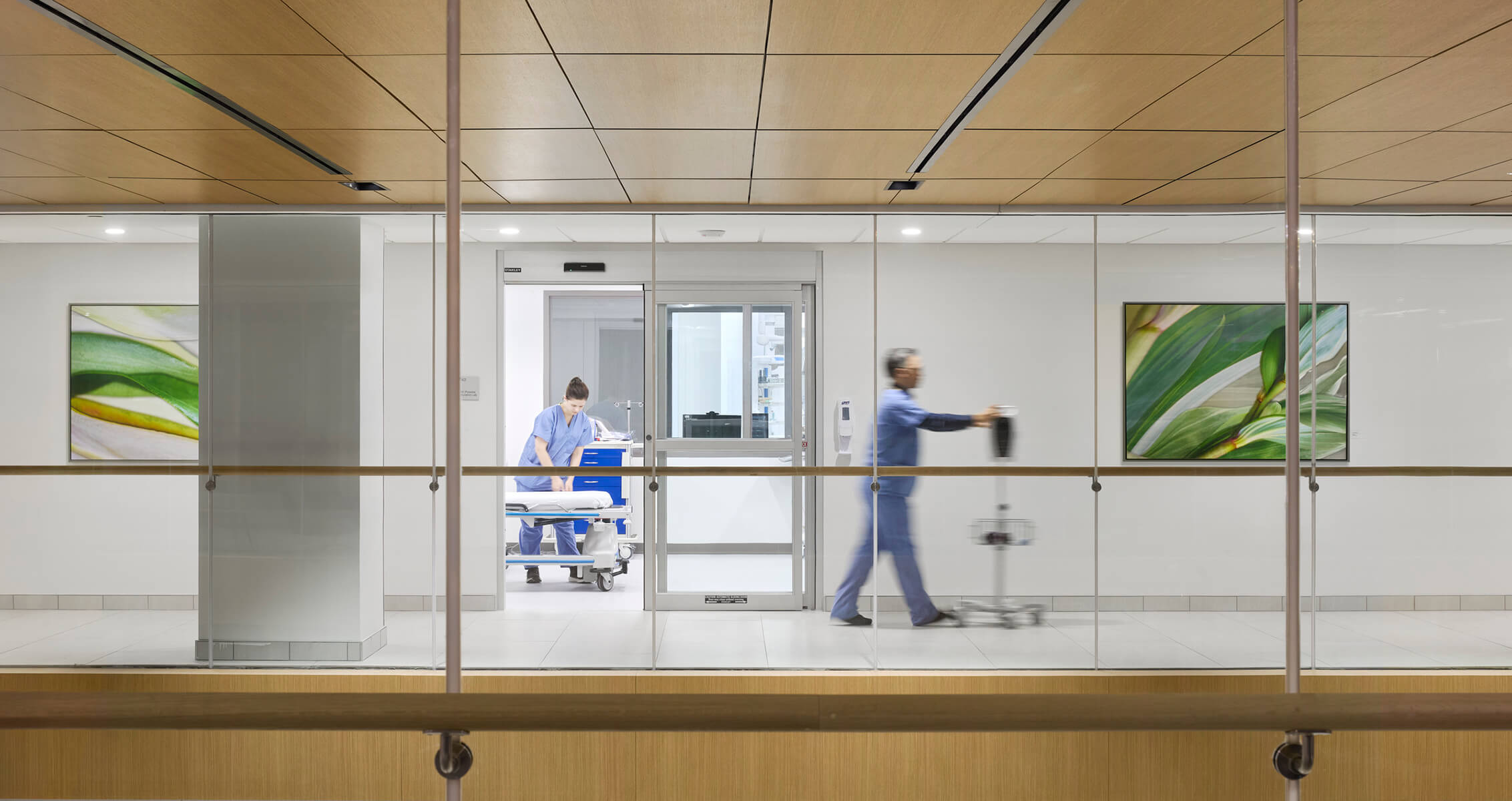
After the health team established the model of care, architects used it to inform their design. The new building features waiting rooms with expansive views on one side of the building, and offstage staff areas with large windows on the other. Kiosk screens on every floor serve patients who prefer a digital check-in experience, and registrars can assist patients who want a personal touch. Flexible “pods” on the interior contain the patient care areas, including private exam and procedure rooms, with walls that can be easily added or removed.

Following the successful ambulatory care rollout, Corewell Health is creating a model of care for longer-term patients that will form the conceptual framework for a new hospital and other future inpatient facilities.

De-Stressing Pediatric Surgery

Nicklaus Children’s Hospital
Miami, Florida

Offering a full complement of pediatric health services, Nicklaus Children’s Hospital is the only free-standing, licensed specialty hospital exclusively for children in South Florida. The surgical center had previously been located at the edge of campus, but its capacity was limited, and many of the operating rooms were too small to accommodate modern equipment.

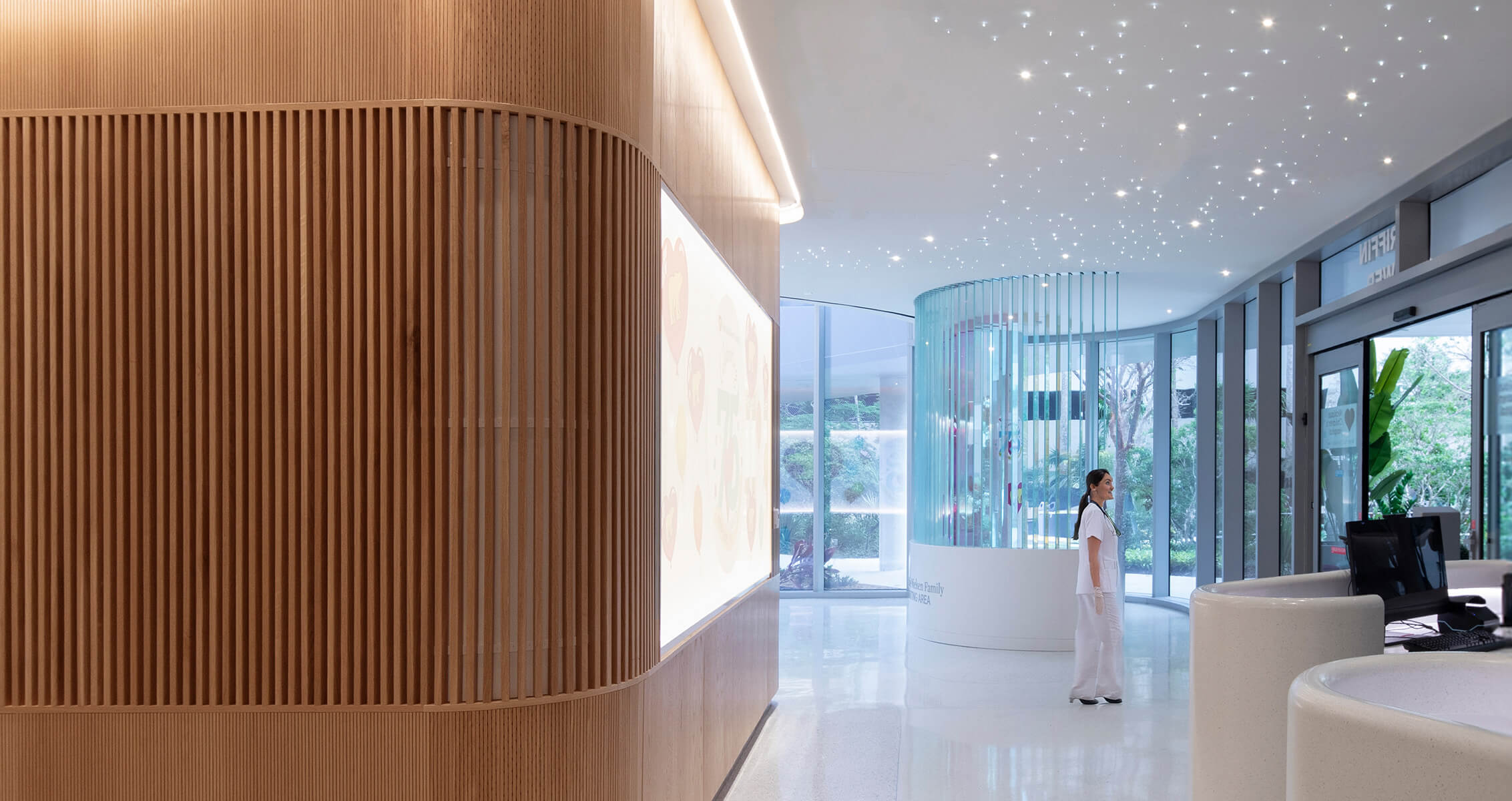
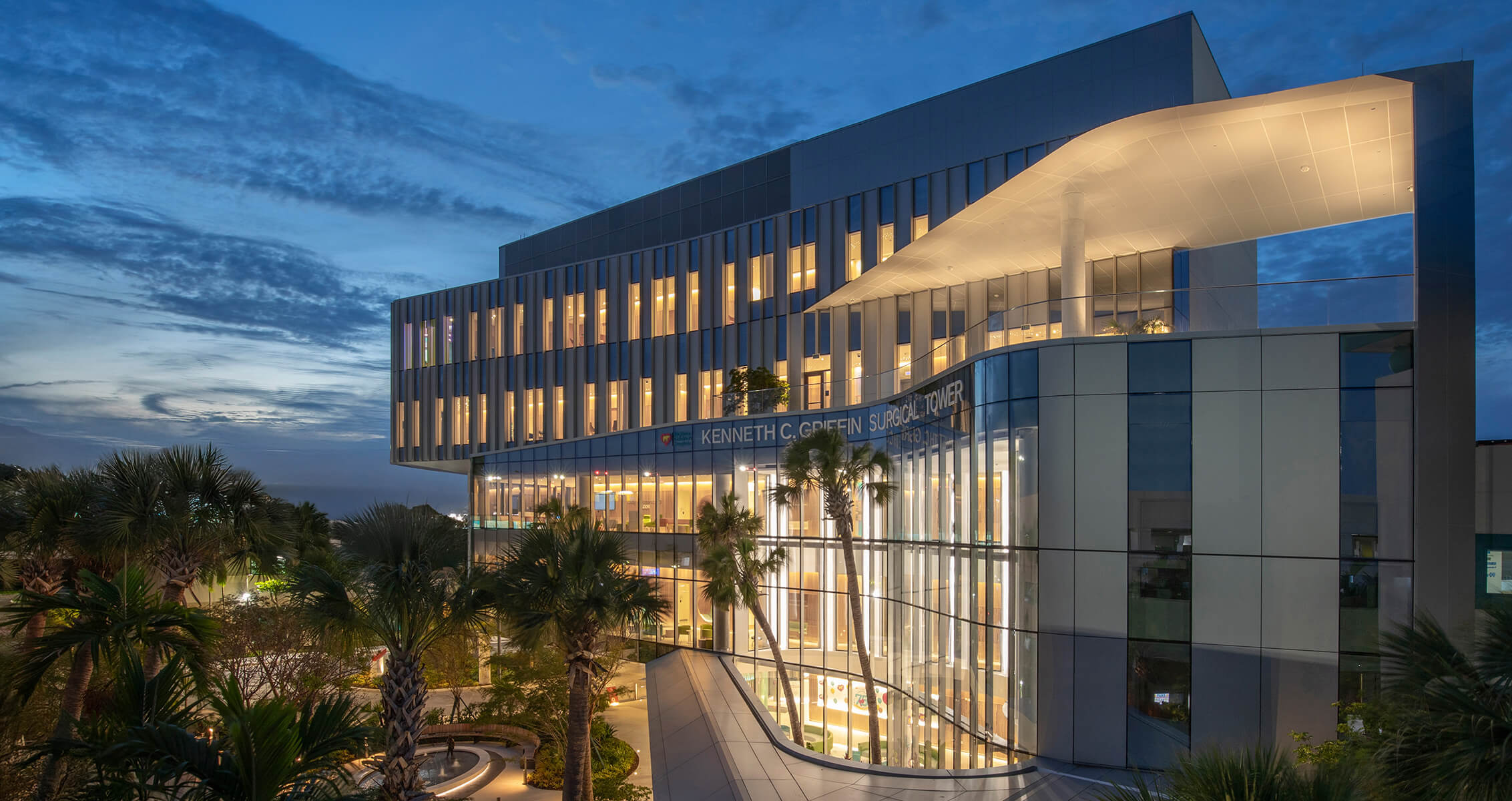
Before design work could begin on the purpose-built, state-of-the-art Kenneth C. Griffin Surgical Tower at the center of campus, the surgical services department had to devise entirely new ways of working together while also improving the patient experience. That meant asking for lots of input right from the outset. “Everyone is important, and everyone’s opinion matters,” says Osnyel Cruz, director of surgical services at Nicklaus Children’s Hospital. “It’s hard to please everybody, but having conversations where people could share their knowledge and experiences really helped ensure that we considered all the options.”

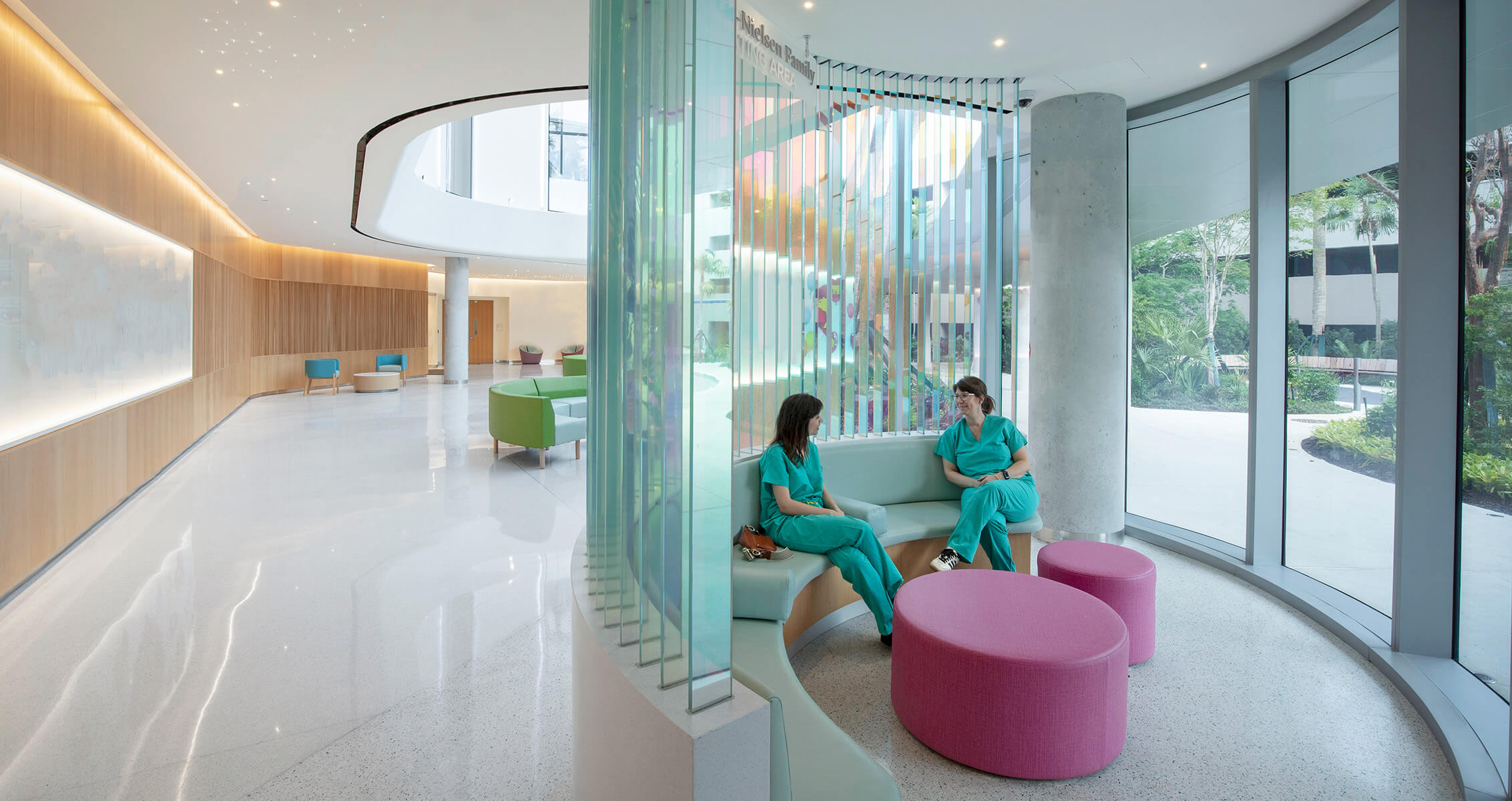
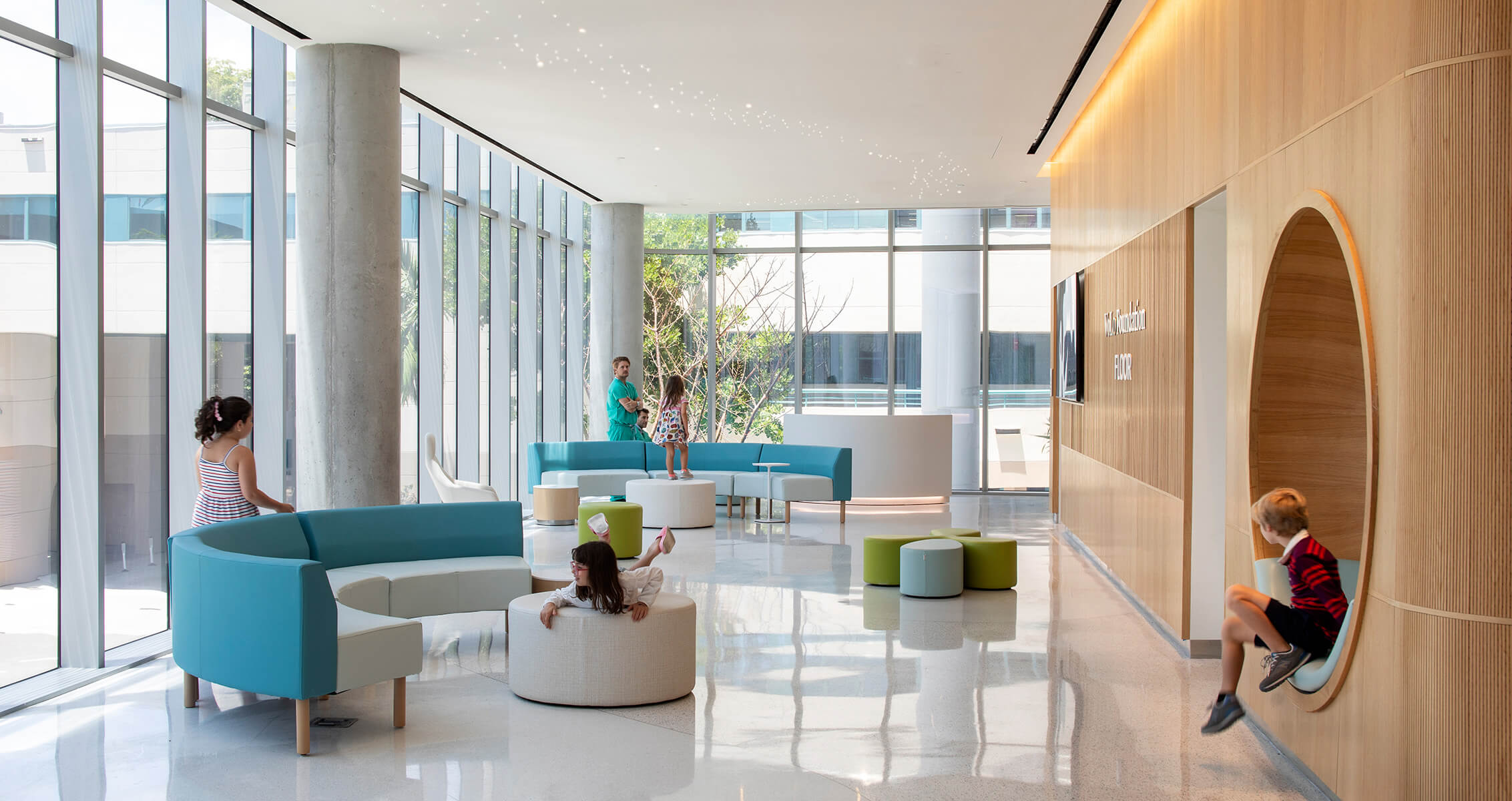
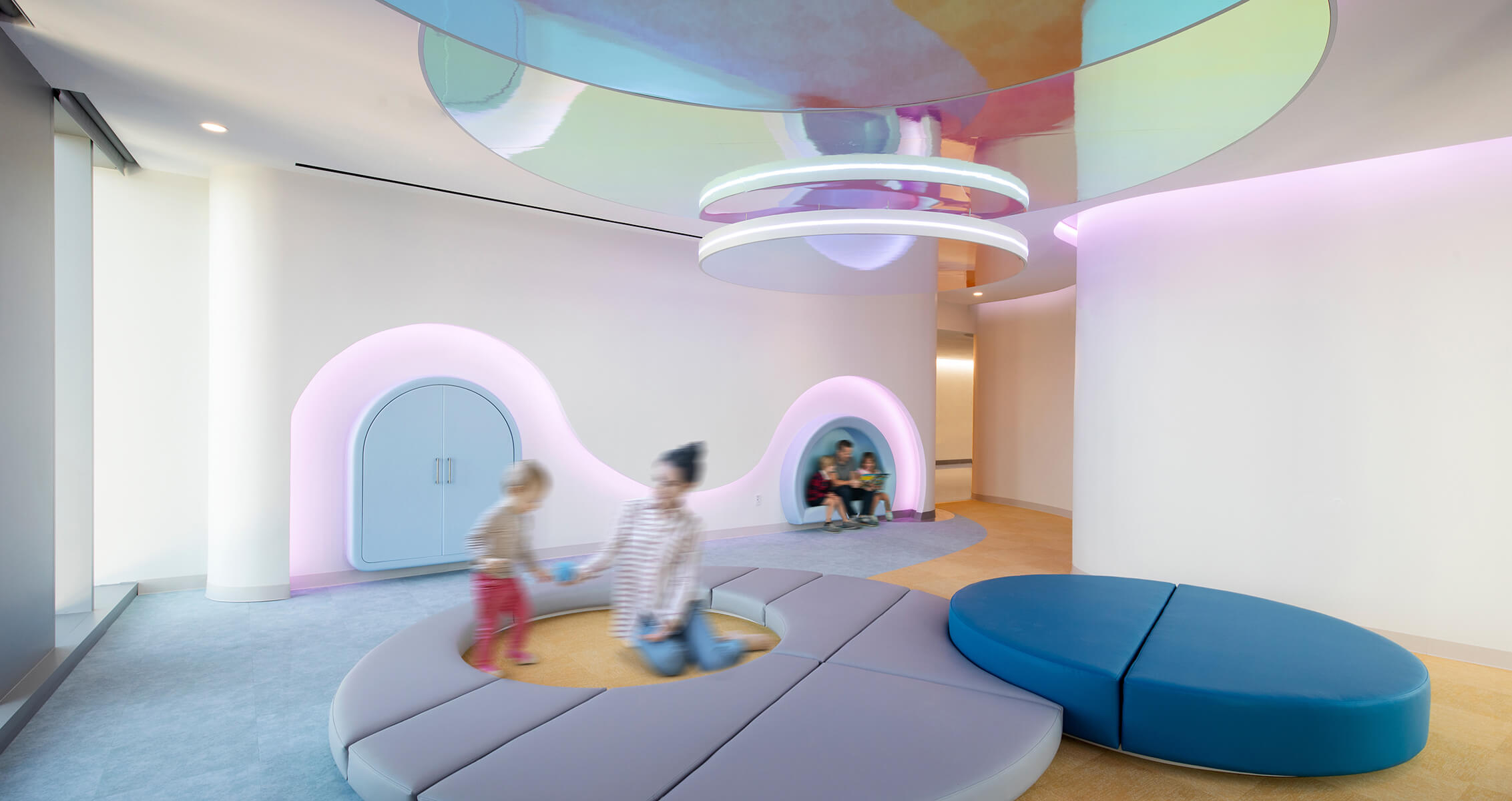
Acknowledging that surgery can be an unsettling experience for patients and their families, the team considered how the new spaces could minimize their anxiety and discomfort. The old model required patients to move among different rooms and floors each step of the way (check-in desk, a waiting room, prep room, operating room, post-anesthesia recovery room, recovery room, and an inpatient room), which added to mental and physical stress. The team envisioned a streamlined experience in which patients could be with their families from check-in to the prep room, be taken into an operating room on the same floor, and then be returned to the prep room for post-anesthesia care and recovery.


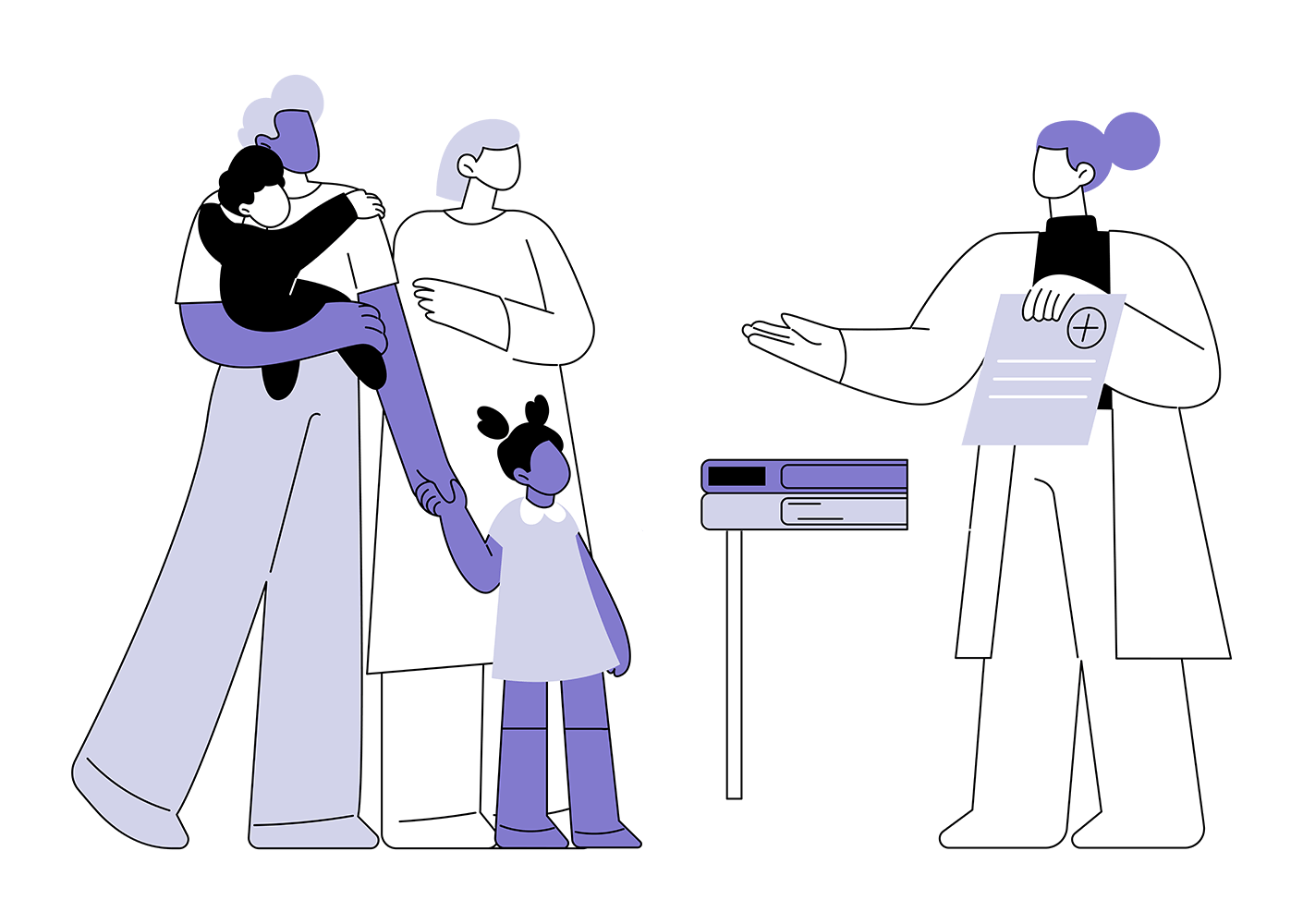
Illustration of a family with two children checking in with a physician

To achieve that vision in the tower’s smaller footprint, operating rooms would need to be located on two floors. Staff were accustomed to all operating rooms being on a single floor, and the team wanted to minimize anxiety for them, too. “We have staff who have been here 30 or 40 years,” Cruz says. “They’re used to the old space; they’re used to knowing where everything is. We made sure they were part of the process. We made them our leads, made them our experts, and we created mock scenarios that lasted weeks and even months at a time.”

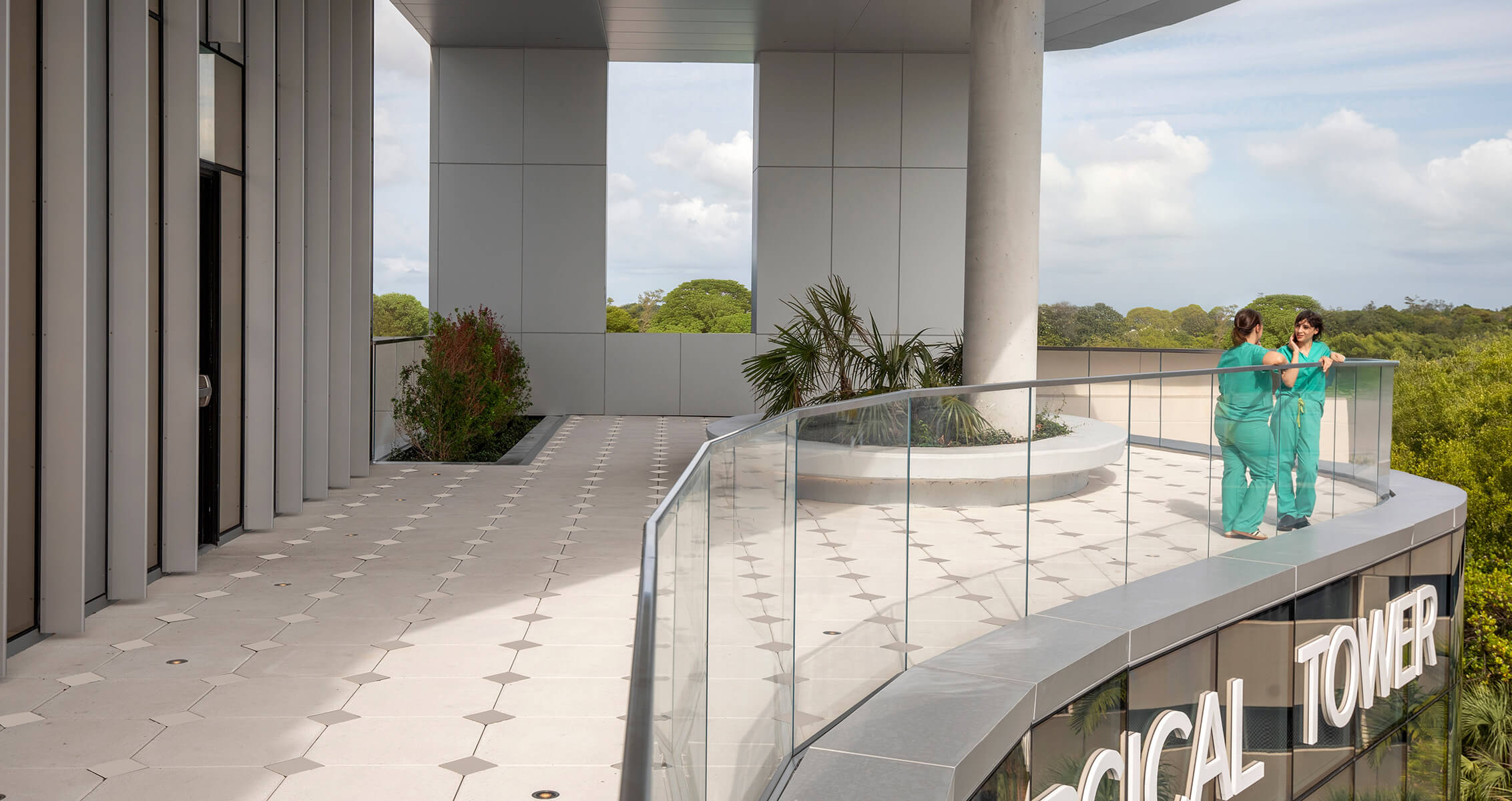
The resulting model of care informed an operations plan that functions over multiple floors, and the resulting recommendations and processes formed the basis of the new five-story surgical tower’s design. In addition to better serving providers, patients, and their families, the tower is helping attract new talent. “It’s always been a great place to work, but this really sets us apart,” Cruz says. “Everything is so well thought-out. We’re really proud of what we’ve accomplished.”