Designer Spotlight January 26, 2026

Keith Curtis: Meaning Before Massing

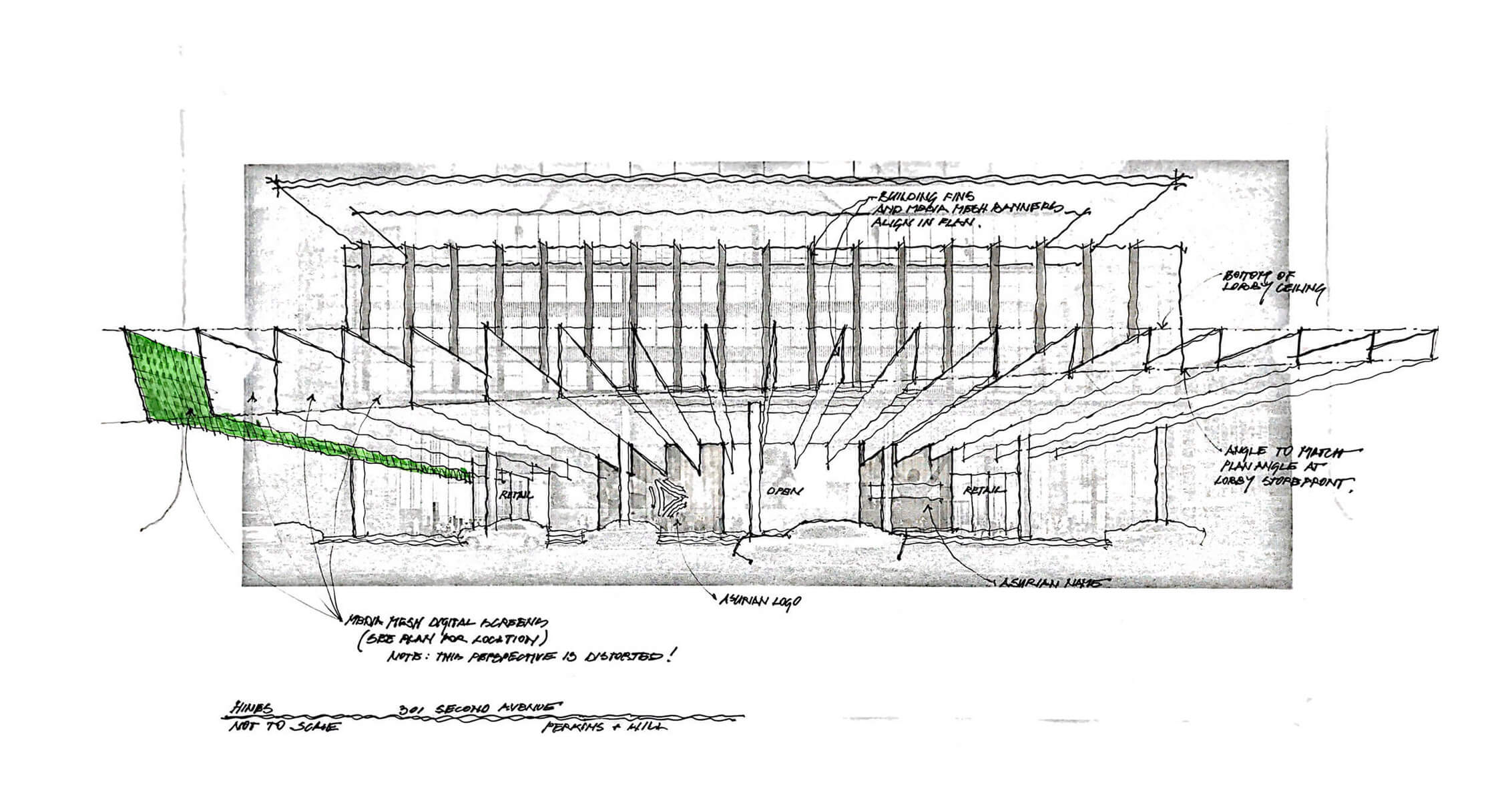
Architectural sketch of building facade with labeled design elements.

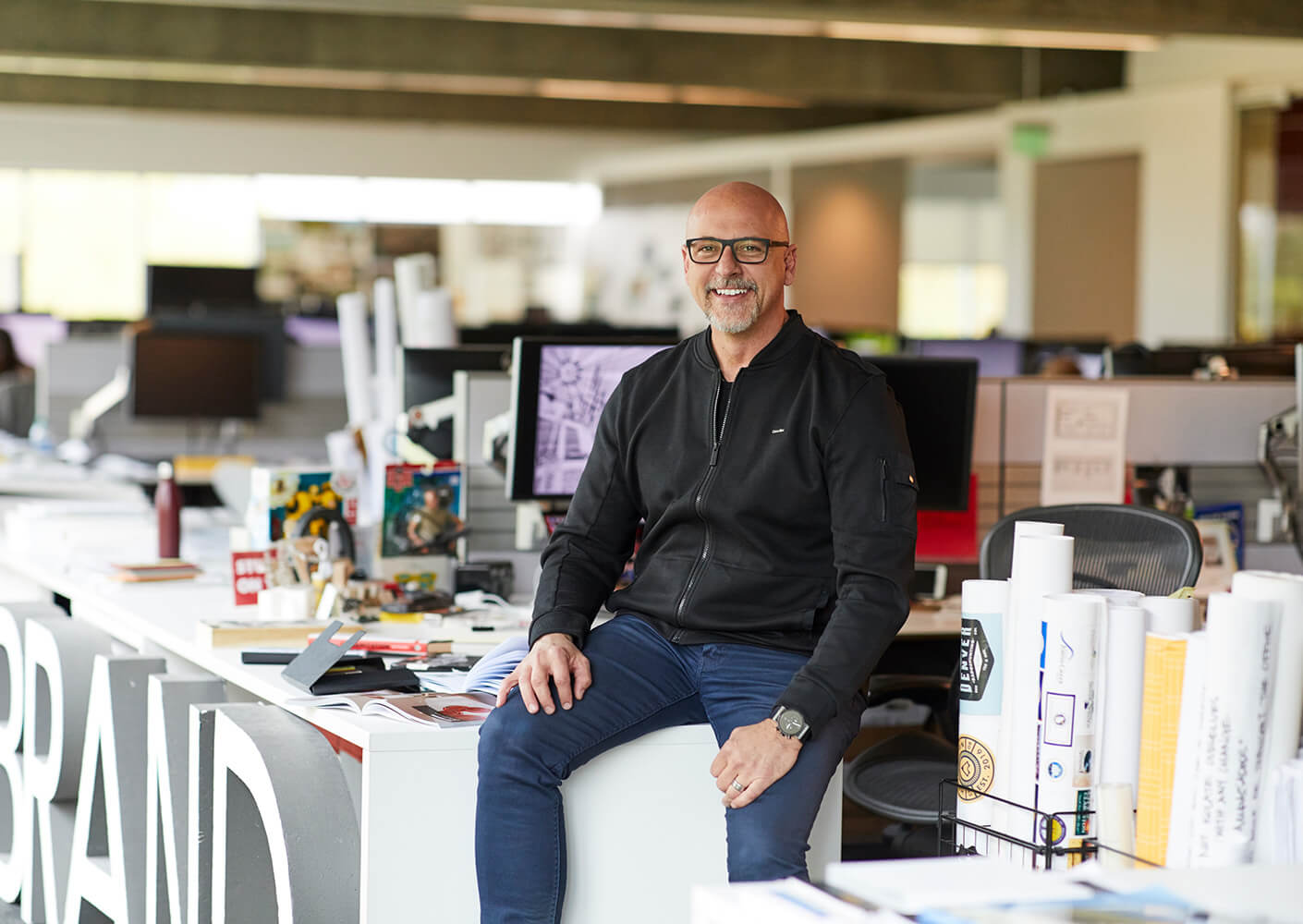
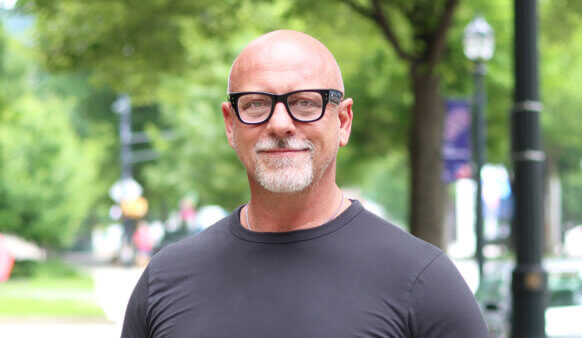
Born and raised in Chicago and trained as an architect, Keith Curtis now leads our firmwide branded environments practice from Atlanta. His path from architecture to this more narrative form of design began when he started working for Eva Maddox, who invented the field before joining Perkins&Will in 2002.

In short, branded environments is the art of translating a client’s identity into spatial experiences through messaging, graphics, art, artifacts, materials, patterns, and sensory cues. It adds storytelling and communication design as a strategic layer of messaging to create spaces that express who the user is, not just how they work.

We recently sat down with Keith and talked about his influences, approach to research and design, response to critical feedback, advice for young designers, and more.

I have always considered physical space as an instrument capable of expressing a client’s mission with clarity and resonance.
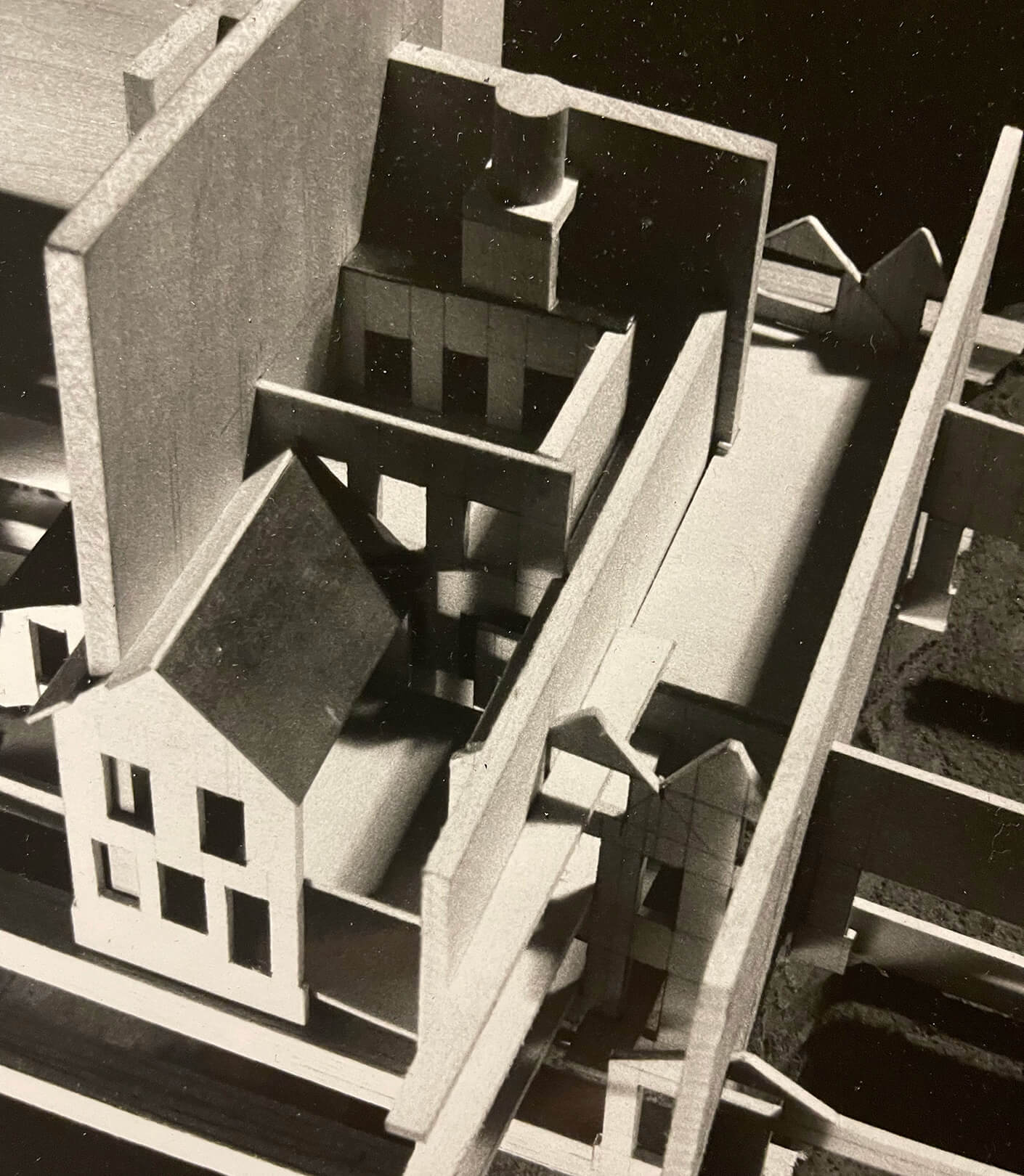
Keith's University of Illinois Chicago thesis imagines a post-automotive world, where Chicago's highways become "dried riverbeds" primed for urban infill.

Who were your early mentors or influences, and what lessons from them still guide your work today?

I’ve been shaped by a constellation of mentors, some expected others quietly powerful, whose guidance still threads through every project I touch. My earliest influences were my parents, who taught me in equal measure how to imagine and how to persevere. My mother, an educator, awakened in me a reverence for curiosity and an insistence that creativity is not indulgence but essential nourishment. My father, a steel press operator, offered lessons in precision, resilience, and dignity in craft. From him I learned that making, whether a steel part or a spatial narrative, is an act of devotion.

As a young professional, my summers working alongside my father on the manufacturing floor honed my respect for process, detail, and the beautiful rigor of things well made. Later, teaching design studios gave me an entirely different perspective: how to listen, how to articulate an idea, and how to elevate the thinking of others while refining my own.

My studies abroad, and my early encounters with Chicago’s architectural community became my next crucible, shaping my dedication to design while honing my craft. Working alongside a handful of experienced professors, talented colleagues, and generous architects, I absorbed the fundamentals of scale, proportion, concept, planning, documentation, and relationship building. But the true inflection point came when I joined Eva Maddox Associates. Eva, whose presence and influence shaped an entire era of design in Chicago, transformed the way I saw things. She once told me: “Design is more about observing the world than it is about personal creativity.” She pushed me to move beyond the expected, to interrogate the meaning beneath form, and to treat each project as a living narrative. Under her mentorship, I learned that the human experience is not an outcome of design, it is the very purpose of it.

Tell us a bit more about Eva Maddox. What was her role in developing the practice of branded environments?

Eva not only pioneered the practice, but she also coined the term “branded environments” to describe a research-based approach that seeks to embed a client’s identity seamlessly into the architecture and interior of a space. She did this at a time when very few firms were linking brand identity to spatial design.

The work we were doing translated branding into memorable spaces. Over time, we realized that environmental branding was broadly applicable, leading to work in a wide range of sectors, including corporate workplace, healthcare, exhibits and showrooms, museums, collaboration and innovation centers, and science and education.

Before Eva, interior design and graphic/identity design often operated separately from architecture. We learned the value in bridging them, combining spatial planning, interior architecture, and identity/brand strategy as one holistic process redefining what environmental design could do.

The successful adoption of our approach helped spawn what is often called “environmental graphic design,” “experiential design,” or “experience architecture.” In that sense, it shifted the industry’s baseline expectations for what an interior or architectural project could deliver and influenced how design firms deliver their work.

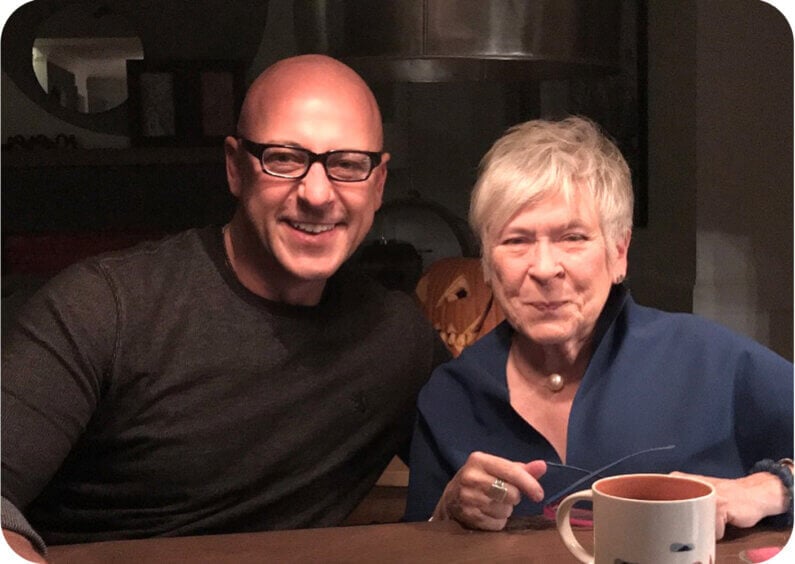
Keith with his mentor, Eva Maddox.
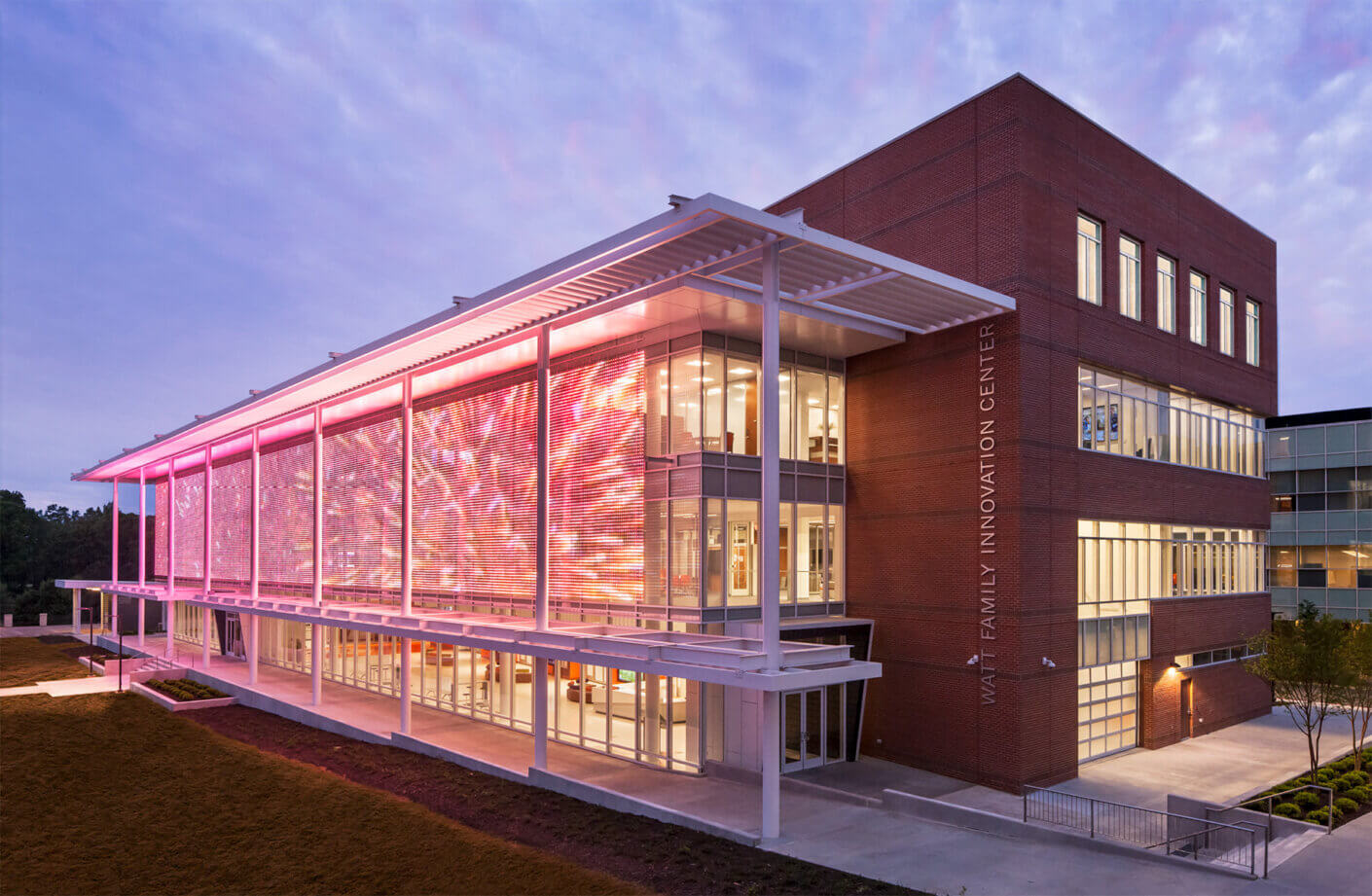
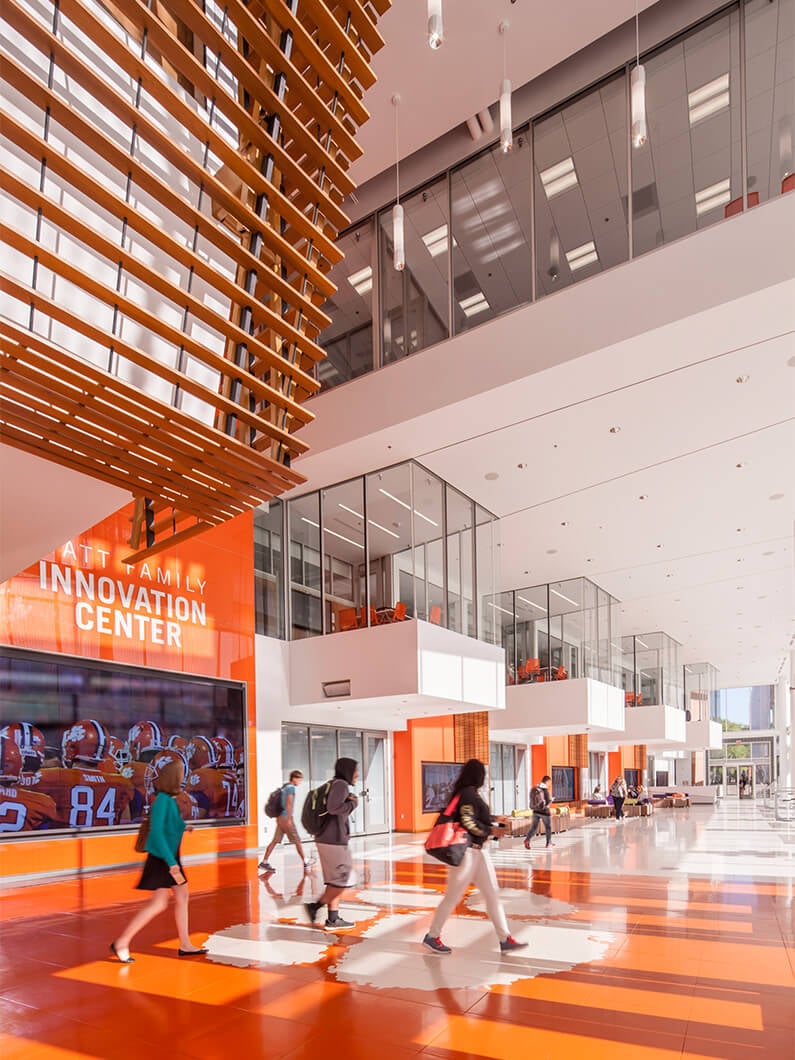
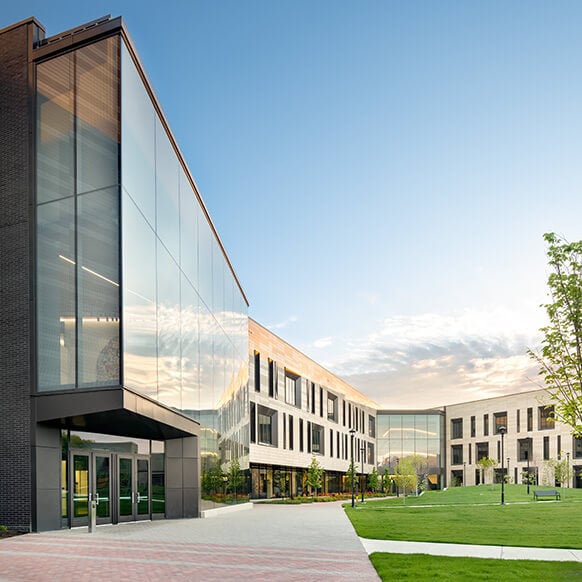
Clemson University, Watt Family Innovation Center
Clemson, South Carolina

What role does regional character and identity play in your work?

Regional character is a critical ingredient that shapes how a space looks, feels, and belongs. Every project requires harmony. We listen for the stories a place already holds, sensing and understanding the people and the culture that move through it, and understanding its history and ambitions. It is especially important in branding places.

As a branded environments practitioner, I, along with our teams, am not simply crafting experiences; we are translating story into identity and identity into spatial and communicative form. As a result, regionality can become both a compass and catalyst, guiding our research, our conversations, and our collaborations with stakeholders who live their narrative daily. Through this process of inquiry and engagement, we gather the raw material of meaningful insight, memory, behavior, and aspiration and shape it into experiences that elevate the human condition.

I have always considered physical space as an instrument capable of expressing a client’s mission with clarity and resonance. The architecture holds the structure; the region provides the soul. Together, they enable our designs to embody a brand.

Do you take design inspiration from other arts, sciences, or professions? If so, which ones and how do they influence your thinking?

Inspiration, for me, is never a single thought—it’s a collection. I draw from the quiet precision of science, the emotional charge of art, the rhythm and breath of music, the contours of topography, the beauty of land and sea, the soul of place, and the evolving intelligence of technology. Together, they provide a different way of seeing, a different lens through which the world reveals itself.

In branded environments, these references aren’t decorative, they are deeply rooted. They infuse the work with a deeper meaning, giving us not just a narrative to tell but a design voice and language to speak. When the rationale of physics collides with the emotional expression of painting, when a musical refrain finds its echo in material rhythm, when a landscape’s geometry becomes a framework for form and flow, our environments become more than experiences, they become stories you can walk into.


How do you respond to criticism—whether from clients, peers, or the public?

I welcome criticism. I’ve come to understand it not as a blunt force to endure, but as an invitation to listen more deeply. In the world of brand and environmental design, where every gesture is intentional and every detail carries narrative weight, critique is simply another form of understanding. It reminds me that our work is alive, subjective, and open to interpretation.

Not every expression we create will resonate with every audience; nor should it. What matters to me is that the design’s essence is rooted in intention, research, and a devotion to meaning. The solutions must rise from a clear understanding of a client’s ambitions, the truth of their identity, and the experiences their communities are meant to feel when they encounter my work. These stories are never invented; they are excavated from history, mission, values, and the subtle qualities that differentiate one brand’s voice from another’s.

So when critique arrives from clients, peers, or the public, I try to hold it with curiosity rather than defensiveness. I look for what it reveals: misalignments, opportunities, new angles of approach. Because branded environments, whether physical, digital, or emerging in artificial realms, are inherently subjective spaces. They ask us to balance vision with empathy, narrative with clarity, beauty with utility.

This is why I anchor my process in discovery, in listening, in building a framework that is grounded in human experience. When criticism meets a foundation like that, it becomes less about right or wrong and more about refinement—about sculpting the work into something truer, more resonant, and more beautifully aligned to connect with its users.
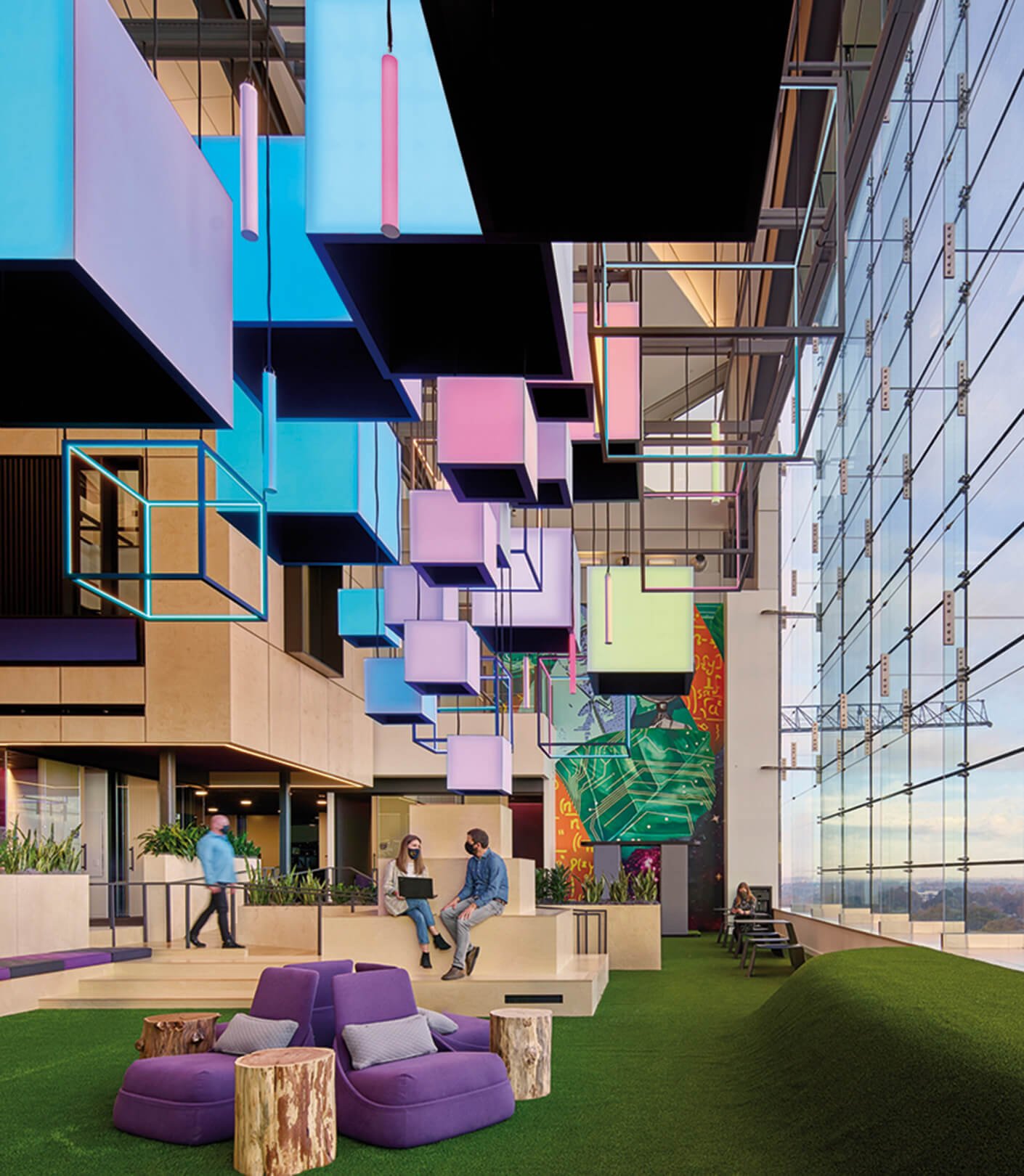
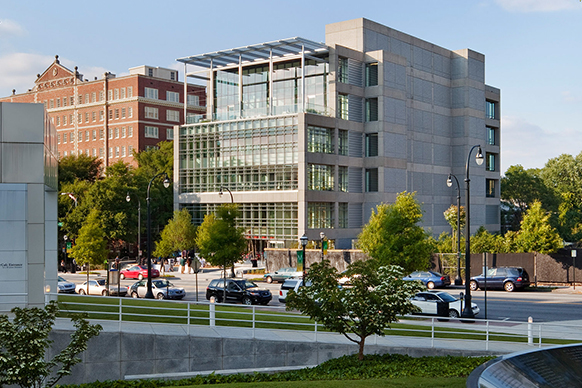
Truist Bank Information and Technology Center
Charlotte, North Carolina
Artwork: Irisol Gonzalez
What excites me most is the possibility that each project can do more than solve a problem—it can shift culture, invite belonging, and provoke imagination.
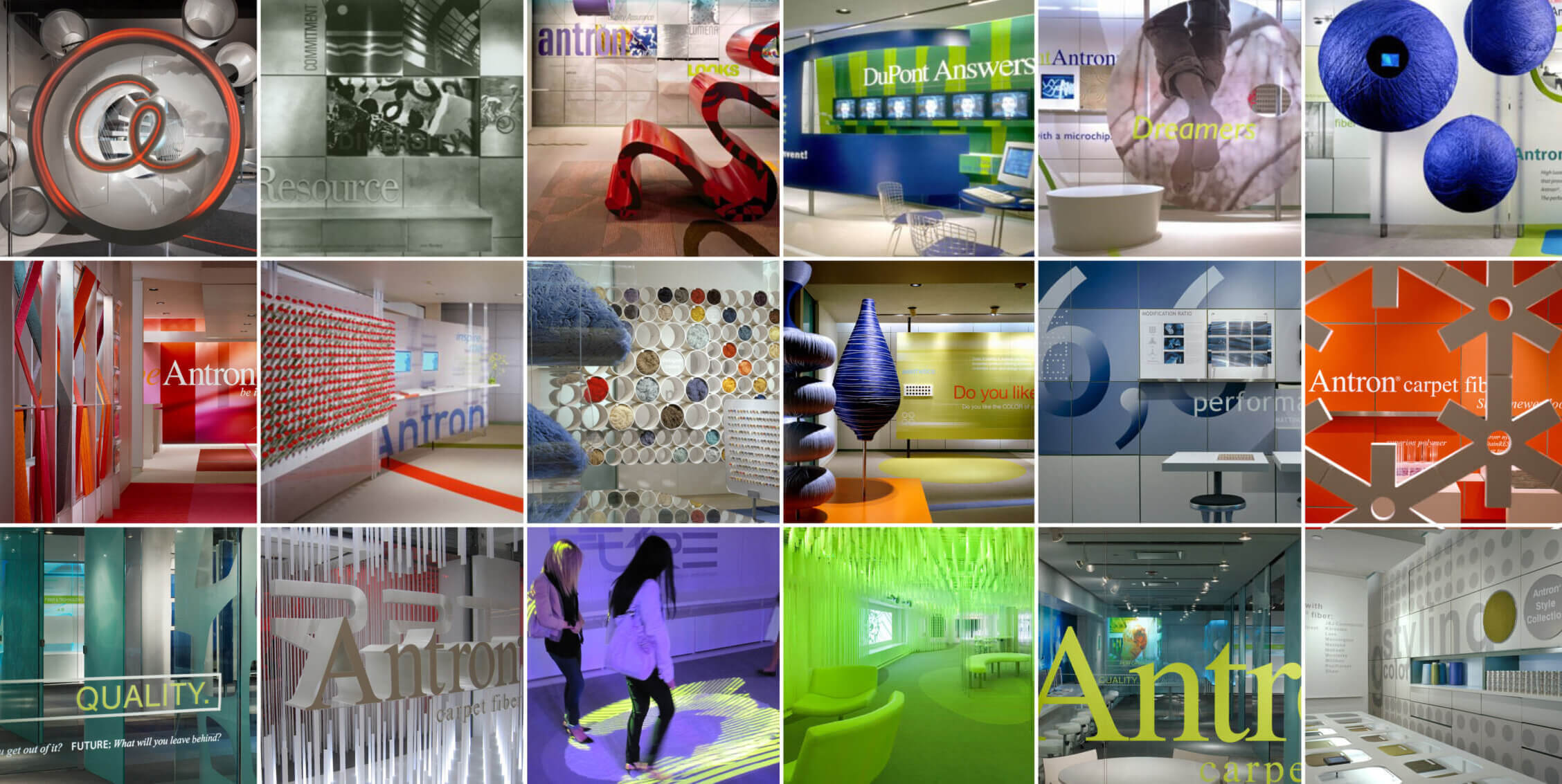
Keith’s evolution as a designer can be traced through his twenty-year relationship with Antron, designing and evolving the brand’s showroom over time.

What projects are you working on now that you are most excited about?

The projects that inspire me most are the ones that dare to stretch beyond the familiar—those rare invitations to break pattern, to unlearn, to wander into the uncharted with a client bold enough to step there with me. When I have the privilege of collaborating with partners who are willing to take risks, embrace experimentation, and believe in the transformative power of design to evolve their brand, something in me ignites. It’s as if the work asks me to go further than I ever have. And I answer every time with a wholehearted yes.

I often express to others that I have the best job in the world: each day is a chance to learn something new and translate that learning into environments and experiences that speak to people who care. There’s a rare kind of joy in watching design become a conduit between a brand and the humans it hopes to reach.

What excites me most is the possibility that each project can do more than solve a problem—it can shift culture, invite belonging, and provoke imagination. My role gives me the chance to leave things better than I found them.

The thrill happens when I feel the alignment click—when I understand a client’s vision, feel their history under my fingertips, glimpse the futures they’re reaching for, and then help carry that vision forward into form. Those are the moments when design becomes more than craft; it becomes stewardship. It becomes the act of taking brands, their communities, and their aspirations to new ground.

Those are the projects that keep me awake in the best possible way—projects that ask us not just to design, but to imagine a world worth moving toward.

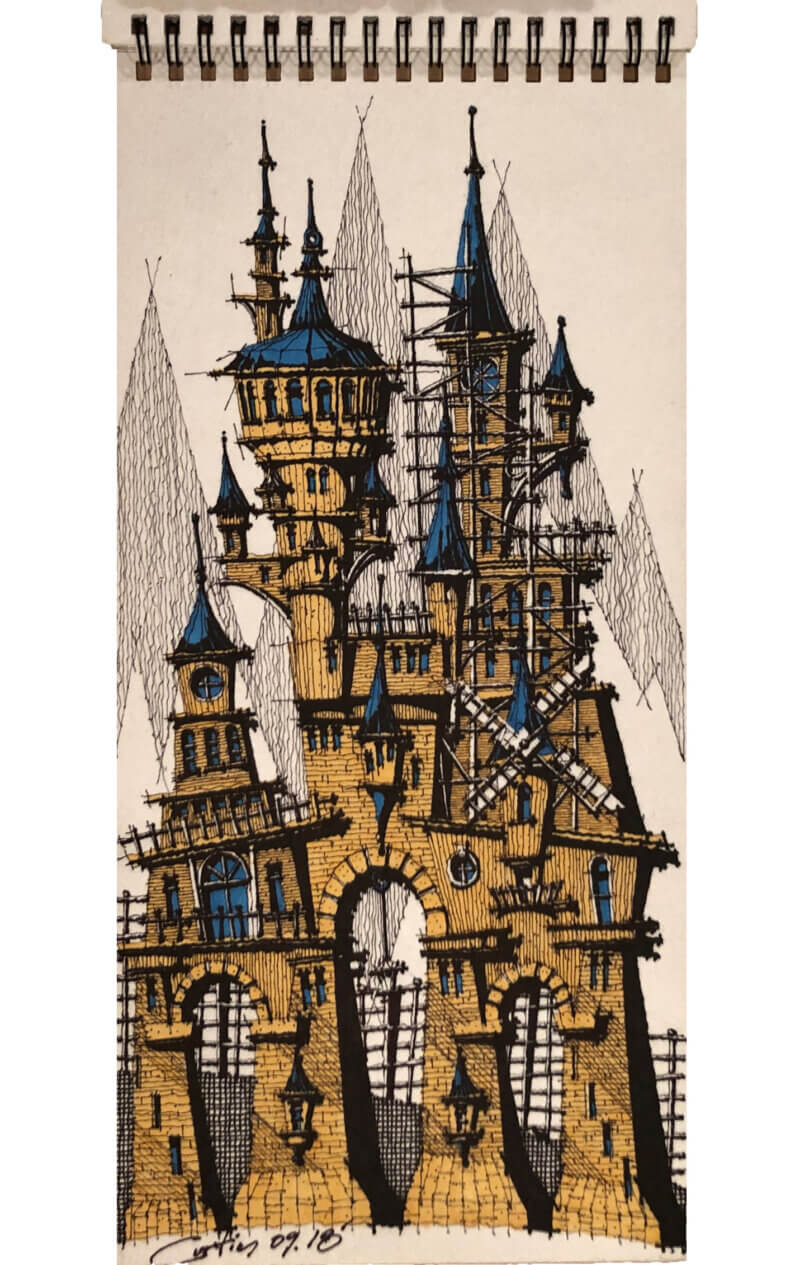
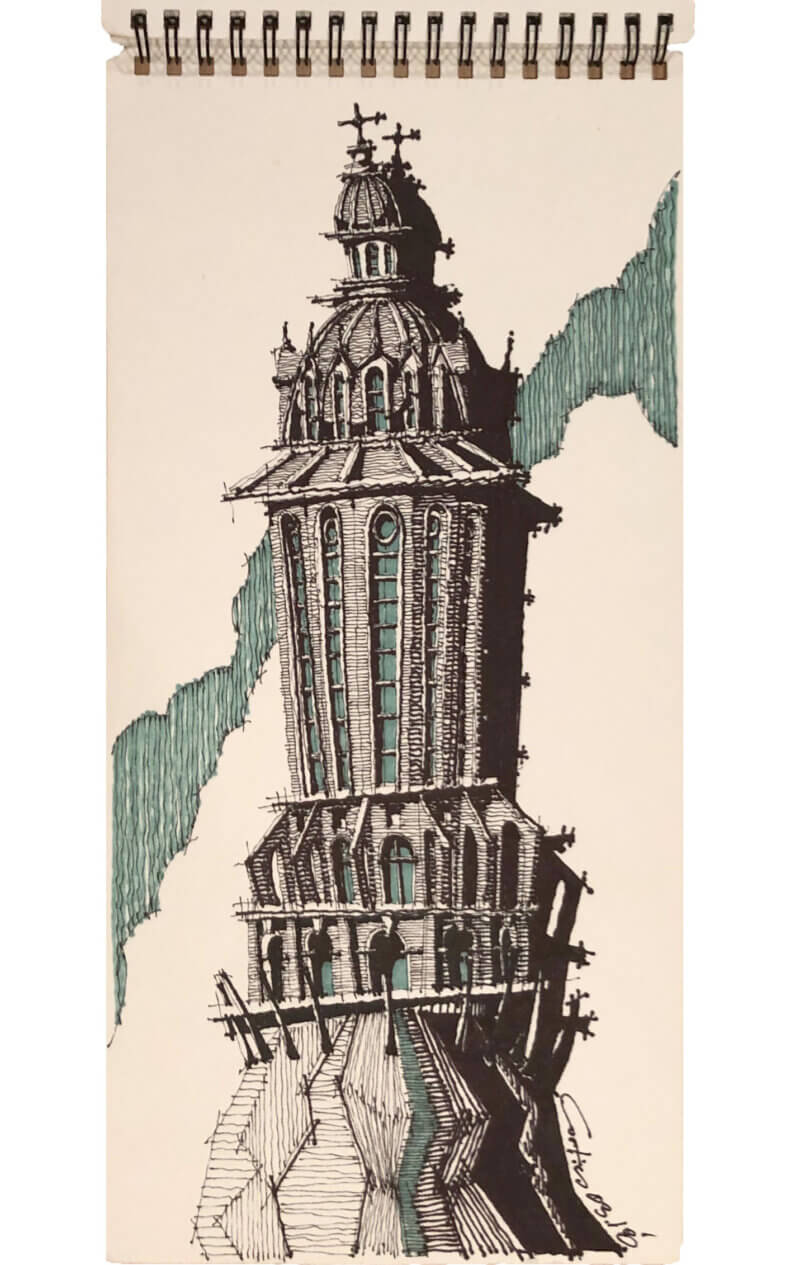
When Keith travels, he draws places he's seen from memory, remixing them in what he calls "interpretive sketching."
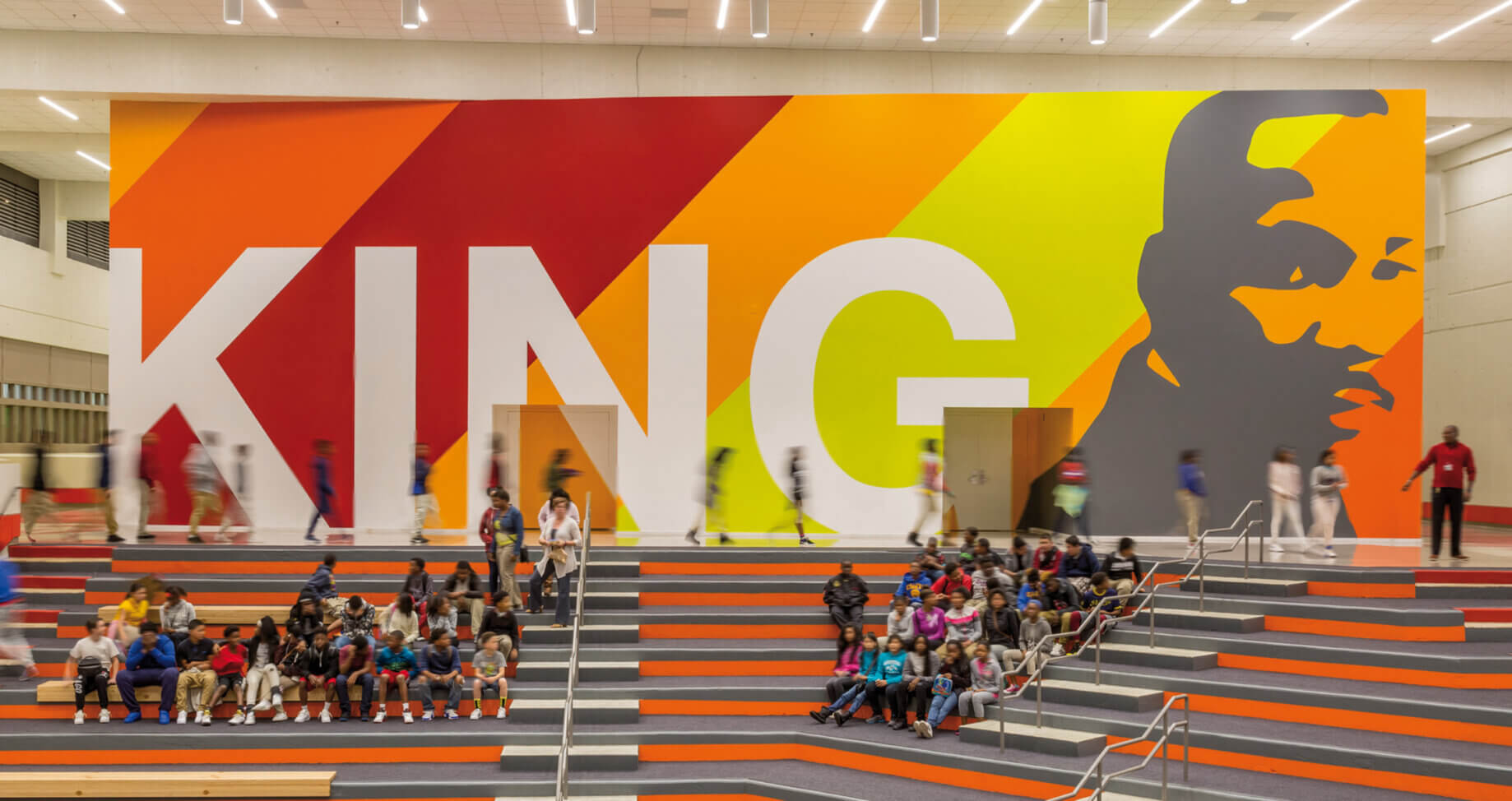
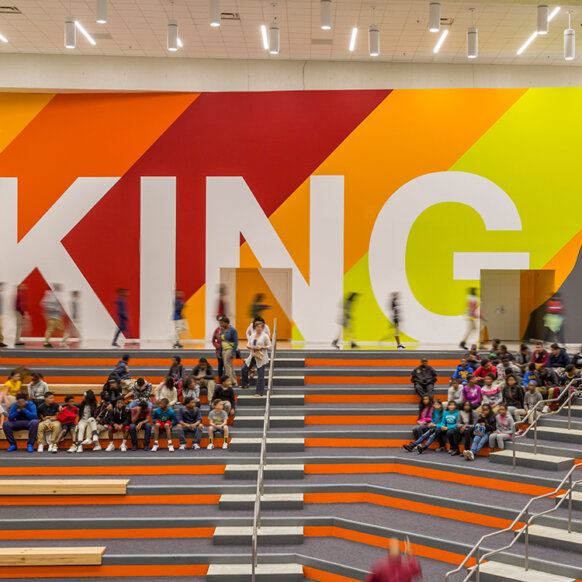
Martin Luther King Jr., Middle School
Atlanta, Georgia

If you weren’t an architect, what career might you have pursued—and why? 

I have been asked this question numerous times throughout my career. I answer it the same way every time. If I were not an architect, I would be a plastic surgeon.

At first glance, those worlds seem distant—one shapes buildings, the other shapes bodies—but the more I reflect on it, the more I see that both disciplines orbit the same gravitational center: the transformation of form to restore confidence, dignity, and possibility.

Architecture, at its core, is the art and science of reshaping the built world to better serve the people who inhabit it. Plastic surgery, in its highest expression, strives for something remarkably similar—it restores harmony, rebalances proportion, and allows people to inhabit themselves more fully. Both practices demand an exquisite sensitivity to human experience: how we move, how we feel, how we see ourselves and our surroundings.

What advice would you give to a young person who is considering studying design or just starting out in the profession?

When young designers ask me for advice, I always begin with the simplest, most radical truth I know: Follow your heart. This profession is a lifelong act of imagining and shaping meaning and is not sustained by skill alone. It is fueled by curiosity, courage, and an unshakable belief that the world can be more beautiful, more thoughtful, more human because of what we create.

If you are just beginning, give yourself permission to experiment wildly. Seek out mentors who challenge your assumptions. Surround yourself with peers who push you to stretch your thinking. Learn to love critique. It is simply another form of conversation, another lens through which your ideas can grow.

Above all, protect your sense of wonder. The world will try to streamline it, temper it, make it “practical.” Resist that. The most meaningful work you will ever create will come from the part of you that is still unafraid to be moved by beauty, by story, and by possibility.

Haworth Showroom
Los Angeles, California