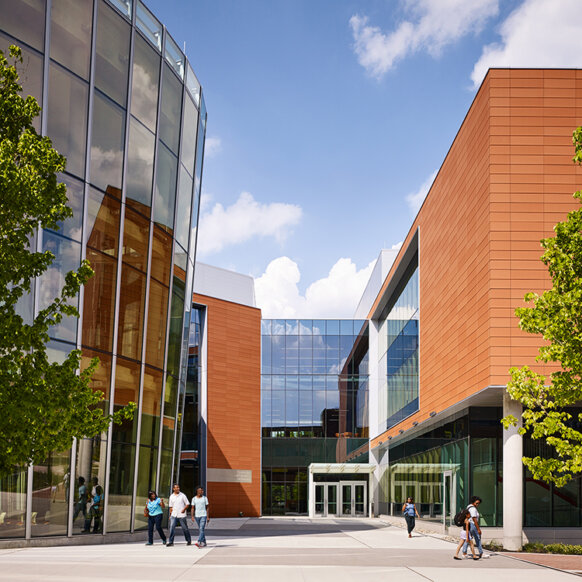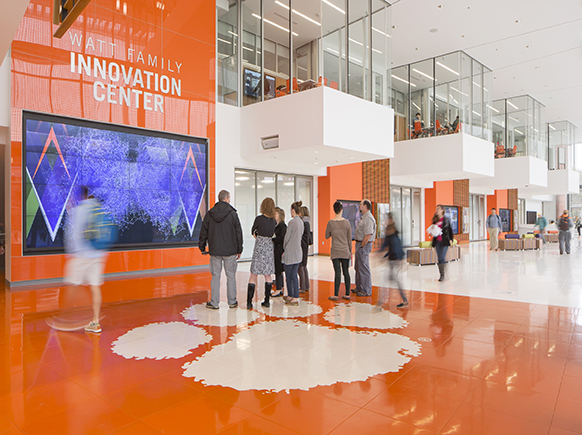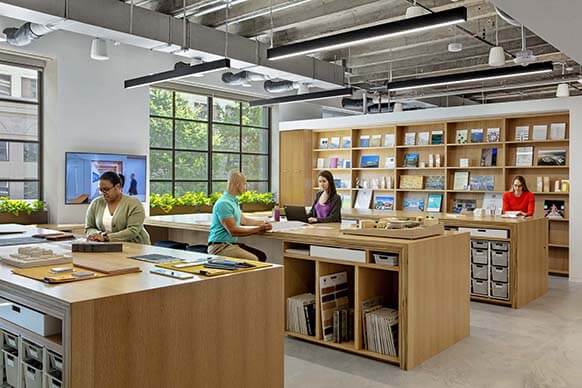
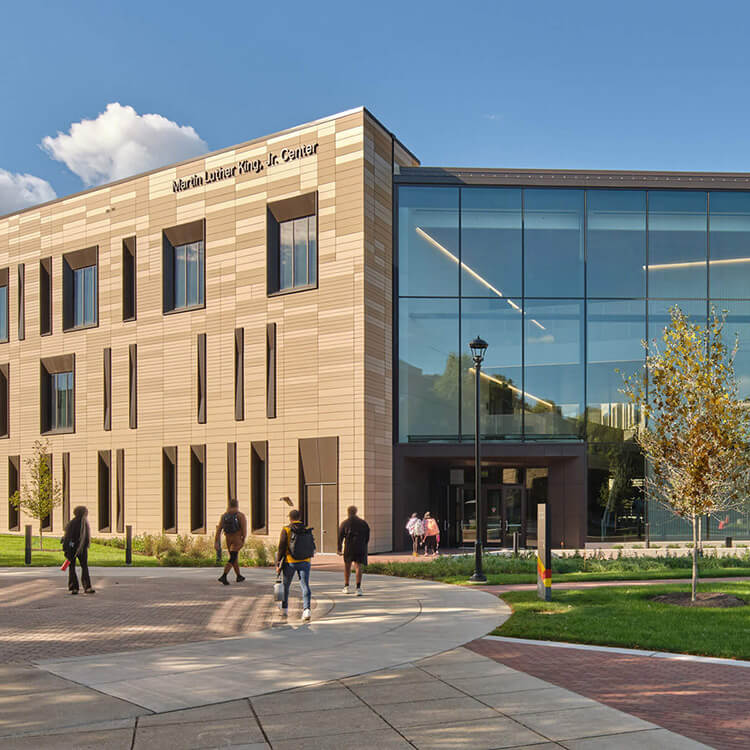
Two distinct buildings with textured brick and glass facades, surrounded by green grass and pathways, under a clear sky.

Bowie State University, Martin Luther King, Jr. Center

Bowie, Maryland
Empowering Voices of Change

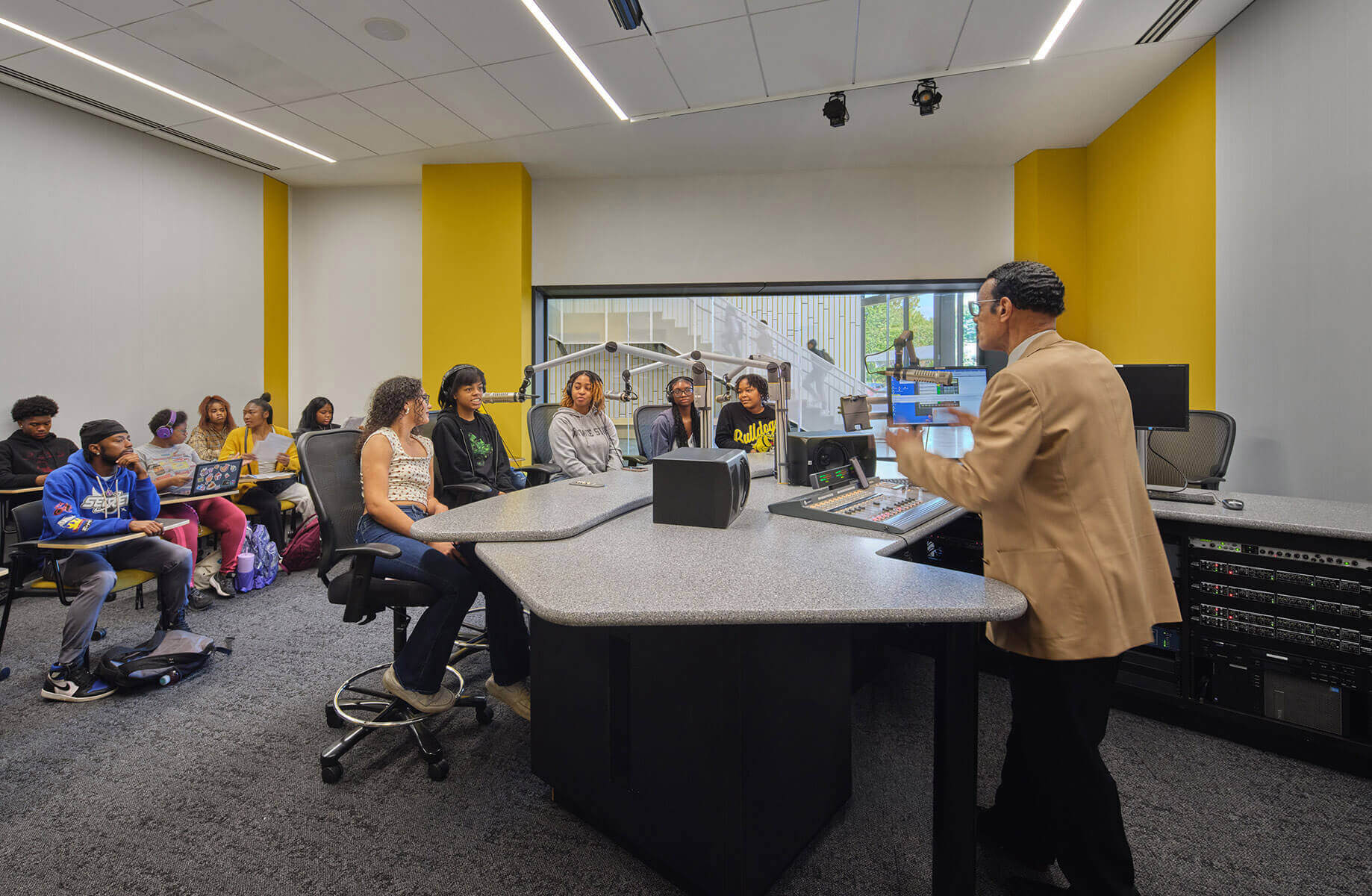
The Martin Luther King, Jr. Center is an integral part of the Bowie State experience, connecting students across various fields of study in a facility that is designed to encourage student self-expression and foster a collaborative environment for learning and creativity. The Center provides customized, technology-rich learning environments for studies in communication arts and humanities disciplines. These specialty spaces create the stage upon which students at Maryland’s oldest historically black university or college (HBCU) are “empowered to speak” and “destined to soar,” celebrating Bowie State’s history as a diverse institution and Dr. King’s ideals of empowerment, justice, equity, love, and community.
Community Inflection
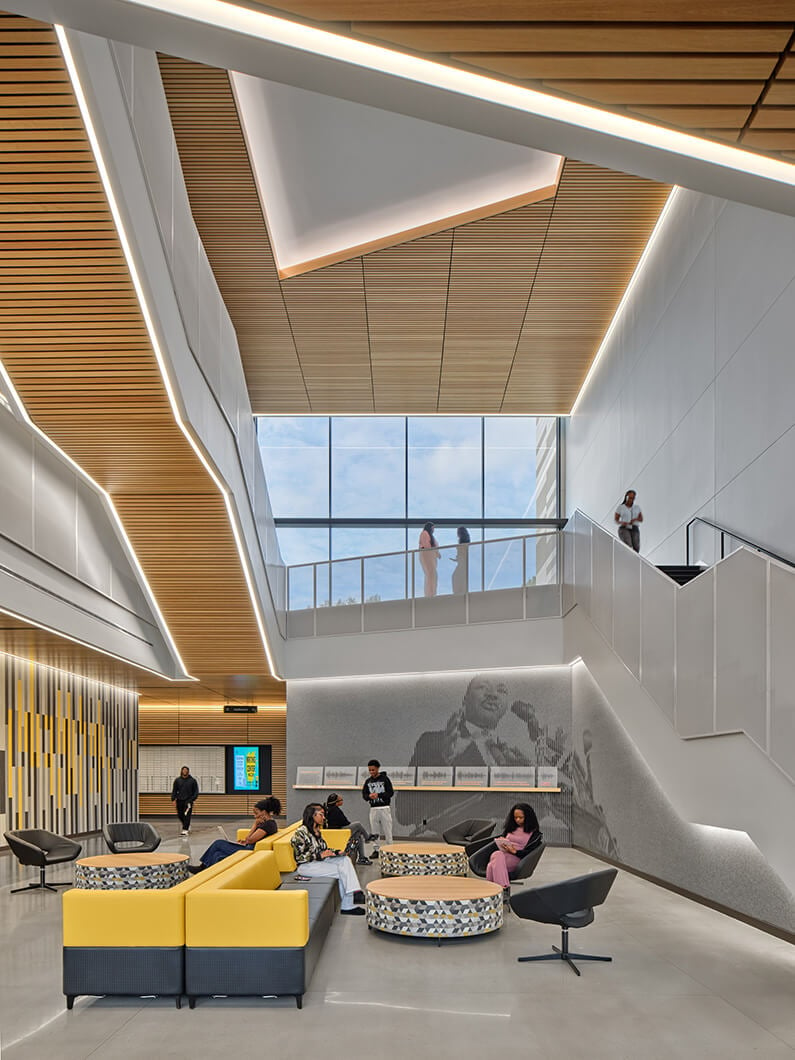
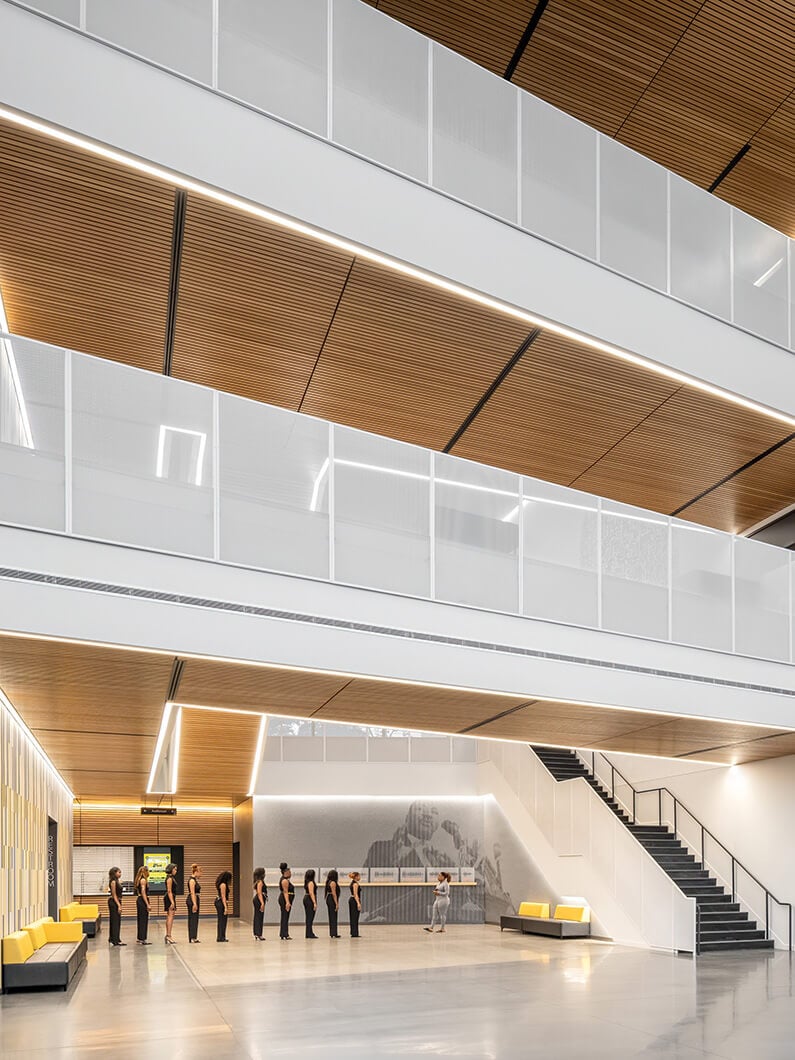
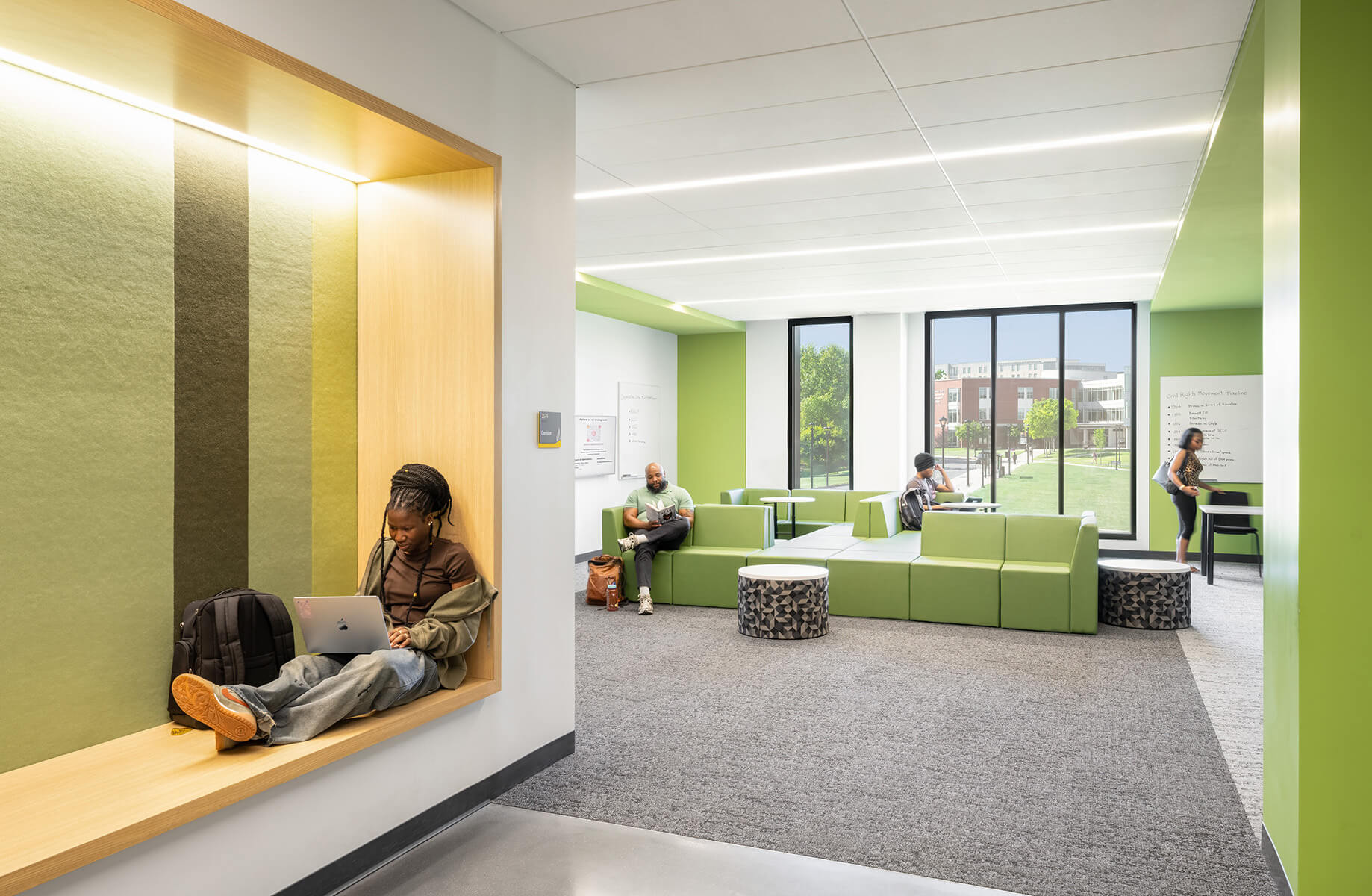
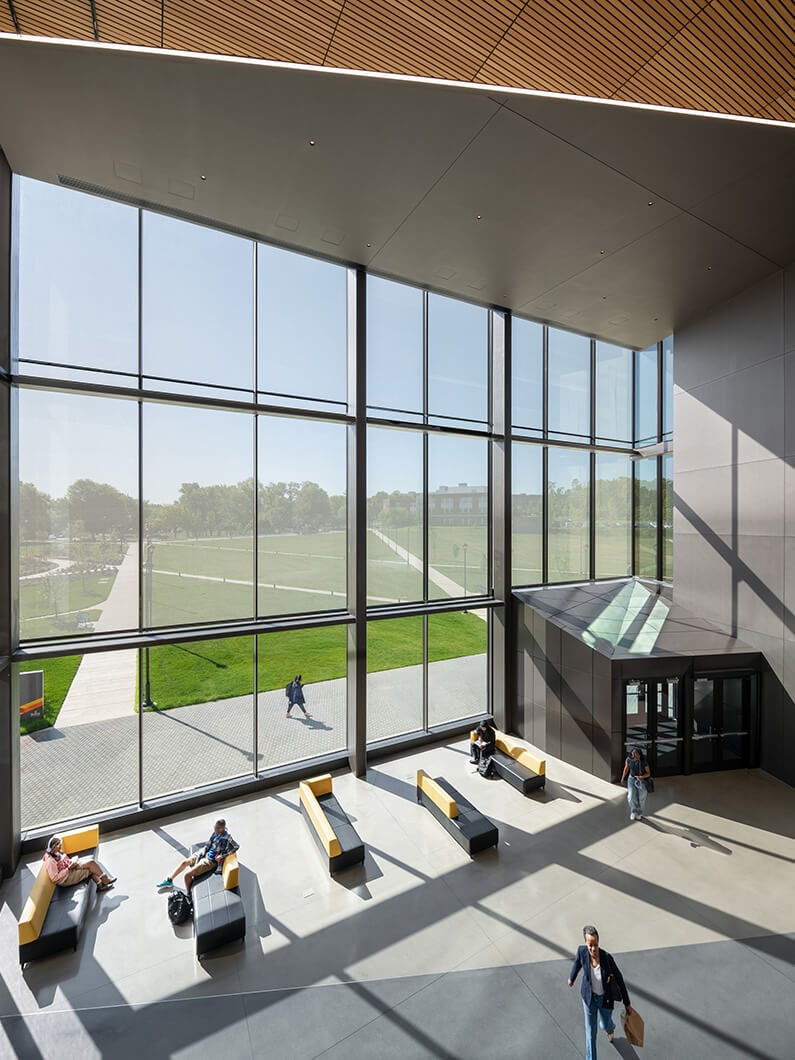
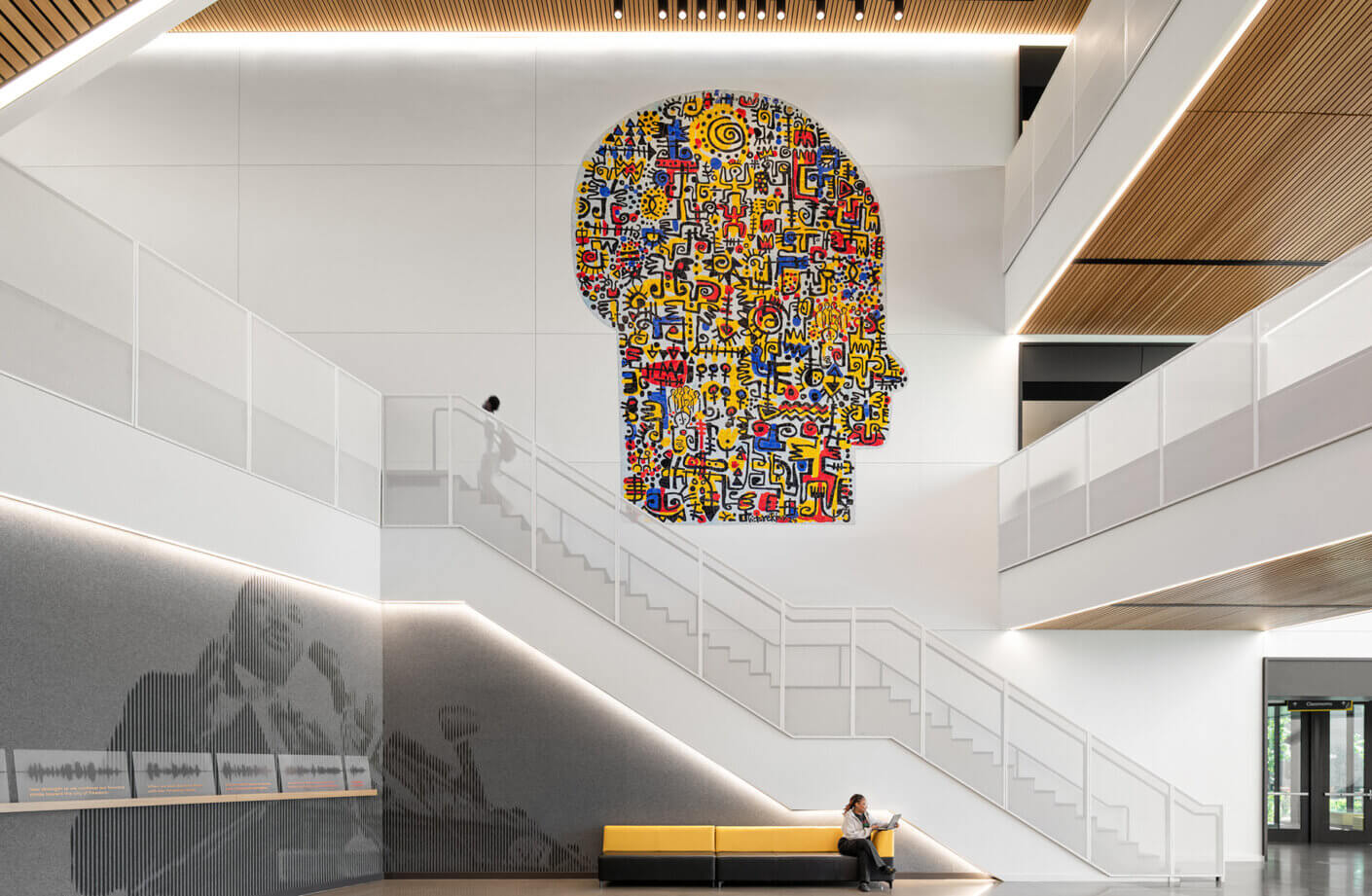
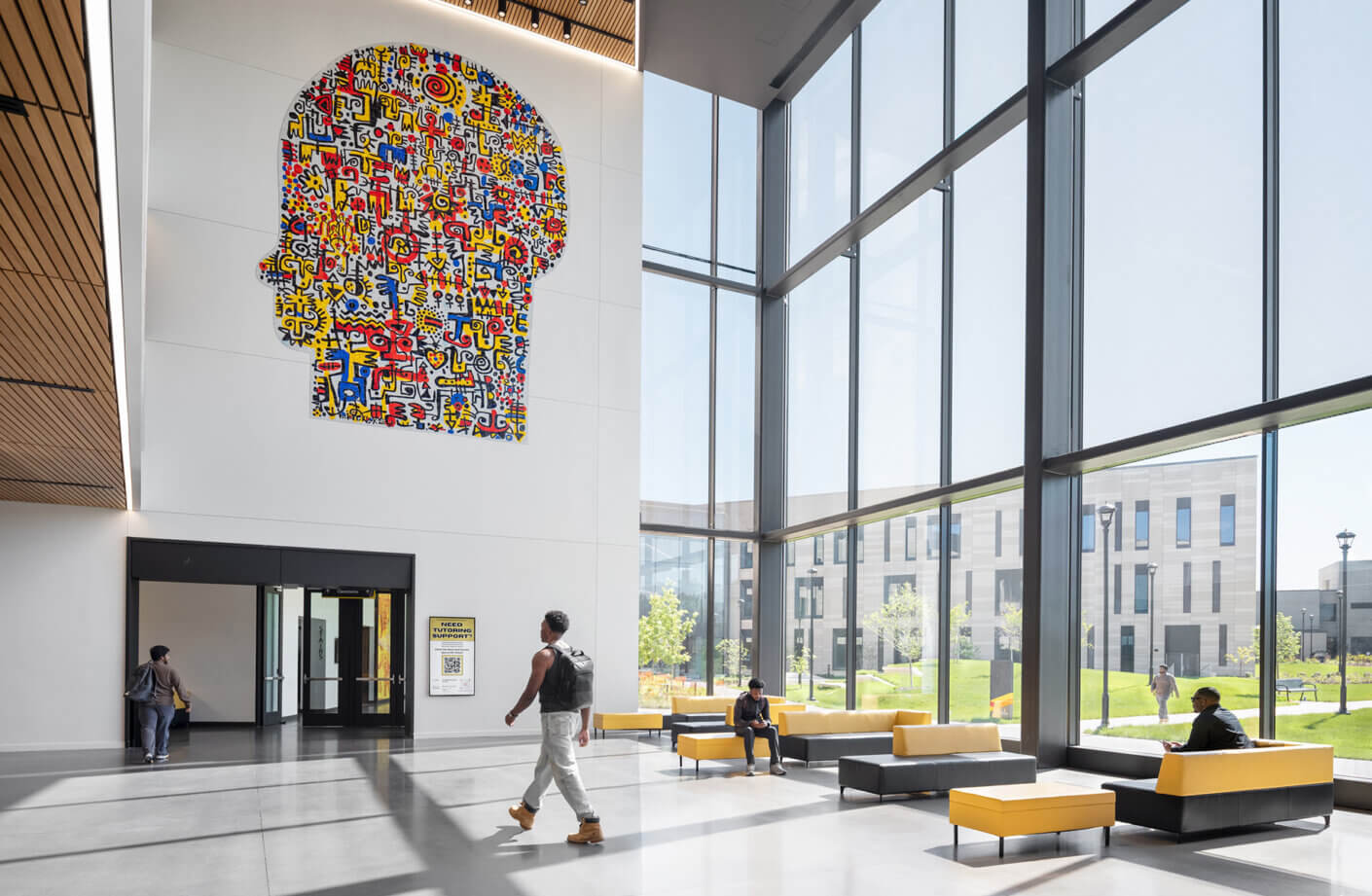
The interior spaces between program blocks are shared public zones for both students and the community. This community inflection space is highly versatile—a pre-function space for theater events, a flexible rehearsal area for the step team, or a quiet setting for study.
vimeo placeholder image
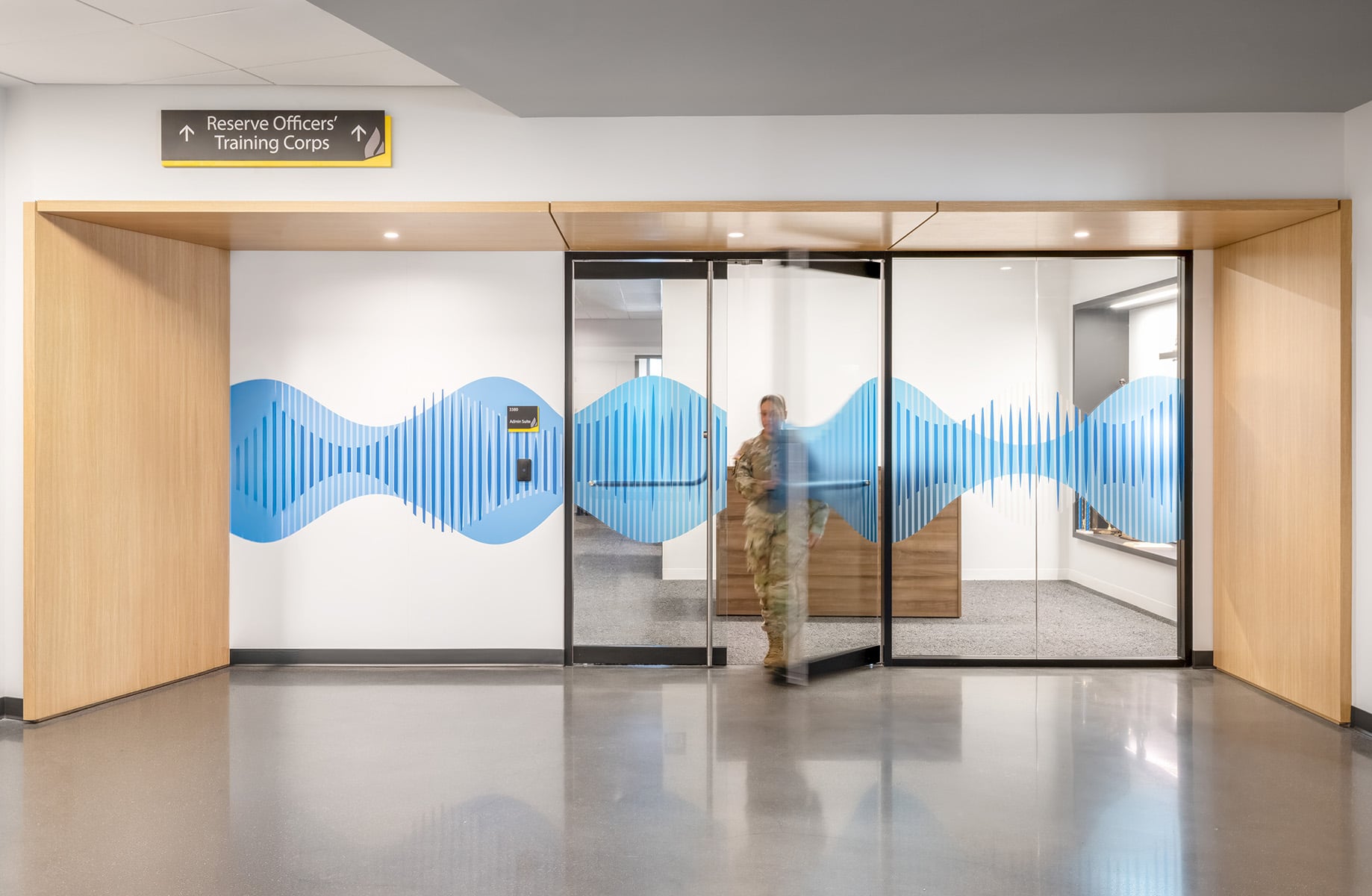
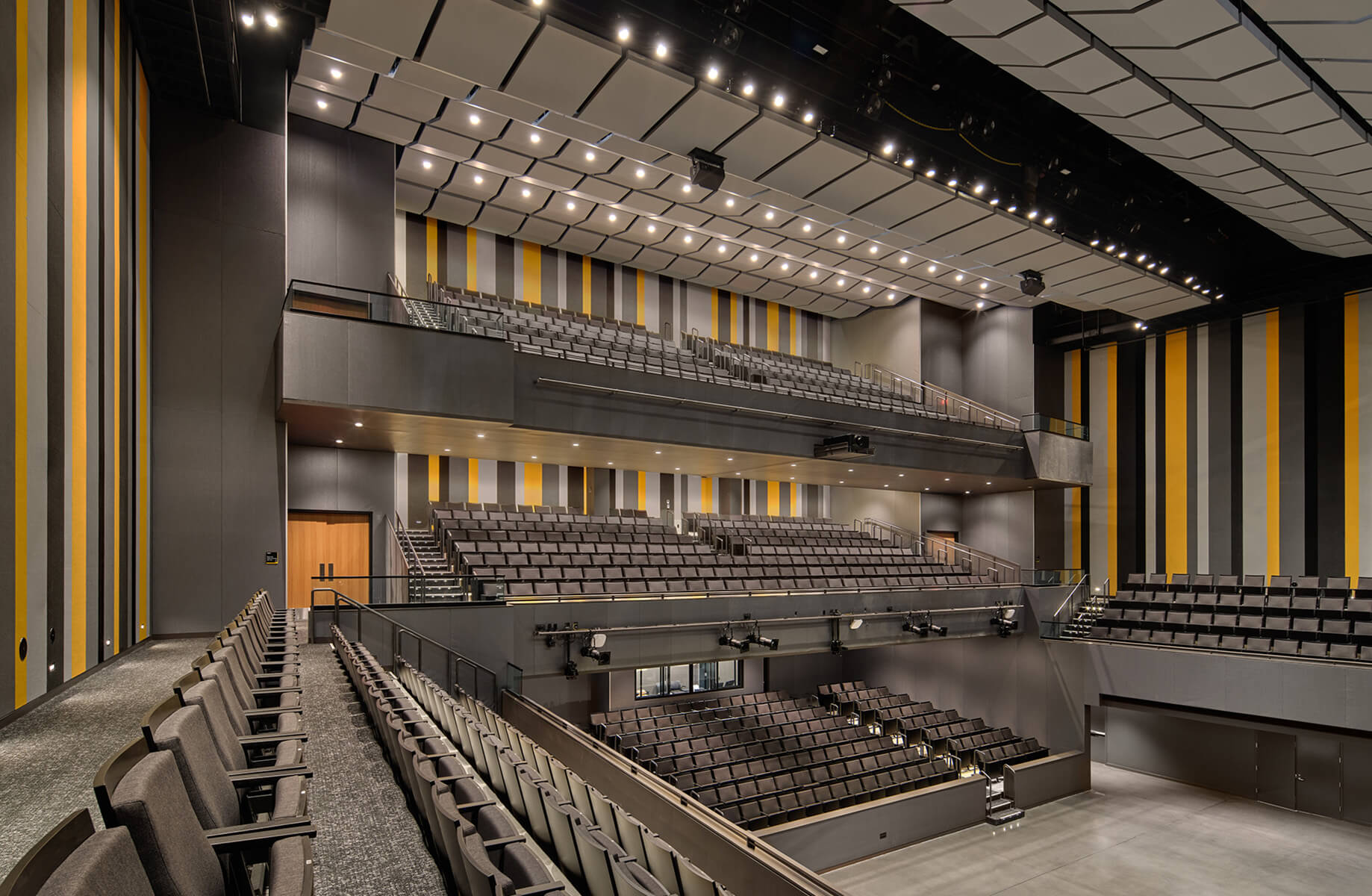
The Martin Luther King, Jr. Center houses the departments of language, literature, and cultural studies; history and government; communications; and military science, as well as performing arts spaces.
Bright, spacious lobby with large windows and sleek seating. People engage in various activities, showing a lively indoor atmosphere.
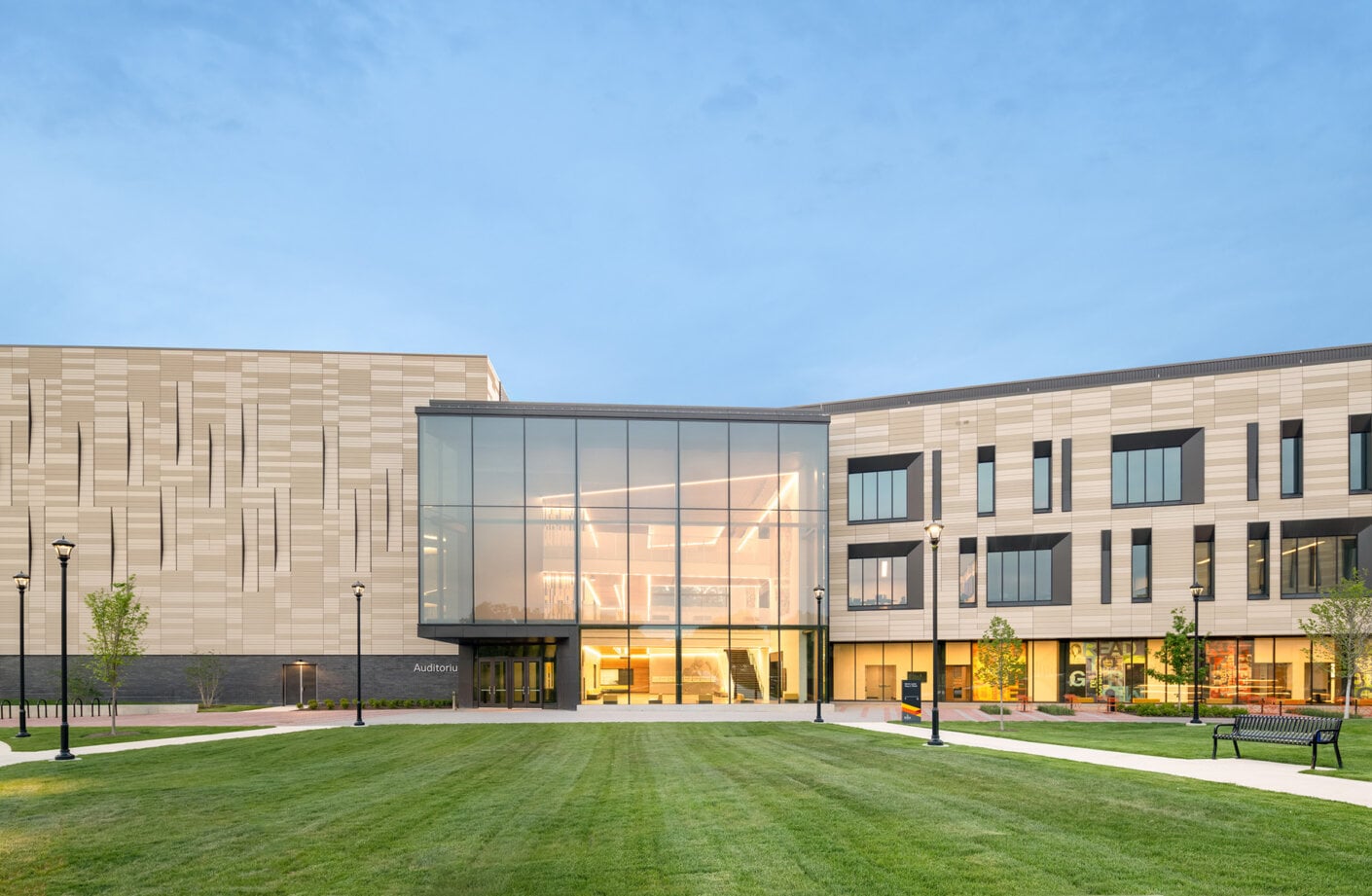
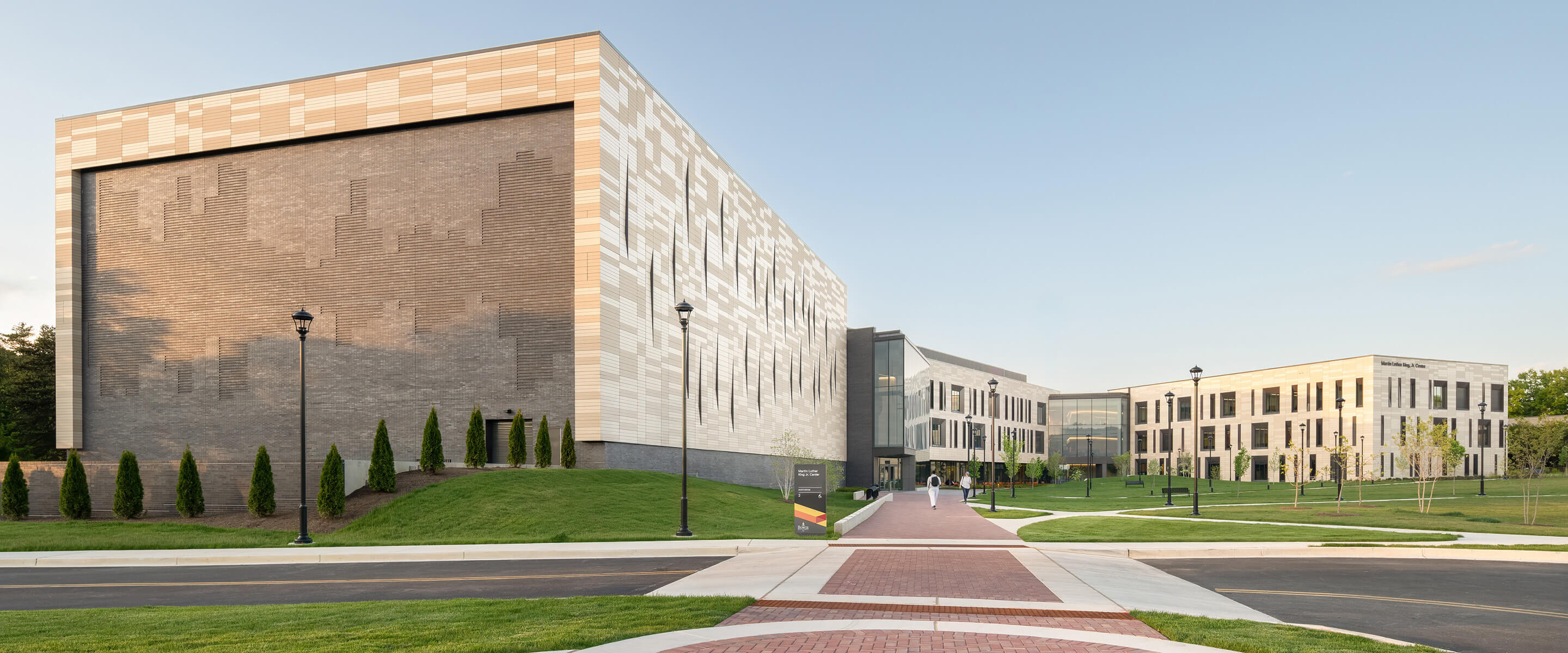
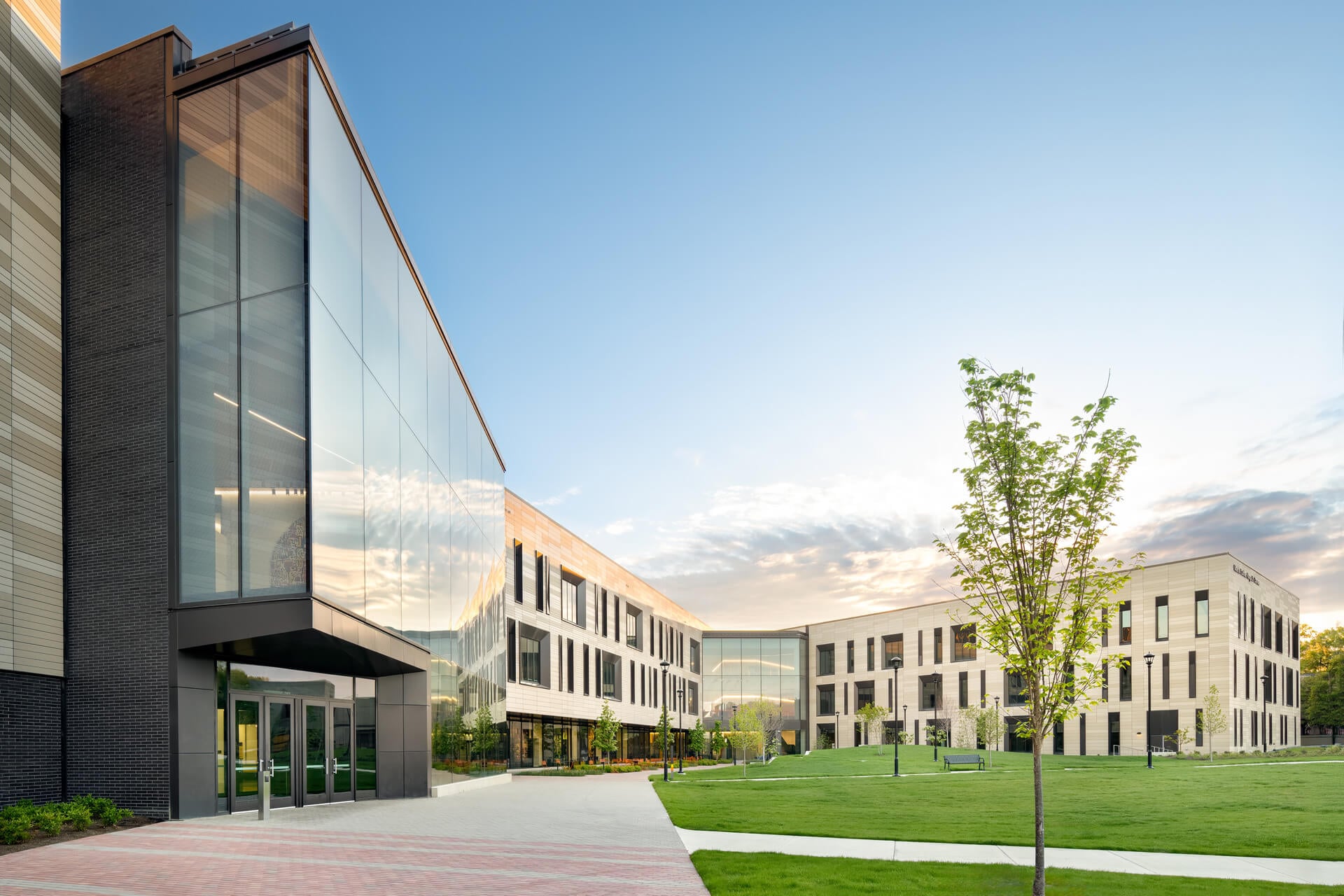
New educational building featuring glass entrance, landscaped lawn, and unique exterior design. Pathways and lighting enhance the accessibility.
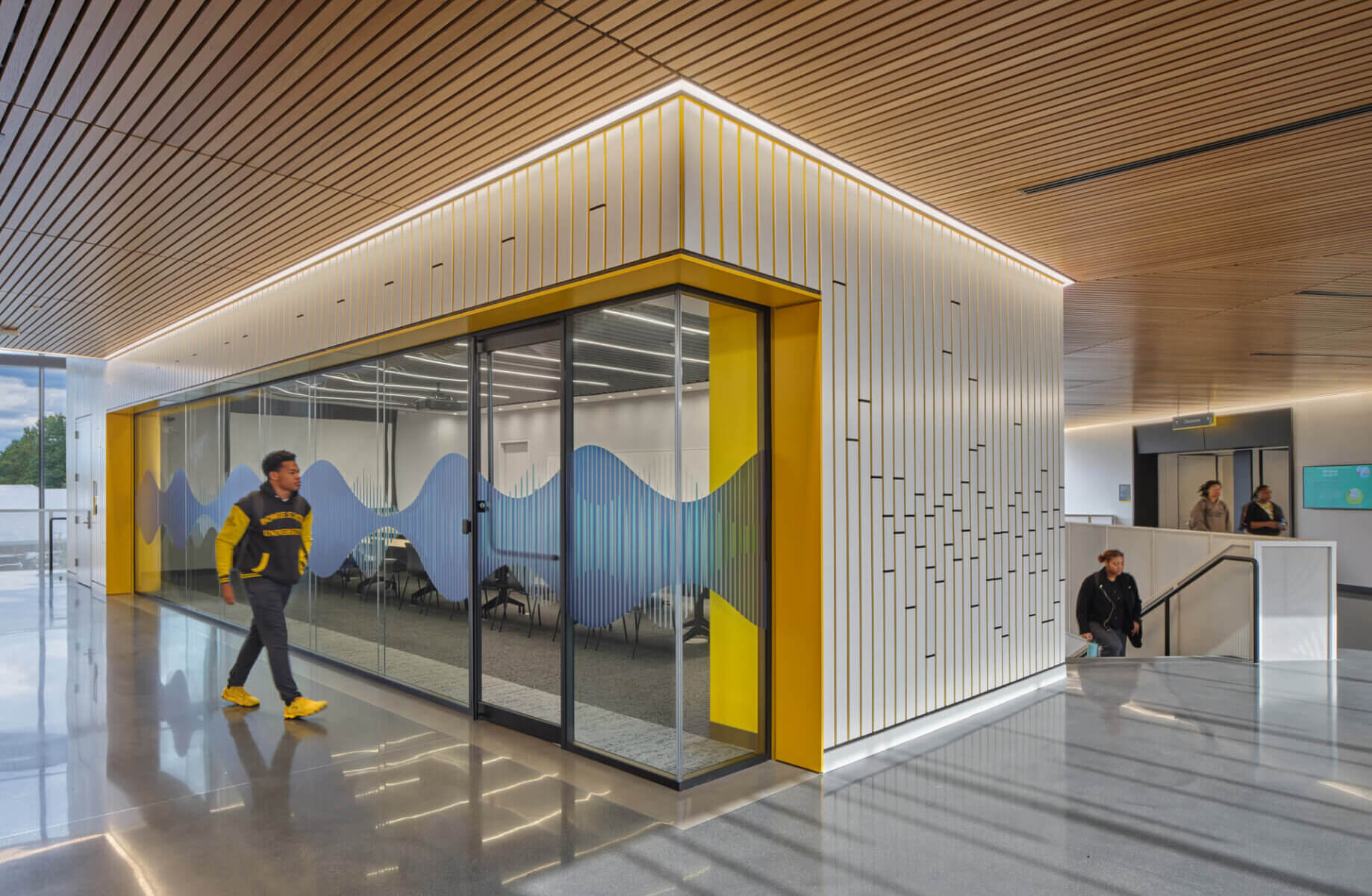
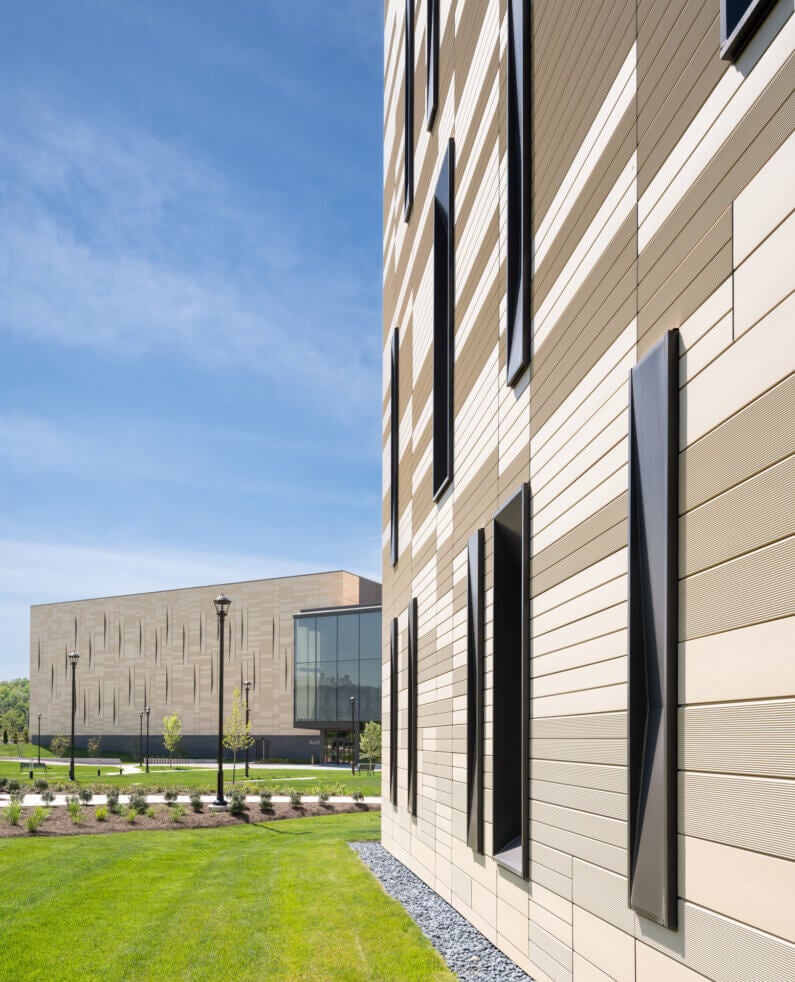
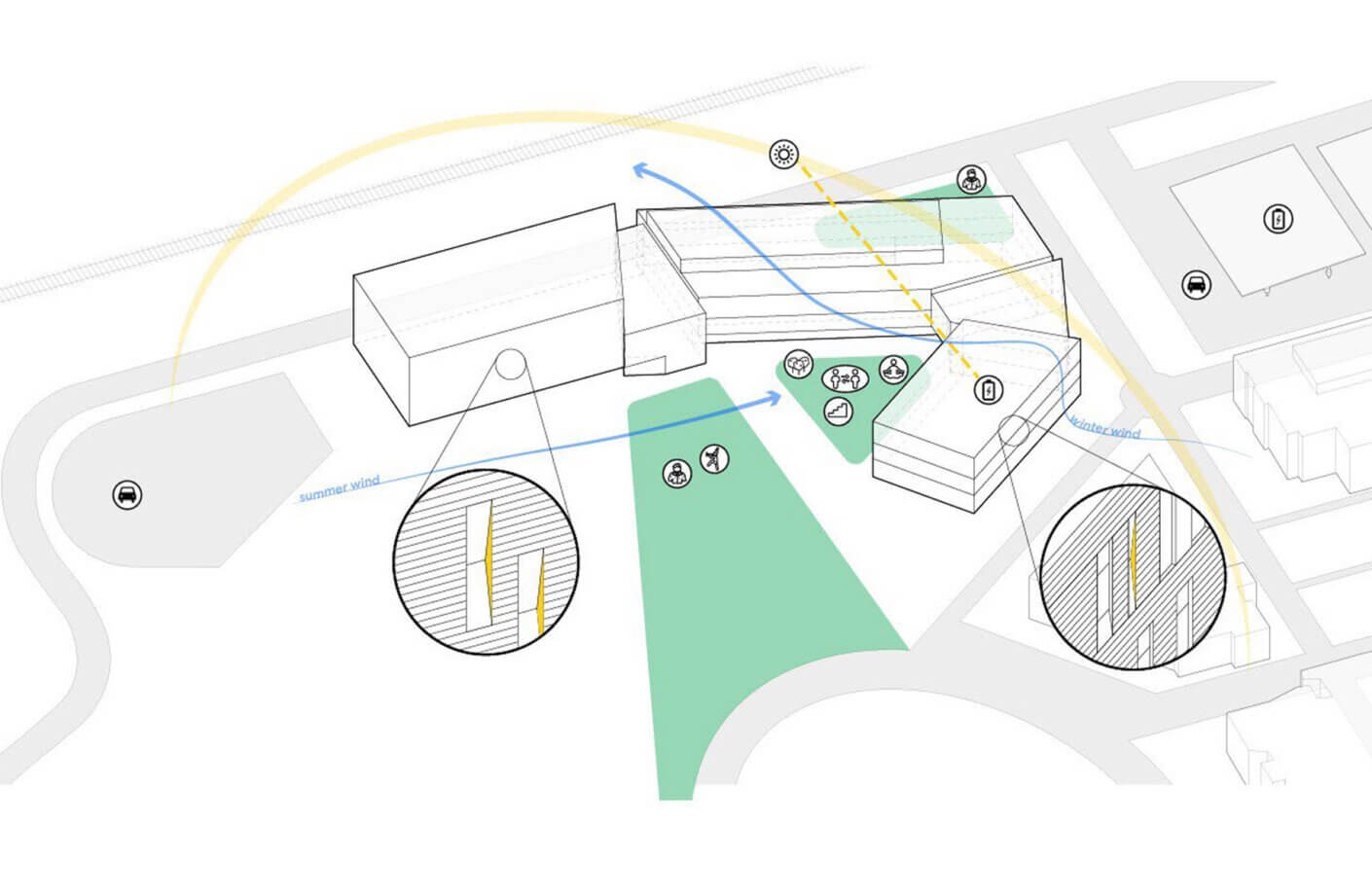
A pattern of louvres and windows on the façade is a translated waveform of Dr. Martin Luther King, Jr.’s voice from his 1964 Nobel Peace Prize acceptance speech, calling us to “have the courage to face the uncertainties of the future.”
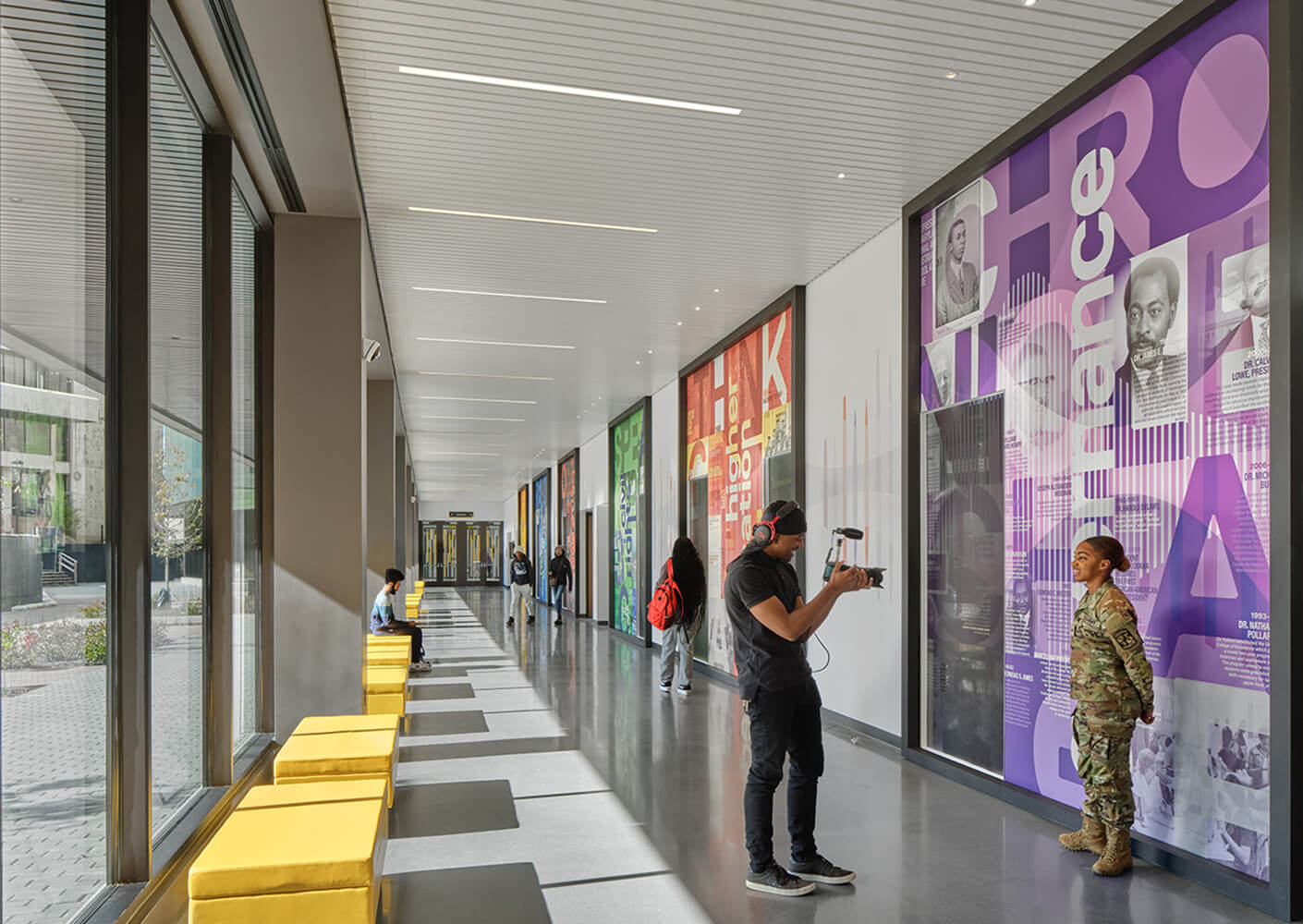
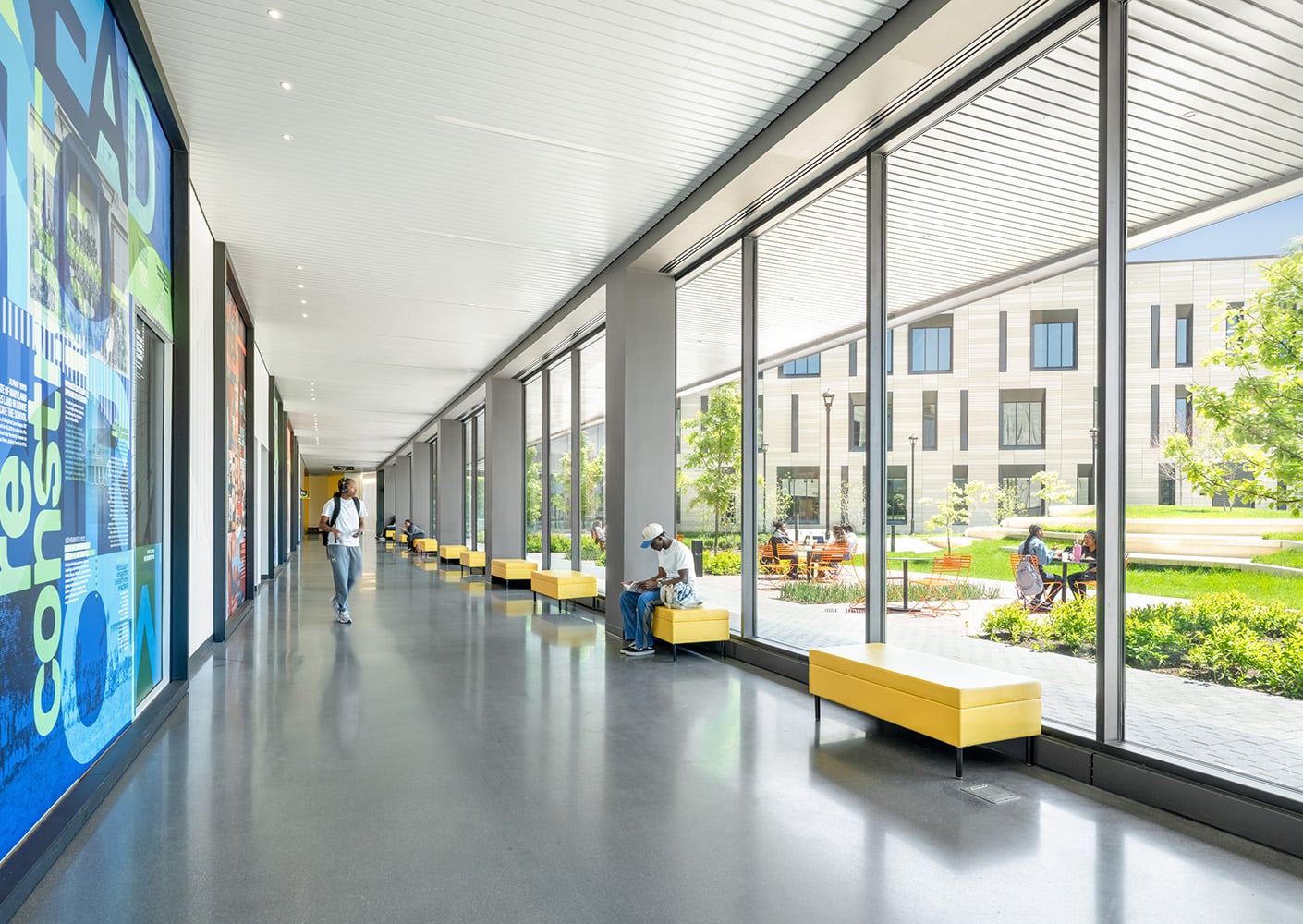
Each panel in the Historical Legacy Corridor uniquely pairs an academic skill with notable events in African American and campus history to create a non-linear heritage timeline.

Artwork and graphic elements throughout the communal areas are designed to inspire, celebrating the power of ideas and using one’s voice to create change. Bowie State’s 160-year history of empowering change is reflected in the Historical Legacy Corridor. The design features mixed-media artwork highlighting the skills essential to succeed in academic life: exploring culture, thinking critically, organizing change, speaking publicly, reading to connect, and analyzing mindfully. Each panel pairs academic skills with notable events, intending to spark new ways of thinking about shared cultural history.

Every student receiving a Bowie State education will pass through this building at some point in their curriculum. The skills they learn here will give them the self-confidence and practical tools to navigate real-world challenges in future career paths.

Aminta H. Breaux, Bowie State University President
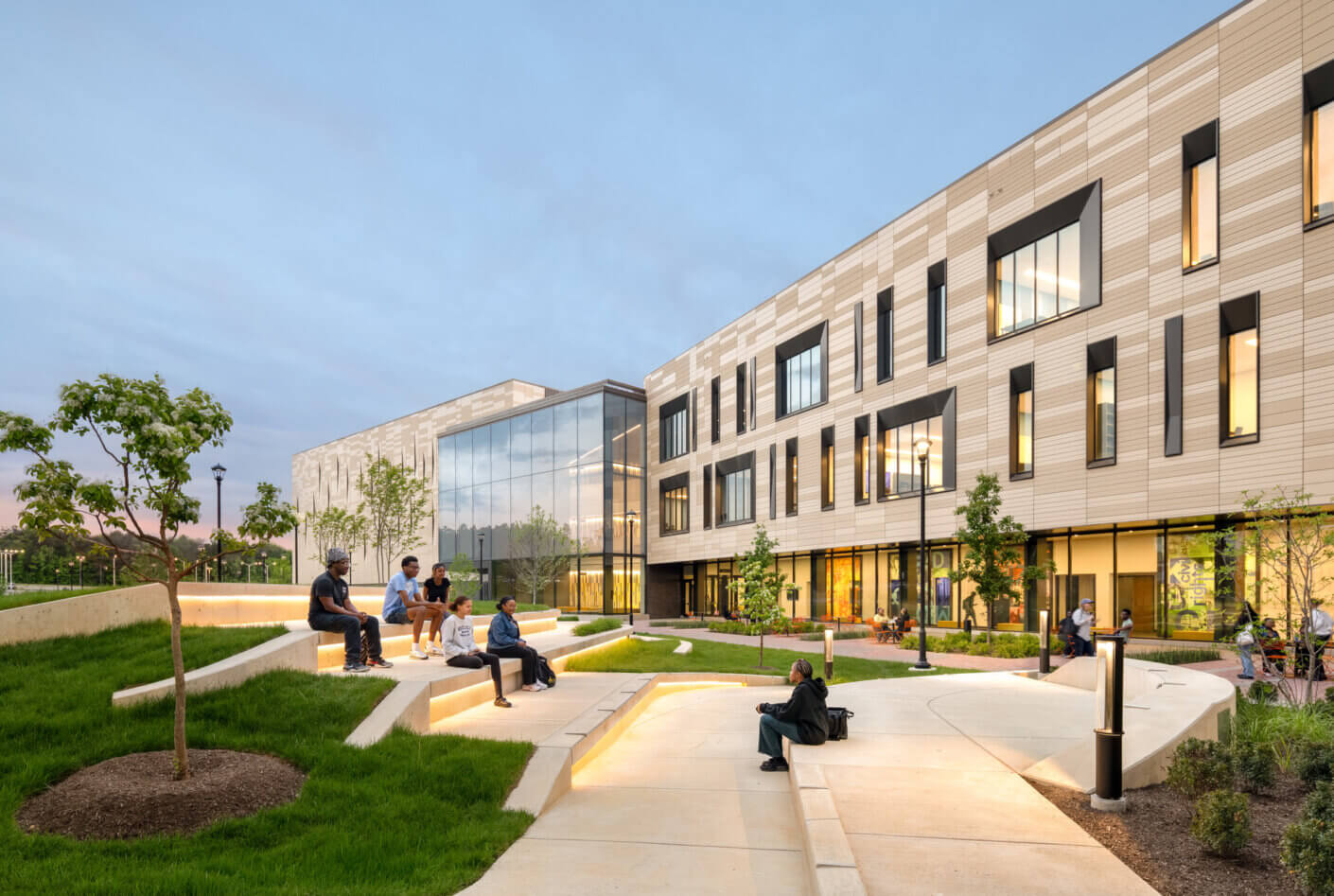
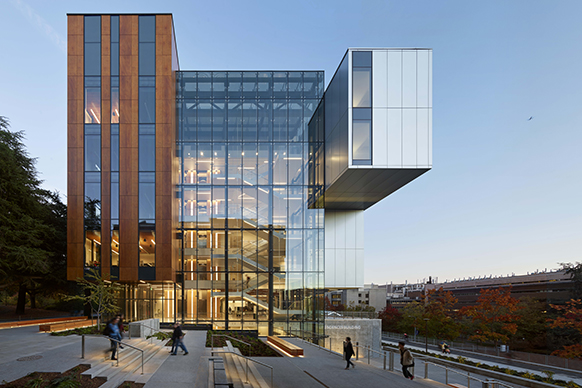
People gather on landscaped steps outside a glass-fronted building, surrounded by greenery and walkways during evening twilight.
Outdoor Programming
A versatile amphitheater-style gathering space supports outdoor classes, campus events, and performances, fostering connection, expression, and engagement in the open air.
Exterior view of a building with textured siding, featuring angular windows and adjacent landscaping, under a clear blue sky.

In a poignant tribute to service and sacrifice, the north “Inflection” space of the Martin Luther King, Jr. Center features a memorial to Lt. Richard Collins III, a Reserve Officer Training Corp (ROTC) candidate at BSU whose life was tragically cut short in a hate crime. Etched into felt panels, Lt. Collins’ image stands as a lasting reminder of the importance of unity, resilience, and remembrance in the face of adversity. An inscription nearby encourages students to “Serve with honor. Live with purpose.”
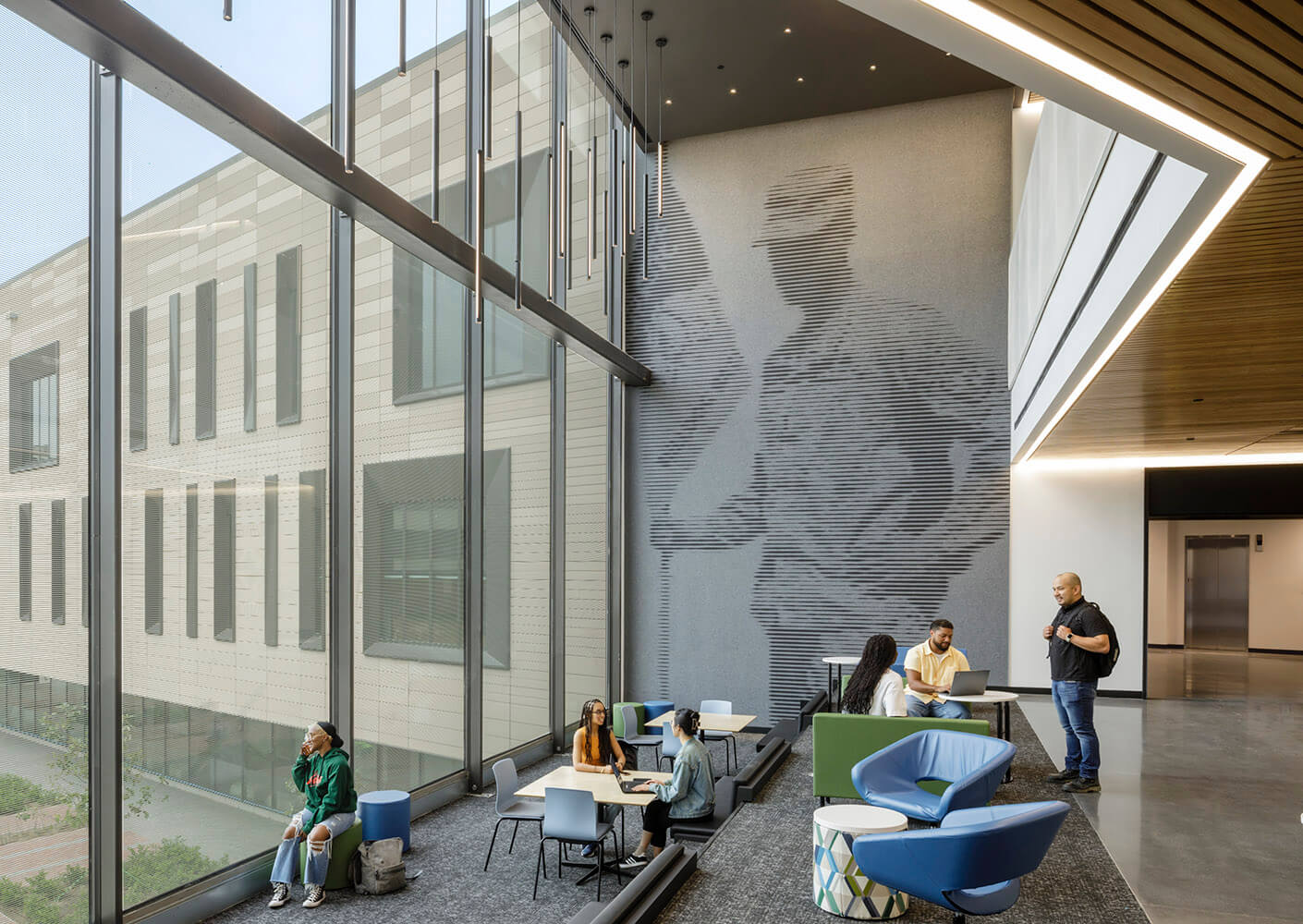
An enclave on the second floor of the Student Inflection serves as a memorial to Lt. Richard Collins III.
Strategic Sustainability
Sustainability solutions include rooftop photovoltaic arrays, electric vehicle charging, and a Lighting Power Density (LPD) reduction of 43%, which exceeds the 2030 Challenge goal.

The project also converts an existing parking lot into new green spaces for recreational use and adds new areas of native planting, allowing for a 79% reduction in landscape potable water use.
Project Team

Renee Rodriguez
People
Renee Rodriguez
Carl Knutson Headshot of Carl Knutson
People
Carl Knutson
Tom Butcavage
People
Tom Butcavage
Katie Janson
People
Katie Janson