Third & Traction
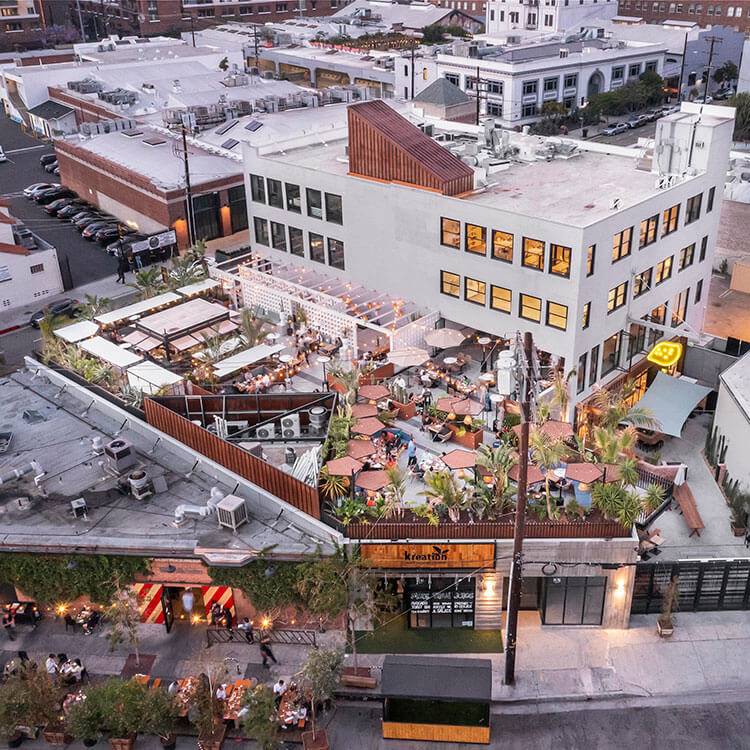
Located at the intersection of Third Street and Traction Avenue, this project reimagines two character-rich, formerly industrial buildings as a connected, mixed-use destination within Downtown Los Angeles’ evolving Arts District. While the buildings were originally separate and underutilized, their pedestrian-friendly context and layered industrial history suggested latent opportunities for activation, connectivity, and reuse.
Instead of starting with a single big idea, the design grows out of the site itself. Existing paths of movement, historic elements, and forgotten pieces of infrastructure shape a series of public and semi-public spaces that carry neighborhood life upward—from sidewalk to courtyard to rooftop.

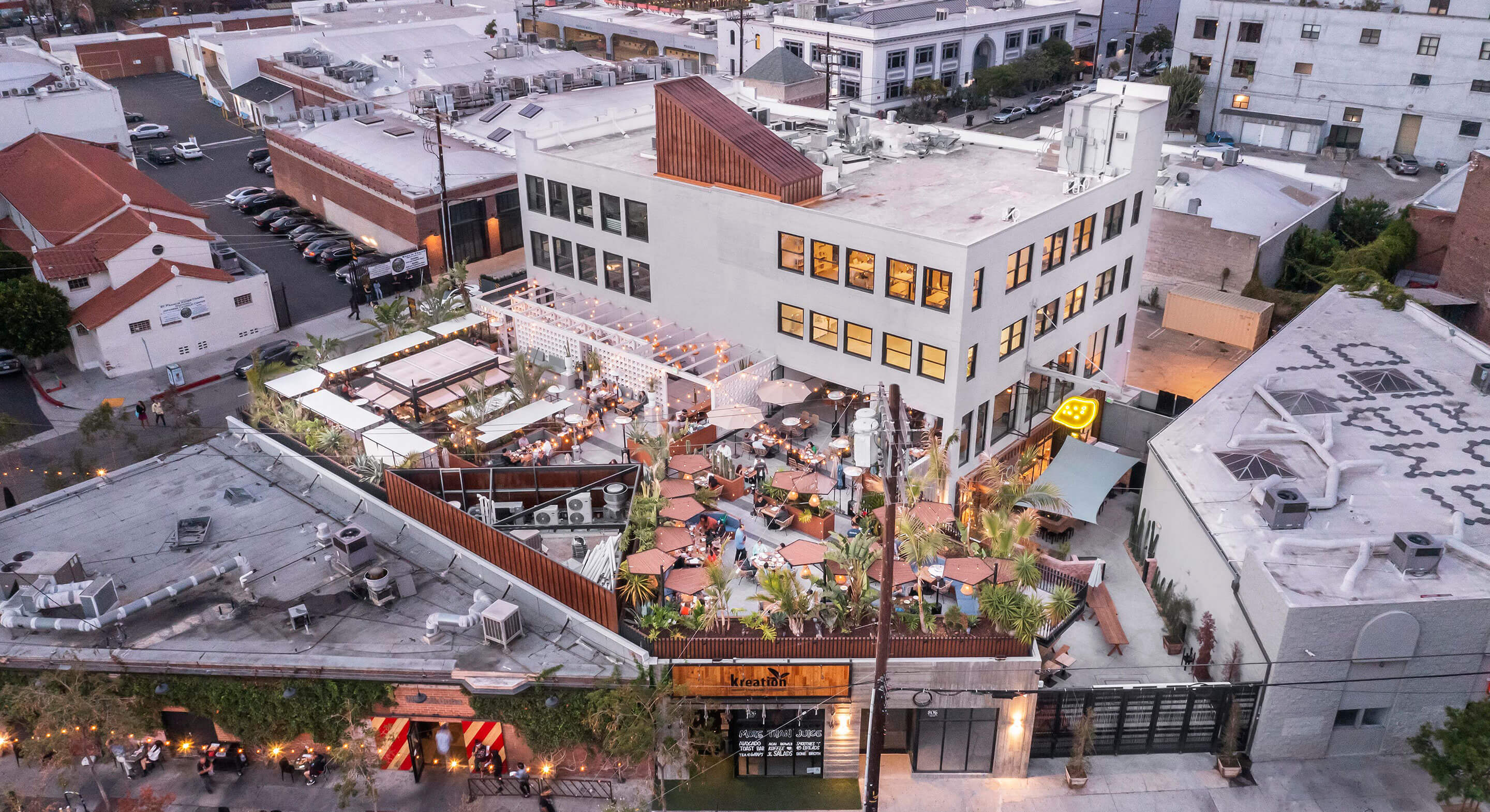
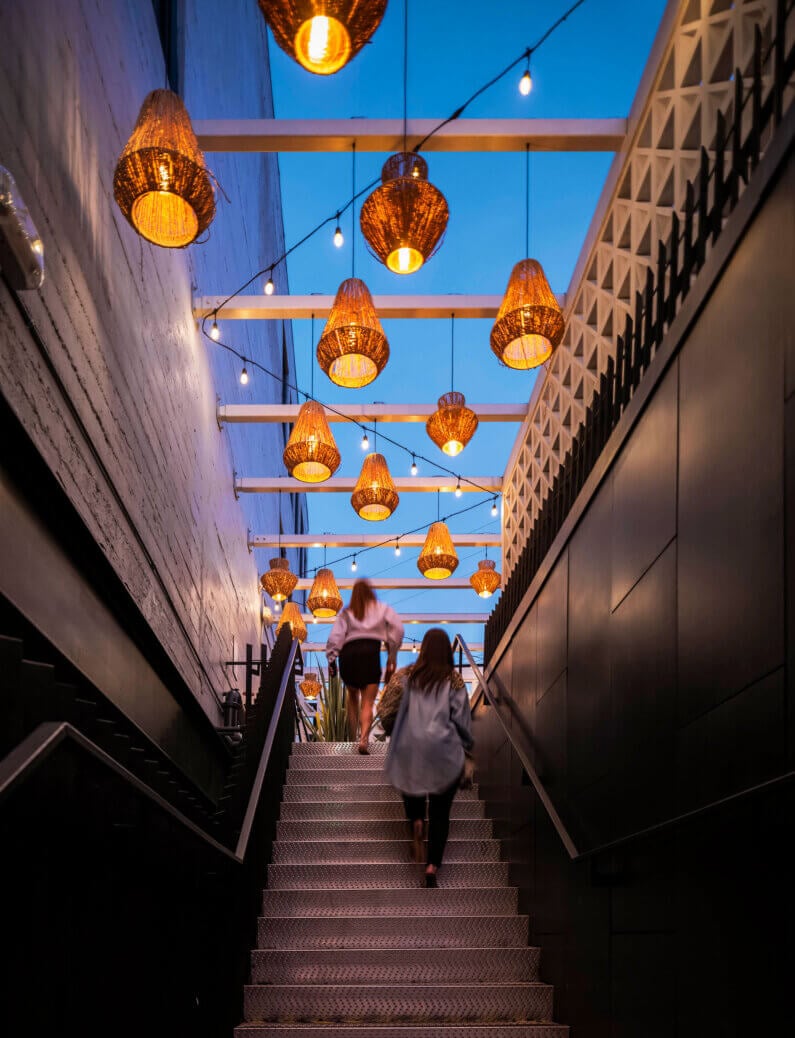
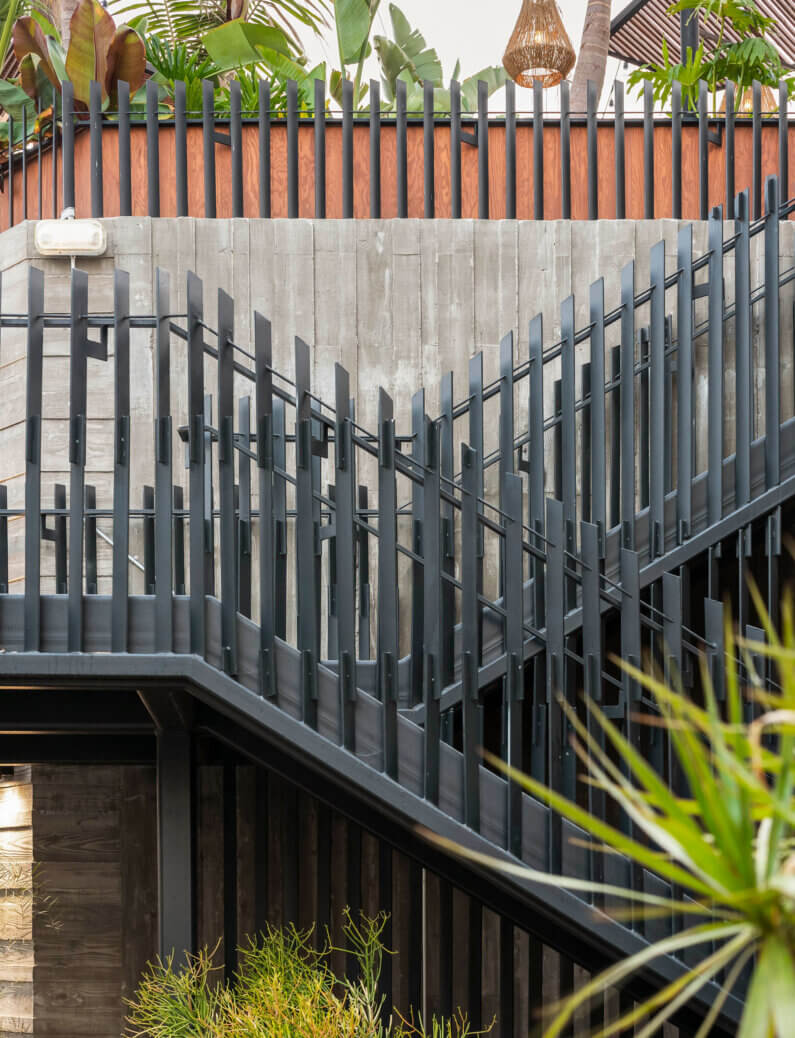
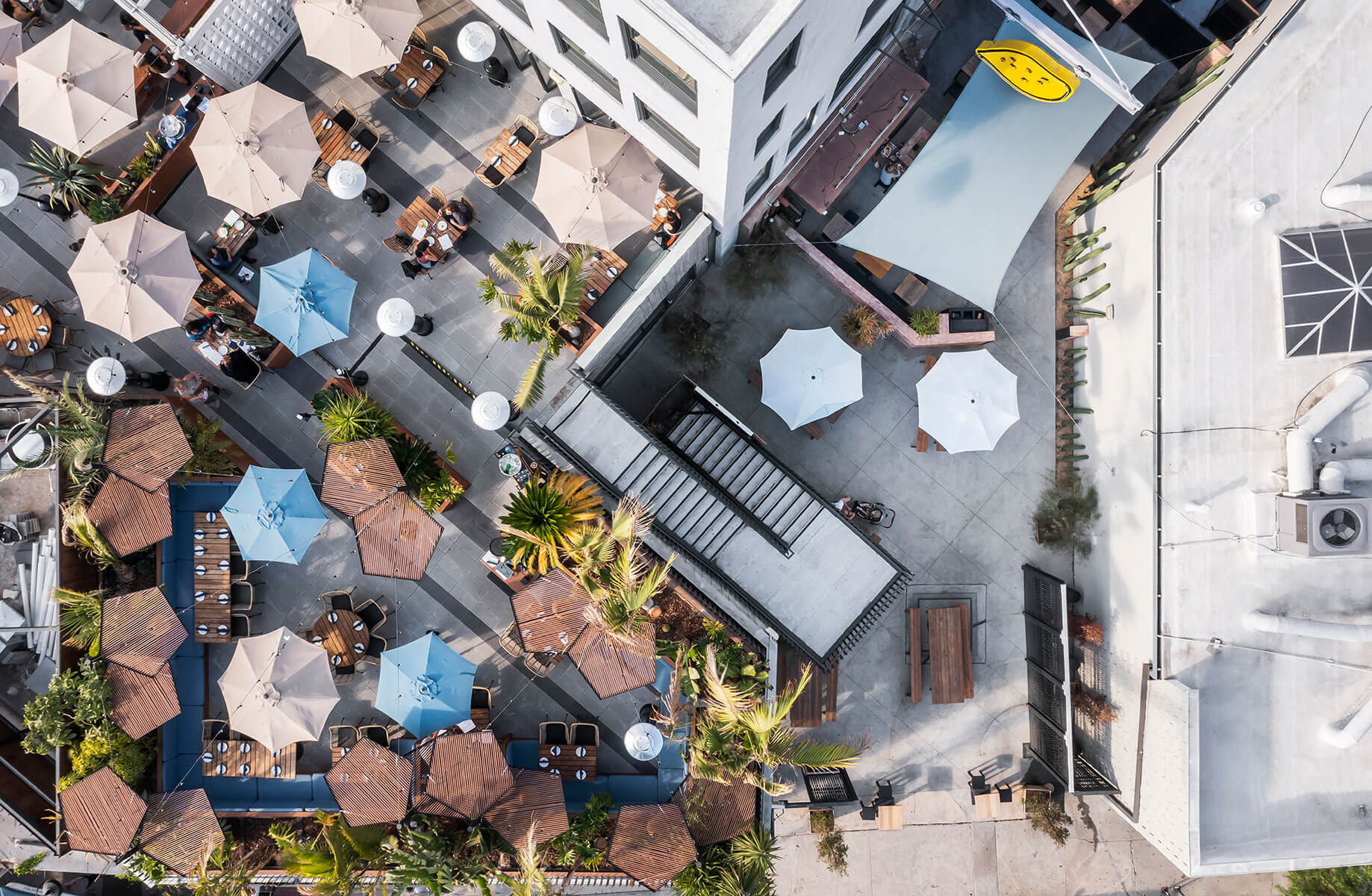
The project transforms two formerly independent buildings into a single rooftop destination. New circulation and targeted structural interventions connect the buildings above grade and link the rooftop directly to the ground-floor retail. A stair from East 3rd Street provides direct access to the indoor/outdoor rooftop restaurant. Selective openings between the buildings allow interior dining spaces to extend outdoors, creating a continuous environment shaped by light, air, and movement.
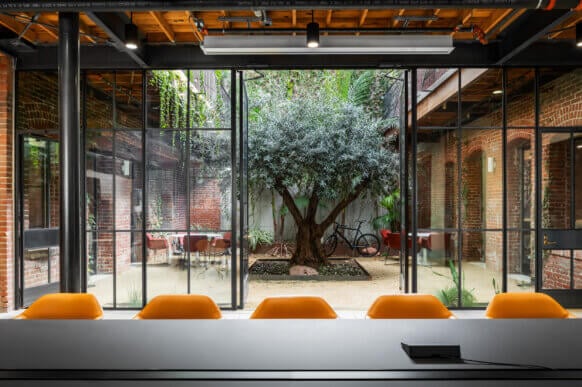
Programmed with fast-casual eateries and flexible outdoor seating, the Traction Avenue courtyard operates as a shared outdoor “living room.” Shaped in part by the trace of an existing railway spur, the plaza supports daily use while strengthening the connection between tenants and the public realm.
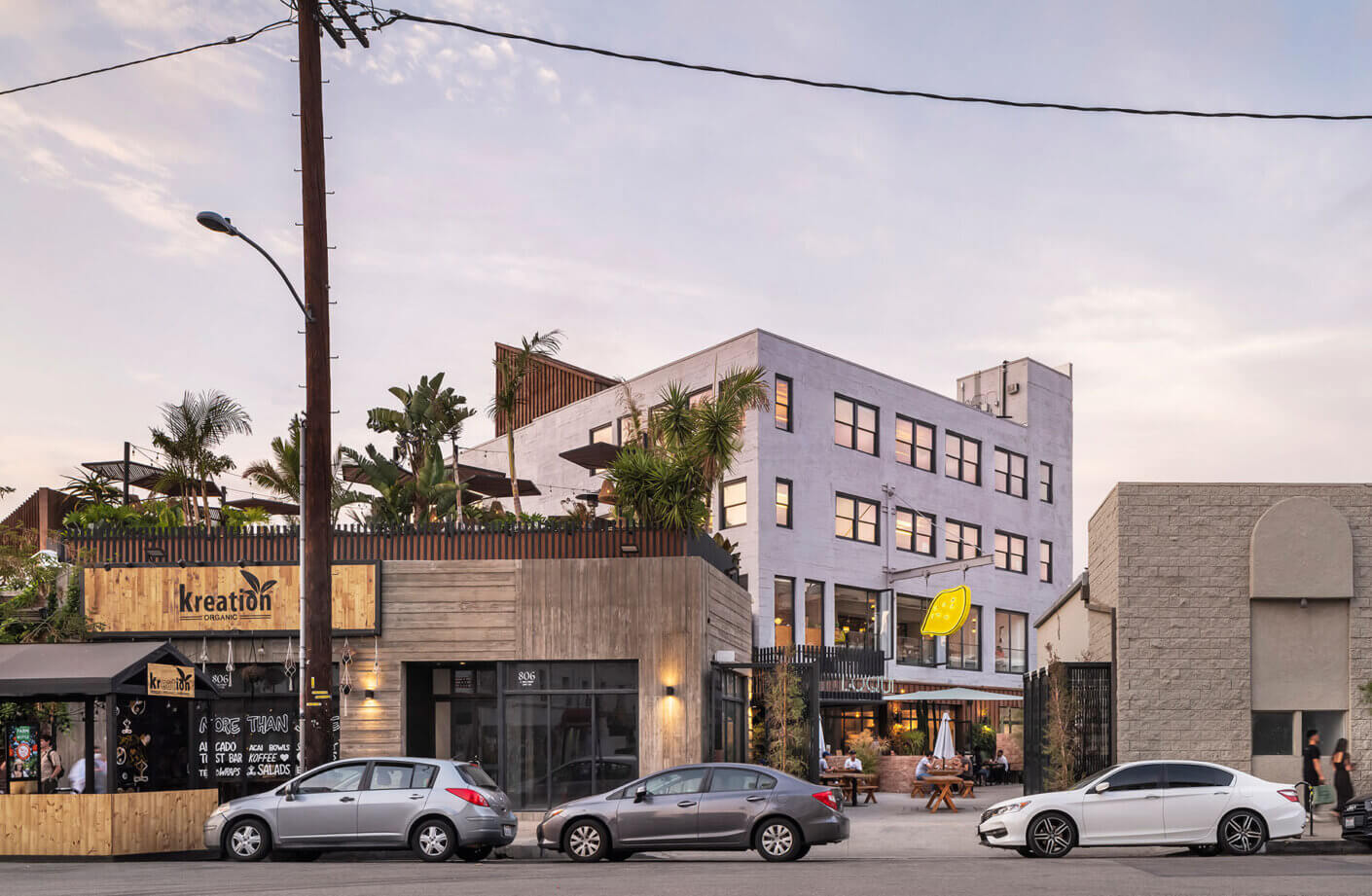
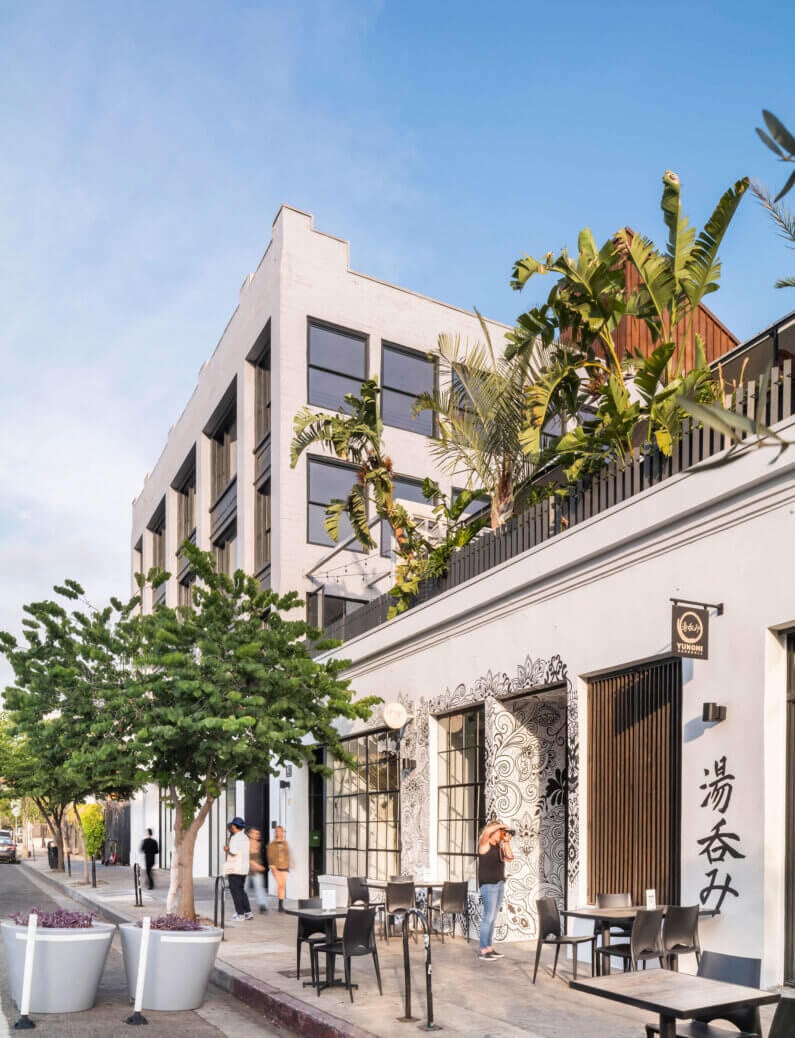
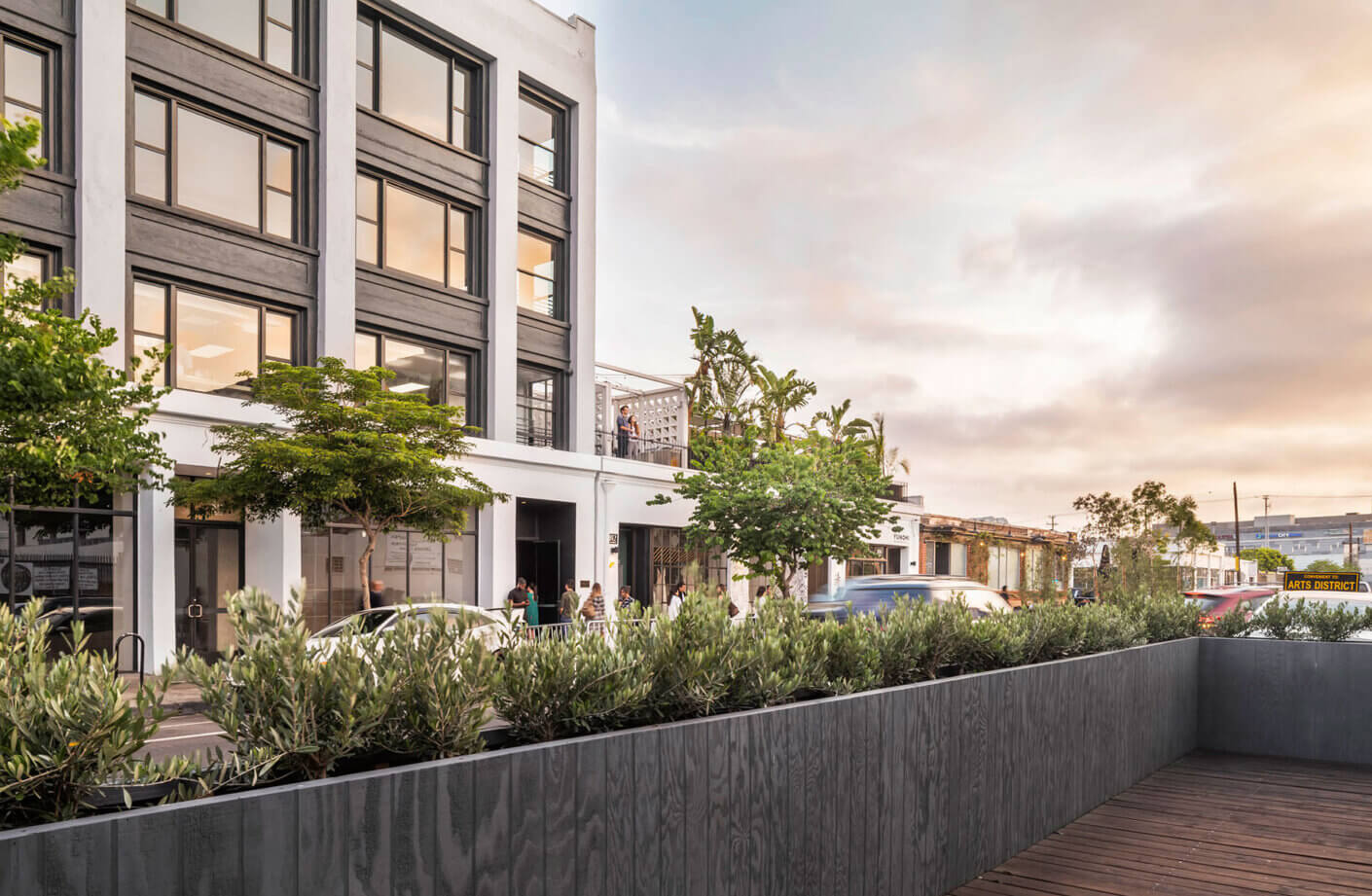
Located at the corner of Third Street and Traction Avenue, the property was designed and built by the Richards–Neustadt Construction Company in 1905, shortly after the arrival of the nearby Union Pacific Railroad. A four-story industrial building anchors Third Street with restrained Beaux-Arts detailing, while a former loading dock lines Traction Avenue at the rear—establishing two distinct urban edges shaped by production, movement, and exchange.
Under the stewardship of RYDA, these original conditions continue to inform the project’s organization. Rather than treating the site as a blank slate, strategic connections between the buildings extend public life upward, while the trace of rail infrastructure reappears at grade in the form of shared outdoor space. The renovation builds on the site’s most enduring qualities, translating its working past into a contemporary framework for gathering, circulation, and reuse.
Project Team
Related Content