Press Releases March 20, 2026

Perkins&Will Unveils World-Class Science and Technology Museum in Suzhou, China

The third and final building of a new cultural district, the museum reflects Suzhou’s status as a hub of intellectual inquiry and manufacturing.
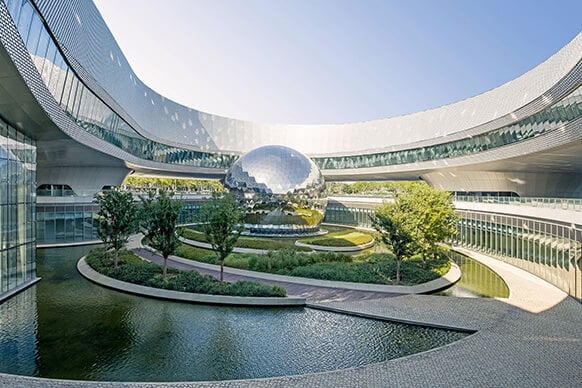
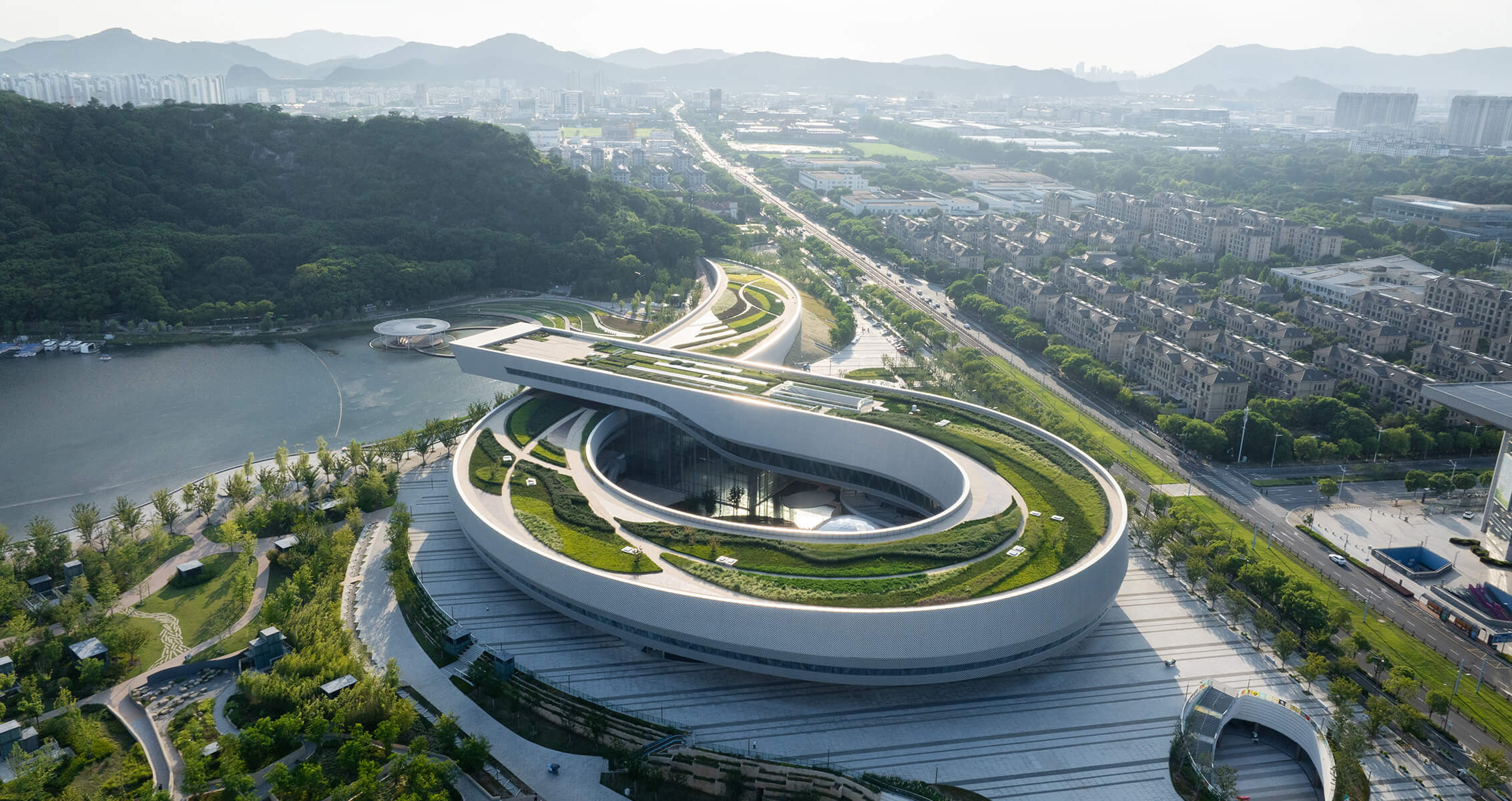
Aerial view of a modern museum surrounded by greenery and cityscape.

SUZHOU, China—One of China’s most anticipated cultural destinations has opened its doors to the public. The Suzhou Science and Technology Museum, designed by global firm Perkins&Will, is a new civic landmark in the city’s High-Tech District that celebrates discovery and innovation.

Suzhou, known internationally for its UNESCO-listed classical gardens and centuries-old silk tradition, has long intertwined culture, craft, and landscape. The museum honors this legacy through its evocative design, which conjures a flowing silk ribbon emerging organically from its verdant waterfront landscape.

“Science and nature are not separate here; they are meant to be experienced together,” says Perkins&Will design director Ralph Johnson, who conceived the original design concept and led the project’s multidisciplinary team. “The museum is about harmony: between past and future, nature and technology, and the city and its landscape.”


A civic and cultural super platform for Suzhou

Located at the base of Shishan, or Lion Mountain, the museum supports a city-led redevelopment of a former amusement park into a multi-venue cultural landscape. Planned alongside Suzhou Museum West and the Suzhou Lion Mountain Opera House, the Suzhou Science and Technology Museum shares public space, pedestrian connections, and access to the mountain and water with its neighboring cultural destinations.

“The architectural form of the Suzhou Science and Technology Museum, inspired by the jade ruyi, seamlessly blends the refined elegance of Suzhou’s traditional culture with the futuristic spirit of a science museum,” says Zhu Xiaoyin, general manager of Suzhou Science and Technology Museum Operation Management Co., Ltd., and deputy director of the Suzhou Science and Technology Museum. “It reflects a deep understanding of local heritage while expressing the forward-looking vision of internationally leading design.”
Architecture that moves like silk

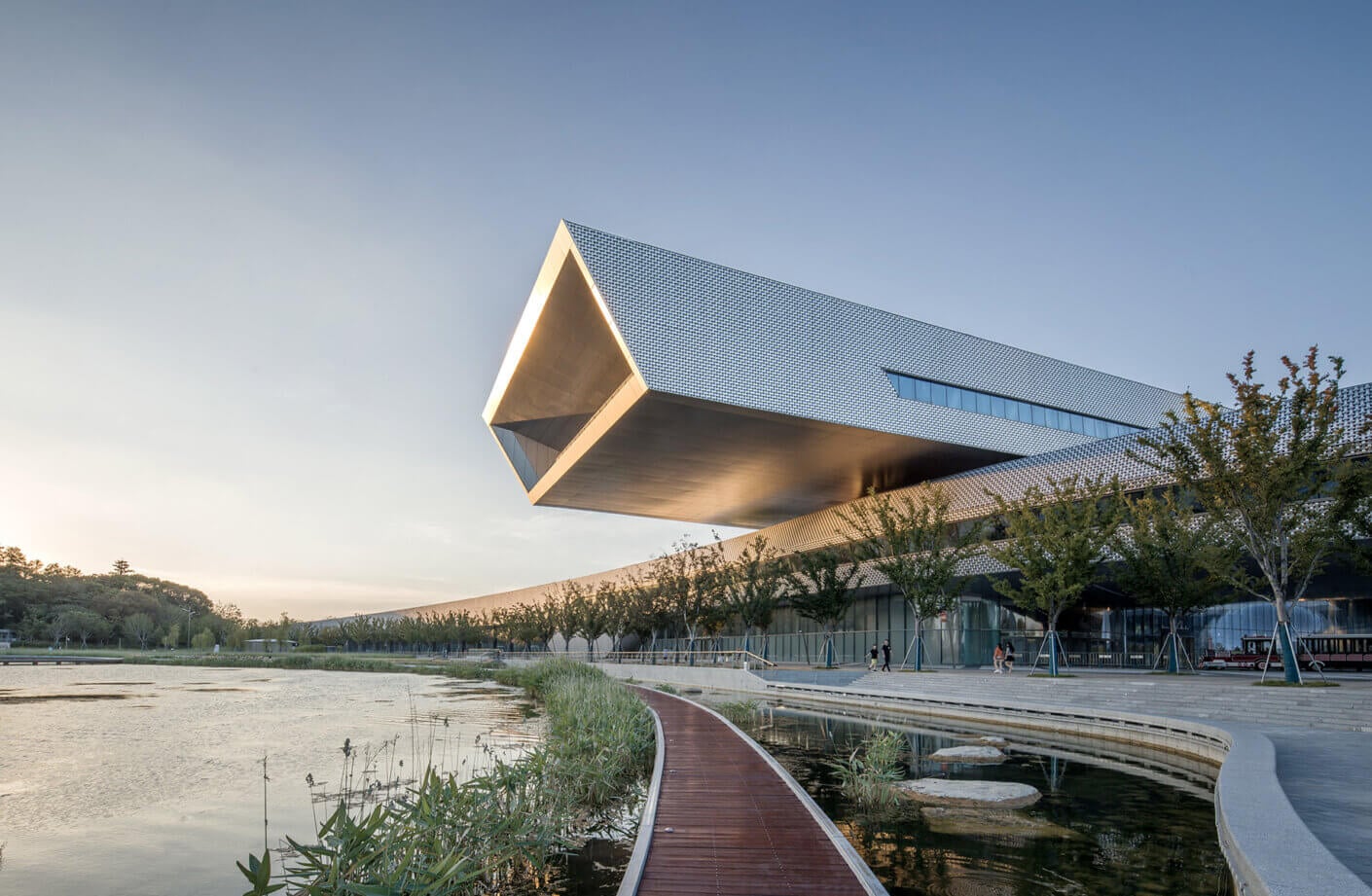
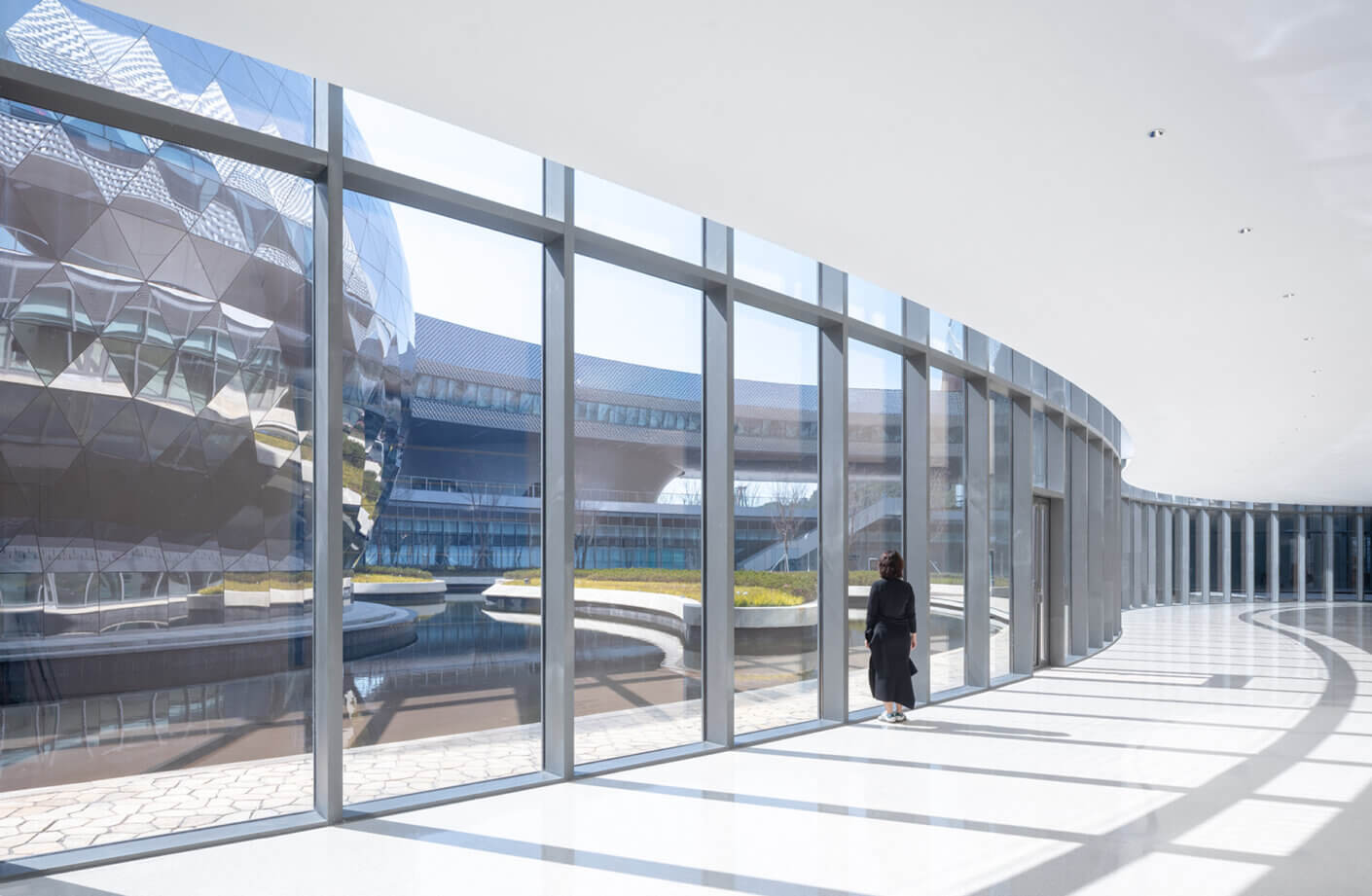
The design is inspired by Suzhou’s history of silk production. The museum gracefully traces the lake’s edge, rises from the landscape, and folds back on itself like a silk sash. Supported by oversized mushroom columns, the building hovers above shaded public space, allowing visitors to move freely between water, gardens, and pathways, and surrounds a sunken courtyard of additional gardens and reflective pools. It then extends outward in a dramatic cantilever toward Lion Mountain, visually linking the building to its natural setting.

“Silk is both ancient and advanced: It’s natural, engineered, and expressive,” says James Lu, Perkins&Will’s regional director for Asia. “Ralph and the team treated the facade the same way, designing an intricate woven system that performs at a civic scale while still feeling refined at a human scale.”

A custom cladding system of convex aluminum panels repeats in a crisscross pattern, appearing to flow beneath one another, lending it a visual quality similar to woven fabric. A high-performance coating produces a soft, shimmering finish, and LEDs embedded within the cladding give the building a subtle glow after dark.

“This museum reflects Suzhou’s national leadership in science and technology, translated into an open, inclusive, and forward-looking civic setting,” says Zena Howard, Perkins&Will’s firmwide cultural and civic practice leader. “It’s a must-see example of how a city can express its values and ambitions through its cultural institutions.”

A museum that’s also a landscape

Visitors descending from Lion Mountain can step directly onto the museum’s fully planted roof, where curving paths mirror the park below. As the roof rises, the landscape gradually shifts from planting beds to photovoltaic panels, expressing a transition from natural systems to technological innovation.

At ground level, rain gardens capture and filter stormwater before it reaches the lake, while trees and plantings buffer the site from surrounding roads and transit connections. Inside, the museum is organized as a continuous loop that guides visitors through exhibitions using daylight and long views outward. Much of the program is set within the landscape itself, using the earth’s thermal stability to support environmental performance while keeping the building visually open.

The visitor journey concludes at an observation platform overlooking Lion Mountain, where the relationship between the museum, the park, and the city comes fully into view.

“Here, science doesn’t sit behind walls. It flows—like silk—through the city,” Johnson says.

###

About Perkins&Will

Perkins&Will, an interdisciplinary, research-based architecture and design firm, was founded in 1935 on the belief that design has the power to transform lives. The firm is committed to creating a better, beautiful, more equitable world through Living Design, an approach that integrates environmental, social, and design considerations to advance ecological health and well-being. Interior Design named Perkins&Will a “Sustainability Giant” in 2024; Architizer named it the world’s “Best Sustainable Firm” in 2023; and Metropolis named it “Firm of the Year” in 2022 for its industry leadership in advancing climate action and social justice. Fast Company named Perkins&Will one of the World’s Most Innovative Companies in Architecture three times, and in 2021, it added the firm to its list of Brands That Matter—making Perkins&Will the first architecture practice in the world to earn the distinction.

With an international team of more than 2,700 professionals, Perkins&Will has over 30 studios worldwide, providing integrated services in architecture, interior design, branded environments, urban design, and landscape architecture. Partners include Schmidt Hammer Lassen Architects; McLennan Design; Portland; Nelson\Nygaard; and Pierre-Yves Rochon (PYR).