Press Releases May 6, 2026

Perkins&Will and Champlin | EOP Design New Health Sciences Center for the University of Louisville

A new academic hub brings four health sciences disciplines together to advance interdisciplinary learning and prepare the next generation of healthcare providers in Kentucky and beyond.
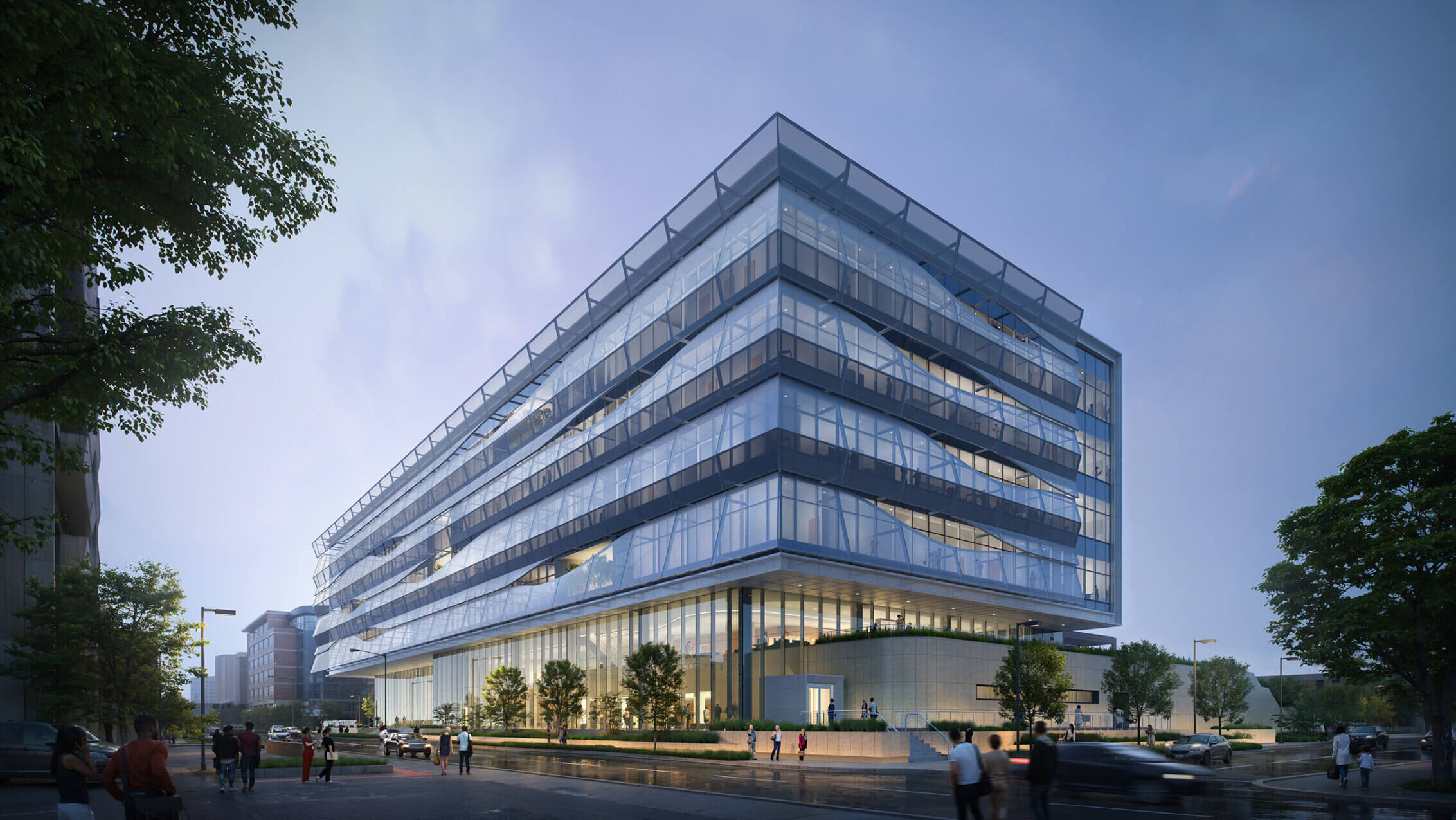
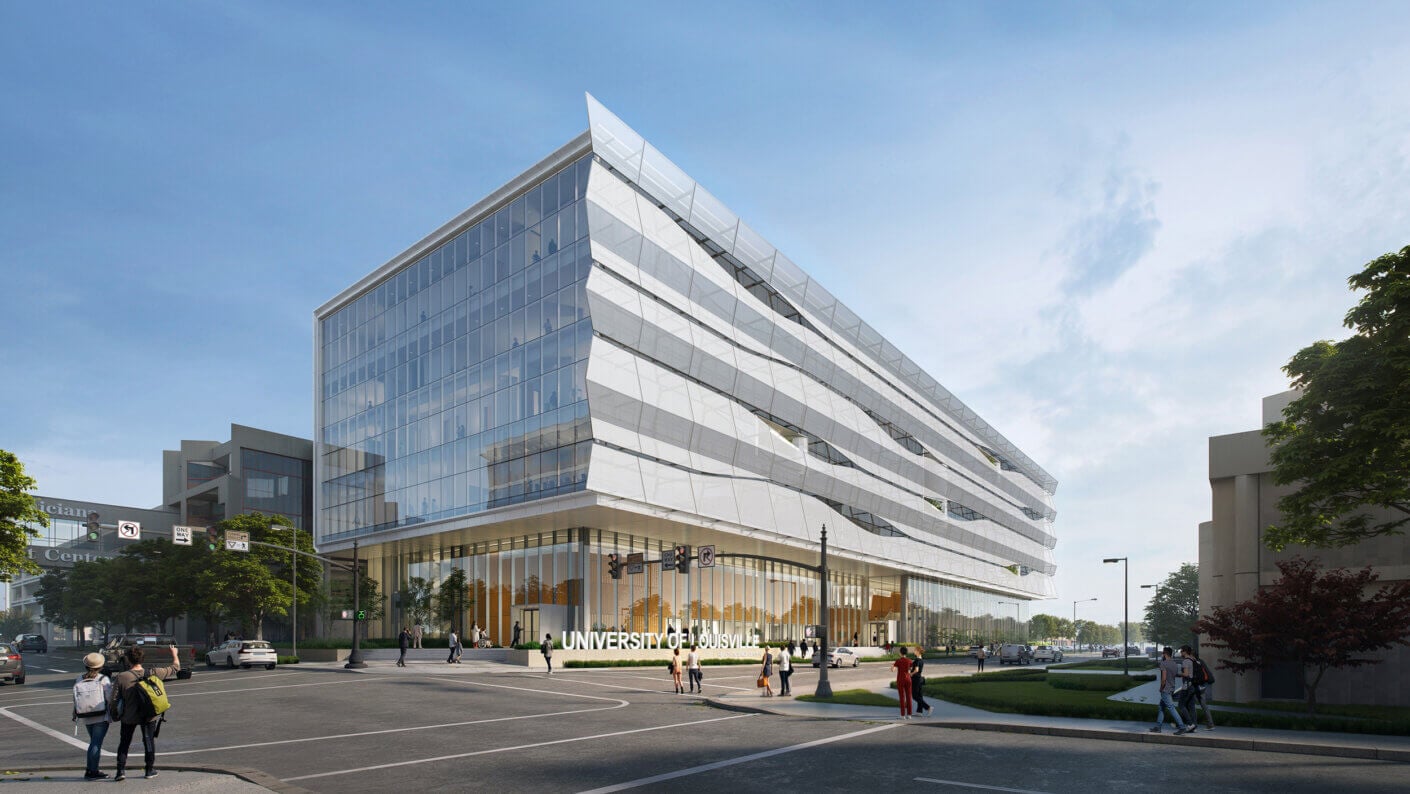
Glass building with a unique architectural design, surrounded by greenery and pedestrians, captured during twilight hours.

LOUISVILLE, Ky.—The University of Louisville has broken ground on a new Health Sciences Center designed by Perkins&Will and Champlin | EOP, built by Messer Construction. By bringing together the schools of public health, medicine, dentistry, and nursing into one shared environment, the project eliminates the physical silos that have historically separated these programs and creates a new hub for experiential learning, simulation, and hands-on clinical training. By enabling closer alignment between how students are trained and how care is delivered, the project creates a direct link between the university’s academic core, the surrounding medical district, and the city of Louisville.

The 257,000-square-foot facility will establish a permanent “front door” for the Health Sciences Campus. This shift will allow students and faculty to transition from isolated study to interprofessional practice, reflecting the collaborative structure of modern healthcare. The project was developed alongside university leadership to ensure the architecture directly supports evolving methods in clinical training and community-based care.
How Interprofessional Learning Drives Design 

Modern healthcare depends on teams working across disciplines, and students need to train that way from the start. The building’s design supports this by encouraging interaction across health professions throughout the building. Rather than organizing programs by discipline, spaces are intentionally interwoven so students and faculty can learn and work alongside peers from other fields.

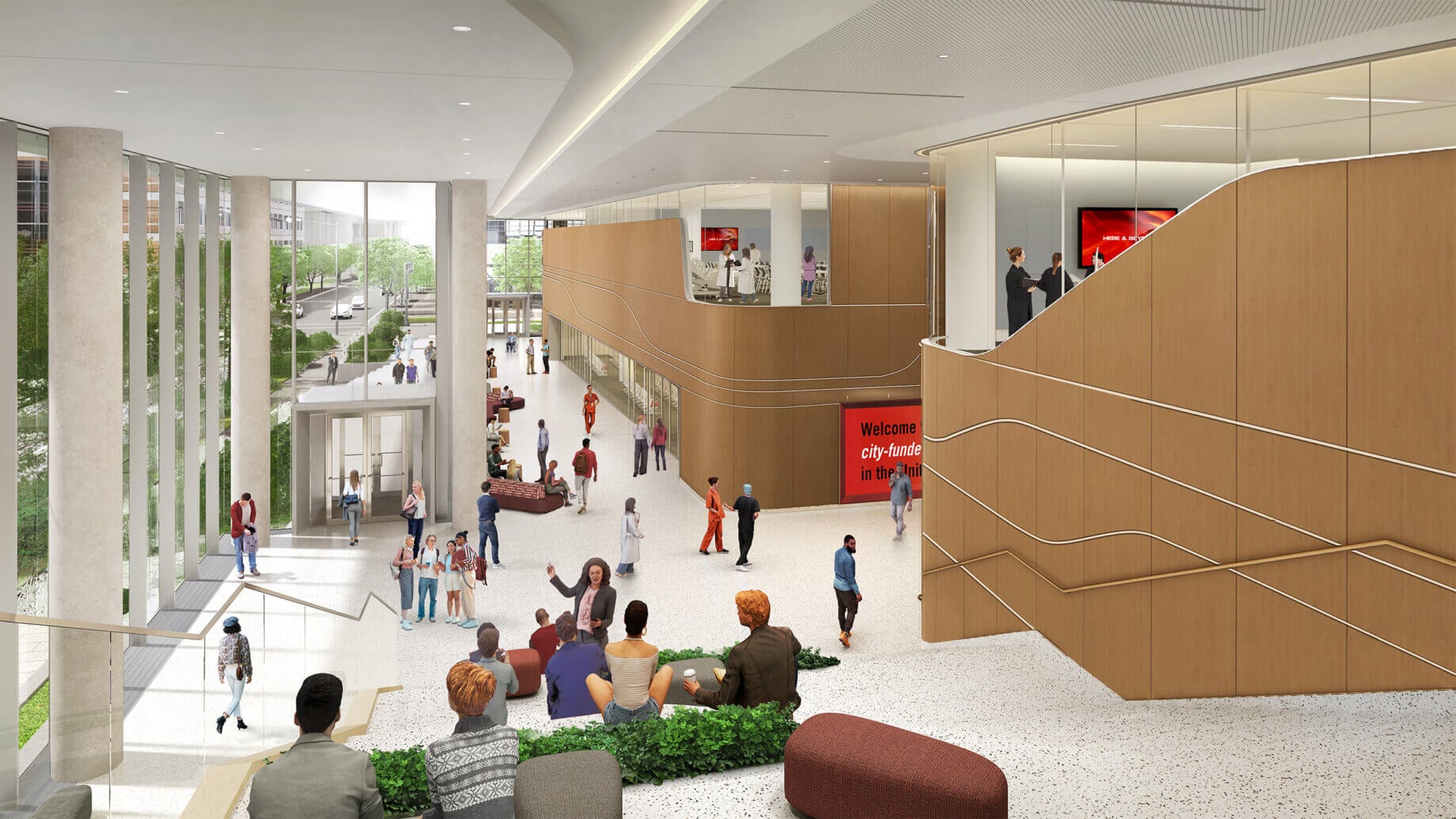
That approach is reinforced through the building’s organization. The first two floors form a visible, two-story academic commons anchored by hands-on learning environments positioned near the main entry. Skills labs placed on display allow students, faculty, and visitors to see experiential learning in action, signaling immediately that this is a health sciences building where practice and instruction go hand in hand.

On the floors above, classrooms, research spaces, and faculty workplaces are deliberately intermixed across four floors to support ongoing exchange between disciplines. A new Omics research core lab brings together three research groups previously dispersed across campus, strengthening opportunities for shared discovery and collaboration. A prominent stair connects these levels vertically, turning everyday movement through the building into opportunities for interaction and exchange.

Designing for Health at Every Scale 

The vision for the center extends beyond co-locating programs. It also recognizes that the well-being of future healthcare providers is foundational to the care they will deliver. The building is conceived as a health catalyst, where architecture, pedagogy, and program work in concert to promote wellness across multiple scales: individual, community, and ecological.

At the individual level, the design enhances daily health and quality of life for those who learn and work within it. Daylight-filled spaces, a highly visible central stair that encourages movement, and welcoming places to gather and share meals promote connection, activity, and a sense of belonging throughout the day.

At the community scale, the project will strengthen relationships across the university’s Health Sciences Campus and the surrounding medical district. By creating a shared academic environment and making learning more visible, the building positions the university as an active driver of healthcare innovation and collaboration within the region.

At the ecological level, the building is designed as a high-performing, sustainable environment targeting LEED Gold certification, reinforcing the university’s broader commitment to environmental stewardship and long-term community health.

Together, these strategies position the building not only a place to learn, but also as an active participant in advancing health across campus and beyond.

The design process became an embodiment of what we were trying to achieve. We were practicing a version of the interprofessional collaboration the building is intended to facilitate—bringing different perspectives together, testing ideas, and learning from one another.

Tony Layne, Design Director, Minneapolis

Connecting Campus, City, and Care 

Located on the University of Louisville’s downtown Health Sciences Campus, the new building will strengthen ties between the university, the surrounding medical district, and the city of Louisville. The project also will extend and activate emerging campus green spaces, creating a more vibrant and welcoming environment through new pathways, seating, and outdoor gathering areas that strengthen connections to the surrounding neighborhood. By bringing health sciences education into a shared academic setting, the building reinforces the university’s role in advancing healthcare innovation, collaboration, and community well-being across the region.

Together, the Health Sciences Center will serve as both a gateway to interdisciplinary education and an investment in the future of healthcare in Kentucky.

Project partners are as follows: Champlin | EOP (Architect of Record), Perkins&Will (Health Education Design Architect), Messer Construction (Construction Manager), Gresham Smith, KPFF, CMTA, NV5, Introba, Lou Clark, Vermeulens, Jensen Hughes, and Lerch Bates.