University of Georgia, Track and Field Complex
Track and field is a sport defined by dynamic motion. Every action, whether a sprint, a throw, or a jump, testifies to this reality. When designing the new University of Georgia Track and Field Complex, we let this theme play out in physical form and space.
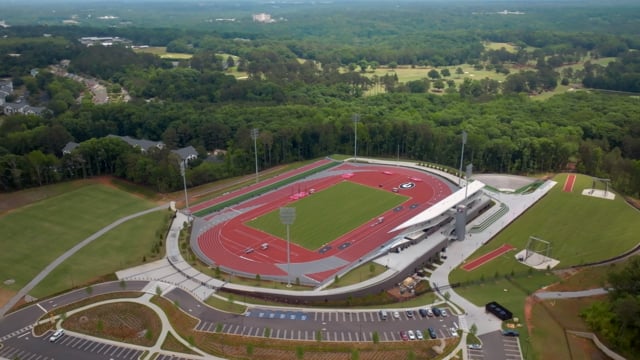
Located in the forested hills on the edge of Athens, Georgia, the state-of-the-art facility embodies the sport through its architecture, landscape architecture, and site planning. Each element takes cues directly from the athletes, their speed, motion, precision, and performance.
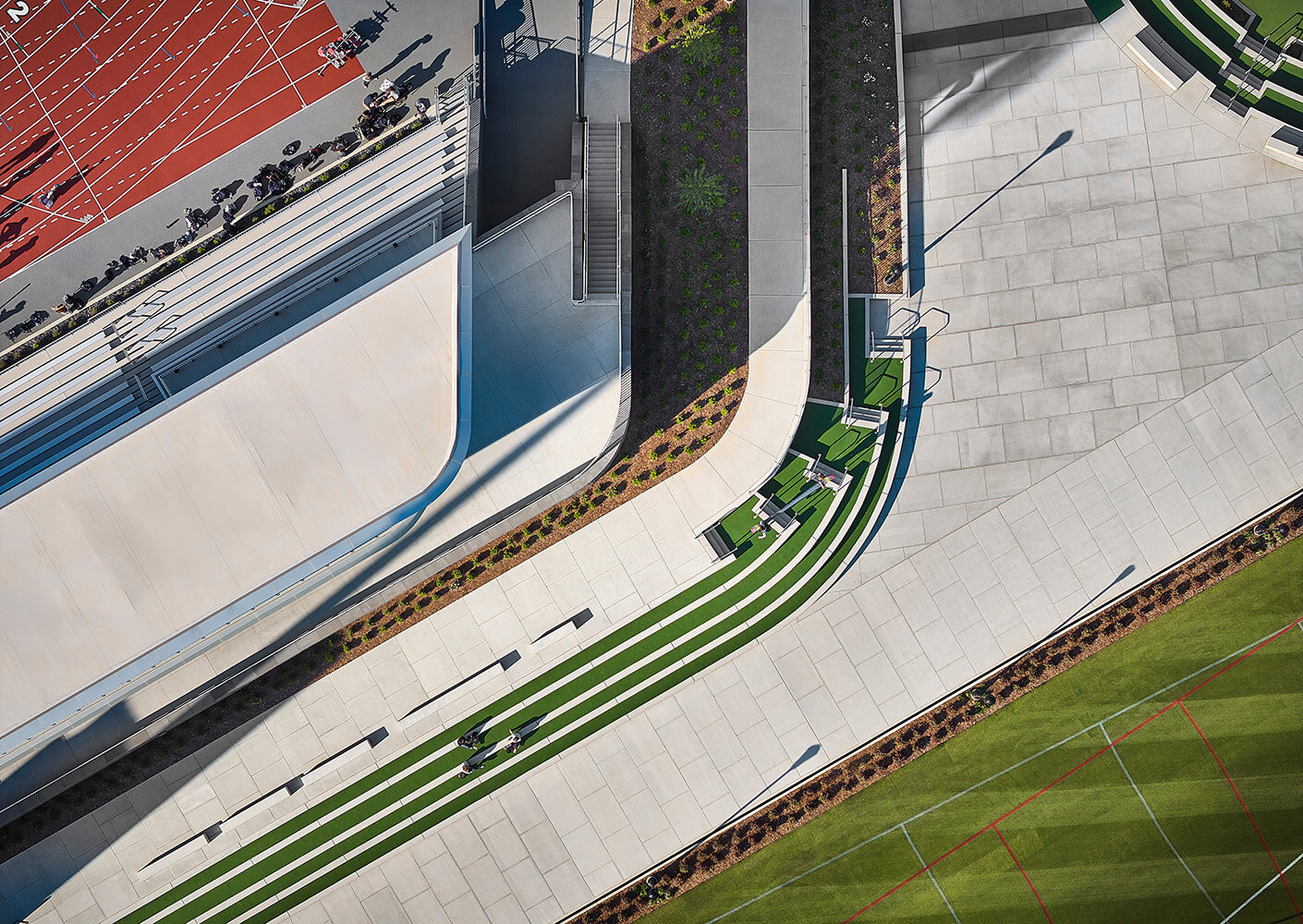
Seeking to understand the relationship between athletic performance and prevailing wind conditions, we commissioned computational fluid dynamics (CFD) modeling to inform our layout.
Our research revealed that the primary objective in track venue design is not simply to reduce wind, but to maximize beneficial tailwinds while remaining within NCAA regulations. Because the 100-meter home stretch is the most critical segment for competition, the design prioritized creating optimal conditions along that portion of the track.
Landscape elements, trees, and future building phases further help moderate wind speeds, creating a facility in which environmental and athletic performance are inseparable.
Christina Nguyen, Associate Principal, Sports, Recreation, and Entertainment
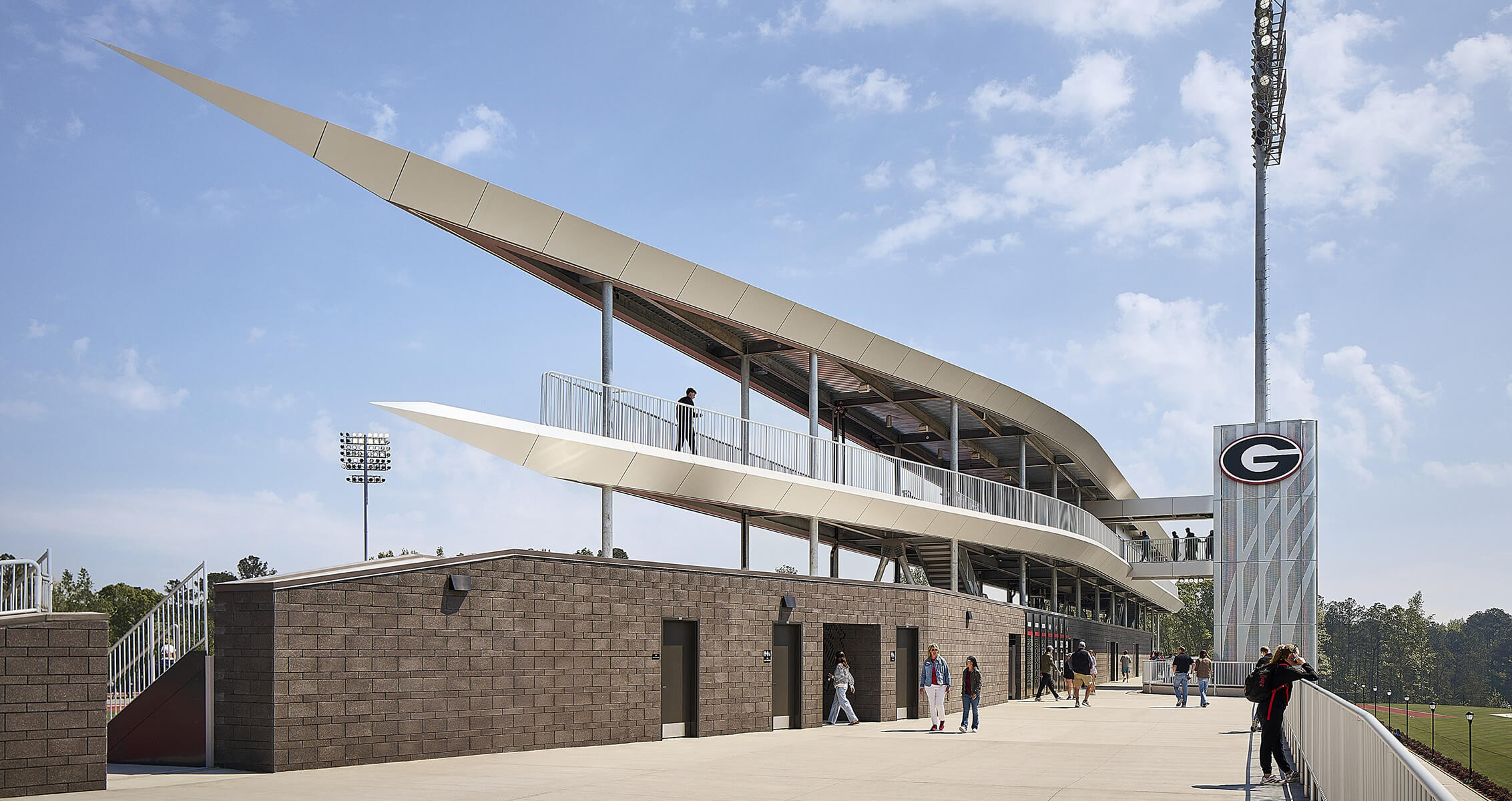
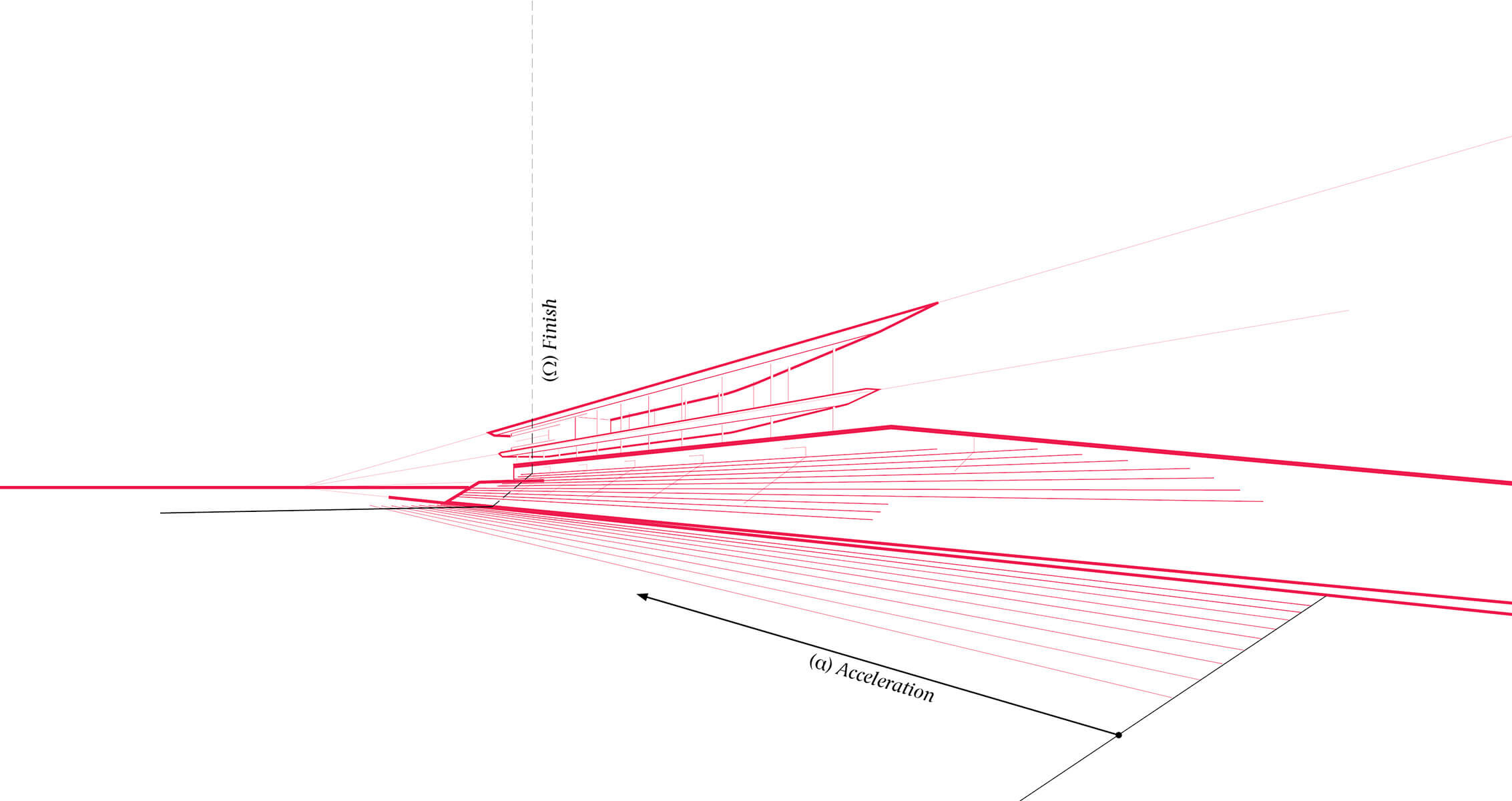
In addition to optimizing for a wind advantage, the complex incorporates advanced timing and performance technologies. Cameras and timing systems are precisely aligned with the finish line and connected through concealed underground conduit systems.
A particularly innovative feature is the incorporation of SmarTracks technology. Underground magnetic rods beneath the track surface with wearable athlete sensors to collect performance data during training, including stride characteristics, speed and acceleration, position, and movement.
By concealing cabling and infrastructure below grade, the design maintains a clean architectural appearance while delivering NCAA competition-grade accuracy.
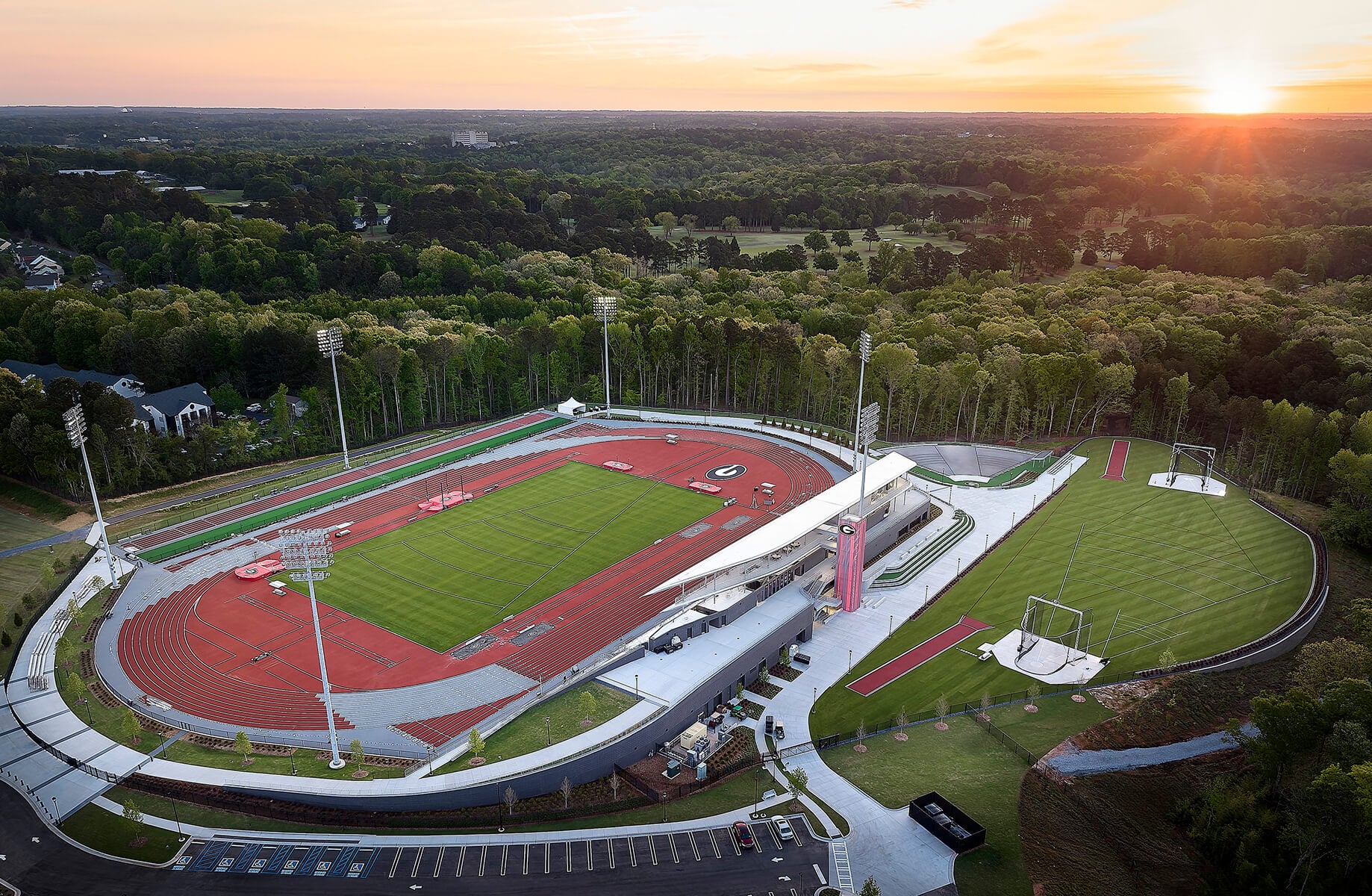
This project seamlessly merges with its natural surroundings. A significant portion of the site occupied a former landfill, creating environmental and development challenges while also providing an opportunity to transform a degraded landscape into a premium destination for collegiate-level athletics.
We employed bioswales and bioretention systems to treat on-site stormwater, while irrigation wells and low-flow fixtures reduce water consumption at the 37-acre complex.
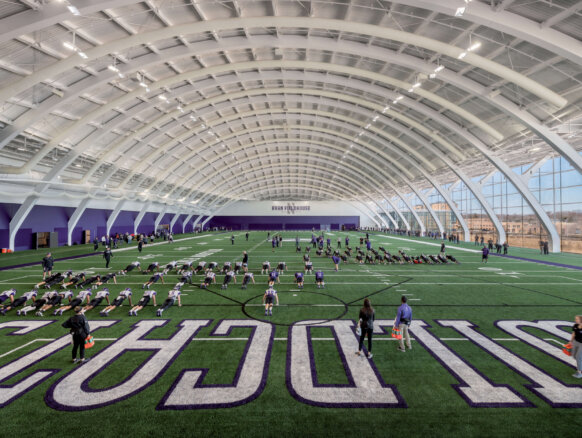
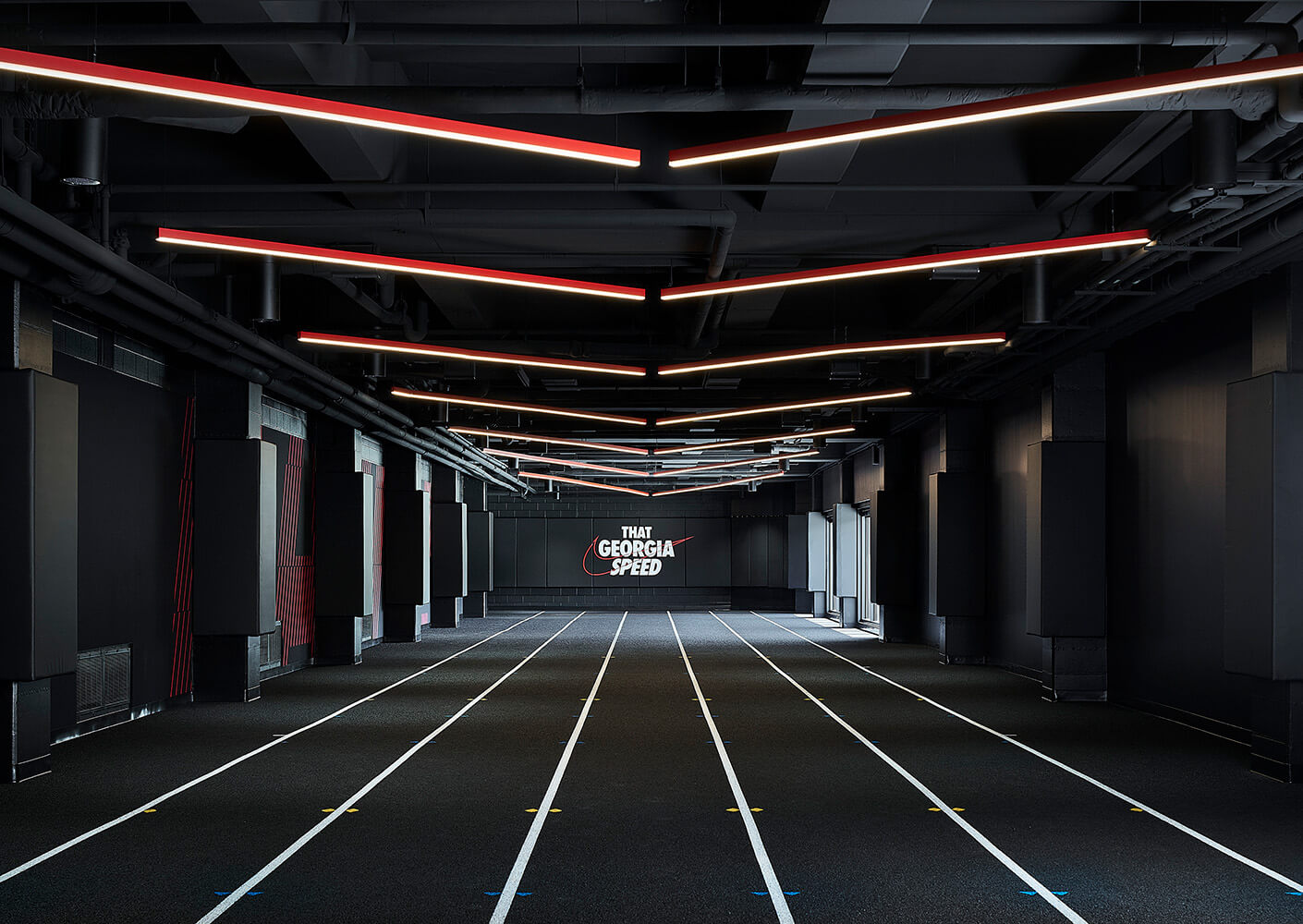
From the outset, student-athlete wellness served as our guiding principle. An on-site sports medicine and nutrition space improves athlete recovery and care, while a satellite Athletic Training Room supports performance and exercise, complete with an indoor warm-up track that allows continued training out of the sun or inclement weather.
The integrated track timing system enables precise performance evaluation, reinforcing the facility’s role in advancing the sport by putting the student-athletes first.
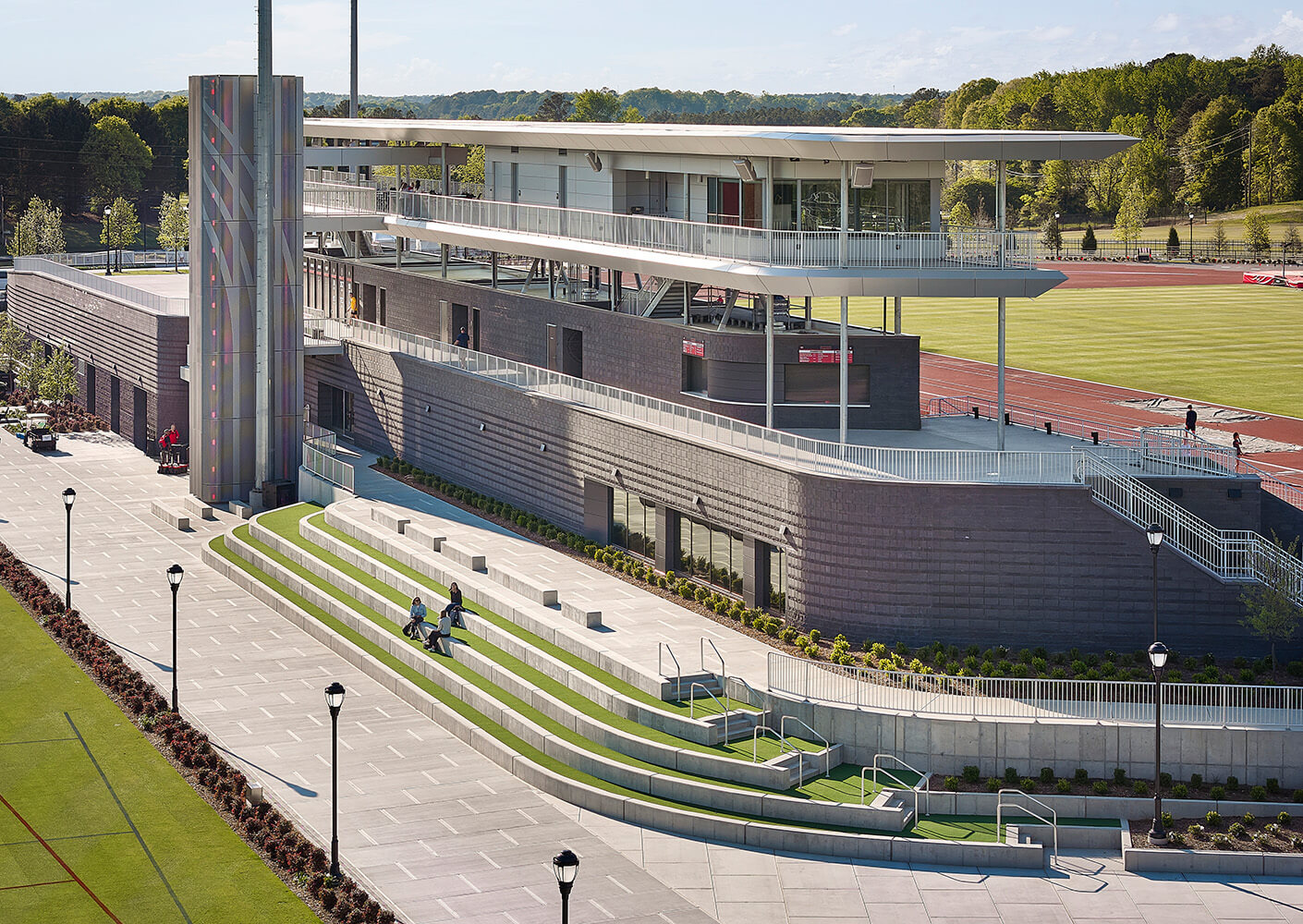
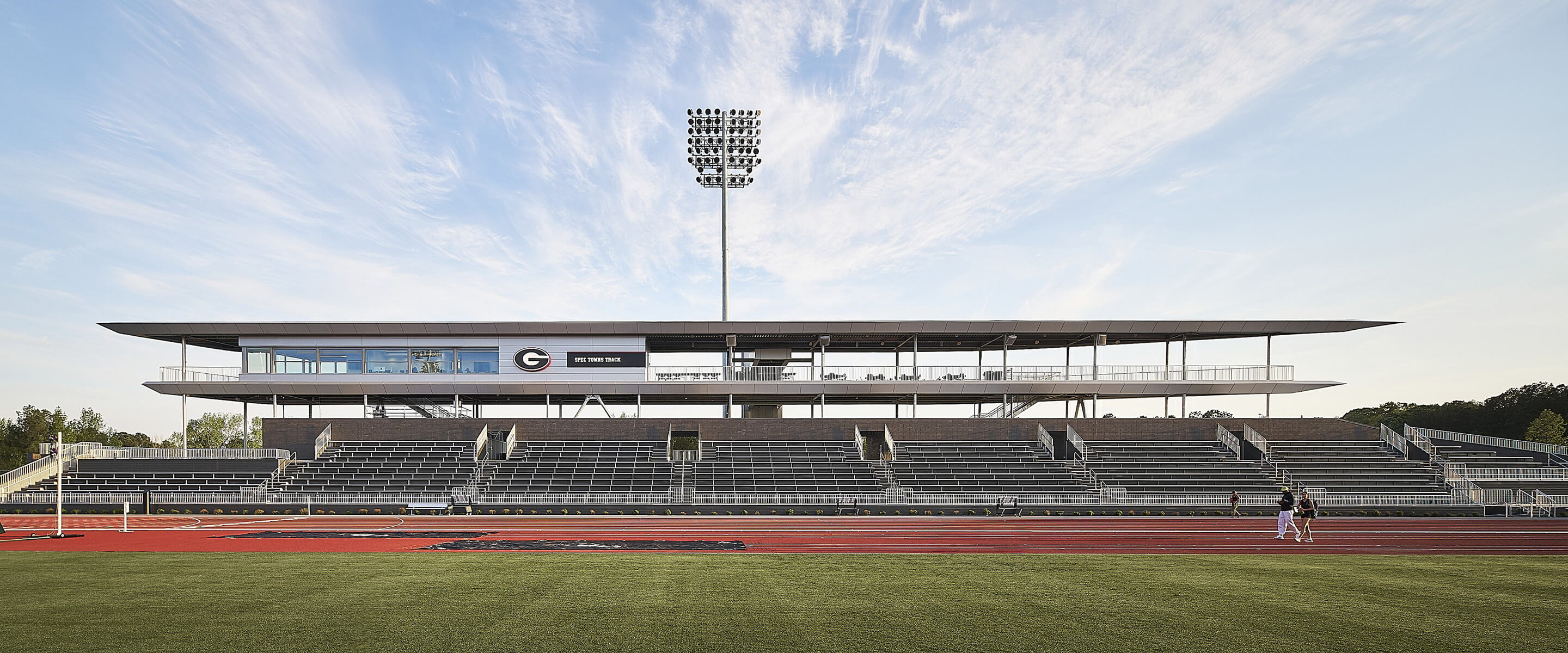
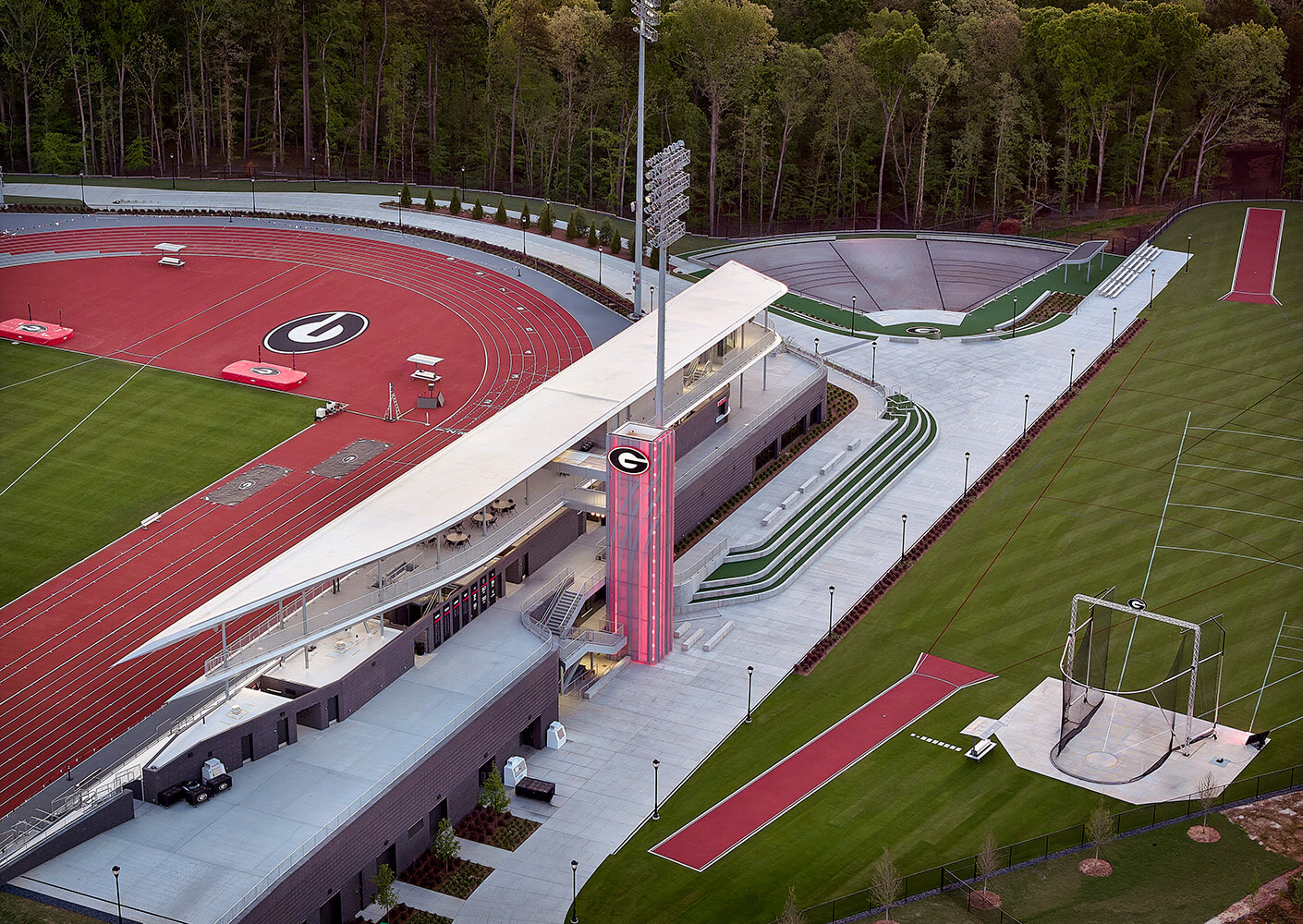
Designed to host Southeastern Conference Championship meets, the UGA complex includes an array of dedicated track-and-field event spaces. Offerings include a highly specialized shot-put arena featuring two competition circles, a dedicated throwing field, and a 400-meter, nine-lane outdoor track with infield long jump, triple jump, pole vault, high jump, and javelin sectors.
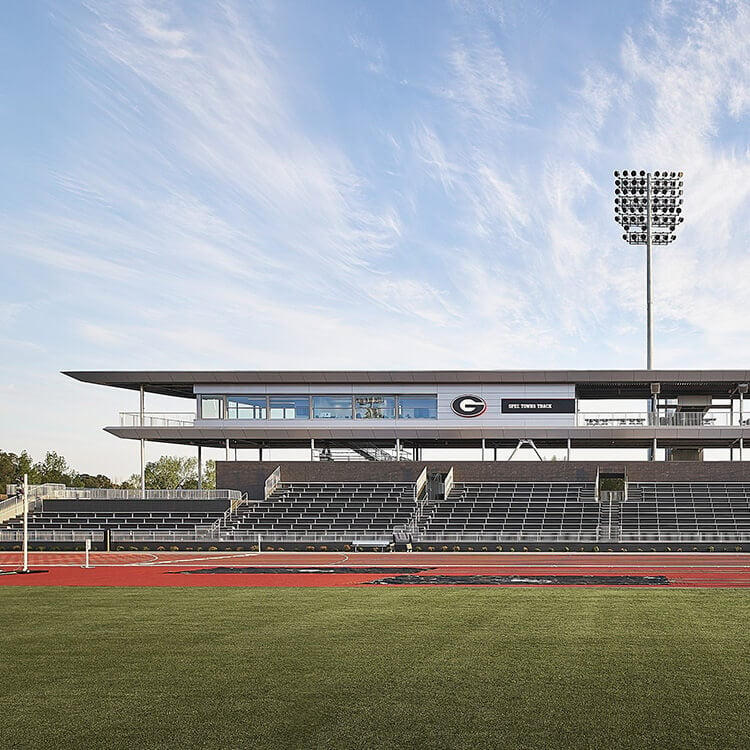
The grandstand, seating terraces, and grass lawns provide varied spectator experiences that are sensitive to universal design principles and neurodiverse needs.
By combining world-class competition standards and performance-based environmental design, the facility serves as a powerful recruiting asset for UGA while strengthening its ability to attract elite competitors, officials, and spectators.
Project Team





Related Content