Climate Impact January 14, 2026

Salt Lake City hits on an innovative solution for saving its abandoned ballpark

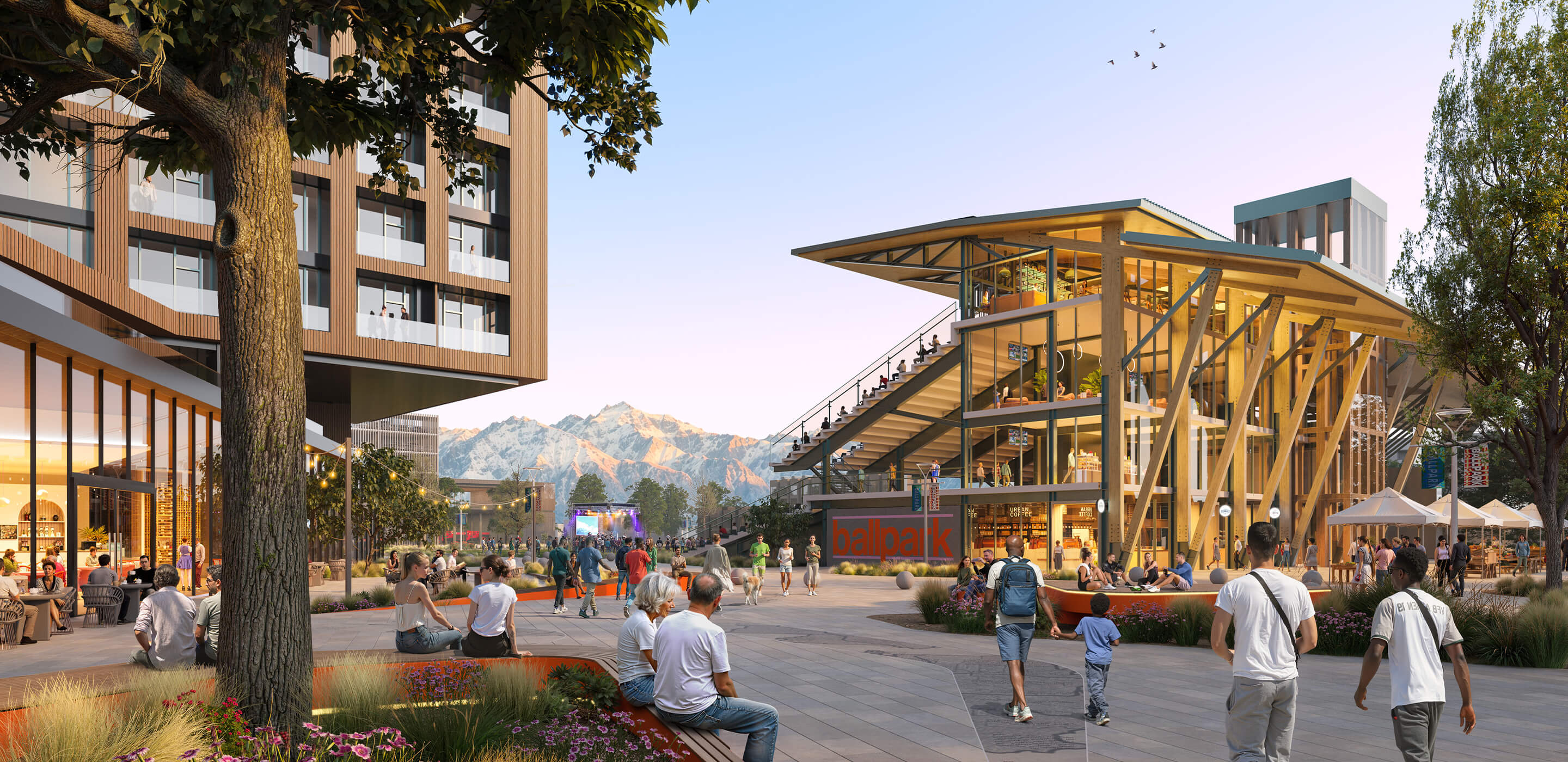
Modern urban plaza with people, wooden structures, mountain view in background.
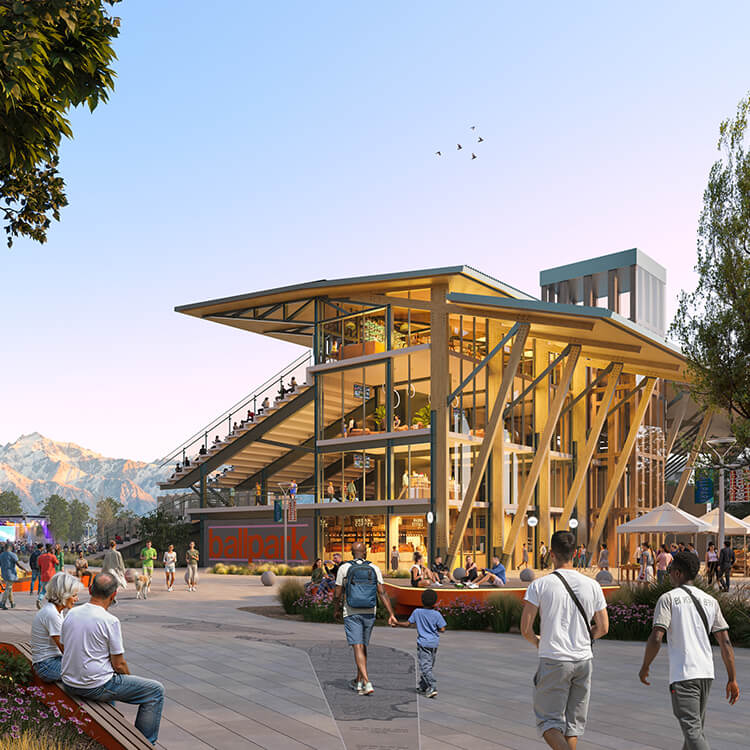
Modern architectural building with people walking and socializing in a vibrant outdoor space.
In professional sports, a team’s loyalty to its home turf can evaporate overnight. Owners chasing more revenue or better facilities can pack up their teams and go, leaving fans forlorn and cities scrambling to fill the void. When the Rams NFL franchise relocated from St. Louis to Los Angeles in 2016, their former home—the Edward Jones Dome—saw limited use in the years that followed, hosting only occasional collegiate or musical events. Similarly, after the Houston Astros left the Astrodome in 1999 for a new ballpark, the City of Houston and Harris County were unable to agree on a reuse or demolition plan. The facility has remained closed and largely unused for more than two decades.

So the mood was decidedly grim when the Salt Lake Bees, the city’s minor league baseball team, announced they would leave historic Smith’s Ballpark for a new stadium in the suburbs. “Teams had been playing there for a century, and in fact that area is known as ‘the ballpark neighborhood.’ To think of the Bees leaving was just gutting,” says Salt Lake City Mayor Erin Mendenhall. “But honestly, after the disappointment, I felt some excitement. It’s a big site, around 13 acres near the downtown core, and this was a chance to transform what was usually a huge, locked-up, quiet space and activate it 365 days a year.”
"...this was a chance to transform what was usually a huge, locked-up, quiet space and activate it 365 days a year.”
Erin Mendenhall, mayor of Salt Lake City
A Community Contest

Civic leaders acted quickly. “We knew if there wasn’t a call to action paired with the public announcement of the Bees’ impending exit, people would naturally worry about inactivation and inaction,” Mendenhall says, noting that the ballpark neighborhood had long been disadvantaged, with scant green space, vast parking lots and intrusive infrastructure, and lower income and education levels than elsewhere in Salt Lake County. “I wanted to give people something they could do to stimulate big ideas about this site.”

To begin re-imagining the ballpark, and to assure residents they would have a voice in its future, the city initiated a design competition in cooperation with the Salt Lake City Community Reinvestment Agency (CRA). Of the more than 100 entries submitted, CRA chose a shortlist of the best proposals, which were released to the public for a vote. “We wanted this to be a community-driven design, and we truly wanted ideas,” says Lauren Parisi, senior project manager at the CRA.

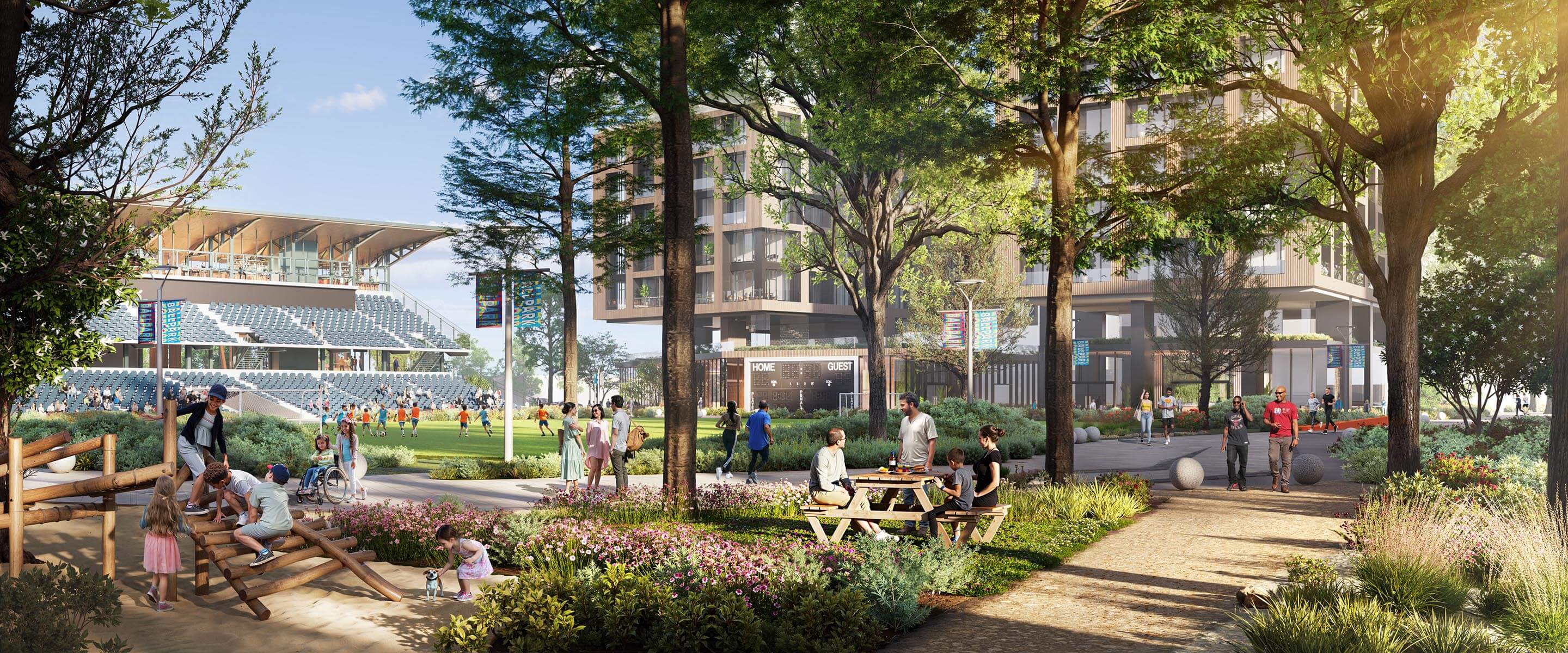
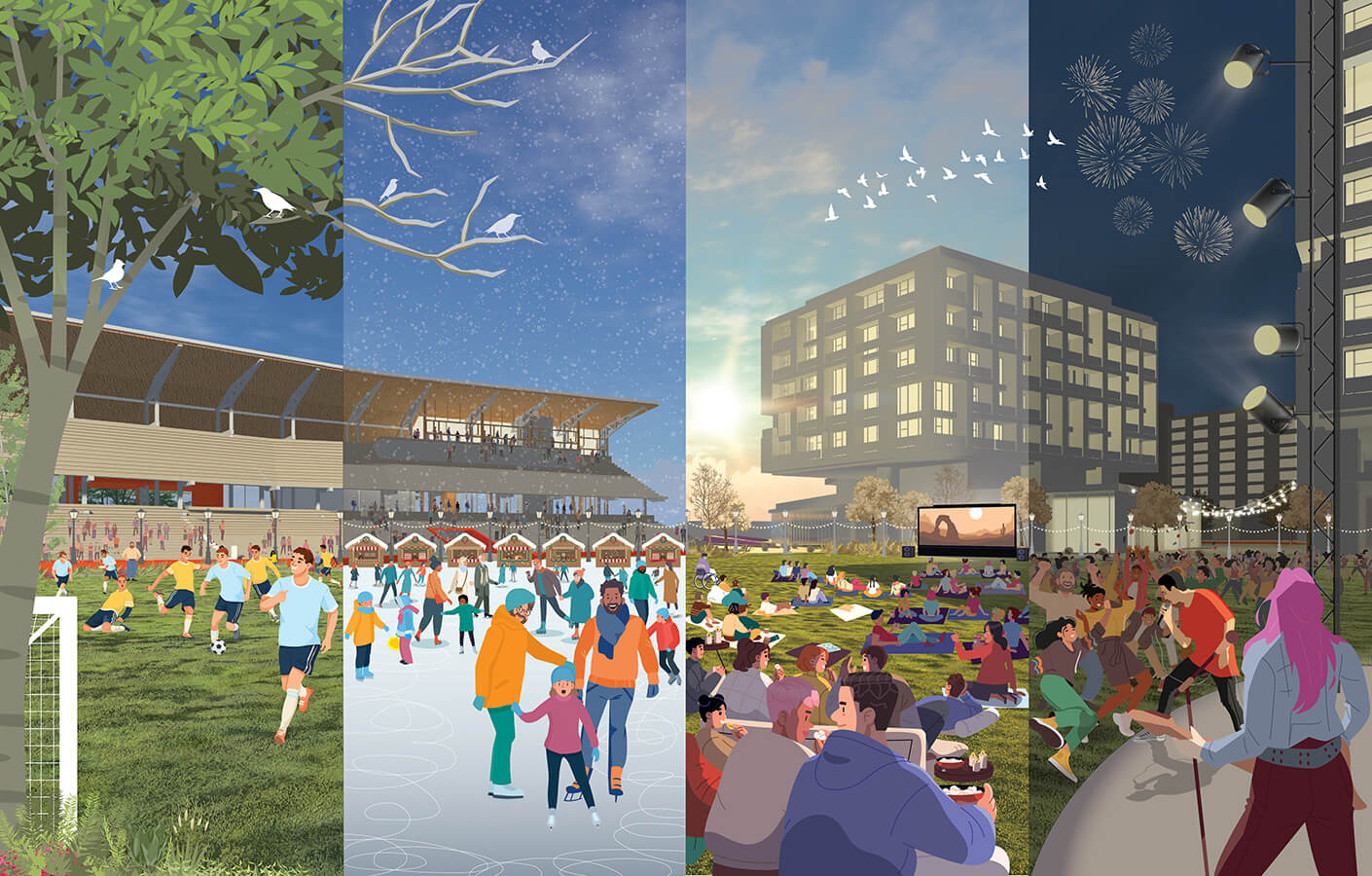
Vibrant community activities throughout the seasons: sports, skating, picnics, concerts.
A Mixed-Use Plan That Honors the Past

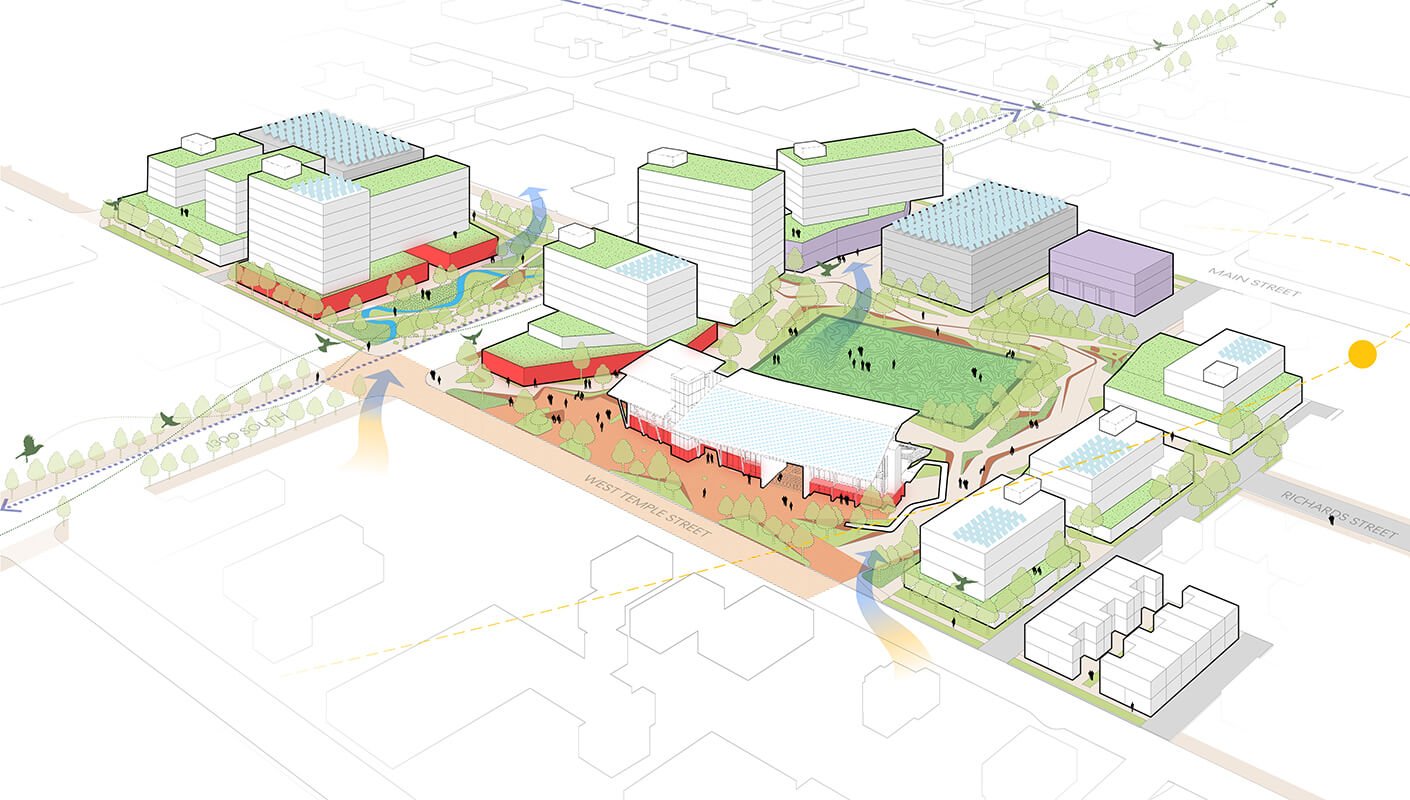
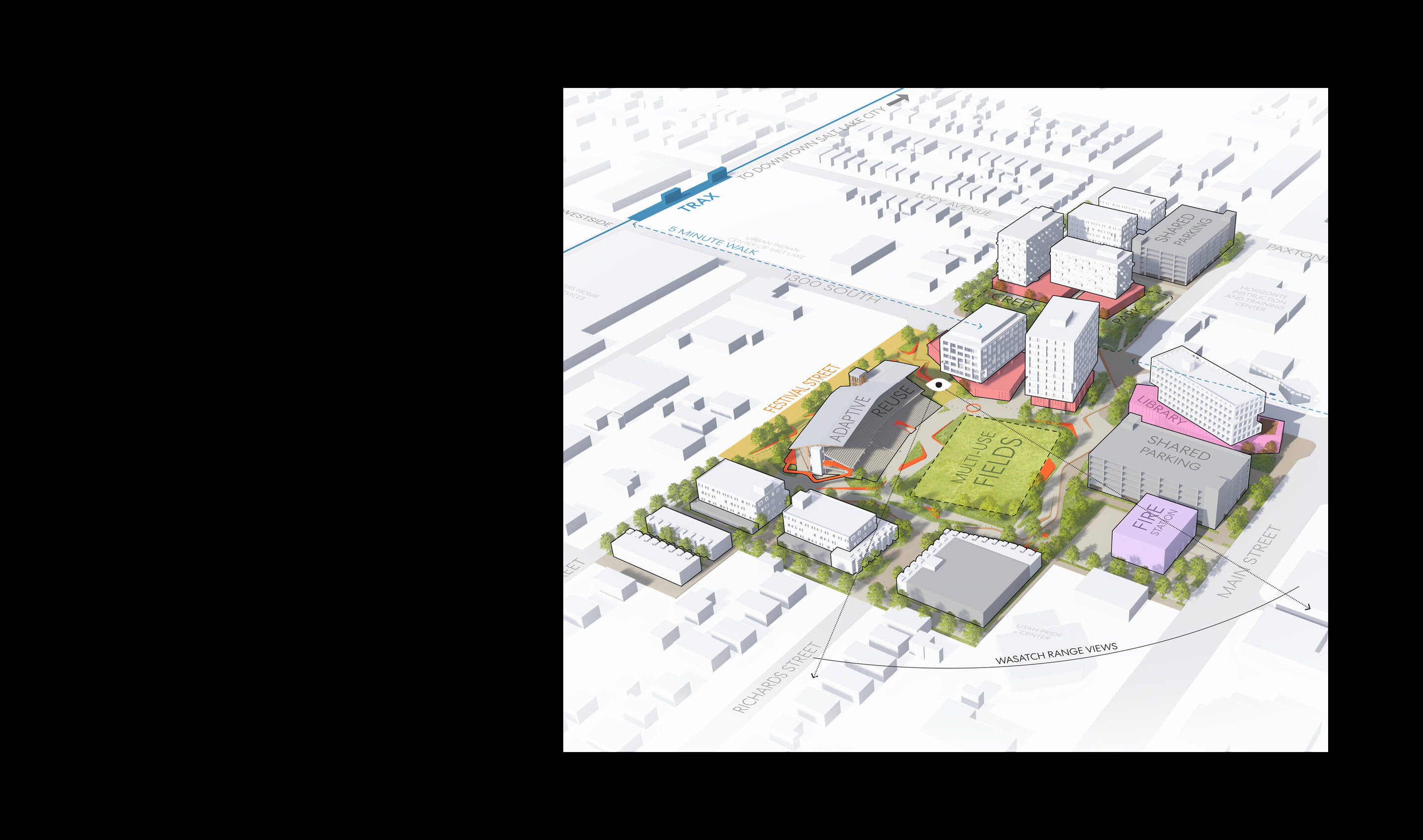
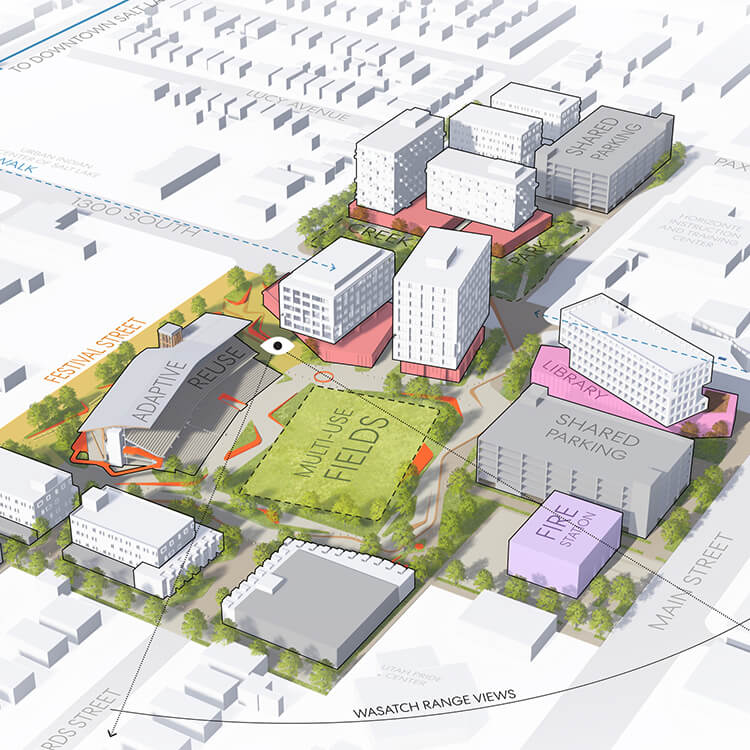
After the competition, the city brought in a design team that developed three redevelopment scenarios inspired by the proposals that did well in the public vote. One reused the stadium in its entirety as a sports arena, another adaptively reused a portion of it as an event venue, and a third removed it entirely. The second option ultimately prevailed, as it combined the best features of the others. Engineering analysis revealed that the stadium comprised three surprisingly sound, structurally independent sections. This led the designers to propose preserving part of it as an iconic event venue and retail setting, while transforming the rest of the property, including adjacent parking lots, into publicly accessible green spaces, multifamily housing, a library, and a fire station.

The Neighbors Weigh In

Noting that people who lived near the ballpark had more health and socioeconomic challenges than in surrounding areas, the design team saw an opportunity to improve living conditions. They used the U.S. Centers for Disease Control and Prevention’s (CDC’s) “Social Determinants of Health” as a framework and asked the community to prioritize design options that would bring the principles to life. “It was a great way to look at the disparities in the neighborhood and think about how to intervene with this new design, while encouraging community members to determine what was most important to them,” Parisi says.

Ballpark neighborhood residents prioritized these design interventions, which are based on the CDC’s five Social Determinants of Health:
Architectural site plan with buildings, green space, and labeled features including parking and library. 3D urban design concept with buildings, green spaces, and labels for future development.

01.
Social and community context


Gathering spaces,
night market,
performance stage


01.
Social and community context

Gathering spaces,
night market,
performance stage

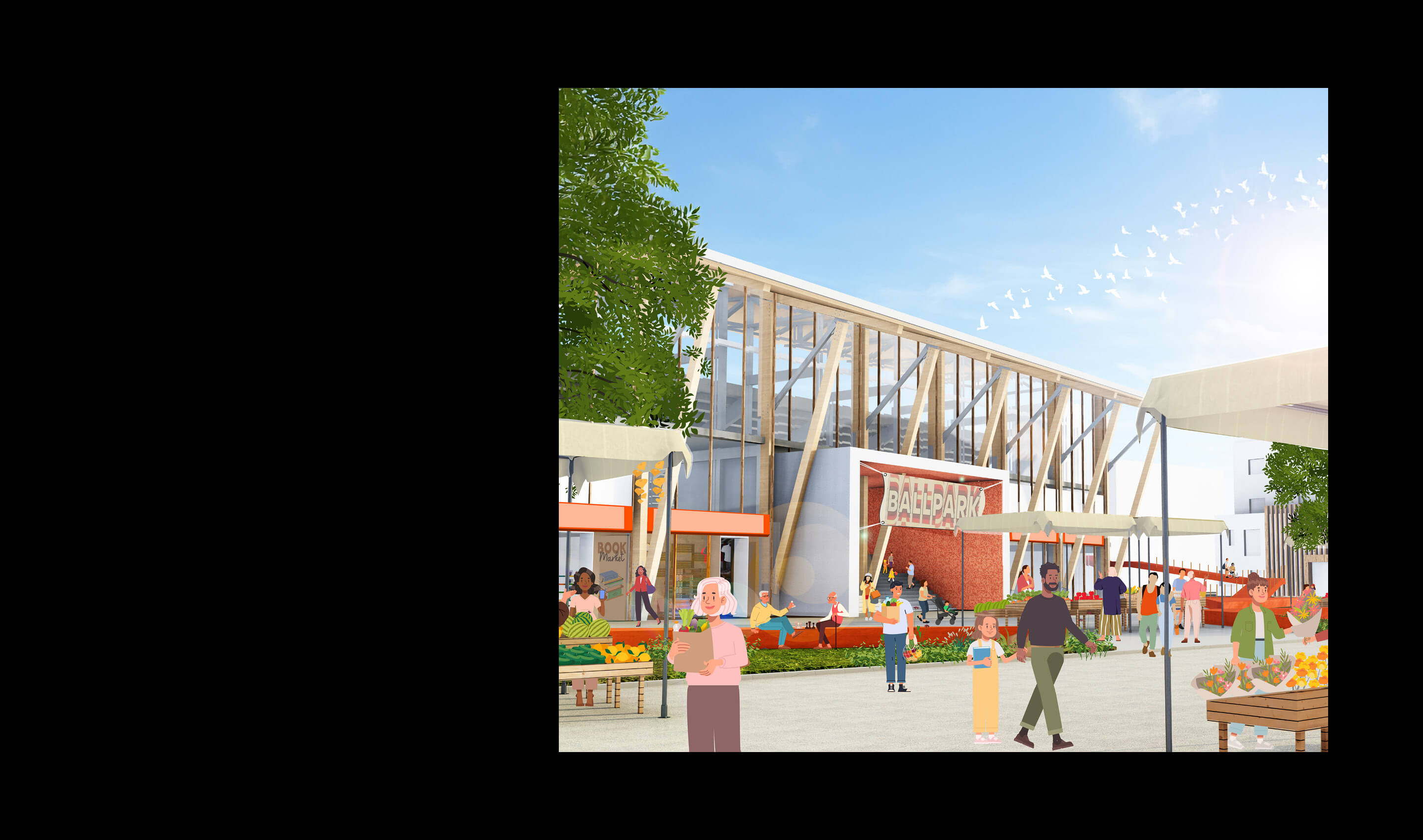
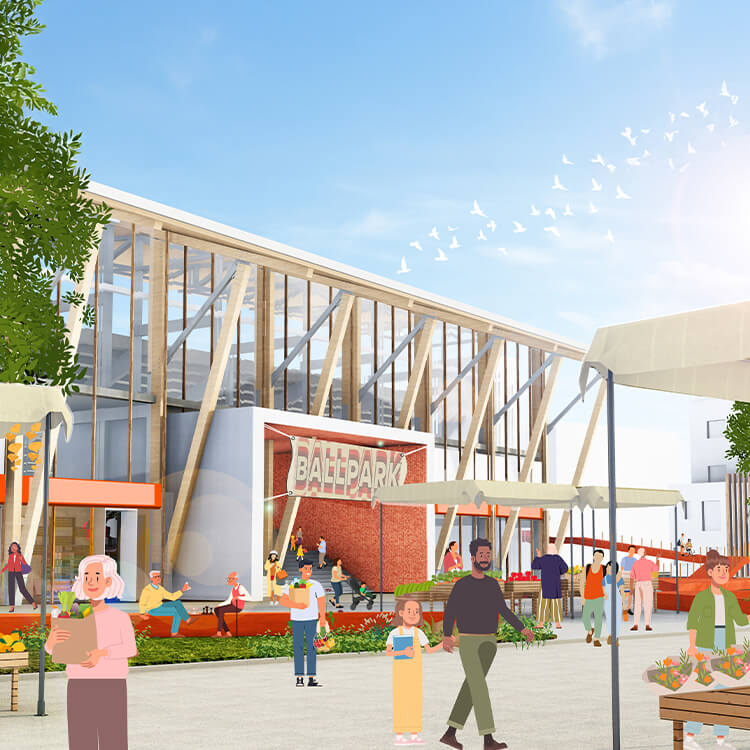
Outdoor market scene with people shopping, modern building, and trees against a clear blue sky. Modern ballpark exterior with people strolling under a clear blue sky.

02.
Economic stability


Public market,
local businesses,
food hub, subsidized
amenities


02.
Economic stability

Public market,
local businesses,
food hub, subsidized
amenities

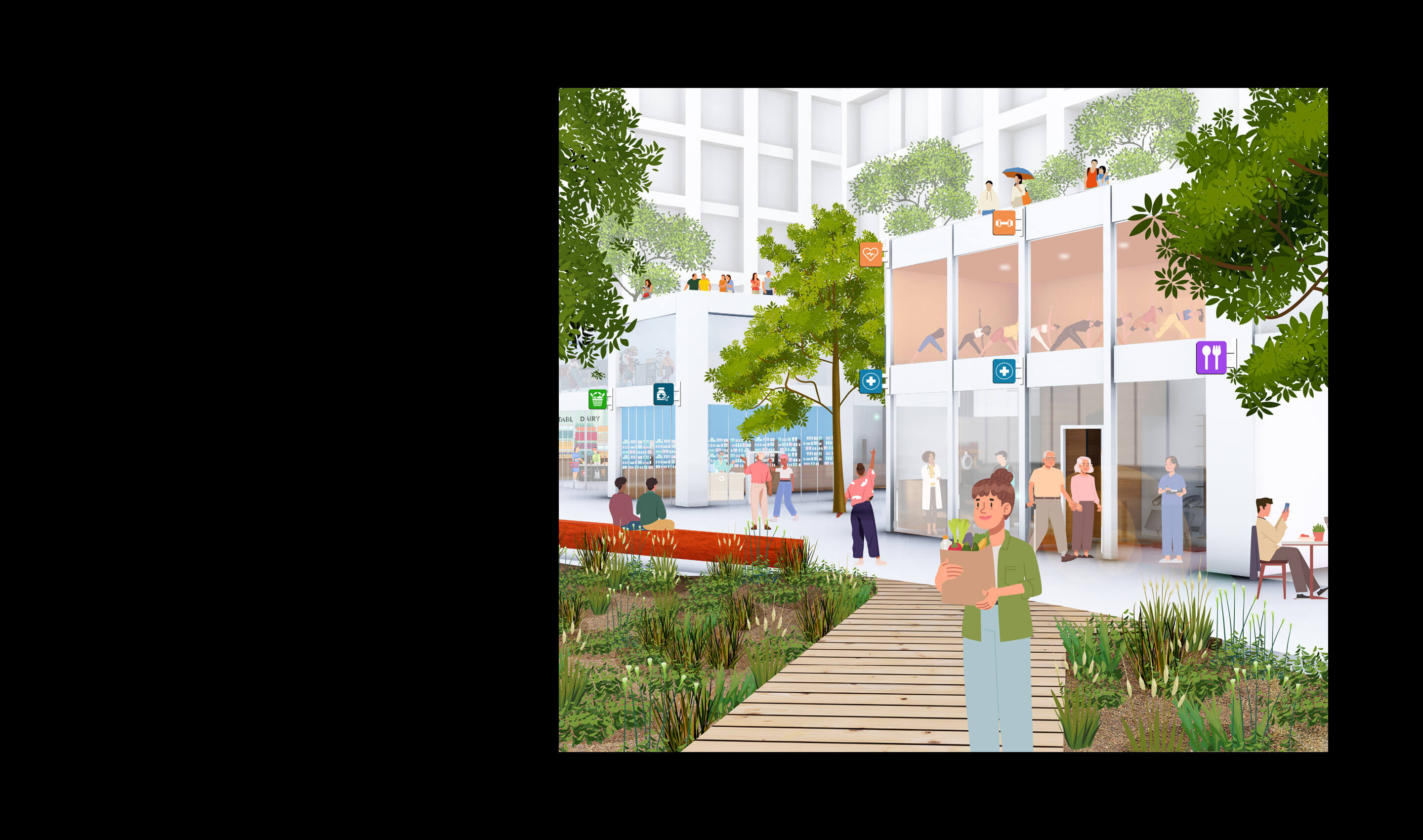
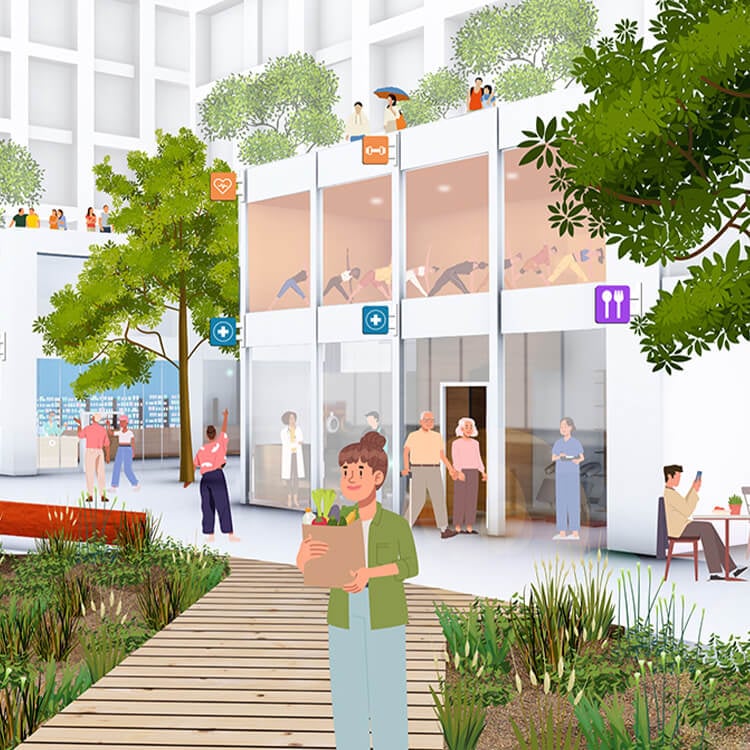
Modern urban courtyard with people, greenery, shops, and seating area for relaxation. Modern community space with people, greenery, and multi-use buildings.

03.
Healthcare access
and quality


Fitness center,
produce market,
mental health
services


03.
Healthcare access
and quality

Fitness center,
produce market,
mental health
services

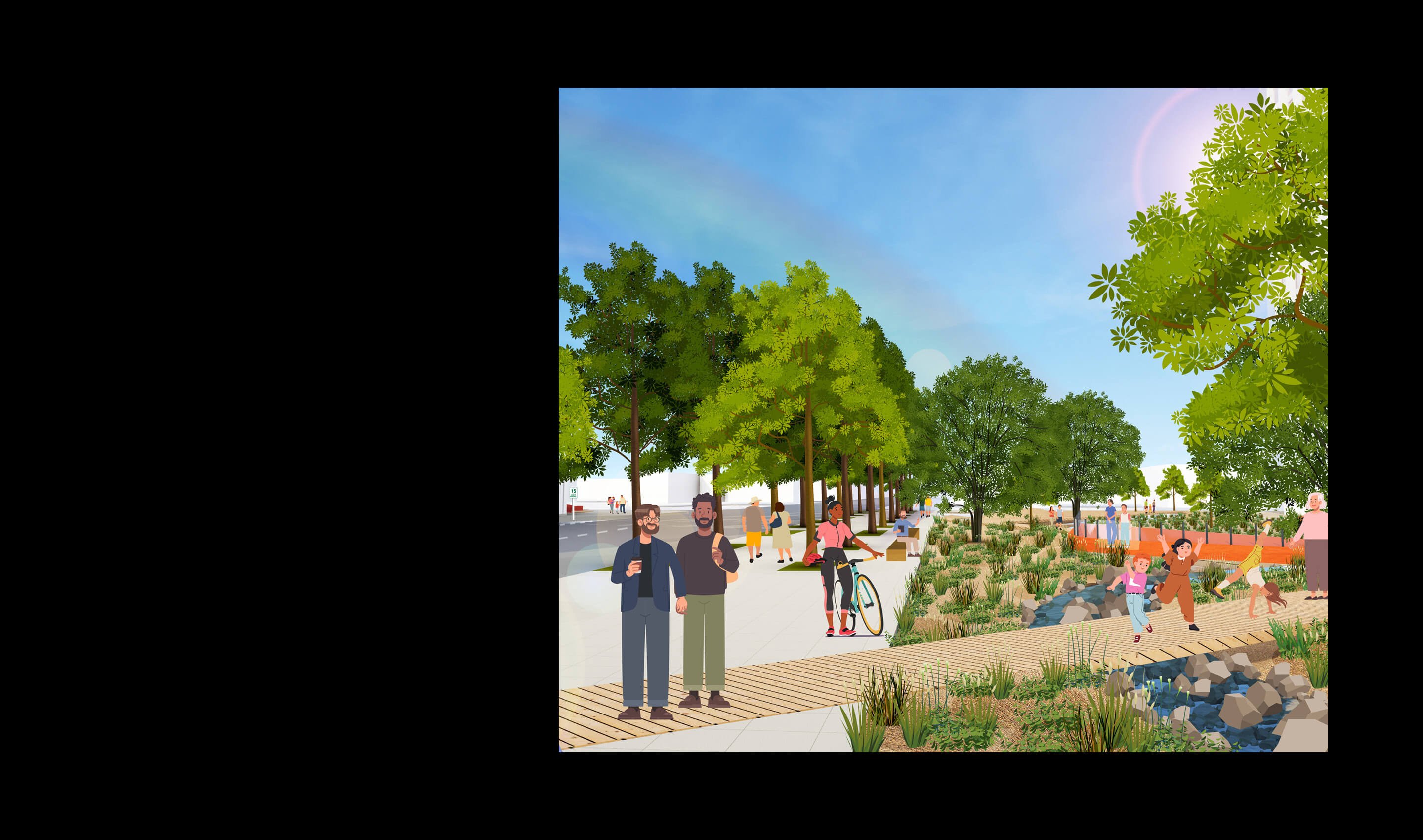
Illustration of a vibrant park with diverse people enjoying nature and paths. People enjoying a tree-lined urban park with a cyclist and pedestrians.

04.
Neighborhood and
built environment


Wide sidewalks
and bike lanes,
neighborhood square,
mixed-use development


04.
Neighborhood and
built environment

Wide sidewalks
and bike lanes,
neighborhood square,
mixed-use development

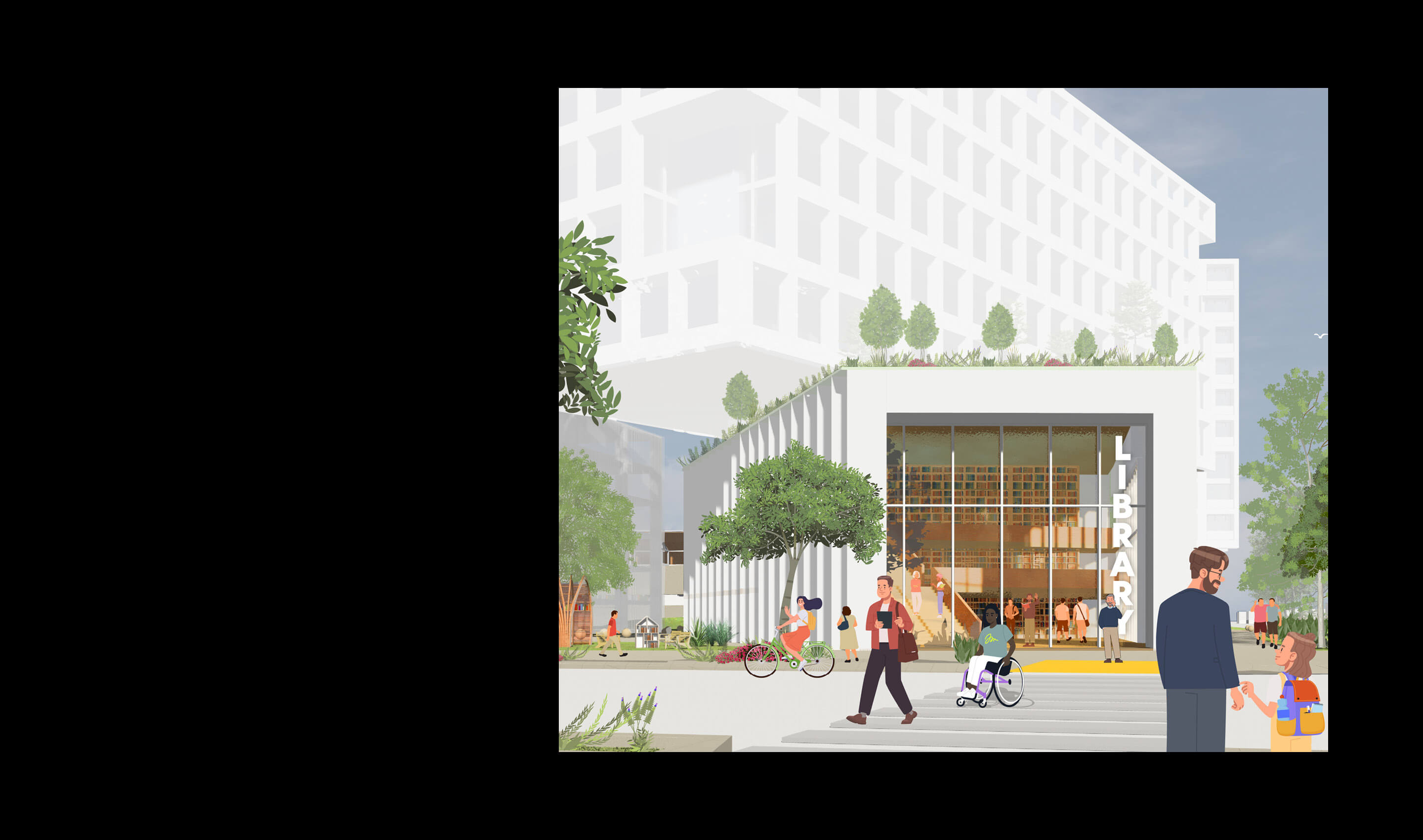
Modern library entrance with diverse visitors and green landscaping. Modern library entrance with diverse people, greenery, and cityscape.

05.
Education access
and quality


Public library,
outdoor exploratorium,
arts and cultural
workshops


05.
Education access
and quality

Public library,
outdoor exploratorium,
arts and cultural
workshops

The plan also improves the site’s ecology with new water features, landscaped green spaces, and improved connectivity to other parks in the city. Incorporating an idea from the competition proposal, it restores three creeks that had been diverted into underground culverts decades ago, bringing them back to the surface and transforming part of an existing parking lot into a streamside oasis. Elsewhere, stormwater swales help filter pollutants and create small pockets of cooler air. Preserving existing street trees and adding native trees and plants help rehabilitate habitat and expand the shade canopy.

Architectural site plan with urban buildings and green spaces.
Future Steps

Public support has been positive, Parisi says, and officials are determining a timeline for phased implementation. In the meantime, the CRA has engaged an event production company to host special events like concerts, festivals, and markets at the stadium. “It’ll take time to break ground,” Parisi says. “Pop-up events allow us to test concepts and use the site in different ways to keep it activated and safe during the interim period.”

Residents are enthusiastic about the unique opportunity to honor the past while creating new spaces for everyone to enjoy. “My fondest hope,” Mendenhall says, “is that this becomes the most active, thriving, dynamic experience in the city.”

“My fondest hope is that this becomes the most active, thriving, dynamic experience in the city.”
Erin Mendenhall, mayor of Salt Lake City