Perspectives April 22, 2026

Our Power, Our Planet

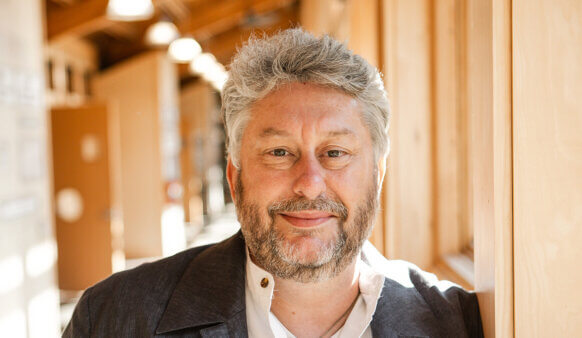
An Earth Day message from Jason F. McLennan, our Chief Sustainability Officer

Fifty-six years ago, my good friend Denis Hayes founded Earth Day, ushering in a global movement to recognize the importance of the environment as the basis for everything we enjoy. Nearly 20 years later, guided by that same passion, I launched the Living Building Challenge, the world’s most rigorous green building program, to set a clear series of targets for our buildings and community designs and motivate our industry to rise to the challenge.

Only a few years later, Denis and I collaborated to create one of the most energy-efficient office buildings: the Bullitt Center. This fully solar-powered, six-story office building stands in one of the least sunny cities in the U.S. (the “lower 48”), proving that we no longer need fossil fuels for most of the buildings being built today if we put our know-how and technology to good use. Since then, renewable energy, batteries, and a host of other technologies have become significantly more accessible and easier to deploy.

We are on the verge of a renewable energy revolution!
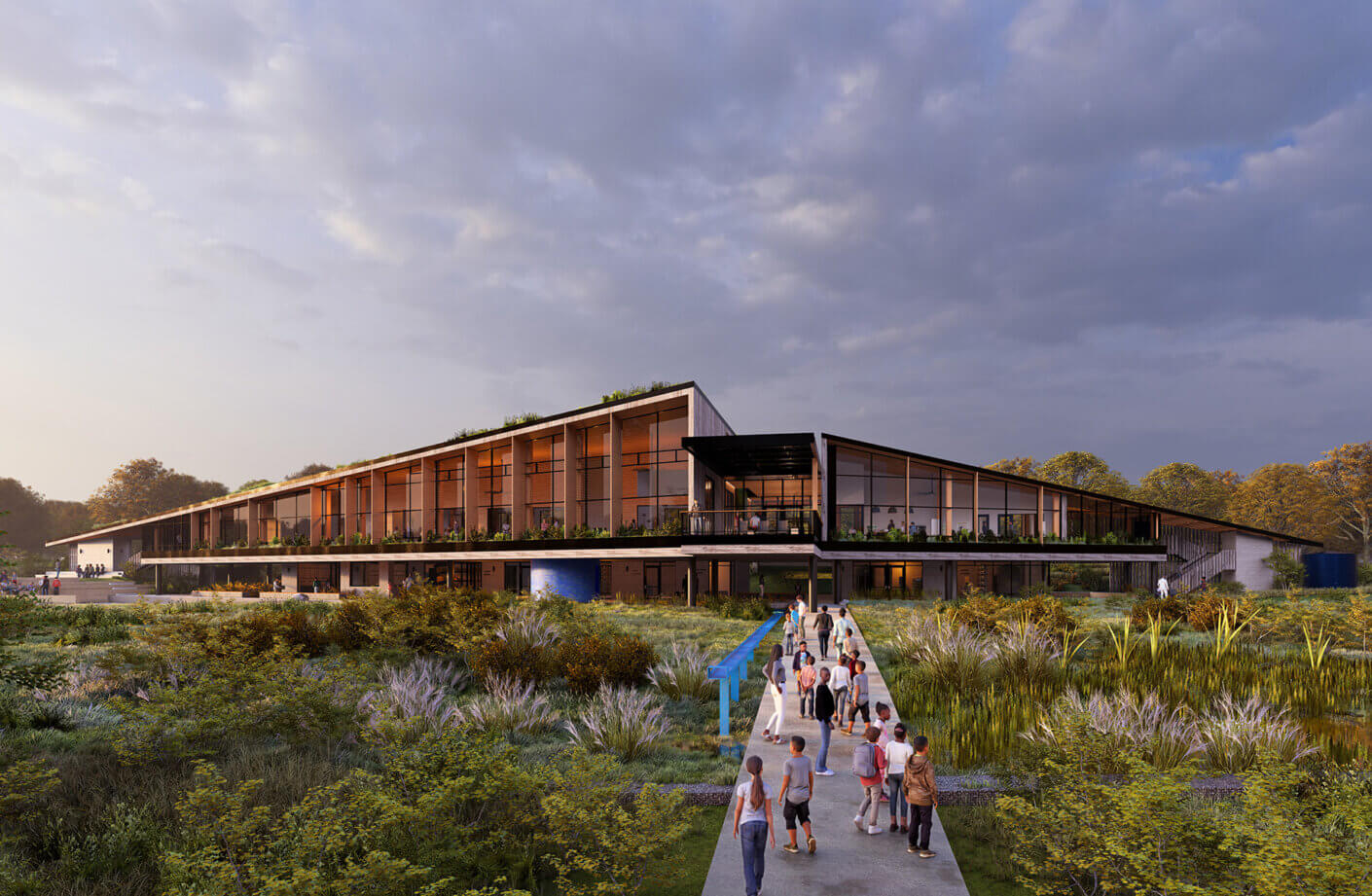
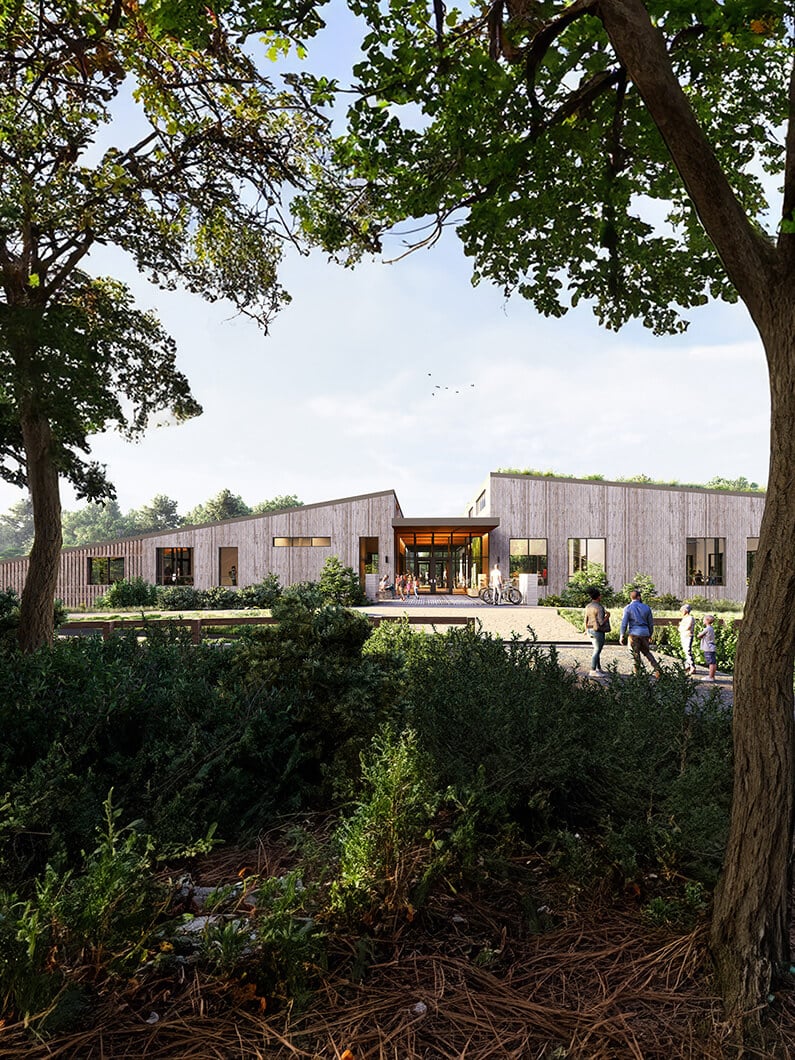
A new building with expansive windows and outdoor space, surrounded by lush vegetation and visitors on a pathway approaching the entrance.
Henrico County’s Center for Environmental Studies and Sustainability sets a new bar for public education, integrating sustainable design with community and place to become the world’s first K–12 Living Building Challenge-certified school.
Exterior view of a building surrounded by greenery, showcasing entrance and pathways, with people walking and bicycles parked nearby.
We’ve borrowed from the past to power the present at the expense of the future.

The world has always been powered by the sun. Even wind is just the sun in action, driven by the uneven heating of the Earth’s surface. The sun brings us life, warmth, and vitality (we even rely on it to metabolize vitamins and regulate sleep, digestion, immune response, and mood). And when we eat—be it plants, fish, or animals—it’s just another form of our bodies harnessing the sun’s energy, just a little more indirectly.

Yet since the Industrial Revolution, we have turned our back on the sun in most ways and turned our attention almost exclusively to the use of fossil fuels, digging into the Earth to harness the trapped ancient solar energy of millions of years of decomposed life. In so doing, we have been altering the climate that sustains us while polluting our air, soil, and water. In this way, we’ve borrowed from the past to power the present at the expense of the future.

In other words, power and energy have always had a time dimension. Sustainability and regeneration are about living in the present moment and using power that is generated in real time every day—wind, waves, and photons from the sun, using what we have responsibly and efficiently. After all, enough energy from the sun reaches the Earth in a single hour to power a year’s worth of our energy needs.

How auspicious!

“Thus, human beings are now carrying out a large-scale geophysical experiment of a kind that could not have happened in the past nor be reproduced in the future. Within a few centuries we are returning to the atmosphere and oceans the concentrated organic carbon stored in sedimentary rocks over hundreds of millions of years.”

― Bill McKibben, The Global Warming Reader: A Century of Writing About Climate Change

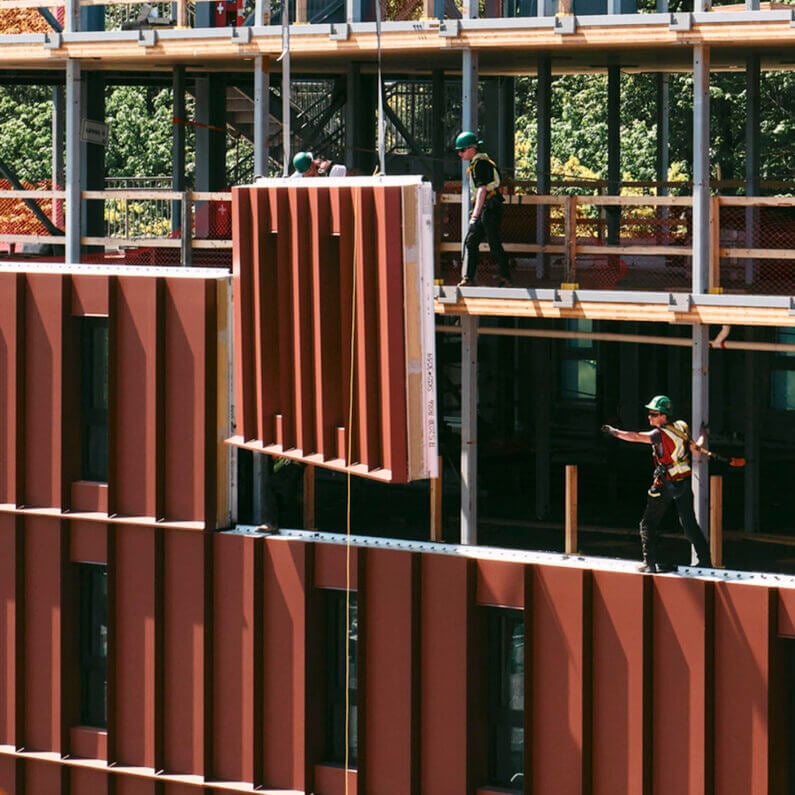
Construction workers installing a large panel on a building site.
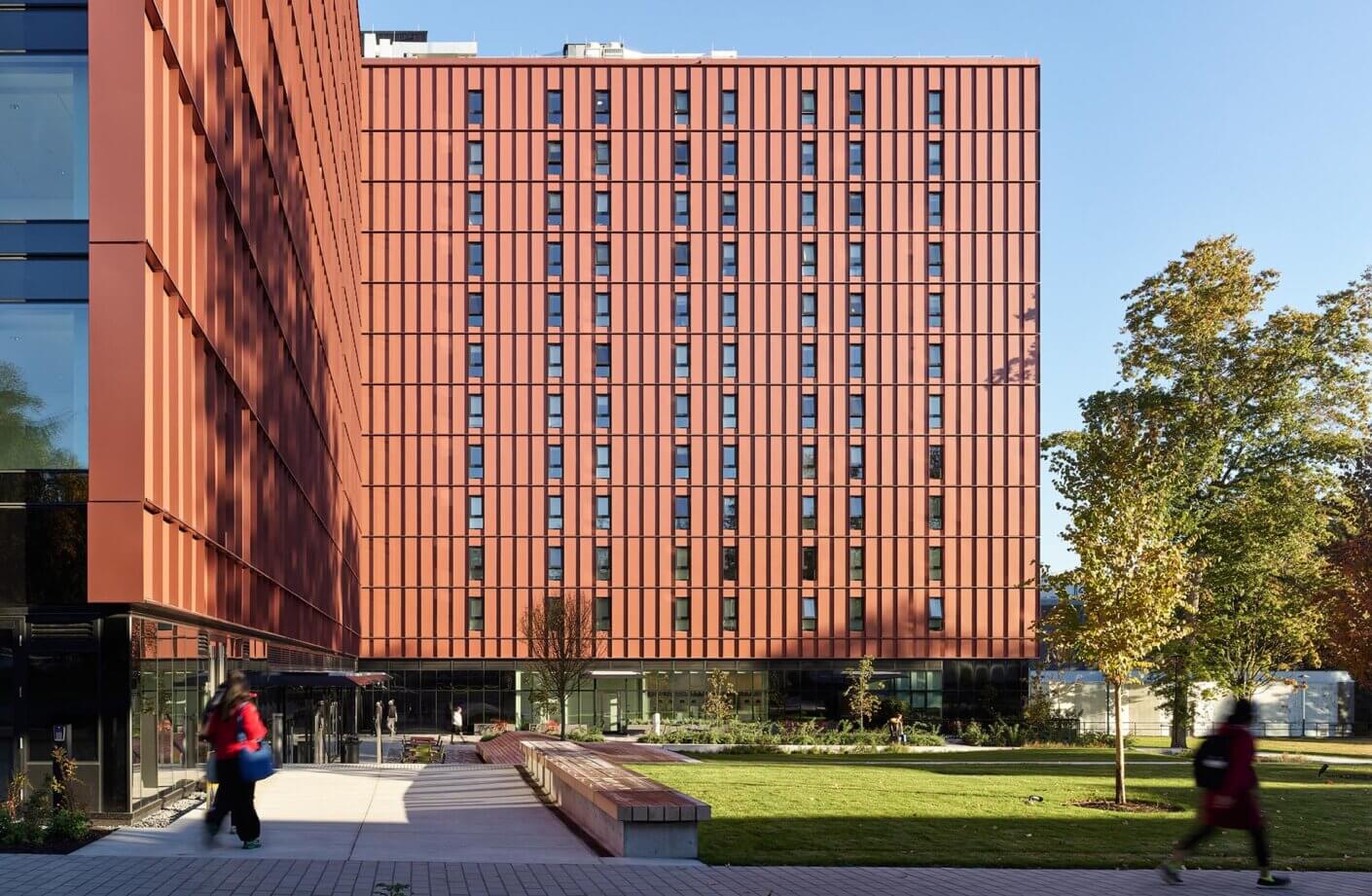
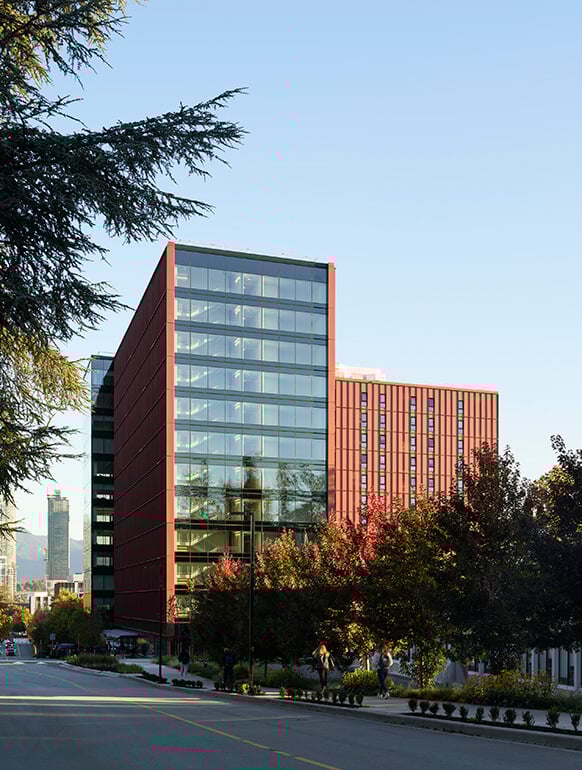
The exterior of BCIT's new tall timber student housing consists of identical prefabricated cassettes. The repetition of the envelope module expresses the planning and structural rigor of the building.
Modern red building with garden and people walking.

This is why our practice at Perkins&Will focuses so much on being efficient and respectful of how much energy we use. We’re always mindful of both time and impact. We set our own energy standards well above code minimums and look for ways to tap into “current” energy sources like solar and wind wherever we can. We push clients to eliminate their carbon footprints, and we help them develop decarbonization plans and strategies, so that wherever they’re starting, they can transition to be more responsible.

We’ve done some remarkable things with our clients on our recent journeys to harness the power of the sun—from working with partners on the Climate Pledge Arena in Seattle, that showed that it’s possible to bring 18,000 people together in shared moments of sports and music, without fossil fuels or single use plastics, to working to create the first renewably powered copper mine in Argentina, that will supply the needed resources to build the very technologies that will finally wean us off of ancient solar energy. Copper from this mine will be used to build solar panels, heat pumps, batteries, and electric cars amongst other things, but this time, without an appreciable carbon footprint.

And buildings must teach!

When it comes to power, like so many things in life, it’s important to live in the present to protect our future.
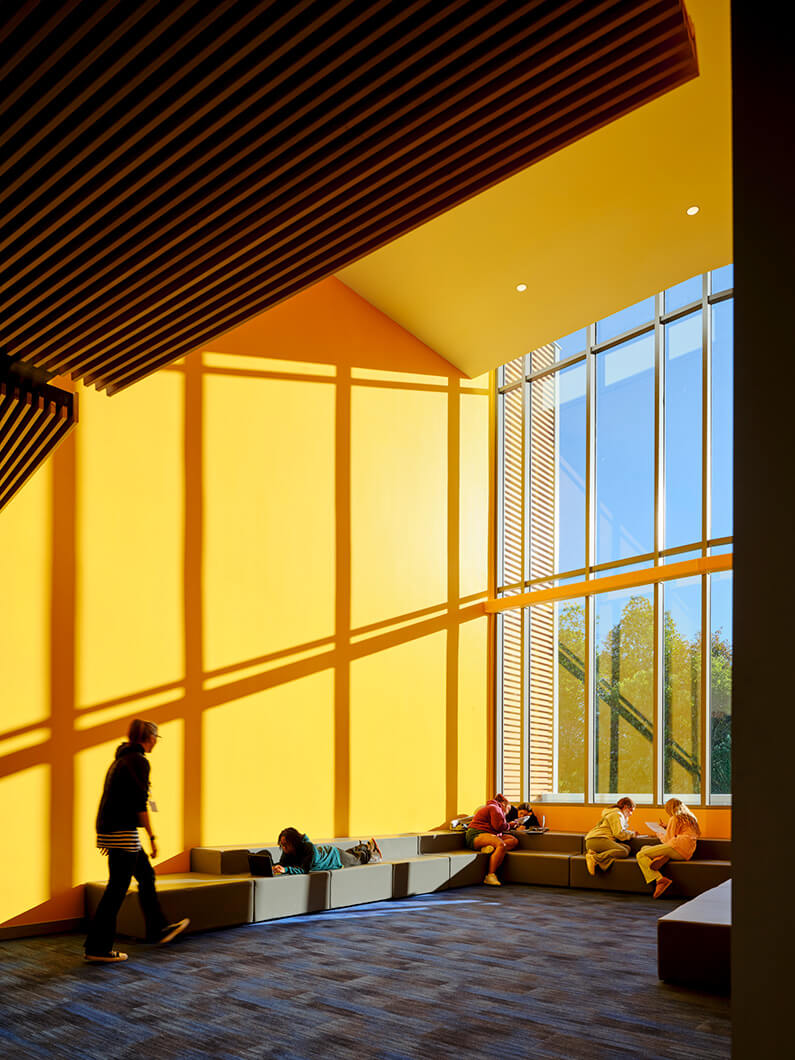
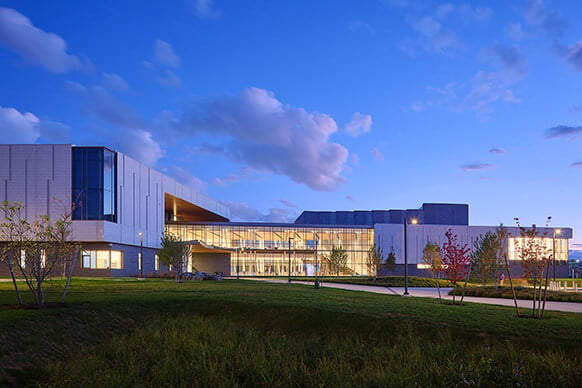
At Stoneham High School, circulation zones fill with daylight, offering a breath of open sky between focused learning spaces.

We are building net-zero schools as palpable examples of hope for the next generation, including our work in Henrico County, Virginia, on the Center for Environmental Science and Sustainability, and at the University of Idaho McCall Field Station Campus. Both future Living Building Challenge projects, where the buildings themselves become part of the curriculum.

In Burnaby, the British Columbia Institute of Technology (BCIT)’s Tall Timber Student Housing is designed as part of the learning experience. Built from mass timber, it is the first building on campus to achieve the Canadian Green Building Council’s Zero Carbon Building – Design Standard certification. It demonstrates how a large academic project can reduce embodied carbon while remaining an open, public-facing gateway to campus.

And in Massachusetts, Stoneham High School transforms its campus into a living arboretum—where the landscape becomes the teacher, connecting students to the surrounding nature and bringing lessons in ecology, stewardship, and innovation to life.

When it comes to power, like so many things in life, it’s important to live in the present to protect our future.

On this Earth Day, we encourage you to join us in reclaiming the power of the sun.