Maven Securities
Maven Securities’ new workspace reflects the trading firm’s self-described values of being “courageous yet honest and humble,” and embodies their willingness to embrace short-term disruption in pursuit of longer-term goals. Our London studio challenged existing ways of working to create a space that empowers “Mavenites” to do their best work.
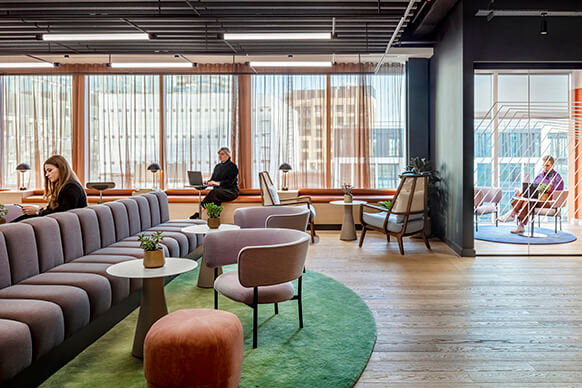
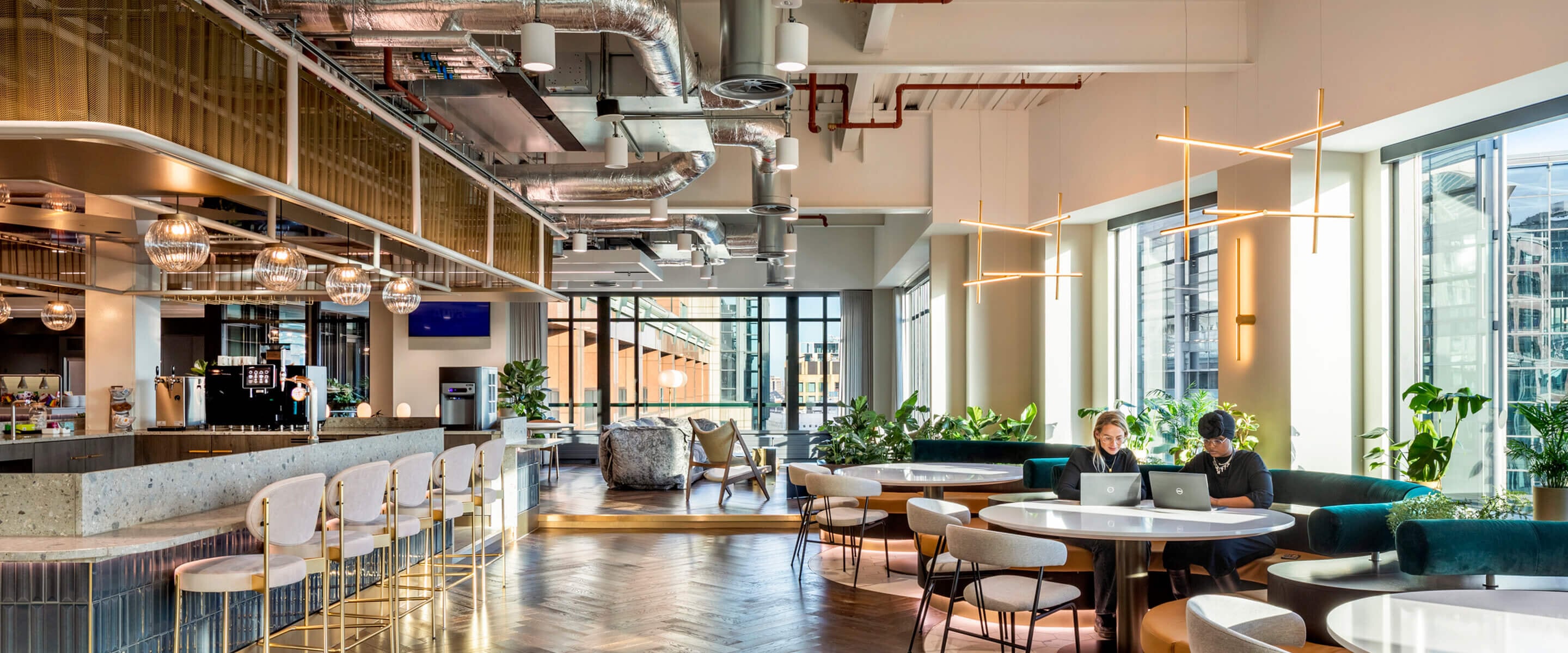
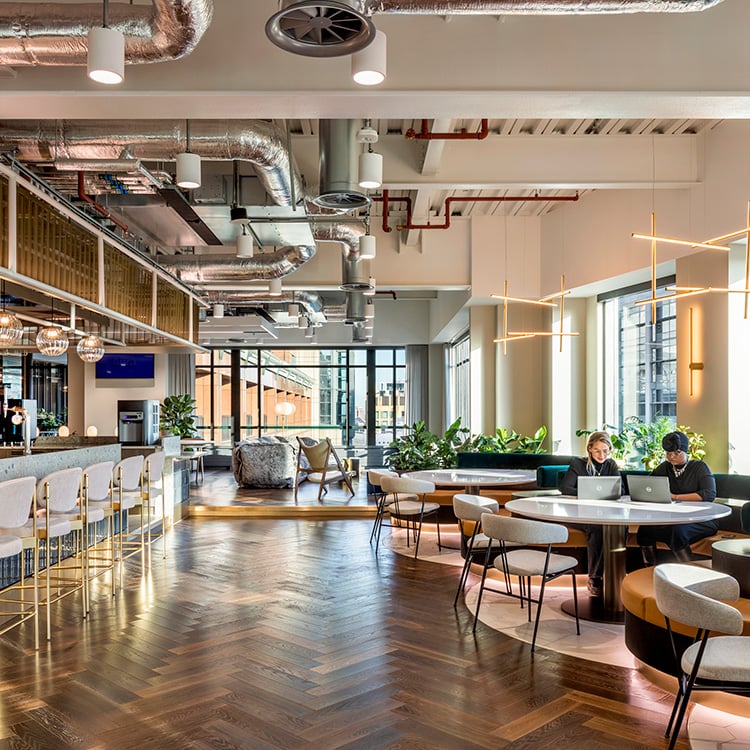
Inspired by the office’s location beside Spitalfields Market and the evolving meaning of “city trading” over time, we created the “Maven Marketplace.” This design concept centers on social space, blurring the line between work and play. Hospitality-style interiors are layered over a grid of fixed walkways, creating zones for amenities and activities that can flex as the business changes. Marrying the planning logic of traditional markets with the energy of the people who bring them to life, Maven’s new office supports employees across the full arc of their working day.
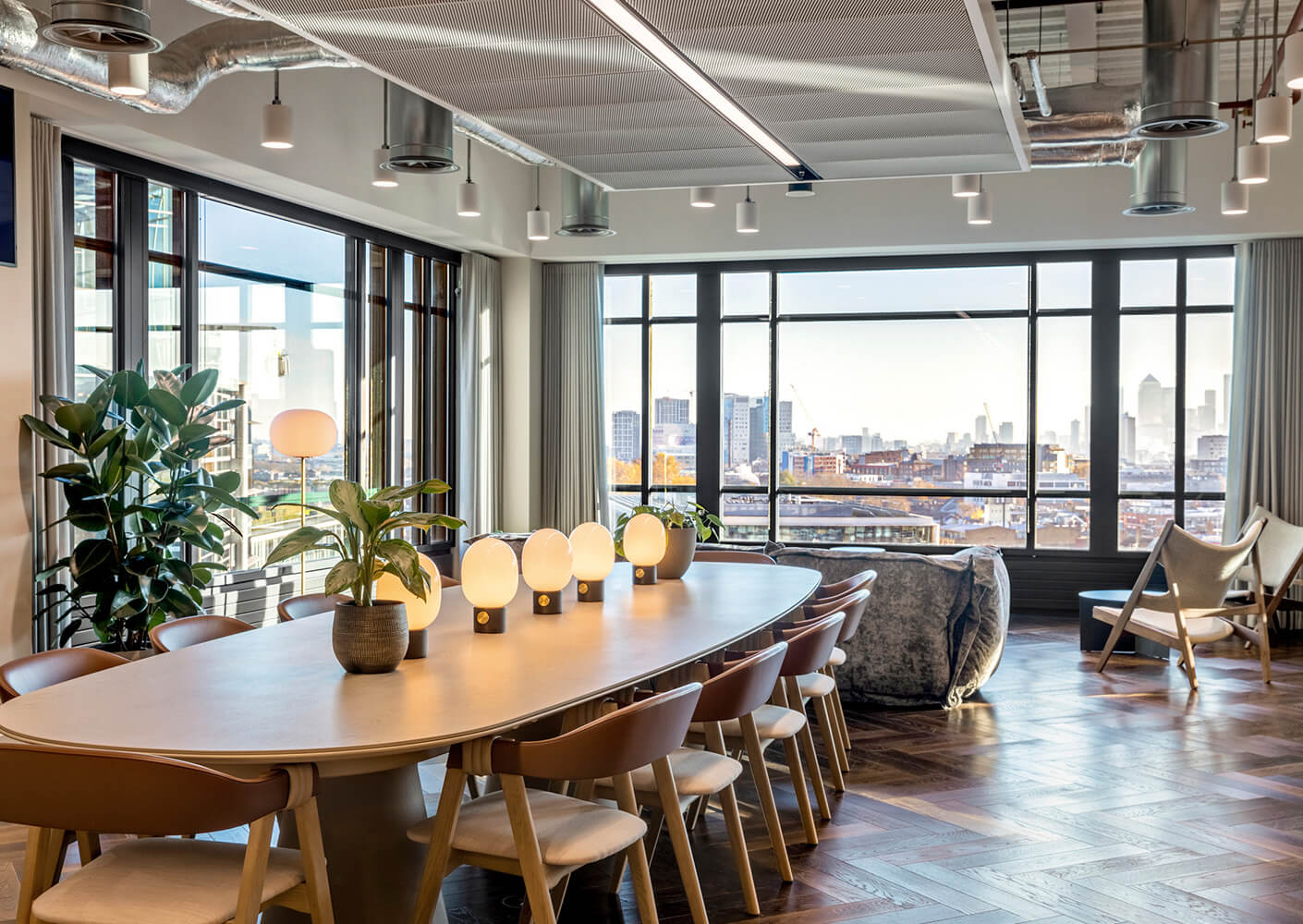
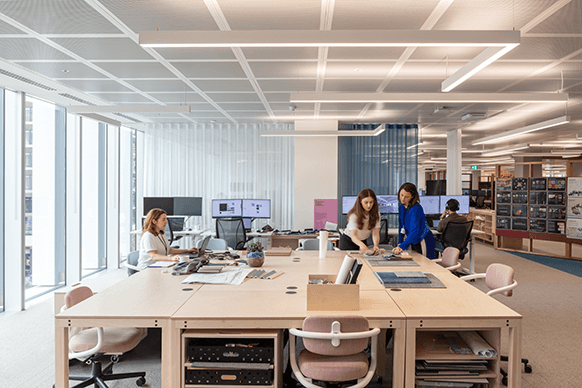
The Maven Marketplace challenges what a workplace should be. It was a deliberate client decision to make this space feel different from others in the industry—softer, warmer, and distinct. Trading areas are bright, open, and flooded with natural light. Planting is abundant throughout. With work and play genuinely blurred, Mavenites have the autonomy to work in a flexible, non-conforming way. The culture of the business has been transformed: social spaces are heavily used all week, day and night.
The breadth of new amenities signals to staff that they are valued. Existing employees take pride in a business that invests in them, supporting retention— and Maven is actively using the workspace as a recruitment tool for top talent.
Our concept is rooted in the history of markets and how that word has shifted meaning in the City over time. Drawing on traditional market planning, we established a grid that creates flexible pathways with clear destinations as you move through the floor. Taking cues from the area’s industrial buildings and temporary market structures, we explored modularity and design for disassembly.
A simple framing device defines each space. Functioning as a modular component, these frames can be adjusted as the business evolves. We developed different frame types that mix and match to create varying levels of privacy—a full-height open frame to which panels can be added, and a lower version integrated with planting. We avoided permanent fixtures and welding entirely, so components can be disassembled and reconfigured with ease. Joints are expressed openly, communicating honesty in construction while remaining refined in execution.
By pairing elegant, simply designed modular components with a hospitality-led aesthetic, the space demonstrates that design for disassembly need not compromise on finish or feel—and can serve the business well into the future.
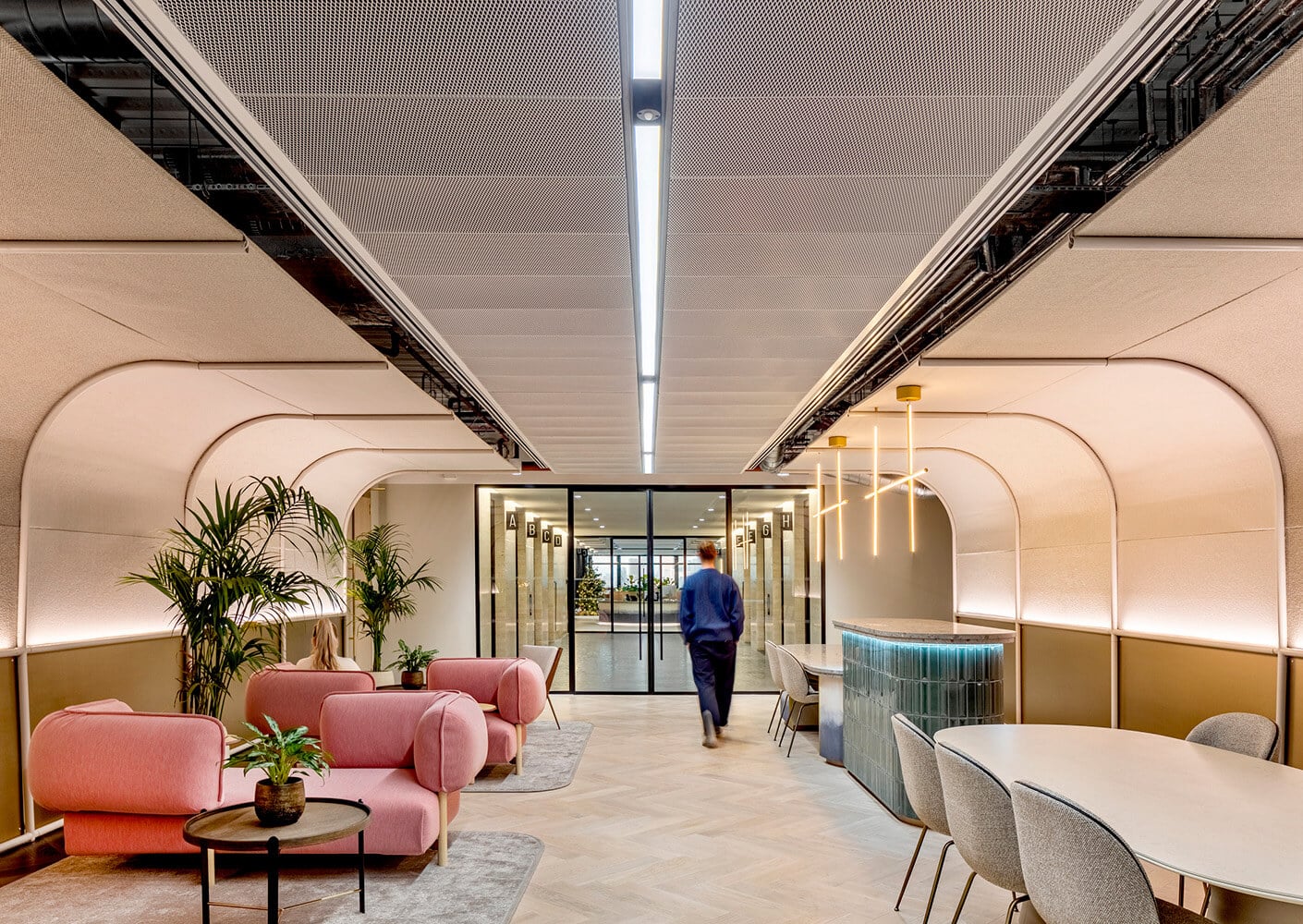
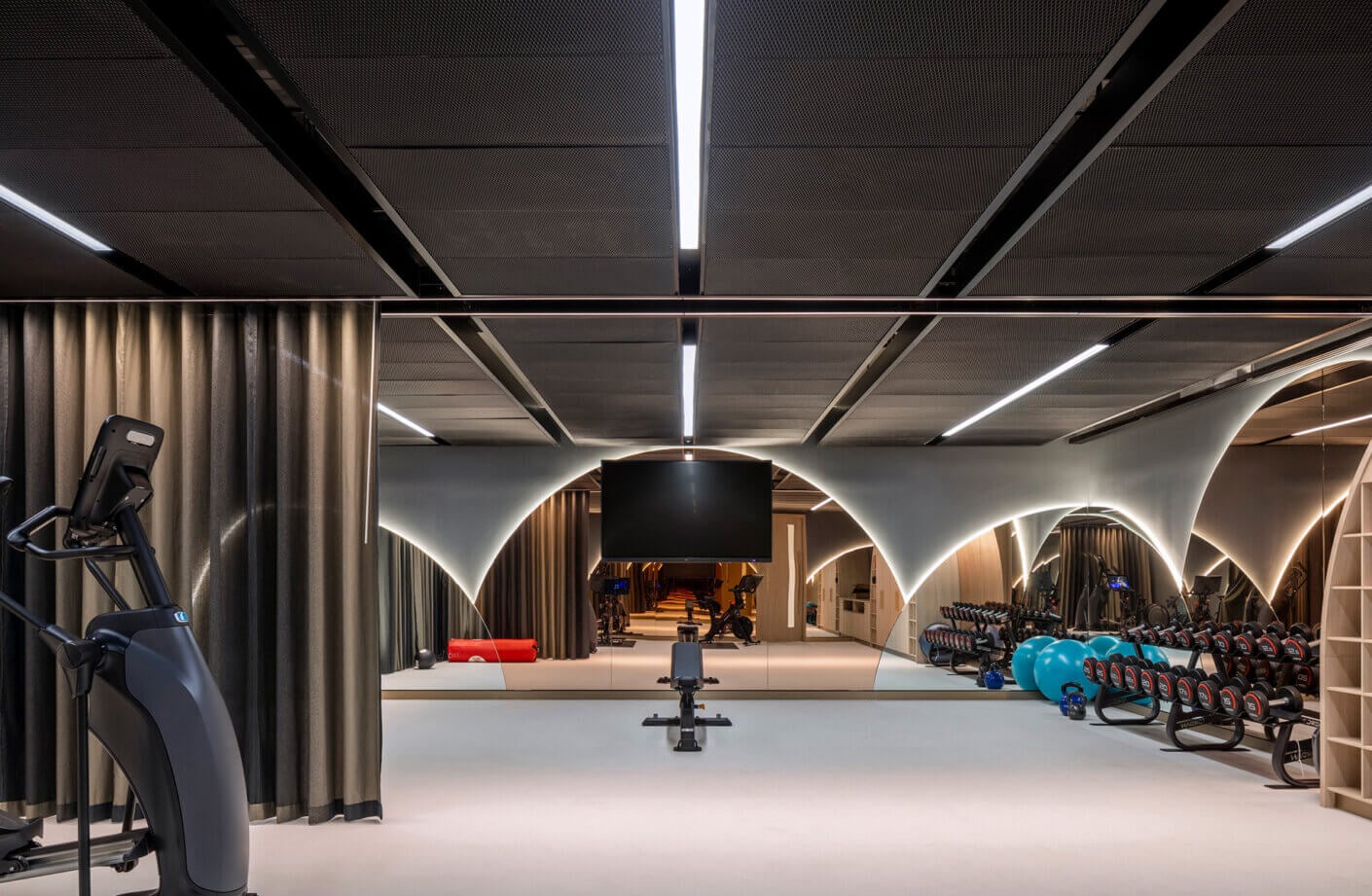
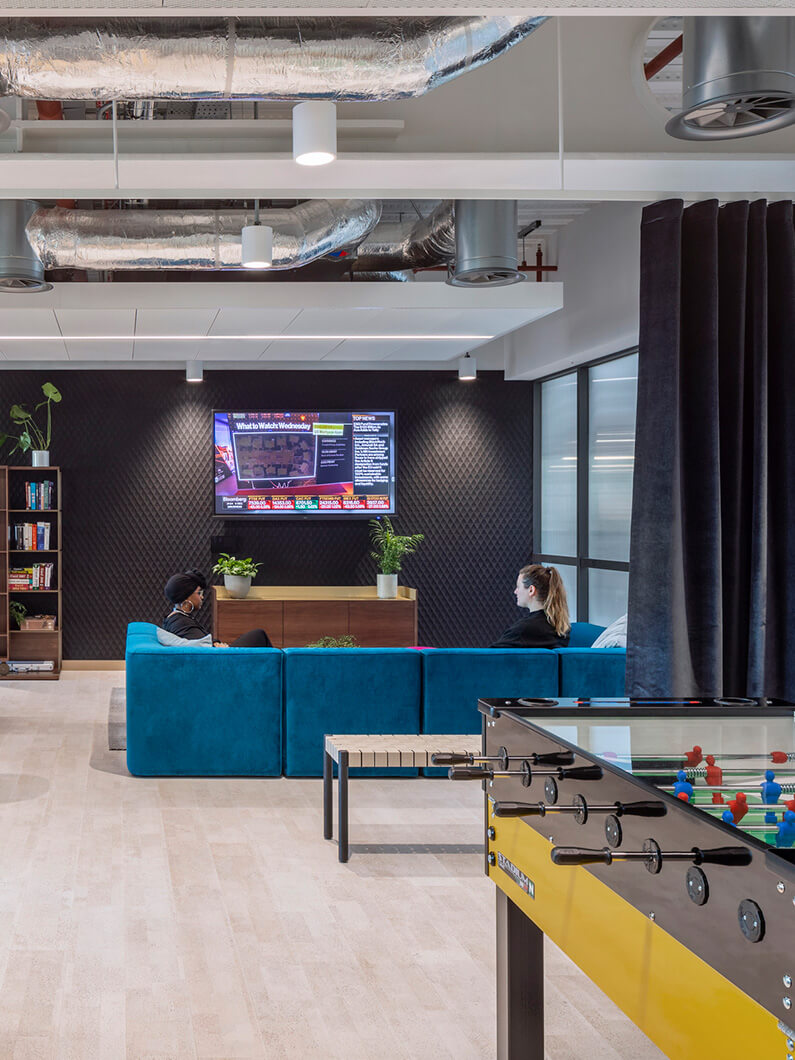
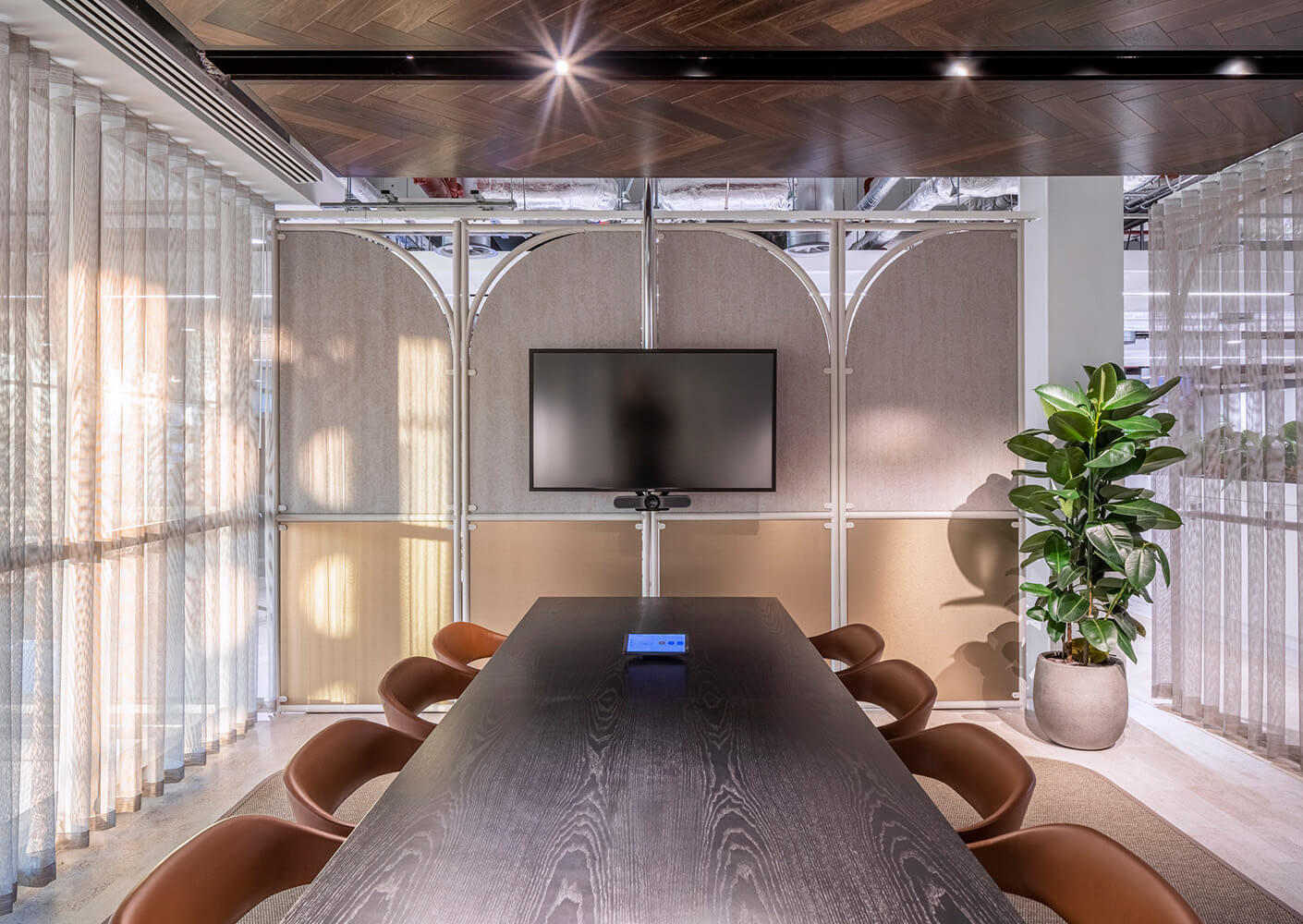
Our design is conscious that the building will eventually be redeveloped as part of the broader Broadgate masterplan. Designing for disassembly means that when that moment arrives, the majority of the fit-out can be repurposed, relocated, or reclaimed—keeping it out of landfill.
Materials and finishes were selected for their sustainability credentials, with high recycled content and future reusability as guiding criteria. Demountable modular meeting rooms are used throughout, elevated with knurled brass ironmongery—a detail chosen both for its tactile quality and its inherent antimicrobial properties.