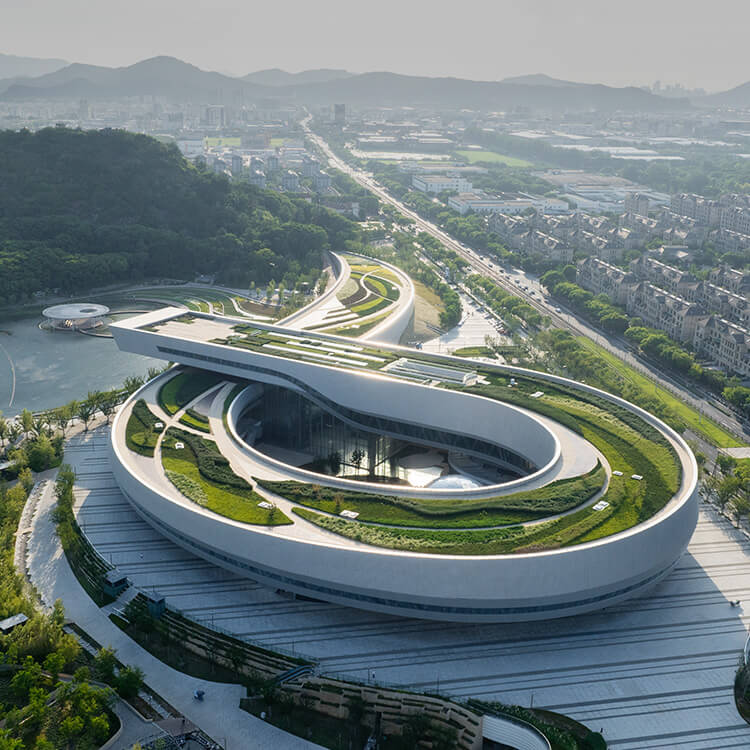
Suzhou Science and Technology Museum
Suzhou is an ancient city in China’s Yangtze River Delta, home to classical gardens that blend architecture, water, rocks, and plants into harmonious compositions. Located on the Grand Canal, it has long been a hub of trade, the arts, and intellectual life, renowned for its beauty, refined cuisine, and bountiful silk production. Today, this tradition continues with the city’s growing technology and manufacturing sectors.
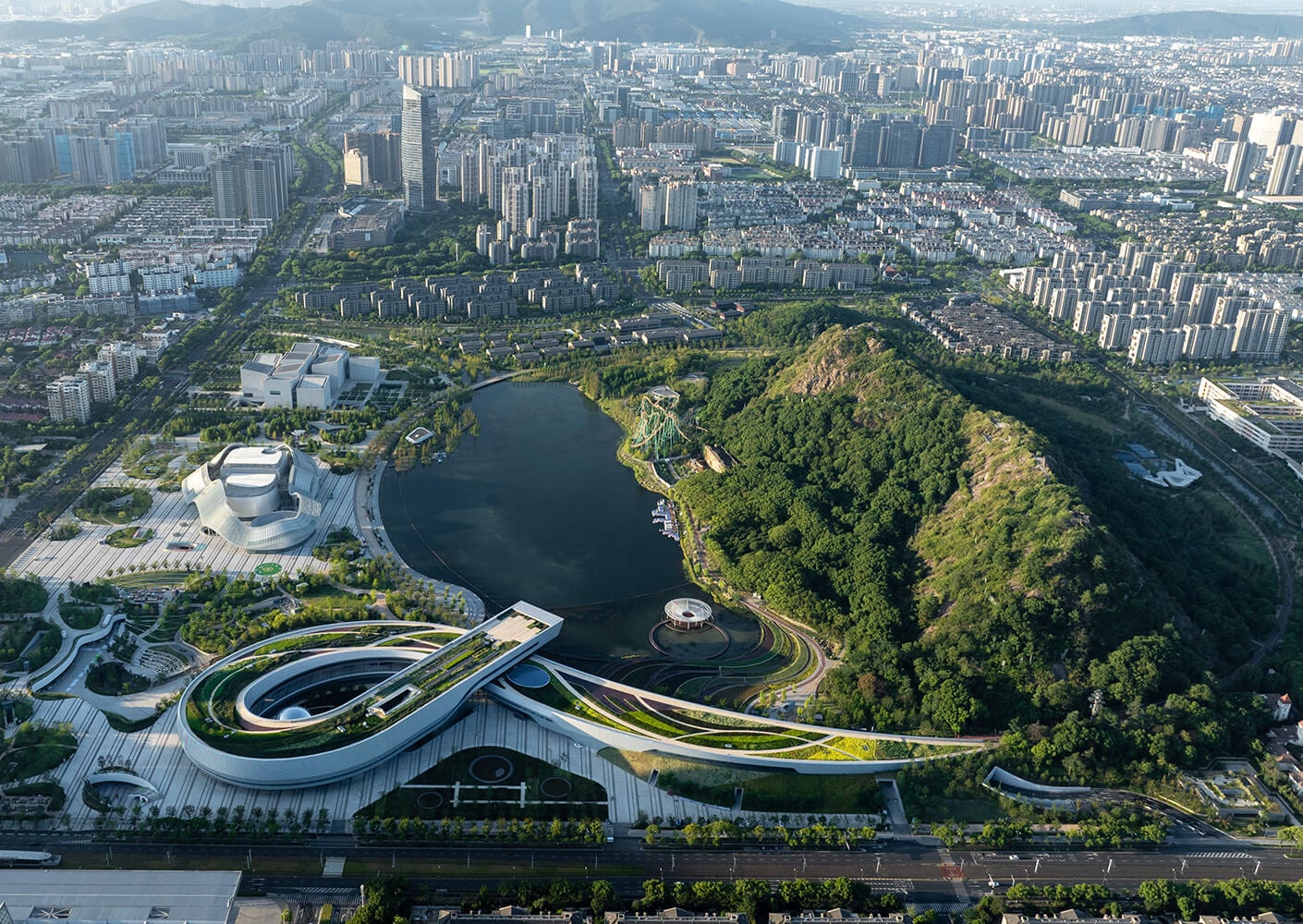
In celebration of its rich past and future promise, Suzhou transformed an abandoned amusement park west of its historic center into a cultural complex built around the prominent local landmark Shishan, or Lion Mountain, and a reconfigured lake. Known as Shishan Park, the complex includes an art museum, performance theater, and our project, the Suzhou Science and Technology Museum.
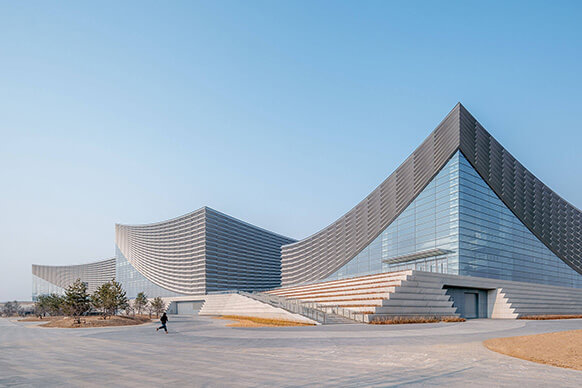
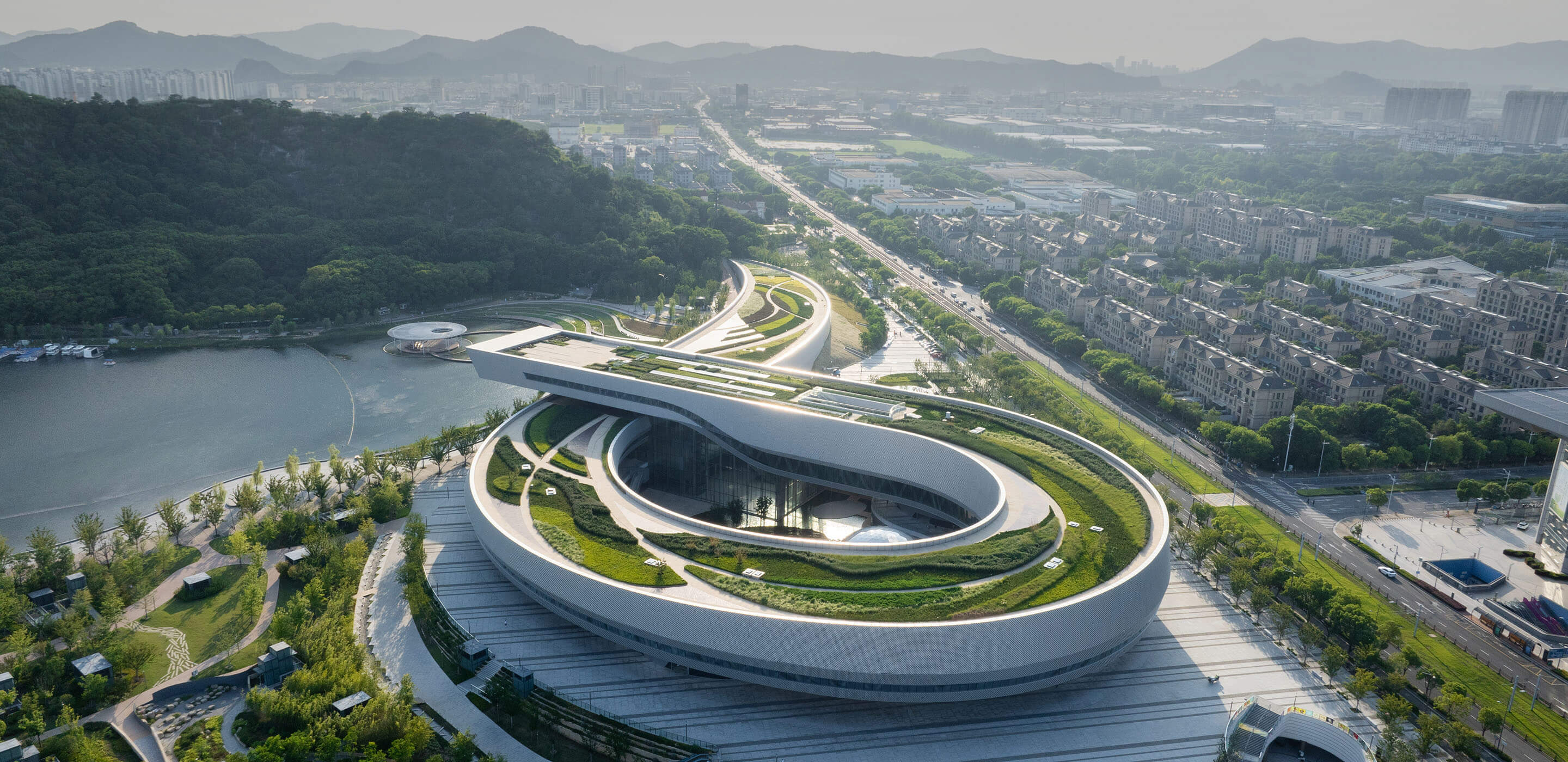
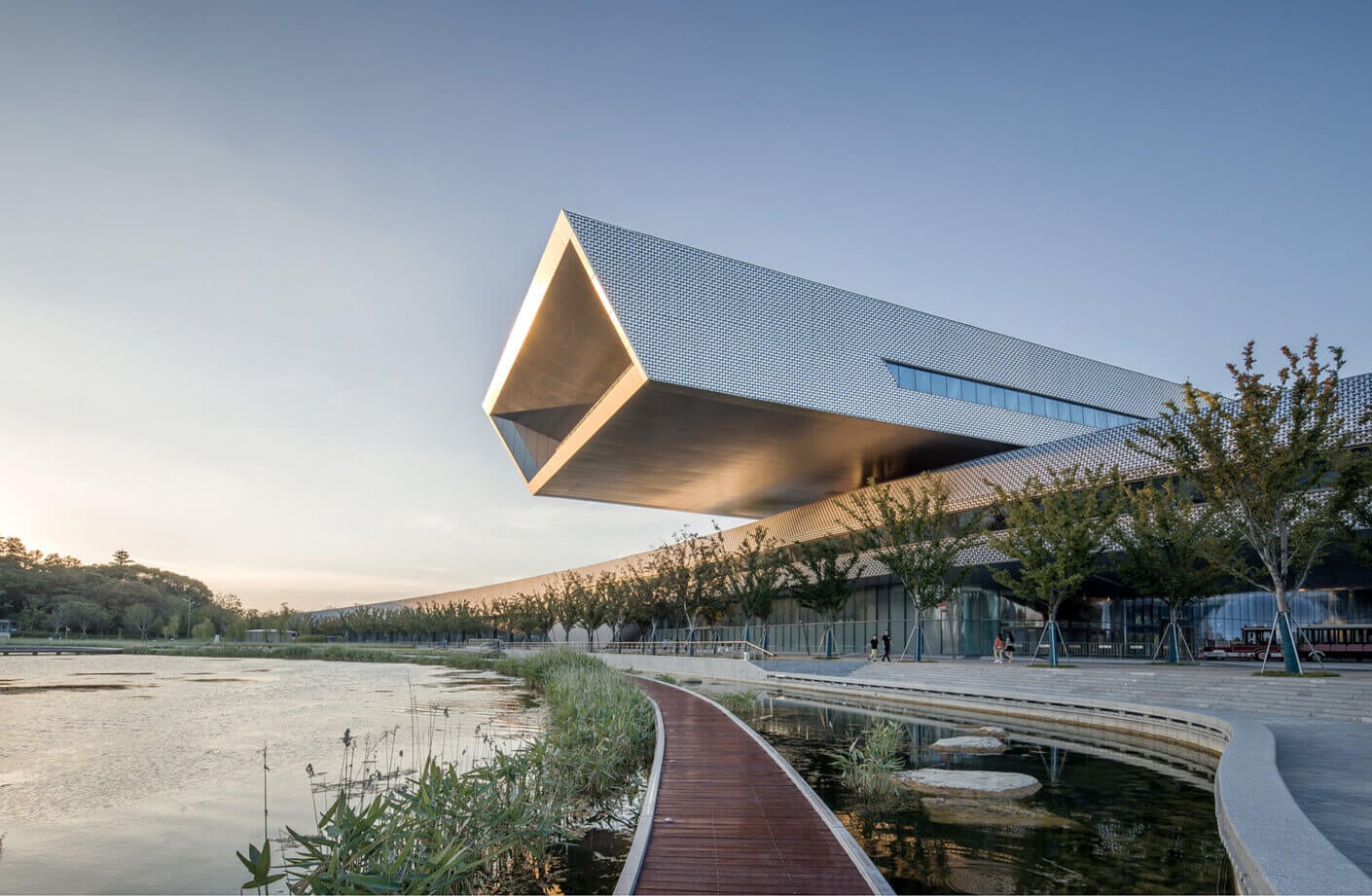
Our design responds to its context with a poetic and functional form that encourages contemplation of the relationship between nature and technology. The building follows the curve of the lake and appears to float above the ground, supported on four super-scaled “mushroom” columns. A green park on the roof becomes an extension of Lion Mountain and its trail network. Arching through the air, the museum loops in on itself, encircling a sunken garden courtyard and extending a heroic cantilever over the water and back toward the mountain.
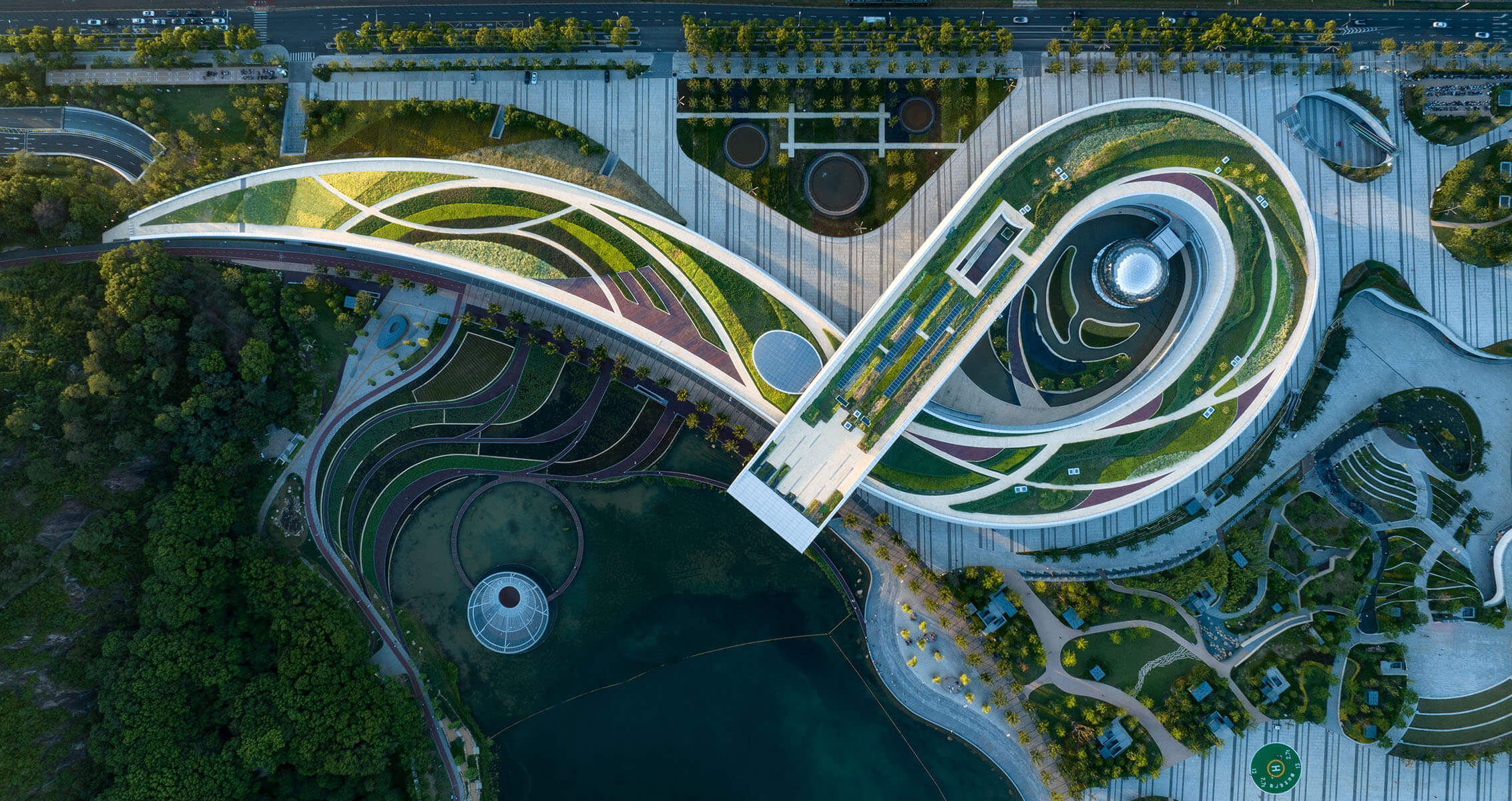
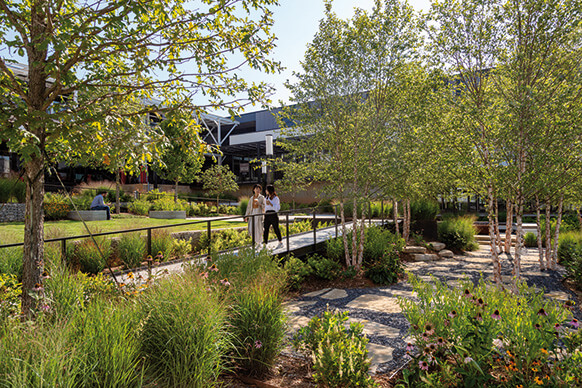
Just as in China’s classical gardens, the boundaries between the museum’s landscape and architecture blur into an idealized environment that shows how humans can work with nature to create beauty, space for pleasure and reflection, and a culture of care. Trees screen the site from the busy access road to the north, where there are local and long-distance bus stops as well as a metro station. A discovery court greets visitors with three disks of water that reflect the sky and the building. Rain gardens in the museum plaza absorb and cleanse runoff from the road, keeping pollutants out of the lake.
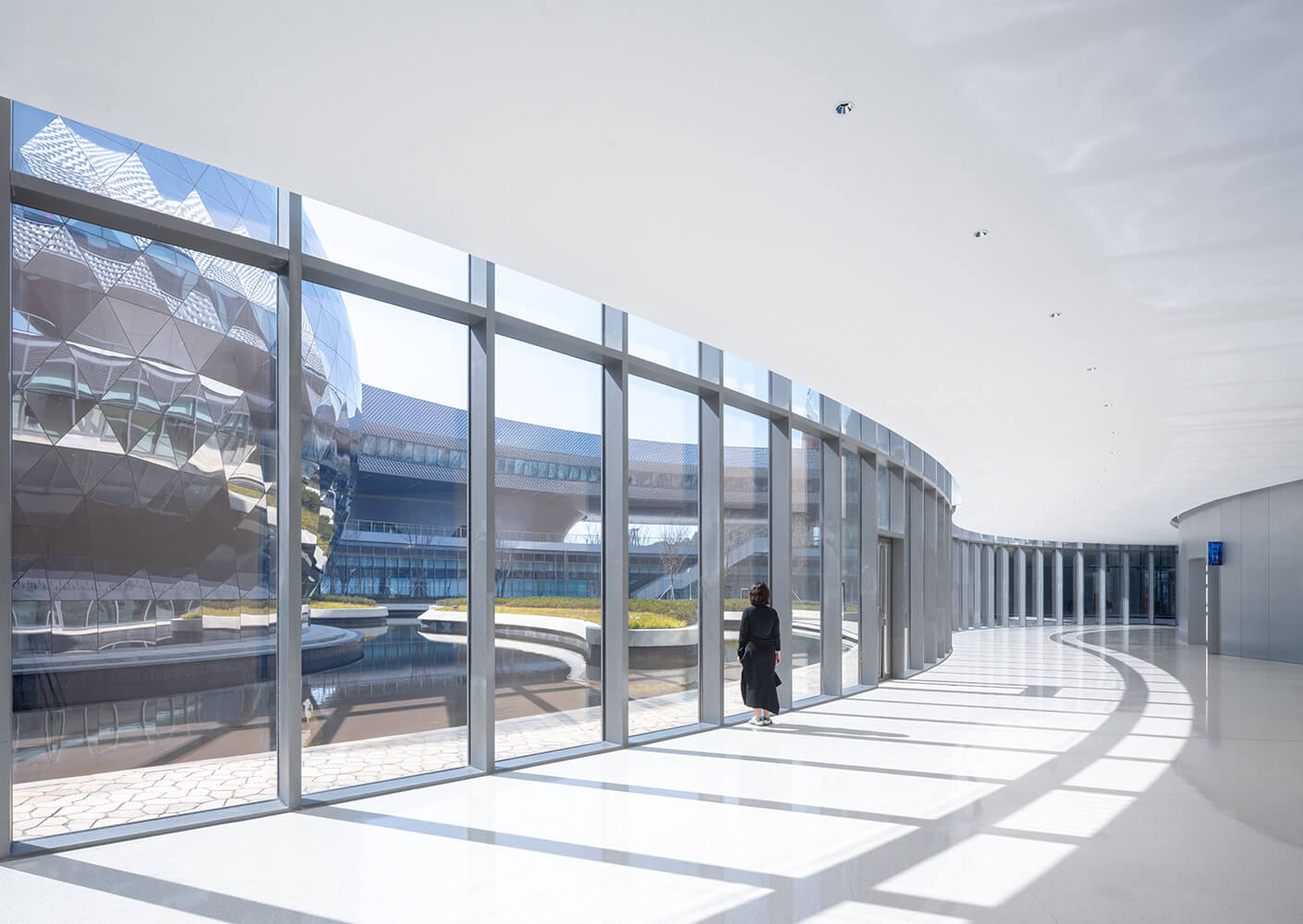
We worked hard to ensure the openness of the museum and its grounds. The lifted structure allows visitors to flow across the open plaza to the lakeshore. Underneath the building, they can look down into the sunken courtyard’s pools of water and garden islands, where the mirrored globe of an immersive theater reflects nature and architecture, and a continuous glazed perimeter offers glimpses into the daylit interior. Or they can look up at the actual sky and through the ribbon windows of the elevated structure, catching hints of exhibitions and the moving forms of other museumgoers.
Hikers coming down the trail from Lion Mountain can seamlessly continue onto the green roof, which starts out with arching pavements and planted beds picking up the curving shapes of the park. As the building rises, the landscape changes slowly from flowing forms to rigid structures interspersed with photovoltaic panels generating energy from sunlight. The transition from organic to rectilinear shapes and planted beds to electricity production embodies the nature/technology duality central to the design.
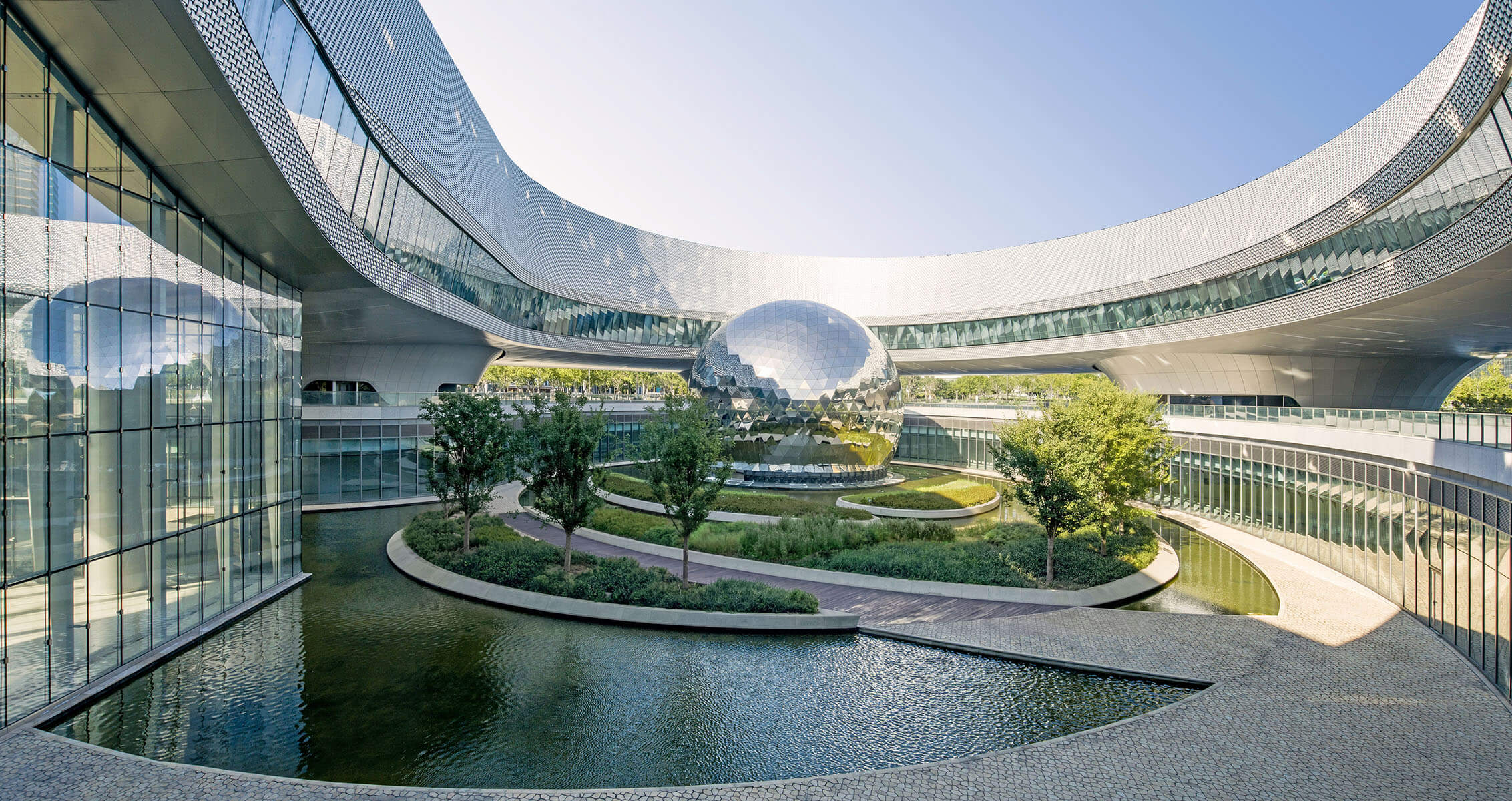
The importance of silk in Suzhou’s history also influenced our concept for the project—silk being a prime example of the intimate relationship between nature and technology. The looping form evokes a silk ribbon curling around itself. To really bring this home, we designed a simple cladding assembly of aluminum panels formed into shallow convex arcs. Arranged in a crisscrossing pattern and mechanically fastened to larger sub frames, they appear to flow beneath each other, giving the impression of woven silk.
We used computational modeling to minimize the number of unique conditions and ensure that the building’s complex curves appear fluid. We also produced numerous mockups to test the effectiveness of the system and resolve challenging edge and corner conditions.
Rounding out the high-tech assembly, a high-performance coating on the aluminum produces a soft, shimmering finish reminiscent of silk fabric. LEDs embedded in the cladding modules give the building a subtle aura at night, communicating its civic function without excessive light pollution.
While complex from the perspective of façade assembly, the building’s looping form created a simple, logical plan. The inner perimeter circulation pattern is easy to navigate, with galleries arranged off the circle. Continuous windows below and above grade give visitors open sightlines to the courtyard, allowing them to orient themselves in relation to the outside. Mechanical services and vertical circulation are concealed within the “mushroom” columns and connect to all levels while allowing egress directly onto the museum plaza.
We located much of the program below grade, using the thermal stability of the earth to reduce the energy needed for heating and cooling. High performance glazing reduces solar gain and automated shades mitigate glare, keeping the interiors daylit while protecting sensitive exhibits.
At once high-tech and organic, the museum leads visitors through a succession of exhibition spaces where the wonders of science are displayed before culminating in an observation platform with a view of Lion Mountain—a return to nature.
Project Team




Related Content