Marine Gateway
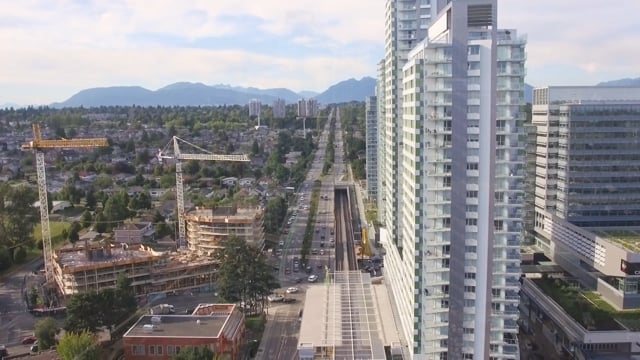
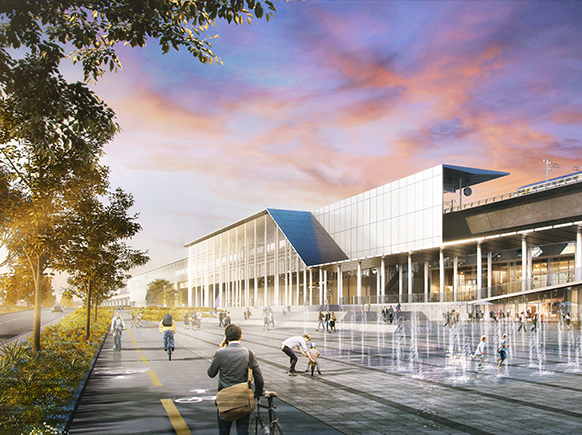
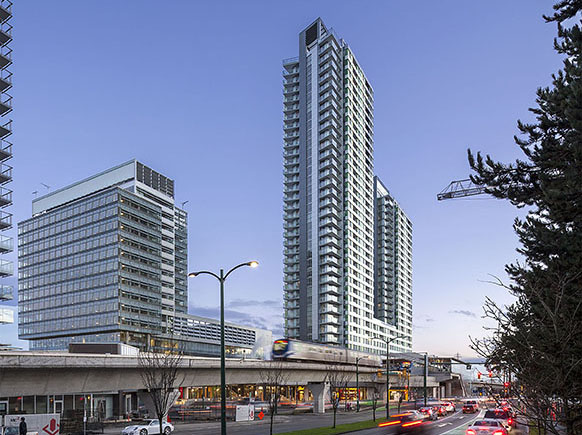
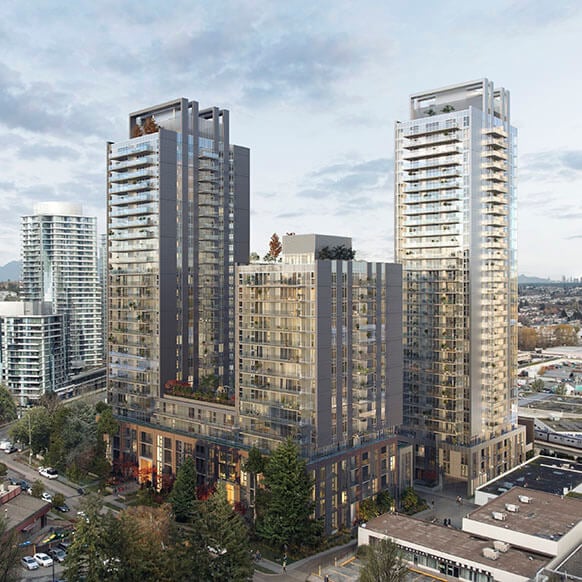
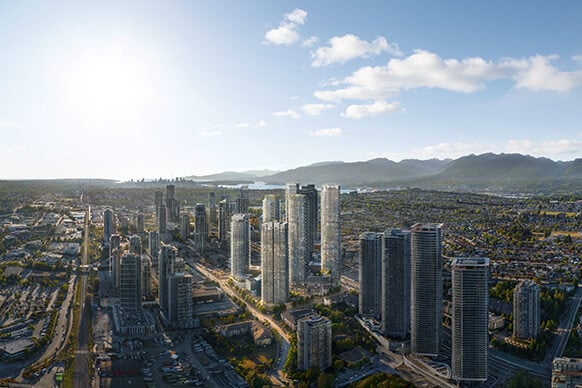
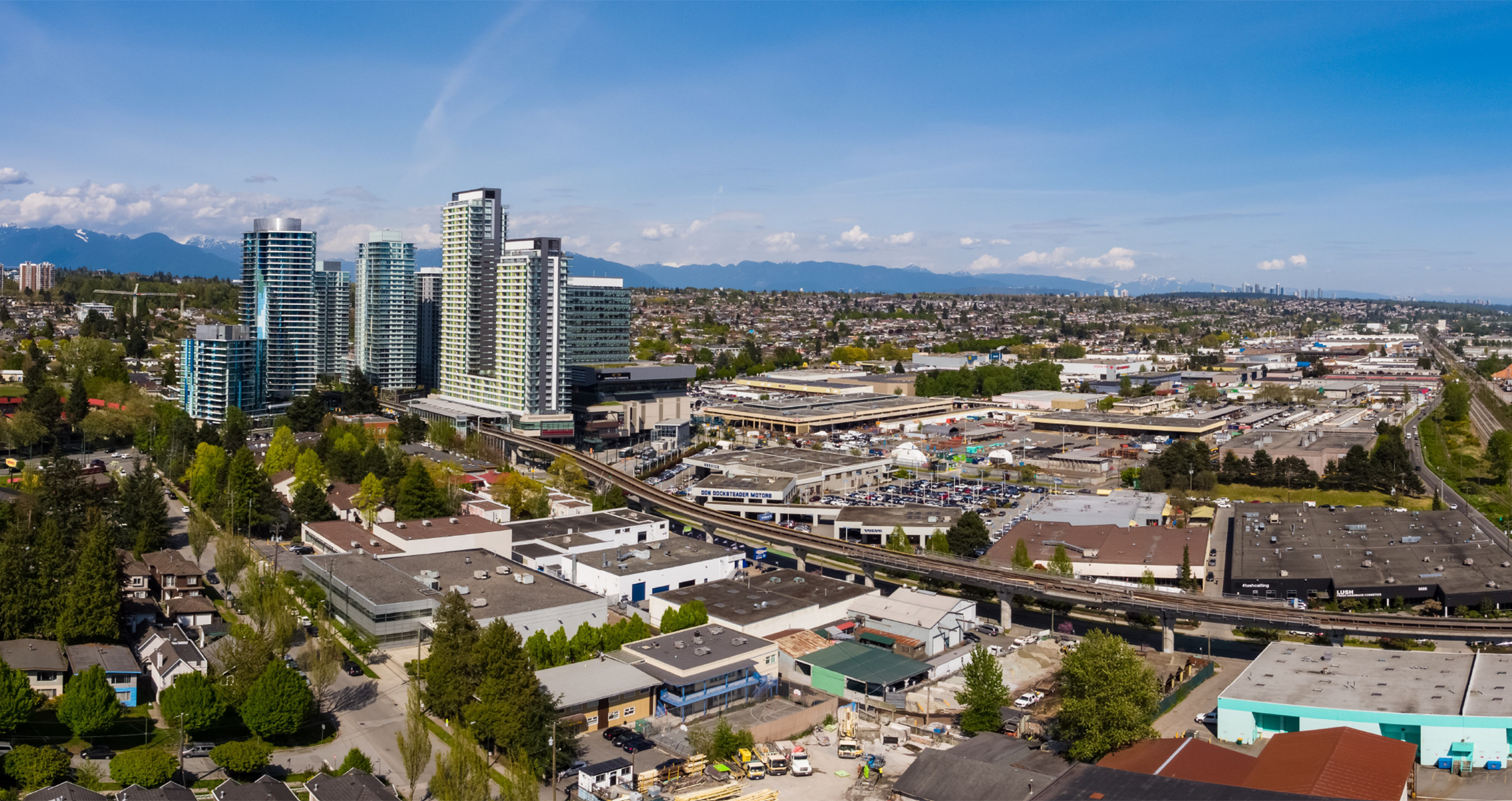
Marine Gateway, a transit-integrated housing, office, and retail development in South Vancouver, has created a new urban center in a former industrial zone. It opened in 2016 as the first major project directly integrated with the Canada Line on Vancouver’s SkyTrain system.
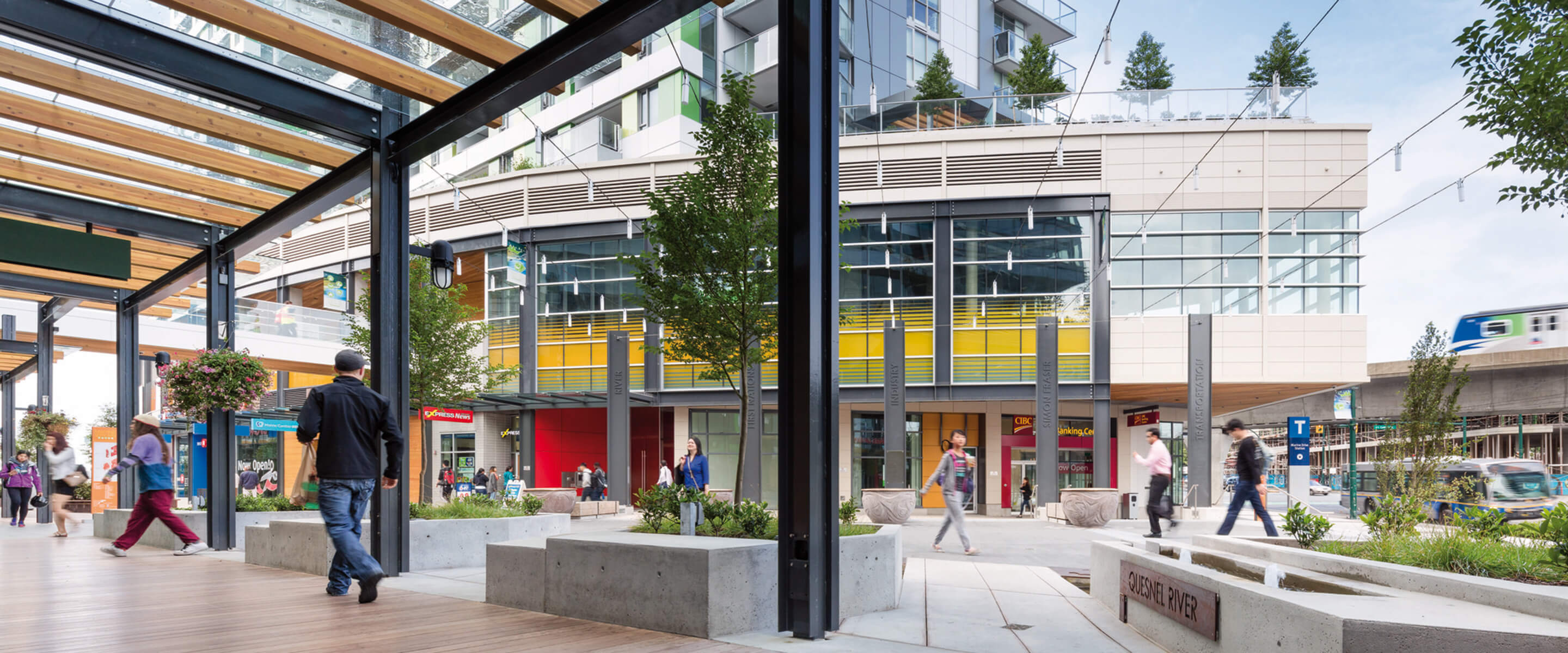
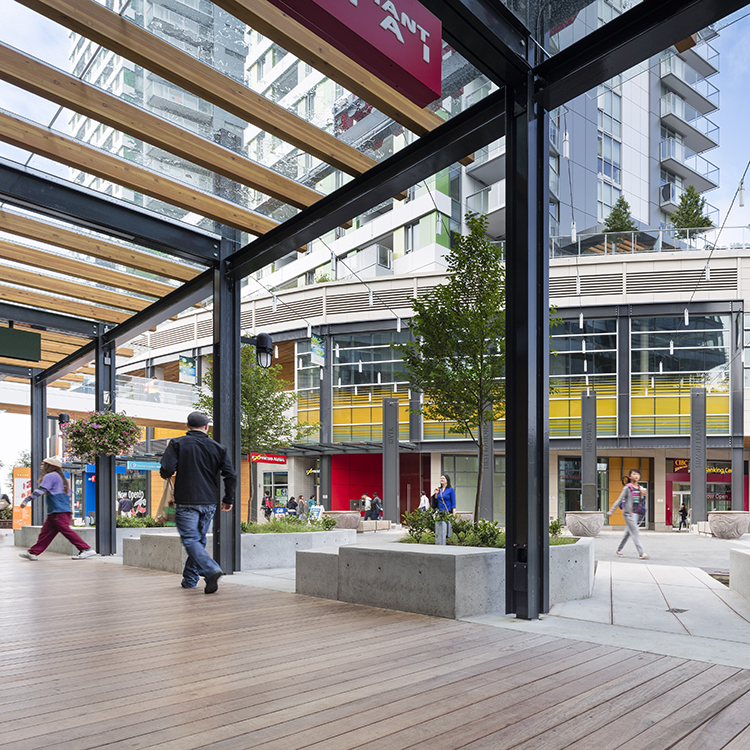
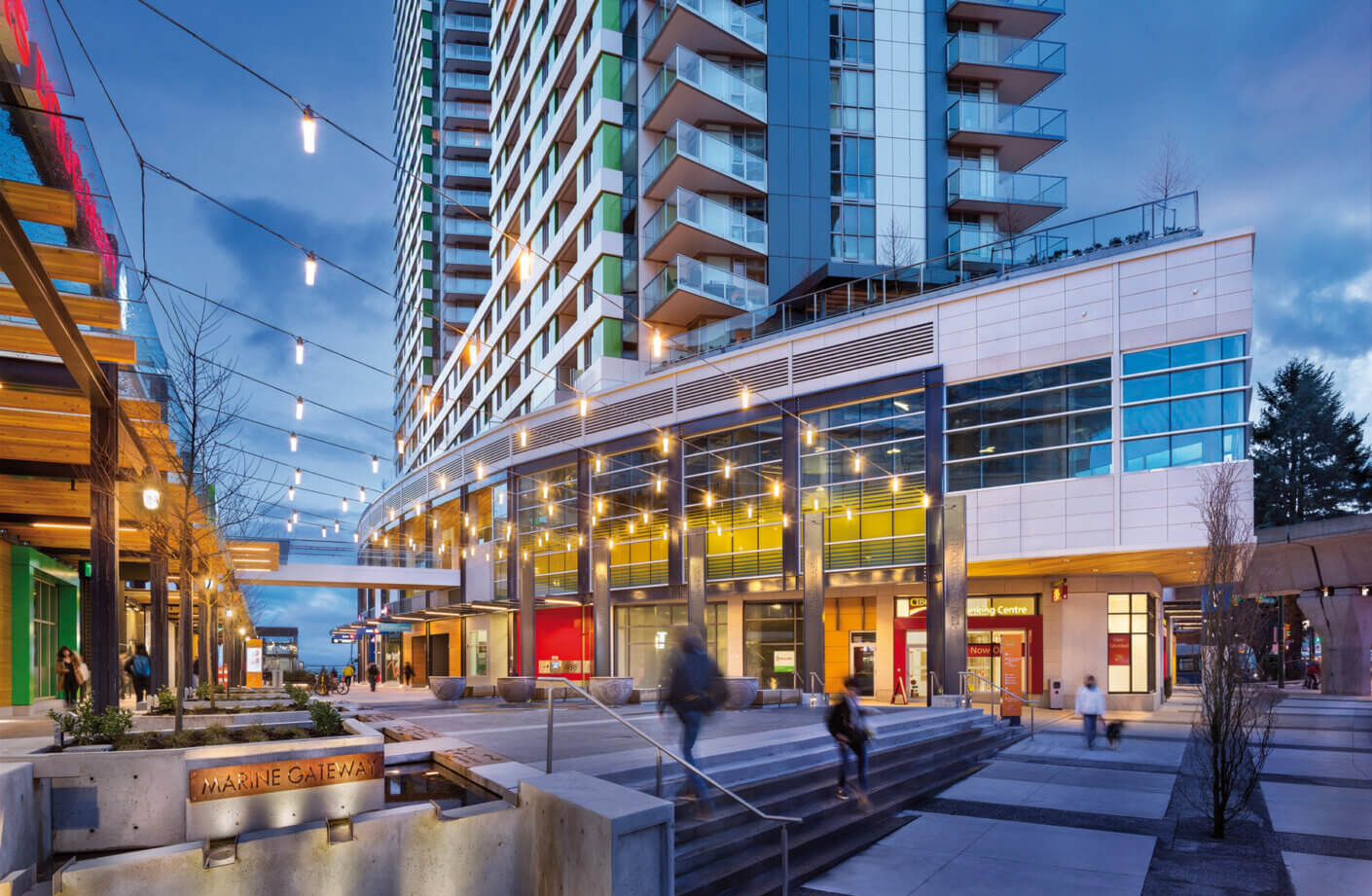
In an area where demand for neighborhood‑serving commercial space far exceeded supply, PCI Developments wanted a retail program to support daily needs while also encouraging evening and weekend activity. A pedestrian‑focused “main street” (often called a “high street” in Canada) serves transit riders, office workers, residents, and visitors, creating a setting where retail thrives due to frequent and diverse foot traffic. Essentials like convenience stores and pharmacies complement a mix of food and beverage options.
The main pedestrian corridor is aligned with the SkyTrain station, placing shops directly along the paths between station platforms and the surrounding neighborhood. The street’s gentle curve creates a sense of compression and expansion that encourages visitors to pass close to storefronts. Signage and detailing are varied within the broader concept, allowing each business to express its identity while maintaining a cohesive appearance throughout the development.
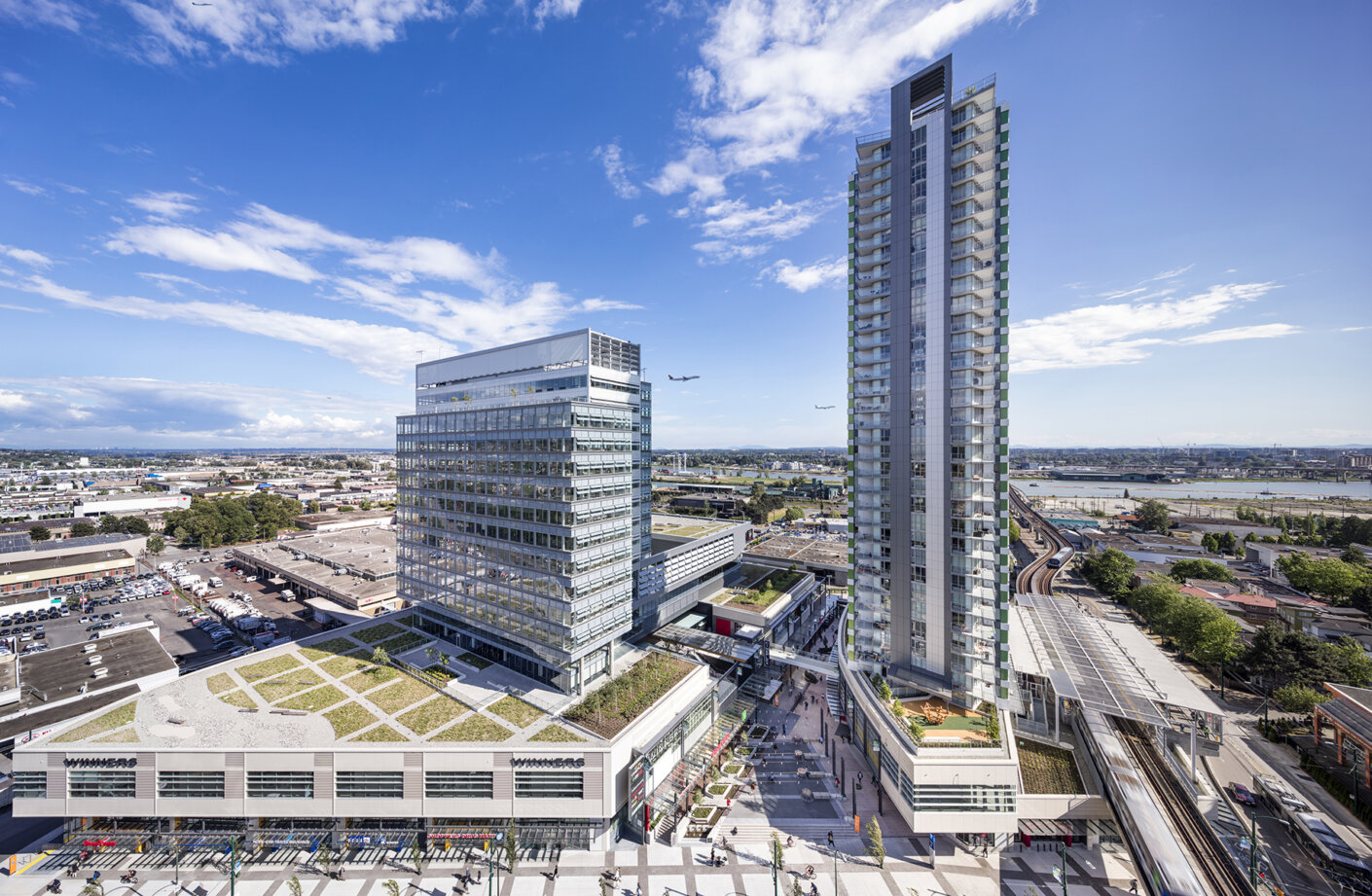
Unlike typical mixed‑use podiums where upper‑level retail suffers from low visibility and foot traffic, Marine Gateway’s office lobby and cinema entrances are strategically placed on the second level to ensure that substantial foot traffic is routed through upper circulation areas. And because these routes are part of a comprehensive retail plan instead of pathways between uses, they become profitable retail frontage.
Appealing public spaces also increase dwell time and, by extension, retail activity. The design team integrated plazas, seating, shading, with public art and references to Vancouver’s history to strengthen the district’s identity and appeal.
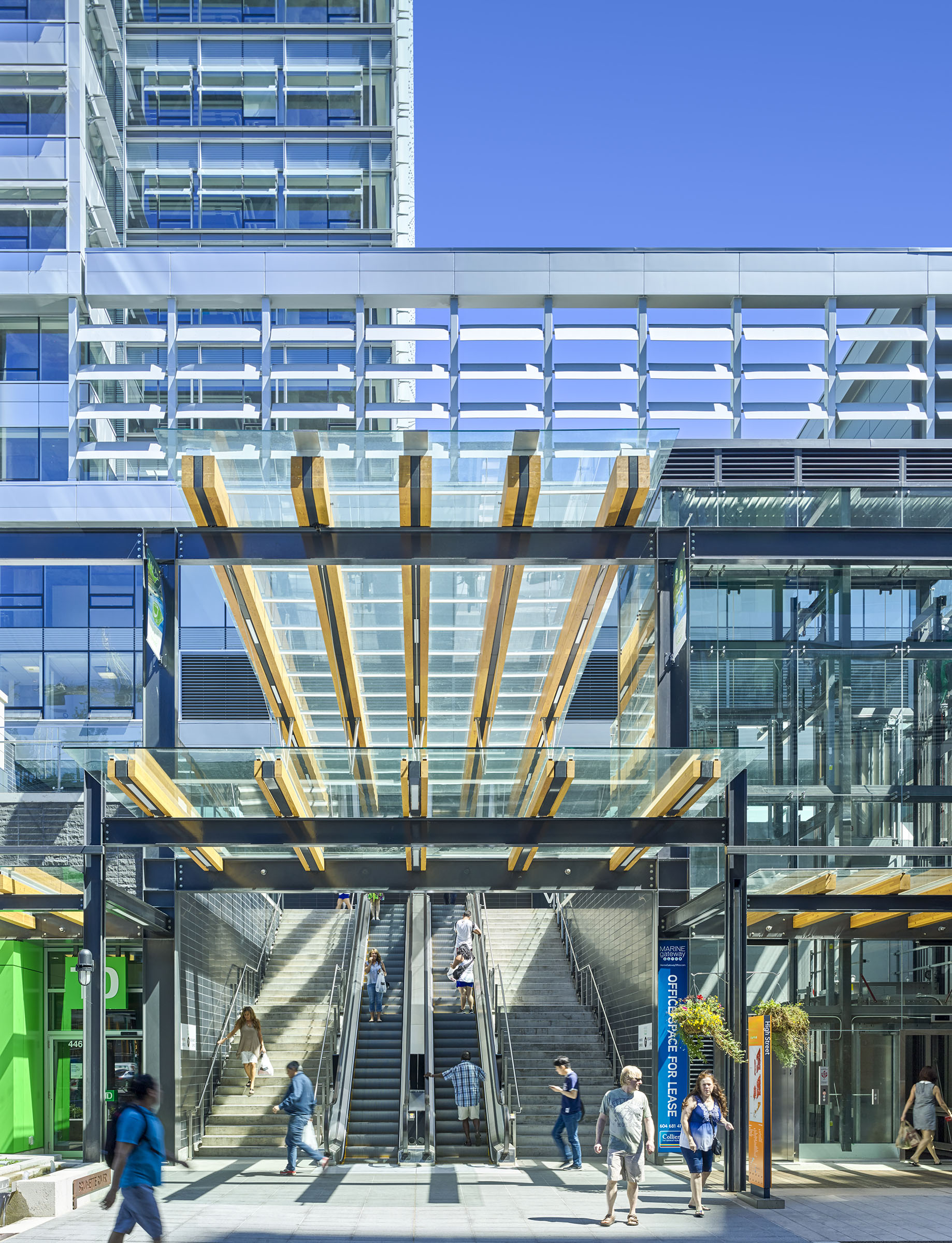
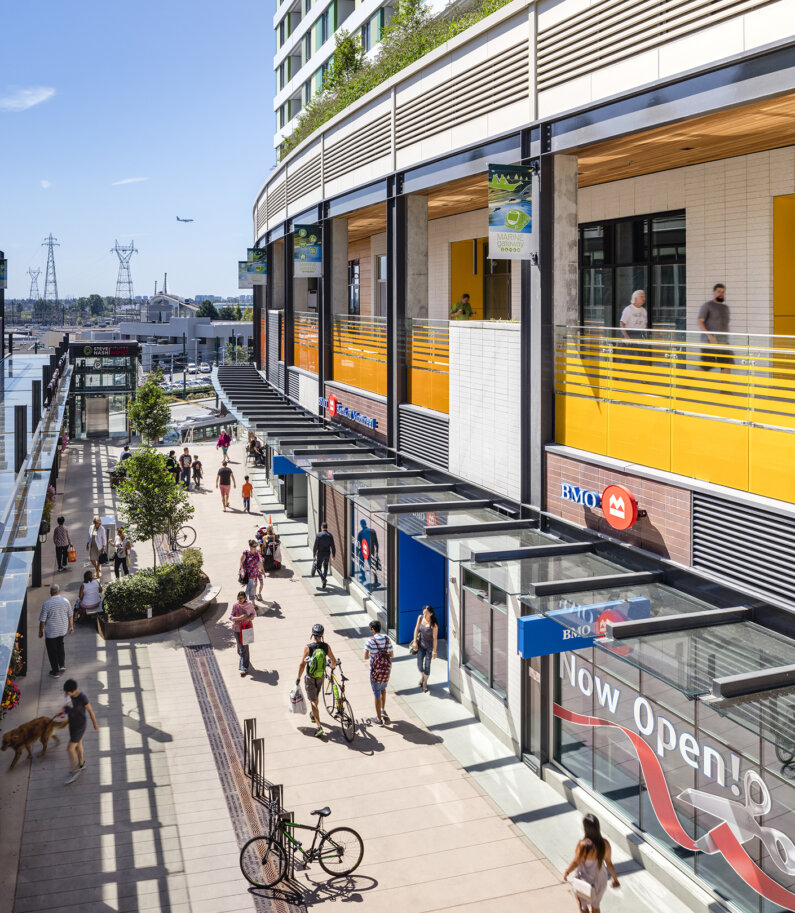
The retail program is supported by robust back‑of‑house planning. A large loading dock, long clear spans for the cinema, and flexible commercial retail units (CRUs) designed on a standard structural grid to accommodate a wide range of tenant sizes and configurations. All tenants are encouraged to incorporate broad openings and visibility to encourage browsing and contribute to a livelier environment.
Marine Gateway’s continuing success is evident in strong tenant retention, sustained footfall, and a planned second phase on an adjacent 5-acre parcel. It also inspired a policy that encourages densification around transit stations.
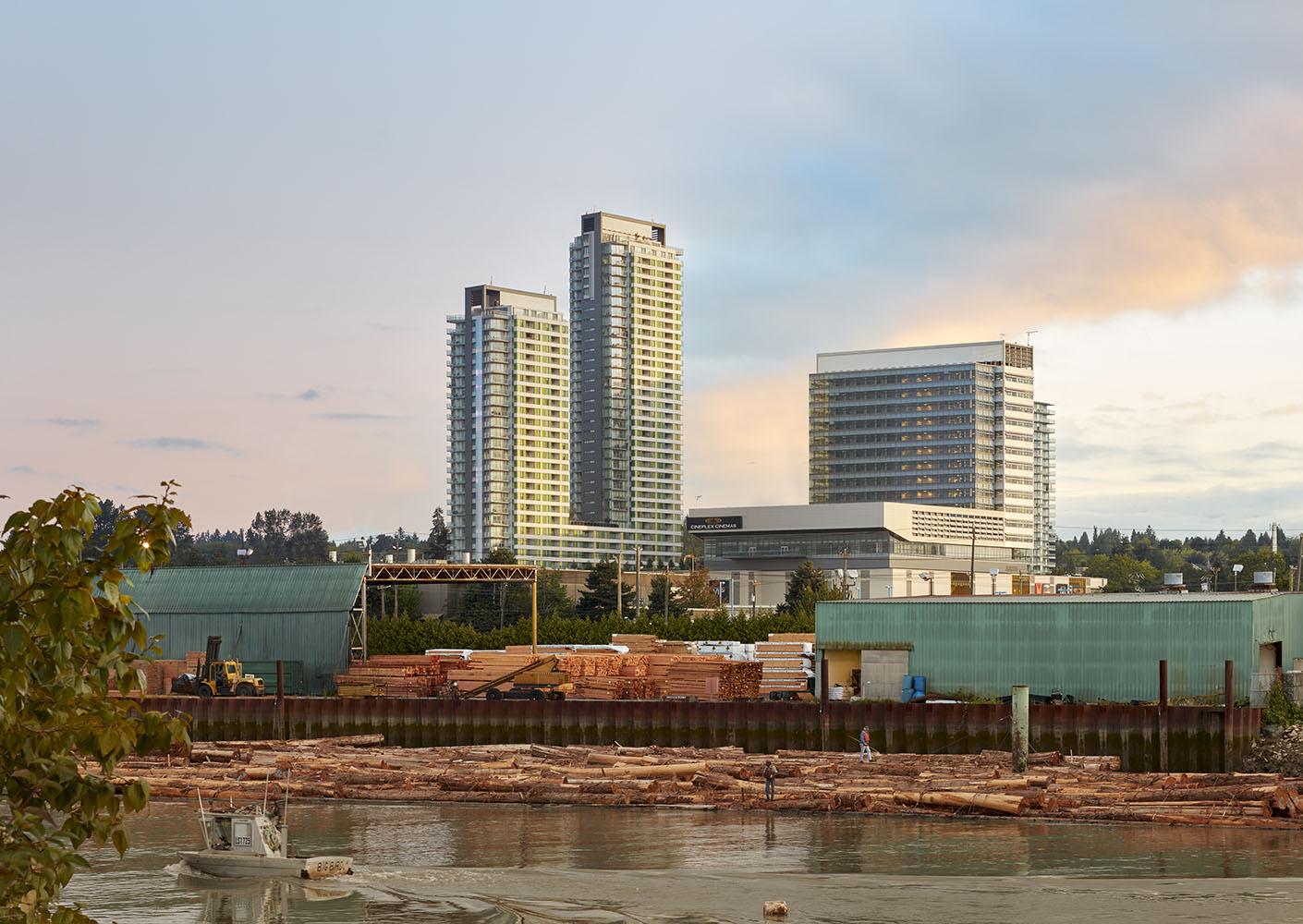
Sited on formerly industrial land, the project fully develops the site and introduces active stormwater control and extensive green roofs. We purposefully designed the landscaped roofs—complete with logs harvested from the existing site—to reintroduce habitat for birds and bugs.
Kevin Desmond, Former TransLink CEO
At the inception of the project, we conducted a comprehensive evaluation of the City of Vancouver’s EcoDensity initiative—which examined ways that Vancouver can accommodate its projected growth, maintain its reputation for livability, and encourage affordability. We focused on development along the Canada Line and laid out a vision where Vancouver, by implementing a nodal EcoDensity, can reduce the city’s GHG emissions dramatically enough to help mitigate the effects of global warming. Marine Gateway is the first large-scale development that serves as an example of sustainable, nodal development along Vancouver’s new transit corridor.