Designer Spotlight April 28, 2026

Patrick Cunningham: Expression in the Elemental

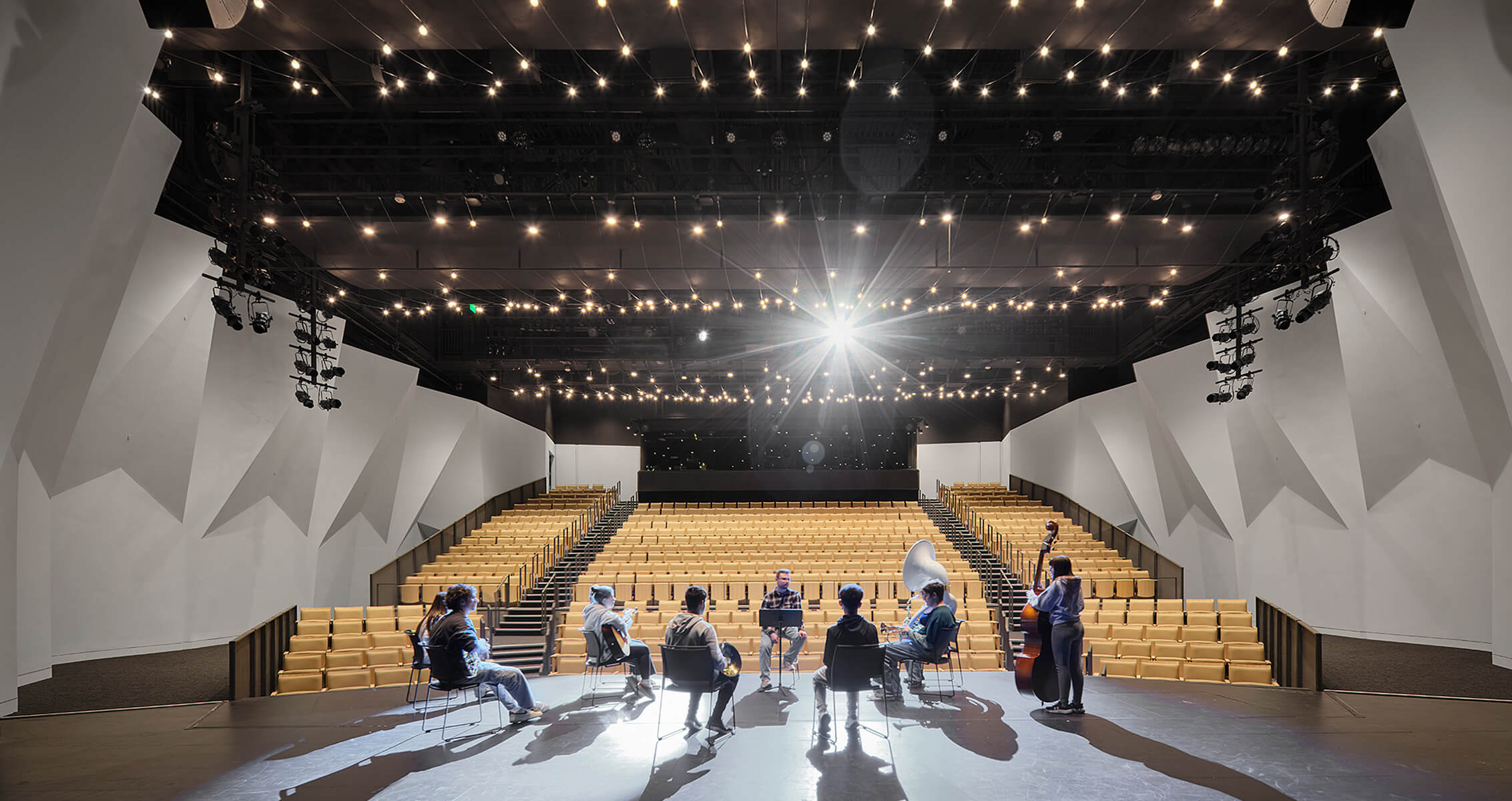
Rehearsal in a spacious auditorium with yellow seating, featuring musicians and bright stage lighting, set against geometric wall design.

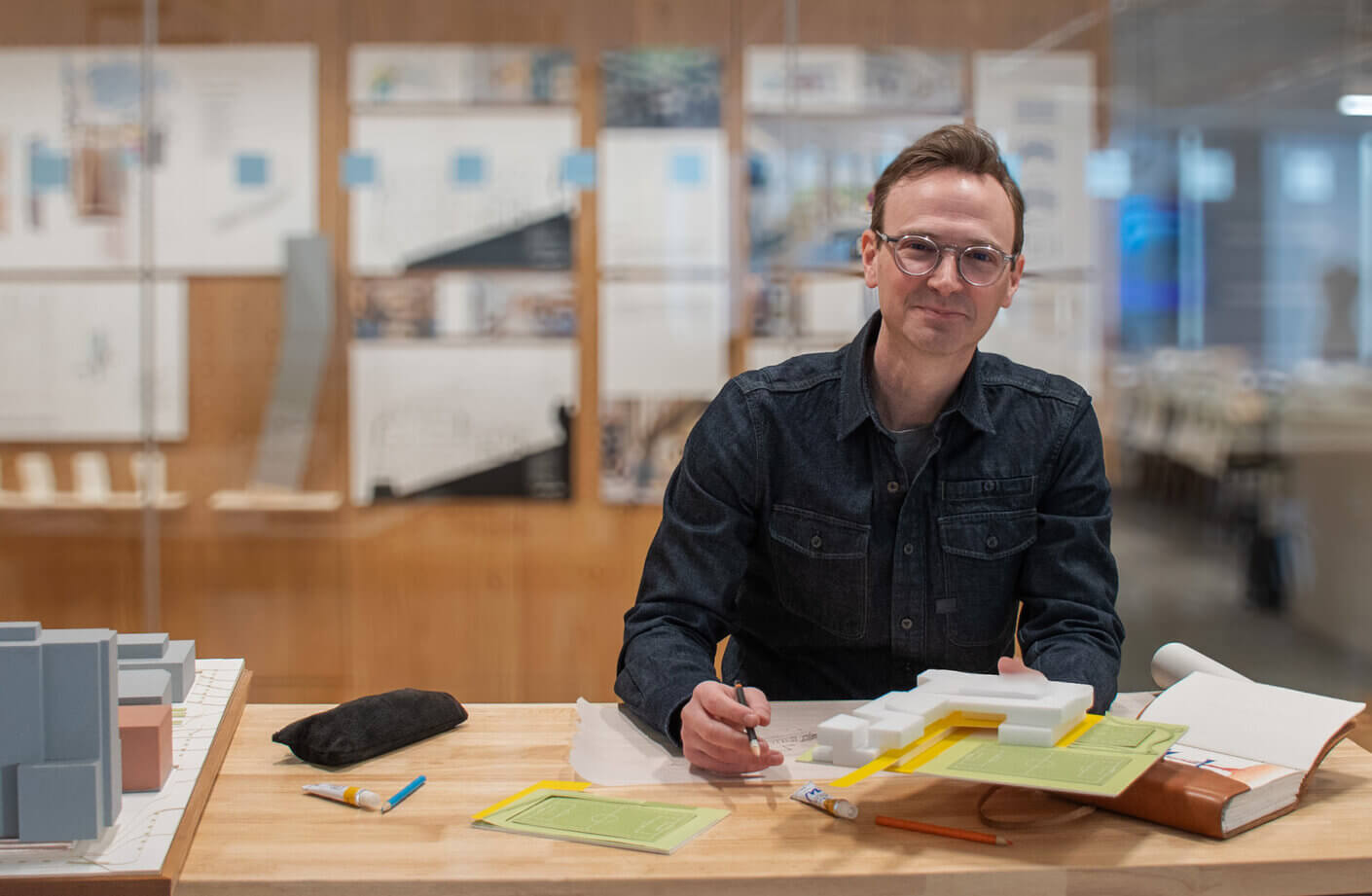
Born and raised in New Hampshire, Patrick Cunningham studied architecture at Syracuse University, where he earned the AIA Henry Adams Medal (now known as the Medal for Academic Excellence), given to students with the highest performance average throughout their course of study.

Rather than pursue architecture internships during his college summers, Patrick worked construction. He credits this experience with teaching him as much about design as he learned in the studio. A lifetime tinkerer, he liked seeing how things got made, and who made them. After a study abroad year in Italy and bouncing around at a few firms during the post-9/11 recession, Patrick joined our Boston studio when it was a small office of 25 people. Today, he is the studio’s design director and shepherds major projects supported by multi-disciplinary teams.

We recently sat down with Patrick to chat about his design philosophy, approach to analog and digital technologies, feelings about artificial intelligence, and more.
Design is about transforming the prosaic into the sublime—making new spaces for someone else’s story to live in.
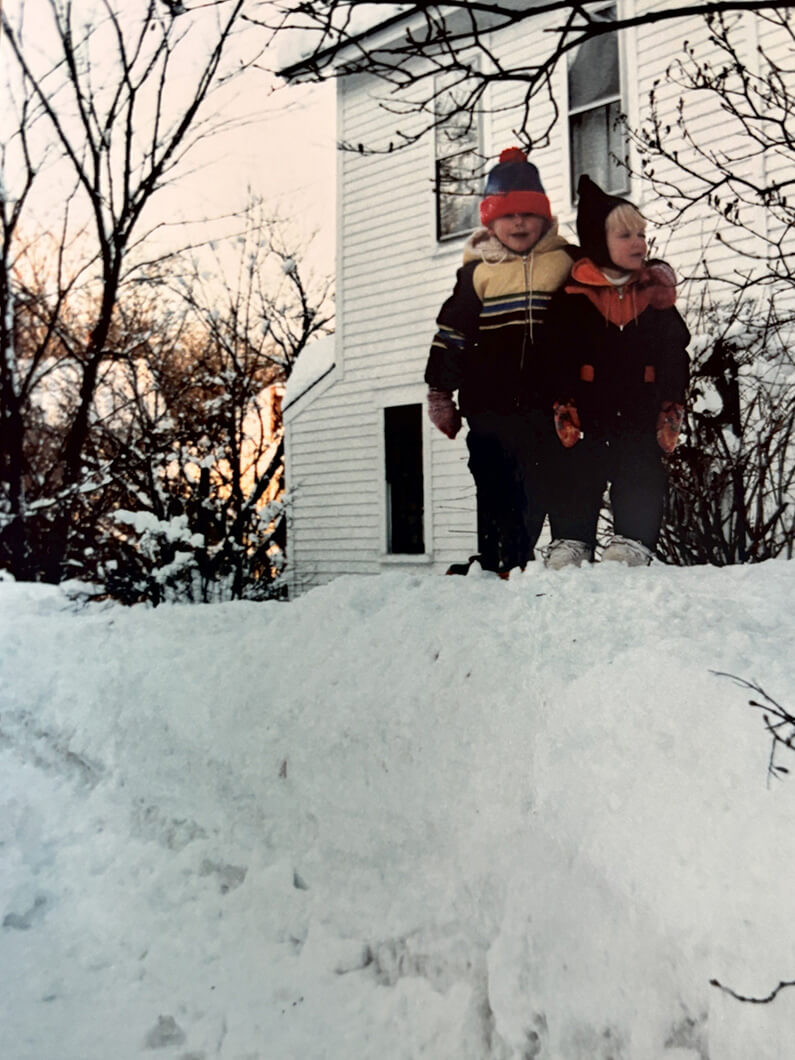
Patrick (right) with his brother in New Hampshire
How has your personal background or culture influenced your design philosophy?

I grew up in the woods of New Hampshire, at the edge of the White Mountains, in a family with a culture of making and tinkering. My grandmother was a painter. My father had no fear of taking things apart and putting them back together. My mother is a person with unending patience. From them I learned basically all the skills a designer needs.

My parents trusted us—me, my brother, and younger sister—enough to disappear into the outdoors. From sunup to sundown we were outside, getting filthy, inventing worlds. We built forts, got lost on purpose, lived inside elaborate survival fantasies. When the lake froze, we shifted. Ice and snow became our toys. We learned how the same place could hold an entirely new story.

That connection never left me. I learned that there is infinite expression in the elemental—water, ice, wood, light, clay—but only if you stay open to it. I carry that sensibility to our design culture, the belief that the everyday holds the potential for both risk and wonder. The question I return to is can we keep inventing with that spirit, transform the prosaic into the sublime, make new spaces for someone else’s story to live in?

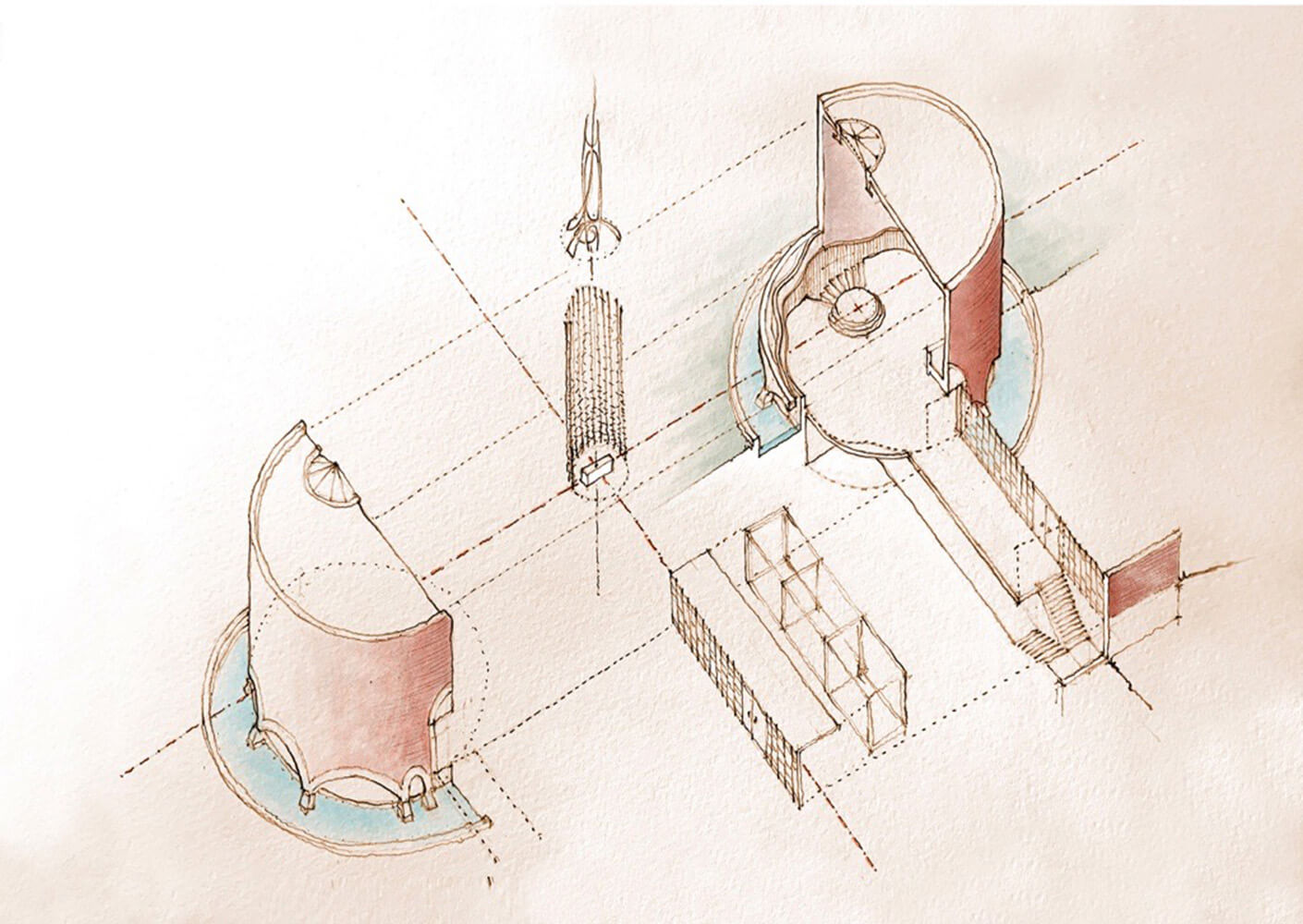
Patrick has often worked with a mix of graphite, charcoal, and watercolor, as seen in this early drawing of the MIT Chapel. "I try to draw whenever I go somewhere."
Is your work exclusively regional or do you work more broadly? How do you navigate differences from place to place?

At school and early in my career I traveled and worked more widely, spending time in places like Italy and China—climates and cultures very far from where I grew up. What those experiences gave me wasn’t a taste for the global so much as a deep reverence for place. I honestly don’t know how to begin a design process without it, and I mean place in the broadest sense.

Place isn’t just the physical setting for me. Time is place. Social and political realities are place. Material availability, local skills, ecology, memory, and history are all part of it. Place is layered and dimensional, something you enter into dialog with, not something you drop a building onto.

Once you start to see place as a living system, advocacy becomes a branch of the same tree. Design always takes a position. Whether we intend to or not, we’re shaping habits, priorities, and ways of connecting. At our best, we do that openly and with care, working with the people and ecosystems we’re designing for, and letting the work grow with bravery out of that ground.

Do you prefer analog or digital?

I try to build wonder in the analog and find depth through the digital. There’s real power in a sketch, a messy model, something a little painterly. Those ways of making do a better job at leaving space for someone else to finish your sentence.

Digital tools can close that space too early. Sometimes they don’t leave enough room for clients or teammates to see themselves in the beginning of an idea, to be drawn in by its potential rather than distracted by something that feels finished or fixed.

I think outsiders to the design industry borrow a perception of digital design from their own experience with technology. They associate it with precision, finality, publication. Even when movie storyboards are published they tend to be free hand when we know many are created digitally. I think this will evolve when digital natives become our clients.

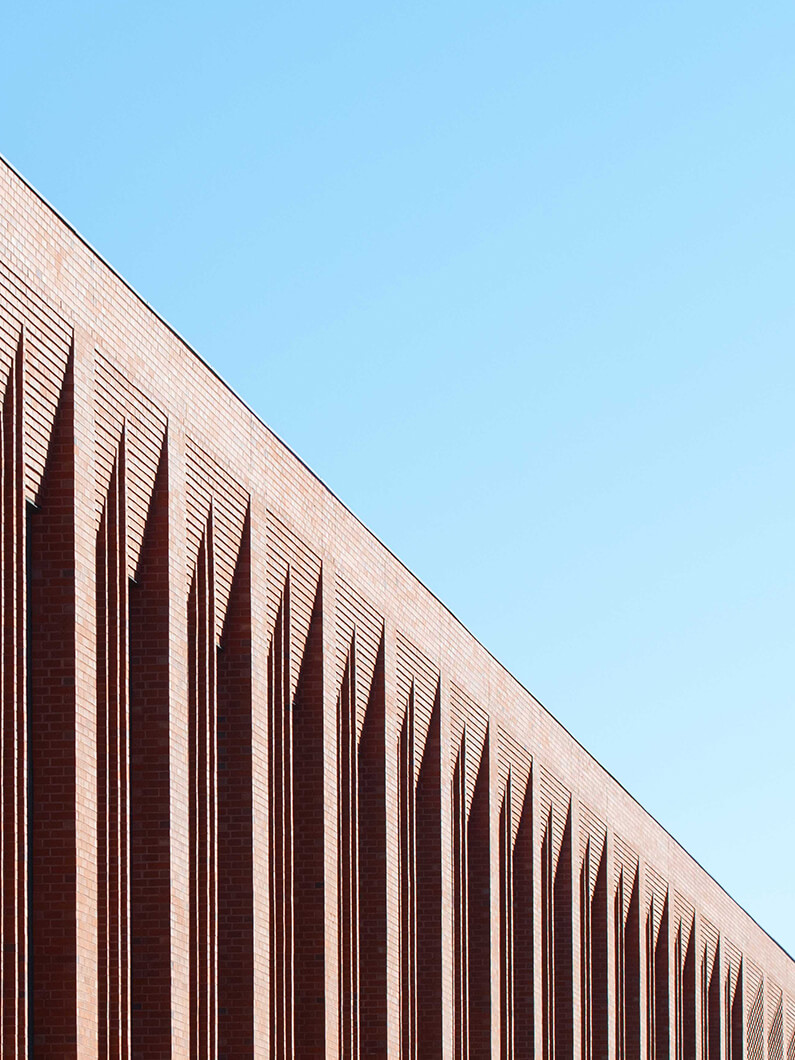
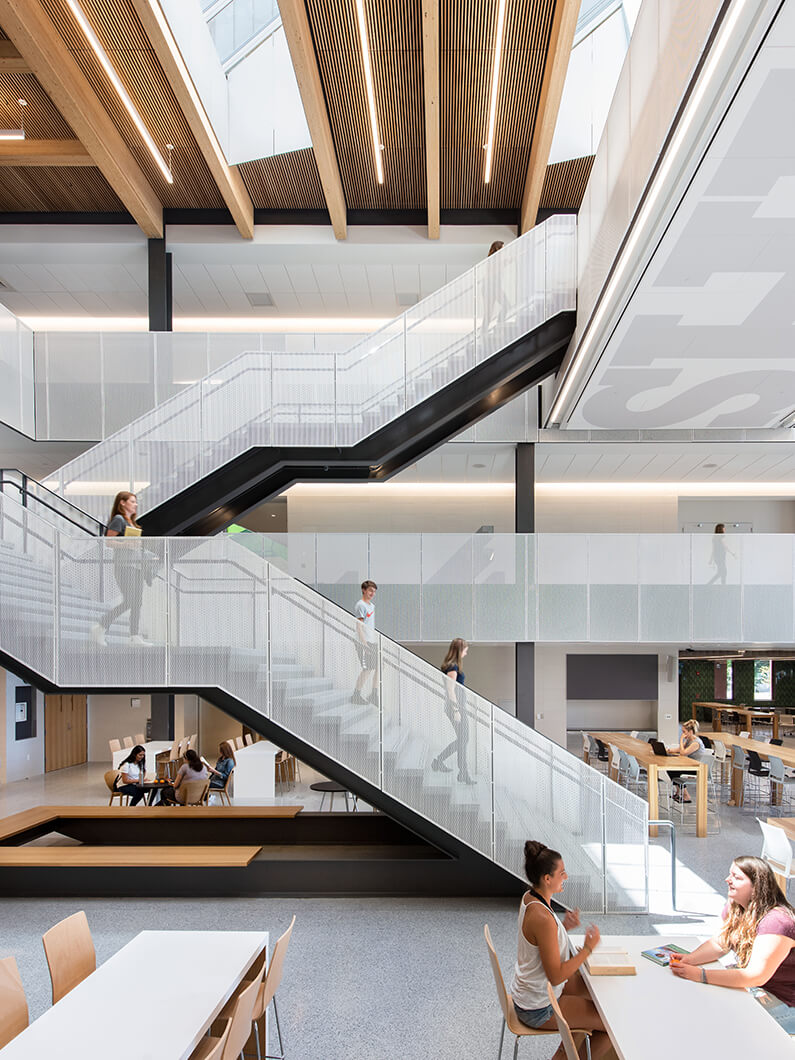
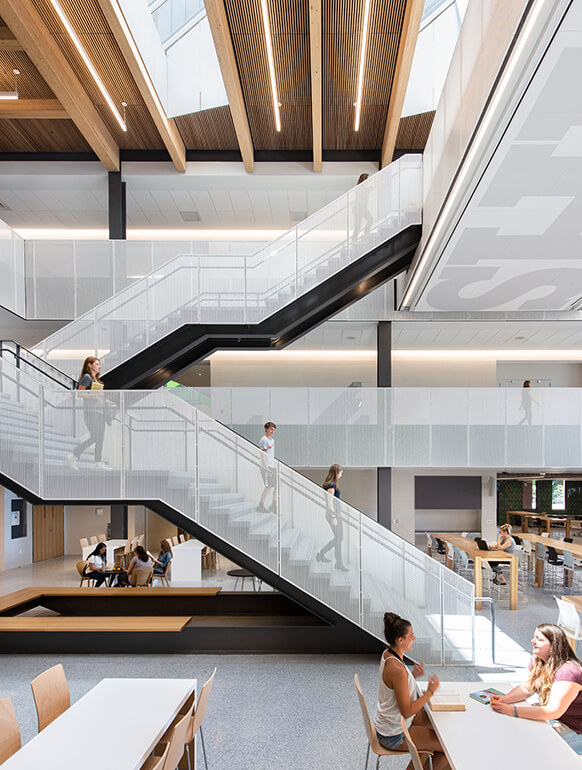
Billerica Memorial High School
Billerica, Massachusetts
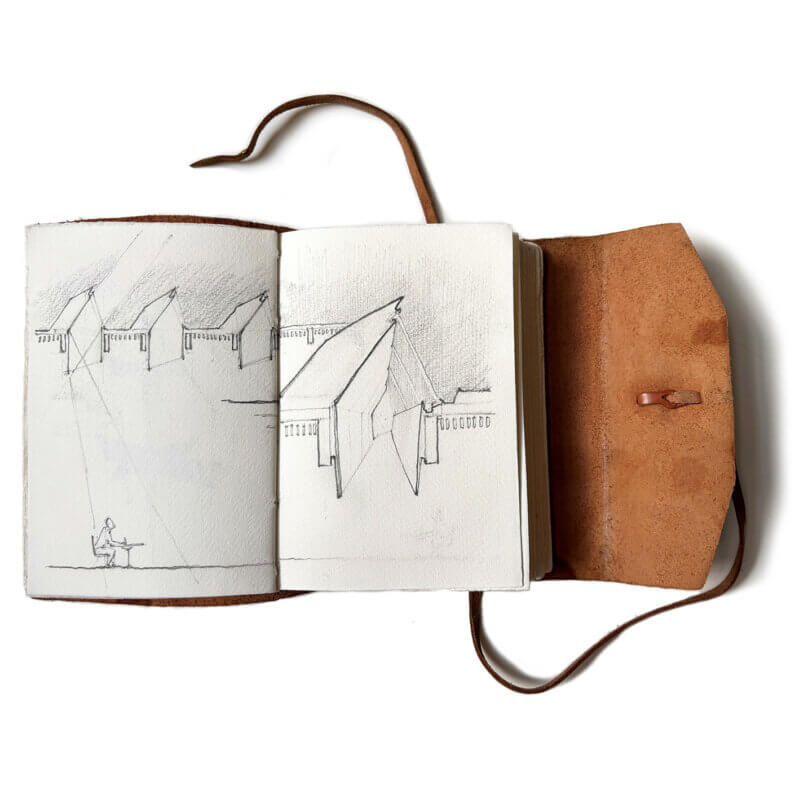
Sketchbook opened to architectural drawings, featuring various building forms and a figure sketching. Leather cover with a tie closure.
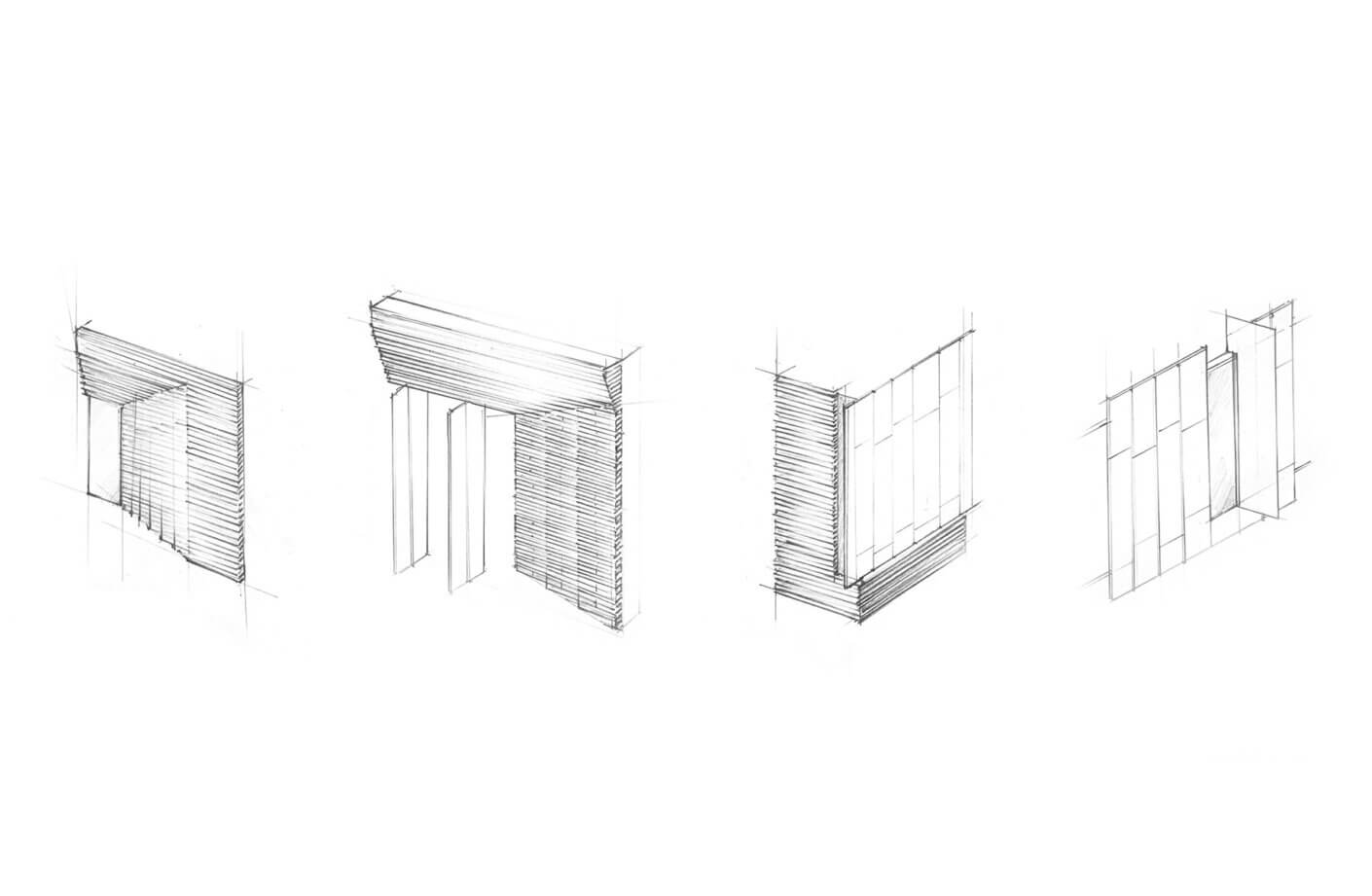
Architectural sketches illustrating various façade designs with varied textures and dimensions, showcasing creative building concepts.
How do you incorporate inclusivity in your design practice?

Lately, I’ve been fortunate to work on projects where inclusivity isn’t just responsible practice but the core mission. When you’re immersed in that kind of focused, meaningful work, the insights and connections you make don’t stay contained, they carry forward, you start to see things you didn’t before.

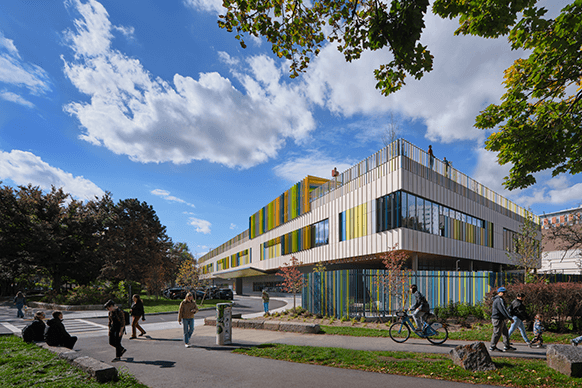
We just completed the William E. Carter School, a purpose-built school for the most developmentally and physically disabled students in the Boston Public School system. Working with the Carter community shaped how I think about designing for the full spectrum of sensory experience. Experientially, we all have a full pie, but as individuals we take in space in differently sized and arranged slices.

Interior of a bright facility featuring a colorful mural, a map display, and a table with blue chairs. People interact and move throughout the space.
William E. Carter School
Boston, Massachusetts
Colorful building facade with unique slatted roof design and large panels in green, blue, and yellow against a clear sky.
What’s a trend in architecture you’re excited about, and one you’re skeptical of?

In equal parts I’m both excited and skeptical about artificial intelligence. We suddenly have the ability to communicate design ideas with an incredible level of vivid complexity. We can run farther, iterate faster, and weave the scientific side of design into our work with a kind of fluidity we couldn’t before. The breaks that computing limits put on effective, rapid iteration are being released. That’s genuinely thrilling.

But the B-side of that record is quieter and more demanding. Great design has always come from intention. When the tools get this powerful, the stakes rise with them. Our culture, our daily lives, even our planet are shaped by the choices we make. On a daily basis I find myself asking our design teams to double down on design discipline and explore these new tools with care, restraint, and purpose.

Outside of architecture, what art forms or hobbies influence your work or mindset?

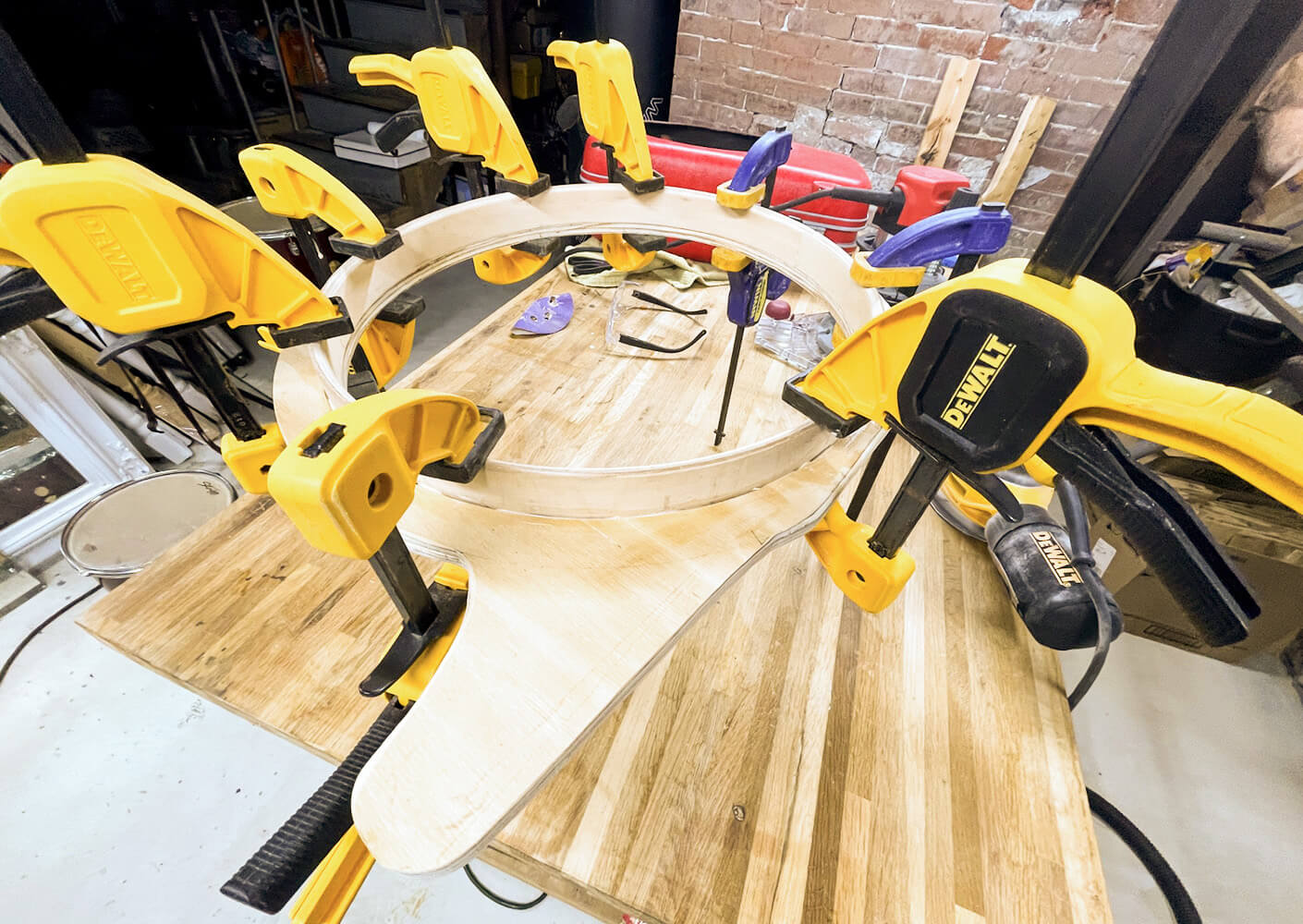
I’m a habitual tinkerer. It drives my family crazy. I’ll make kick drums from old suitcases and drum parts I’ve bought online, get bored of that, start steam bending wood with tools I’ve fashioned from pet-store warming lamps and old cooking tins. As soon as I make something in my workshop I get bored again and think of something else to make. I love having an unfinished project going at home, it feeds the work to be a mad-craftsman with no deadline.

One of Patrick's recent projects involved steam bending wood for a kick drum.
What advice would you give to anyone who wants to make a meaningful impact on the built environment?

Learn how to be a connector… of materials, people, systems, and ideas, but never forget that connection starts with attention: daily, personal, creative acts of noticing a place, and making something that leaves room for someone else to belong.