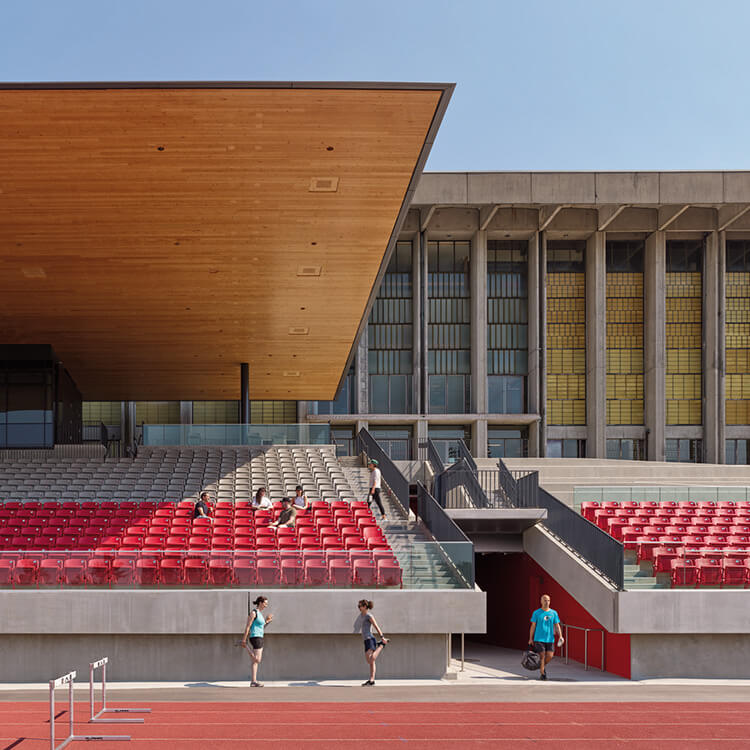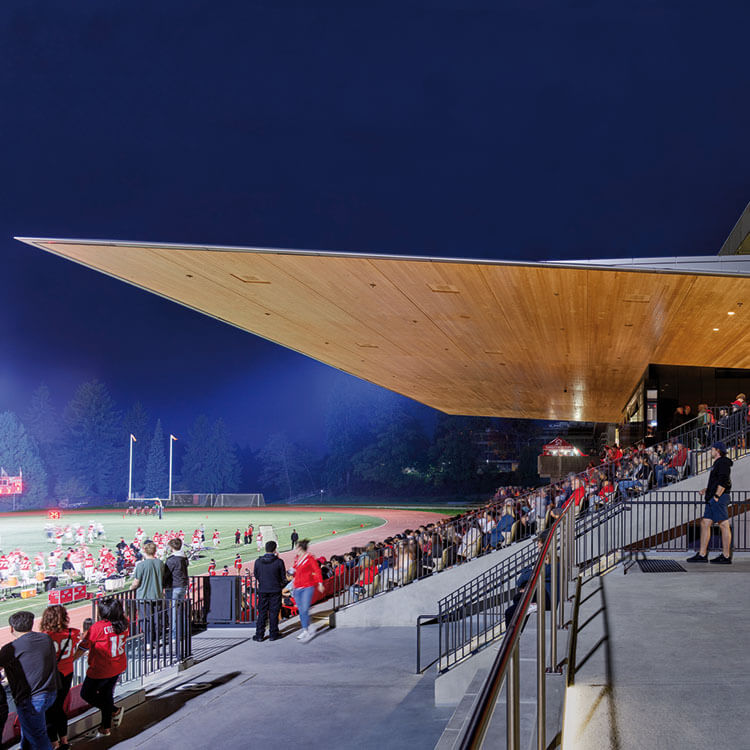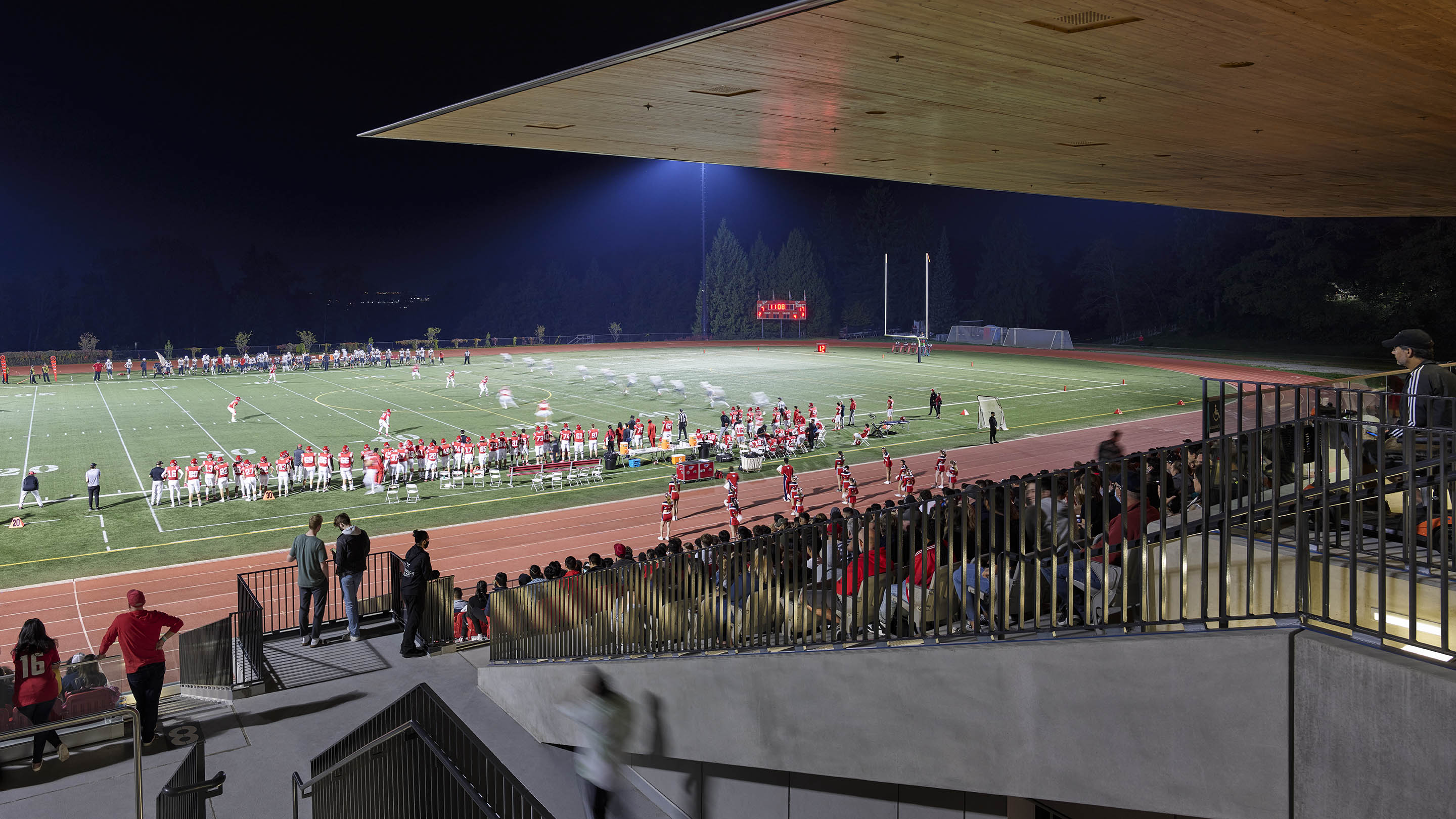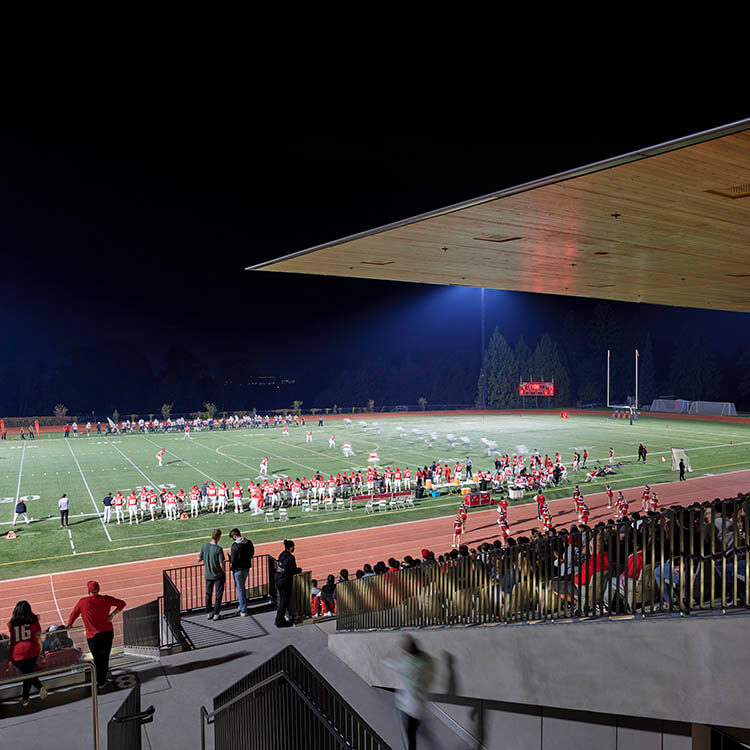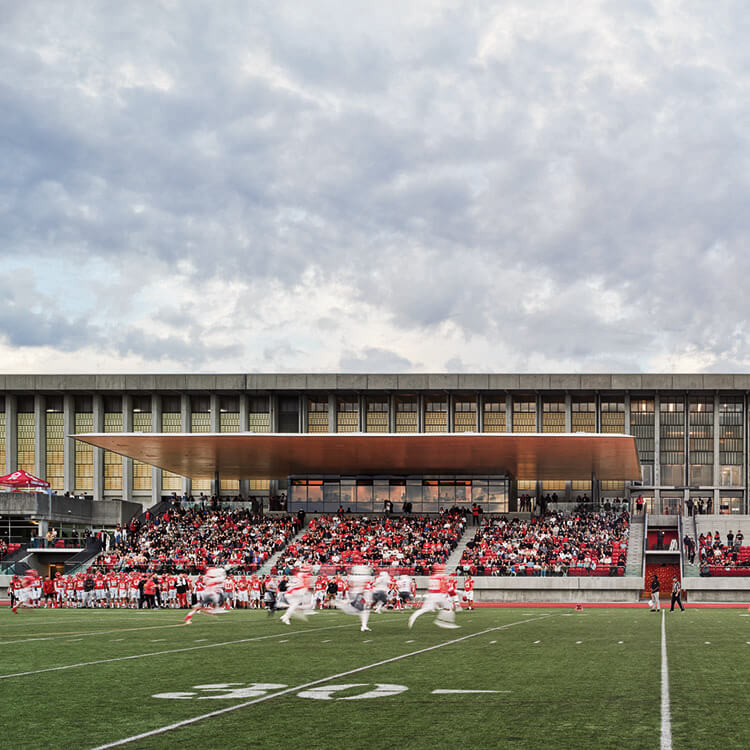
Student organizations at Simon Fraser University (SFU) have long rallied for a proper sports stadium on campus. The Burnaby, British Columbia-based institution opened in 1965 without one, but by 2012, students raised $10 million for a 2,000-seat stadium with a striking focal point. “It took six decades’ worth of student determination to make this building happen,” says the university’s senior project manager, Gerald Gongos. The university’s leadership contributed an additional $10 million to get the project across the financial finish line.
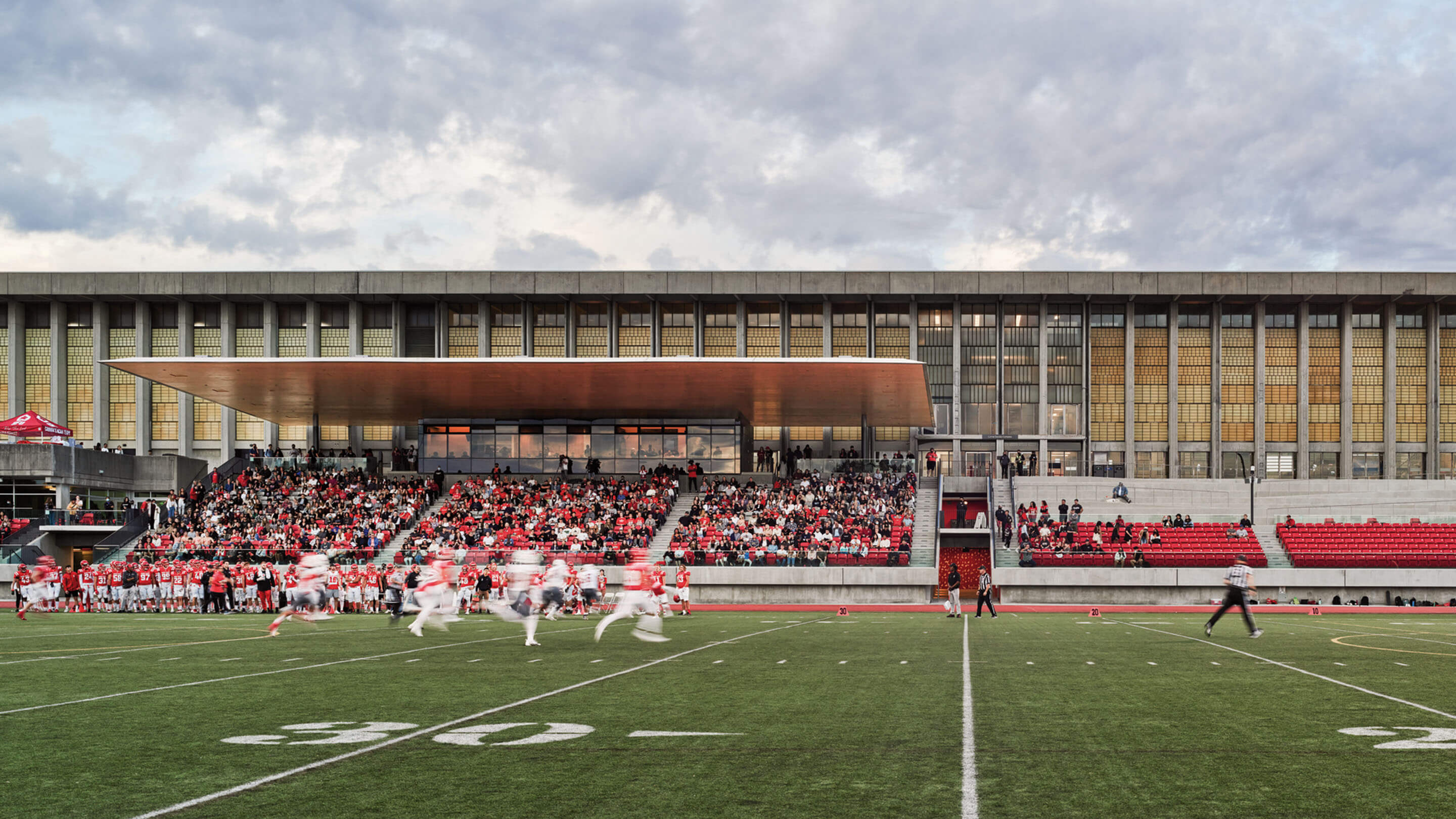
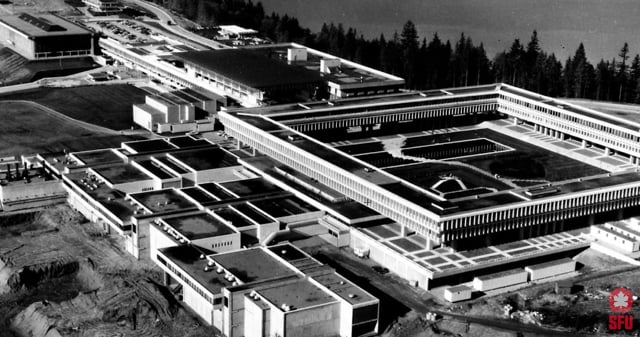
With the funds finally secured, the university turned to longtime architectural collaborators Perkins&Will. The design team concepted a stadium that paid tribute to the largely horizontal work of celebrated Canadian architect Arthur Erickson, who designed the campus in the 1960s.
The design team concepted a stadium that paid tribute to the largely horizontal work of celebrated Canadian architect Arthur Erickson, who designed the campus in the 1960s.
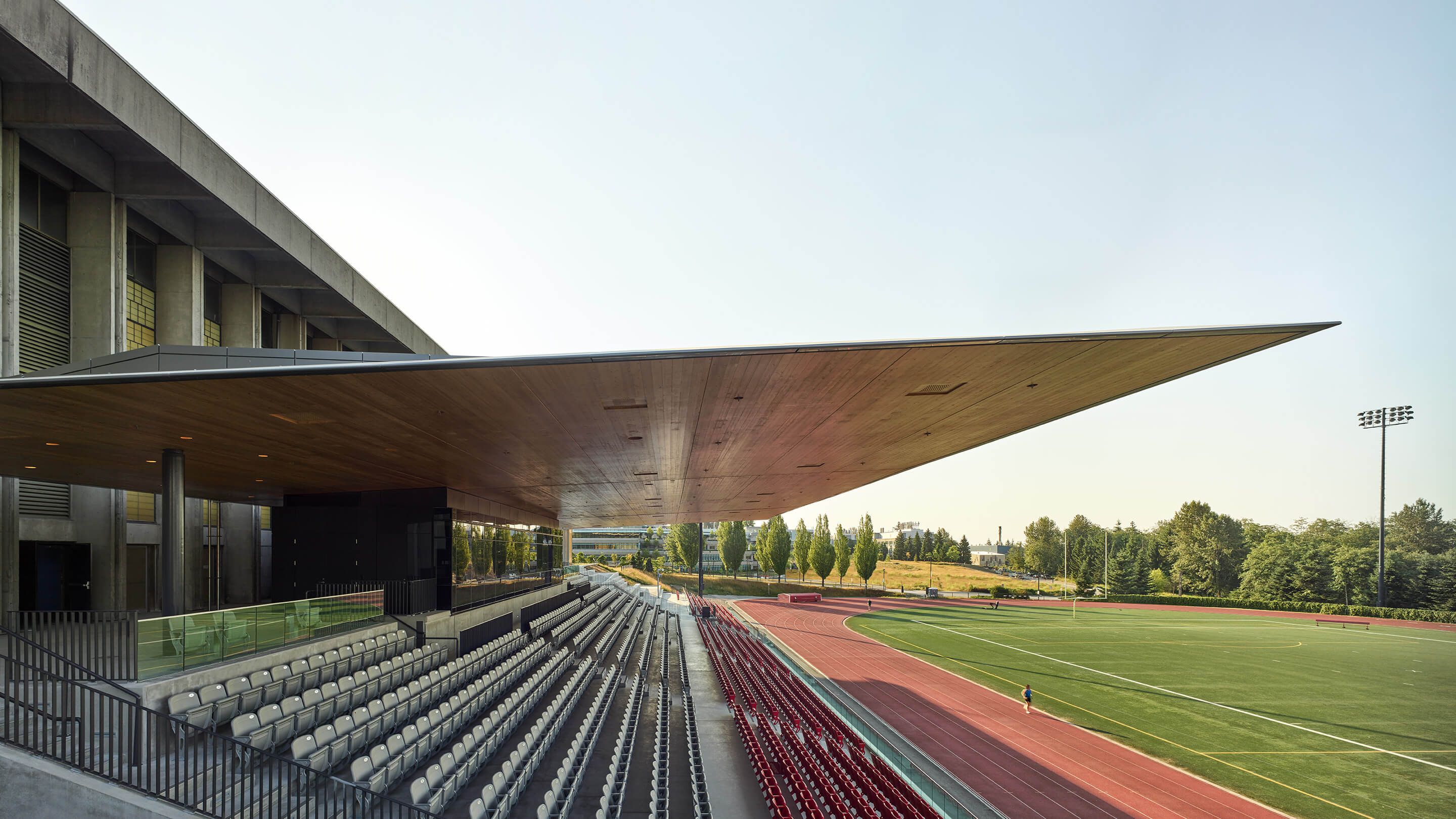
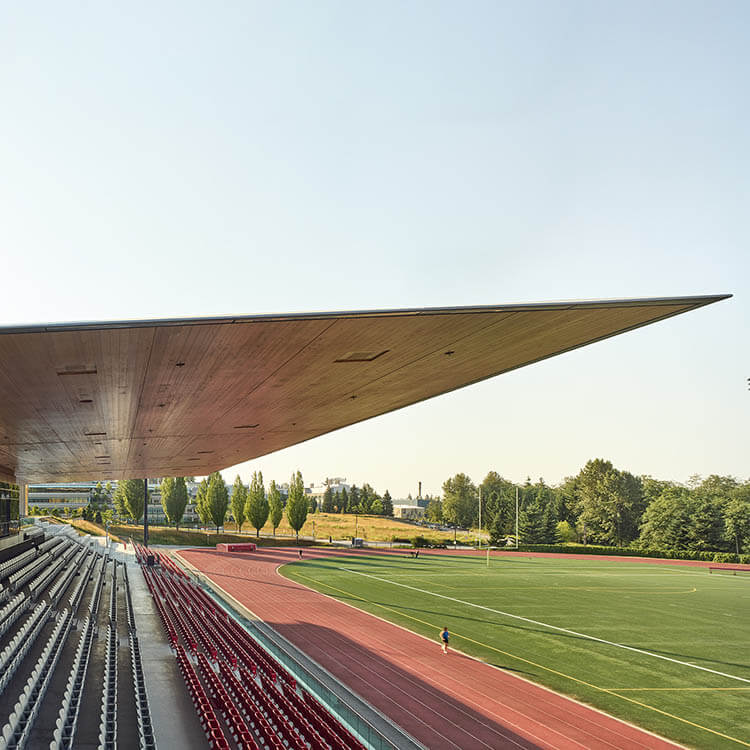
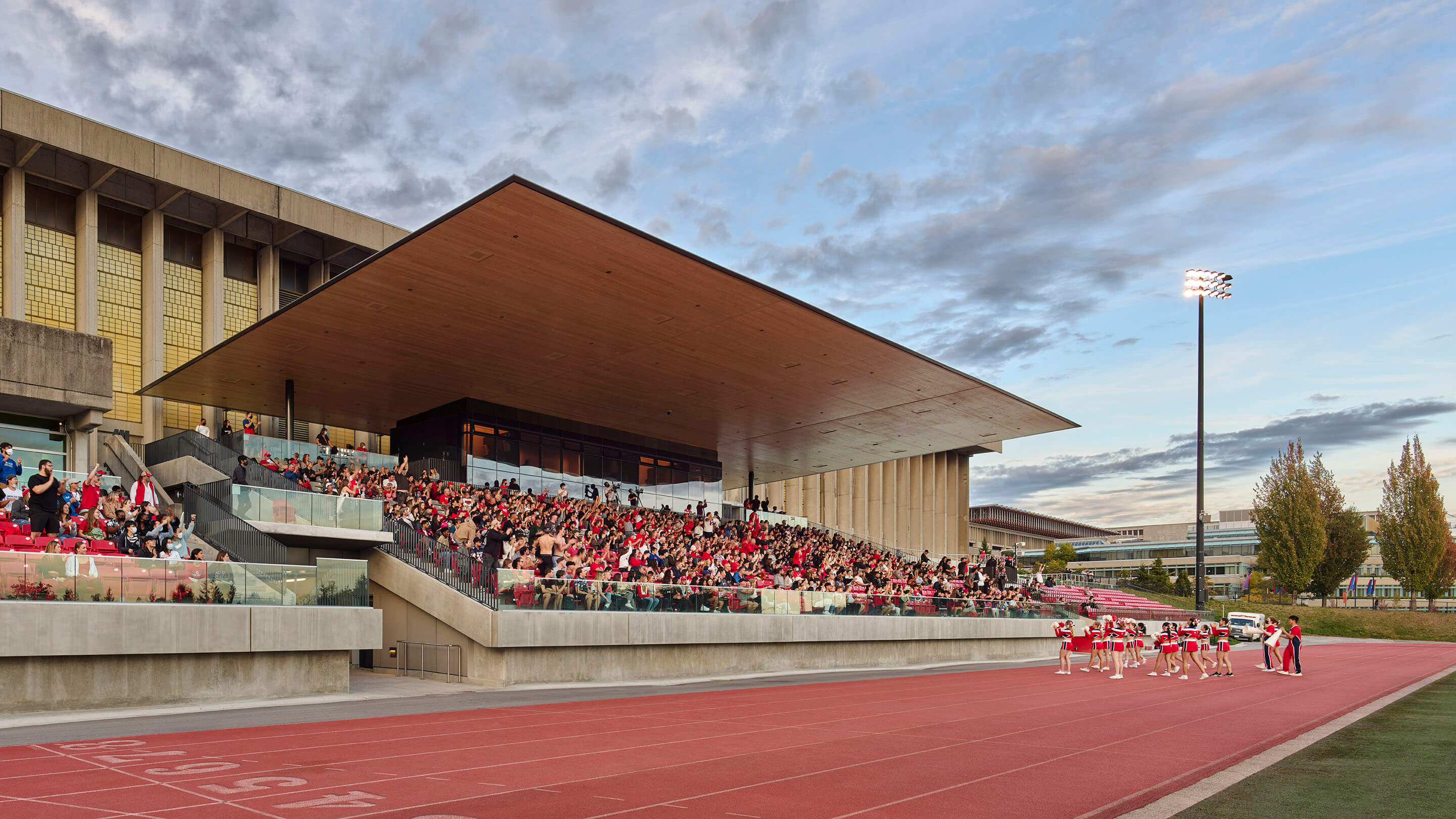
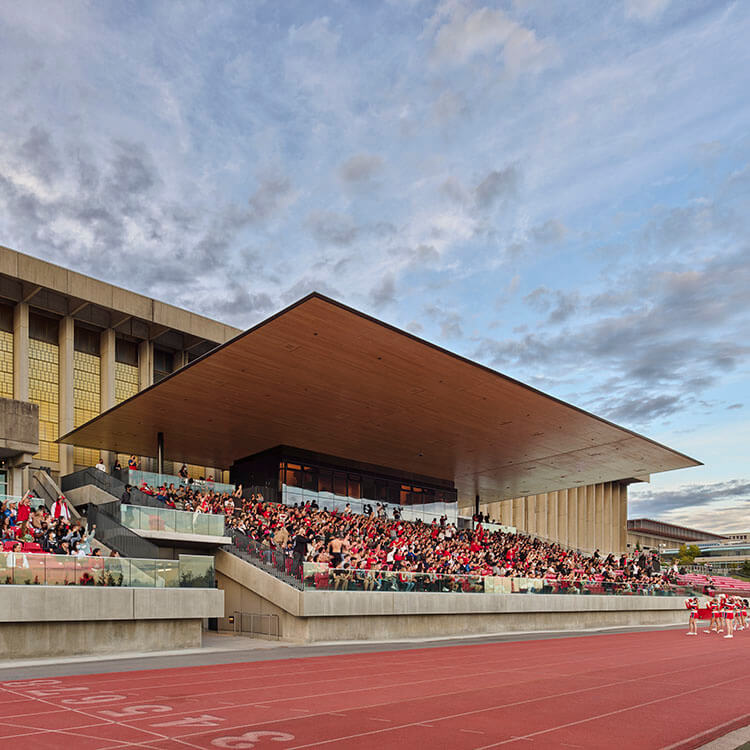
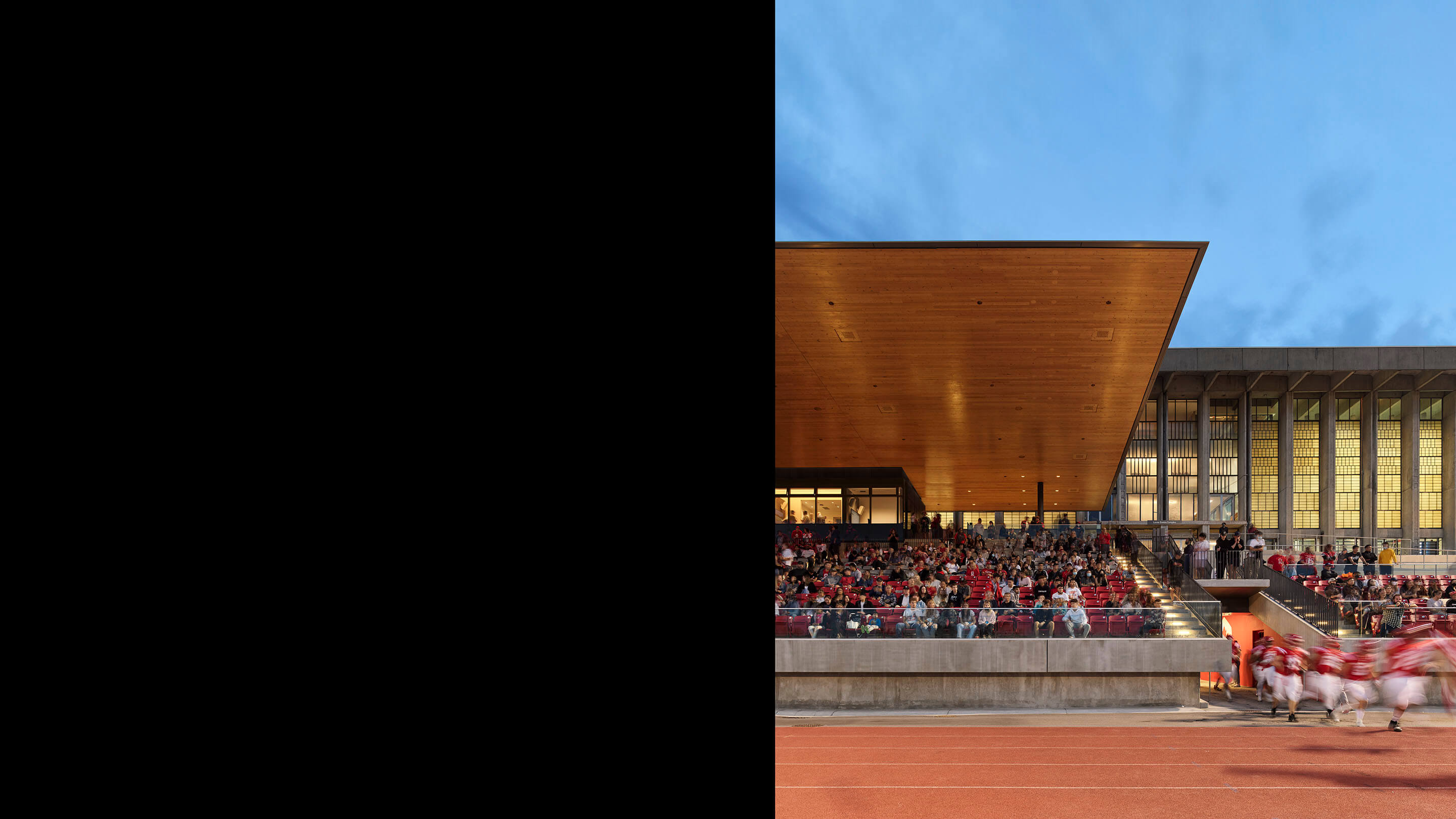
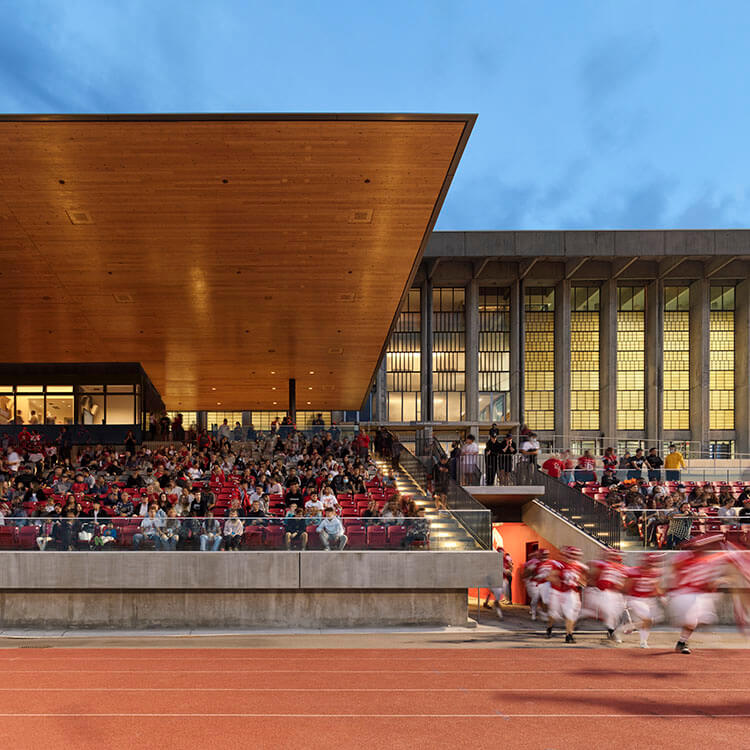
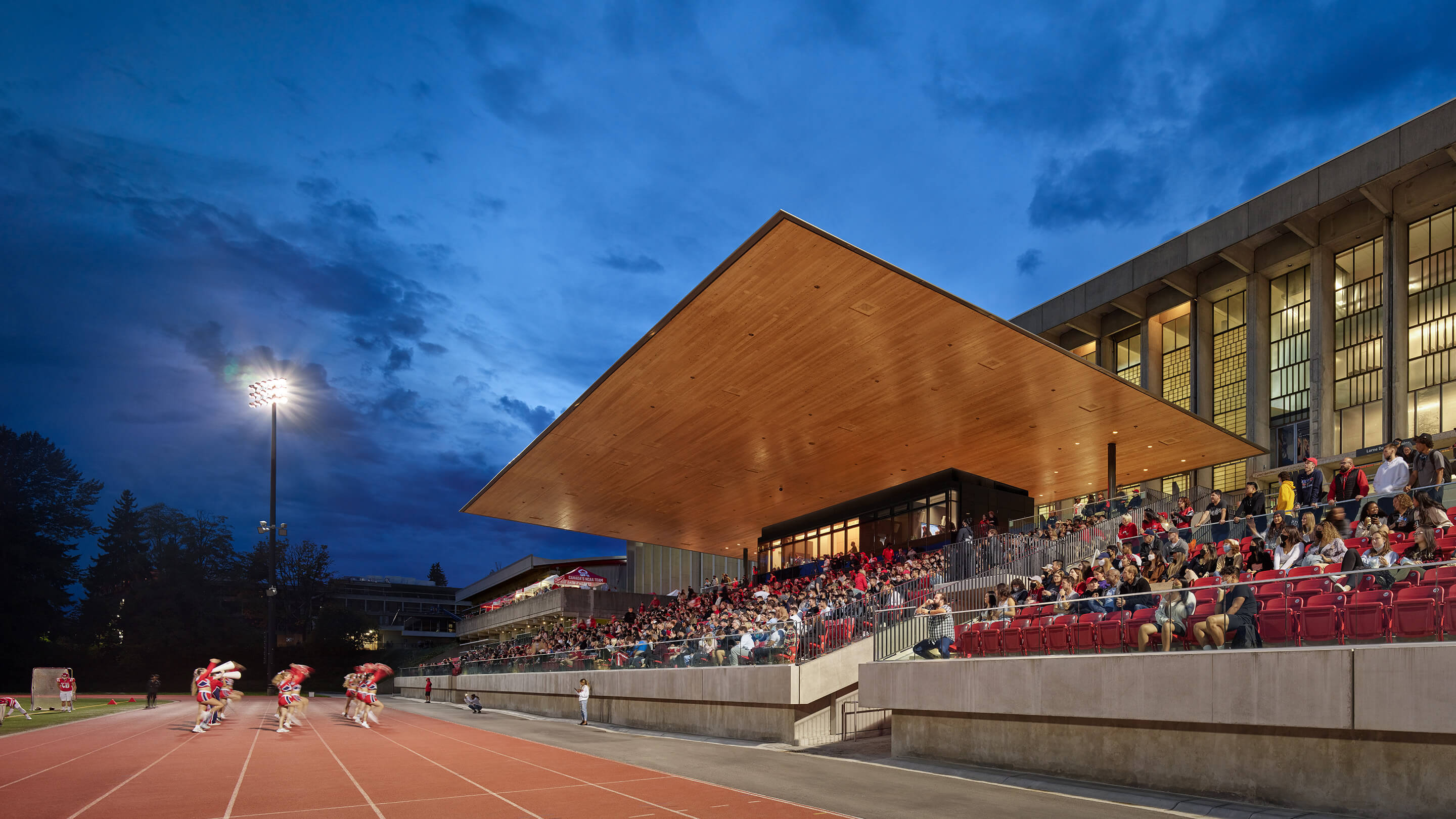
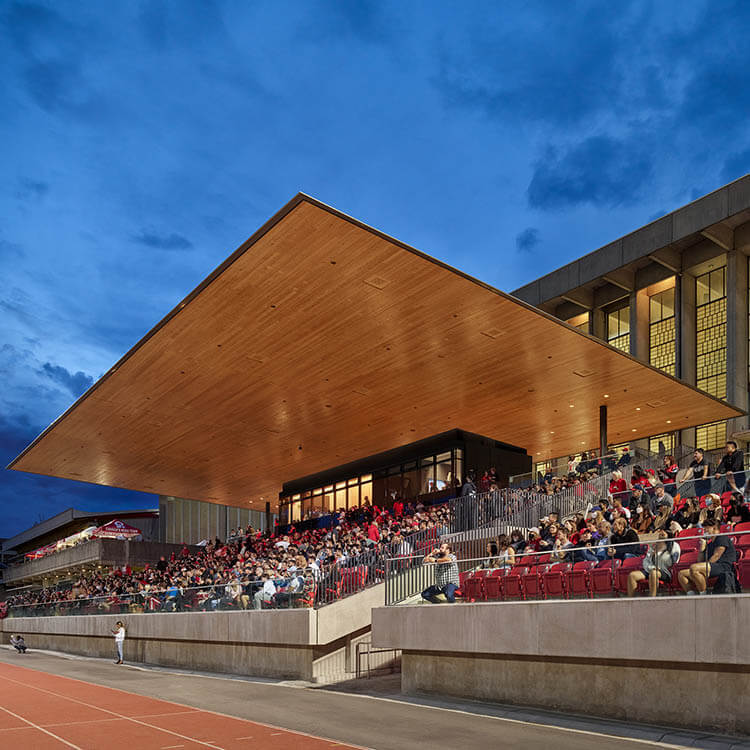
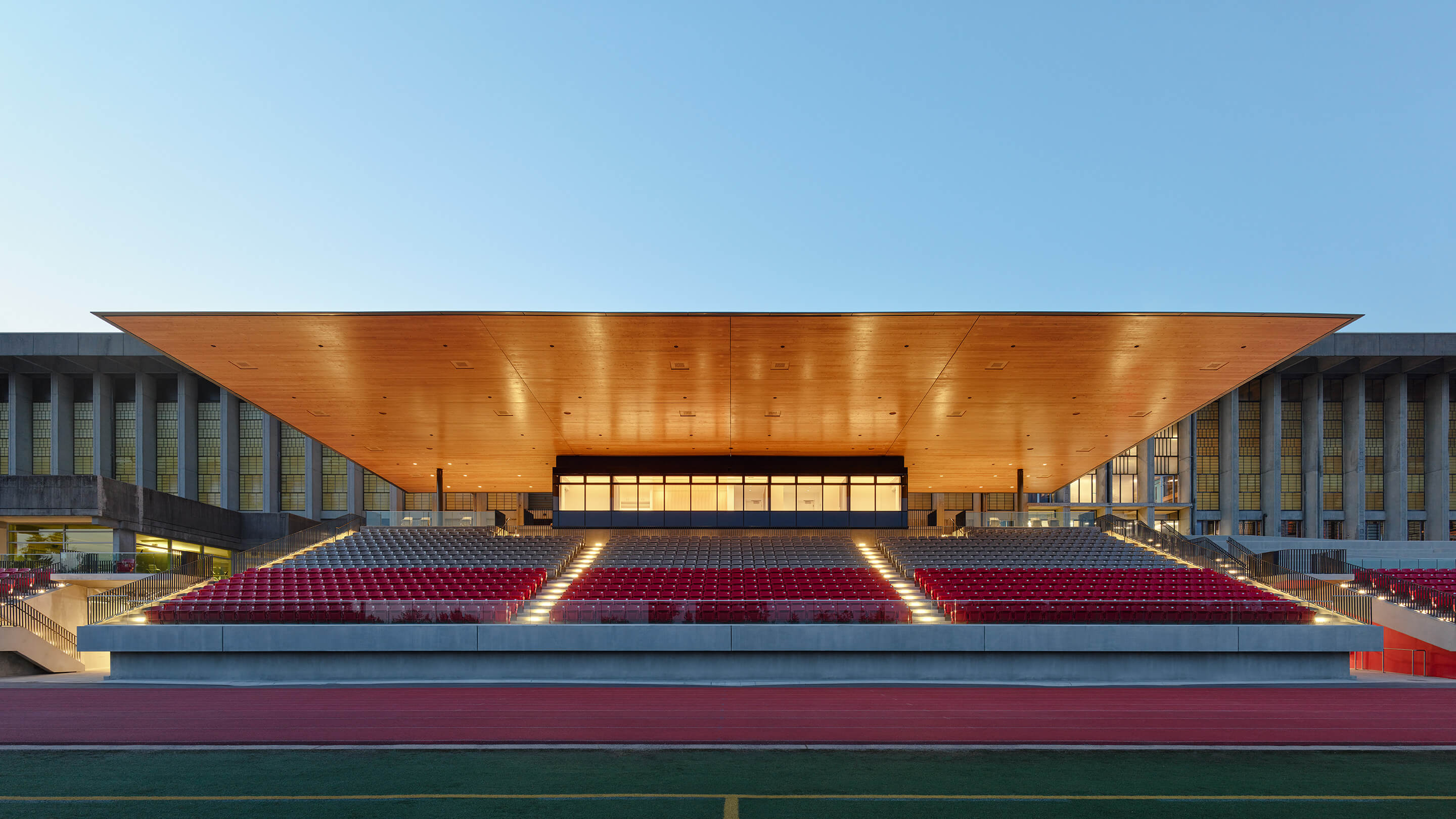
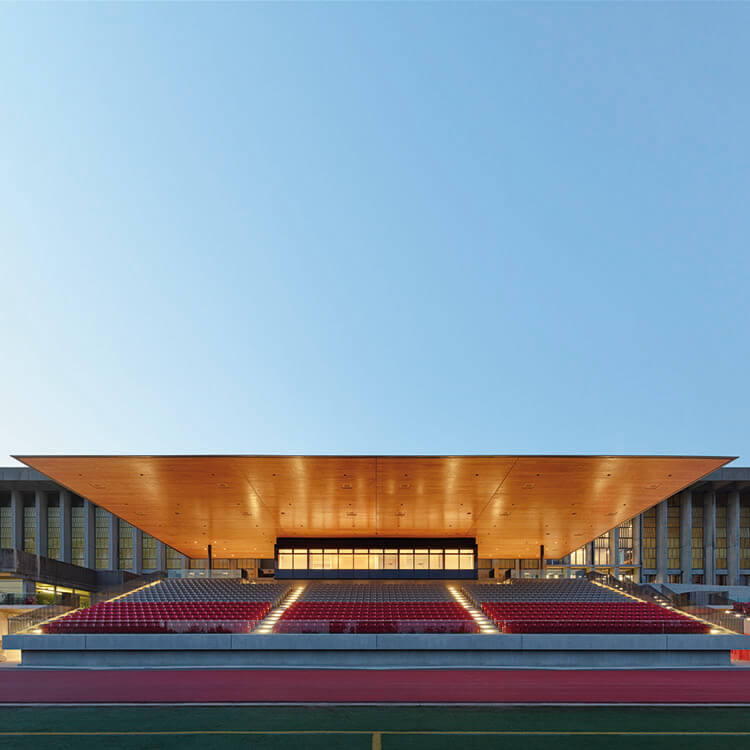
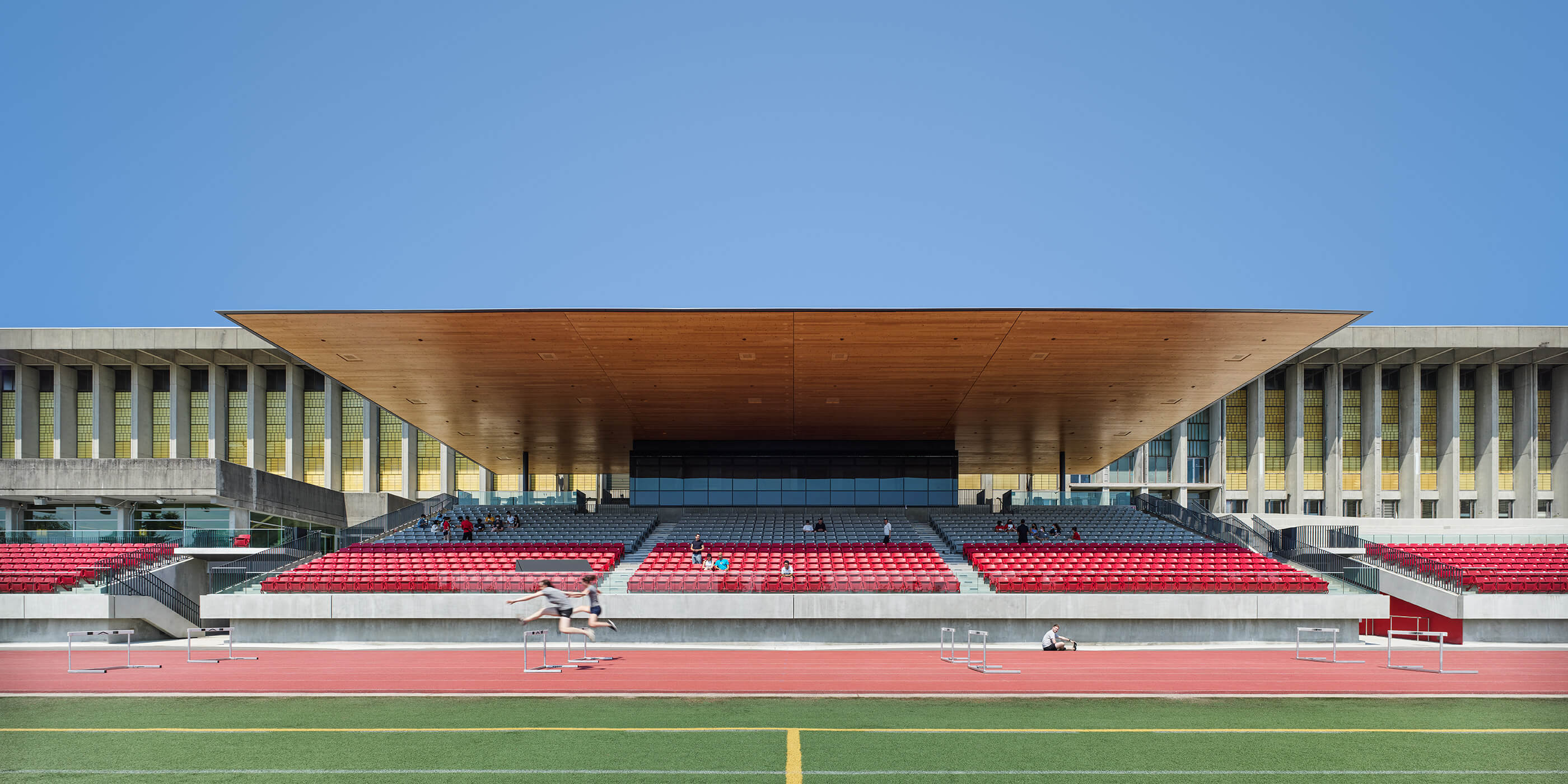
This is most apparent in the eye-catching central canopy that appears to float over the central seating section.
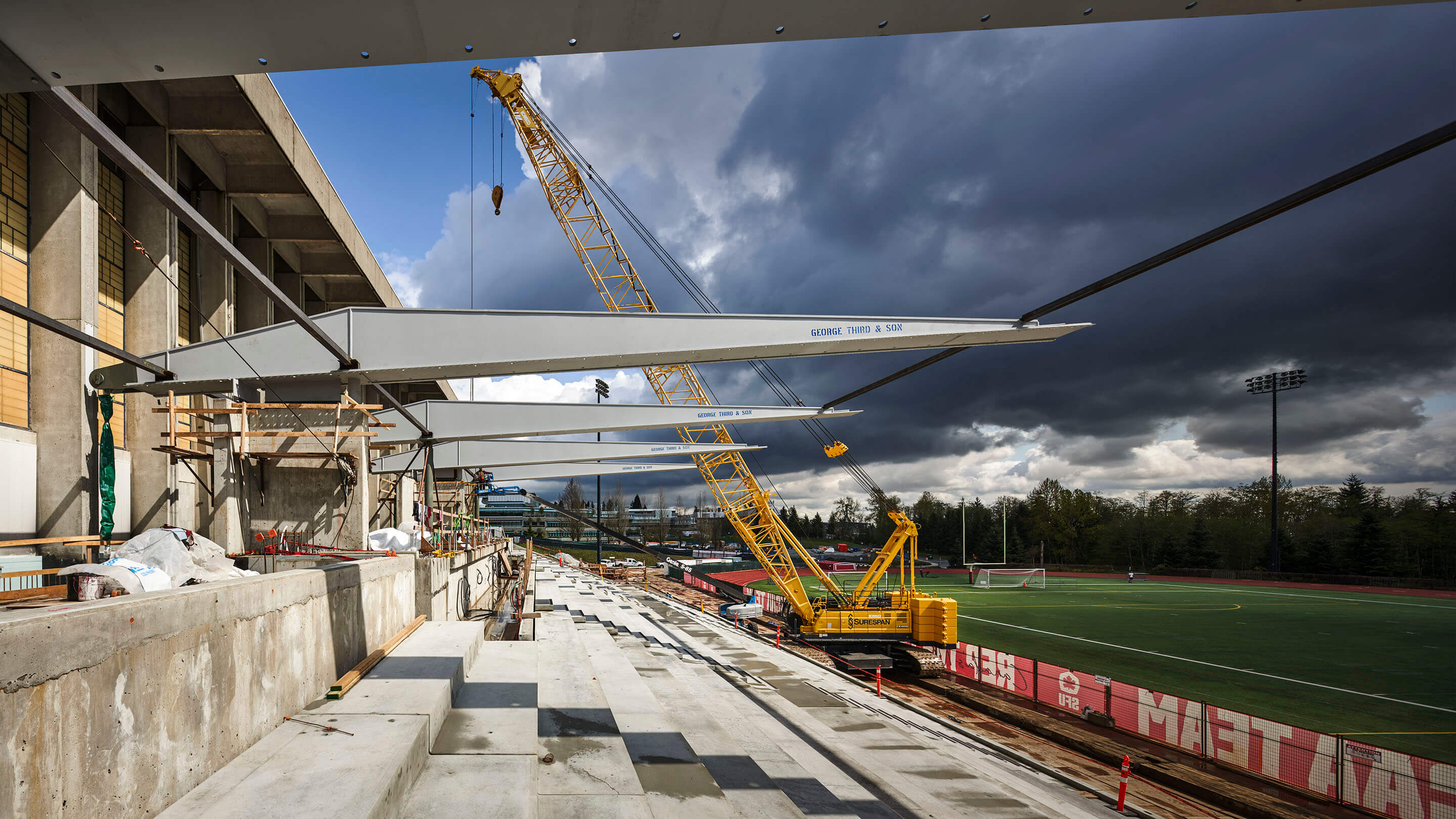
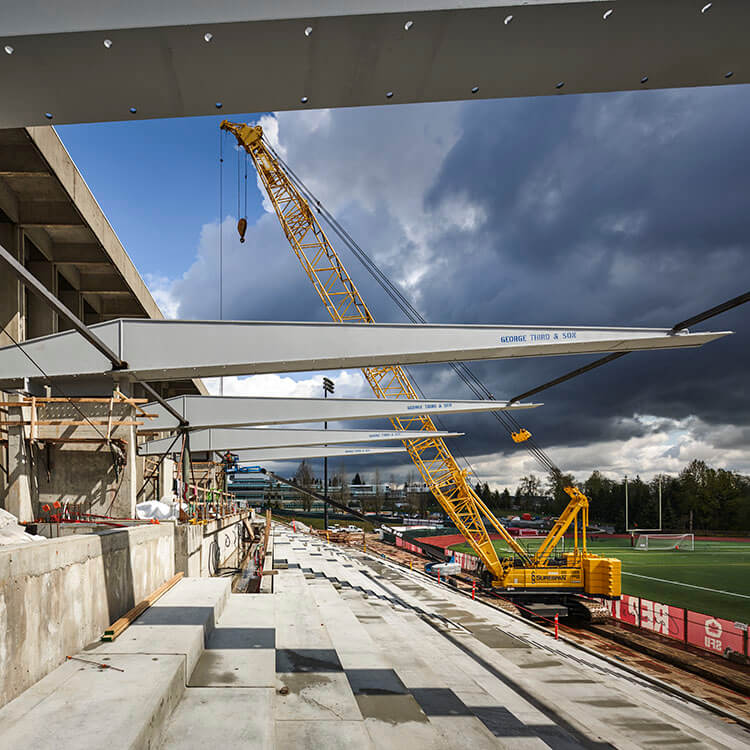
The canopy is as elegant as it is safe and strong, thanks to massive box girder beams, which are hidden behind the roofing, cladding, and cross-laminated timber soffit panels.
In the stands, the canopy creates a safe atmosphere for gathering. It’s even built to withstand the region’s heavy snowfall.
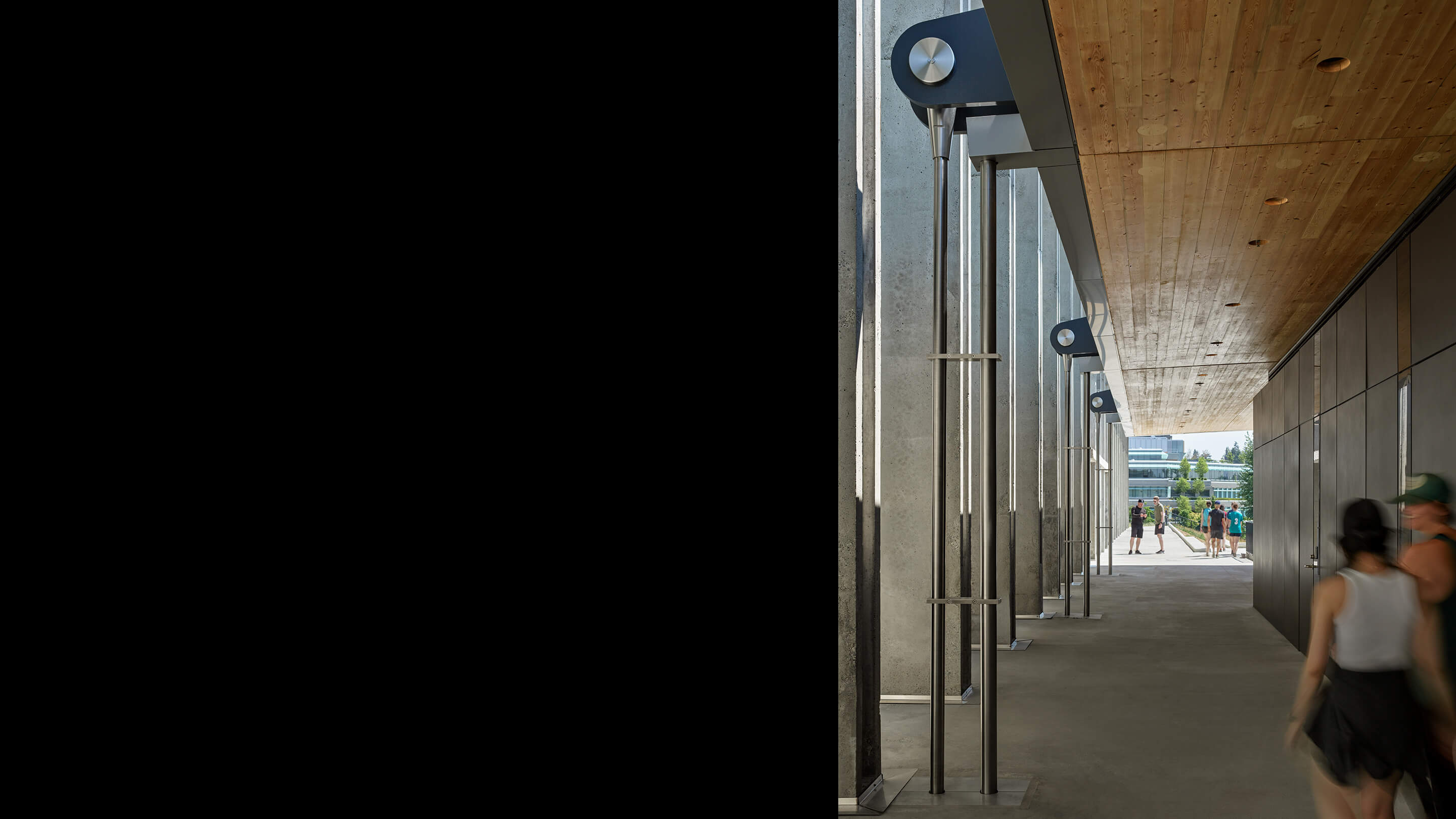
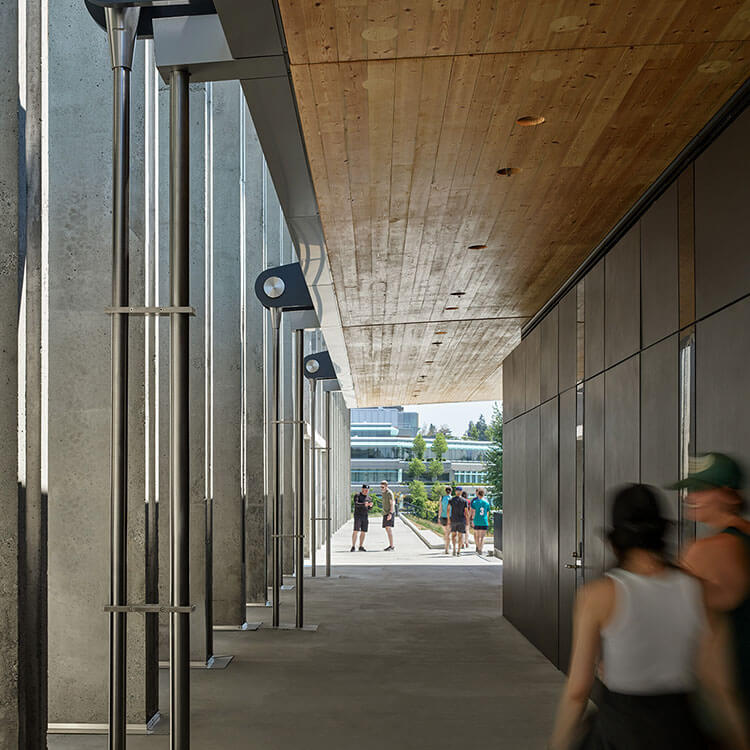
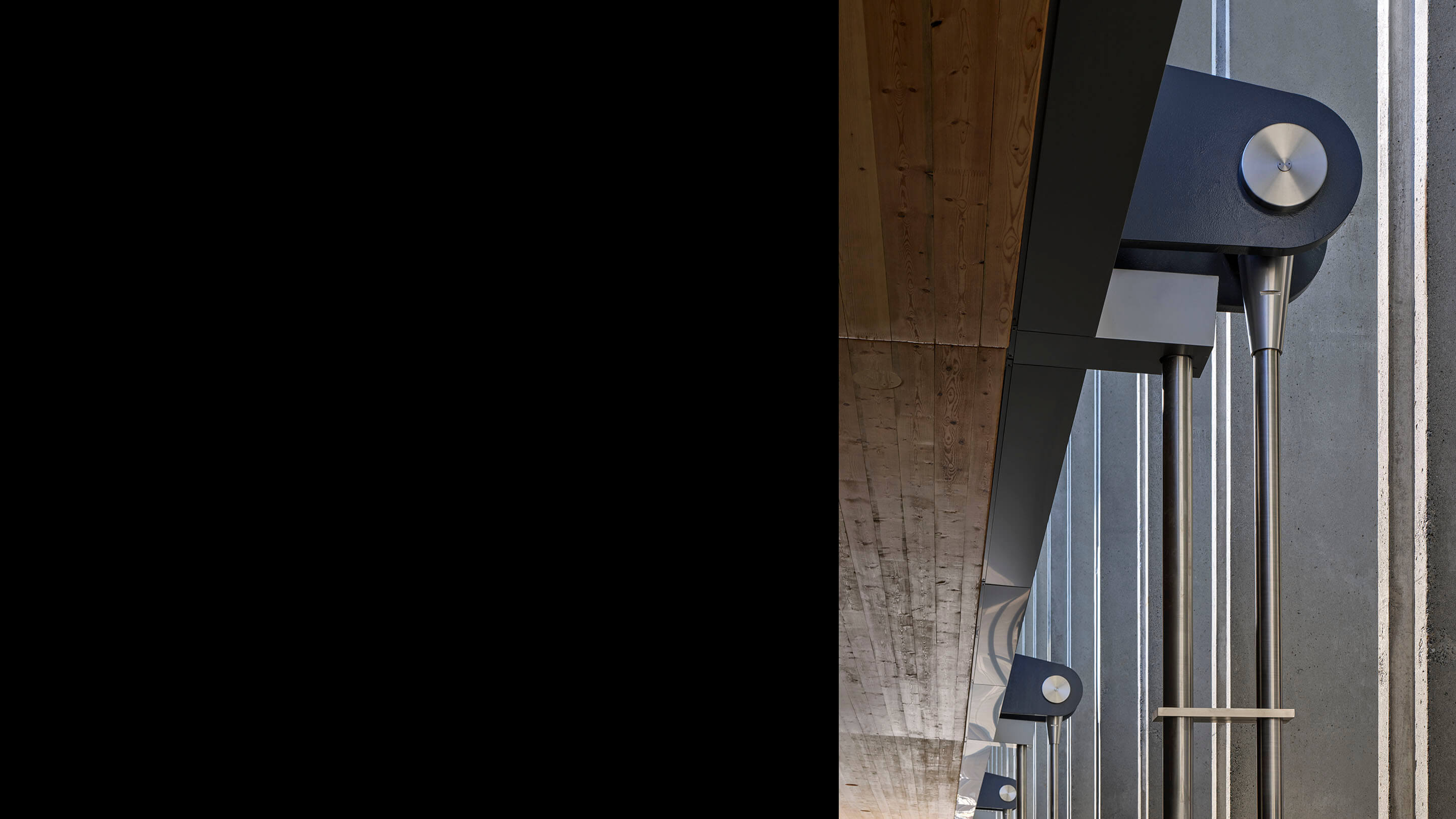
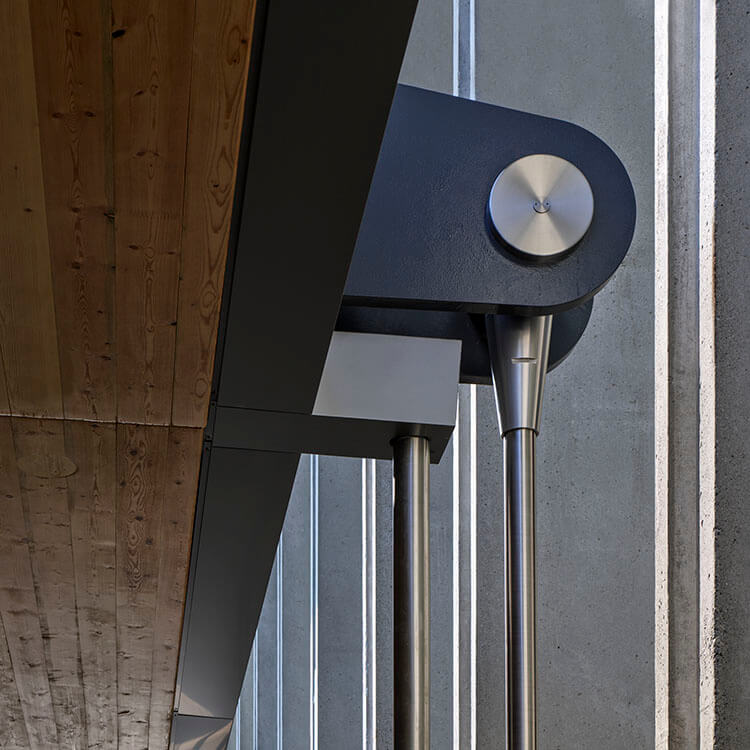
Supportive tension rods, along with two thin columns on both sides of the press box, seem to disappear as they align with the building’s concrete columns.
Sleek stainless steel discs cover the bolts that connect the cantilevered beams to the tension rods.
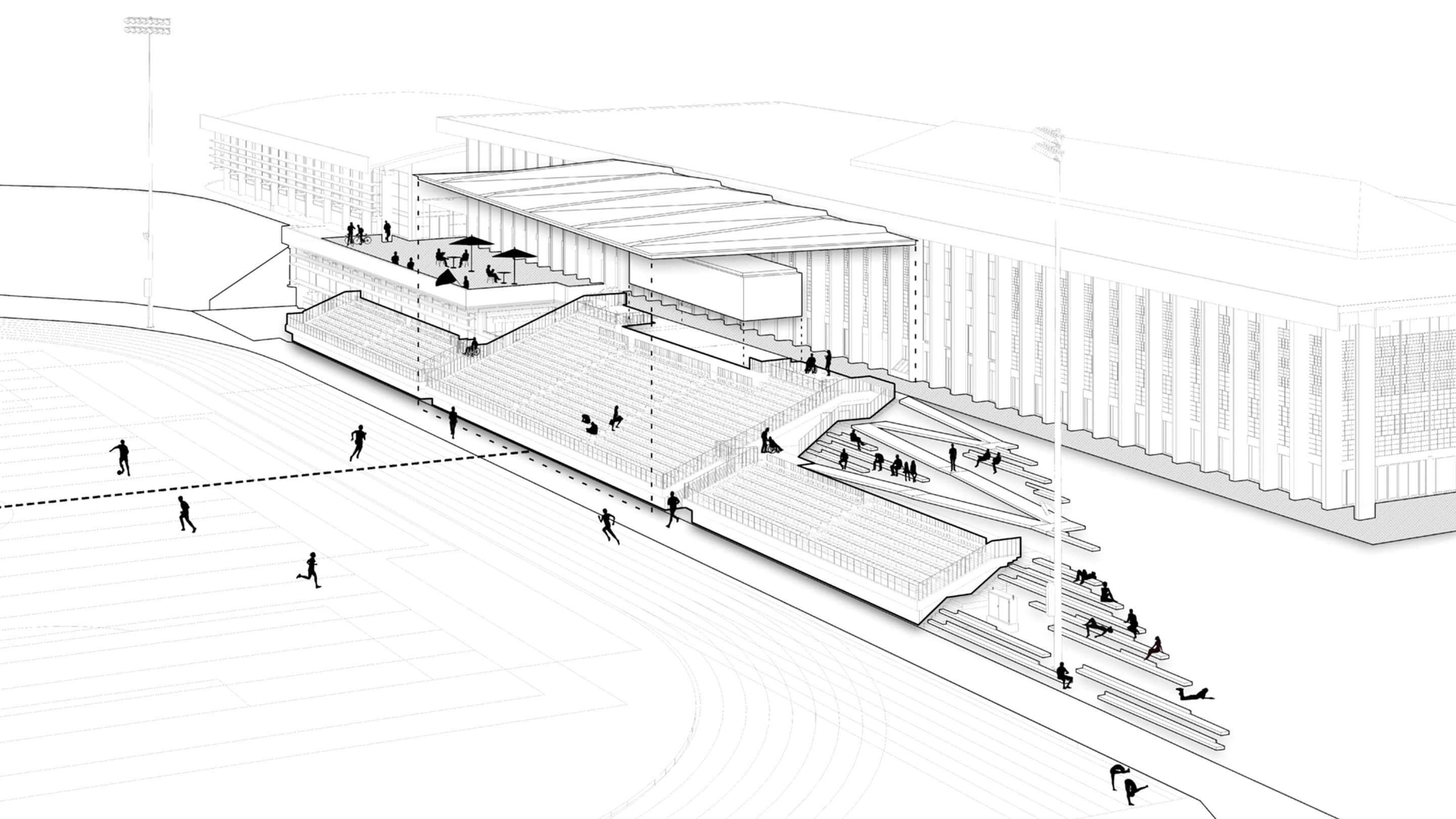
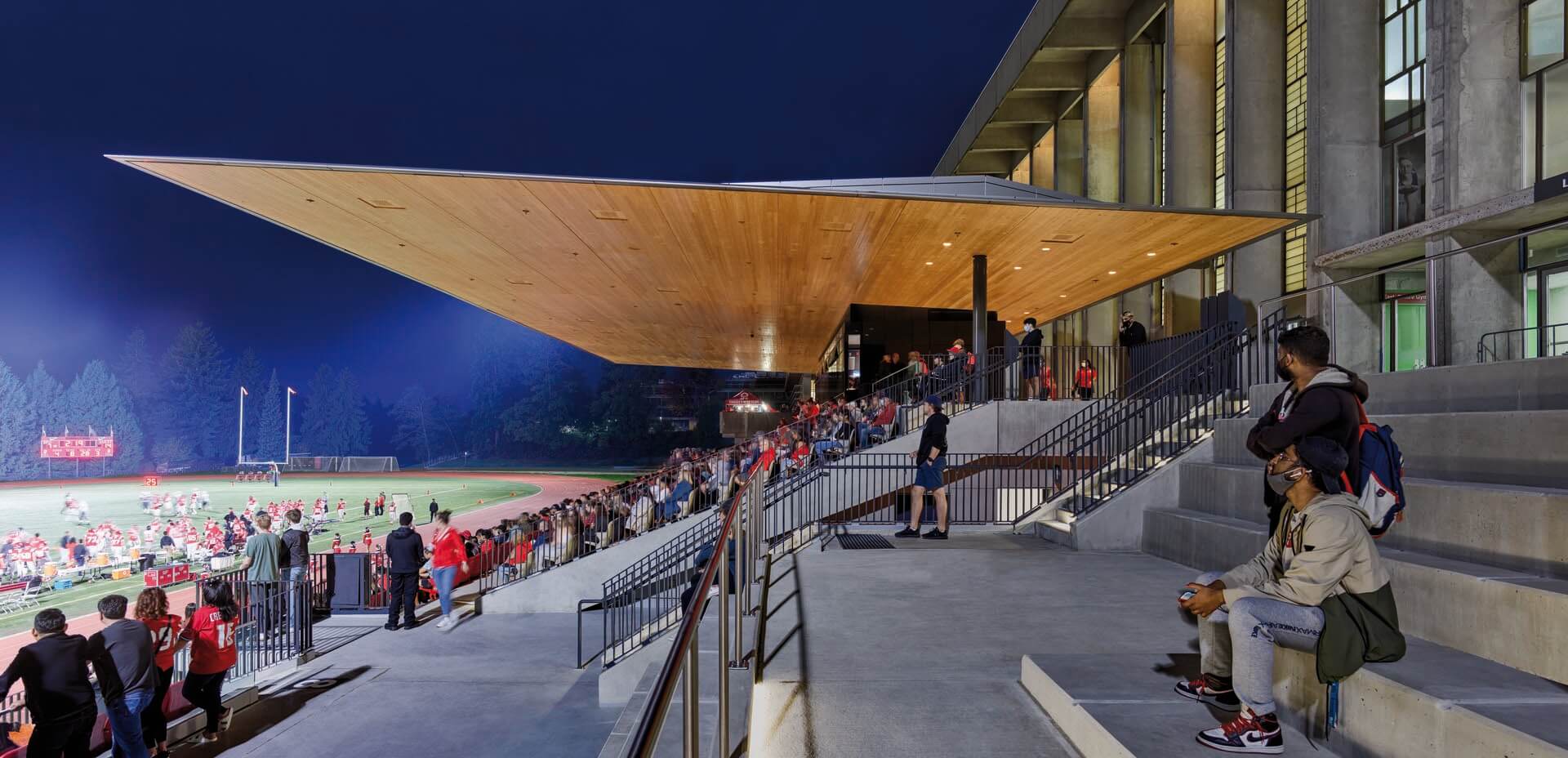
Accessibility was a top priority. The stadium is designed so that anyone can be entertained comfortably, whether in the stands, on the terrace, or in the wheelchair-accessible section that offers a variety of views.
Accessibility was a top priority. The stadium is designed so that anyone can be entertained comfortably.
The ramp doubles as a terrace that welcomes food trucks during games. Hidden speakers facilitate an effortless entertainment experience.
The ramp doubles as a terrace that welcomes food trucks during games.
“We didn’t want certain spectators relegated to the back row because that was the most convenient place for a wheelchair,” Gongos says.
“We strove to inspire the spectators,” says architect Max Richter, who led the design team. “At the right angle, it just looks like a flat sheet of paper held by almost nothing.”
“At the right angle, it just looks like a flat sheet of paper held by almost nothing,” says architect Max Richter, who led the design team.
“We really wanted a structure that fit in,” says Theresa Hanson, senior director of athletics and recreation at SFU. The canopy’s thinness and flatness ensure people in the building behind it have views to the field.
The canopy’s thinness and flatness ensure people in the building behind it have views to the field.
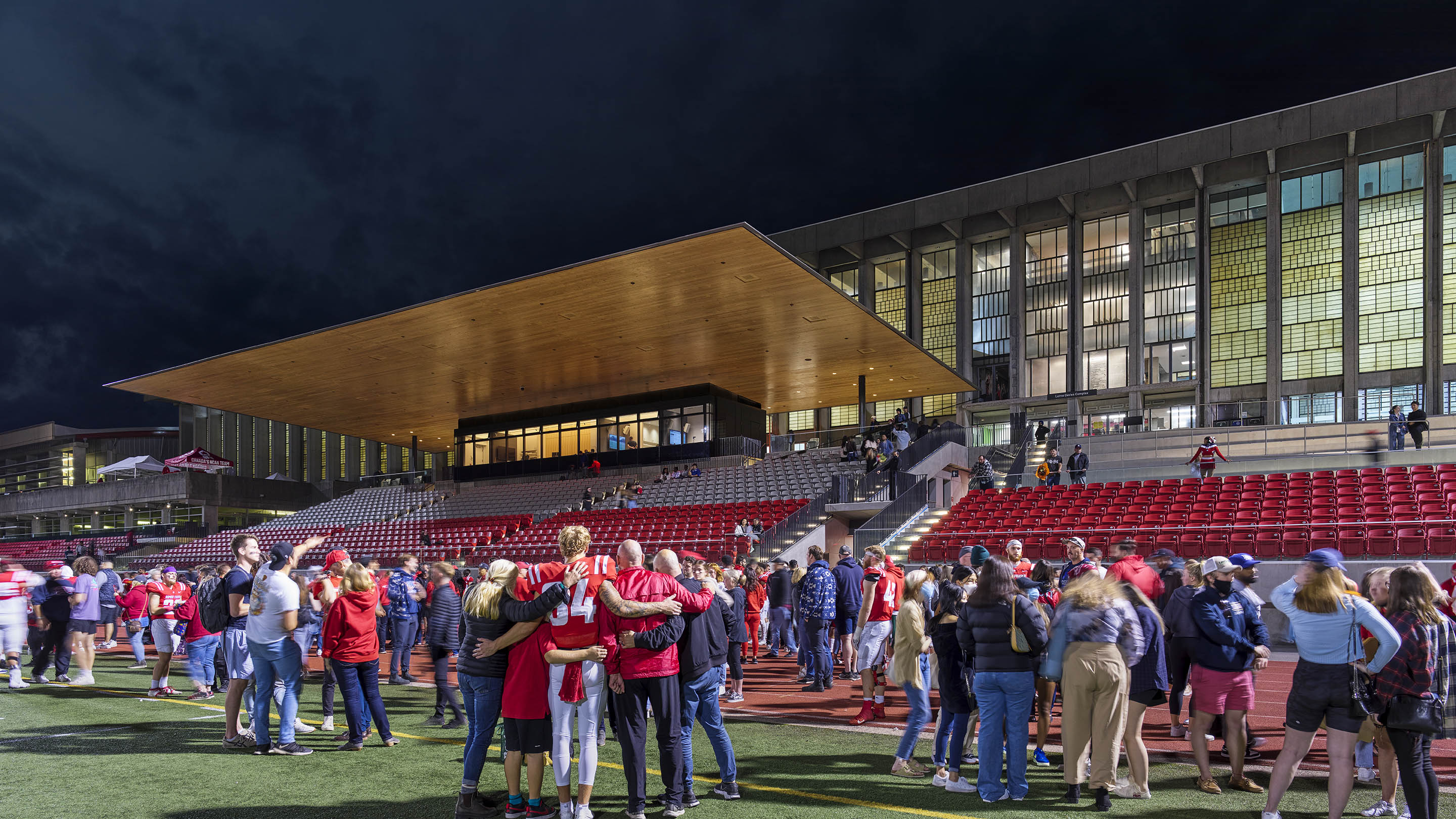
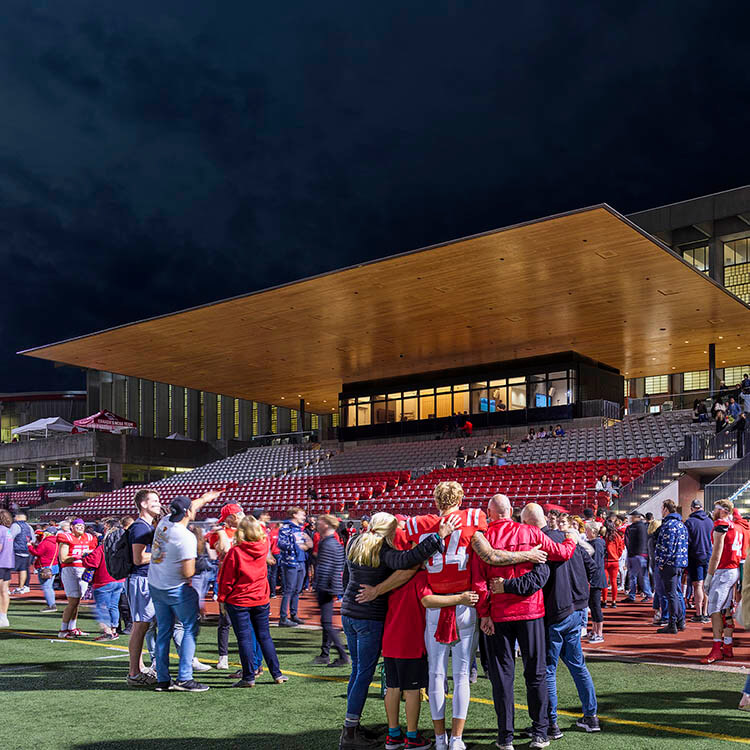
The result is an inclusive, welcoming venue that is a point of pride on campus. “There was a sense of accomplishment during that first game,” Hanson remembers. “It really is a legacy project for the students. They were the reason it all happened.”
“There was a sense of accomplishment during that first game,” Hanson remembers. “It really is a legacy project for the students. They were the reason it all happened.”
That said, university staff were happy, too. “It was one of the best projects I’ve ever worked on,” says Gongos.