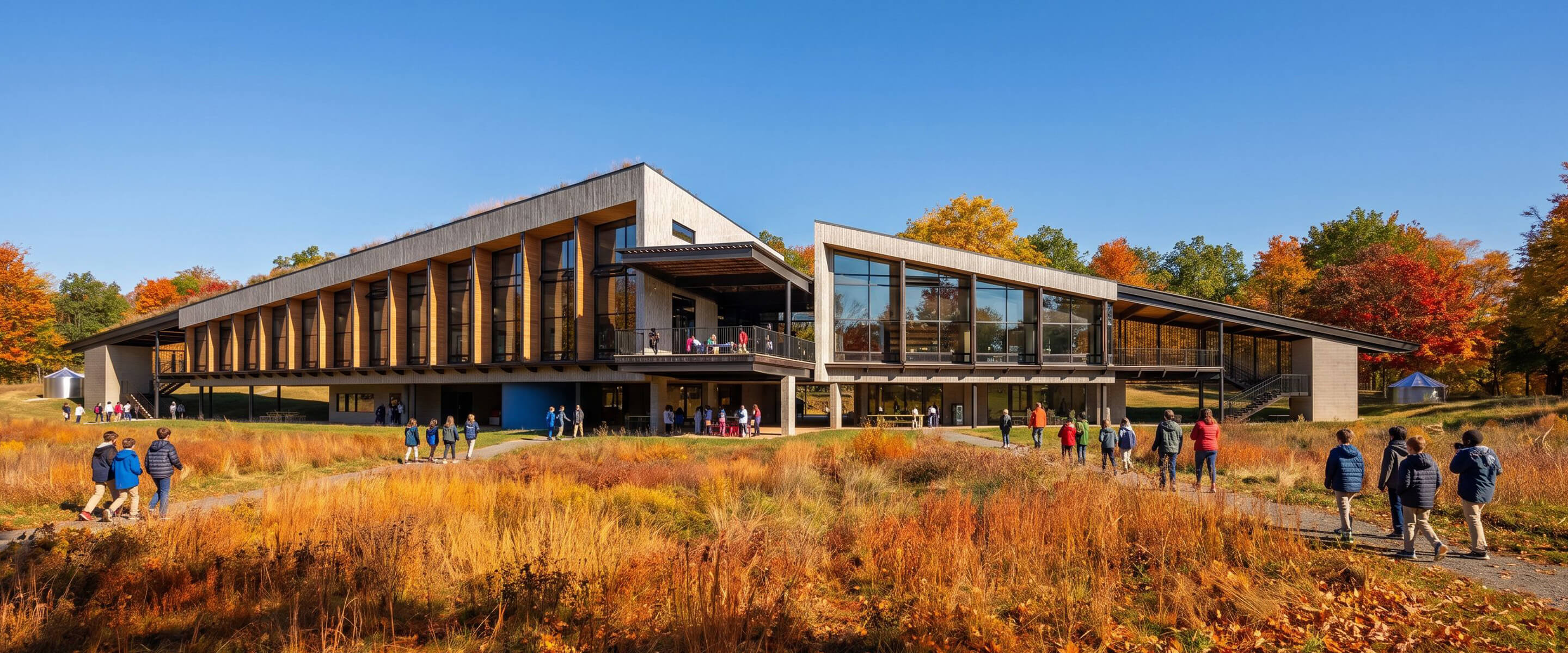
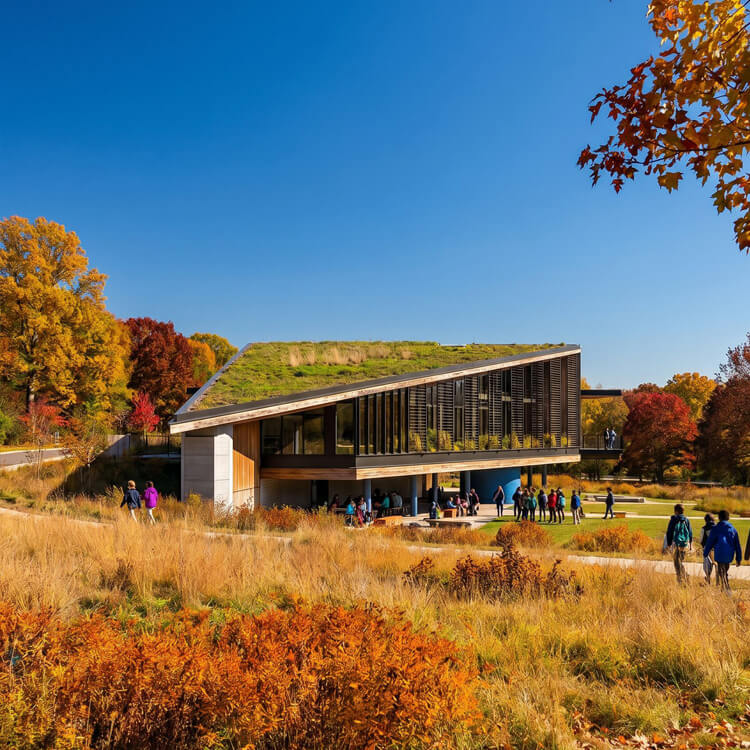
Henrico County Center for Environmental Studies and Sustainability
Nestled within the 1,184-acre Wilton Farm along the James River, the Center for Environmental Studies and Sustainability (CESS) is a groundbreaking regenerative school and educational facility for Henrico County Public Schools, designed to be the world’s first K–12 Living Building Challenge-certified (LBC) public school project. CESS stands as a beacon of ecological education and regenerative design, demonstrating how public schools can lead innovation by integrating sustainable design for schools with community and place. This 11,000-square-foot regenerative facility supports the district’s environmental studies specialty program with flexible classrooms, prep spaces, a commons area, and administrative offices designed to foster interdisciplinary exploration across life sciences, environmental physics, biology, geospatial studies, and more.
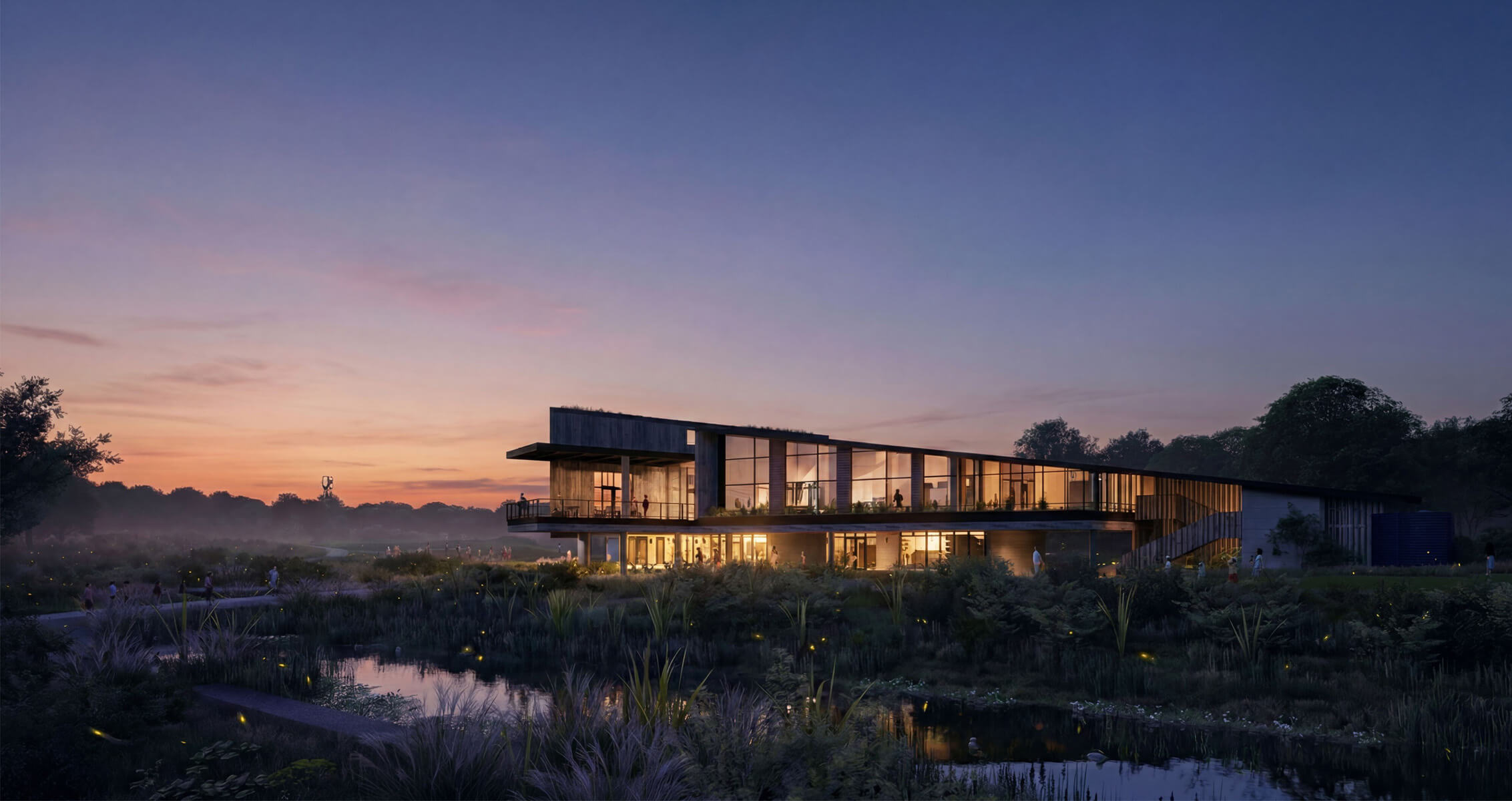
As both a high-performance learning environment and living teaching tool, the building operates as an integrated ecological system: solar panels generate over 105% of the energy the building consumes annually, while on-site captured rainwater (purified for drinking, cooking, and restrooms) reduces building water use by 90%. Construction uses repurposed materials and generates minimal landfill waste. Surrounded by wetlands, forests, a lake, a creek, a pollinator garden, and native landscaping, students learn not just in nature, but with nature—engaging in activities from water quality testing and renewable energy monitoring to hiking, photography, and canoeing.
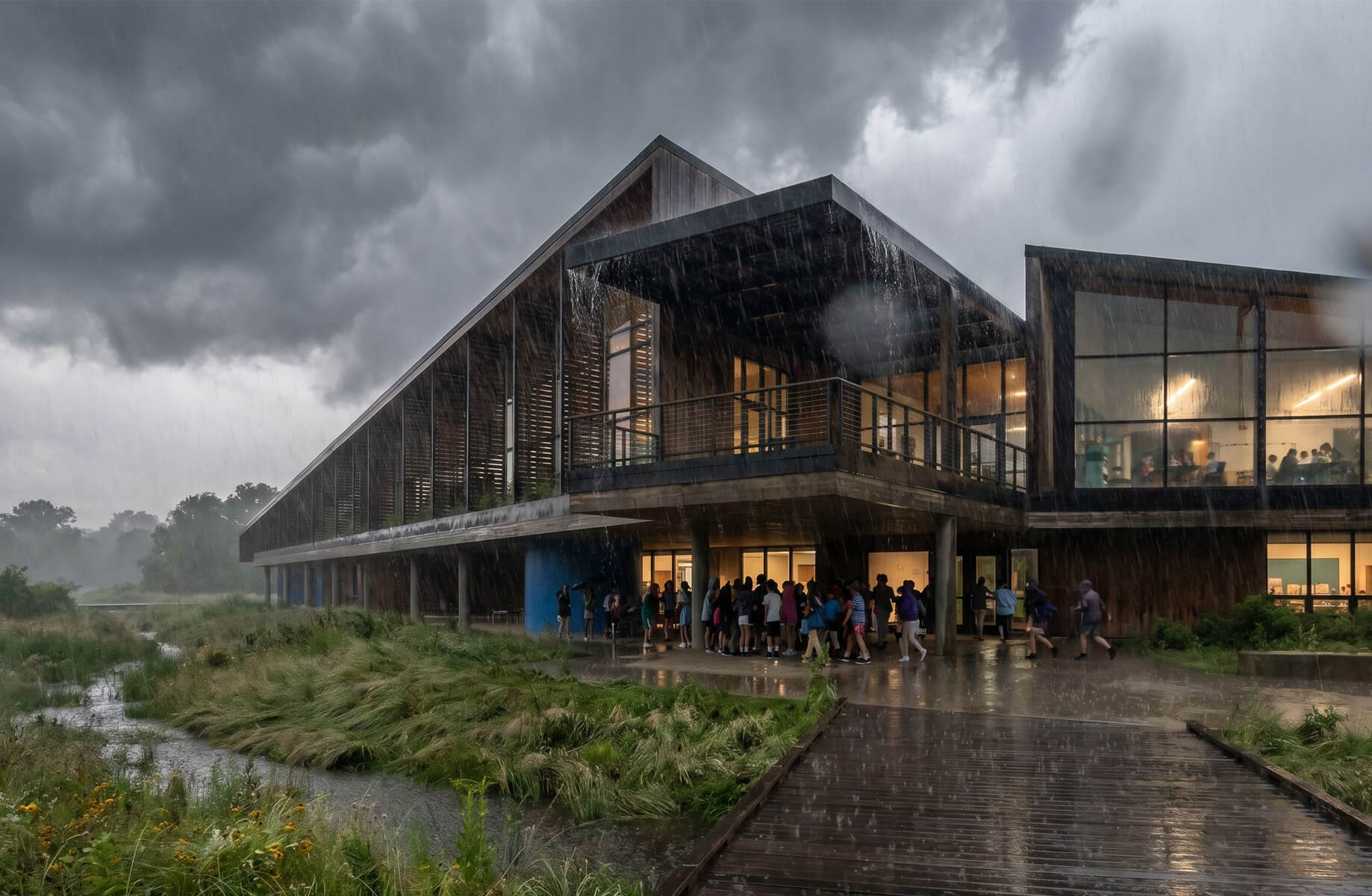
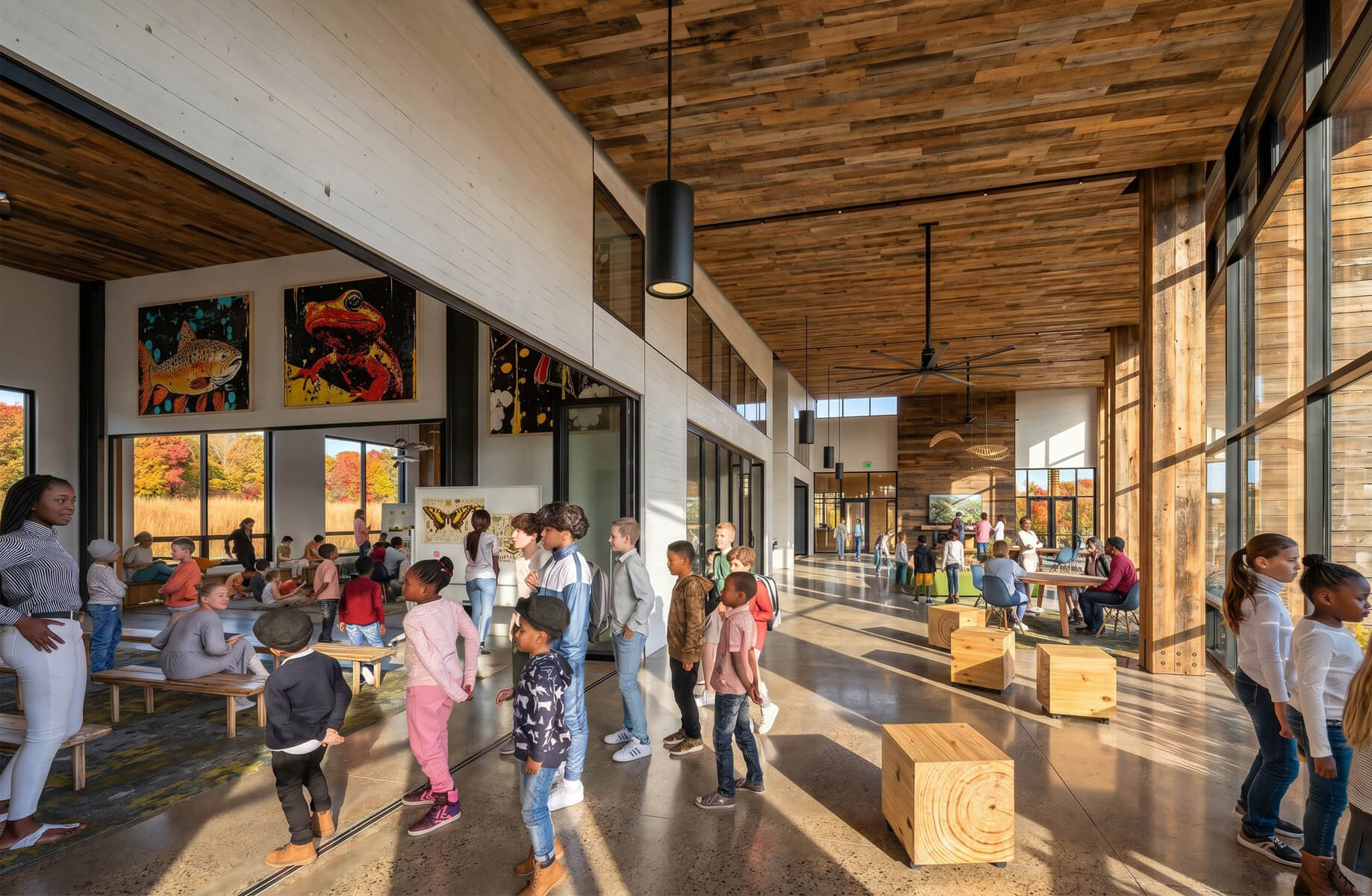
More than a functional facility, this is a living classroom—where the architecture itself teaches. Materials matter: interior walls are clad in salvaged wood gym flooring, rich with patina and memory, giving the space warmth, texture, and story. Designed for durability and rooted in place, the building demonstrates careful stewardship of land, water, energy, and materials. It relies entirely on water and energy captured on-site, with construction practices that minimize waste and leave a regenerative footprint.
Targeting Living Building Challenge certification, every inch of this project reinforces sustainability not as a concept, but as a lived, daily experience—for learners of all ages.
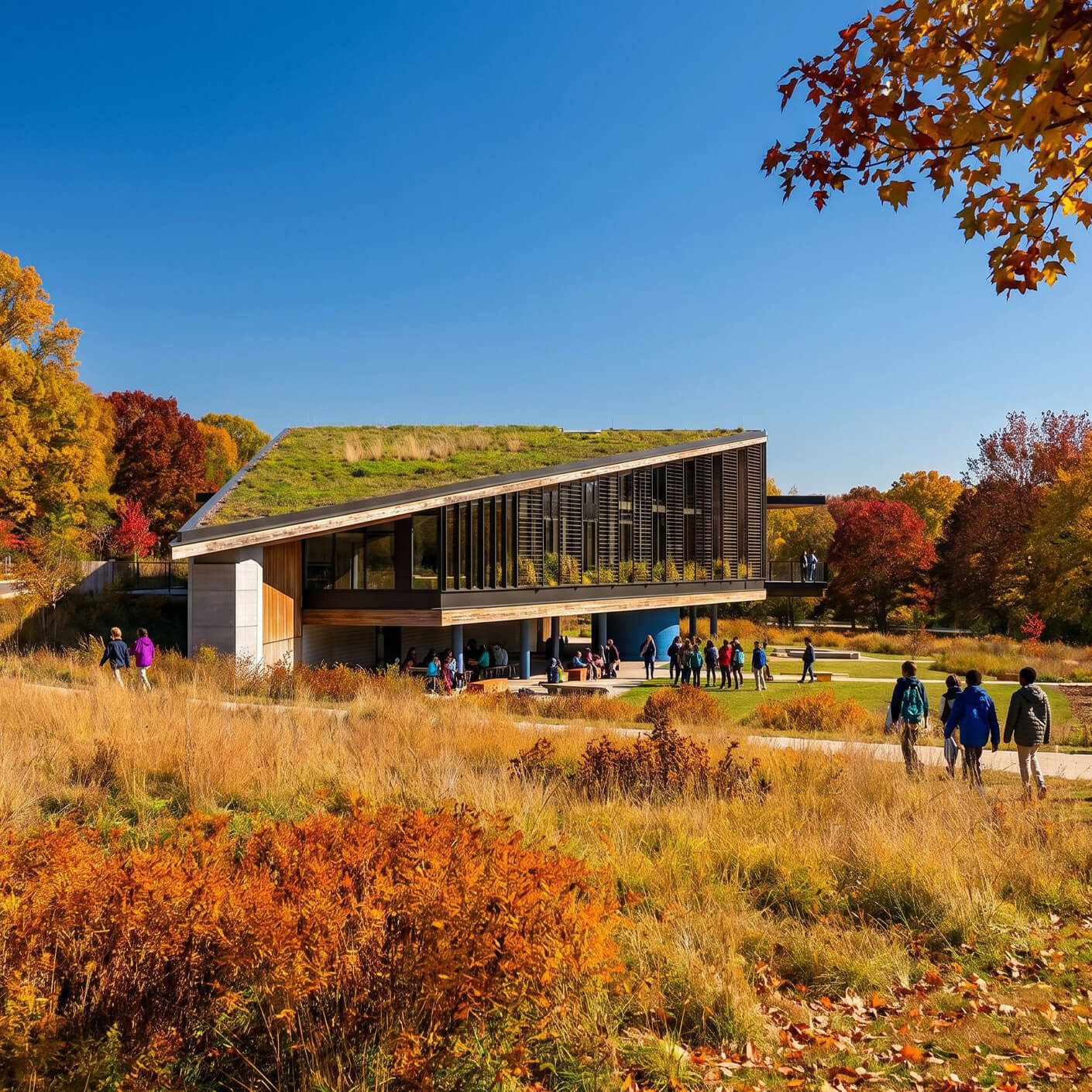
The design team worked closely with biologists and ecologists to understand the land’s ecological rhythms and site health, selecting a location that minimized disruption to sensitive habitats. Nestled carefully into the existing canopy and topography, the building honors the landscape’s natural systems—protecting, preserving, and learning from them.
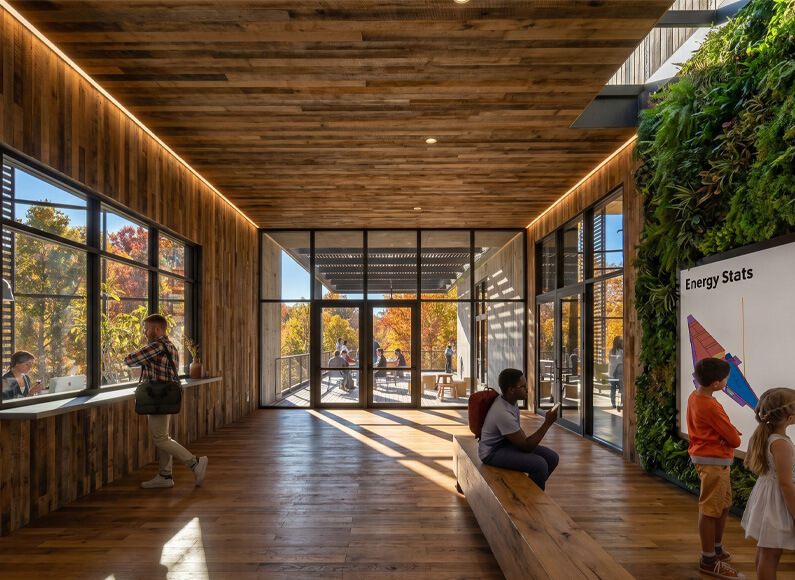
Mr. Madison T. Irving; Henrico County School Board, Three Chopt District
Project Team


Related Content

Read more about our commitment to sustainability.