Press Releases January 15, 2026

Perkins&Will Designs BCIT’s Zero-Carbon, Tall Timber Student Housing to Expand On-Campus Living.

The project marks BCIT’s first new student housing in over 30 years, more than doubling residential capacity and becoming Burnaby’s tallest mass-timber building.

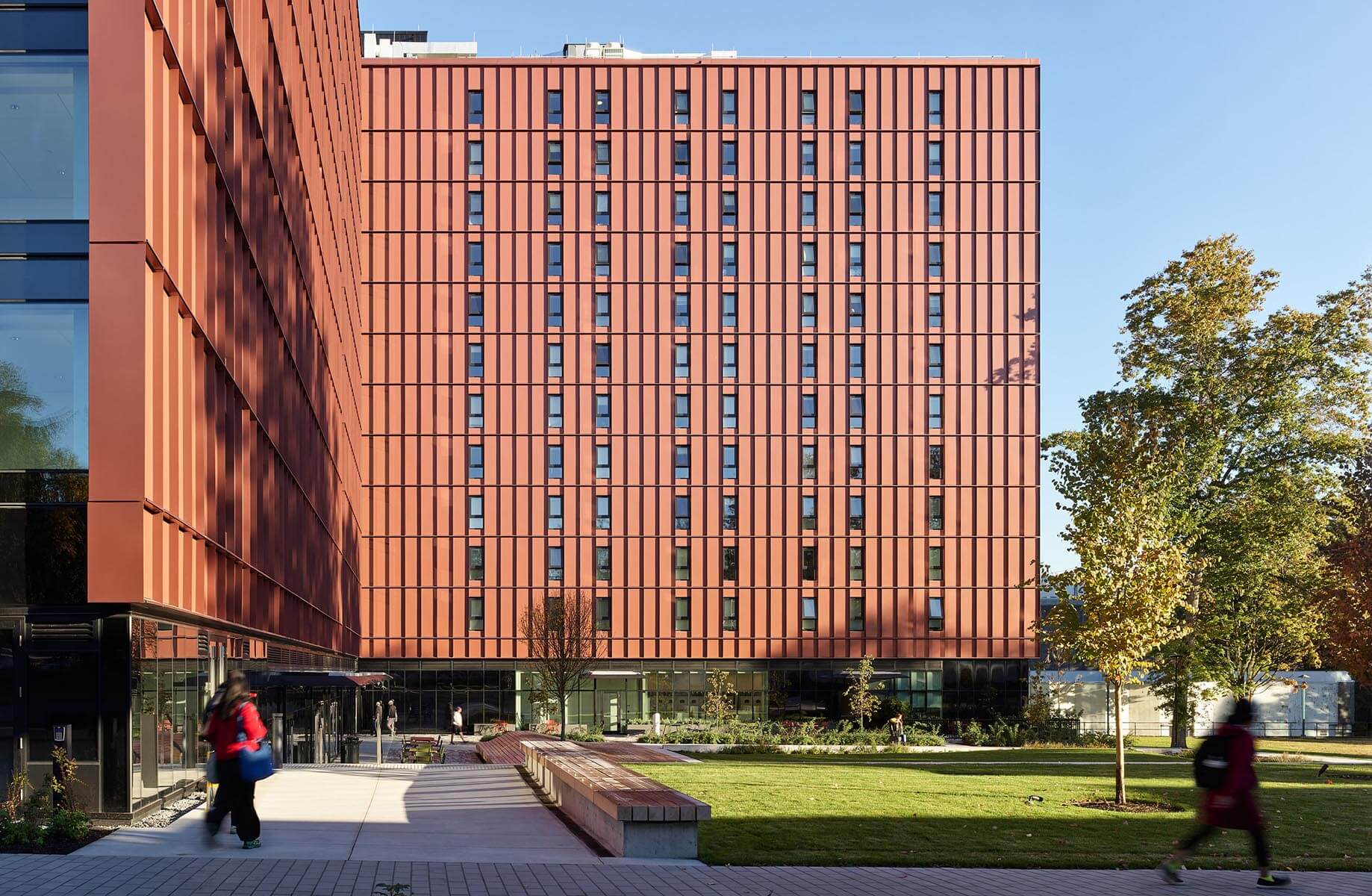
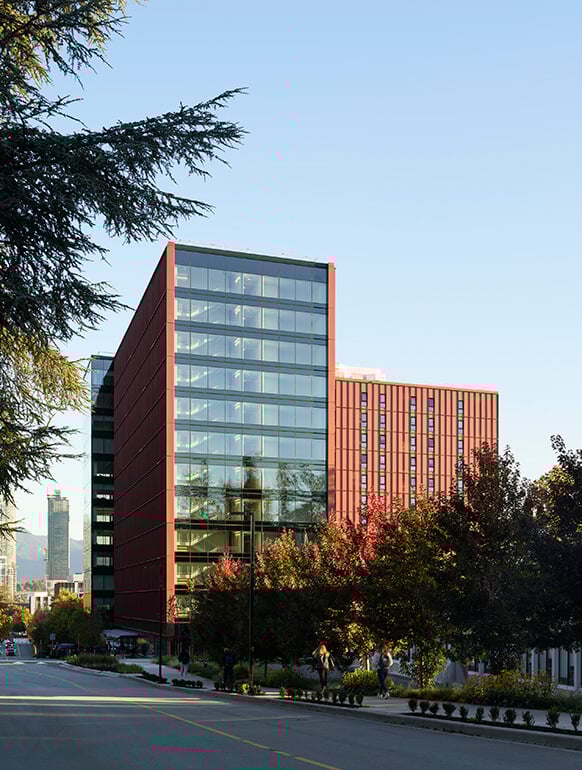
BURNABY, BRITISH COLUMBIA—The British Columbia Institute of Technology (BCIT) has completed a new student housing development at its Burnaby campus, the first in more than three decades. Designed by Perkins&Will, the 12-storey mass timber building adds 469 new beds, is the first campus building to achieve the Canadian Green Building Council’s (CAGBC) Zero Carbon Building–Design Standard™ certification, and stands as Burnaby’s tallest mass timber structure.

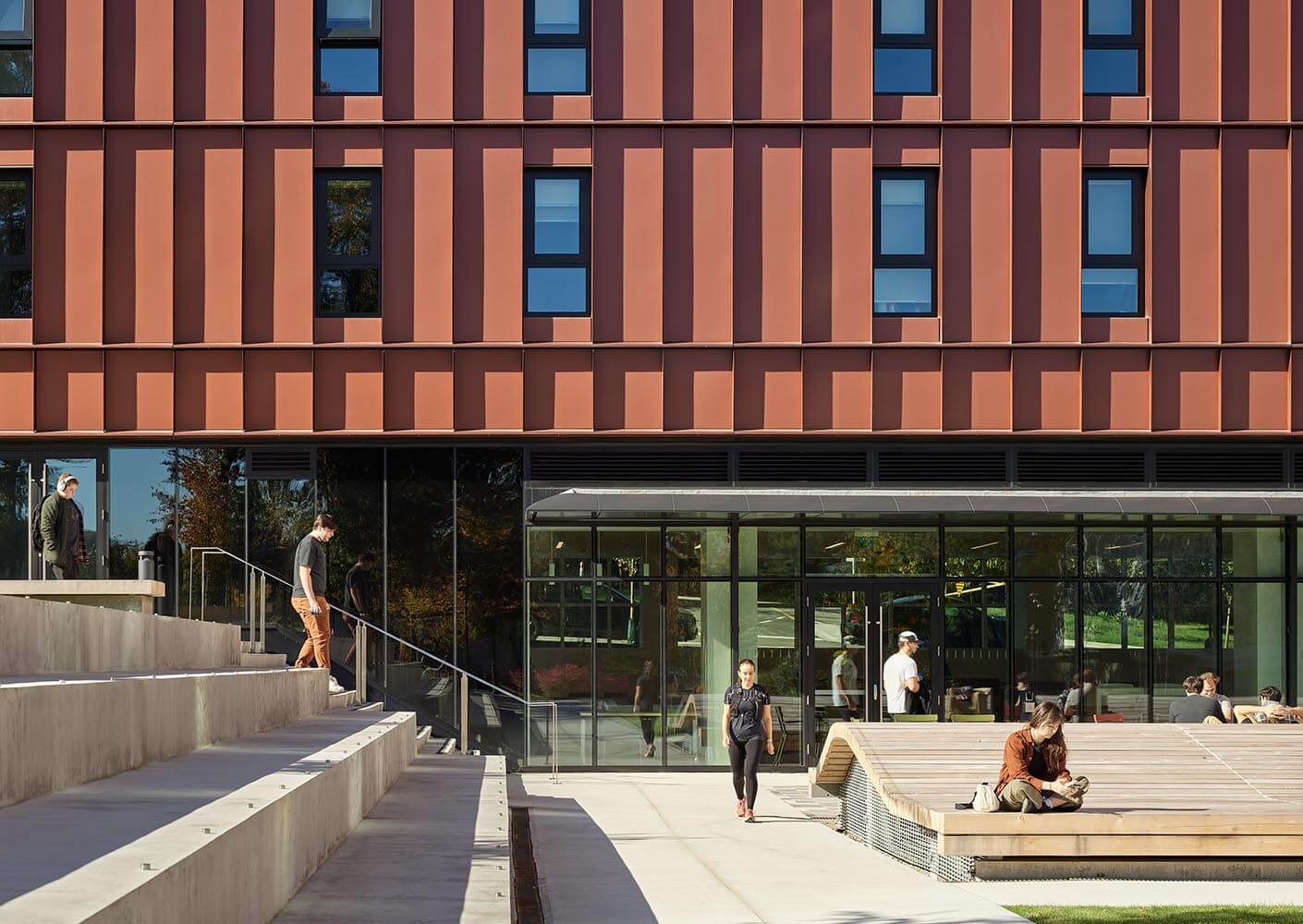
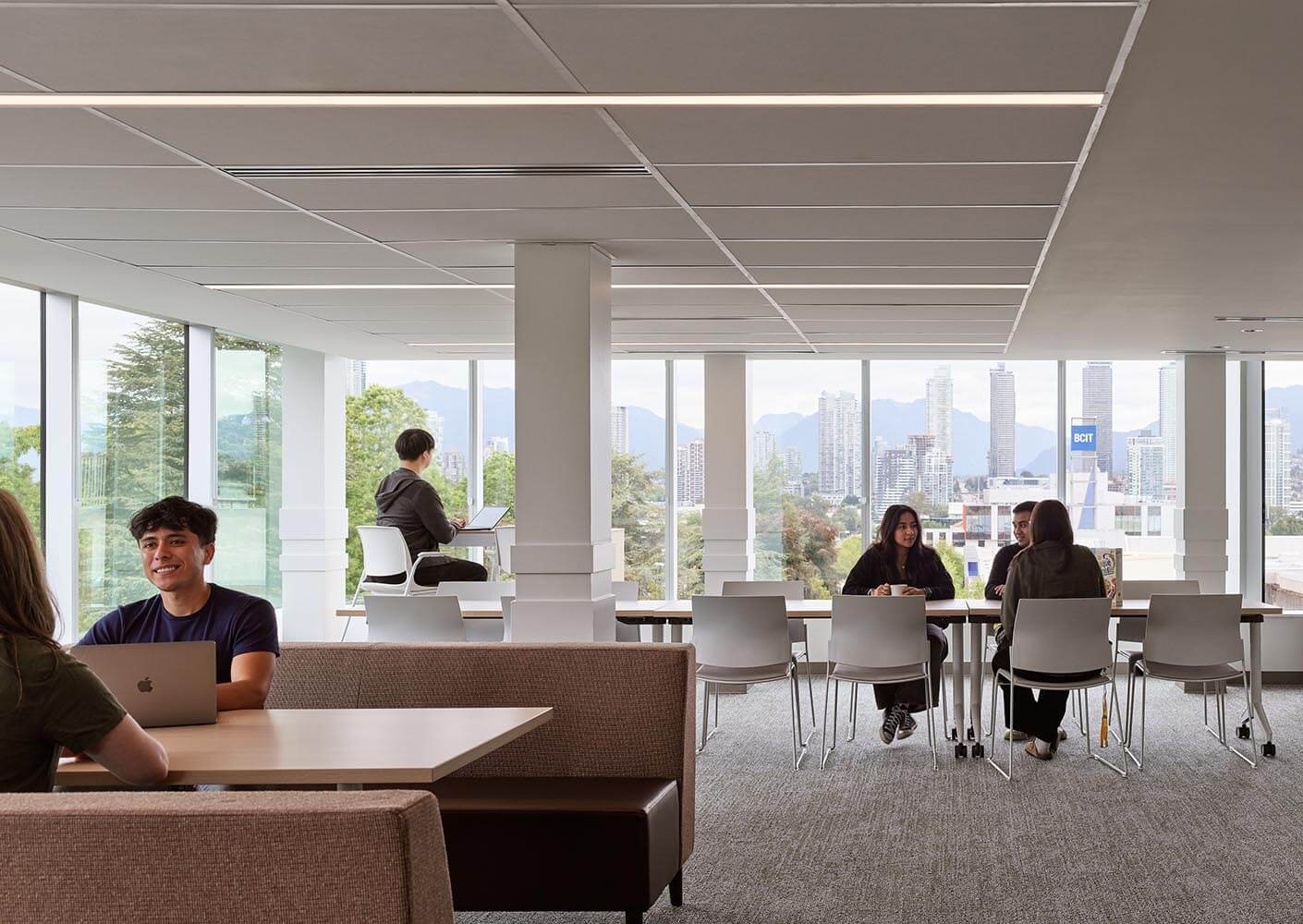
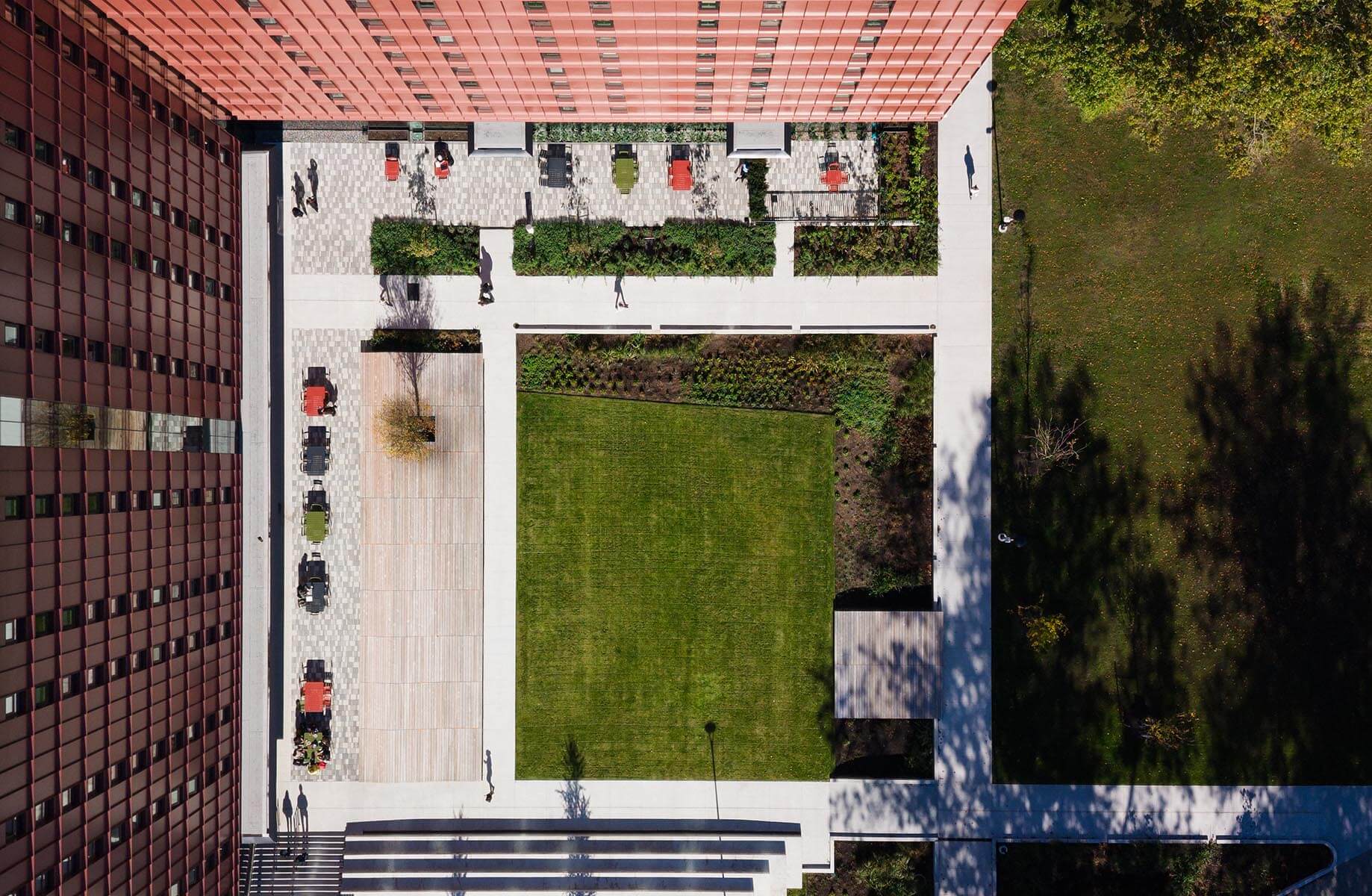
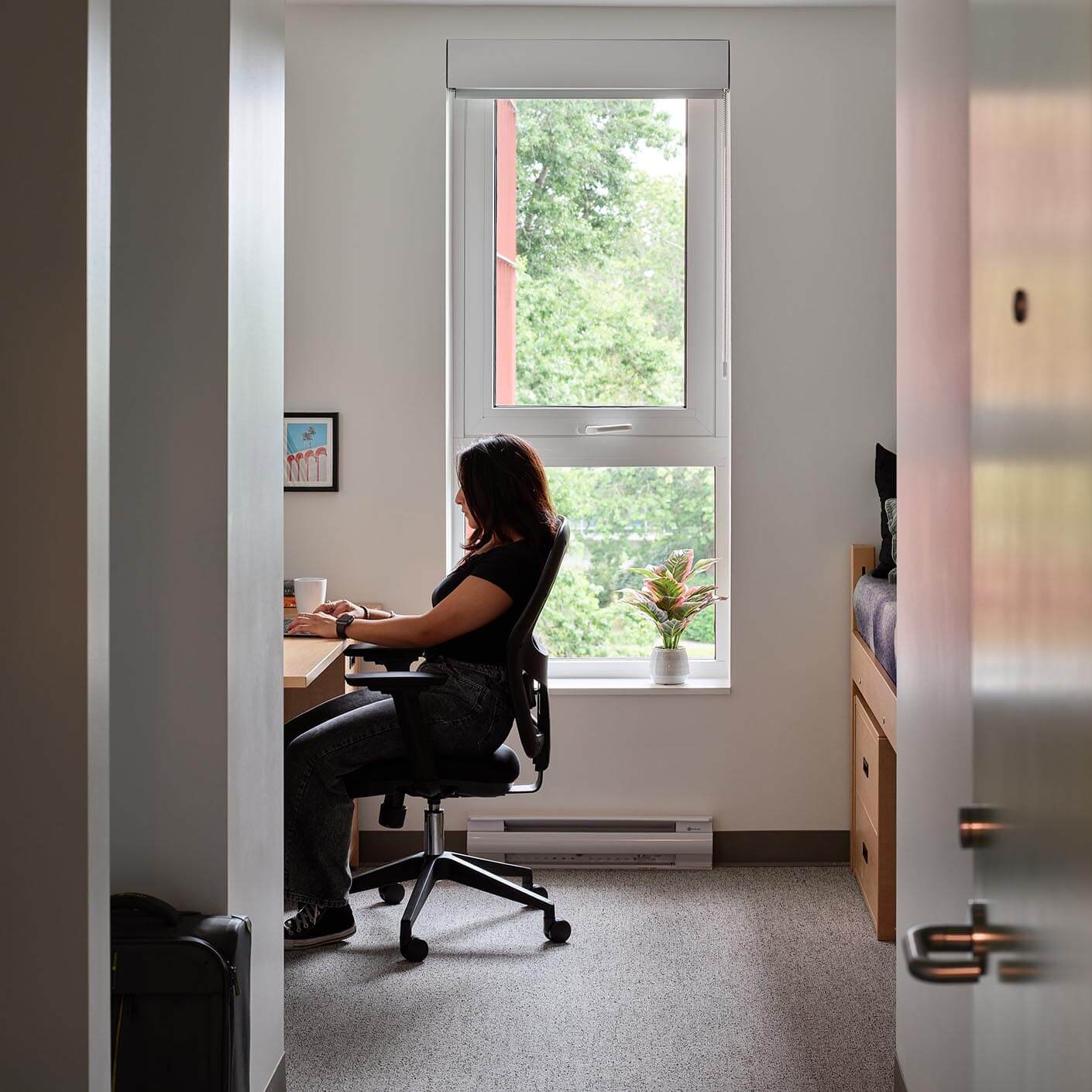
Located at the South Campus Commons, the project introduces a mix of semi-suite and studio units, with shared kitchens, study rooms, and common dining areas. Group study rooms, a flexible multi-purpose space, and an accessible outdoor plaza at ground level support connection, inclusivity, and everyday campus life.
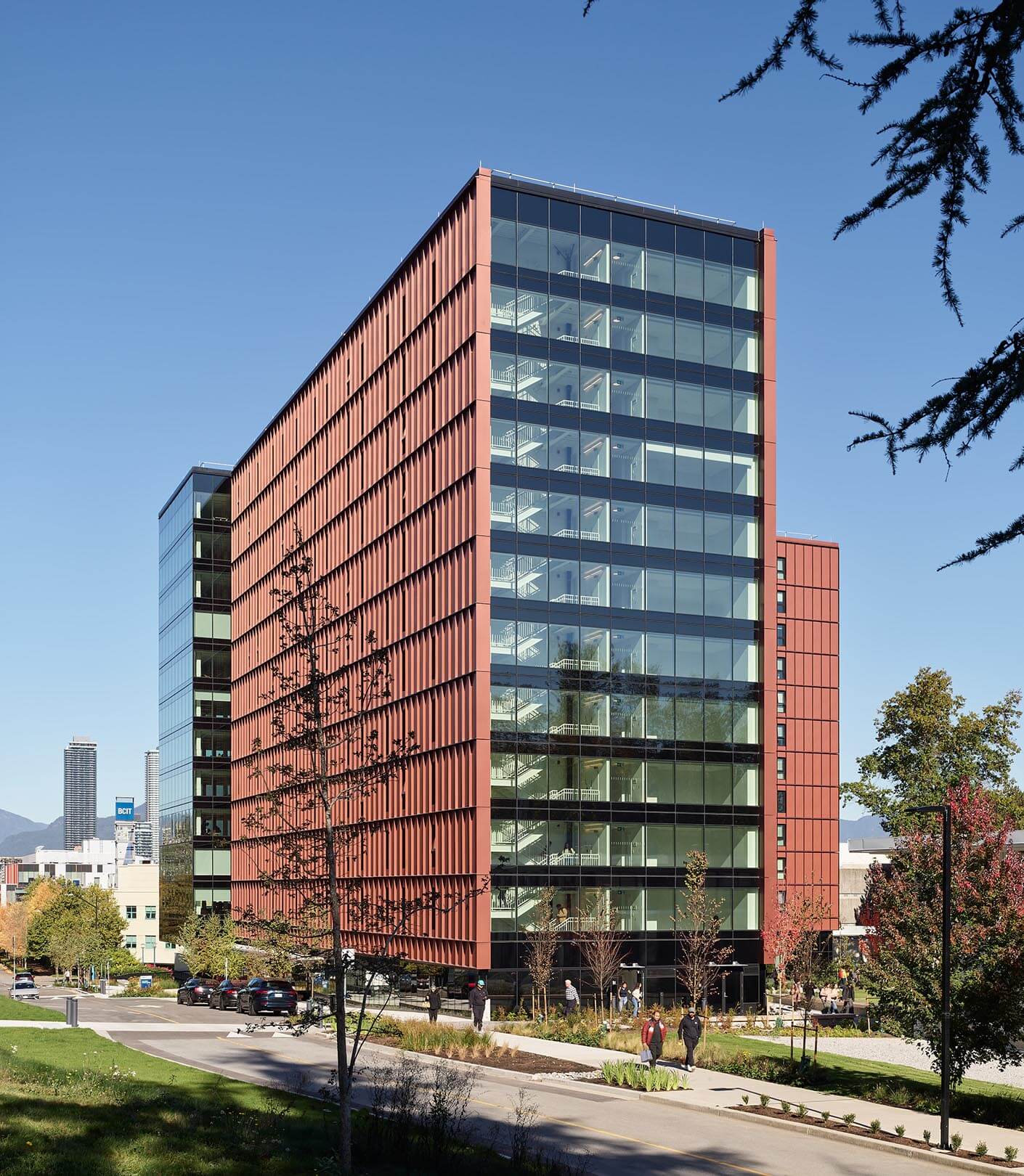
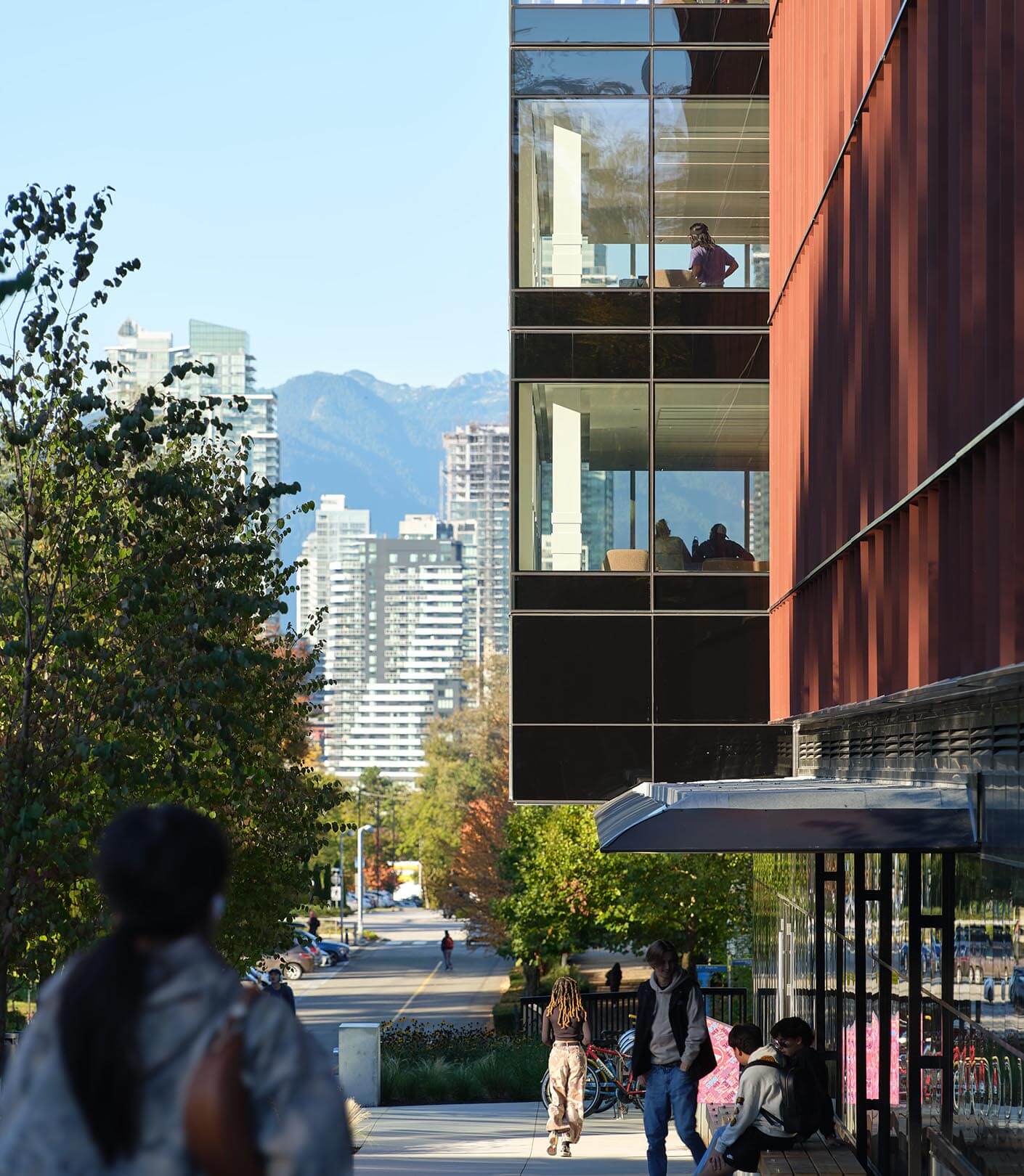
The residence creates a landmark along a primary north-south route, activating the eastern edge of campus.

“This was an exciting project for BCIT. We focus on delivering a great experience for our students, and access to high-quality on-campus accommodation is a big part of that support,” says Danica Djurkovic, associate vice president, campus planning and facilities at BCIT.

“This was also an opportunity to work with leading firms on creative and energy-efficient solutions that demonstrate BCIT’s leadership in sustainability. We were excited to work with the project team to use the building’s innovative elements as a Living Lab and provide learning opportunities for our students.”

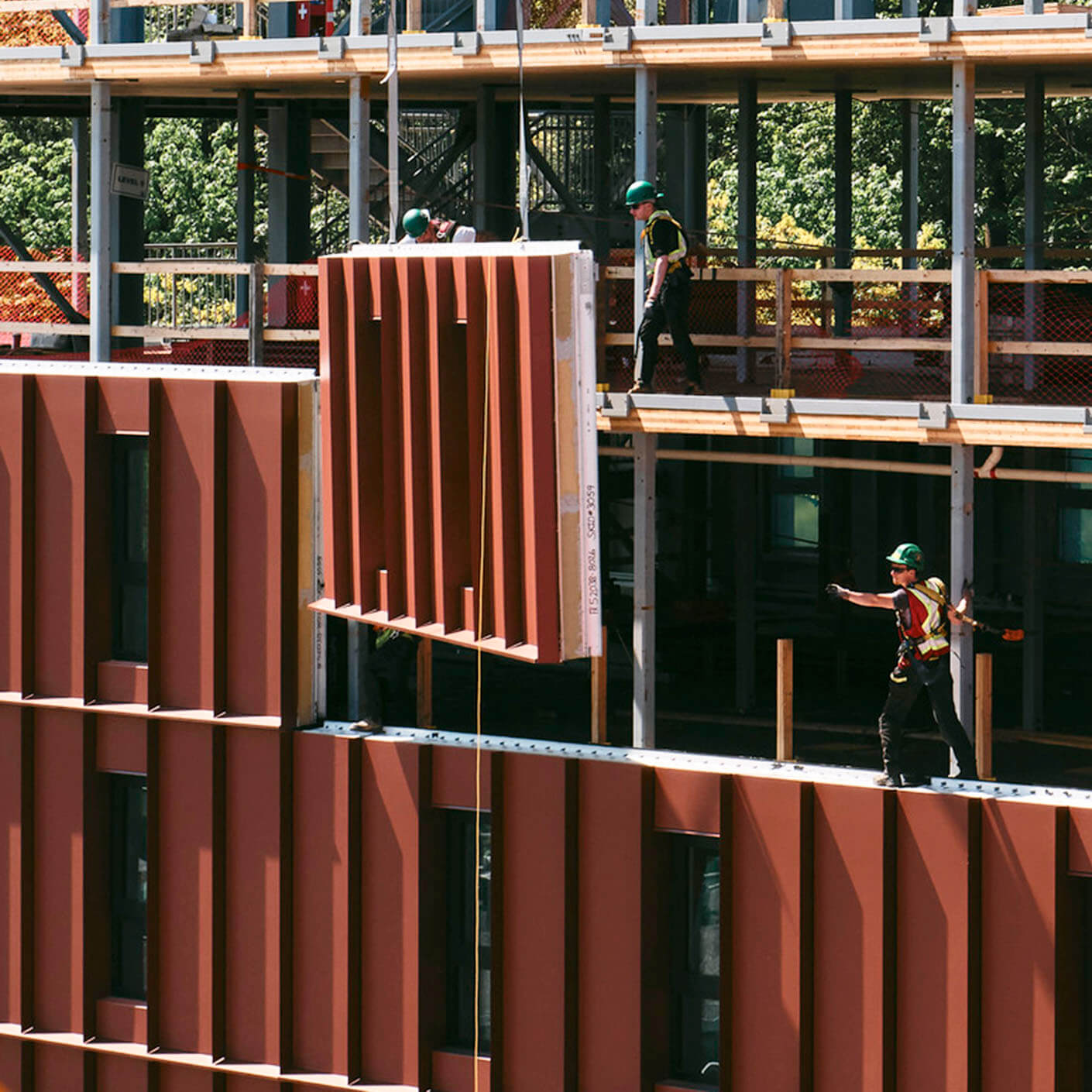
Prefabricated wall assemblies and modular planning streamlined fabrication and installation, enabling remarkable speed: one floor was completed approximately every 14 days during peak construction.

High Performance Through Mass Timber, Prefabrication, and Speed at Scale

Planned as a fully electric building with a high-performance envelope, the building meets BC Energy Step Code 4, the highest level of energy efficiency for its type. From the outset, the design team prioritized embodied carbon reduction, using life-cycle assessment data to guide material choices, including a prefabricated wall assembly and a mass timber structural system.

“Proactively modelling the project’s embodied carbon enabled our team to understand where carbon savings could be realized in both the structure and envelope design.” says Kathy Wardle, regional director of regenerative design at Perkins&Will. “Completing a life cycle assessment and documenting our embodied carbon savings was a key part of meeting the CAGBC Zero Carbon Building Design certification requirements.”

Structural innovation includes cross-laminated timber (CLT) floors supported on slender steel hollow structural section (HSS) columns, a solution developed to maximize usable space. Mass timber was central to the project’s construction strategy, using locally sourced CLT panels and a design-for-manufacture-and-assembly (DfMA) approach to optimize prefabrication and modularity. Ideal for student housing delivery, this method minimized waste, ensured cost efficiency, and accelerated construction, with one floor being completed approximately every two weeks.

At grade, group study rooms, a flexible multi-purpose space, and an outdoor accessible plaza create natural gathering points and sightlines that connect students across programs and schedules.

Designing for Resilience, Comfort, and Belonging

Extensive thermal studies and modelling informed wall assemblies, glazing, and HVAC systems, ensuring the building is resilient to future climate extremes. Cooling strategies in lounges, enhanced ventilation in bedrooms, and solar exposure optimization were incorporated to support year-round student comfort.

Accessibility and inclusion were also integral to the design. The project achieved Rick Hansen Foundation Accessibility Certification (RHFAC) and prioritizes healthy materials throughout. Indigenous input informed landscape design and cultural spaces—reinforcing the project’s commitment to student well-being and belonging.

Cooling strategies in lounges, enhanced ventilation in bedrooms, and solar exposure optimization were integrated to ensure student comfort.

Advancing Provincial Climate Action and Housing Goals

The project aligns with British Columbia’s priorities for low-carbon construction, housing affordability, and mass timber adoption, demonstrating how institutional development can support climate action while advancing construction innovation.

As BCIT continues to lead in applied learning through its Living Lab initiative, the building also serves as a learning resource, offering insights into prefabricated construction, mass timber structural systems, and sustainable design strategies that can inform future projects.

This residence is a milestone for BCIT and for sustainable design in British Columbia. Our team set out to create housing that not only meets today’s needs but anticipates tomorrow’s challenges—combining mass timber construction, zero-carbon performance, and a prefabricated approach to deliver efficiently, and with resilience. It’s a project that reflects what’s possible when innovation and collaboration drive the design process.

Jana Foit, Project Lead