Resource Circularity: Reimagining Cities as Regenerative Systems
By 2050, nearly 70% of the global population will live in cities. Food demand is projected to increase by more than 50%, with most of that demand concentrated in urban areas. At the same time, food systems already account for roughly one-third of global greenhouse gas emissions, and expanding these existing systems could accelerate climate change. These pressures place cities at the center of the global sustainability challenge.
Typically, urban metabolism, resource recovery, and food supply chains are considered to be discrete systems—best addressed through infrastructure, policy, or operations rather than design. Buildings remain largely passive consumers of energy and resources, even as they generate waste streams that could directly align with our food system needs.
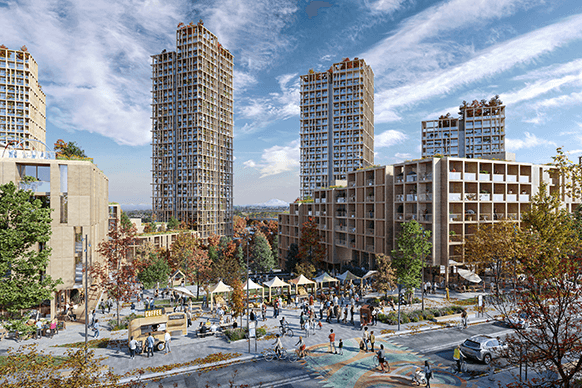
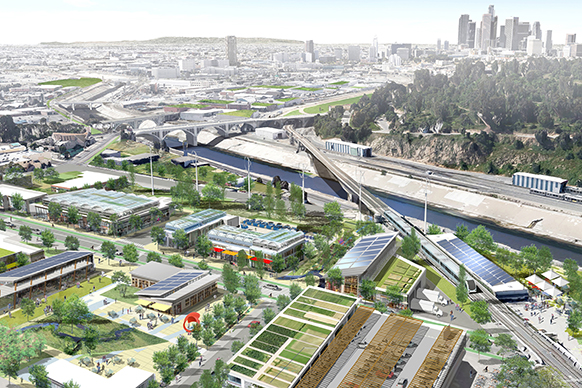
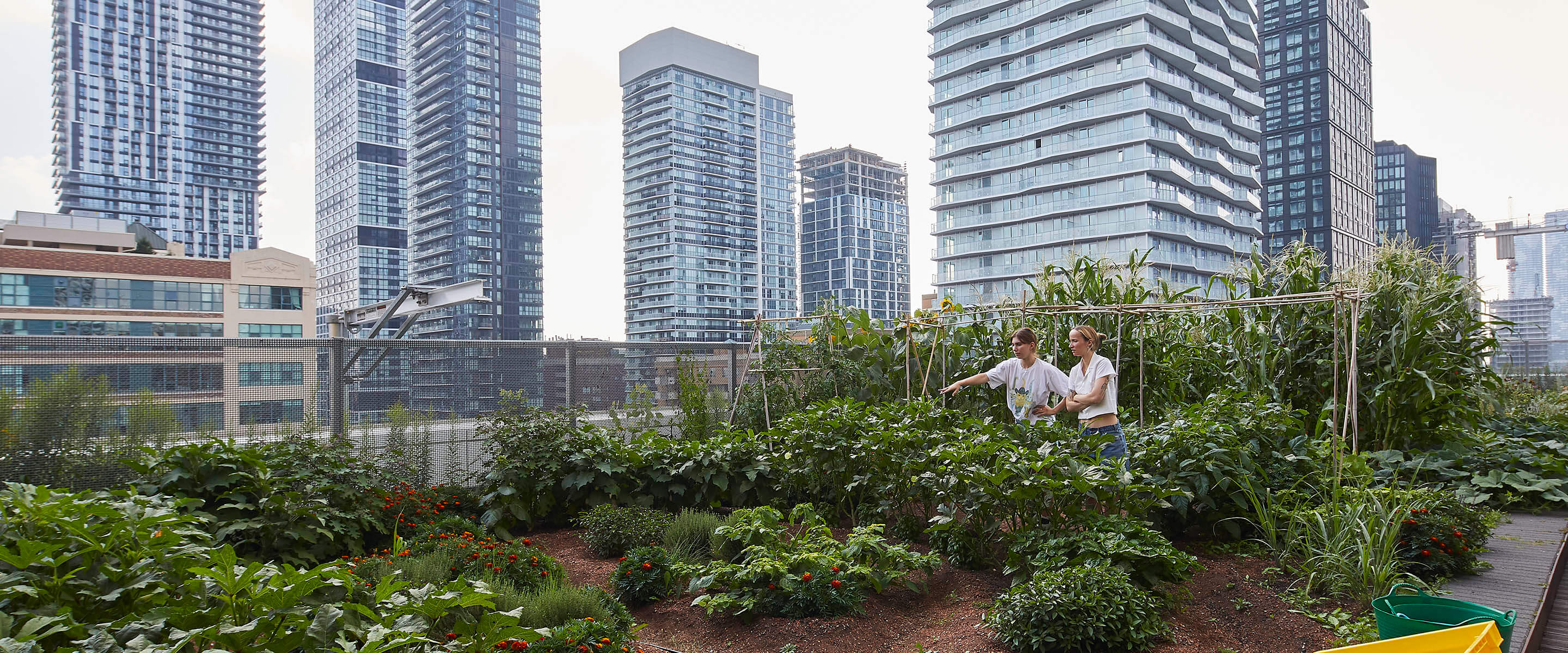
What if cities functioned as circular, regenerative systems? How can buildings evolve to be productive participants that offer not just shelter but resources?
Resource Circularity brings together architecture, building performance, agriculture, policy, and economics to explore how urban systems can evolve beyond a conventional linear metabolism. Through interviews, policy analysis, and case study reviews, the report discusses:
Policy frameworks shaping the future of BIA
Market analysis and economic considerations for scaling
Ecological and environmental impacts of integrated food systems
Technical analysis for system design and infrastructure compatibility
Design implementation, human experience, and the role of BIA in supporting community resilience
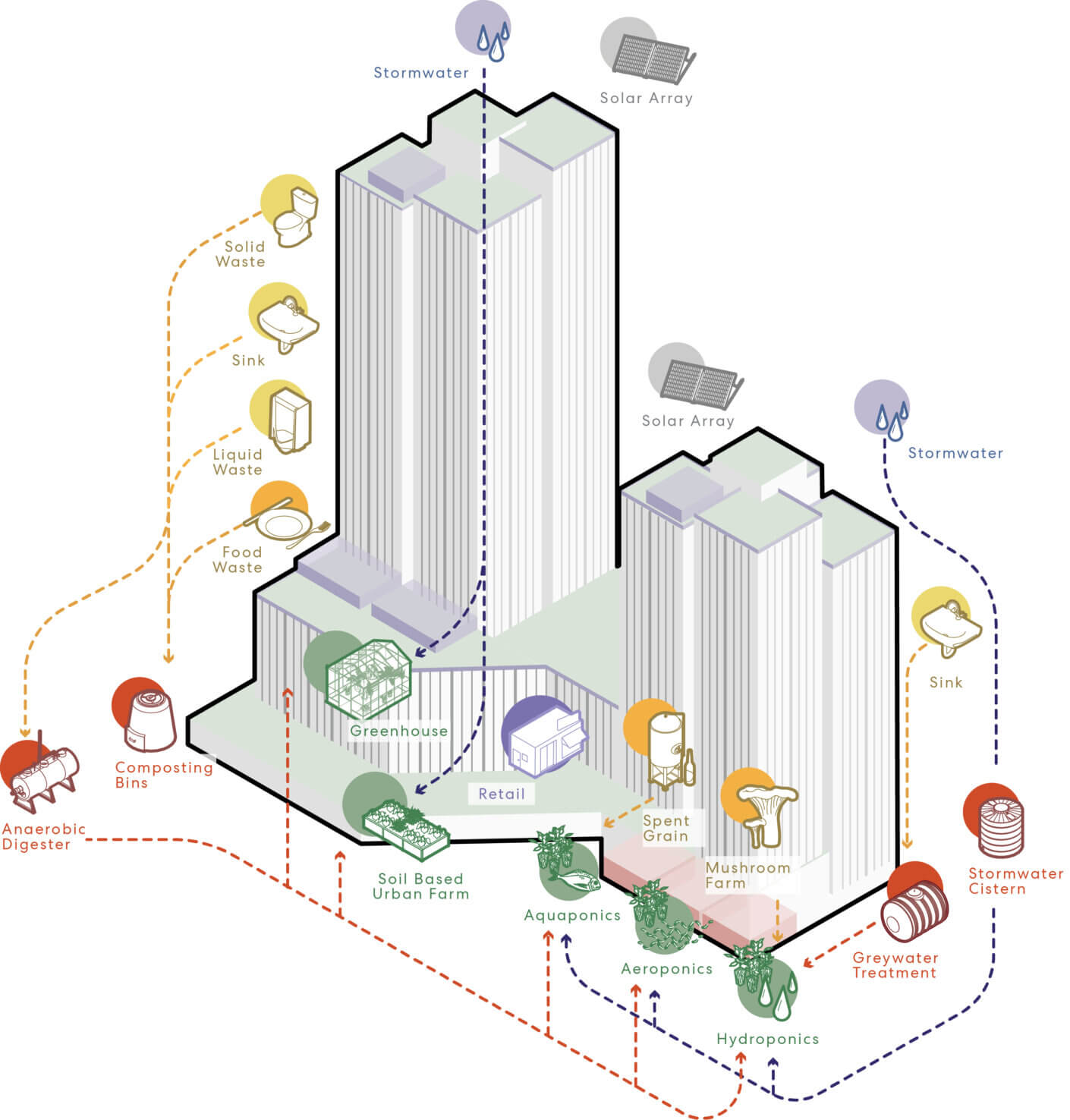
Our research integrates directly into practice. By collaborating with government, local institutions, architects, engineers, urban farmers, policymakers, and academic partners, we were able to test our findings through real projects, design studies, and stakeholder engagement rather than academic inquiry alone.
The work translates research findings into design-operational frameworks and tools: system diagrams, performance benchmarks, and scenario-based evaluation methods that can be deployed early in the design process. These tools allow project teams to test assumptions, compare alternatives, and evaluate trade-offs between yield, energy, carbon, cost, and spatial impact before systems are locked in.
And coming soon, in collaboration with Simon Fraser University and the BC Centre for Agritech Innovation, we are currently developing a decision-support platform that will use machine learning to predictively evaluate regenerative building systems.
Mohamed Imam, Ph.D., Senior Research Lead
Funding for this project has been provided by Agriculture and Agri-Food Canada through the Agricultural Clean Technology (ACT) Program. Matching funding was provided by Perkins&Will and the BC Centre for Agritech Innovation (BCCAI).
Project Team






Related Content