Press Releases February 27, 2026

New Study from Perkins&Will Offers Mass Timber Solution to Canada’s Housing Crisis

Researchers propose a prefabricated, modular mass-timber system for accelerating housing delivery while supporting the nation's economy and climate commitments.
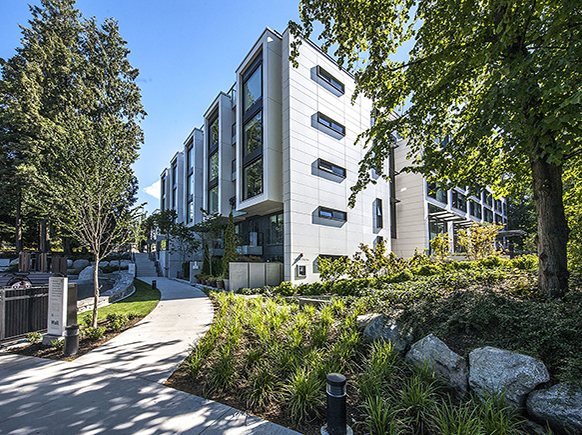
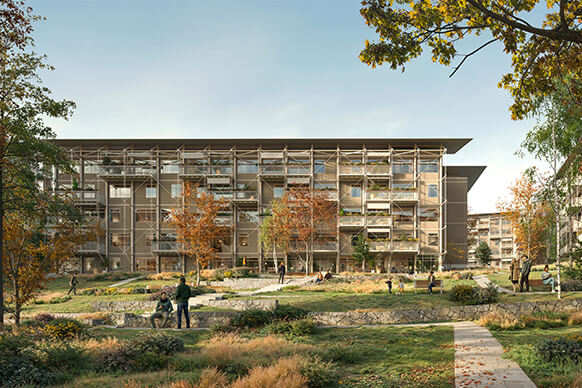
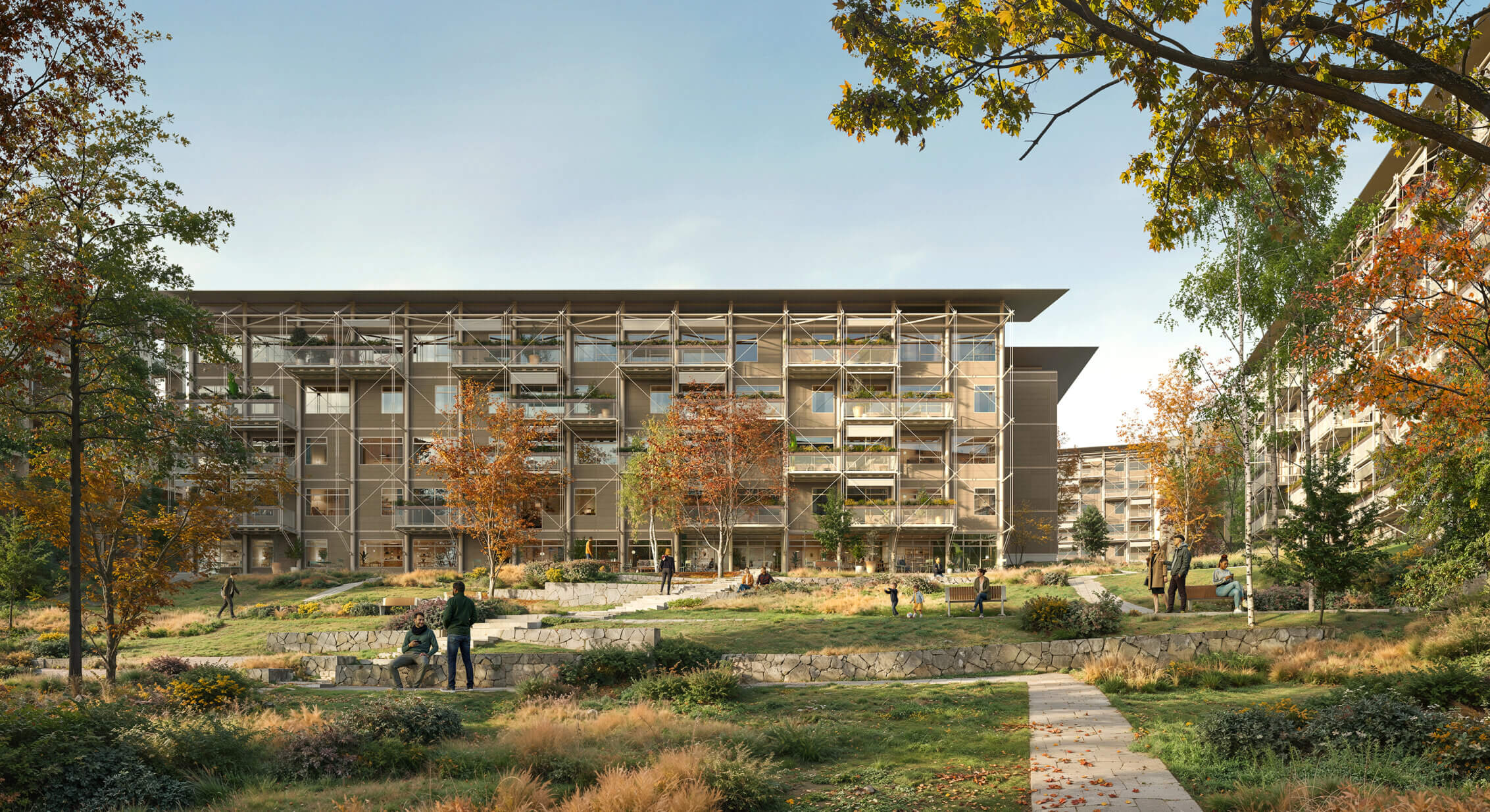
Modern residential complex with landscaped gardens and people enjoying outdoor space.

VANCOUVER, BRITISH COLUMBIACanada needs a lot of housing—fast. Perkins&Will has published research proposing a scalable prefabricated modular mass timber system to deliver high-quality homes quicker, more sustainably, and in alignment with regulatory and market realities.

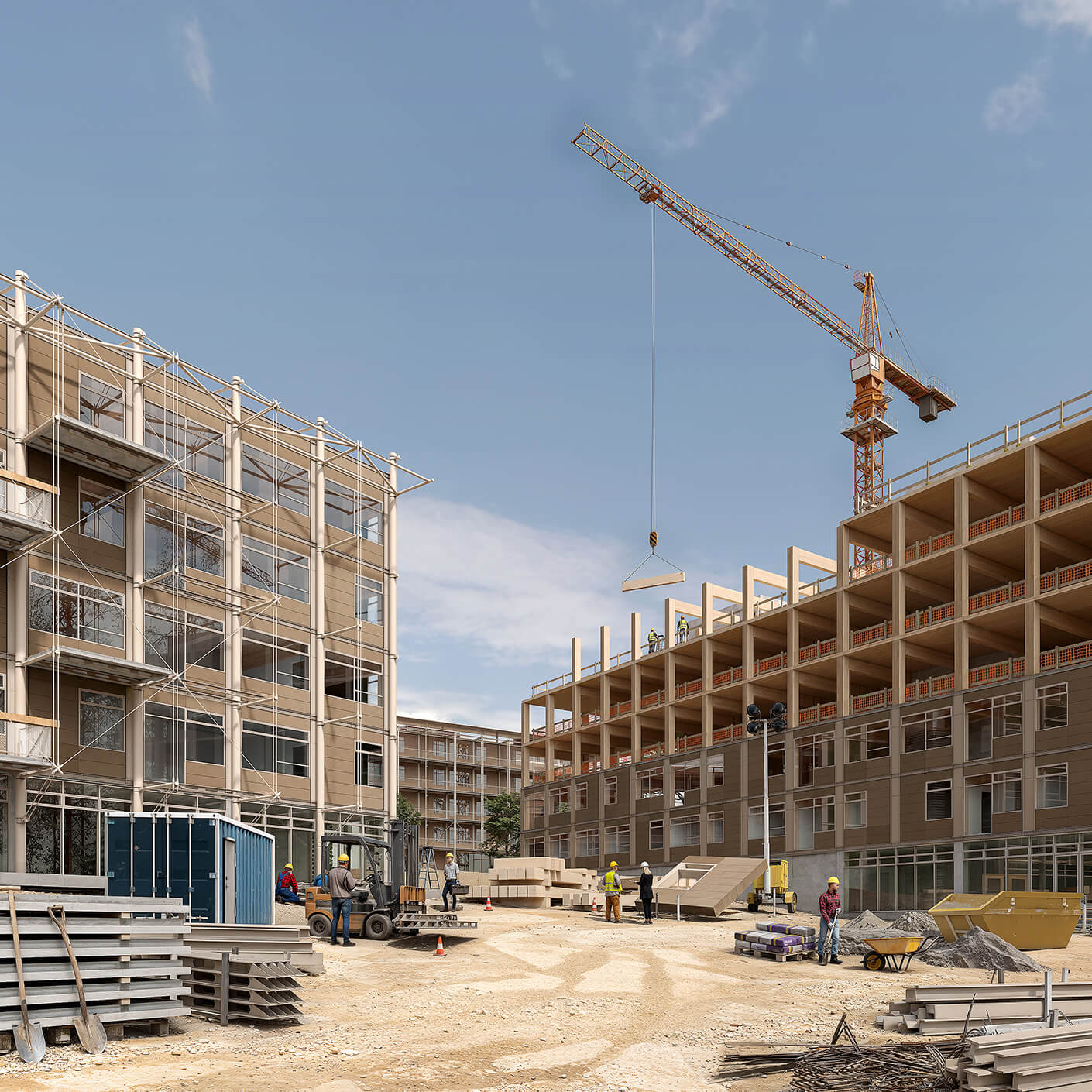
Developed in collaboration with industry and academic partners, the modular timber system is based on a rationalized structural grid, a concise kit of prefabricated components, modular planning principles, and fully coordinated building services. Together, these elements streamline design, approvals, manufacturing, and assembly—supporting both housing delivery and Canada’s climate commitments.

“We face a housing crisis across Canada, and the impact of a rapidly changing climate is real. These are issues that demand decisive action,” says Derek Newby, regional director of Perkins&Will practices across Canada. “At the same time, we have outstanding potential in our industry, and an incredible wealth of natural resources. This study brings all these pieces together and proves that we can do much better. We can start today.”

By integrating modular planning, off-site manufacturing, and mass timber construction, the system provides a path forward for closing Canada’s housing supply gap while strengthening domestic industry and reducing embodied carbon.
We face a housing crisis across Canada, and the impact of a rapidly changing climate is real. These are issues that demand decisive action.

Derek Newby, Canadian Regional Director

Faster, better, cheaper
Leveraging prefabricated mass timber components has the potential to significantly accelerate housing delivery while supporting our national economy and climate commitments.
Building Homes While Building Strength at Home

Mass timber first: Engineered timber is a renewable, low-carbon building material that lends itself naturally to prefabrication. It also represents a fast-growing industry in Canada with significant untapped economic potential. The study demonstrates that modular, prefabricated mass timber housing can meet stringent regulatory, livability, and delivery requirements. 

Industrializing quality: The research challenges the idea that prefabrication produces uniform or undesirable housing. The modular system can accommodate a variety of unit types, market conditions, and facade systems within the same structural logic and fabrication strategy. 

Reducing risk, building confidence: By aligning regulatory, manufacturing, and livability criteria, the system creates a scalable delivery model that reduces risk for municipalities, funders, and project teams while strengthening Canada’s housing supply chain.


We need to leverage every opportunity to reduce the environmental impact of the built environment.

Kathy Wardle, Regional Director of Regenerative Design

System Benefits

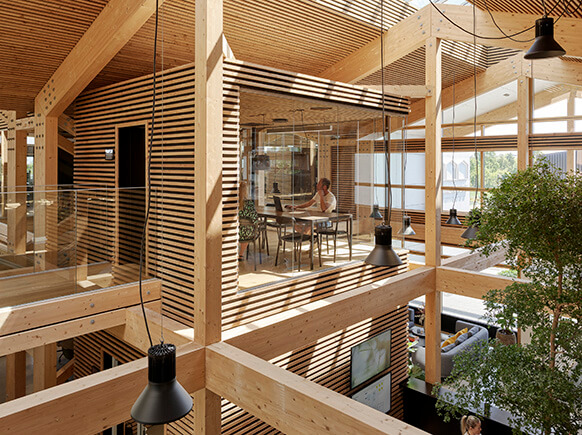
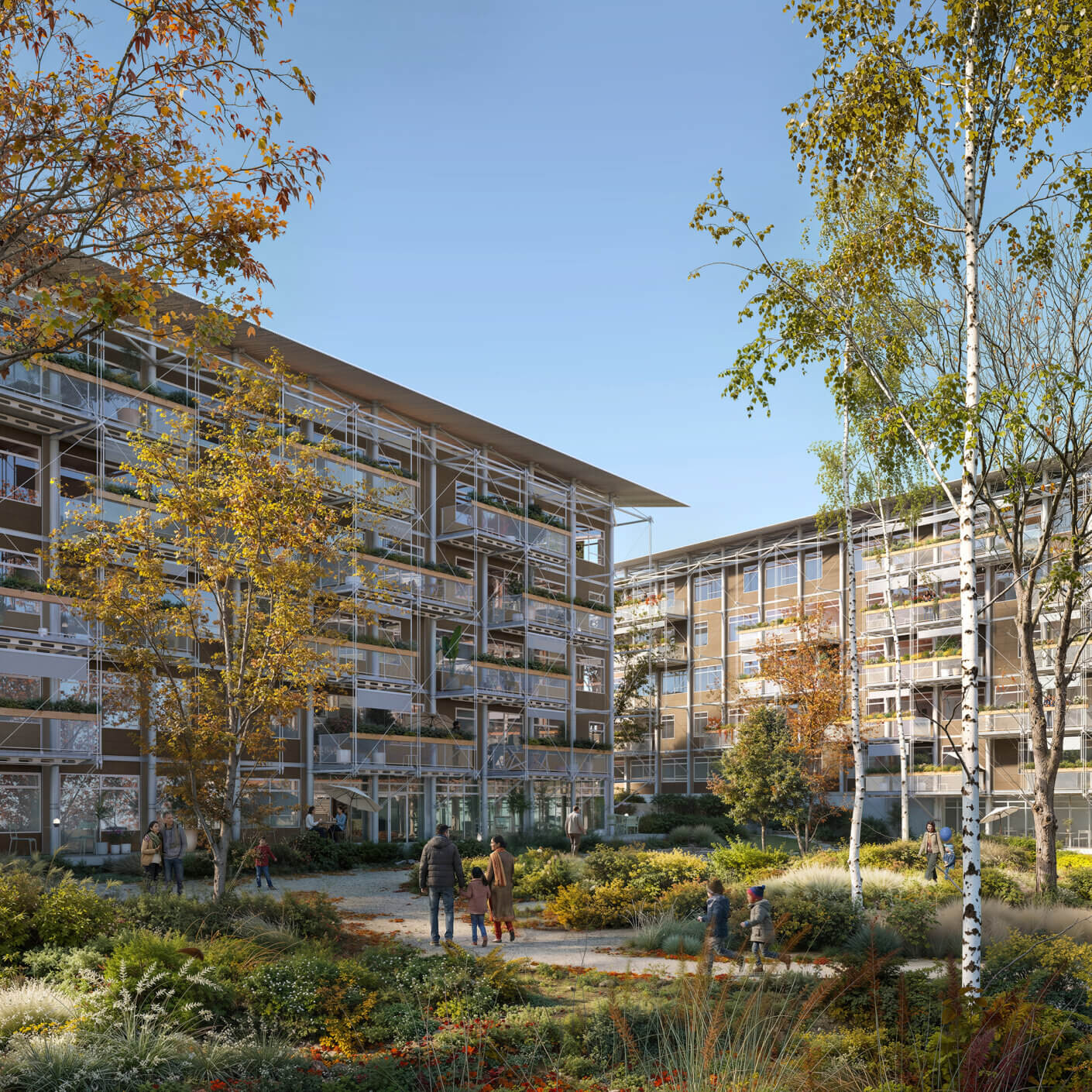
Better homes: Modular planning and an optimized grid enable more spacious units with improved daylight, ventilation, and family-friendly layouts. Exposed mass timber enhances occupant well-being through biophilic design. 

Delivered efficiently: A fully rationalized and coordinated system streamlines design, approvals, and construction. Prefabricated components reduce on-site labor and accelerate project timelines. 

Built sustainably: Mass timber is a renewable, low-carbon material. By reducing reliance on concrete, steel, and gypsum, the system enables housing with significantly lower embodied carbon. 

We need to leverage every opportunity to reduce the environmental impact of the built environment,” says Kathy Wardle, regional director of regenerative design. While the industry in general may evolve slowly, we see it as our responsibility to drive change with impactful design solutions that are resilient and low carbon. 

Stress-Tested

Rigorous study parameters were established to validate the system’s performance under the most demanding conditions. Included among these was a requirement to allow for 100 percent adaptable units. The resulting modular framework supports a wide range of outcomes—from fully adaptable homes to conventional market-driven layouts—without changing the underlying grid, structural system, or fabrication strategy.

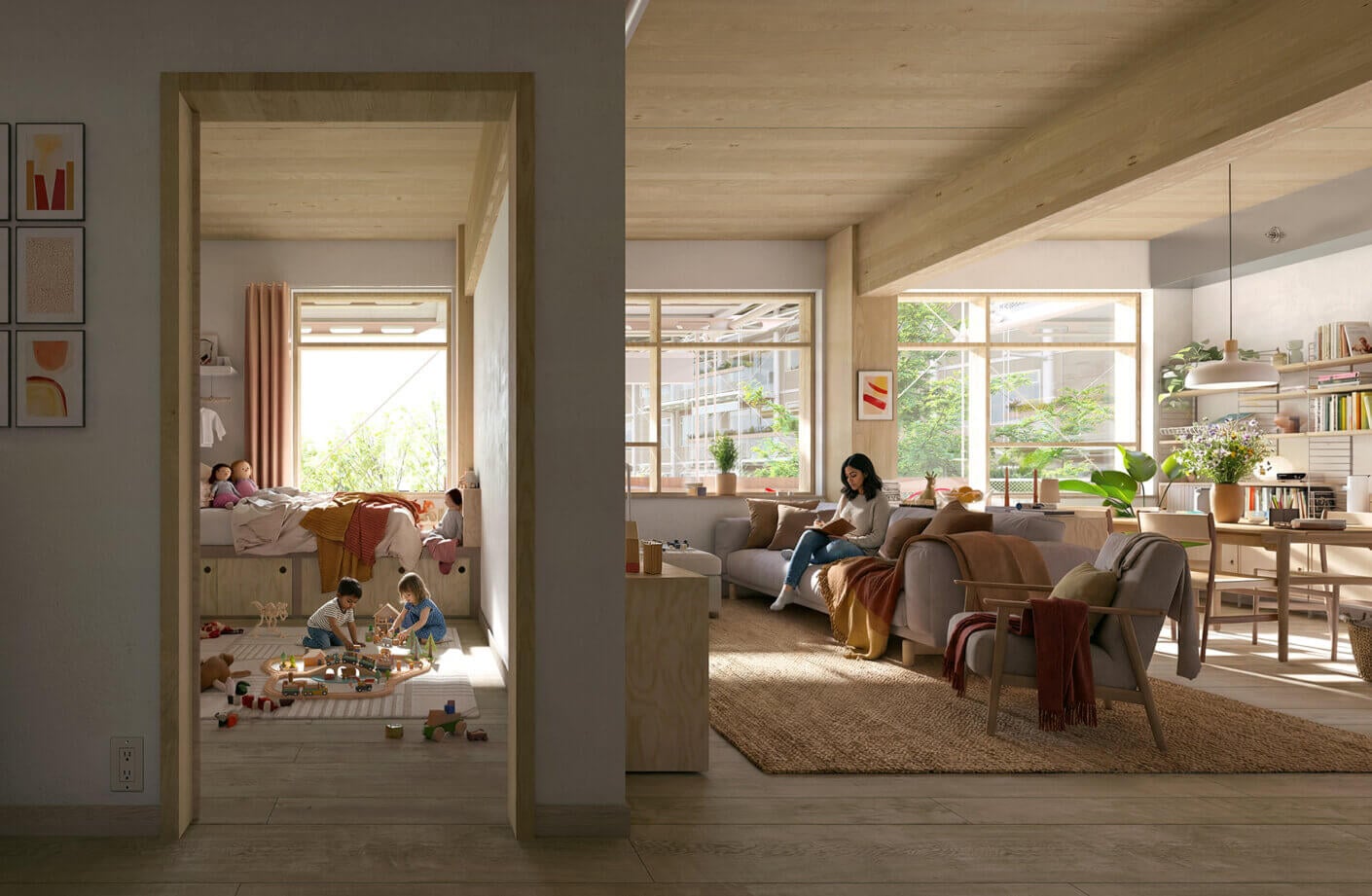
Cozy interior scene showing a family playing and a woman reading in a bright living space.
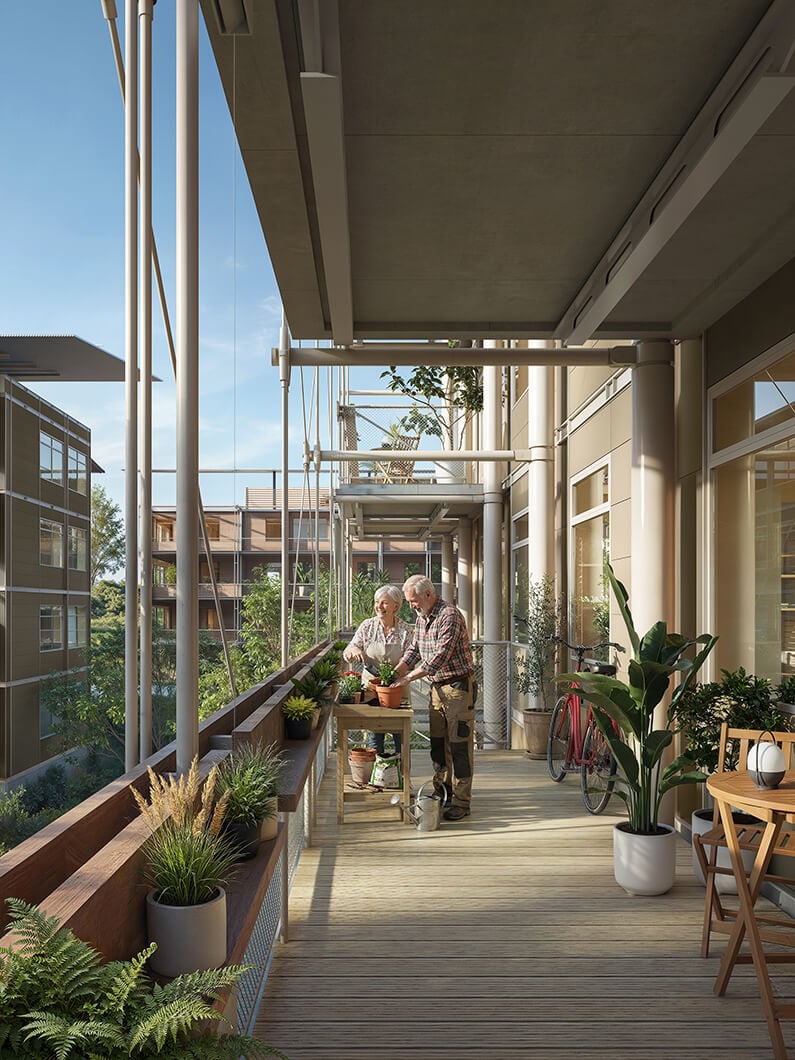
Elderly couple gardening on a modern balcony, surrounded by plants and natural light.
Livability, longevity, and resilience
The system is designed to support adaptable and family-oriented housing.

Led by Perkins&Will and supported by ASPECT Structural EngineersIntroba, and Simon Fraser University’s School of Interactive Arts & Technology (SFU SIAT), this research was funded through a co-investment from DIGITAL, Canada’s commercialization partner for digital technologies, delivered under its Housing Growth Innovation program.

###

About Perkins&Will

Perkins&Will, an interdisciplinary, research-based architecture and design firm, was founded in 1935 on the belief that design has the power to transform lives. The firm is committed to creating a better, beautiful, more equitable world through Living Design, an approach that integrates environmental, social, and design considerations to advance ecological health and well-being. Interior Design named Perkins&Will a “Sustainability Giant” in 2024; Architizer named it the world’s “Best Sustainable Firm” in 2023; and Metropolis named it “Firm of the Year” in 2022 for its industry leadership in advancing climate action and social justice. Fast Company named Perkins&Will one of the World’s Most Innovative Companies in Architecture three times, and in 2021, it added the firm to its list of Brands That Matter—making Perkins&Will the first architecture practice in the world to earn the distinction.

With an international team of more than 2,700 professionals, Perkins&Will has over 30 studios worldwide, providing integrated services in architecture, interior design, branded environments, urban design, and landscape architecture. Partners include Schmidt Hammer Lassen Architects; McLennan Design; Portland; Nelson\Nygaard; and Pierre-Yves Rochon (PYR).


About the Vancouver Studio of Perkins&Will

The Vancouver studio of Perkins&Will is a long-standing pioneer of green buildings in the Canadian marketplace. The multi-disciplinary team has helped shape sustainable building policies and has consistently advocated environmental stewardship, resilient design, responsible material procurement and net-zero energy and carbon performance. With multiple LEED, Zero Carbon Building and Passive House-certified projects across Canada, the team continues to push the boundaries in realizing great building design and exemplary performance.


About DIGITAL

DIGITAL is Canada’s commercialization partner for digital technologies. Established in 2018 under the Government of Canada’s Supercluster Initiative, DIGITAL brings together industry leaders, SMEs, and post-secondary institutions to collaborate on large-scale projects that drive innovation and the development of technology solutions in sectors critical to Canada, such as mining and energy, housing, workforce development and health. More at digitalsupercluster.ca/.