
Museum House
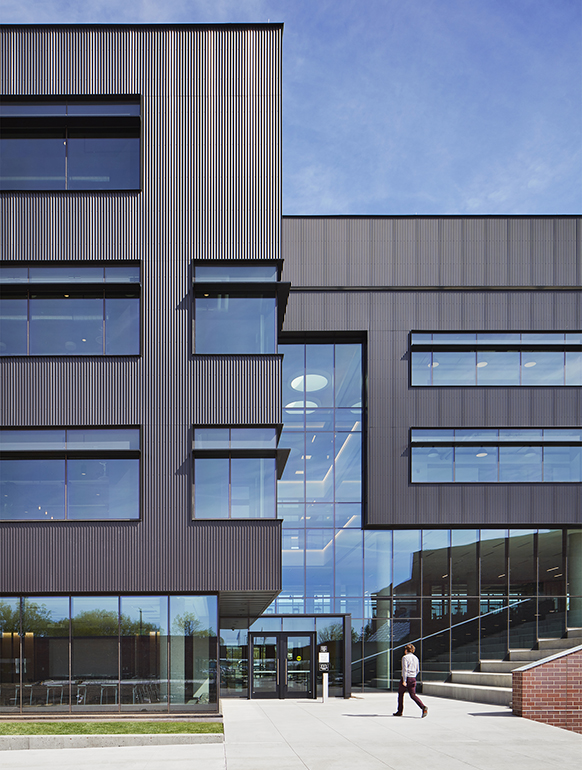
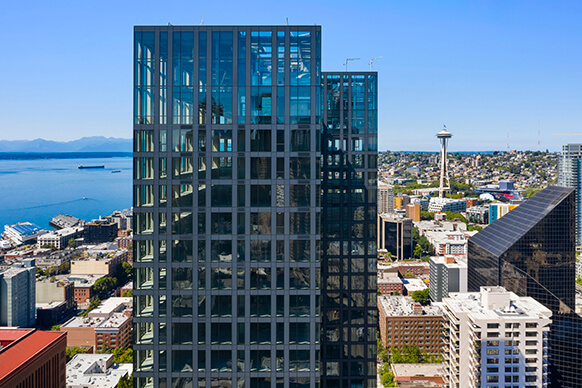
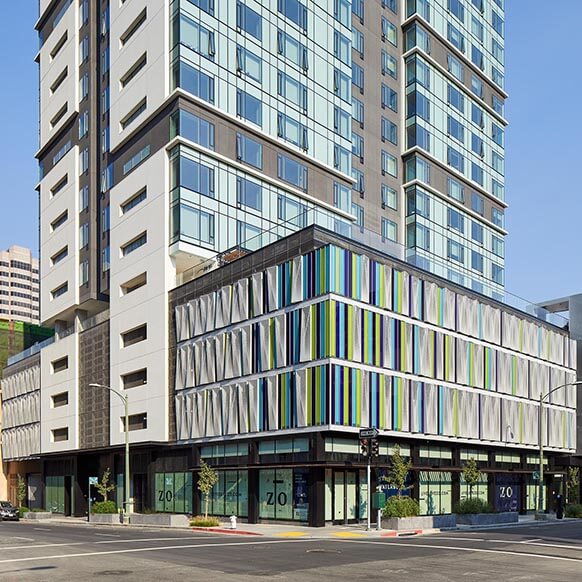
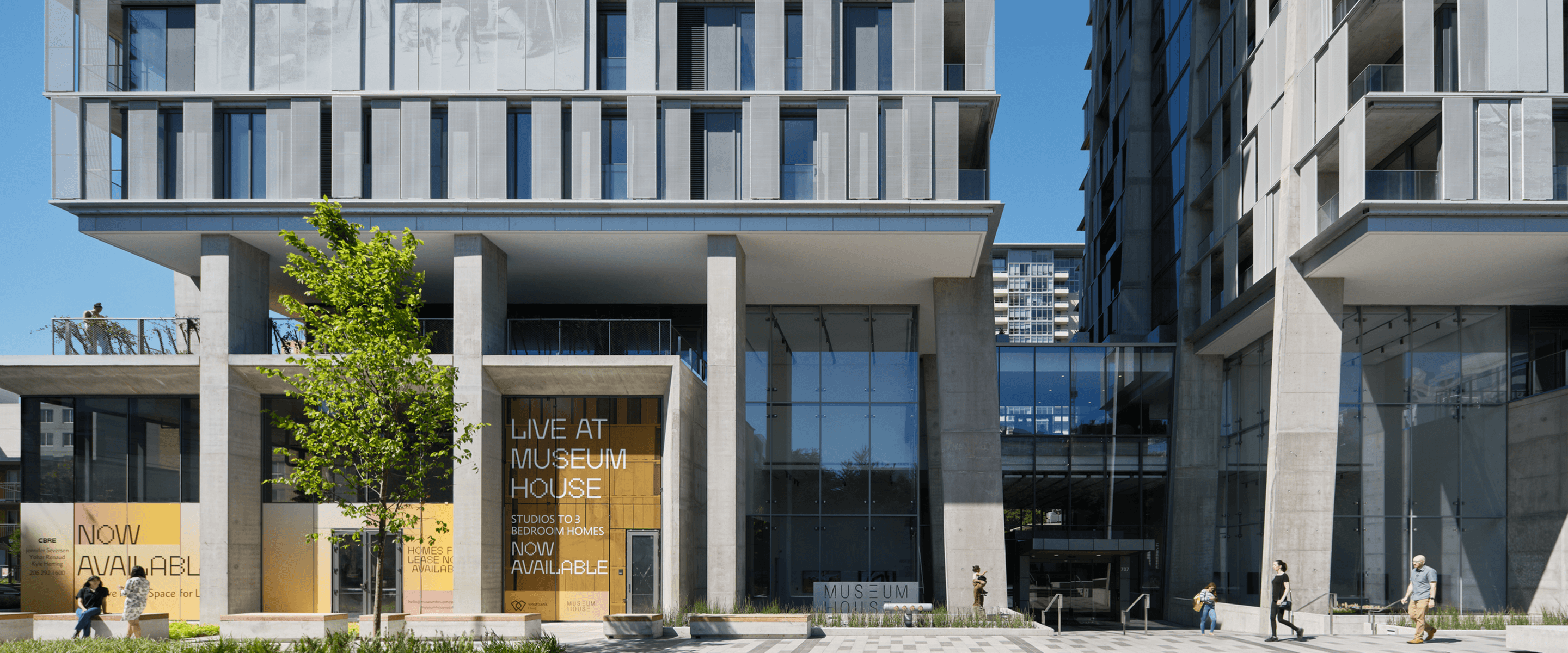
Located between downtown Seattle and several major medical campuses, Museum House appeals to young professionals and healthcare workers seeking proximity, culture, and community. The 506-unit, mixed-use rental residential development blurs the line between art and architecture through a series of shifting screens on the building’s facade that recreate works from the neighboring Frye Art Museum’s collection, allowing residents to interact with the building’s exterior animation. The structure operates as an ever-changing canvas, spanning two diverging towers joined by a glass bridge.
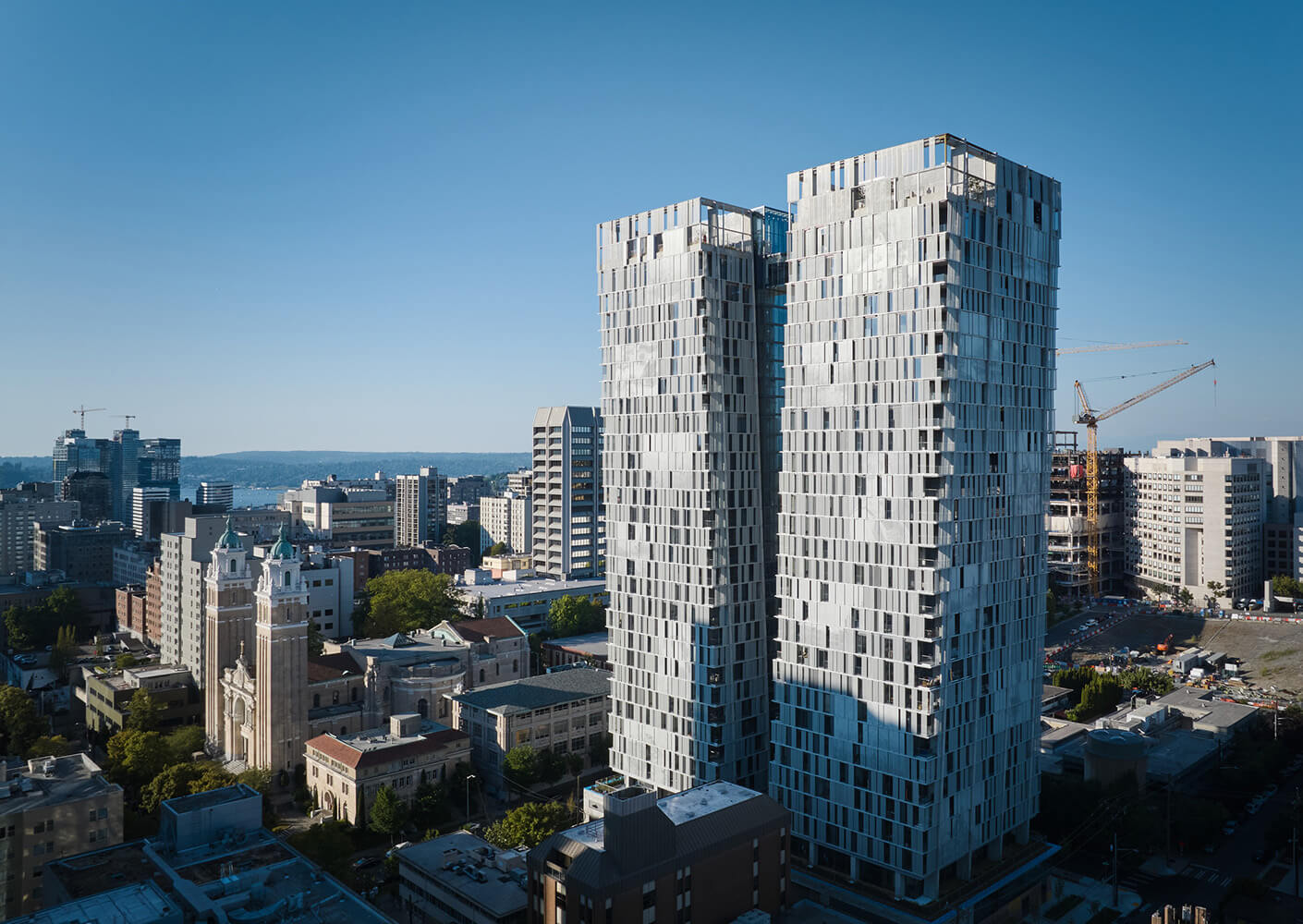
On an urban scale, Museum House contributes to Seattle’s post-pandemic growth and cultural revival. The design team relocated the main drop-off to a side alley, allowing Terry Avenue to become a pedestrian-centric “festival street” that supports public art, community programming, and a more active streetscape. Retail and dining options within the building further energize then neighborhood, while a ground-floor public gallery expands the block’s cultural footprint.
Ian Gillespie, Founder, Westbank

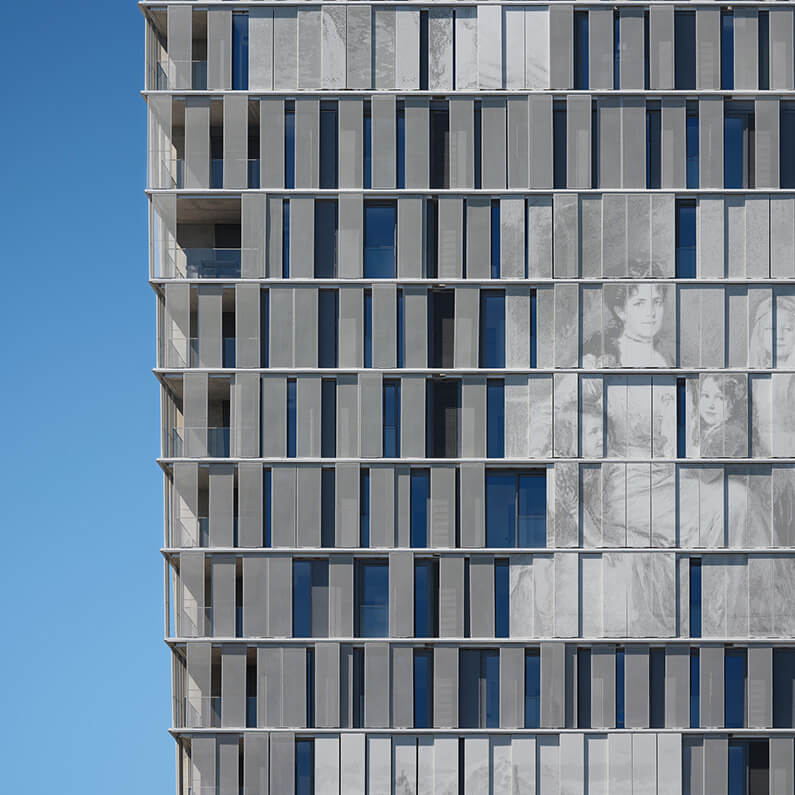
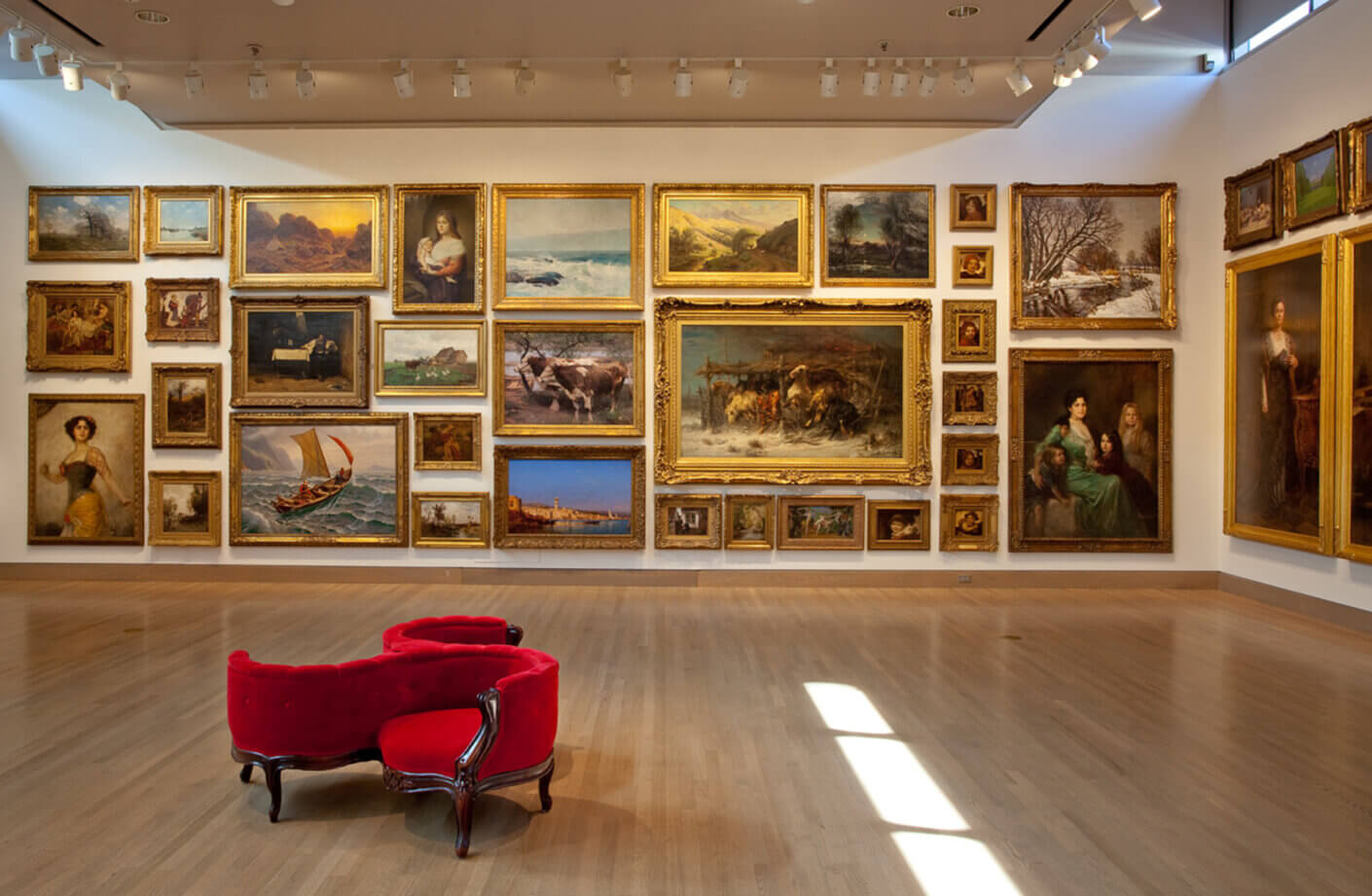
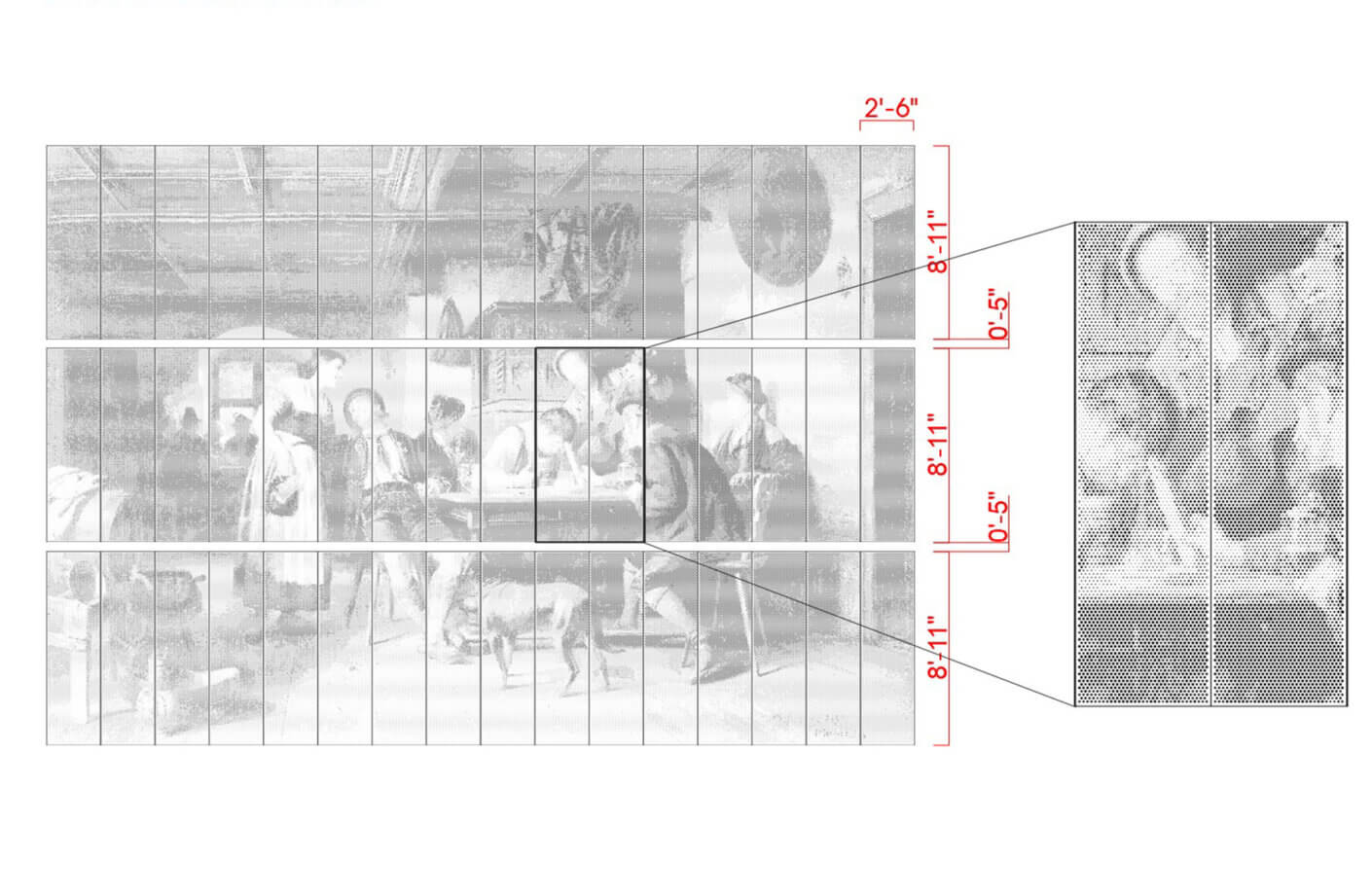
Paintings from the Frye’s historic Salon were chosen based on traits that would maximize their visibility in greyscale and at a distance. Selected images underwent an editing process to boost contrast, capture the maximum amount of detail, and ensure that average light values were equalized across all images. Then, each image was converted to a series of custom perforation patterns and cut out of the panels.
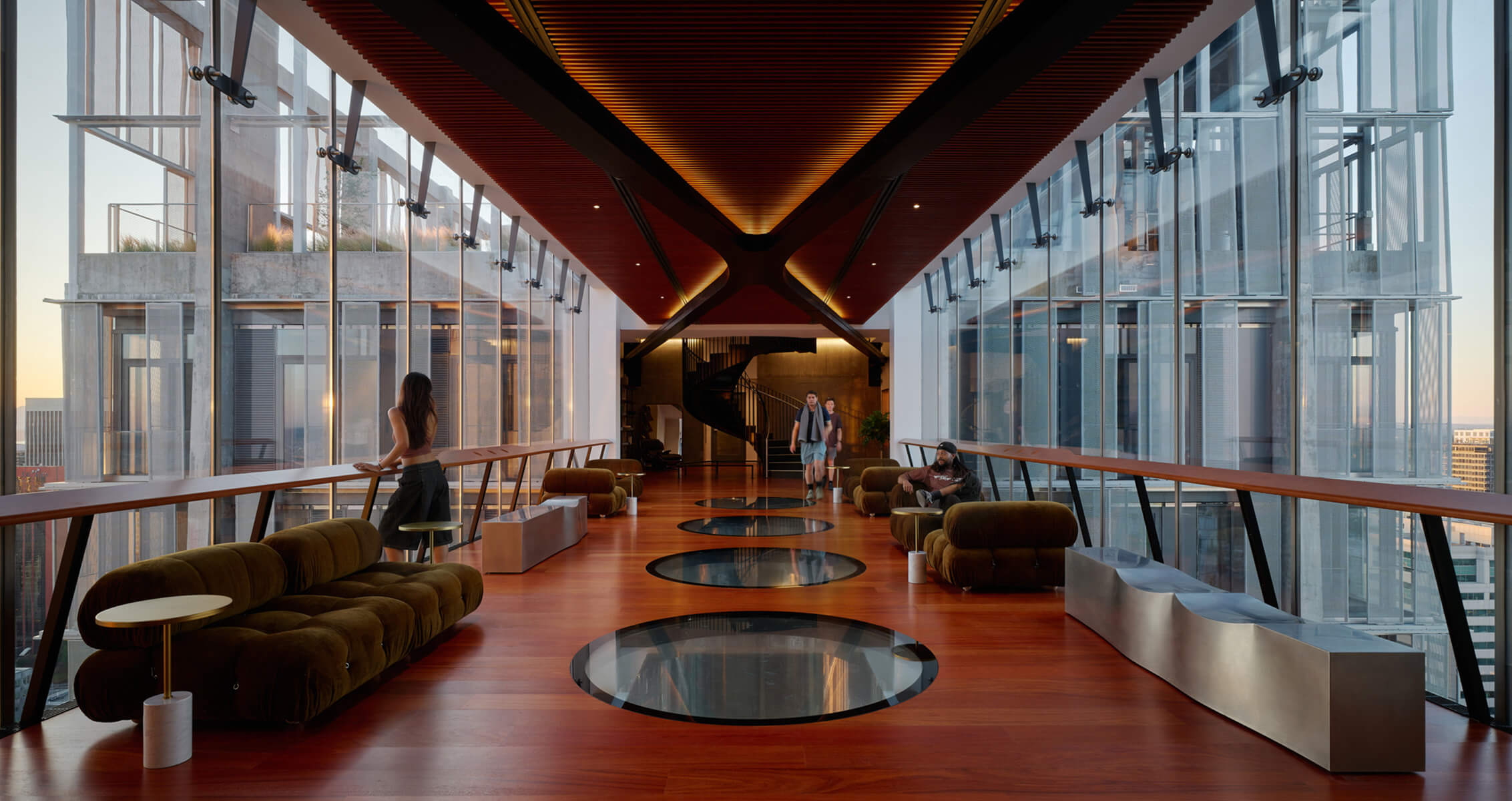
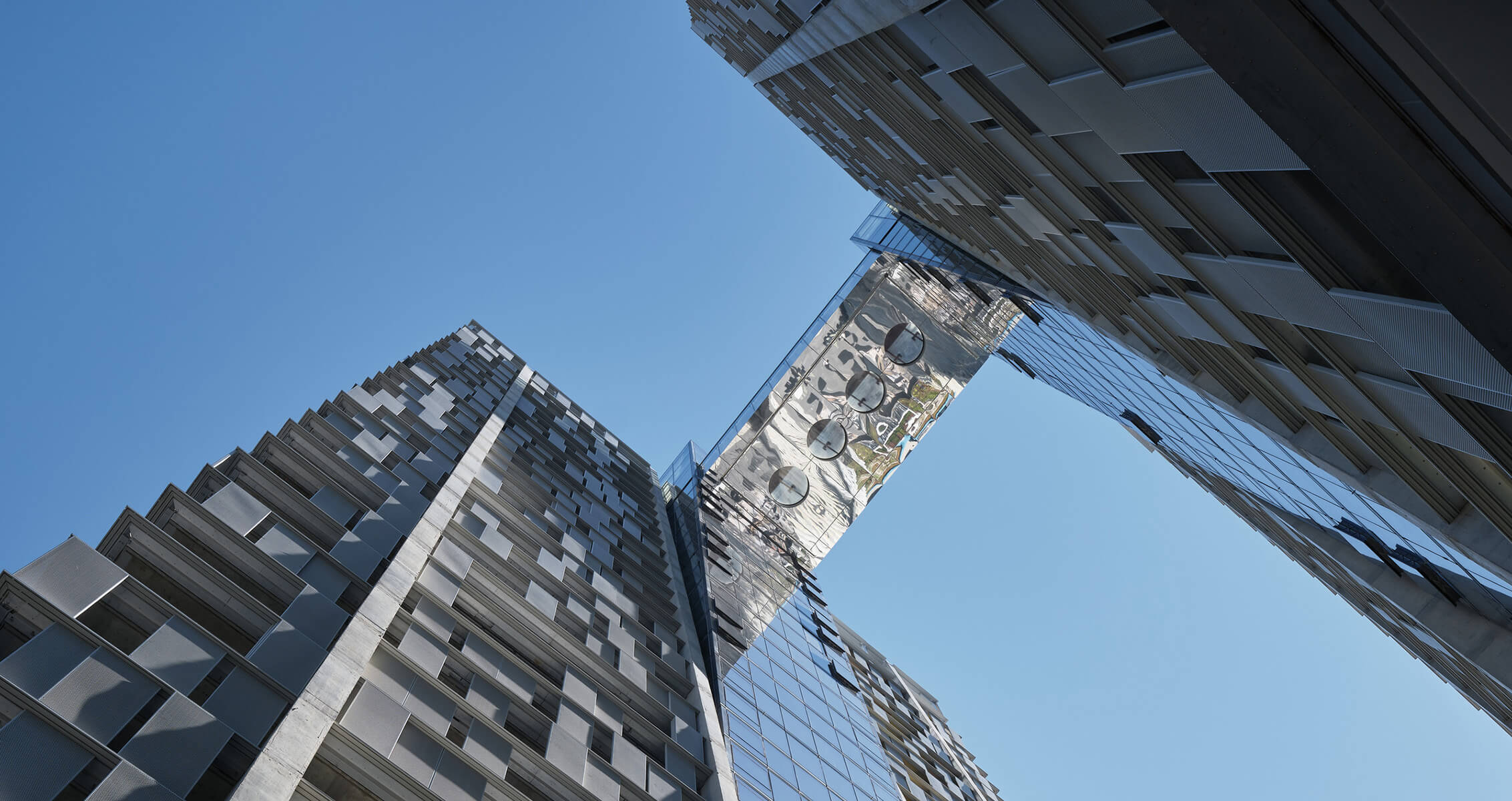
A sky bridge connects the two diverging towers, allowing residents to traverse the void and access the two amenity spaces located in each building. The creative tension formed at the bridge is enhanced by the unparalleled views both to the Cascade and Olympic Mountain ranges as well as through the glass viewing portals in the floor to the Frye Museum below.

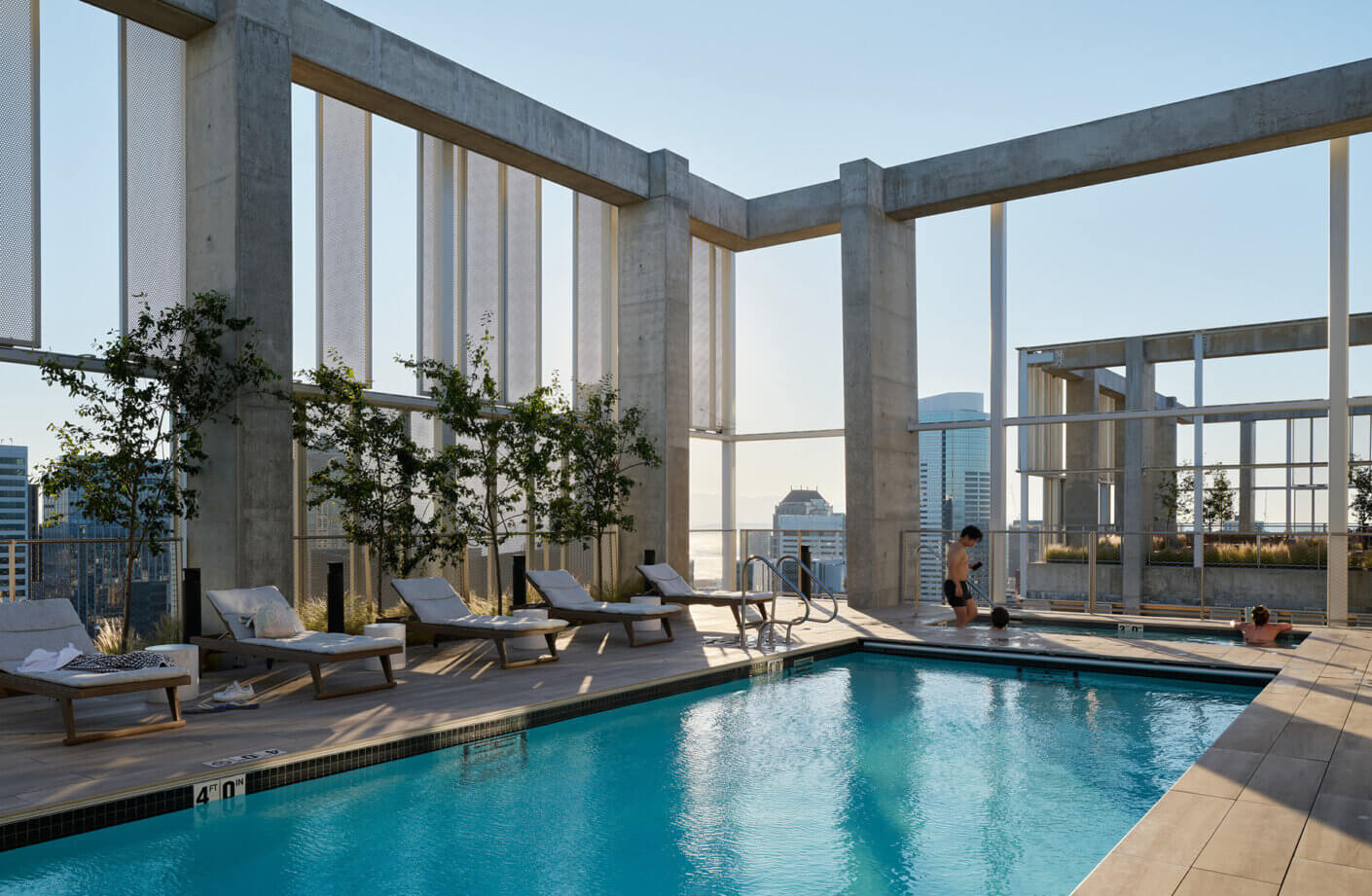
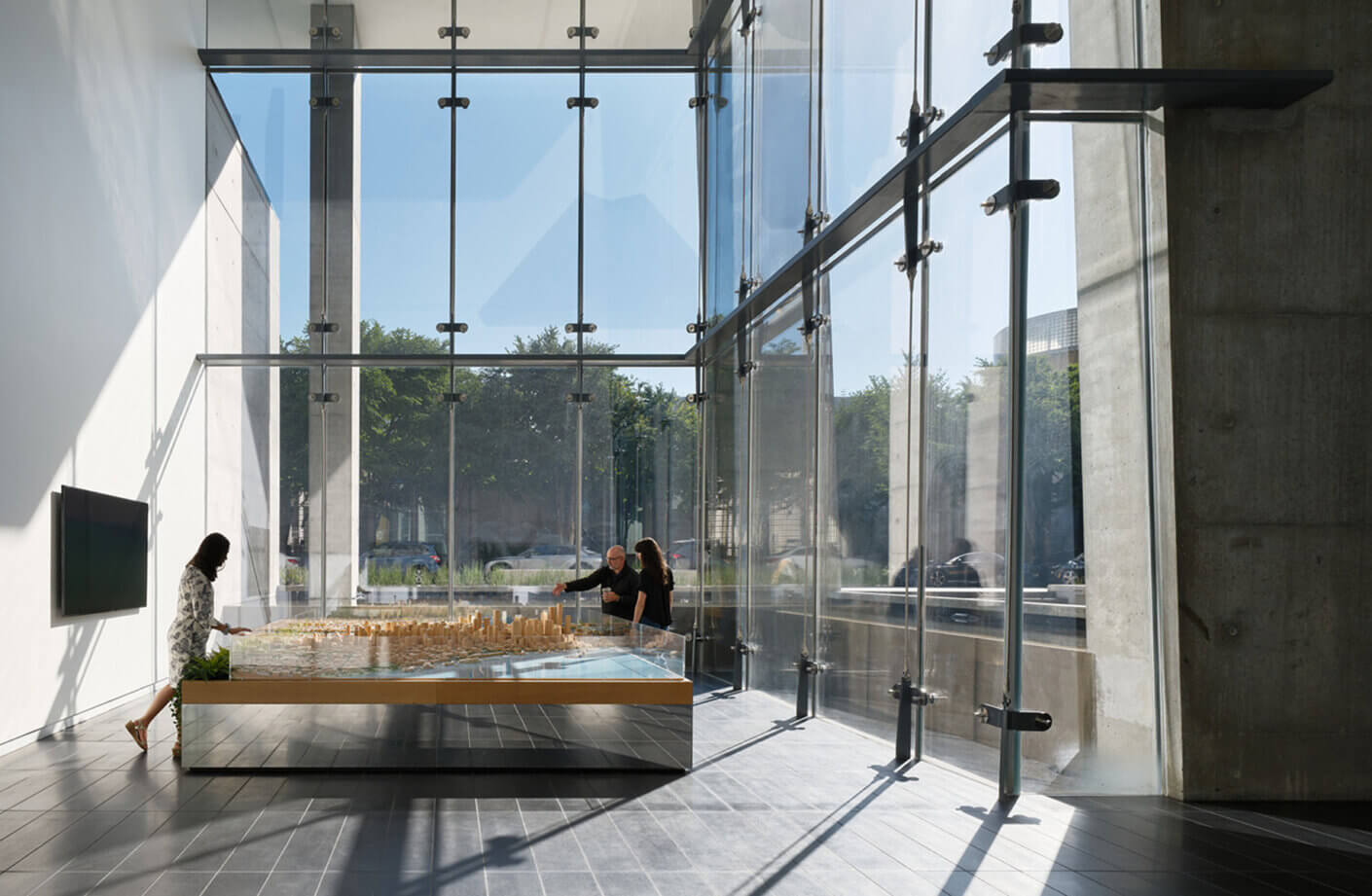
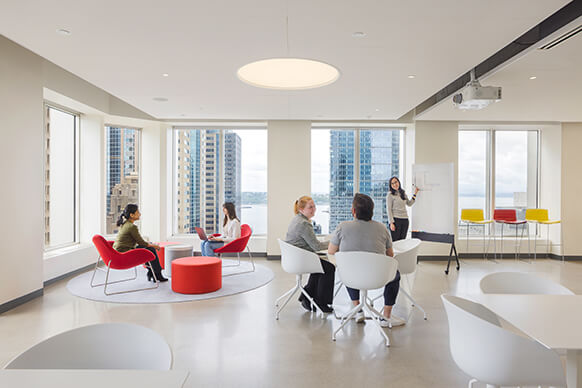
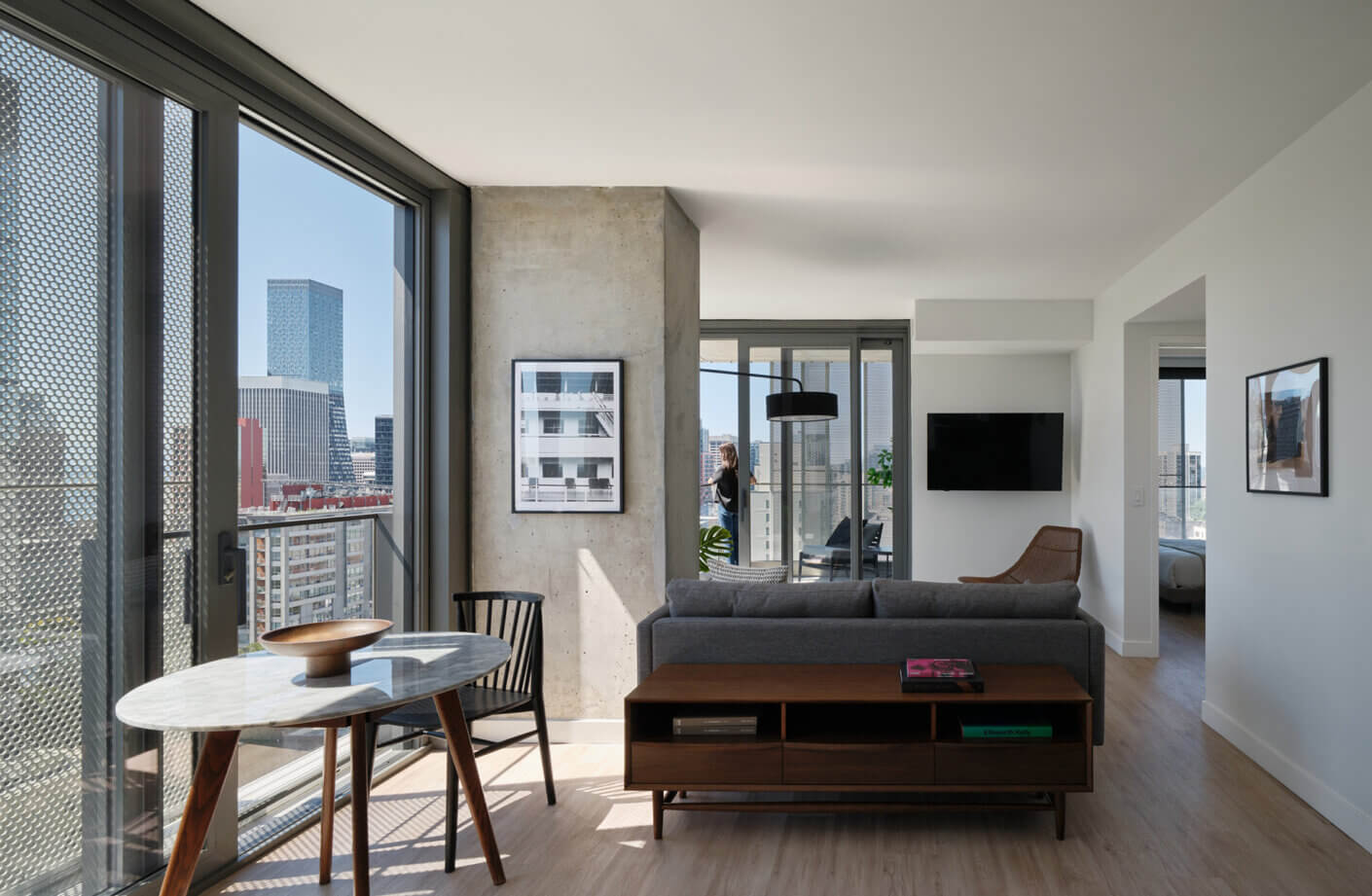
Throughout, the interiors emphasize transparency and lightness, creating a sense of suspension and perspective. Materials such as raw concrete, warm wood, and refined steel accents reference traditional Northwest craftsmanship and Seattle’s aeronautical legacy. Red List–free materials promote healthier interiors, while durable finishes extend the life of high-traffic areas and reduce waste over time.

Peter Busby, Perkins&Will Firmwide Design Principal