Press Releases May 12, 2026

“Architecture in a Rapidly Changing World” is a Career-Spanning Survey of Architect Ralph Johnson’s Most Significant and Recent Designs

Johnson’s latest monograph shows how Perkins&Will’s design culture encourages individual talent to develop in the context of its global practice.
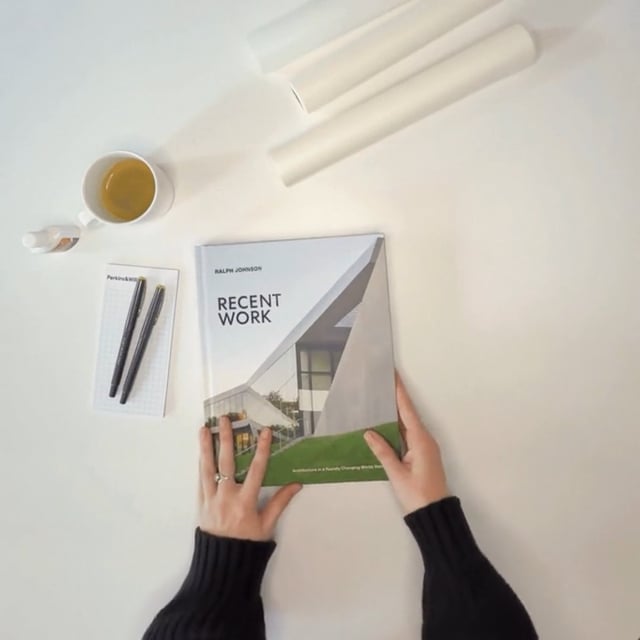
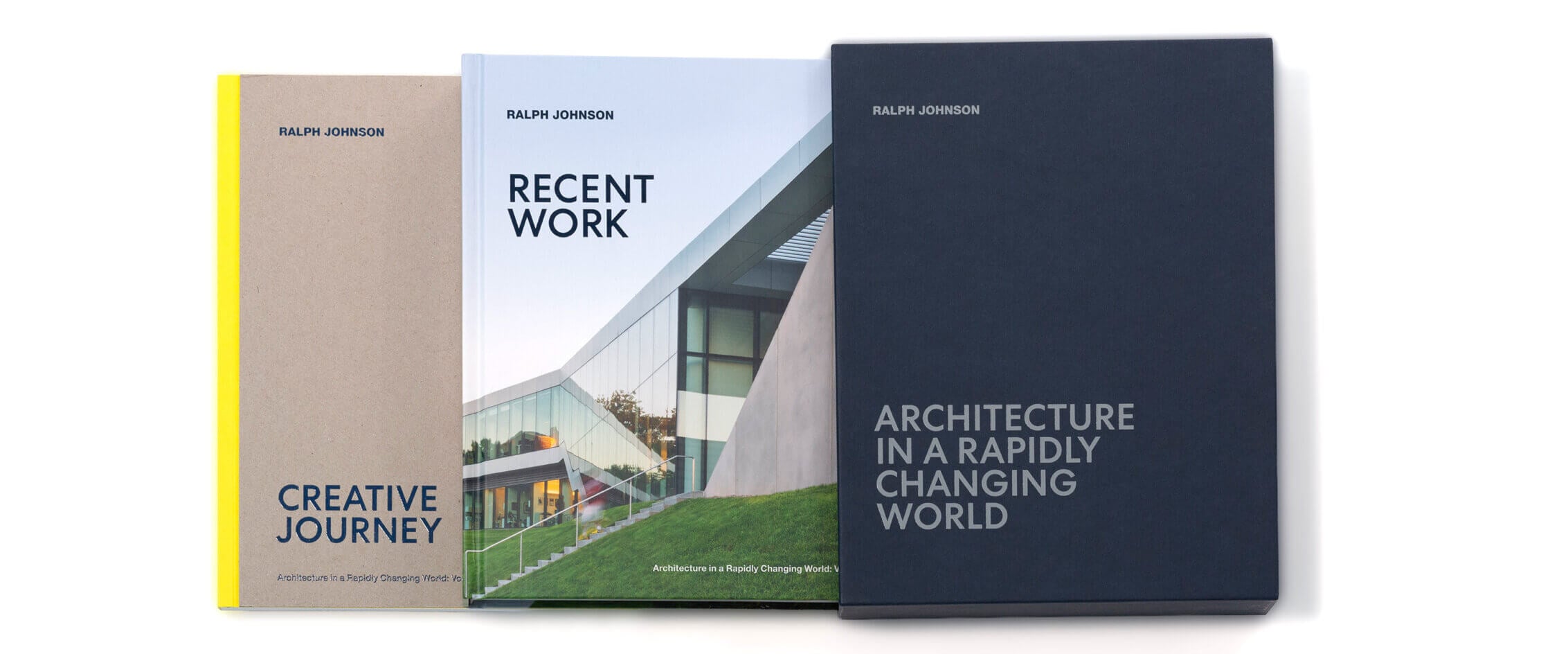
Flat lay of

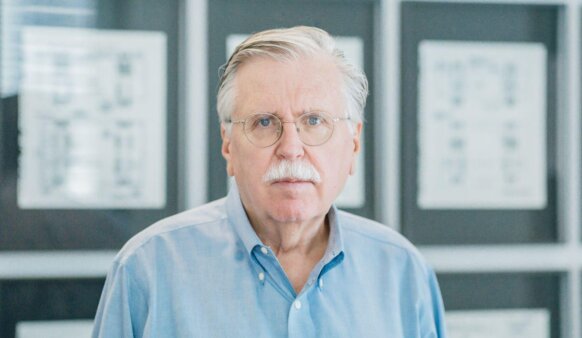
CHICAGO—Ralph Johnson, a firmwide design director at Perkins&Will, has published his first monograph in over a decade: Architecture in a Rapidly Changing World. This wide-ranging survey of the award-winning architect’s designs begins with drawings made during his university travel abroad year and culminates in his most recent work.

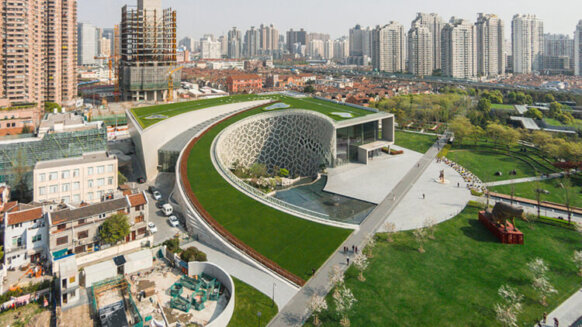
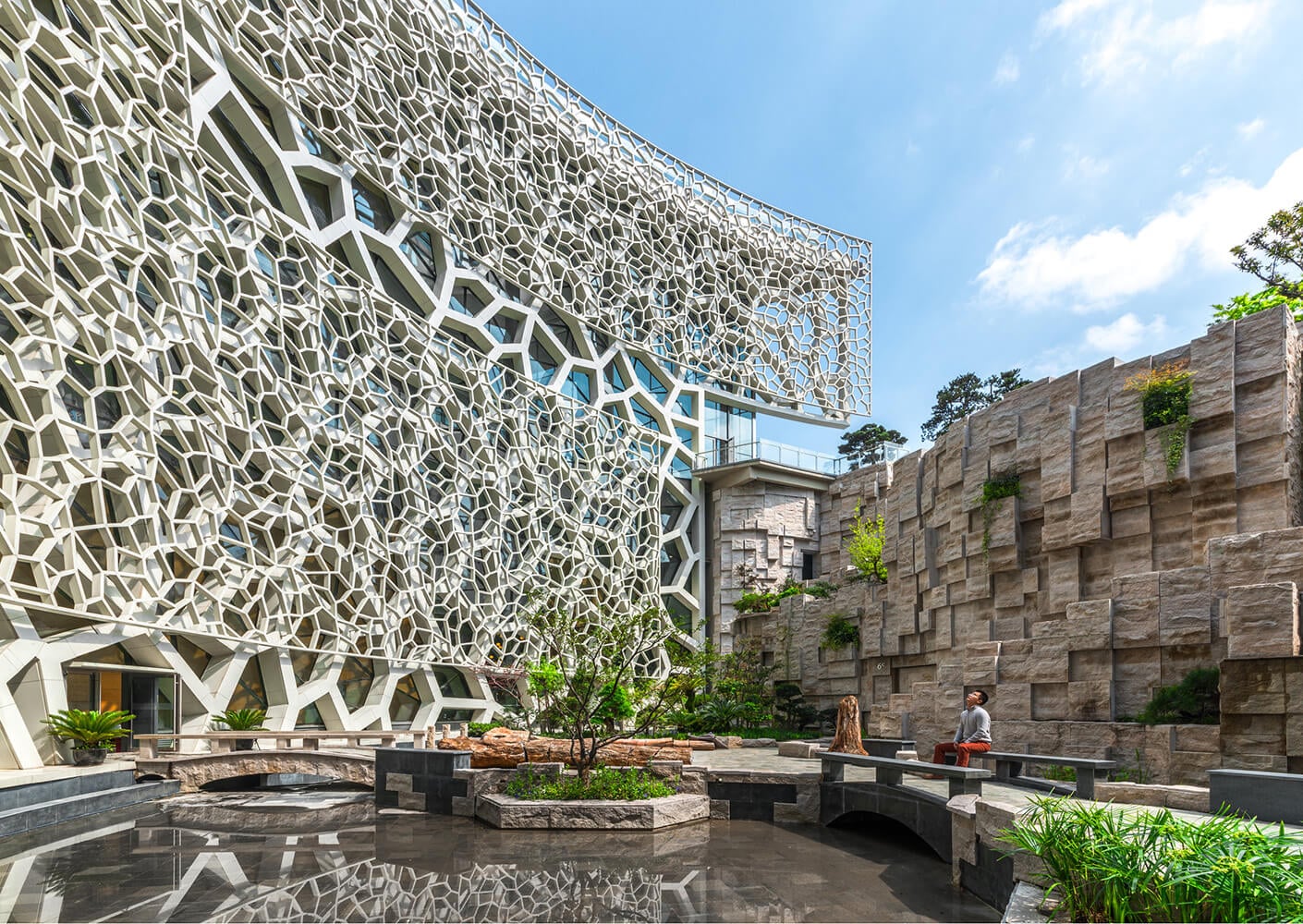
Throughout his more than 50-year career, Johnson has designed some of the world’s most quietly iconic buildings, from 100 Riverside Plaza in his hometown of Chicago to the Shanghai Natural History Museum. Diving into this legacy of diverse project types—from schools to skyscrapers—tailored for communities around the globe, the book explores how Perkins&Will’s design culture provides the latitude for individual expression to emerge within the context of its global practice and tracks epochal changes in architecture across half a century.
“I’ve seen the world change quite a bit during my career, and architecture has changed with it,” says Johnson. “These changes are reflected in my design portfolio, which is itself a response to this evolving context. Seen all together, it makes for an interesting story.”

Organized in two volumes, the book spotlights built and unbuilt work. Volume 1: Creative Journey offers a selection of designs Johnson produced from 1971 to 2012, including a series of axonometric drawings he made in the 1980s. Volume 2: Recent Work presents his most significant projects from 2013 to the present. Introductory essays by Ned Cramer, former editor-in-chief of Architect Magazine, and Thomas Fisher, director of the Minnesota Design Center, contextualize Johnson’s work. A Q&A between Cramer and Johnson draws out further insights into the architect’s design thinking.

“History can place [Johnson’s] architecture alongside that of Chicago titans such as Daniel Burnham and Bruce Graham,” writes Cramer in his introductory essay to the first volume, “not as iconoclastic, but as emblematic of the age.”

Shanghai Natural History Museum
Shanghai, China
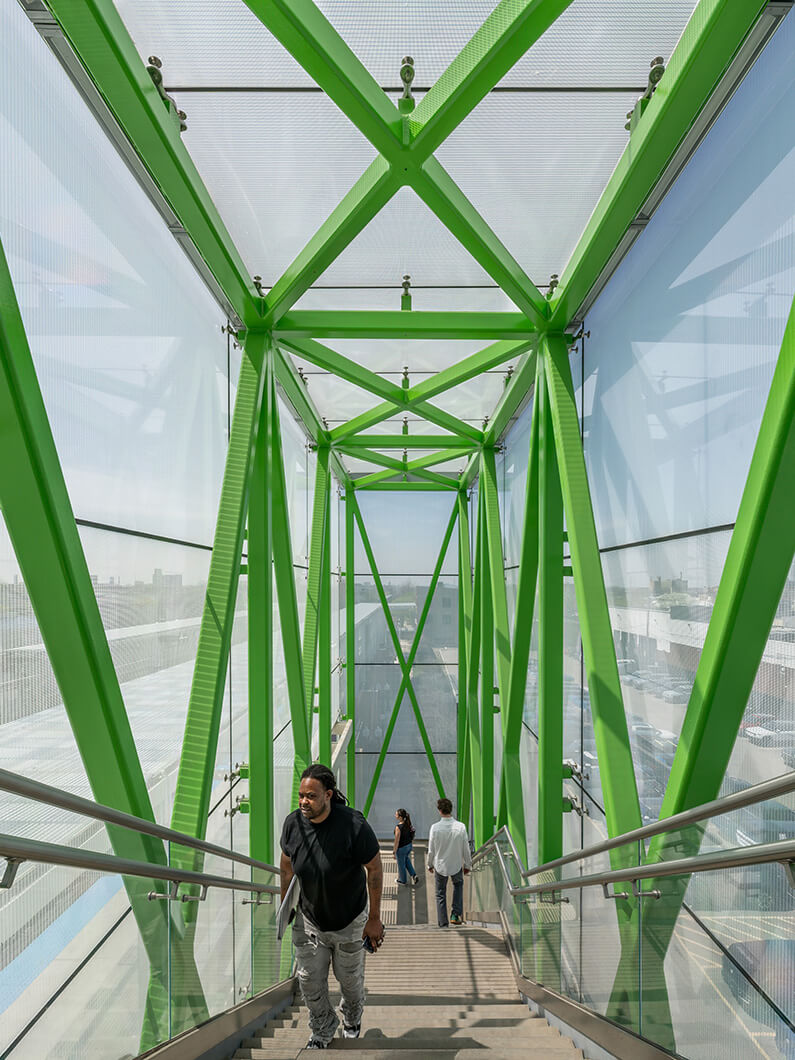
Man ascending stairs in a green metal-framed pedestrian bridge with clear panels and urban views.
Damen Green Line Station
Chicago, Illinois
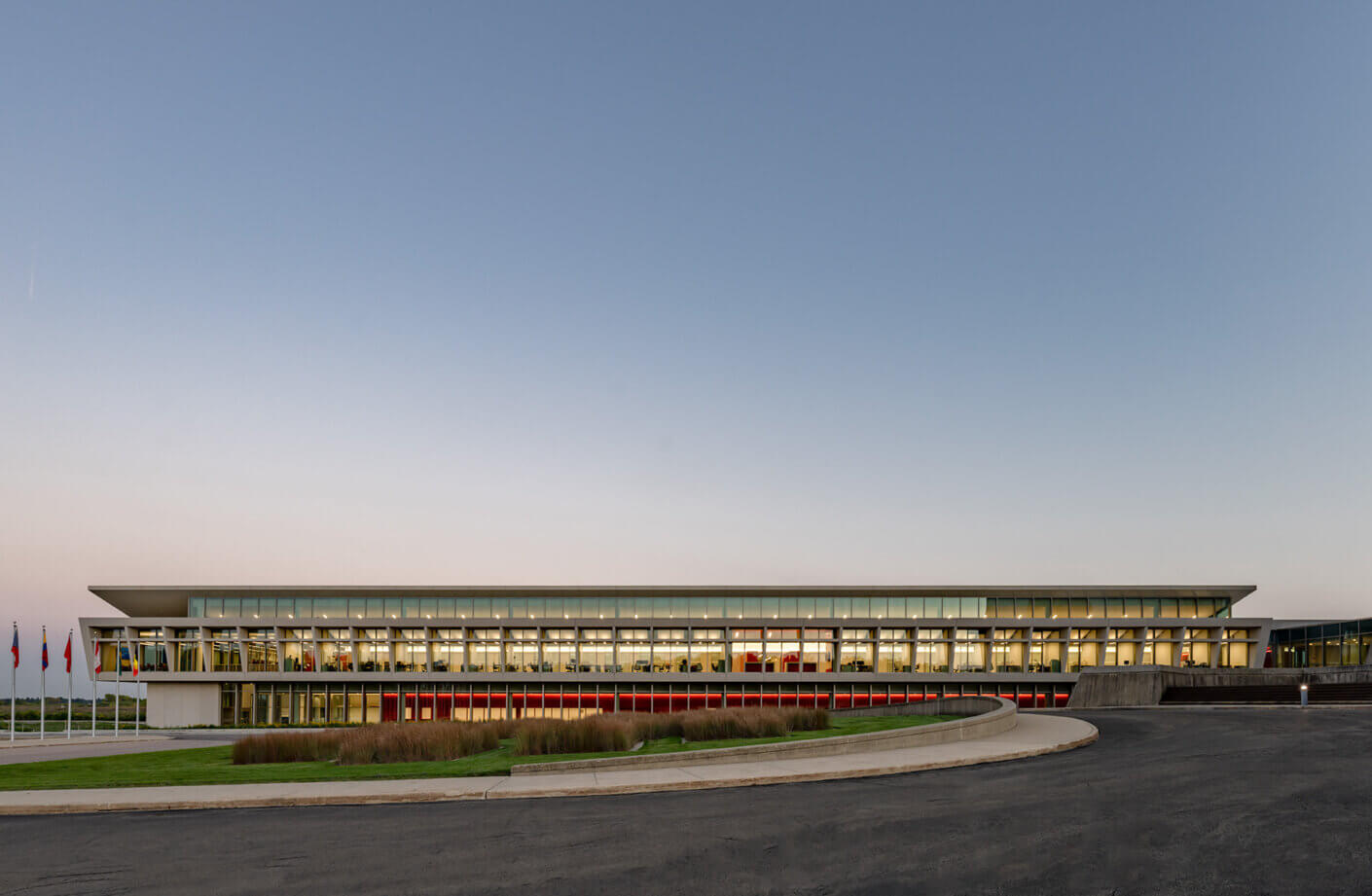
Exterior view of a sleek, glass-fronted building with landscaped grounds, showcasing flags in front and a curved access road leading to the entrance.
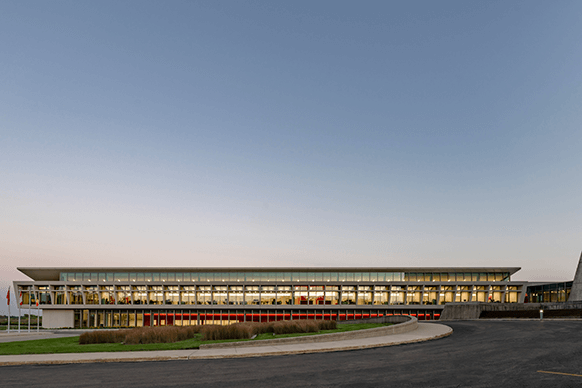
Fermilab Helen Edwards Engineering Research Center
Batavia, Illinois
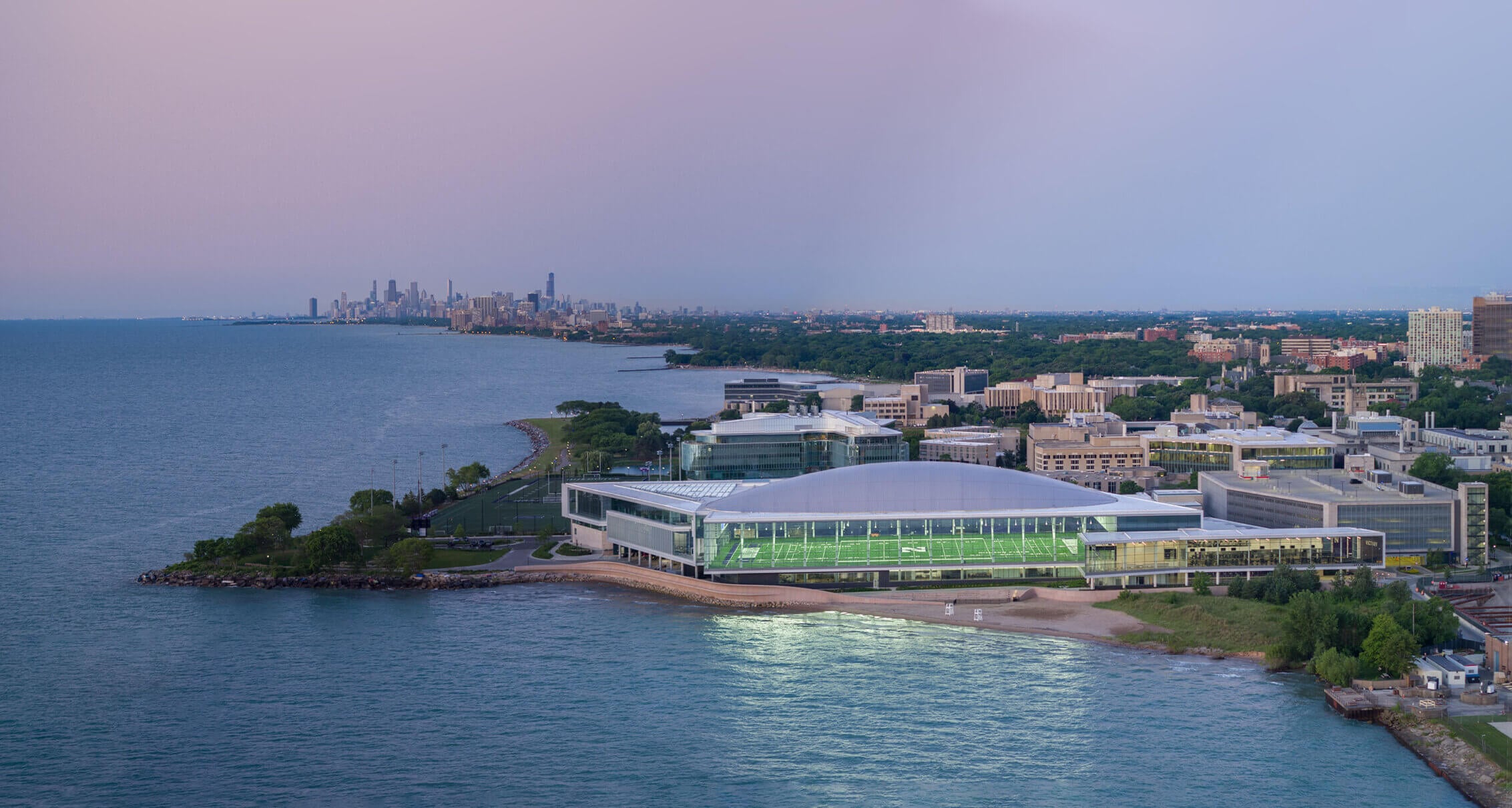
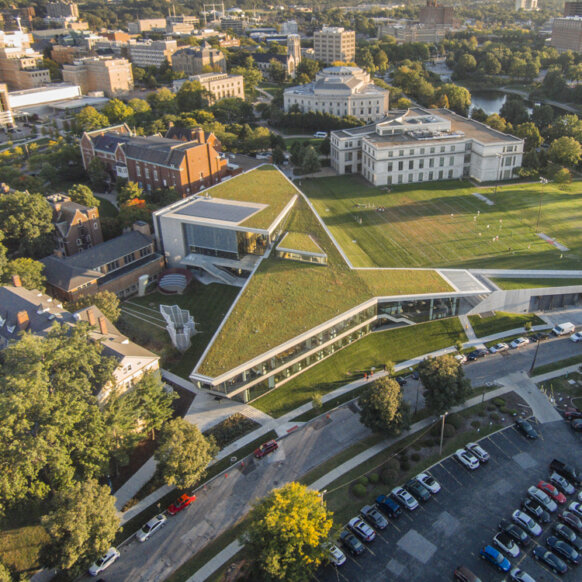
Northwestern University, Ryan Fieldhouse and Walter Athletics Center
Evanston, Illinois
Pragmatic and poetic

“For me, architecture is about layering the practical and the artistic,” says Johnson in his conversation with Cramer. “The needs and requirements of the client will be the basis for any architectural solution. Layered on top of that will be the concerns of site, neighborhood, and context. Some architects are known for a specific style, my approach is based on context. That is always the foundation.”

Architecture in a Rapidly Changing World makes a case for Johnson’s humble approach to design, which puts the needs of clients, the public, and the planet ahead of the architect’s personal brand. Lavishly presented with sketches, plans, renderings, color photography, and perceptive narratives, the book’s layouts emphasize how the intersection of architecture and context can serve society and improve lives.

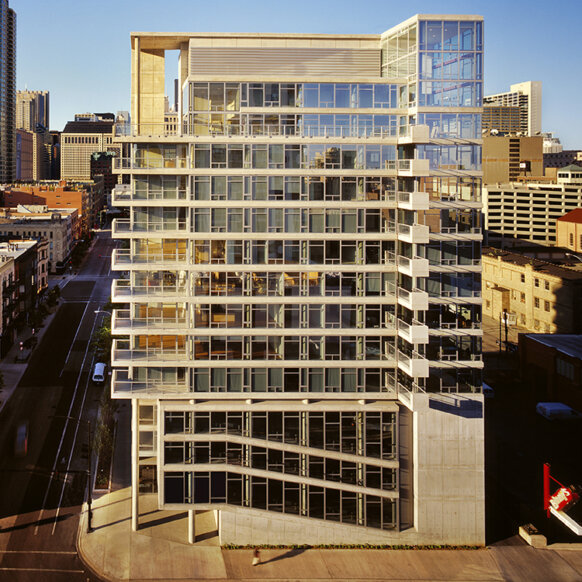
Featured projects include Contemporaine, an inventive take on high-rise housing in downtown Chicago; Case Western Reserve University’s Tinkham Veale Center, a commons for the Cleveland research institution; Northtown Library and Apartments, which integrates senior housing with a neighborhood library; Damen Green Line Station, restoring rail service to an underserved Chicago neighborhood; and the Suzhou Science and Technology Museum, the third and most anticipated component of the ancient Chinese city’s new cultural complex.

vimeo placeholder image

“The projects in this publication show Johnson’s deft ability to transform functional buildings into memorable works of architecture—places that have become local, national, and even international landmarks,” says Casey Jones, chief design officer of Perkins&Will.

“Like door handles, the elements of architecture… can recede from consciousness until, in the hands of a talented architect like Ralph Johnson, we encounter them again in unexpected ways,” writes Thomas Fisher in his introductory essay to the second volume. “In his work, we see how corridors can become skybridges, how a room can recall a rib cage, how exterior walls can enclose gardens, and how roofs can hold an entire landscape.”

Press Contact

For review copy requests, please contact Chika Sekiguchi at chika.sekiguchi@perkinswill.com

For press images and interview requests, please contact Kaila Haindl at kaila.haindl@perkinswill.com and Rachel Rose at rachel.rose@perkinswill.com.

About Ralph Johnson

Ralph Johnson’s portfolio of award-winning work around the world has earned him a rightful place in the pantheon of modern architecture legends. For more than four decades, his buildings have transformed both place and community, inspiring a generation of architects to pursue beauty and high performance through meticulous study of site and form. Born and raised in Chicago, Johnson received his Bachelor of Architecture from the University of Illinois at Urbana-Champaign and his Master of Architecture from Harvard University. In 1976, he joined Perkins&Will—now 2,700 people strong—where he is Firmwide Design Director.