British Columbia Institute of Technology, Tall Timber Student Housing
With a growing student population, low vacancy in surrounding cities, and limited housing near campus, BCIT faced an urgent need for additional student accommodation. At the same time, the Institute sought to demonstrate leadership in sustainability and innovation—creating a residence that could serve as a living lab for future learning and set a precedent for climate-resilient campus design.
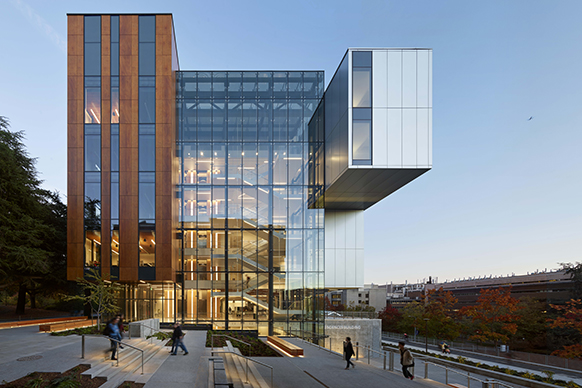
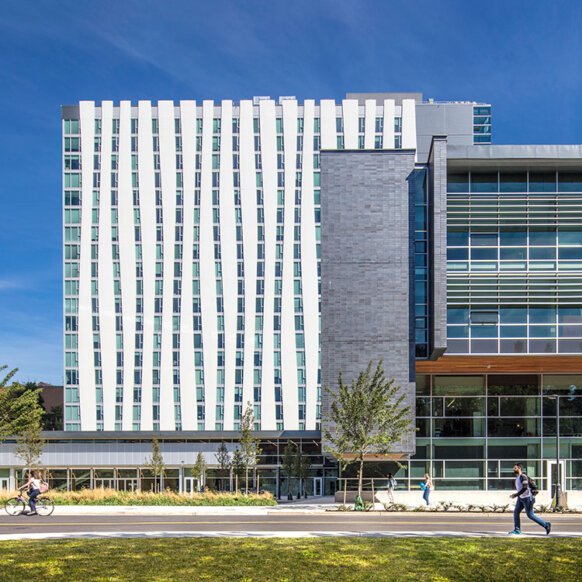
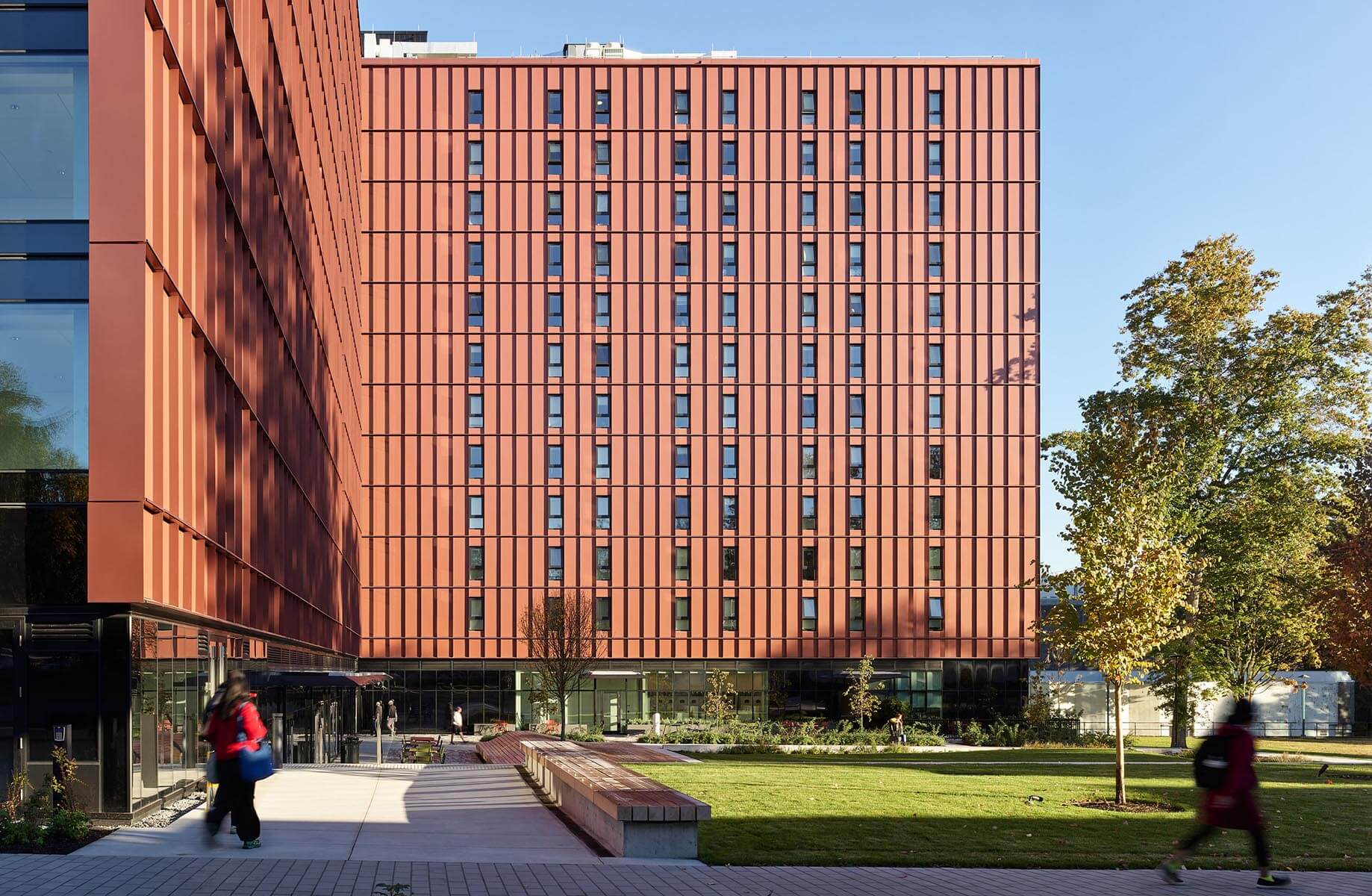
The resulting Tall Timber Student Housing is a 12-storey mass timber building that more than doubles BCIT’s on-campus housing capacity, adding 469 beds in a mix of semi-suite and studio units. Designed with modularity and prefabrication at its core, the residence combines efficiency, resilience, and inclusivity—delivering a fully electric, Zero Carbon Building – Design Standard™ certified project that activates the South Campus Commons as a vibrant hub of student life.
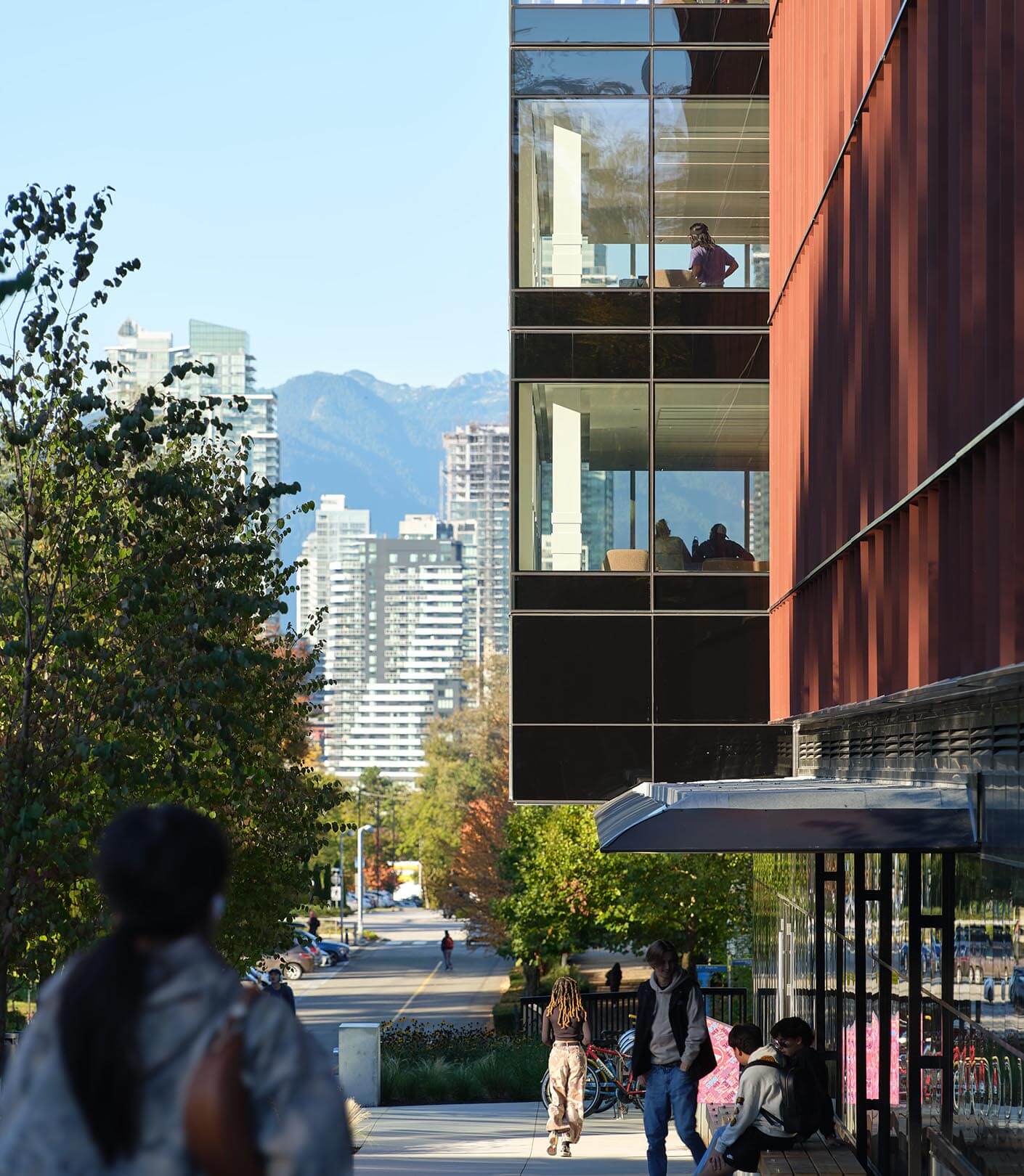
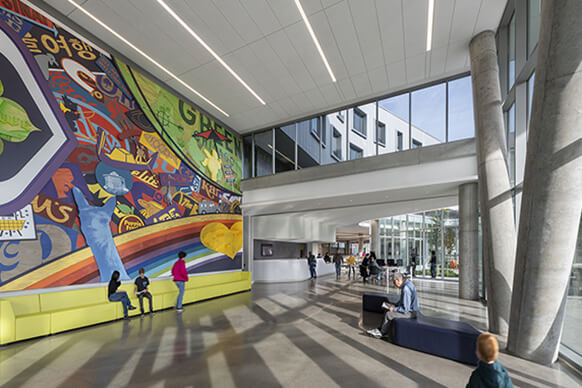
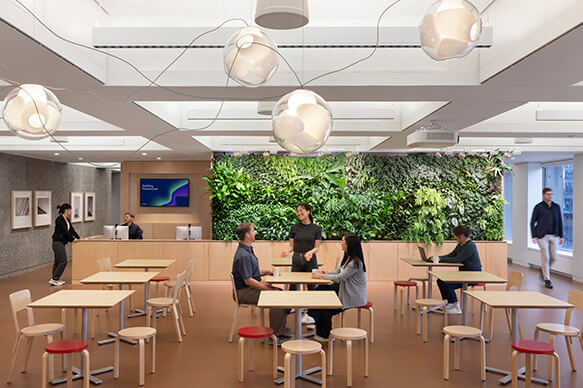
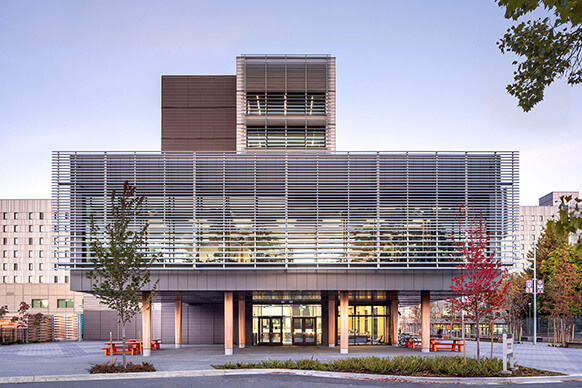
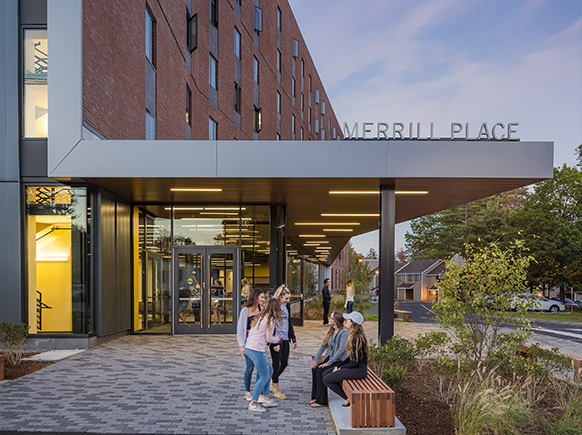
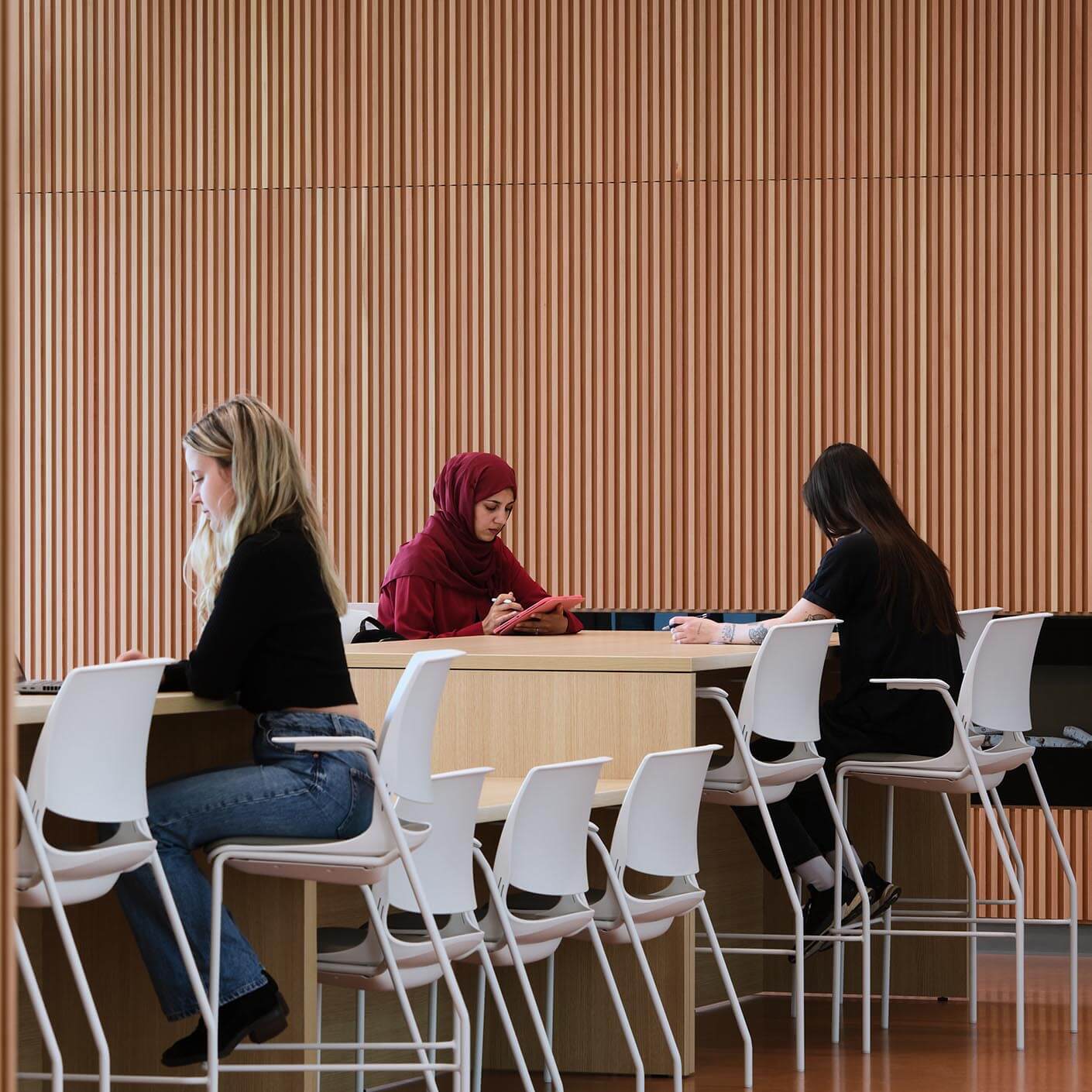
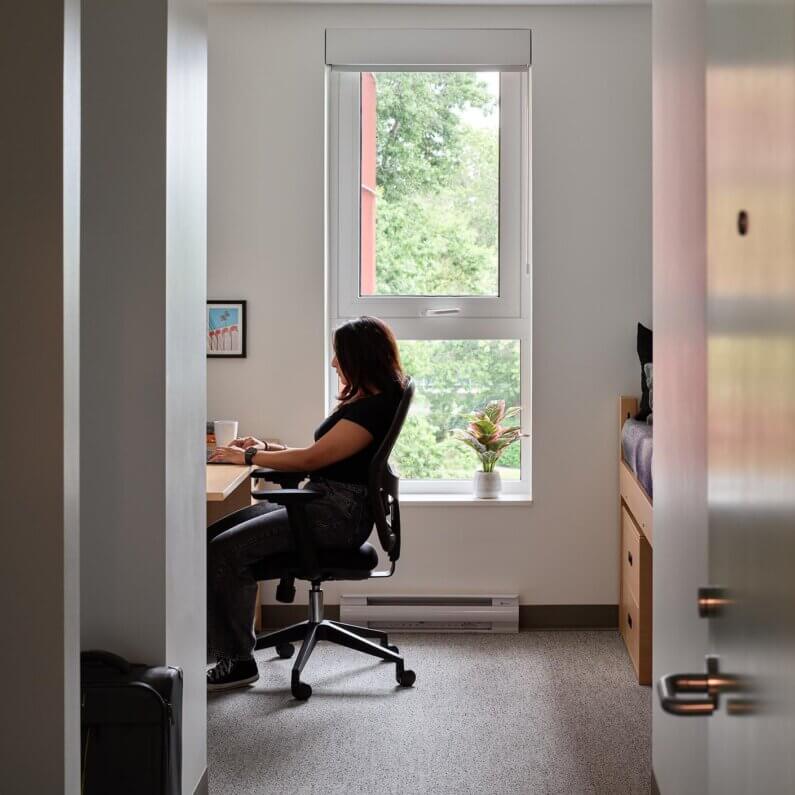
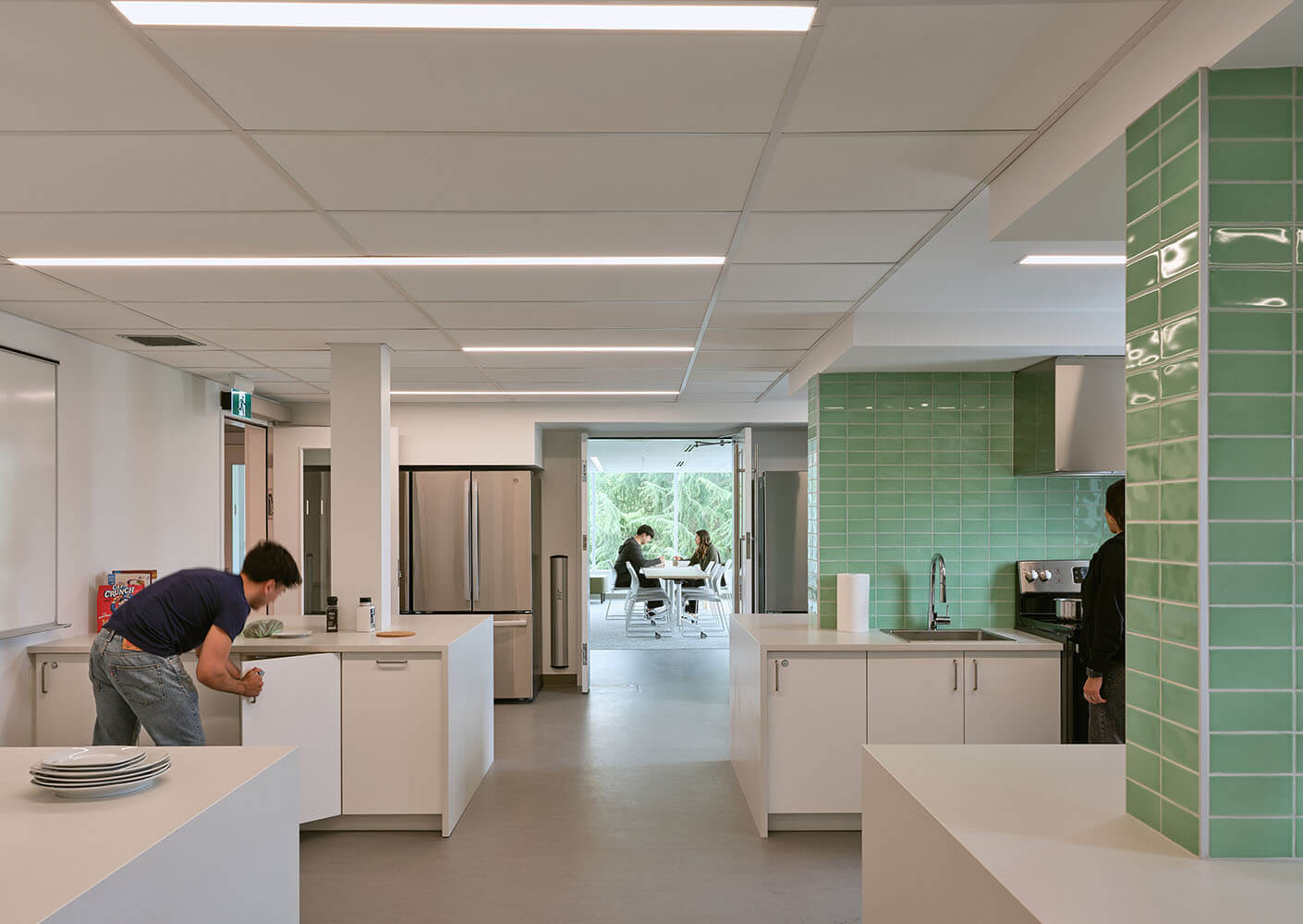
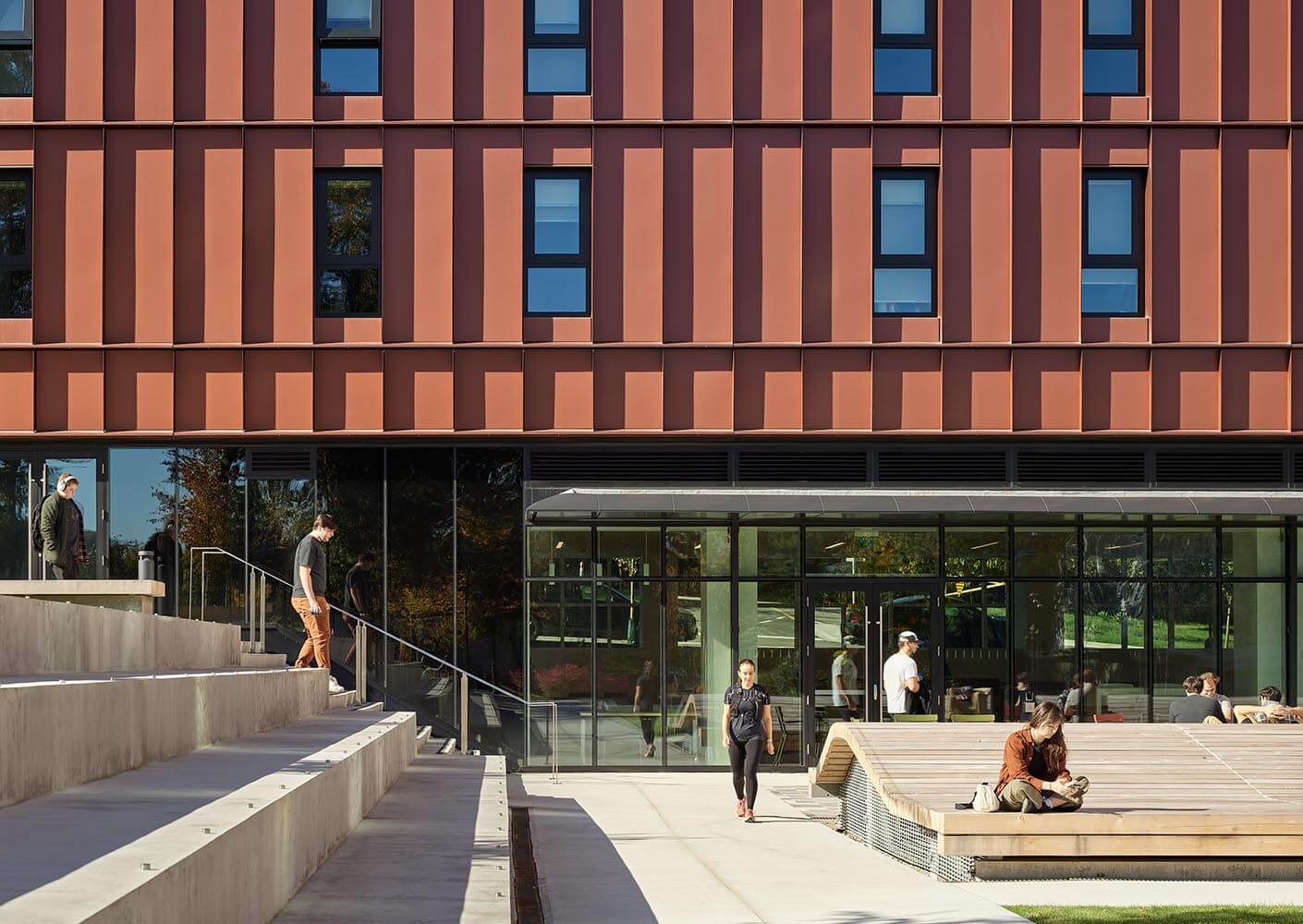
Strategic placement of the residence activates the South Campus Commons, creating a lively centre for daily campus life. On the ground floor, group study rooms, a flexible multi-purpose space, and an outdoor accessible plaza create natural gathering points and sightlines that connect students across programs and schedules. Inside, the unit mix reflects BCIT’s unique student demographic: semi-suite and studio units with shared kitchens, common dining areas, and quiet study zones respond to varied needs, cultivating community through everyday routines.
From the outset, sustainability was the project’s organizing principle. A fully electric design, high-performance envelope, and low-carbon refrigerants enable the building to meet BC Energy Step Code 4 and achieve CAGBC Zero Carbon Building – Design Standard certification. Rigorous life-cycle assessment (LCA) informed material choices and assemblies, reducing embodied carbon at every stage. Thermal studies shaped decisions on solar orientation, glazing performance, and HVAC systems. Cooling strategies in lounges, enhanced ventilation in bedrooms, and solar exposure optimization were integrated to protect student comfort and well-being during extreme heat events, ensuring a resilient living environment for years to come.
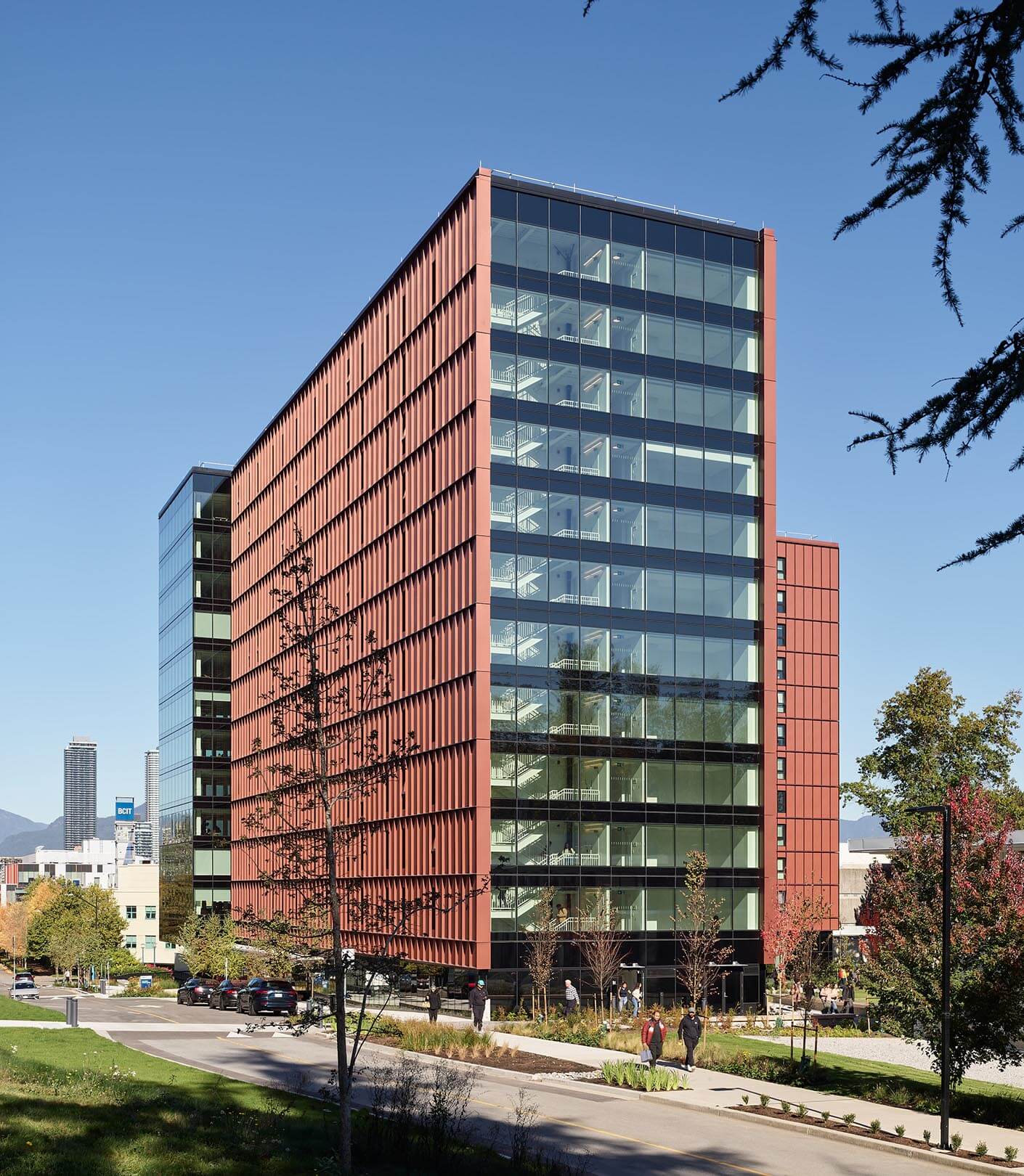
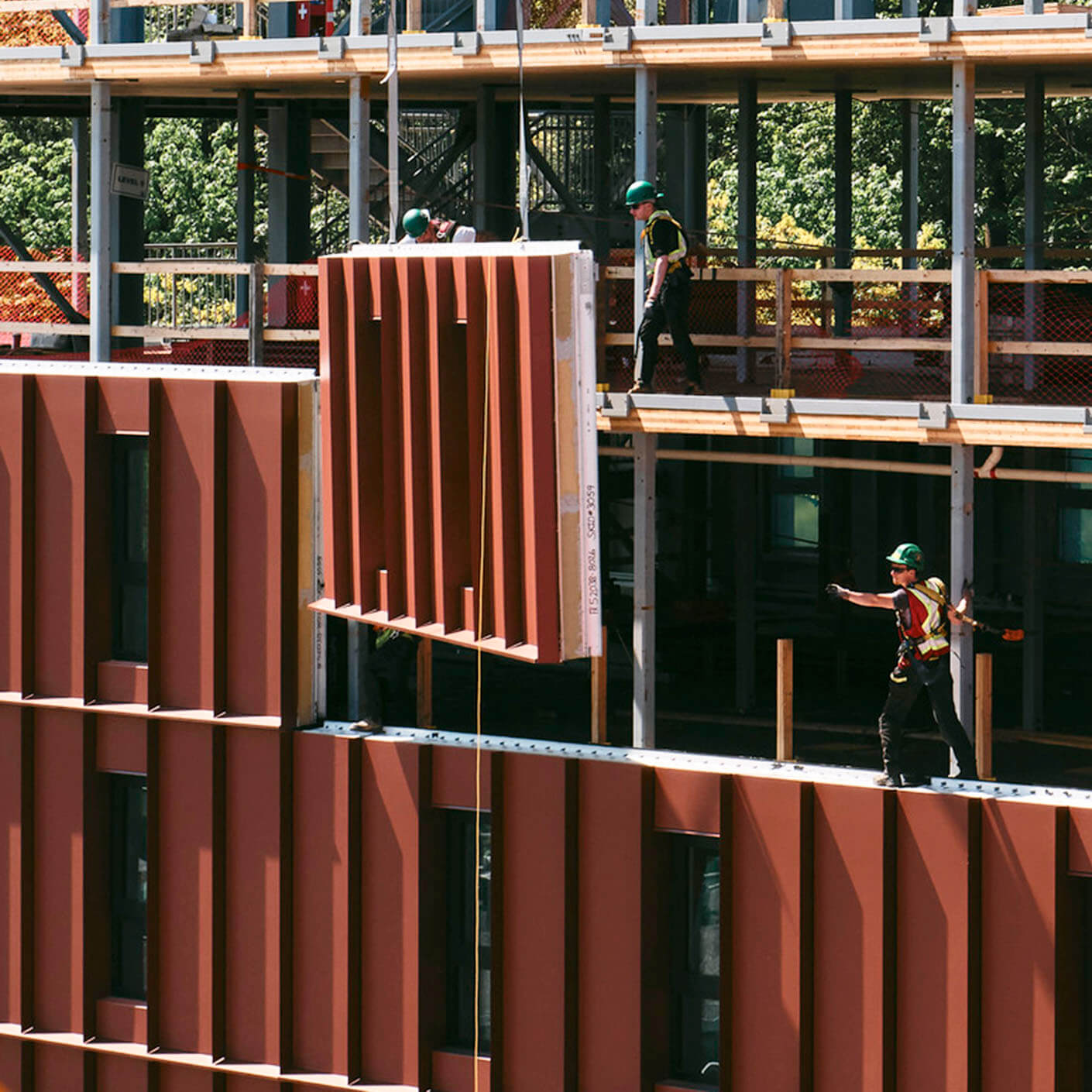
As Burnaby’s tallest mass timber building, the residence leverages locally sourced CLT and a design-for-manufacture-and-assembly (DfMA) approach to maximize efficiency and minimize waste. Prefabricated wall assemblies and modular planning—based on optimal CLT panel sizes and program requirements—streamlined fabrication and installation, enabling remarkable speed: one floor was completed approximately every 14 days during peak construction. Structurally, CLT floors supported on slender 150mm square steel posts eliminate beams and transfer elements, reducing weight and embodied carbon while increasing usable floor area. Prefabricated steel cores in six-storey subassemblies provided lateral stability, accelerating assembly and reducing site labour.
Accessibility was central to the design intent, and the project achieved Rick Hansen Foundation Accessibility Certification (RHFAC), establishing inclusive standards across units, common spaces, and site circulation. Healthy materials were specified to support well-being, and programming incorporated Indigenous input—particularly in landscape and planting—while a flexible community space at grade serves as an invitation for cultural expression and gathering. Daylight and views were prioritized throughout, with fully glazed shared spaces, operable windows, and individual thermostats in bedrooms. Warm wood finishes connect students to nature and the building’s construction technology, creating a sense of welcome and belonging.
Danica Djurkovic, Associate Vice President, Campus Planning and Facilities, BCIT

As an institute focused on applied technology, BCIT approached the residence as a learning platform. Information on the prefabrication process, envelope performance, and operational strategies helps inform future projects and learning, supporting BCIT’s Living Labs of sustainability initiative that turns energy systems, building technology, materials, and other topics into opportunities for hands-on discovery.
Project Team

Related Content